Viburnum
Viburnum tinus
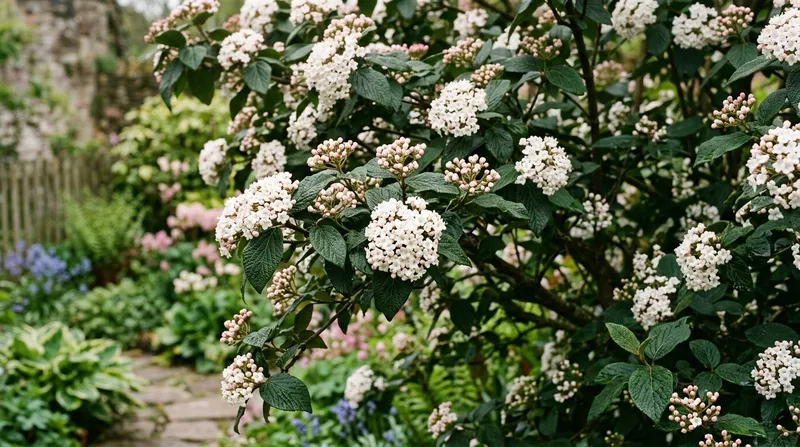
A robust evergreen shrub flowering from November through to March, making it one of the most valuable winter-flowering plants for UK gardens. Clusters of small white flowers open from pink buds, followed by dark blue-black berries. Tolerates shade, pollution and coastal exposure. Widely used for hedging, screening and winter interest in borders throughout Britain.
How to grow viburnum
Plant in autumn or spring in any reasonable garden soil. Viburnum tinus is remarkably tolerant, thriving in sun or shade, on clay or chalk, and even in dry shade under trees. Water young plants regularly during their first summer. Once established, it needs very little attention. Mulch annually with garden compost to retain moisture. In colder regions of northern England and Scotland, plant against a south or west-facing wall for extra shelter. Feed with a balanced fertiliser in spring. This shrub makes an excellent informal hedge — plant 60cm apart for a dense screen. It also grows well in large containers for patios and courtyard gardens.
Pruning
Prune lightly after flowering in late spring, trimming back any straggly or overgrown shoots to maintain a tidy shape. Viburnum tinus tolerates hard pruning if it outgrows its position — cut back to 30cm from ground level and it will regrow. For hedges, clip once in late spring after the last flowers fade.
Propagation
- Semi-ripe cuttings in summer
- Hardwood cuttings in late autumn
Common problems
- Viburnum beetle eating leaves
- Leaf spot in damp conditions
- Whitefly on sheltered plants