White Water Lily
Nymphaea alba
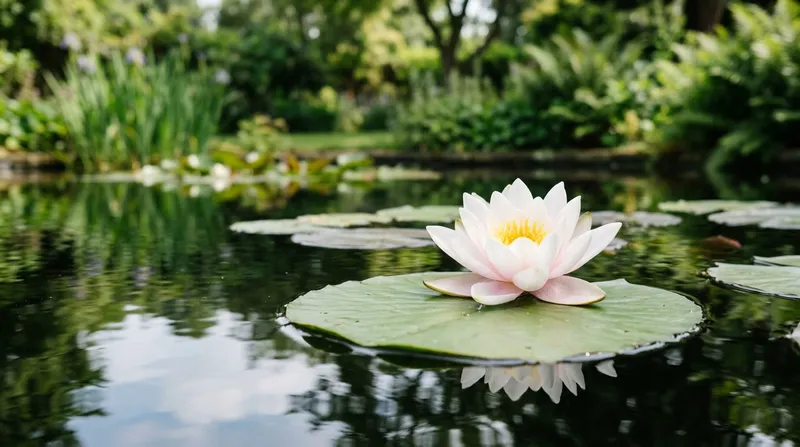
The native British water lily, producing large, floating circular leaves and exquisite white flowers with golden centres from June to September. Each bloom opens in the morning and closes by late afternoon. Nymphaea alba is a deep-water aquatic plant suited to ponds at least 60 cm deep, where its roots anchor in the mud and its leaves spread across the surface. The floating pads provide shade that helps control algae and shelter for fish and amphibians.
How to grow white water lily
Plant in still, open water in full sun. Water lilies need at least five to six hours of direct sunlight to flower well and will not bloom in shade or moving water. Plant the rhizome in an aquatic planting basket filled with heavy loam or specialist aquatic compost, topped with gravel to stop soil clouding the water. Lower the basket gradually into the pond, starting at a depth of 15-20 cm and moving deeper as the plant establishes, eventually settling at 45-90 cm for Nymphaea alba. Remove yellowing leaves throughout summer to keep the plant tidy and prevent decaying matter from fouling the water. Feed with slow-release aquatic fertiliser tablets pressed into the compost in spring. Divide congested plants every three to four years in spring when flowering declines.
Pruning
Remove dead or yellowing leaves and spent flower stalks throughout the growing season by cutting them below the waterline. In autumn, allow the foliage to die back naturally. Remove the remains of dead leaves from the pond in late autumn to prevent them decomposing and releasing nutrients that encourage algae.
Propagation
- Rhizome division in spring
- Seed
Common problems
- Poor flowering from too much shade
- Water lily beetle eating leaves
- Water lily aphid
- Crown rot from planting too deep too quickly
Good companions
Related guides
Best Pond Plants for UK Gardens
Native UK pond plants for every planting zone. Covers water lilies, oxygenators, marginals, and bog plants with depths, spreads, and wildlife value.
How to Build a Wildlife Pond UK Guide
Step-by-step guide to building a wildlife pond in the UK. Covers liner choice, planting, depth, wildlife access, maintenance, and costs from fifty pounds.
How to Build a Garden Pond: UK Guide
Step-by-step guide to building a garden pond in the UK. Covers liner types, digging, pumps, filters, fish stocking, planting, and maintenance.
How to Create a Wildlife Garden UK
Turn any UK garden into a wildlife haven. Covers ponds, native planting, hedgehog access, bird feeding, bug hotels, and seasonal wildlife tasks.