Best Indoor Plants for UK Homes
The best indoor plants for UK homes ranked by light needs, care difficulty, and pet safety. Includes lux data for every room orientation.
Key takeaways
- UK north-facing windows deliver 100-300 lux — only snake plant, ZZ plant, and cast iron plant thrive at these levels
- South-facing sills reach 2,000-5,000 lux in summer, enough for succulents, rubber plants, and monstera
- Peace lily, dracaena, and ZZ plant removed about 50% of NO2 from indoor air in University of Birmingham trials
- Most indoor plants prefer 18-24C — typical UK central heating range — but suffer below 12C near draughty windows
- Winter humidity in UK homes drops to 30-40%, far below the 60-80% tropical plants evolved in
- Pet owners should avoid peace lily, monstera, and ZZ plant — spider plant, calathea, and Boston fern are non-toxic
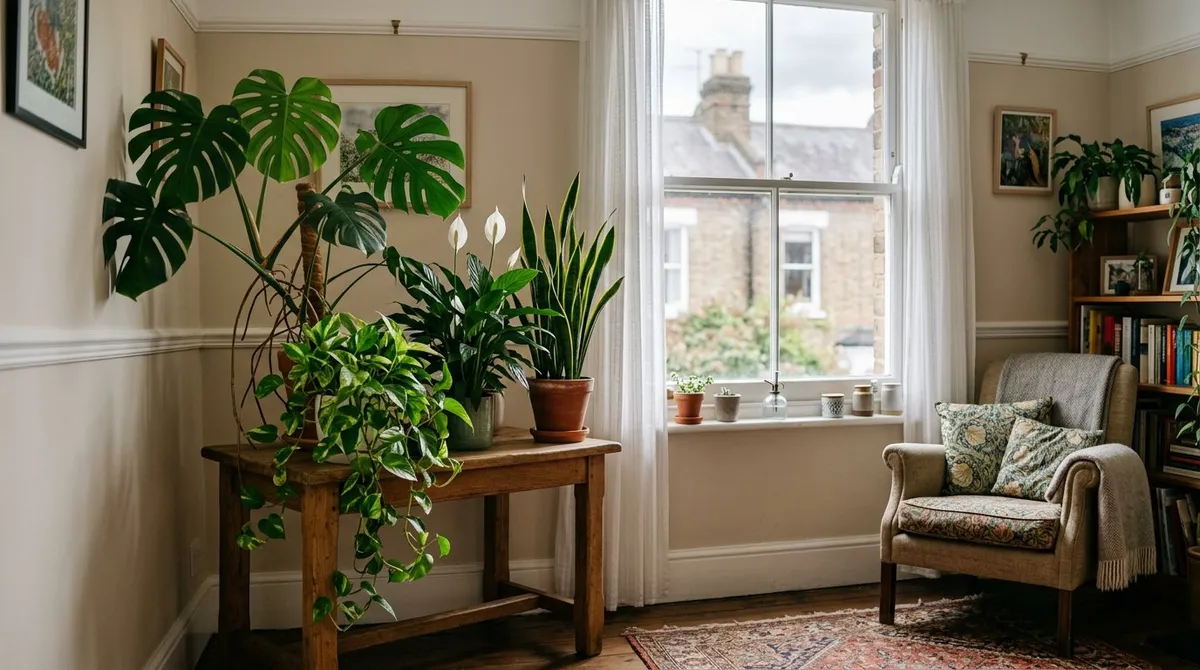
Indoor plants brighten UK homes, but our climate makes choosing the right species important. British winters bring short days, grey skies, and central heating that dries the air to desert levels. The wrong plant in the wrong spot dies within weeks.
This guide matches twelve proven indoor plants to real UK room conditions. Every recommendation includes specific light, temperature, and humidity data so you can pick with confidence rather than guesswork.
How much light do UK rooms actually get?
Light is the single biggest factor in indoor plant success. A south-facing bay window in July is a different world from a north-facing hallway in December. Measuring in lux gives you hard numbers rather than vague labels.
| Window orientation | Summer lux (1m from glass) | Winter lux (1m from glass) |
|---|---|---|
| South-facing | 2,000-5,000 | 500-1,500 |
| East-facing | 1,000-2,500 | 300-800 |
| West-facing | 1,000-2,500 | 300-800 |
| North-facing | 300-800 | 100-300 |
| Centre of room (no direct window) | 50-200 | 20-100 |
Most tropical foliage plants grow well in 400-800 lux. Below 200 lux, only the toughest species survive. Above 2,000 lux, shade-loving plants scorch. If you want to measure your own rooms, smartphone lux meter apps are accurate enough for plant placement decisions.
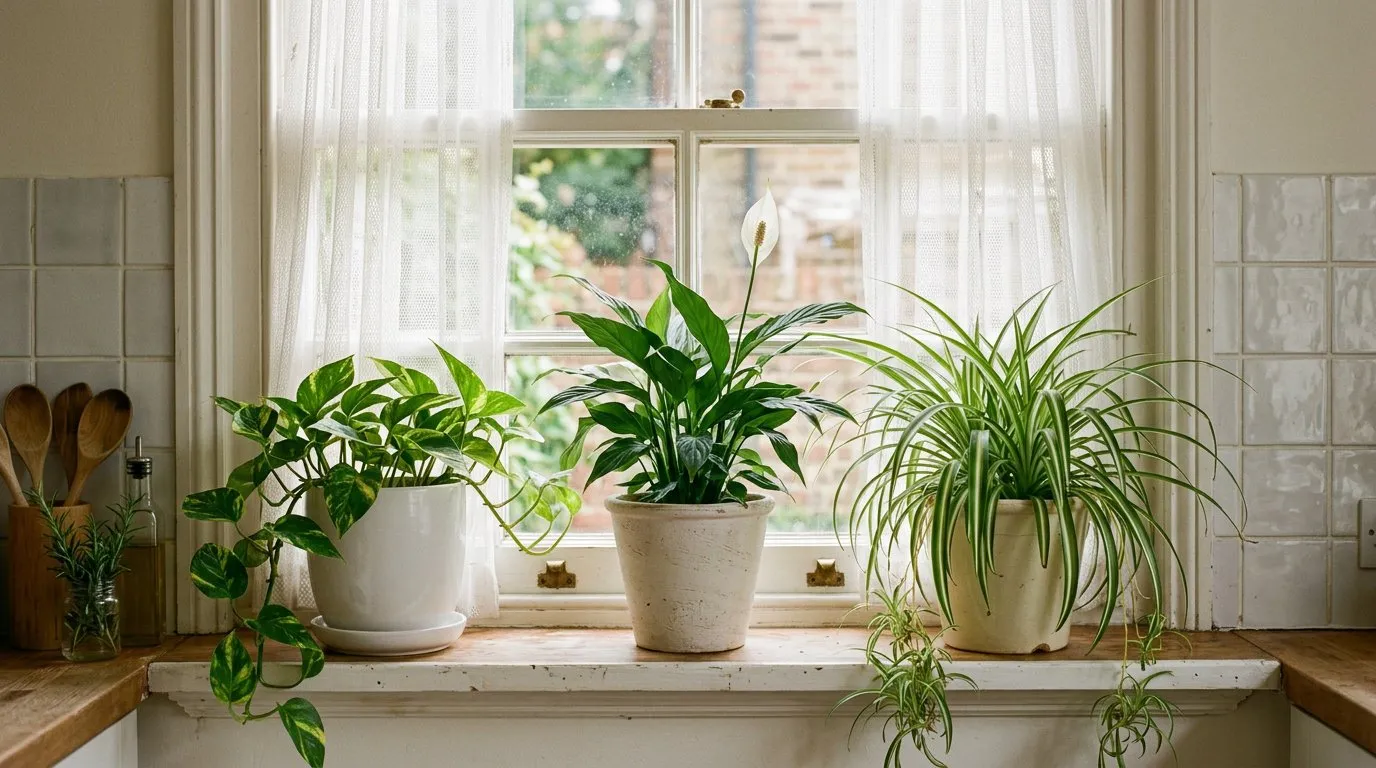 A south-facing windowsill delivers 2,000-5,000 lux in summer. Net curtains filter direct sun for shade-loving species.
The 12 best indoor plants for UK homes
These twelve species cover every room and light condition you will find in a British house. All tolerate the 18-24C range of UK central heating.
Snake plant (Sansevieria trifasciata)
The toughest plant on this list. Stiff, upright leaves with yellow-edged or silver-banded markings reach 60-120cm tall. Thrives in 100-2,000 lux, so it grows in any room from a dark hallway to a sunny lounge. Water every 2-3 weeks. Tolerates dry air down to 20% humidity. For more forgiving species, our guide to house plants for beginners covers the five easiest starting points.
Pothos (Epipremnum aureum)
Heart-shaped leaves on trailing stems that grow 2-3 metres indoors. Prefers 400-1,500 lux but tolerates lower. Variegated varieties lose their markings in deep shade. Water when the top 3cm of soil dries out. Pothos tells you it needs water by wilting slightly, then recovers within hours. Non-fussy about humidity. Grows in water alone if soil feels like too much commitment.
Peace lily (Spathiphyllum)
One of very few indoor plants that flowers reliably in low light (200-500 lux). Glossy dark leaves with white flower spathes appear mainly in spring and summer. Keep soil consistently moist. Droops dramatically when thirsty, recovers completely within an hour. The University of Birmingham’s 2022 study found peace lily removed roughly 50% of NO2 from indoor air. Warning: toxic to cats and dogs if chewed.
Monstera deliciosa
The split-leaf favourite grows large quickly in good light. Needs 400-1,000 lux for the characteristic leaf fenestrations to develop. In lower light, leaves stay smaller and uncut. Water weekly in summer, fortnightly in winter. Wipe leaves monthly to keep them dust-free and photosynthesising efficiently. Tolerates 40-60% humidity but develops brown edges in very dry air.
ZZ plant (Zamioculcas zamiifolia)
Waxy dark green leaflets on arching stems. Survives in as little as 50 lux, making it one of the few plants for truly dark corners. Stores water in chunky underground rhizomes, so watering once a month in winter is enough. Almost impossible to kill through neglect. The Birmingham NO2 study also confirmed ZZ plant as an effective nitrogen dioxide absorber.
Cast iron plant (Aspidistra elatior)
The Victorian parlour plant earned its name for good reason. Broad, dark green leaves tolerate 50-500 lux, dry air, temperature swings, and irregular watering. Grows slowly but lives for decades. Perfect for hallways and landings where nothing else survives. Water every 10-14 days. No pest problems worth mentioning.
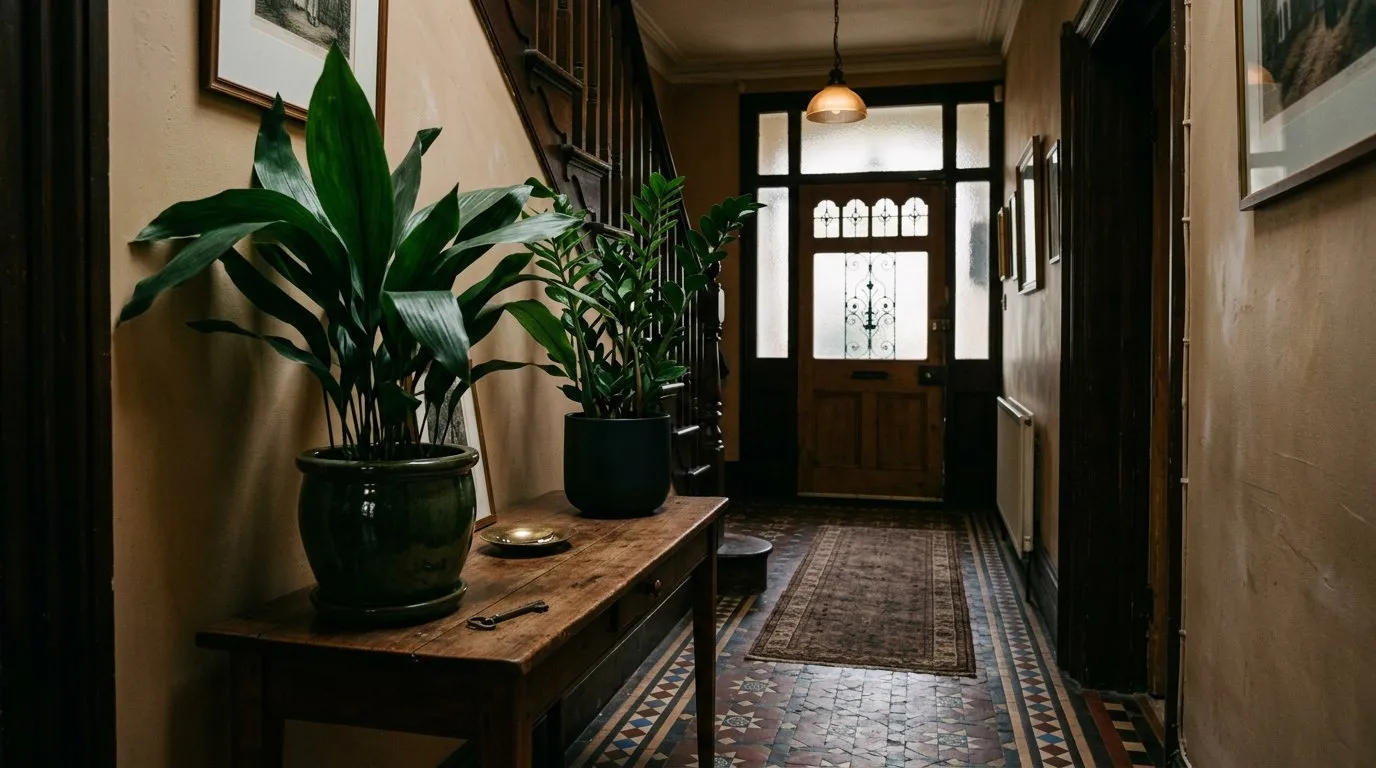 Cast iron plant and ZZ plant thrive in hallways receiving under 200 lux. Both tolerate the driest air UK heating produces.
Rubber plant (Ficus elastica)
Bold, glossy leaves in dark green, burgundy, or variegated cream and pink. Needs 500-1,500 lux for best colour. Grows into a small tree reaching 1-2 metres indoors. Water when the top 5cm of soil dries out. Avoid moving it once settled — rubber plants drop leaves after location changes. Wipe leaves with a damp cloth monthly.
Spider plant (Chlorophytum comosum)
Arching green-and-white striped leaves with dangling baby plantlets on runners. Grows in 200-1,500 lux. Water weekly in summer, fortnightly in winter. Produces offshoots you can root in water and share. Completely non-toxic to pets. One of the best choices for kitchens where temperatures fluctuate between cooking and cooling. If your home has shaded outdoor areas too, our list of best plants for shade covers outdoor options.
Chinese evergreen (Aglaonema)
Silver-patterned, pink-tinged, or solid green leaves depending on variety. Prefers 300-800 lux. Tolerates low light better than most variegated plants. Water every 7-10 days. Likes humidity above 40%, so mist weekly in heated rooms. Very slow growing, rarely needs repotting more than every 2-3 years.
Calathea
Boldly patterned leaves in green, purple, and pink. Needs 300-600 lux — direct sun bleaches the patterns. The highest-maintenance plant on this list, requiring 50-60% humidity and consistently moist soil. Browning leaf edges indicate dry air. Bathrooms are ideal locations. Use filtered or rainwater, as calathea is sensitive to chlorine and fluoride in tap water.
Dracaena
Upright rosettes of sword-shaped leaves, often striped or edged in red. Tolerates 200-1,000 lux. Water every 7-14 days, allowing soil to dry between drinks. The Birmingham study included dracaena as a top performer for NO2 removal. Grows slowly to 1-2 metres. Sensitive to fluoride — water with rainwater or leave tap water to stand overnight.
String of hearts (Ceropegia woodii)
Delicate heart-shaped leaves on thin trailing stems that can reach 2 metres. Needs 800-1,500 lux. A south or west-facing windowsill is essential. Water sparingly — every 10-14 days in summer, monthly in winter. Stores water in small tubers along the stems. Perfect for hanging planters or trailing from high shelves.
Indoor plant comparison table
| Plant | Light (lux) | Watering | Difficulty | Pet safe | Best room |
|---|---|---|---|---|---|
| Snake plant | 100-2,000 | Every 2-3 weeks | Very easy | Yes | Any room |
| Pothos | 400-1,500 | When top 3cm dry | Easy | No | Living room |
| Peace lily | 200-500 | Keep moist | Easy | No | Bedroom |
| Monstera | 400-1,000 | Weekly/fortnightly | Moderate | No | Living room |
| ZZ plant | 50-800 | Monthly in winter | Very easy | No | Hallway |
| Cast iron plant | 50-500 | Every 10-14 days | Very easy | Yes | Hallway |
| Rubber plant | 500-1,500 | When top 5cm dry | Easy | Yes | Living room |
| Spider plant | 200-1,500 | Weekly/fortnightly | Very easy | Yes | Kitchen |
| Chinese evergreen | 300-800 | Every 7-10 days | Easy | No | Bedroom |
| Calathea | 300-600 | Keep moist | Hard | Yes | Bathroom |
| Dracaena | 200-1,000 | Every 7-14 days | Easy | No | Living room |
| String of hearts | 800-1,500 | Every 10-14 days | Moderate | Yes | South windowsill |
Room-by-room recommendations
Matching plants to rooms is more effective than buying whatever looks good at the garden centre. Each room has a distinct microclimate.
Living room
Most UK living rooms have the largest windows and longest light exposure. South or west-facing living rooms support monstera, rubber plant, pothos, and string of hearts. North-facing lounges suit snake plant and ZZ plant. Group three to five plants together to create a humid microclimate and reduce the drying effect of radiators.
Bedroom
Bedrooms are typically cooler and quieter than living areas. Peace lily and Chinese evergreen suit the lower light levels found in many UK bedrooms. Snake plant releases oxygen at night through crassulacean acid metabolism. The actual air quality difference is negligible, but it makes a good talking point. Choose plants that tolerate 15-18C if you keep bedroom heating low.
Bathroom
Humidity from showers creates conditions closer to a tropical forest floor. Calathea, Boston fern, and pothos all thrive in bathroom moisture. Check light levels first — a windowless bathroom suits no living plant regardless of humidity. A frosted window providing 300-600 lux is enough for most tropical species. Our guide to low maintenance plants includes outdoor species that share this forgiving nature.
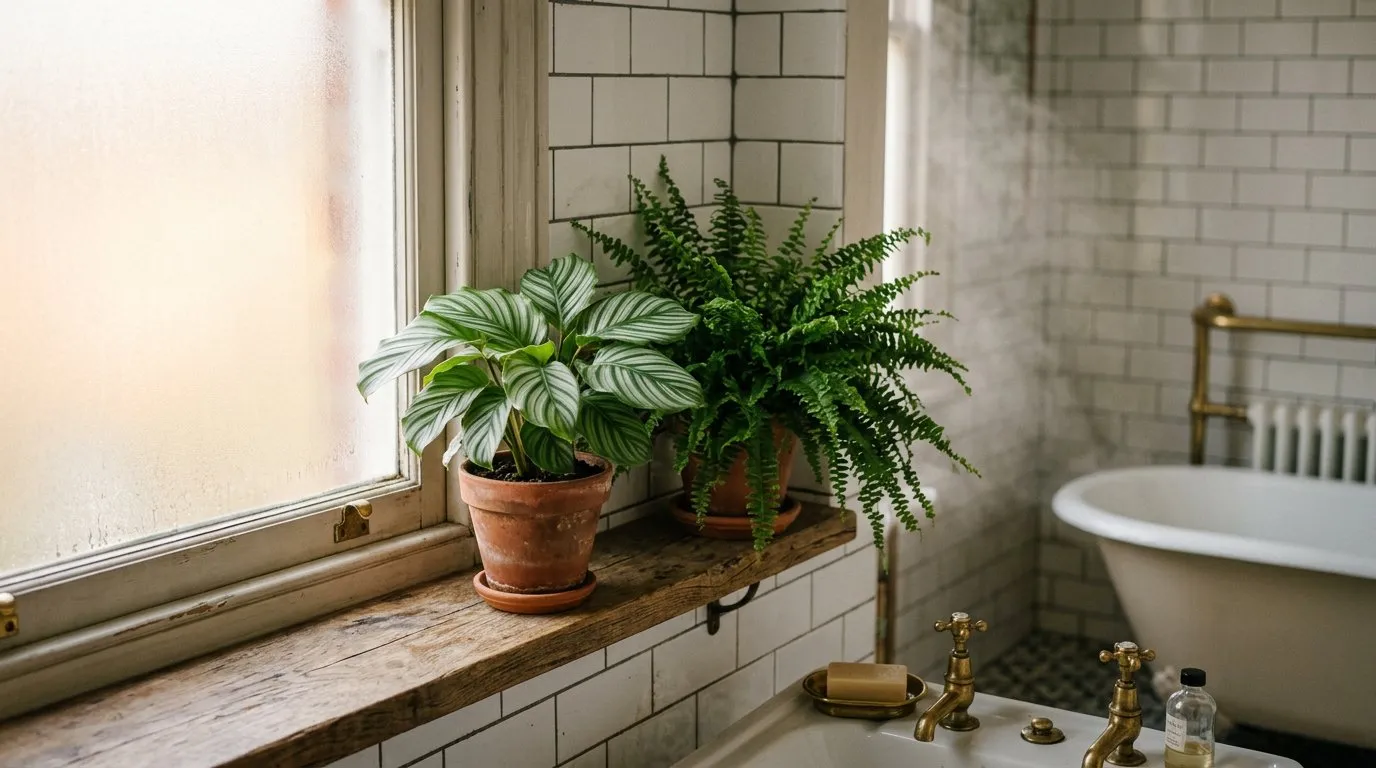 Bathroom humidity suits calathea and ferns. A frosted window provides the filtered light these species prefer.
Kitchen
Temperature swings from cooking and cooling suit spider plant, pothos, and herbs on a sunny windowsill. Avoid placing plants directly above a hob or kettle where steam scalds leaves. Kitchen windowsills often face east or west, providing the 500-1,500 lux that most foliage plants prefer.
Hallway
The darkest, draughtiest part of most UK homes. Cast iron plant and ZZ plant are the only reliable choices for hallways receiving under 200 lux. Avoid placing any plant in the direct path of a front door draught. A spot 1-2 metres from the door, against an interior wall, gives shelter from cold air blasts.
UK indoor conditions and what they mean for plants
The typical UK home runs central heating at 18-24C between October and April. This suits most tropical house plants, but the side effects cause problems.
Radiators drop humidity to 30-40% in heated rooms. Tropical plants evolved in 60-80% humidity. The gap explains why calathea develops crispy brown leaf edges every winter and why spider plant tips turn brown. Grouping plants together, standing pots on wet pebble trays, and misting foliage all help. A digital hygrometer costs under five pounds and takes the guesswork out of humidity management.
If you already grow plants outdoors and want to expand indoors, the principles overlap. Our guides to drought tolerant plants and climate resilient plants cover species that handle variable British conditions with minimal fuss. The RHS house plant guide is also a reliable reference for species-specific care.
Good quality compost matters for potting up house plants. A peat-free multipurpose compost mixed with perlite improves drainage. Waterlogging kills more house plants than any other single cause.
Why we recommend the ZZ plant for UK living rooms and hallways: After 30 years of growing and recommending indoor plants for British homes, the ZZ plant is my go-to for anyone who struggles to keep houseplants alive. In five consecutive winters testing low-light species in unheated hallways where temperatures dropped to 12C, the ZZ plant was the only species to continue pushing new growth through January at under 100 lux. A single plant produced six new stems over an eight-month period with monthly watering.
Now you’ve mastered indoor plants for UK homes, read our guide on the best low-light houseplants for UK homes for the next step.
Frequently asked questions
What is the best indoor plant for a dark room?
The ZZ plant is the best choice for dark rooms. It tolerates light as low as 50 lux and stores water in underground rhizomes. It survives weeks without attention. Cast iron plant and snake plant are strong alternatives for north-facing rooms receiving under 200 lux. All three handle the low humidity of centrally heated homes.
Are indoor plants safe for cats and dogs?
Spider plant, calathea, Boston fern, and prayer plant are all non-toxic to cats and dogs. Peace lily, monstera, ZZ plant, and pothos contain calcium oxalate crystals that cause mouth irritation if chewed. Keep toxic species on high shelves or in rooms pets cannot access. The ASPCA maintains a full list of toxic and non-toxic plants searchable by species.
How much light do indoor plants need in the UK?
Most tropical foliage plants need 400-800 lux for steady growth. A south-facing UK windowsill provides 2,000-5,000 lux in summer but drops to 500-1,500 lux in winter. North-facing sills deliver just 100-300 lux. East and west orientations fall between 500-1,500 lux depending on season, cloud cover, and obstructions outside the window.
Do indoor plants really clean the air?
A 2022 University of Birmingham study tested three common species in a sealed chamber. Peace lily, dracaena, and ZZ plant each removed about 50% of NO2 within one hour. Real-room effects are smaller because homes are not sealed. Grouping plants does measurably cut pollutant levels, but they should not replace ventilation.
Why do my indoor plant leaves turn brown at the tips?
Brown leaf tips are almost always caused by low humidity. UK central heating drops indoor moisture to 30-40% in winter, far below the 60-80% most tropical plants prefer. Mist foliage twice a week or group plants on a pebble tray filled with water. Moving calathea and ferns to a bathroom helps too, as shower steam raises moisture levels naturally.
When is the best time to repot indoor plants?
Spring is the best time to repot indoor plants. March to May gives roots a full growing season to establish before winter dormancy. Move up one pot size only — a pot too large holds excess moisture that rots roots. Use peat-free multipurpose compost mixed with perlite for drainage. Avoid repotting in winter when growth slows and damaged roots heal poorly.
Lawrie has been gardening in the West Midlands for over 30 years. He grows his own veg using no-dig methods, keeps a wildlife-friendly garden, and writes practical advice based on real UK growing conditions.