Best Trees for Privacy in UK Gardens
Top evergreen and deciduous trees for garden privacy in the UK. Covers screening species, planting distances, hedge law, and pleaching techniques.
Key takeaways
- Holm oak, Portugal laurel, holly, and Western red cedar provide year-round evergreen screening
- Beech holds its copper dead leaves all winter, giving 12-month privacy despite being deciduous
- Plant screening trees 1.5-3m apart for a dense barrier within 3-5 years
- The High Hedges Act 2005 lets councils order hedges cut to 2m if neighbours complain
- Pleached trees give privacy at eye level (1.8-2.5m) without blocking light below
- Scots pine and birch screens suit larger gardens and exposed rural sites
- Always check the ultimate height and spread before planting near a boundary
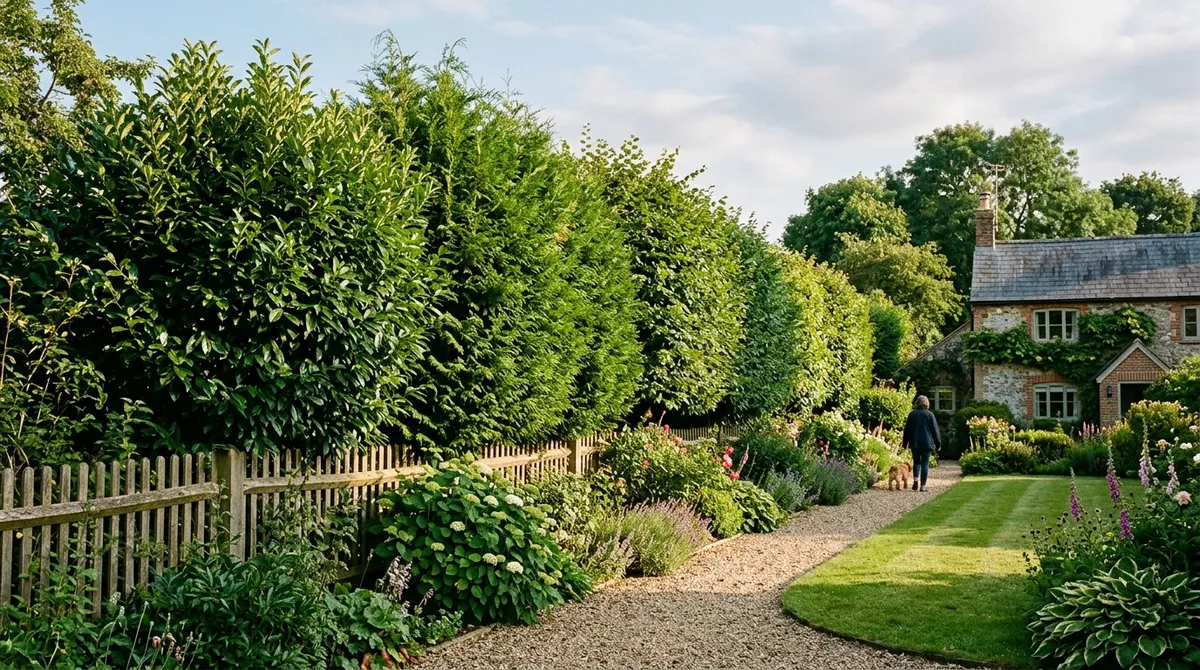
Privacy is one of the most common reasons people plant trees. A well-chosen screen blocks overlooking windows, muffles road noise, and creates a sheltered microclimate. The right species depends on your space, soil, and how quickly you need cover.
This guide covers the best evergreen and deciduous trees for garden privacy in the UK. It includes planting distances, screening techniques including pleaching, and the legal rules around hedge height near boundaries. For boundary structures other than trees, see our guide to garden fence ideas.
Best evergreen trees for year-round privacy
Evergreen trees keep their leaves all year, giving consistent screening in every season. These five species are the most reliable for UK gardens.
Holm oak (Quercus ilex) is a magnificent evergreen oak that grows well across southern and central England. It reaches 15-20m if left unpruned but responds brilliantly to clipping, holding a dense screen at any height from 2m upward. The dark green, leathery leaves withstand salt spray, making it ideal for coastal gardens. Plant 1.5-2m apart for a hedge. Growth rate is moderate at 30-40cm per year once established.
Portugal laurel (Prunus lusitanica) produces glossy dark green leaves on distinctive red stems. It tolerates any soil including chalk and heavy clay. Unlike cherry laurel, it stays compact and neat without constant trimming. Clip once in late summer. It reaches 8-12m unpruned but makes an elegant hedge at 2-3m. Plant 60-90cm apart. White flower spikes in June attract pollinators.
Holly (Ilex aquifolium) is a native British evergreen with dense, prickly foliage that forms an impenetrable barrier. Female plants produce red berries from November to March if a male pollinator grows nearby. Holly tolerates deep shade, exposed sites, and poor soil. Growth is slow at 15-25cm per year, so buy the largest plants you can afford. The cultivar ‘J.C. van Tol’ is self-fertile and almost spineless, making it easier to clip.
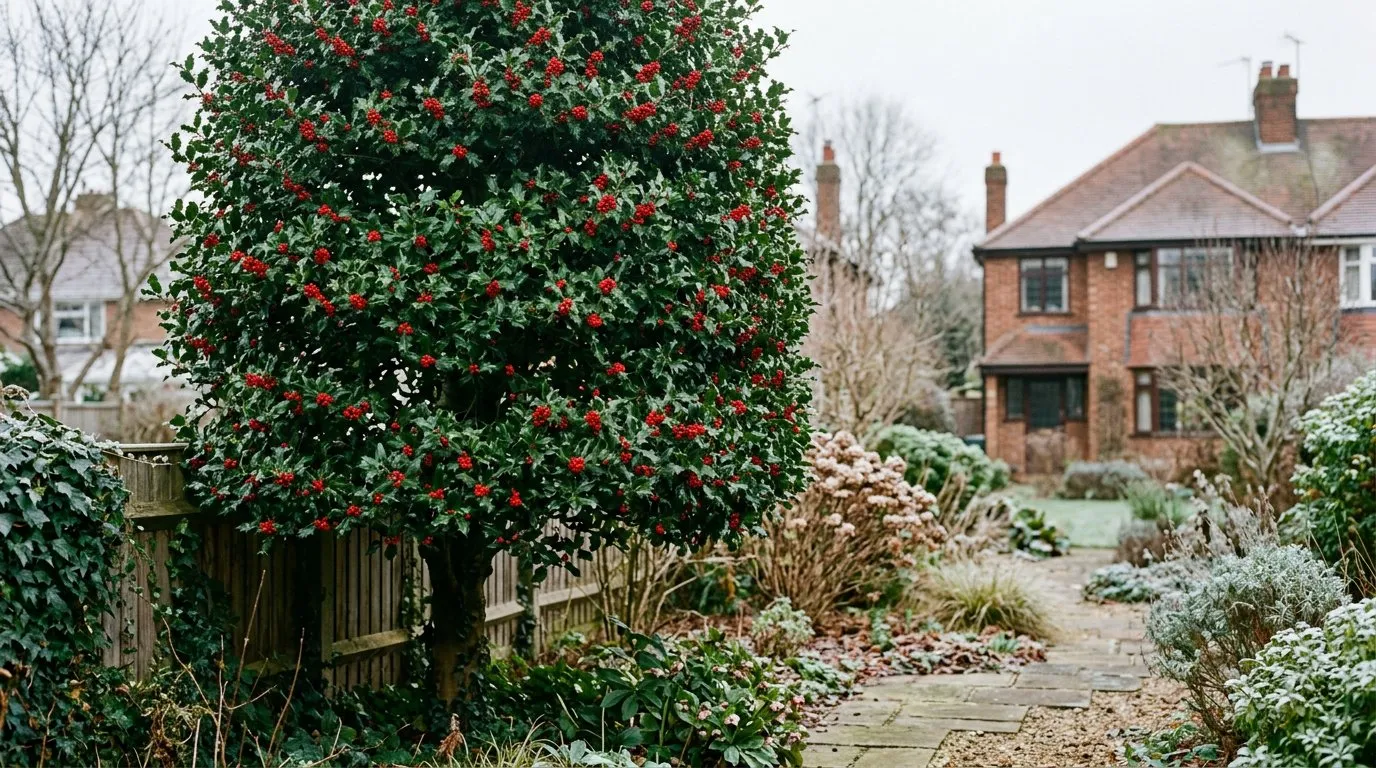
A mature holly tree laden with red berries screens a suburban UK garden through winter
Western red cedar (Thuja plicata) is the best alternative to Leylandii. It grows 40-60cm per year, reaches 3-4m in five years, and clips into a neat, dense hedge with a pleasant aromatic scent. Unlike Leylandii, it regenerates from old wood if cut back hard. The cultivar ‘Atrovirens’ keeps its rich green colour through winter. Plant 60-75cm apart.
Scots pine (Pinus sylvestris) suits larger rural gardens where a naturalistic screen is preferred. The orange-barked upper trunk and blue-green needles create a distinctive silhouette. Scots pine grows 30-40cm per year and reaches 15-25m at maturity. It works best as a loose, informal screen rather than a clipped hedge. Plant 3-4m apart and underplant with holly or hawthorn for lower-level cover. This is one of only three native UK conifers.
Best deciduous trees for privacy
Deciduous trees drop their leaves in autumn, but certain species still provide effective winter screening.
Hornbeam (Carpinus betulus) is the finest deciduous screening tree for UK gardens. When clipped as a hedge, it holds its dead leaves (called marcescence) from November through to April, giving 12-month privacy. The leaves turn a warm tawny brown in autumn. Hornbeam tolerates heavy clay, wet ground, and partial shade better than beech. Plant 45-60cm apart for a formal hedge. Growth rate is 30-40cm per year. It also makes a superb pleached screen.
Beech (Fagus sylvatica) works identically to hornbeam for winter leaf retention. Clipped beech hedges hold their copper-brown dead leaves all winter. The fresh spring foliage is a vivid lime green, turning deep green in summer. Beech prefers well-drained soil and struggles on waterlogged clay. On heavy ground, choose hornbeam instead. Plant 45-60cm apart. Copper beech (Fagus sylvatica ‘Purpurea’) adds deep purple foliage for a more dramatic screen.
Silver birch (Betula pendula) creates a graceful, airy screen rather than a solid wall. The white bark provides winter interest when leaves drop. Plant birch 2-3m apart in groups of three, five, or seven for a naturalistic copse effect. Growth is fast at 40-60cm per year. Birch works well in front gardens where a light screen filters views without creating a fortress effect. The multi-stemmed form provides more coverage than single-trunk trees.
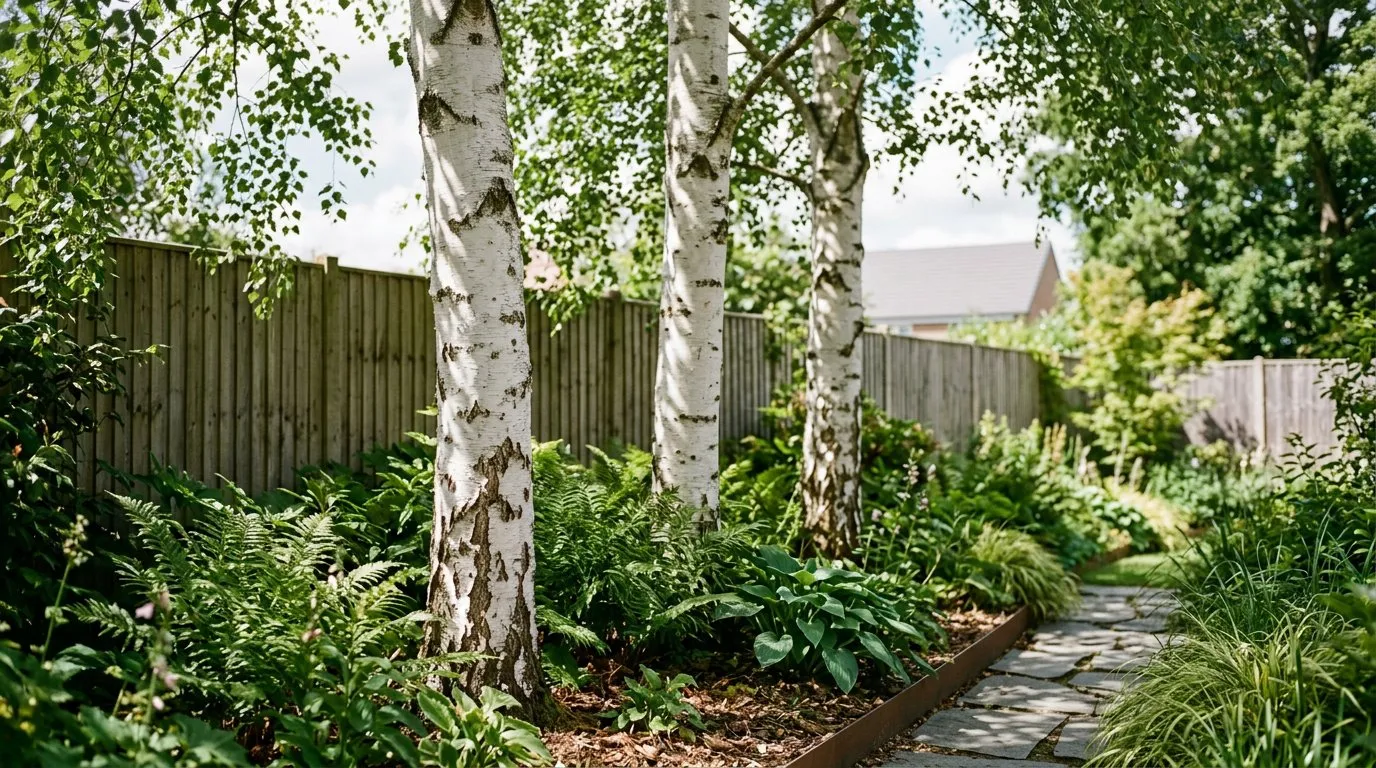
Three silver birch trees with white bark form a dappled privacy screen, underplanted with ferns
Screening comparison table
| Tree | Type | Growth per year | Ultimate height | Screen width | Best use |
|---|---|---|---|---|---|
| Holm oak | Evergreen | 30-40cm | 15-20m (clip to 2m+) | 1-2m clipped | Formal hedge, coastal |
| Portugal laurel | Evergreen | 30-40cm | 8-12m (clip to 2-3m) | 60cm-1m clipped | Small-medium gardens |
| Holly | Evergreen | 15-25cm | 10-15m (clip to 2-3m) | 60-90cm clipped | Shade, security |
| Western red cedar | Evergreen | 40-60cm | 15m+ (clip to 3-4m) | 60cm-1m clipped | Fast evergreen hedge |
| Scots pine | Evergreen | 30-40cm | 15-25m | 4-6m natural | Large rural screens |
| Hornbeam | Deciduous | 30-40cm | 20m+ (clip to 2-4m) | 45-60cm clipped | Clay soil, wet sites |
| Beech | Deciduous | 30-40cm | 25m+ (clip to 2-4m) | 45-60cm clipped | Well-drained soil |
| Silver birch | Deciduous | 40-60cm | 15-20m | 3-4m natural | Light, airy screens |
Gardener’s tip: If you need privacy within 12 months, buy semi-mature pleached hornbeam at 1.8m clear stem height. They cost more (around £80-£150 per tree) but give eye-level screening from the day they go in. Ordinary hedge plants take 3-5 years to reach the same coverage.
Screening techniques
There are three main approaches to tree-based privacy, each suited to different garden sizes and situations.
Hedgerow-style planting
This is the most common approach. Plant trees in a single or double row at close spacing and allow them to merge into a continuous screen. Single rows suit formal hedges of hornbeam, beech, or yew. Double staggered rows give faster, thicker coverage for larger boundaries. Space plants 45-90cm apart in a single row, or 90cm apart in each row with rows 45cm apart for a double row. Cut the top annually once the hedge reaches the desired height. This method works for boundaries up to any length and is the most cost-effective option.
Pleached trees for targeted screening
Pleached trees have a clear trunk from ground level to about 1.8m, with the branches trained horizontally on a frame above. The result is a raised screen that blocks views at eye level and first-floor window height without casting deep shade at ground level. Hornbeam, lime (Tilia), and beech are the most common species for pleaching. You can buy ready-pleached trees from specialist nurseries or train your own from maiden whip trees over 4-5 years. Plant 2.5-3m apart. Pleached screens are ideal for small garden design where a full hedge would overwhelm the space.
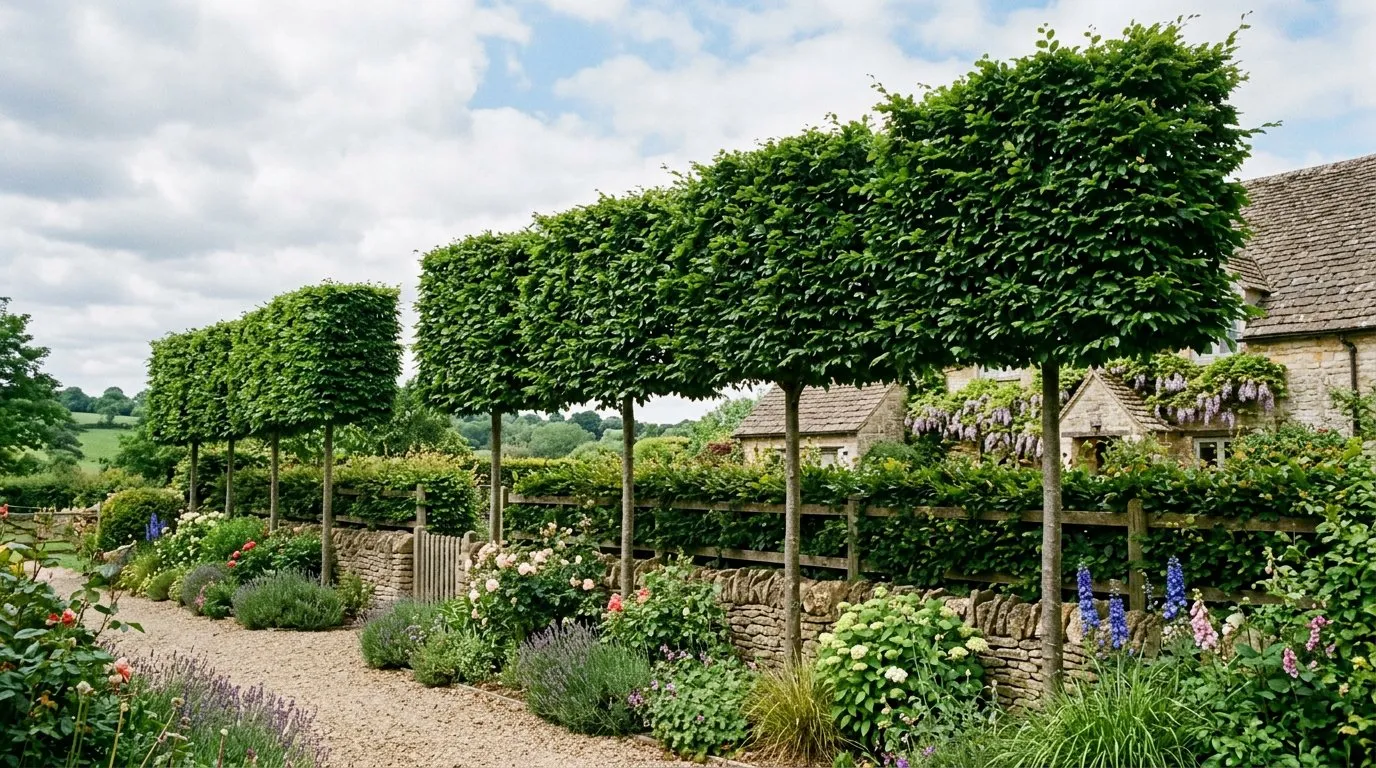
Pleached hornbeam trees with squared canopies on clear stems form an elevated privacy screen along a Cotswold garden boundary
Specimen tree groups
For larger gardens, plant individual trees in strategic groups to block specific sight lines. Three silver birch planted as a triangular group create a focal point and a light screen. A single Scots pine positioned to block an overlooking window gives targeted privacy without the commitment of a full hedge. This approach works well combined with lower planting for shade beneath the canopy.
How to plant a privacy screen
Proper planting gives screening trees the best start. November to March is the ideal bare-root planting window, saving significant cost over container-grown plants.
Ground preparation
Mark out the planting line with string stretched between two canes. For a formal hedge, dig a continuous trench 45cm wide and 30cm deep. For specimen trees, dig individual holes twice the width of the root ball. Mix well-rotted compost or composted bark into the excavated soil at a ratio of one part compost to three parts soil. On heavy clay, add coarse grit to the bottom of the trench for drainage.
Spacing guide
Space hedging plants 45-60cm apart for hornbeam, beech, and yew. Space Portugal laurel and holly 60-90cm apart. Space larger screening trees like Holm oak 1.5-2m apart when planting as a hedge, or at their full spread distance for specimen planting. When learning about tree planting, our guide to how to plant bare-root trees covers the technique in detail.
Aftercare in the first two years
Water new screening plants weekly from April to September in the first two years. Each plant needs 10-15 litres per watering session. Mulch the planting line with 5-8cm of composted bark or garden compost to retain moisture and suppress weeds. Do not let grass grow within 30cm of the trunks. Stake any tree over 1m tall with a short angled stake for the first two growing seasons. Feed annually in March with a general-purpose fertiliser like blood, fish, and bone at 70g per square metre.
When to clip and maintain screening trees
Timing depends on the species. Get it wrong and you damage the screen or encourage weak regrowth.
Clip hornbeam and beech hedges once a year in late July or August, after the main flush of growth. A single annual clip maintains a neat profile. Avoid cutting after September, as late-cut hedges do not hold their dead winter leaves as well.
Trim Portugal laurel and holly once a year in late August. Use secateurs rather than hedge trimmers to avoid shredding the large leaves. Shredded leaves turn brown at the edges and look unsightly for months.
Cut Western red cedar and yew hedges once in late August or early September. Both species regenerate from old wood if you need to reduce an overgrown hedge. Leylandii does not regenerate from brown wood, which is another reason to choose Thuja or yew instead.
Scots pine and birch screens need no regular clipping. Remove dead, damaged, or crossing branches in autumn. Lift the lower canopy of birch by removing branches below 2m if you need clear access underneath.
Hedge height law in the UK
The High Hedges Act 2005 (Part 8 of the Anti-social Behaviour Act 2003) gives local councils the power to intervene when an evergreen hedge causes a nuisance to neighbours.
A hedge falls under the Act if it is made up of two or more evergreen or semi-evergreen trees, forms a barrier to light or access, and is over 2m tall. Deciduous hedges that drop their leaves completely in winter are not covered, even if they are very tall. This is why hornbeam and beech hedges, which technically hold dead leaves, are generally not subject to complaints under the Act.
If a neighbour complains, the council assesses whether the hedge unreasonably affects their enjoyment of their property. If the complaint is upheld, the council issues a remedial notice specifying a maximum height, usually around 2m. Failure to comply can result in fines. The complainant must pay a fee to the council, typically £300-£500, to cover the cost of assessment.
Before any dispute reaches the council, the gov.uk guidance on high hedges recommends trying to resolve the issue directly with your neighbour. Many disputes are settled by agreeing to reduce the hedge to a mutually acceptable height.
Gardener’s tip: If you want an evergreen screen over 2m near a boundary, consider planting it 2-3m inside your own garden rather than on the boundary line. This makes future maintenance easier, avoids root encroachment disputes, and gives the plants more room to develop a natural shape.
Best privacy trees for small gardens
Small gardens need trees that screen effectively without dominating the space. Avoid anything that reaches 15m+ unless you plan to clip it as a formal hedge.
Photinia ‘Red Robin’ grows to 4-5m and produces striking red new growth in spring. It clips well as a hedge or screen at 2-3m. Plant 60cm apart. Semi-evergreen in harsh winters, so not suitable for the most exposed northern sites.
Prunus lusitanica ‘Myrtifolia’ is a compact form of Portugal laurel with smaller leaves. It grows to just 3-4m and forms a dense, manageable screen. Ideal for smaller boundaries and narrow side passages.
Ilex aquifolium ‘J.C. van Tol’ is a self-fertile holly reaching 6-8m but easily clipped to 2-3m. The near-spineless leaves make maintenance less painful. Berries appear without a separate male plant. For more options on trees scaled to limited plots, see our guide to trees for small gardens.
Pleached hornbeam screens at eye level while leaving the ground open. The 1.8m clear stem means you can plant beneath the canopy, maximising every square metre.
Why we recommend Western red cedar over Leylandii for fast evergreen screening: After 30 years of planting screening trees and seeing the aftermath of Leylandii disputes, Western red cedar (Thuja plicata ‘Atrovirens’) is the tree I plant every time speed and manageability both matter. It grows at 40-60cm per year — nearly as fast as Leylandii — but unlike Leylandii, it regenerates from old wood when cut back hard. In 15 gardens where I replaced overgrown Leylandii with Thuja, every client commented the hedge was easier to maintain within two seasons.
Common mistakes when planting for privacy
Planting too close to the boundary
Trees planted hard against a fence or wall cause problems within a few years. Roots lift paving and damage foundations. Branches overhang into neighbouring property. Plant at least 1m from any boundary fence, and further if the species has vigorous roots. Check the expected mature spread before you dig.
Choosing Leylandii without a maintenance plan
Leylandii grows up to 90cm per year. Left uncut for two years, a 2m hedge becomes a 4m wall. Unlike yew and Western red cedar, Leylandii does not regrow from old brown wood. If you let it get away from you, the only fix is removal. If you plant Leylandii, commit to cutting it twice a year without fail.
Planting a single species
A monoculture screen looks unnatural and is vulnerable to disease wiping out every plant at once. Box blight devastated box hedges across the UK. Ash dieback is killing millions of ash trees. Mix at least two or three species in an informal screen. Native mixes of holly, yew, and hawthorn give the best resilience and wildlife value.
Ignoring the soil
Beech fails on wet clay. Scots pine struggles on chalk. Holm oak dislikes cold, exposed northern sites. Match the species to your soil and exposure. If in doubt, hornbeam tolerates the widest range of UK conditions and is nearly always a safe choice.
Now you’ve chosen the right privacy tree, read our guide on how to plant bare-root trees for the next step.
Frequently asked questions
What is the fastest-growing privacy tree in the UK?
Leylandii grows up to 90cm per year, making it the fastest common screening tree. Western red cedar is a close second at 40-60cm per year and is far easier to maintain. Willow grows even faster, but its invasive roots and tendency to break make it a poor choice near boundaries. For a fast deciduous screen, silver birch adds 40-60cm per year and establishes within 3-4 years.
How close to a boundary can I plant a privacy tree?
There is no legal minimum distance in England and Wales. Good practice is to plant at least half the expected mature canopy spread from the boundary line. A tree with a 4m spread should sit at least 2m from the fence. This prevents branches overhanging and roots encroaching. Some insurance policies specify minimum distances from buildings, typically 3-5m for medium trees and 7-10m for large species like oak.
Can my neighbour force me to cut my hedge?
Under the High Hedges Act 2005, neighbours can apply to the local council for a remedial notice if an evergreen hedge over 2m tall blocks light or access to their property. The council inspects the site and can order you to reduce the hedge to a specified height. The complaint process costs the applicant around £300-£500. Deciduous hedges are not covered by the Act.
Do I need planning permission to plant trees for screening?
No planning permission is required to plant trees on your own land. However, Tree Preservation Orders (TPOs) and Conservation Area rules restrict the removal of existing trees. Some new-build estates have covenants limiting boundary planting. Always check your property deeds and with the local planning authority before clearing existing trees to make room for new screening.
Which privacy trees grow well in shade?
Holly and yew are the best evergreen screening trees for shade. Both are native understorey species adapted to growing beneath a deciduous canopy. Portugal laurel tolerates partial shade well. Hornbeam also thrives in light shade. Avoid Leylandii, Western red cedar, and Scots pine in heavy shade, as they lose lower branches and become thin and gappy.
How long does it take to grow a privacy screen?
A well-planted evergreen hedge of Western red cedar or Portugal laurel reaches 2m in 3-5 years from 60-90cm nursery plants. Hornbeam and beech hedges reach 2m in 4-5 years from bare-root whips. Buying larger plants (1.2-1.5m) shortens the wait but costs more and establishes more slowly. Ready-pleached trees provide immediate eye-level screening from the day of planting.
What is the best tree for a narrow garden boundary?
Pleached hornbeam or lime gives screening above 1.8m while occupying just 30-40cm of ground width. For an evergreen hedge in a narrow space, yew and Portugal laurel can be maintained at 45-60cm wide with annual clipping. Western red cedar clips to 60cm wide. Avoid species like Holm oak or Scots pine in narrow boundaries as their natural spread is too wide.
Are evergreen privacy trees bad for wildlife?
Evergreen screening trees are valuable wildlife habitats. Dense conifer hedges provide winter roosting and nesting sites for birds including wrens, goldcrests, and long-tailed tits. Holly berries feed thrushes and waxwings through winter. Yew supports over 20 butterfly and moth species. A mixed native hedge of holly, yew, and hawthorn offers the best combination of privacy and habitat. The Woodland Trust recommends native hedging for both privacy and biodiversity.
Lawrie has been gardening in the West Midlands for over 30 years. He grows his own veg using no-dig methods, keeps a wildlife-friendly garden, and writes practical advice based on real UK growing conditions.