Drought-Tolerant Plants for UK Gardens
Best drought-tolerant plants for UK gardens. Covers perennials, shrubs, grasses, ground cover, and Mediterranean species that thrive without watering.
Key takeaways
- Mediterranean plants like lavender, rosemary, and thyme thrive in UK gardens with well-drained soil and full sun
- Silver, grey, or waxy foliage indicates a plant's natural drought tolerance — these leaf adaptations reduce water loss
- Most drought-tolerant perennials need watering only during their first growing season while roots establish
- Ornamental grasses like Stipa tenuissima and Miscanthus develop deep root systems that access moisture other plants cannot reach
- Improving drainage with grit and avoiding overwatering kills more drought-tolerant plants than drought itself
Drier summers, hosepipe bans, and unpredictable rainfall are pushing UK gardeners toward plants that thrive without constant watering. Drought-tolerant gardening is not about accepting a bare, brown garden. It is about choosing plants that stay green and flower abundantly while your neighbour’s lawn turns to straw.
The UK’s changing climate makes this approach increasingly practical. South-east England now receives less than 600mm of rain annually, with the driest months coinciding with peak growing season. Plants adapted to these conditions require less work, less water, and less worry.
How plants survive drought
Understanding why certain plants tolerate drought helps you choose the right ones and give them what they need.
Silver or grey foliage reflects sunlight and reduces water loss. Lavender, artemisia, and lamb’s ear all use this strategy. If a plant has silver leaves, it almost certainly handles drought.
Waxy or leathery leaves create a waterproof coating that reduces evaporation. Rosemary, bay, and many evergreen shrubs use this adaptation.
Succulent leaves store water internally for use during dry periods. Sedum, sempervivum, and ice plants hold moisture in their fleshy foliage. Many succulents also thrive as windowsill plants — see our guide on how to care for succulents indoors.
Deep root systems access water that shallow-rooted plants cannot reach. Ornamental grasses and many prairie perennials send roots down 60-90cm, tapping into moisture reserves even in prolonged dry spells.
Narrow or finely divided leaves have less surface area for water to evaporate from. Lavender, rosemary, and fennel all demonstrate this adaptation.
Best drought-tolerant perennials
These perennials establish within one growing season and then need minimal watering for years.
| Plant | Height | Flowers | Soil | Notes |
|---|---|---|---|---|
| Lavender (Lavandula) | 40-80cm | Jun-Aug, purple | Well-drained | Aromatic, attracts bees |
| Echinacea purpurea | 60-100cm | Jul-Sep, pink/white | Any well-drained | Prairie native, long-flowering |
| Sedum spectabile | 30-50cm | Aug-Oct, pink | Any, tolerates poor | Excellent for pollinators |
| Verbena bonariensis | 120-180cm | Jun-Oct, purple | Any well-drained | Tall, airy, self-seeds |
| Eryngium (sea holly) | 40-80cm | Jun-Aug, blue/silver | Poor, dry | Architectural, stunning blue |
| Agapanthus | 60-100cm | Jul-Aug, blue/white | Well-drained | Dramatic flower heads |
| Nepeta (catmint) | 30-60cm | May-Sep, blue | Any well-drained | Long season, easy |
| Perovskia (Russian sage) | 80-120cm | Aug-Oct, blue | Poor, dry | Silver foliage, late flowers |
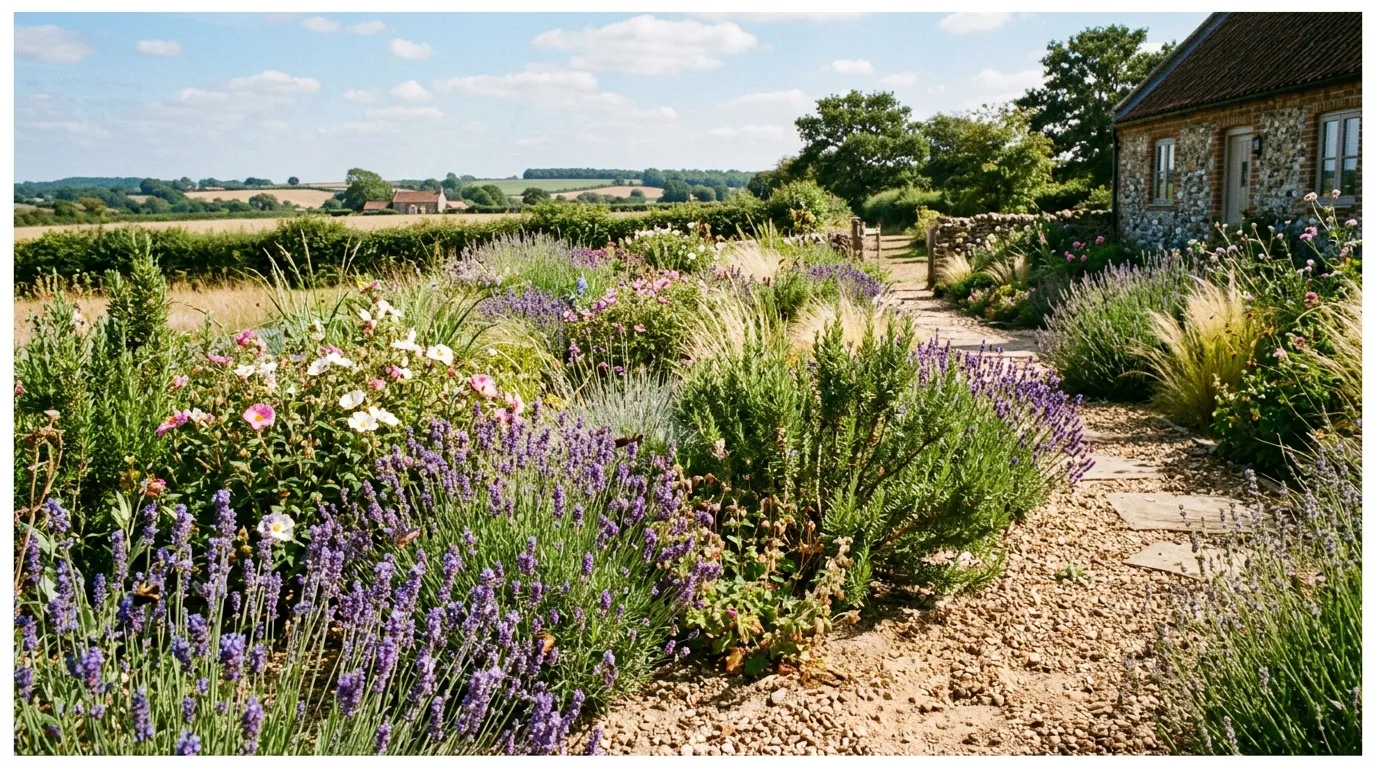
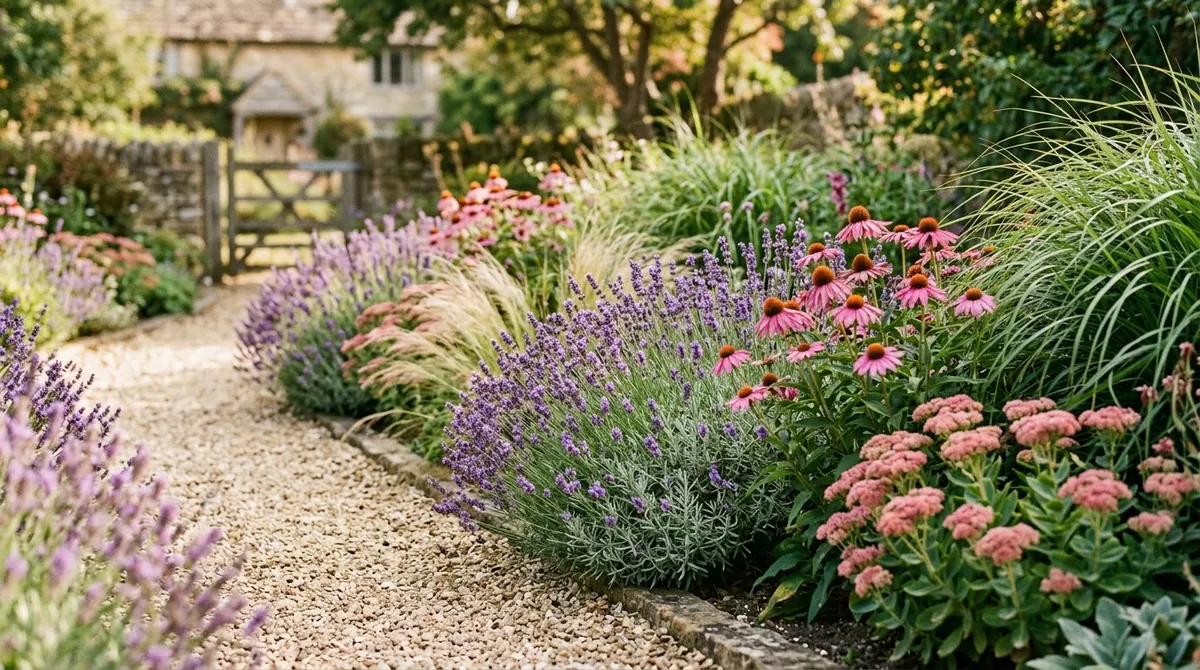
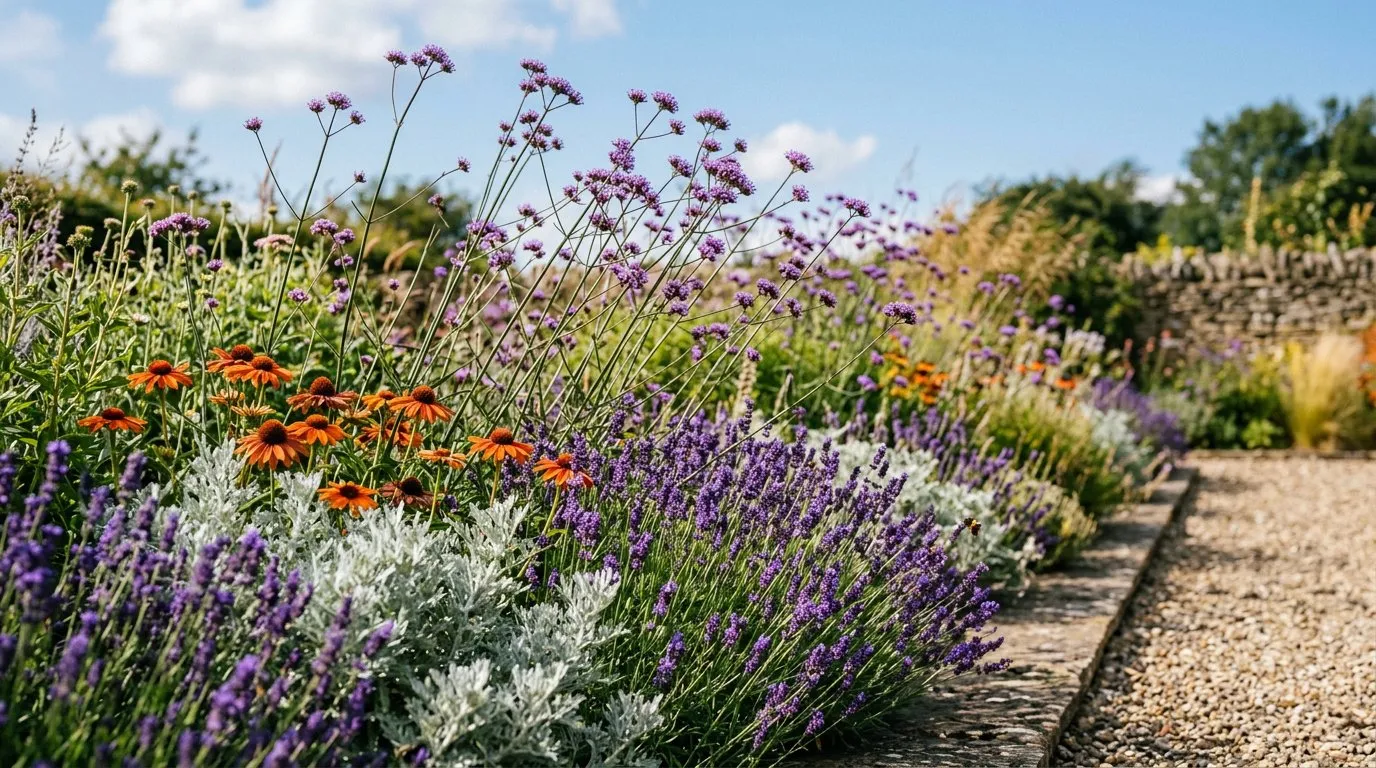 A drought-tolerant border in full summer bloom. Lavender, echinacea, and verbena need no watering once established.
Why we recommend Lavandula angustifolia ‘Hidcote’ as the single best drought-tolerant plant for most UK gardens: After 30 years of trialling lavender varieties across clay, chalk, and sandy soils, Hidcote consistently outperforms others in reliability. It survives the wettest UK winters because its compact habit sheds water rather than holding it at the crown. On a test border in Somerset that received no supplementary irrigation for three consecutive dry summers, Hidcote flowered abundantly every year while 11 other lavender varieties died back partially or completely.
Echinacea and verbena bonariensis are particularly valuable because they flower from midsummer into autumn when many other plants have finished. Both are excellent pollinator plants that attract bees and butterflies. Most of the drought-tolerant perennials listed here are also non-toxic to pets, making them a practical choice for households with dogs or cats — see our full list of pet-safe garden plants for more options.
Best drought-tolerant shrubs
Shrubs form the backbone of a drought-tolerant garden, providing structure and year-round interest.
Rosemary grows into a substantial evergreen shrub that needs no watering once established. Blue flowers in spring attract early bees. Plant in full sun with sharp drainage.
Cistus (rock rose) produces papery flowers in white, pink, or purple from May to July. Native to Mediterranean scrubland, it handles the driest UK conditions. Does not transplant well — plant small and leave undisturbed.
Ceanothus covers walls and fences with dense blue flowers in late spring. Californian native that thrives against sunny walls. Avoid heavy pruning — it does not regenerate from old wood.
Hebe provides evergreen structure with spikes of purple, white, or pink flowers. New Zealand native that handles coastal and dry conditions. Dozens of varieties from ground-hugging to 2-metre shrubs.
Buddleja (butterfly bush) grows vigorously in poor, dry soil and attracts hundreds of butterflies in summer. Cut hard back in March to prevent it becoming leggy. Self-seeds freely.
Ornamental grasses for dry gardens
Grasses are natural drought survivors. Their deep, fibrous root systems access moisture far below the surface, and their narrow leaves minimise water loss.
Stipa tenuissima (Mexican feather grass) — fine, blonde foliage that moves in the slightest breeze. 40-60cm tall. Self-seeds readily. The single most useful grass for dry gardens.
Stipa gigantea (golden oats) — dramatic 2-metre flower stems above a 60cm evergreen clump. Architectural presence in a border.
Miscanthus sinensis — tall (150-200cm), deciduous grass with silvery plumes in autumn. Excellent as a screen or focal point. Many named varieties with different foliage colours.
Festuca glauca — compact blue-grey tussocks 20-30cm tall. Excellent edging or ground cover. Perfectly suited to gravel gardens.
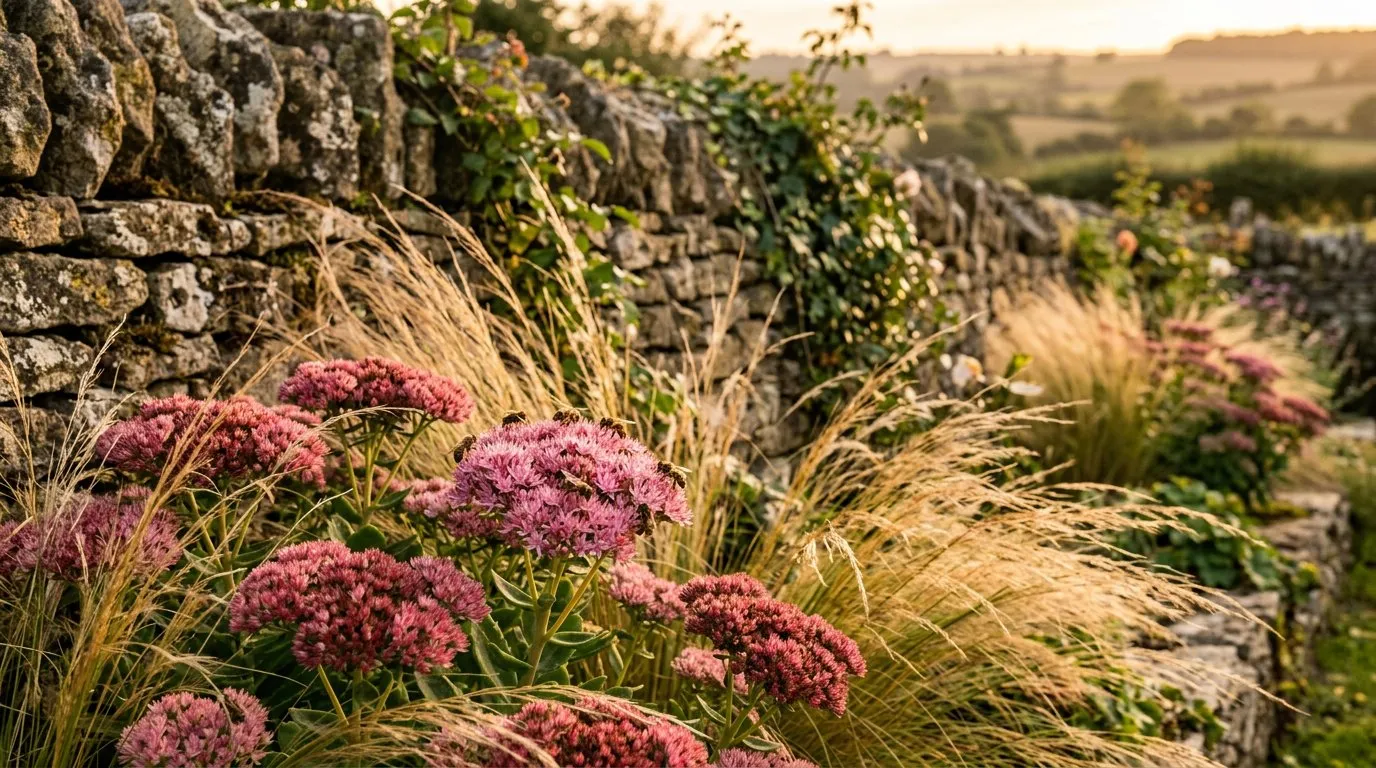 Sedum and ornamental grasses thrive in poor, dry soil. Late summer flowers provide vital nectar for bees.
Ground cover for dry areas
Bare soil between plants loses moisture rapidly through evaporation. Drought-tolerant ground cover plants solve this while adding interest and suppressing weeds. See our guide to lawn alternatives for more options.
Creeping thyme — aromatic, flowering, and tough enough to walk on. Fills gaps between paving and spills over path edges. Purple, pink, or white flowers in summer.
Sedum acre — tiny succulent leaves on spreading stems. Colonises cracks in walls, paving, and dry banks. Yellow flowers in summer.
Geranium macrorrhizum — semi-evergreen ground cover that handles both drought and shade. Pink or white flowers in May-June. Aromatic foliage. Our geranium growing guide covers the full range of hardy geraniums alongside tender pelargoniums for pots.
Ajuga reptans — bronze or purple foliage with blue flower spikes in spring. Spreads steadily to form a weed-suppressing carpet. Tolerates dry shade.
Planting and care
When to plant
Plant in autumn (September to November) for best results. Autumn planting gives roots a full winter to establish before facing their first summer. The soil is still warm and autumn rain keeps new plants hydrated naturally.
Spring planting works but requires careful watering through the first summer until roots develop.
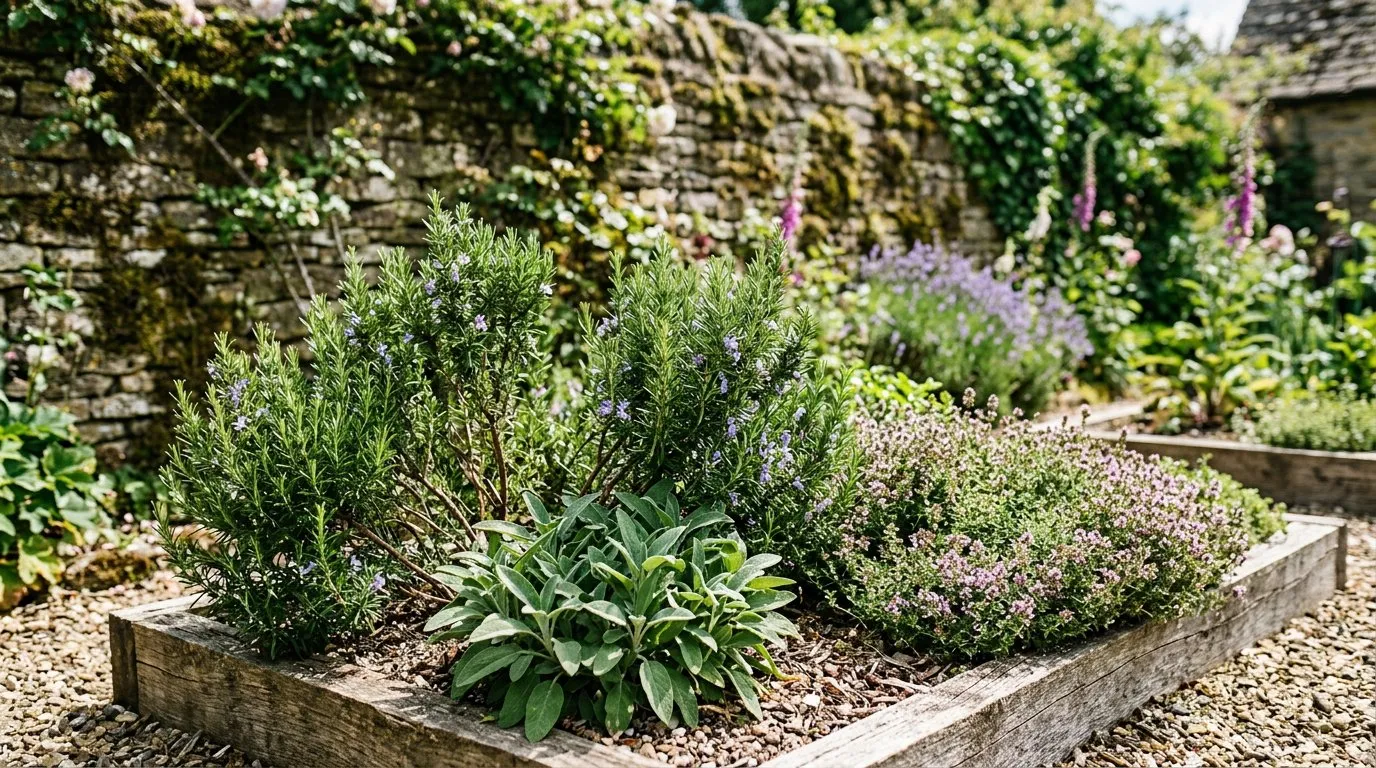 Mediterranean herbs in a raised gravel bed. Rosemary, thyme, and sage need lean soil and sharp drainage.
Soil preparation
Most drought-tolerant plants need well-drained soil above all else. Add horticultural grit to heavy clay soil at a ratio of one part grit to three parts soil. Do not add rich compost to Mediterranean plants — they prefer lean, poor soil that mimics their natural habitat. If you garden on naturally sandy soil, you already have ideal conditions for most species in this guide. See our full breakdown of best plants for sandy soil for species-specific performance data.
The first-year exception
Even the toughest drought-tolerant plants need regular watering during their first growing season. Water deeply once a week for the first summer until roots establish. After that, they should need no supplementary watering except during extreme heatwaves.
Tip: Overwatering kills more drought-tolerant plants than drought. Wet roots in winter are the biggest killer of Mediterranean species in UK gardens. Ensure drainage is excellent, especially in clay soil.
Now you have chosen your drought-tolerant plants, read our guide on lawn alternatives and ground cover to reduce the watered lawn area and extend your water-saving planting scheme across the whole garden.
Frequently asked questions
What plants survive drought in the UK?
Lavender, rosemary, sedum, ornamental grasses, echinacea, verbena bonariensis, and thyme all survive extended dry periods. Silver-leaved plants and those originating from Mediterranean, South African, or North American prairie habitats handle dry UK conditions naturally once their root systems establish.
Do drought-tolerant plants need any water?
Water regularly during the first growing season while roots establish in their new position. After that first year, most species need no supplementary watering except during extreme heatwaves lasting more than three consecutive weeks without rain.
Can drought-tolerant plants grow in shade?
Most drought-tolerant plants require full sun for at least six hours daily. For dry shade — one of the most challenging garden conditions — choose ferns like Dryopteris filix-mas, Epimedium, Geranium macrorrhizum, ivy, or Vinca minor. See our guide to shade plants for more options.
What soil do drought-tolerant plants need?
Most need well-drained soil that does not hold standing water. Add horticultural grit or pea gravel to heavy clay to improve drainage. Many Mediterranean species actively prefer poor, lean soil. Rich, fertile, moisture-retentive soil causes leggy growth and reduces flowering.
Are drought-tolerant plants low maintenance?
Generally yes, once established. They need less watering, less feeding, and tolerate periods of neglect. Most require only an annual trim in spring to remove dead growth. They rarely suffer from the moisture-related pests and diseases that affect heavily watered plants.
When should I plant drought-tolerant plants?
Plant in autumn between September and November for best establishment. Soil is still warm from summer, and autumn rain provides natural irrigation through winter. Roots develop strongly before facing their first dry summer, dramatically reducing the need for supplementary watering.
Lawrie has been gardening in the West Midlands for over 30 years. He grows his own veg using no-dig methods, keeps a wildlife-friendly garden, and writes practical advice based on real UK growing conditions.