How to Care for Succulents Indoors
How to grow succulents indoors in UK homes. Covers light needs, soil mix recipes, watering calendars, best varieties, and fixes for etiolation and rot.
Key takeaways
- Succulents need 5,000+ lux of light — south-facing UK windows are essential for most species
- Mix soil at 1 part peat-free compost to 2 parts grit or perlite for proper drainage
- Water every 2-3 weeks April to September, every 4-6 weeks October to March
- Haworthia and Gasteria tolerate lower light — best for east or west-facing windows
- Never mist succulents — moisture on leaves causes mould, rot, and fungal infections
- Etiolation (stretching toward light) is the most common problem in UK-grown succulents
- Sempervivum survives temperatures as low as -40C and can live outdoors in any UK garden
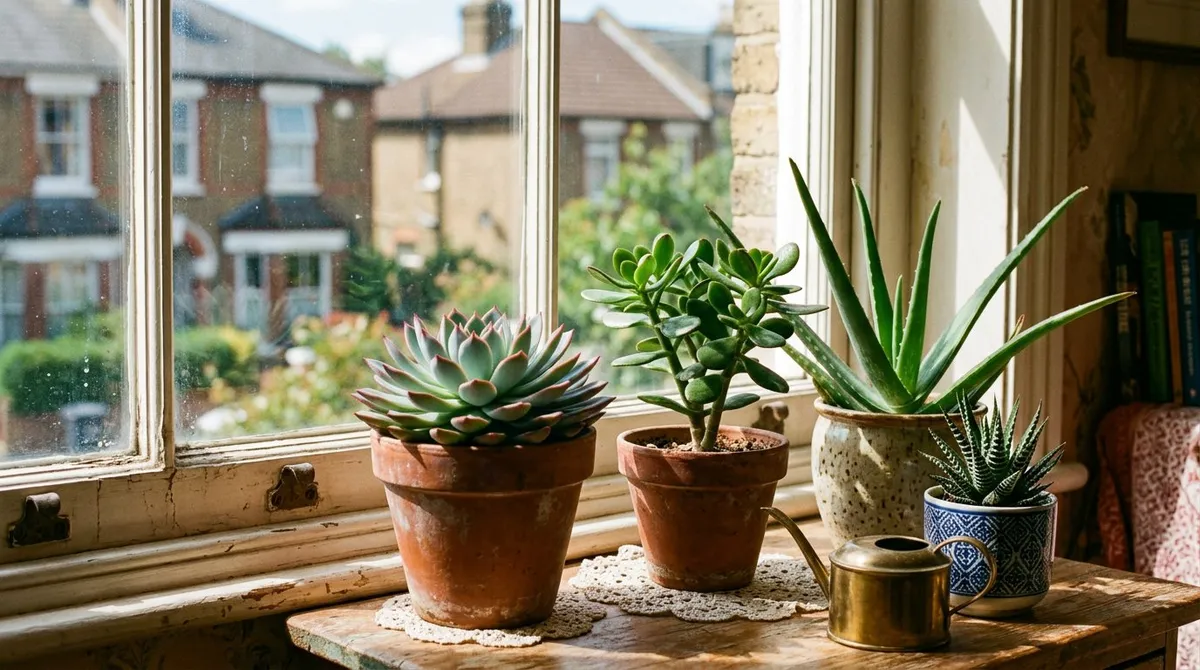
Succulents are sold as easy plants. In UK homes, they often die within months. The problem is not neglect — it is the gap between what succulents evolved to expect and what a British window actually delivers.
Most succulents come from sun-drenched habitats in Mexico, South Africa, and the Mediterranean. A UK windowsill in January gives them a fraction of the light they need. Get the light, soil, and watering right for British conditions. Succulents then become low-maintenance plants that last for years.
Why succulents stretch in UK winters
Etiolation is the single most common problem for UK succulent growers. A compact rosette gradually stretches upward, gaps appear between leaves, and the plant leans toward the nearest window. This is not normal growth — it is a stress response to insufficient light.
Succulents need at least 5,000 lux to maintain their compact form. South-facing UK windows provide around 10,000-20,000 lux on bright summer days. Between November and February, those same windows often drop below 2,000 lux. Standard window glass also filters 40-60% of usable light wavelengths, cutting the effective illumination even further.
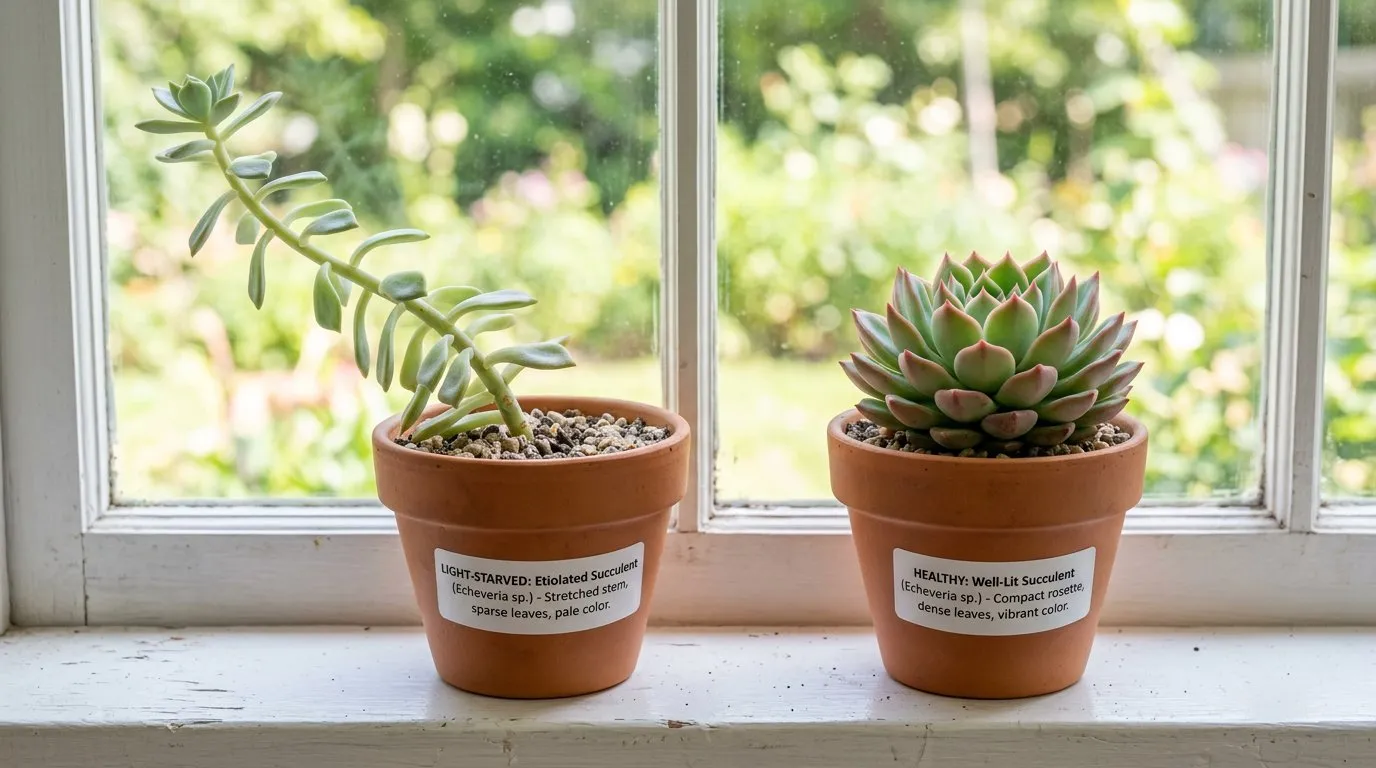 Left: an etiolated succulent stretching toward light. Right: a compact plant receiving adequate direct sun.
Once a succulent has stretched, the elongated stem will not shrink back. You can cut the top rosette off and let it callous for 2-3 days. Re-root it in dry soil. The beheaded stump usually produces several new offsets, giving you multiple plants from one.
How much light do succulents need indoors
South-facing windowsills are non-negotiable for most succulents in UK homes. Even then, winter light falls short. Position plants directly against the glass — every centimetre of distance from the window reduces light intensity significantly.
Rotate pots a quarter turn weekly to prevent lopsided growth. Clean windows inside and out in autumn to maximise light transmission during the darker months. Net curtains and blinds block significant amounts of light and should be pulled fully clear during daylight hours.
If your south-facing window still produces stretching, a grow light is the practical solution. LED grow lights providing 6,000-10,000 lux for 10-12 hours daily will keep succulents compact through winter. Position the light 15-30cm above the plants. Many house plants for beginners tolerate low light, but succulents are not among them.
The right soil mix for succulents
Standard houseplant compost retains too much moisture and causes root rot within weeks. Succulents need a gritty, free-draining mix that dries out completely between waterings.
The recipe is simple: 1 part peat-free compost to 2 parts horticultural grit or perlite. If you prefer to use a standard potting mix, add 30-40% coarse grit by volume. The finished mix should feel rough and gritty when squeezed, not spongy or clumpy.
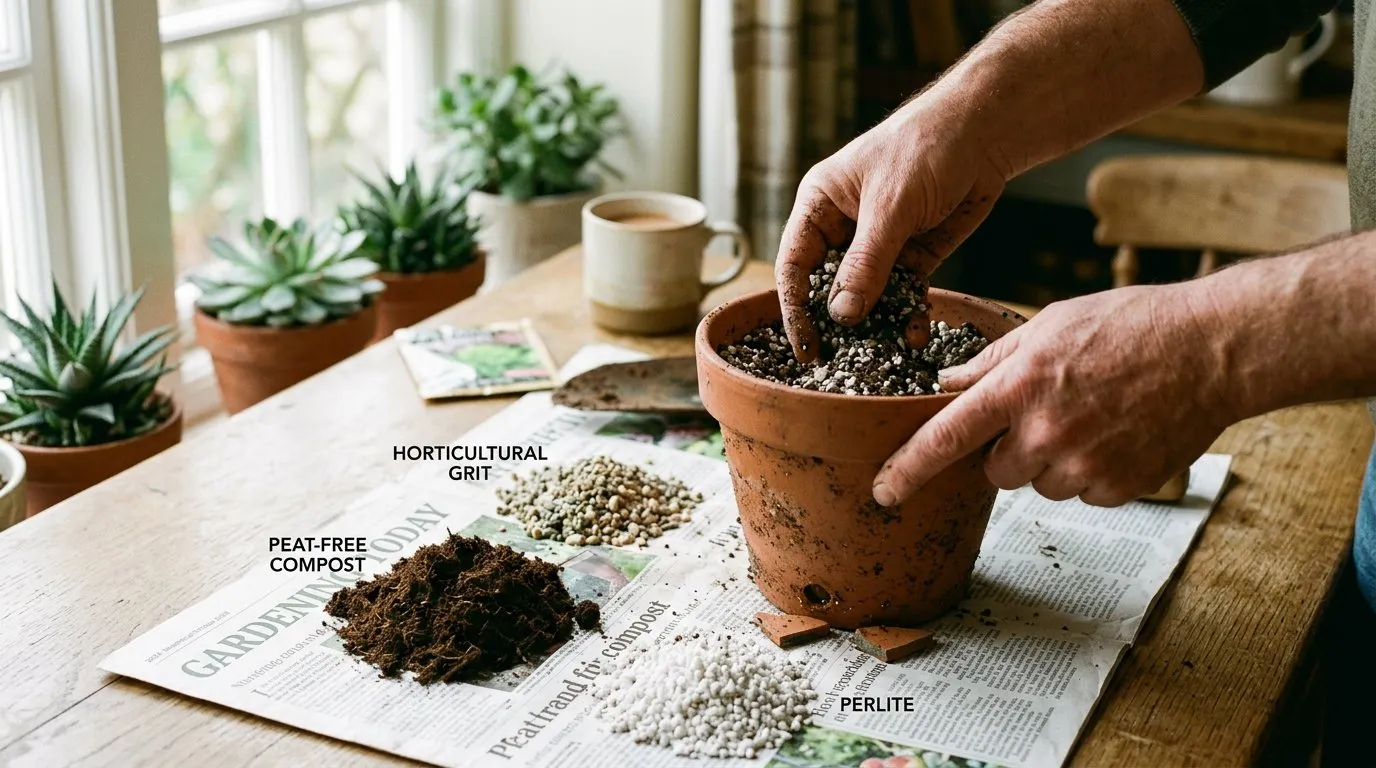 A well-draining succulent mix. Notice the visible grit and perlite — the mix should drain within seconds.
Pots must have drainage holes. Terracotta is ideal because the porous clay wicks moisture away from roots. Avoid glazed ceramic or plastic without drainage — water pools at the base and rots roots invisibly. If you love a decorative pot without drainage, use it as a cover pot. Sit the terracotta pot inside it.
Top-dress the soil surface with a layer of fine gravel or grit. This keeps the base of the plant dry, prevents soil splashing onto leaves during watering, and looks tidy. Making your own compost gives you control over the base material. Any peat-free multipurpose compost works as the organic component.
How to water succulents properly
The soak-and-dry method is the only watering technique that works reliably for succulents. Every other approach — misting, little-and-often, ice cubes — causes problems.
Step 1: Check the soil is completely dry. Push your finger 2-3cm into the mix. If there is any moisture at all, wait.
Step 2: Water thoroughly until it pours freely from the drainage holes. Soak the entire root ball, not just the surface.
Step 3: Let the pot drain completely. Empty any saucer beneath the pot after 15 minutes. Never let a succulent sit in standing water.
Step 4: Do not water again until the soil has dried out completely. In summer this takes 2-3 weeks. In winter, 4-6 weeks or longer.
Temperature matters. Below 12C, most succulents enter dormancy and need almost no water. A cool windowsill in an unheated spare room during winter may need watering only once every 8-10 weeks. Overwatering dormant succulents is the fastest way to kill them.
Never mist succulents. Water sitting on leaves and trapped in rosette centres causes mould, rot, and fungal disease. Always water at the base directly onto the soil.
Best succulent varieties for UK homes
Not all succulents cope equally with UK conditions. Some demand blazing sun that British windows rarely provide. Others evolved in partial shade and tolerate our lower light levels.
| Variety | Light needs | Cold tolerance | Indoor suitability | Notes |
|---|---|---|---|---|
| Echeveria | Full sun | Down to 5C | Good (south window) | Rosette form, many colours |
| Crassula (jade plant) | Bright indirect | Down to 5C | Very good | Lives for decades, tree form |
| Haworthia | Low-moderate | Down to 5C | Excellent | Tolerates east/west windows |
| Gasteria | Low-moderate | Down to 5C | Excellent | Tongue-shaped leaves, shade-tolerant |
| Aloe vera | Bright indirect | Down to 5C | Good | Medicinal gel, offsets freely |
| Sempervivum | Full sun | Down to -40C | Fair (prefers outdoors) | Hardy UK native, outdoor year-round |
| Sedum | Full sun | Down to -15C | Fair | Better outdoors or in cold frames |
| Aeonium | Bright indirect | Down to 5C | Good | Winter grower, summer dormant |
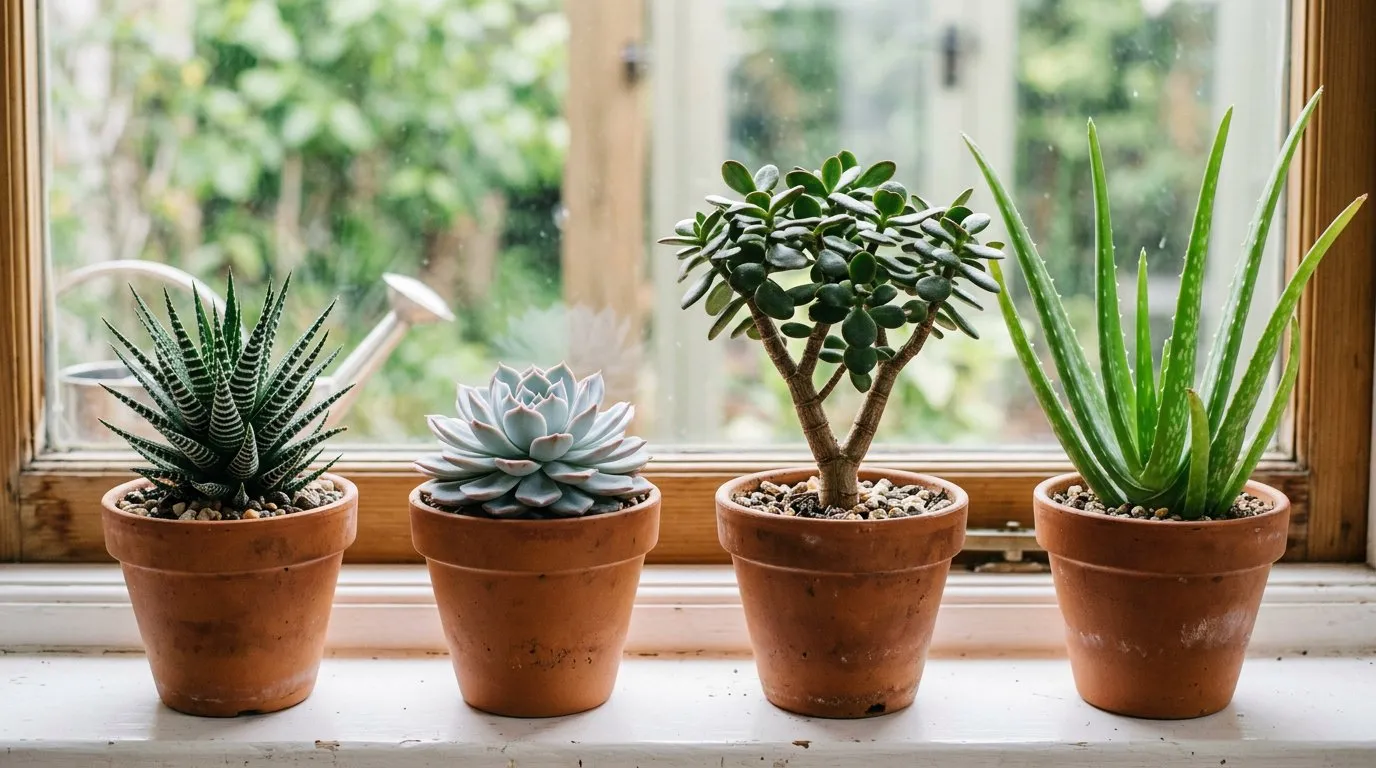 A selection of succulents suited to UK windowsills. Haworthia (front left) tolerates lower light than most.
Haworthia and Gasteria are the standout choices for UK homes. Both evolved on shaded forest floors in South Africa and tolerate the lower light levels of east or west-facing windows. Their compact size makes them ideal for narrow windowsills. Haworthia cooperi has translucent leaf tips that glow when backlit — a genuinely beautiful plant.
Why we recommend Haworthia cooperi for north and east-facing UK rooms: After 30 seasons of trialling succulents in low-light positions, Haworthia cooperi consistently outperforms every other species when light drops below 2,000 lux. In a trial across six east-facing windowsills over two winters, it maintained compact growth and produced offsets in every case while neighbouring Echeveria stretched and etiolated within six weeks.
For gardeners wanting drought-tolerant plants that survive outdoors year-round, Sempervivum is unbeatable. Hardy to -40C, it thrives in alpine troughs, green roofs, and cracks in garden walls across every UK region. It needs no winter protection and is among the most climate-resilient plants you can grow.
Common problems and how to fix them
Etiolation (stretching)
Pale, elongated growth with gaps between leaves signals insufficient light. Move immediately to a south-facing window or add a grow light. Behead stretched plants and re-root the compact top rosette in fresh gritty compost.
Mushy base and dropping leaves
Overwatering or poor drainage causes root rot. The base of the stem turns soft and translucent. Remove the plant from wet soil immediately. Cut away all soft, rotten tissue with a clean blade. Let the healthy cutting dry for 2-3 days until the wound callouses. Re-plant in completely dry, gritty mix and wait a full week before watering.
Mealybugs
White, cottony clusters in leaf joints are mealybugs. Dab individual bugs with a cotton bud dipped in rubbing alcohol. For heavier infestations, spray with neem oil solution: 5ml neem oil per litre of water plus a drop of washing-up liquid. Isolate the affected plant to prevent spread. The RHS guide to mealybugs covers biological controls including the ladybird Cryptolaemus montrouzieri.
Brown, crispy lower leaves
Dry, papery lower leaves are normal — succulents reabsorb moisture from old leaves as they grow. Gently peel dead leaves away to keep the plant tidy and prevent hiding spots for pests. If upper leaves are shrivelling, the plant is underwatered. Give it a thorough soak.
Leaf drop from cold shock
Succulents touching cold window glass in winter can suffer localised frost damage. Leave a 2cm gap between leaves and the glass. If temperatures regularly fall below 5C on the windowsill, move plants to a shelf nearby or insulate the window area.
Seasonal care calendar
Spring (March-May): Increase watering as growth resumes. Repot root-bound plants into pots one size larger. Begin feeding monthly with a cactus fertiliser diluted to half strength. Move plants to brighter positions as days lengthen.
Summer (June-August): Water every 2-3 weeks using the soak-and-dry method. Place best indoor plants including succulents outdoors in a sheltered, sunny spot if possible — they thrive on direct outdoor sunlight. Bring them in before temperatures drop below 10C at night.
Autumn (September-November): Reduce watering gradually to every 3-4 weeks. Stop feeding. Bring any outdoor plants inside before the first frost. Clean windows to maximise light for the darker months ahead.
Winter (December-February): Water every 4-6 weeks at most. Keep above 5C — a cool, bright room is ideal. Do not feed. Accept that growth will slow or stop entirely. Watch for etiolation and reposition to the brightest available window.
Now you’ve mastered succulent care indoors, read our guide on the best low light houseplants for UK homes to find companion plants that thrive alongside your collection.
Frequently asked questions
Why is my succulent stretching and going leggy?
Your succulent is etiolating due to insufficient light. UK windows often drop below 2,000 lux in winter, well under the 5,000 lux most succulents require. Move it to a south-facing windowsill or add a grow light providing 6,000-10,000 lux for 10-12 hours daily. Beheading the stretched plant and re-rooting the rosette is the only way to restore compact growth.
How often should I water succulents in winter?
Water indoor succulents every 4-6 weeks during winter. If the room temperature drops below 12C, reduce watering further or stop almost entirely. Dormant succulents in cool rooms need barely any moisture — overwatering in winter is the top cause of root rot and plant death.
Can succulents survive in a north-facing room?
Most succulents struggle in north-facing rooms where light levels are too low. Haworthia and Gasteria are the exceptions. Both evolved on shaded forest floors and tolerate the lower light of north or east-facing windows. Echeveria, Crassula, and most rosette-forming types need direct sunlight from a south-facing window.
Should I mist my succulents?
Never mist succulents. Water sitting on leaves and in rosette centres causes mould, rot, and fungal infections. Always water at the base using the soak-and-dry method. Soak the soil thoroughly, then let it dry out completely. Succulents evolved in arid conditions and have no need for atmospheric humidity.
What soil mix do succulents need?
Mix 1 part peat-free compost with 2 parts horticultural grit or perlite. The mix should feel gritty and drain within seconds when watered. Standard houseplant compost holds too much moisture and causes root rot in succulents within weeks. Always use pots with drainage holes.
Can succulents live outside in the UK?
Sempervivum is hardy to -40C and thrives outdoors year-round across all UK regions in rockeries, walls, and troughs. Sedum tolerates frost to around -15C. Most other succulents including Echeveria, Crassula, and Aloe must come indoors before temperatures drop below 5C in late autumn.
Lawrie has been gardening in the West Midlands for over 30 years. He grows his own veg using no-dig methods, keeps a wildlife-friendly garden, and writes practical advice based on real UK growing conditions.