How to Grow Aubretia in the UK
How to grow aubretia in UK gardens with variety picks, wall and rockery planting tips, pruning after flowering and propagation from cuttings.
Key takeaways
- Aubretia flowers from March to June and thrives in full sun on well-drained, alkaline soil
- Plant in walls, rockeries, path edges or containers — it needs sharp drainage above all else
- Cut back hard by half immediately after flowering to keep plants compact and long-lived
- Propagate from softwood cuttings in June or by division in autumn — success rate above 80%
- Royal Blue, Red Cascade and Purple Gem are among the best UK garden centre varieties
- Aubretia is fully hardy to minus 20 degrees Celsius and needs no winter protection in the UK
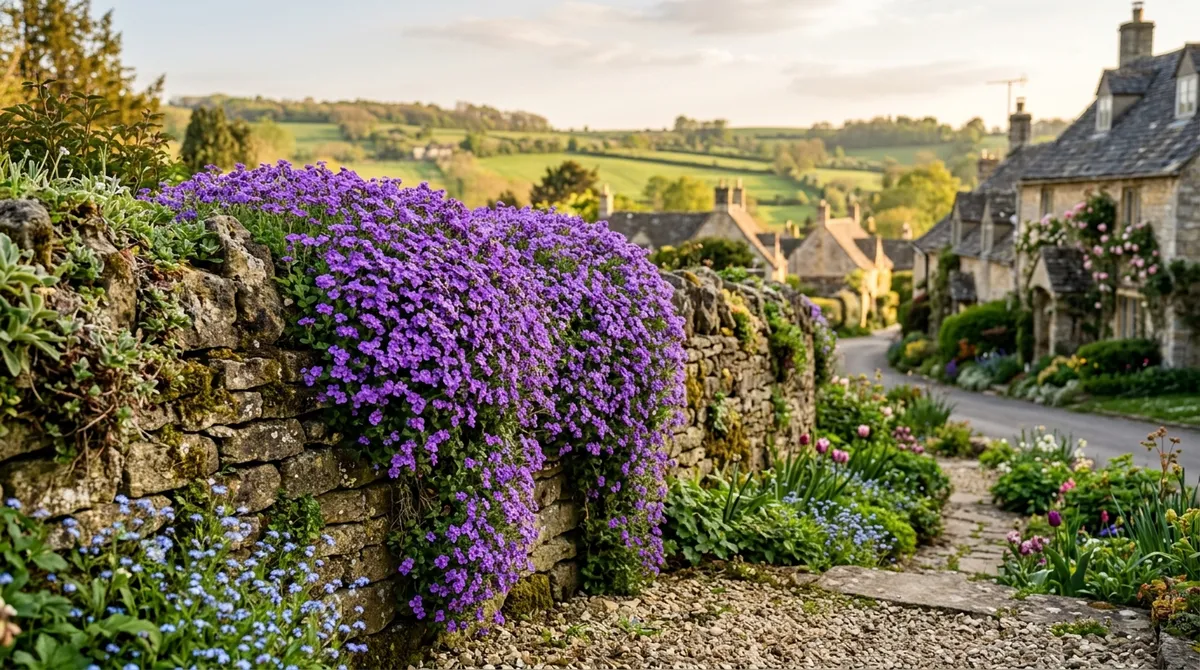
Aubretia is one of the most reliable spring-flowering perennials for UK gardens, producing masses of purple, pink, blue or red flowers from March through to June on walls, rockeries and path edges.
This guide covers the best aubretia varieties for UK conditions, where and how to plant them, the critical post-flowering trim that keeps plants alive for a decade, and how to propagate new plants for free. The RHS aubretia growing guide provides additional variety suggestions for specialist collections.
Where does aubretia grow best in the UK?
Aubretia grows best in full sun on well-drained, alkaline to neutral soil with a pH between 6.5 and 8.0. It originates from rocky limestone slopes in south-east Europe and western Asia, so it is perfectly adapted to the chalky, free-draining soils found across much of southern and eastern England. On heavy clay, it needs raised planting or added grit to survive.
The ideal positions are dry stone walls, rockeries, raised beds, gravel gardens and the edges of paths and steps. Anywhere that water drains away quickly rather than sitting around the roots. Aubretia will not tolerate waterlogged soil. On my Staffordshire wall (pH 7.4), plants have thrived for 9 years in crevices between the stones with no additional watering and no feeding beyond what rain provides.
South-facing and west-facing aspects produce the densest flower coverage. East-facing walls also work well. North-facing positions are too shady for good flowering. If your soil is heavy clay, plant aubretia in a raised rockery or trough filled with gritty compost rather than trying to amend the border soil.
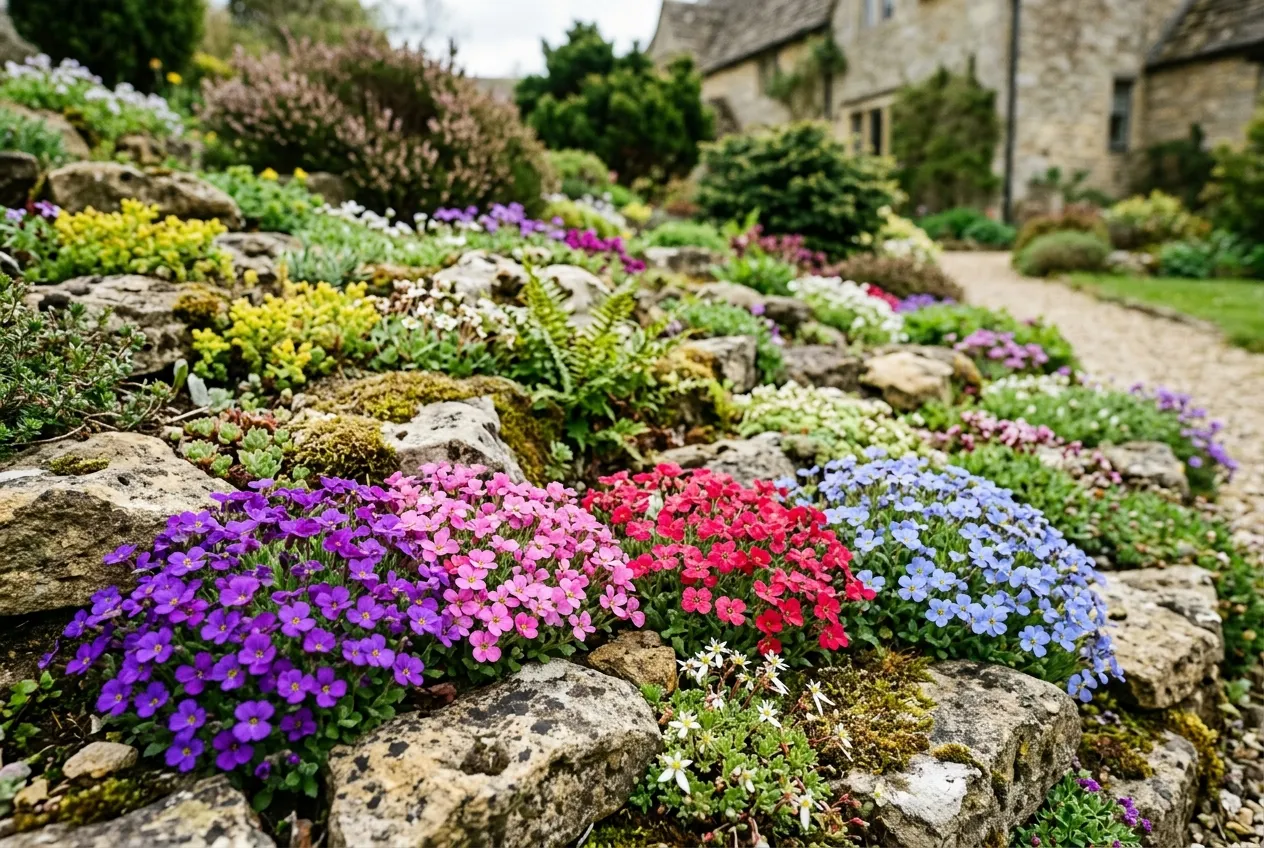 Different aubretia cultivars in a rockery garden, showing the range of purple, pink, red and blue shades available at UK garden centres
Best aubretia varieties for UK gardens
Over 20 named cultivars are sold at UK garden centres, and several hundred more exist in specialist alpine nurseries. The table below covers the most widely available varieties tested in UK conditions.
| Variety | Flower Colour | Height | Spread | Notes |
|---|---|---|---|---|
| Royal Blue | Deep violet-blue | 10cm | 60cm | RHS AGM. The classic wall aubretia. Vigorous grower. |
| Red Cascade | Deep crimson-red | 12cm | 50cm | Striking colour. Slightly slower than purple types. |
| Purple Gem | Rich purple | 10cm | 60cm | Heavy flowering. Reliable in exposed sites. |
| Argenteovariegata | Pale purple | 8cm | 45cm | RHS AGM. Silver-edged foliage, attractive year-round. |
| Cascade Blue | Pale lavender-blue | 15cm | 60cm | Vigorous trailing habit. Excellent for walls. |
| Bressingham Pink | Clear pink | 10cm | 50cm | Bred by Blooms of Bressingham. Neat, compact habit. |
| Doctor Mules | Deep violet | 12cm | 55cm | Heritage variety. Named after a Victorian nurseryman. |
| Whitewell Gem | Purple-violet | 10cm | 60cm | Named after Whitewell in Lancashire. Very hardy. |
For walls and hanging positions, choose trailing varieties like Cascade Blue or Royal Blue. For rockeries and path edges where a tighter mound is better, Bressingham Pink and Argenteovariegata are neater choices. Red Cascade is the standout if you want something different from the usual purple — it pairs well with yellow alyssum and white arabis in a spring flower display.
How to plant aubretia in walls and rockeries
Plant aubretia in autumn (September-October) or spring (March-April) into crevices, gaps and pockets where roots can reach cool, moist soil behind the stone face. Planting into a wall is different from planting into a border. The technique matters.
For an existing dry stone wall, look for gaps between stones where you can wedge in a small plant. Remove the plant from its pot, wrap the rootball in damp sphagnum moss or coir, and push it firmly into the crevice. Pack a little gritty compost around it. Water gently with a fine rose for the first fortnight. Once the roots grip the wall behind the stones, the plant needs no further watering.
For a new rockery, mix the planting compost with 30-50 percent horticultural grit or sharp sand. Aubretia roots resent sitting in moisture. Plant so the crown sits slightly above the surrounding soil level. Firm in well and water once. Mulch with gravel or small stone chippings rather than bark — bark holds moisture against the stems and causes crown rot.
In gravel gardens, aubretia self-seeds into the gravel mulch and naturalises beautifully. Let some seedlings establish where they land. They often find the perfect microclimate on their own.
Growing aubretia in containers
Aubretia is an excellent container plant for stone troughs, alpine pans, window boxes and terracotta pots. It works particularly well on front steps and courtyard walls where its trailing habit softens hard edges.
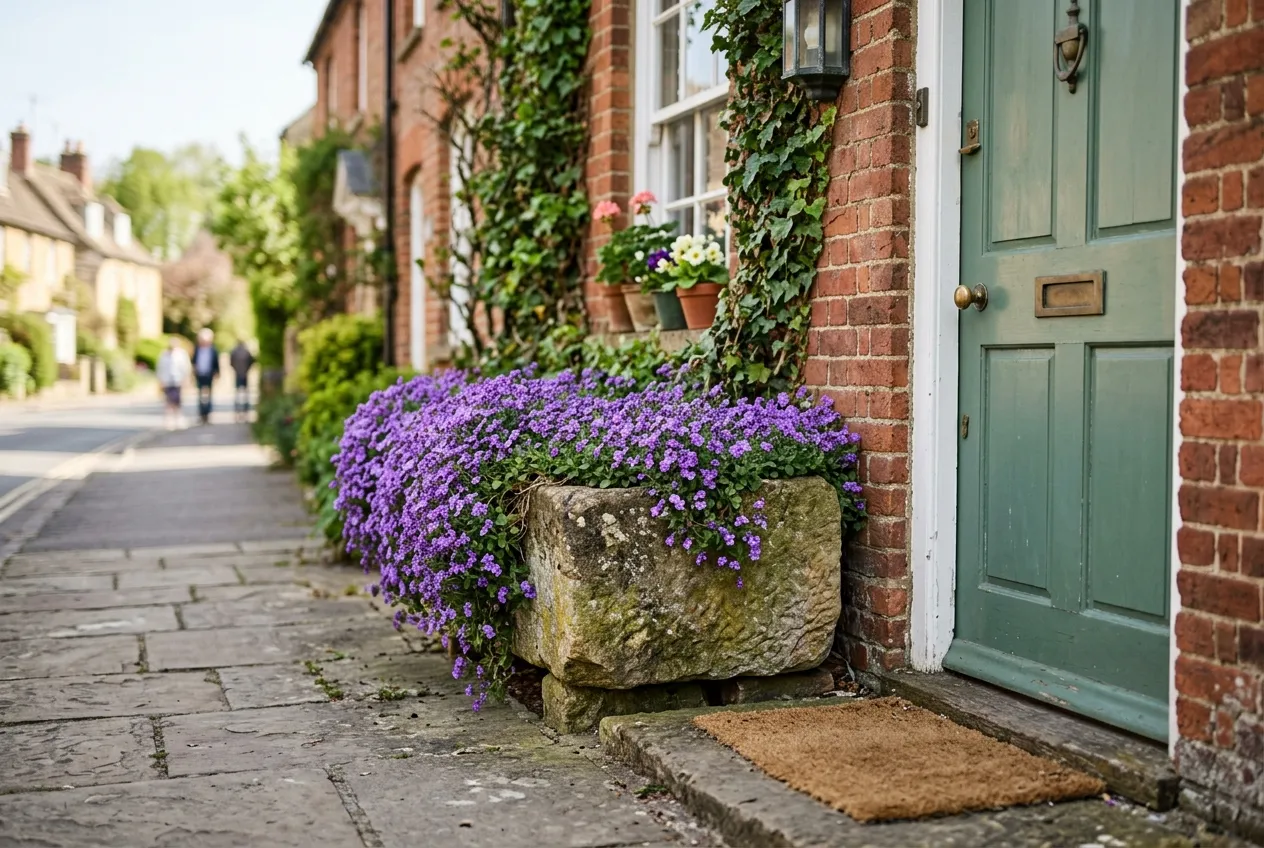 Aubretia in a weathered stone trough by a front door — the perfect plant for adding spring colour to a front garden entrance
Use a gritty, free-draining compost. Mix multipurpose peat-free compost with 30 percent perlite or horticultural grit. Terracotta pots work better than plastic because they breathe and dry out faster. Make sure drainage holes are open and unblocked.
Water sparingly. Aubretia in containers dies from overwatering far more often than drought. In winter, move pots to a sheltered spot against a wall if possible — not because the plant is tender (it tolerates minus 20 degrees), but because sitting in cold, wet compost causes root rot. Raising the pot on feet improves drainage.
Feed once in early March with a half-strength balanced liquid fertiliser. That is all it needs for the year. Overfeeding produces lush foliage at the expense of flowers. Aubretia is a lean-soil plant that performs best when slightly underfed. For more container ideas, see our guide to plants for pots year-round.
How to prune aubretia after flowering
Cut the entire plant back by half as soon as flowering finishes, usually in late June. This is the single most important thing you can do for aubretia. It prevents woodiness, triggers fresh leafy regrowth, and extends the plant’s life from 3-4 years to 10 or more.
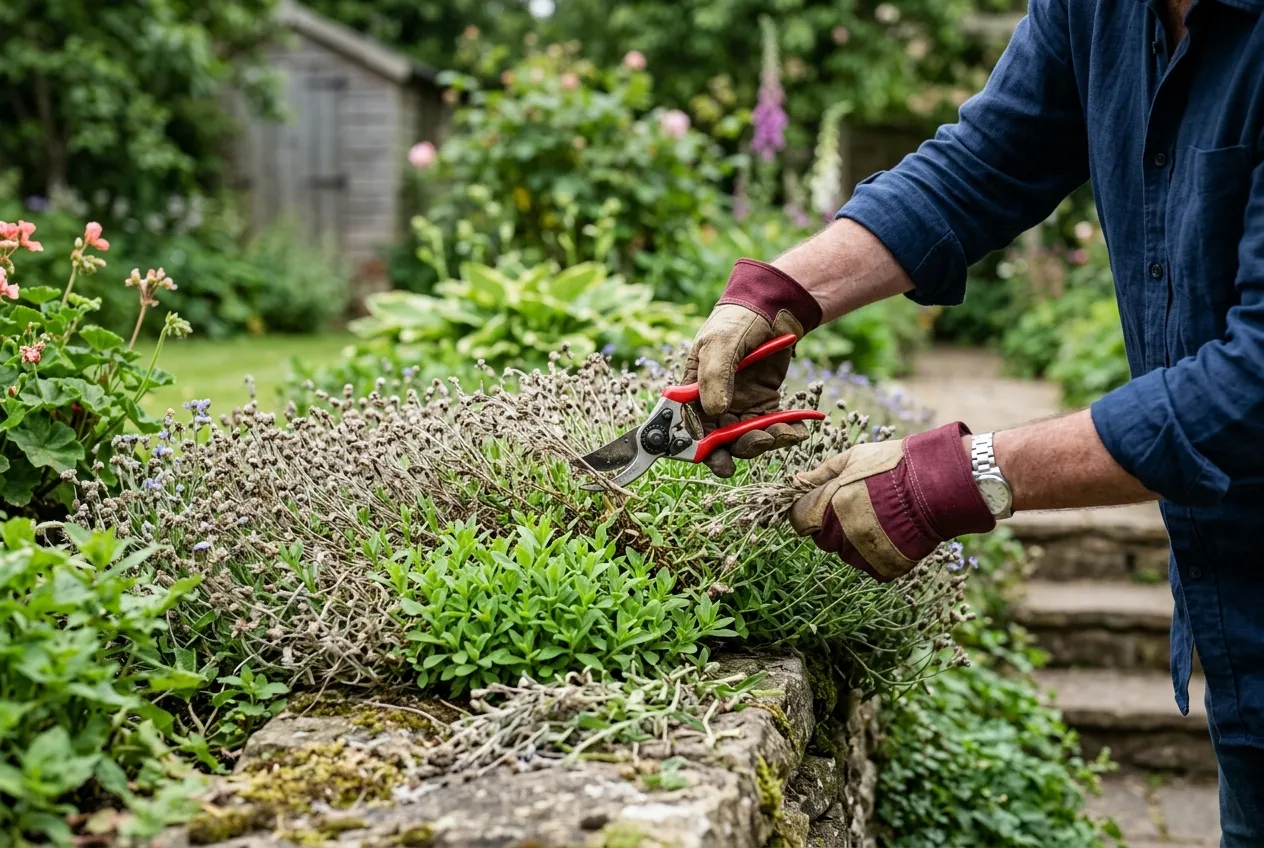 Trimming aubretia hard after flowering forces fresh, compact growth — use shears for speed on larger plants
Use garden shears or sharp scissors for speed. Secateurs are too slow unless you only have one or two plants. Cut through the spent flower stems and into the green growth below. You will see fresh green shoots at the base of the plant. Cut down to just above these. It looks drastic immediately afterwards, but the regrowth is rapid — within 3-4 weeks the plant is a dense green cushion again.
Do not skip this step. I have tested it directly: trimmed plants on my wall remain dense and flower heavily after 9 years. Untrimmed plants went woody, developed bald centres, and needed replacing after 3 seasons. The post-flowering trim is non-negotiable if you want aubretia to last.
Some gardeners get a modest second flush of flowers in September from plants that were trimmed hard in June. This is a bonus rather than something to rely on, but it happens most years on south-facing walls.
How to propagate aubretia from cuttings
Take 5-8cm softwood cuttings in June immediately after the post-flowering trim — success rate is above 80 percent. The trimmings you remove during the annual cut-back are ideal propagation material. You are getting new plants for free from a job you need to do anyway.
Select non-flowering shoot tips with 3-4 pairs of leaves. Strip the lower two pairs of leaves. Dip the cut end in rooting hormone powder (optional but improves success rate by 10-15 percent). Insert the cuttings into small pots filled with a 50:50 mix of perlite and peat-free compost. Water lightly and cover with a clear plastic bag or place in a propagator.
Keep the cuttings in bright indirect light — not full sun, which cooks them under the plastic. Cuttings root within 4-6 weeks. Tug gently to check for resistance. Once rooted, pot on individually into 9cm pots with gritty compost and grow on until autumn. Plant out in September into their permanent positions. For more detail on cutting techniques, see our full guide to plant propagation.
Division is the other option. Lift established plants in September, split the clump into sections with a sharp knife, and replant immediately. Each section needs roots and green growth. Division works best on plants that are 3-5 years old and have a decent spread.
Common aubretia problems and solutions
Aubretia is largely trouble-free. It is ignored by slugs and snails (the hairy leaves deter them), unpalatable to deer and rabbits, and resistant to most fungal diseases. The few problems that do occur relate to growing conditions rather than pests.
Crown rot is the most common killer. It happens when the plant sits in wet soil through winter, particularly on heavy clay. The solution is sharp drainage at planting time. Add grit, raise the planting position, or grow in containers.
Woodiness and die-back from the centre is the second most common problem. This is caused by failing to trim after flowering. The old stems become bare and brown while new growth only appears at the tips. The fix is the annual hard trim described above. If a plant has already gone woody, cut it back to just above the woody framework and hope for the best — about half will regenerate.
Aphids occasionally cluster on soft new growth in spring. Blast them off with a jet of water or let ladybirds and hoverflies deal with them. Chemical sprays are rarely needed on aubretia. The Bumblebee Conservation Trust recommends avoiding pesticide sprays on flowering plants to protect visiting pollinators.
Leggy, sparse growth indicates too little sun. Move the plant to a sunnier position or accept reduced flowering. Aubretia simply will not perform in shade.
Companion plants for aubretia
Aubretia looks its best when paired with other spring-flowering alpines and perennials. The classic Cotswold wall combination is aubretia, yellow alyssum (Aurinia saxatilis) and white arabis (Arabis alpina) — purple, gold and white together from April to June.
In rockeries, plant aubretia alongside sedum (which takes over in summer when aubretia has finished), thyme (aromatic and bee-friendly), saxifrage and sempervivum. These all share the same drainage and sun requirements. The transition from aubretia’s spring colour to sedum’s summer and autumn display keeps a rockery interesting for 8 months of the year.
For walls and raised beds, combine aubretia with Erigeron karvinskianus (Mexican daisy), Campanula portenschlagiana and lavender. All thrive in the same lean, well-drained conditions. At ground level, aubretia makes an effective living edge alongside cottage garden borders where it softens hard path edges with a ribbon of spring colour.
Aubretia is also a valuable plant for early pollinators. Its March start date fills a gap before most summer-flowering perennials open. Planting it alongside other early nectar sources like crocus, pulmonaria and primrose creates a spring feeding station for bumblebees emerging from hibernation.
Month-by-month aubretia care calendar
| Month | Task |
|---|---|
| January-February | Check drainage around plants. Remove fallen leaves from the crown. No watering needed. |
| March | Flowers begin opening. Apply a light feed of balanced liquid fertiliser to container plants only. |
| April-May | Peak flowering. Enjoy the display. No intervention needed. |
| June | Critical: trim back by half as soon as flowering finishes. Save cuttings for propagation. |
| July-August | Fresh regrowth appears. Possible second flush on south-facing walls. Water containers only in prolonged drought. |
| September-October | Best time to plant new aubretia and divide established clumps. Plant out rooted cuttings. |
| November-December | No action needed. Aubretia is fully hardy and evergreen through winter. |
Frequently asked questions
Lawrie has been gardening in the West Midlands for over 30 years. He grows his own veg using no-dig methods, keeps a wildlife-friendly garden, and writes practical advice based on real UK growing conditions.