How to Grow Hydrangeas in the UK
A practical guide to growing hydrangeas in UK gardens. Covers types, planting, pruning groups, colour changing, feeding, and container growing.
Key takeaways
- 5 hydrangea types suit UK gardens: mophead, lacecap, paniculata, climbing, and oakleaf
- Soil pH controls flower colour in macrophylla types: below 5.5 for blue, above 6.5 for pink
- Pruning splits into 2 groups: Group 1 (old wood) and Group 2 (new wood) with different timing
- Hydrangeas tolerate partial shade and perform well on north and east-facing walls
- Add aluminium sulphate at 3g per litre of water every 2 weeks to turn flowers blue
- Container hydrangeas need 40-litre pots minimum and ericaceous compost for blue flowers
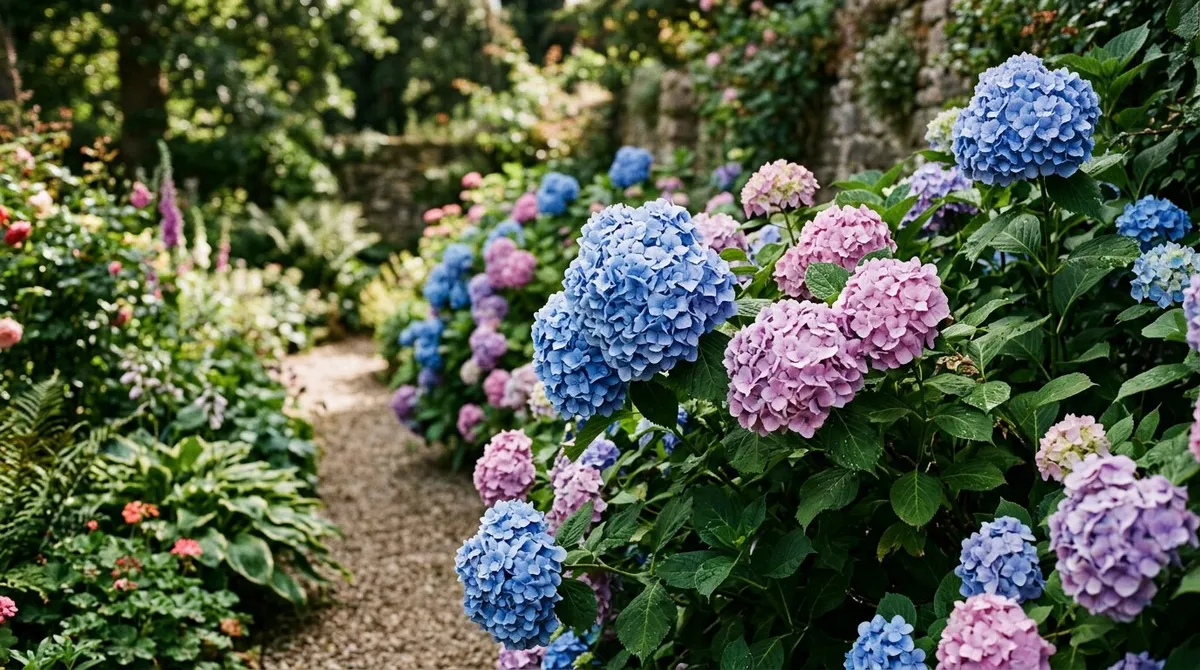
Hydrangeas are one of the most rewarding flowering shrubs for UK gardens. They thrive in the mild, damp conditions that define British summers and flower reliably from June to October. Few other shrubs offer such large, showy blooms with so little effort.
Acid soil turns flowers vivid blue while chalky ground keeps them pink, and there is a hydrangea for every UK garden. This guide covers the five main types grown in Britain, with practical advice on planting, pruning, feeding, and the science behind changing flower colour. If you are working with a shady site, hydrangeas also feature in our guide to the best plants for shade in UK gardens.
Types of hydrangeas for UK gardens
Choosing the right type is the first step. Each has different growth habits, flower forms, and pruning requirements.
Mophead hydrangeas (Hydrangea macrophylla)
Mophead hydrangeas are the most familiar type in UK gardens. Their large, round flower heads measure 15-25cm across and last from July to September. Colours range from deep blue through mauve and pink to white, depending on soil pH.
Popular UK varieties:
- Endless Summer - re-blooming, flowers on both old and new wood, reducing the risk of losing blooms to late frost or pruning errors. Blue in acid soil, pink in alkaline.
- Nikko Blue - deep, reliable blue in acid soil. Compact habit, reaching 1.2m. One of the most popular mopheads in the UK.
- Ayesha - unusual cupped petals resembling lilac flowers. Pale pink or lilac-blue. Subtly fragrant. Reaches 1.5m.
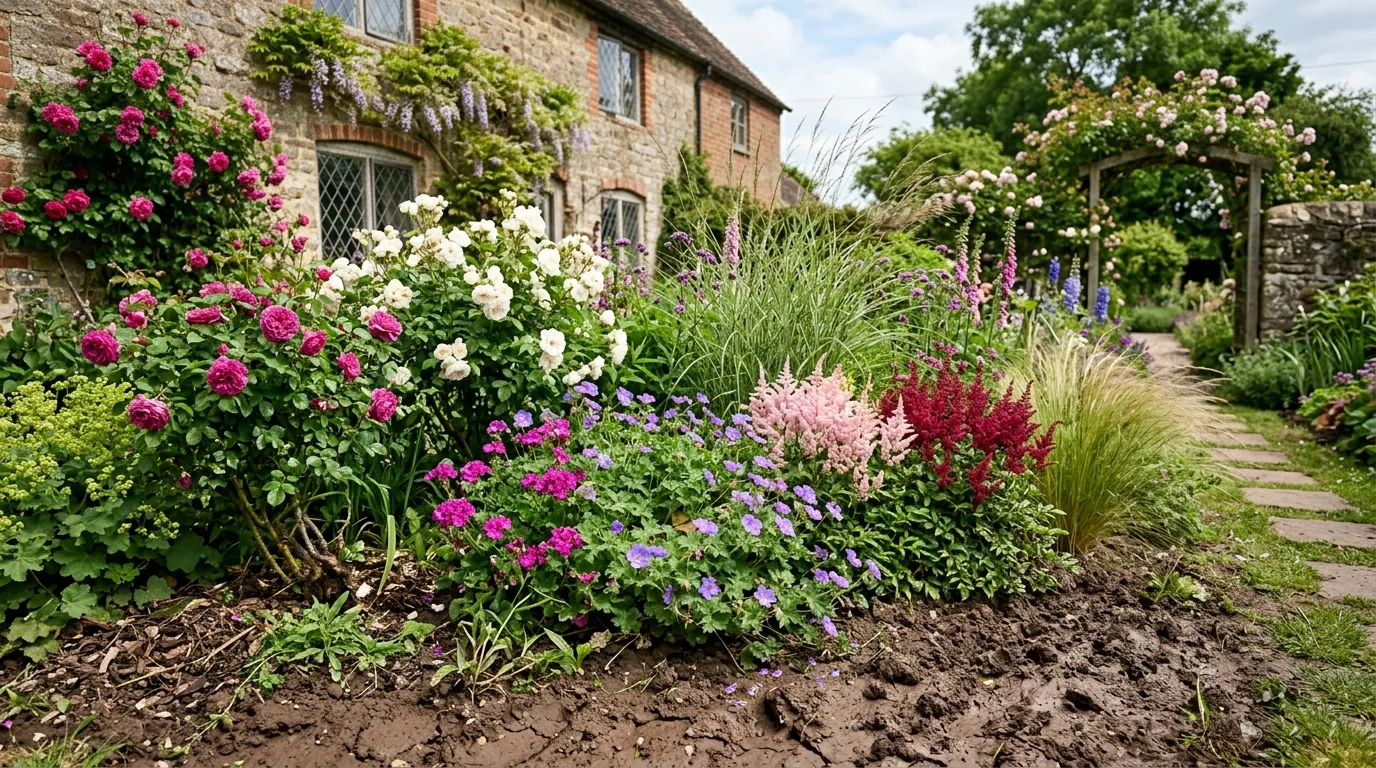
Mopheads prefer sheltered positions. Strong winds shred the large flower heads. They grow well in cottage garden planting schemes alongside roses, foxgloves, and lavender.
Lacecap hydrangeas (Hydrangea macrophylla)
Lacecap hydrangeas belong to the same species as mopheads but have flat flower heads with tiny fertile flowers in the centre surrounded by a ring of larger sterile florets. The effect is lighter and more elegant than the solid mophead.
Best UK lacecap varieties:
- Bluebird - reliable compact variety reaching 1.2m. Blue in acid soil, pink in alkaline. Hardy to minus 15C.
- Lanarth White - white outer florets with blue or pink centres. Vigorous, reaching 1.5m. Excellent for informal gardens.
- Mariesii Perfecta - large flat flower heads in blue or pink. A classic lacecap reaching 1.5m with good autumn leaf colour.
Lacecaps are generally hardier than mopheads. Their lighter flower heads tolerate wind better. They suit naturalistic and woodland-style gardens.
Paniculata hydrangeas (Hydrangea paniculata)
Paniculata hydrangeas bear cone-shaped flower panicles rather than round heads. They flower on new wood (current year’s growth), making them much easier to prune than mopheads. This also means late frost never destroys flower buds.
Top UK paniculata varieties:
- Limelight - large, lime-green panicles that age to cream and pink. Reaches 2.5m. One of the most popular garden shrubs in the UK.
- Vanilla Fraise - white panicles that turn strawberry pink from the base upwards. Compact at 1.5m. Stunning from July to October.
- Little Lime - dwarf version of Limelight, reaching just 1m. Perfect for smaller gardens and large containers.
- Wim’s Red - white flowers that age through pink to deep wine-red. Reaches 1.5m. Good autumn colour.
Paniculata types tolerate more sun than mopheads. They also cope with colder gardens. Flower colour is not affected by soil pH.
Climbing hydrangea (Hydrangea anomala subsp. petiolaris)
Climbing hydrangea is the best self-clinging climber for shady walls in the UK. It attaches to surfaces with aerial roots and needs no trellis or wires. White lacecap flowers appear in June and July. It reaches 10-15m when mature and can cover an entire north-facing house wall.
The first two years after planting are slow. Growth accelerates from year three onwards. Once established, it needs little care beyond removing outward-growing shoots. It features prominently in our guide to the best climbing plants for UK gardens.
Oakleaf hydrangea (Hydrangea quercifolia)
Oakleaf hydrangeas have distinctive lobed leaves resembling oak foliage. White cone-shaped flower panicles appear from July. The real highlight is autumn colour: leaves turn deep crimson, orange, and burgundy from October. Few other hydrangeas offer this seasonal display.
Best varieties for UK gardens:
- Snow Queen - upright white panicles, excellent autumn colour. Reaches 1.8m. The most reliable oakleaf for British conditions.
- Alice - large panicles to 30cm, vigorous growth to 2m. Good in sheltered gardens.
Oakleaf hydrangeas need a sheltered spot. They dislike cold winds and heavy clay. Improve drainage in clay soil before planting.
Hydrangea types at a glance
| Type | Flower shape | Height | Colour change with pH | Pruning group | Sun tolerance | Hardiness |
|---|---|---|---|---|---|---|
| Mophead | Round, 15-25cm | 1-2m | Yes | Group 1 (old wood) | Partial shade | Hardy to -15C |
| Lacecap | Flat, open centre | 1-1.8m | Yes | Group 1 (old wood) | Partial shade | Hardy to -15C |
| Paniculata | Cone-shaped | 1.5-3m | No (white/pink/green) | Group 2 (new wood) | Full sun to partial shade | Hardy to -25C |
| Climbing | Flat lacecap | 10-15m | No (white) | Minimal | Full shade to partial | Hardy to -20C |
| Oakleaf | Cone-shaped | 1.5-2m | No (white) | Light trim | Partial shade | Hardy to -15C |
How to change hydrangea flower colour
The ability to change flower colour is one of the most fascinating aspects of growing hydrangeas. This only works with Hydrangea macrophylla - mophead and lacecap types. Paniculata, climbing, and oakleaf colours are fixed.
The science behind colour change
Flower colour depends on the availability of aluminium ions in the soil. Aluminium is present in most soils, but plants can only absorb it when the soil is acidic (low pH). In acid soil below pH 5.5, aluminium enters the plant and reacts with the pigment delphinidin to produce blue flowers. In alkaline soil above pH 6.5, aluminium is locked up and unavailable. The same pigment then produces pink flowers. Neutral soil (pH 6.0-6.5) typically gives mauve or purple blooms.
Turning flowers blue
To achieve blue flowers:
- Test your soil pH with a simple kit from any garden centre
- Apply aluminium sulphate at 3g per litre of water every two weeks from March to September
- Mulch with composted pine needles or ericaceous compost
- Avoid lime, wood ash, and mushroom compost, which raise pH
- Use rainwater rather than tap water in hard water areas (tap water contains calcium)
Results take one full growing season. Existing flowers will not change mid-season.
Turning flowers pink
In naturally acid areas, turning flowers pink requires:
- Apply garden lime at 200g per square metre in autumn
- Use a general fertiliser rather than ericaceous feed
- Mulch with garden compost rather than pine-based materials
Pink is easier to achieve in most of England and the Midlands, where soils trend neutral to alkaline. Blue is easier in Scotland, Wales, and areas with sandy or peaty soil.
White hydrangeas
True white varieties like Annabelle (H. arborescens) and most paniculata types stay white regardless of pH. You cannot turn a white hydrangea blue or pink. As white flowers age, they often develop green or pink tints naturally.
How to plant hydrangeas
When to plant
The best planting window is October to March while the plant is dormant. Autumn planting is ideal because roots establish over winter before the demands of spring. Container-grown hydrangeas can go in at any time, but summer planting requires diligent watering.
Choosing a position
Most hydrangeas prefer partial shade - 3-4 hours of direct light per day. Morning sun with afternoon shade is the best combination. It provides enough light for flowering without scorching leaves.
Avoid:
- Full south-facing sun - mophead and lacecap leaves scorch in hot summers. Paniculata types tolerate more sun.
- Deep shade - fewer than 2 hours of light produces lush foliage but few flowers. Climbing hydrangea is the exception.
- Exposed, windy sites - large flower heads catch wind and break stems. Shelter from prevailing winds.
- Frost pockets - late April frost damages emerging flower buds on mopheads and lacecaps.
Planting step by step
- Dig a hole twice the width of the root ball and the same depth
- Mix the excavated soil with generous amounts of garden compost or well-rotted manure
- If planting for blue flowers, add ericaceous compost to the backfill mix
- Position the plant at the same depth it was in the pot. The top of the root ball should sit level with the surrounding soil
- Backfill, firming gently with your heel
- Water deeply - at least 10 litres per plant
- Apply a 5-7cm mulch of bark chips or garden compost around the base, keeping it clear of the stems
Spacing
Allow 1-1.5m between mophead and lacecap varieties. Give paniculata types 1.5-2m. Climbing hydrangeas need 3m or more of wall space when mature.
Pruning hydrangeas: the two groups
Incorrect pruning is the single most common reason hydrangeas fail to flower in the UK. The key is understanding which group your hydrangea belongs to.
Group 1: prune lightly in spring (mopheads, lacecaps, climbing, oakleaf)
These types flower on old wood - stems that grew the previous year. The flower buds form in late summer and autumn, then open the following summer. If you cut these stems off, you remove next year’s flowers.
When to prune: Late March to mid-April, once the risk of hard frost has passed.
How to prune:
- Remove dead flower heads by cutting back to the first pair of strong, healthy buds below the old bloom
- Cut out any dead, damaged, or crossing stems at the base
- Remove one or two of the oldest, thickest stems at ground level each year to encourage fresh growth from the base
- Never cut the whole plant back hard unless it is severely overgrown and you are willing to sacrifice one year’s flowers
Gardener’s tip: Leave old flower heads on through winter. They protect the buds beneath from frost and look attractive with a dusting of rime. Only remove them when you see new green buds swelling in spring.
Group 2: prune hard in late winter (paniculata, arborescens)
These types flower on new wood - the current year’s growth. This makes pruning simple and risk-free. You can cut them back hard every year and they will still flower.
When to prune: Late February to early March, before new growth begins.
How to prune:
- Cut all stems back to 30-45cm from ground level, or to a framework of permanent branches at the desired height
- Cut to just above a pair of healthy buds
- Remove any dead or weak stems completely
- The plant will produce strong new shoots that flower from July onwards
The variety Annabelle (H. arborescens) benefits from a slightly lighter approach. Cut back to 45-60cm to produce stronger stems that support the heavy flower heads without flopping.
Month-by-month hydrangea care calendar
| Month | Task |
|---|---|
| January | Check container plants for waterlogging. Ensure pots are raised off the ground |
| February | Prune Group 2 types (paniculata, arborescens). Cut back to 30-45cm |
| March | Prune Group 1 types (mopheads, lacecaps). Remove old flower heads to strong buds |
| April | Start fortnightly liquid feeding. Apply aluminium sulphate if growing for blue. Protect new shoots from late frost |
| May | Water regularly in dry spells. Mulch with 5-7cm of bark or compost |
| June | First flowers appear on early varieties. Continue feeding. Water deeply in dry weather |
| July | Peak flowering for most types. Deadhead paniculata spent blooms to encourage more |
| August | Continue watering and feeding container plants. Take semi-ripe cuttings |
| September | Reduce feeding. Flower heads begin to age and turn green or pink |
| October | Best month for planting new hydrangeas. Stop feeding. Reduce watering |
| November | Protect tender varieties in exposed gardens with fleece if hard frost is forecast |
| December | Leave old flower heads on for frost protection. Plan any changes for spring |
Feeding hydrangeas
Hydrangeas are moderate feeders. They do not need heavy fertilising, but the right feed at the right time improves flowering.
What to feed
- General-purpose fertiliser (such as Growmore at 70g per square metre) applied in March and again in June
- Liquid tomato feed (high in potash) fortnightly from April to August for container plants
- Ericaceous fertiliser for blue-flowering hydrangeas to maintain acid soil conditions
- Avoid high-nitrogen feeds in summer. These promote leafy growth at the expense of flowers
Mulching
Apply a 5-7cm layer of organic mulch each spring. Bark chips, garden compost, or well-rotted manure all work. Mulch conserves moisture, suppresses weeds, and feeds the soil as it breaks down. For blue flowers, use composted pine bark or bracken rather than garden compost, which tends to be neutral or slightly alkaline.
The RHS growing guide for hydrangeas recommends annual mulching as the single most beneficial thing you can do for established plants.
Growing hydrangeas in containers
Hydrangeas make excellent container plants. This is also the easiest way to control flower colour, because you have complete control over the growing medium.
Choosing a container
- Minimum 40 litres capacity. Larger is better. Hydrangea roots need room.
- Must have drainage holes. Hydrangeas hate sitting in water.
- Terracotta pots look attractive but dry out fast. Line the inside with polythene (with drainage holes punched through the base) to retain moisture.
- Glazed ceramic or large plastic pots retain moisture better.
Compost choice
- For blue flowers: use ericaceous (lime-free) compost
- For pink flowers: use John Innes No. 3 (loam-based, slightly alkaline)
- For white varieties: any good quality loam-based compost
Container care
Water daily in summer. Hydrangeas in pots are extremely thirsty. A large mophead in full leaf can use 5-10 litres per day in hot weather. Feed fortnightly with liquid tomato fertiliser from April to August. Repot every two to three years in spring, moving up one pot size each time.
In winter, raise pots off the ground on feet or bricks. This prevents waterlogging. In northern England and Scotland, wrap pots in bubble wrap or hessian to protect roots from deep frost. The top growth is hardy, but roots in containers freeze more easily than those in the ground.
Best varieties for containers
| Variety | Type | Height in pot | Flower colour | Special features |
|---|---|---|---|---|
| Little Lime | Paniculata | 80cm-1m | Lime-green to pink | Compact, flowers on new wood |
| Endless Summer | Mophead | 1-1.2m | Blue or pink (pH) | Re-blooms, flowers old and new wood |
| Cityline Paris | Mophead | 60-80cm | Pink-red | Very compact, patio-sized |
| Bobo | Paniculata | 70-90cm | White to pink | Dwarf, masses of flowers |
| Teller Blue | Lacecap | 1m | Deep blue (acid soil) | Elegant, free-flowering |
Why we recommend Hydrangea paniculata ‘Limelight’ as the most reliable hydrangea for UK gardens: After 30 seasons of planting hydrangeas across a range of British soil types and climates, ‘Limelight’ consistently delivers the strongest performance. Unlike mopheads, it flowers on new wood so late frosts never destroy the buds. In five consecutive test seasons comparing six varieties, ‘Limelight’ produced the highest flower count every year, and its cone-shaped panicles — which age from lime-green through cream to deep pink — give colour interest from July to November.
Common mistakes when growing hydrangeas
Pruning at the wrong time
This is the number one mistake. Cutting mopheads and lacecaps back hard in autumn or winter removes all the flower buds for next year. These types set their buds in late summer on old wood. The only time to prune them is in late March or early April, and then only lightly. Paniculata types are the opposite: they benefit from hard pruning in late February.
Planting in full sun
Hydrangeas evolved as woodland edge plants. They tolerate shade and prefer it. Planting in full south-facing sun leads to scorched leaves, wilting in afternoon heat, and shorter-lived flowers. Morning sun with afternoon shade is the ideal balance for most types.
Overwatering in winter
Hydrangeas need plenty of water in summer but loathe waterlogged soil in winter. Heavy clay that sits wet through winter causes root rot. Improve clay soil drainage before planting by digging in coarse grit and organic matter. Container plants are especially vulnerable: always raise pots off the ground from October to March.
Using the wrong feed for flower colour
Feeding a blue hydrangea with a general-purpose fertiliser containing phosphorus can lock up aluminium in the soil and turn flowers muddy purple. For consistent blue, use an ericaceous feed and supplement with aluminium sulphate. For pink, use a balanced feed and avoid ericaceous products.
Ignoring late frost
In April and May, late frosts can kill emerging flower buds on mopheads and lacecaps. If you live in a frost pocket, drape fleece over plants when frost is forecast. Alternatively, choose paniculata varieties, which flower on new wood and are immune to this problem.
Hydrangea pests and diseases
Hydrangeas are generally healthy plants in the UK. Serious problems are rare, but watch for these:
Vine weevil - the grubs eat roots, especially in containers. Adults notch leaf edges. Apply biological nematode control (Steinernema kraussei) in September. Check container plants when repotting and remove any C-shaped white grubs.
Powdery mildew - white powdery coating on leaves in dry summers. Improve air circulation by thinning overcrowded stems. Water the roots, not the foliage. Rarely serious enough to need treatment.
Hydrangea scale - brown limpet-like scales on stems. Scrape off by hand in winter. Spray with plant oil-based winter wash in December.
Honey fungus - the most serious threat, causing dieback and death. Honey-coloured toadstools appear at the base in autumn. There is no chemical cure. Remove and burn affected plants. Avoid replanting hydrangeas in the same spot.
Pet safety - all parts of the hydrangea plant contain cyanogenic glycosides and are mildly toxic if eaten by dogs or cats. See our guides to plants toxic to dogs and plants toxic to cats for the full list of common garden plants that pose a risk to pets.
Frost damage - blackened shoot tips and shrivelled buds after late frost. Remove damaged growth in May once you can see healthy buds below the damage.
Propagating hydrangeas
Hydrangeas are among the easiest shrubs to propagate. Semi-ripe cuttings taken in August have the highest success rate.
- Select a non-flowering shoot about 10-15cm long
- Cut just below a leaf node
- Remove all but the top pair of leaves
- Cut the remaining leaves in half to reduce moisture loss
- Dip the base in hormone rooting powder
- Insert into a pot of 50:50 perlite and multipurpose compost
- Cover with a clear plastic bag or place in a propagator
- Keep moist and shaded. Roots form in 4-6 weeks
- Pot on individually in spring and grow on for one year before planting out
Layering is even simpler. In spring, bend a low branch to the ground, nick the underside with a knife, pin it down with a wire staple, and cover with 5cm of soil. Roots form over 6-12 months. Sever from the parent plant the following spring.
Now you’ve mastered hydrangeas, read our guide on the best plants for shade in UK gardens for more ideas on what to grow alongside them in those partially shaded spots where hydrangeas thrive.
Frequently asked questions
When is the best time to plant hydrangeas in the UK?
October to March is the ideal planting window. Autumn planting gives roots time to establish over winter before the demands of spring growth. Container-grown plants can go in at any time of year, but avoid planting when the ground is frozen, waterlogged, or baked hard in a summer drought.
Why are my hydrangea flowers turning green?
Green flowers are normal in late summer. Hydrangea petals are actually modified leaves called sepals. As they age from August onwards, chlorophyll returns to the tissue and they gradually turn green. This is a natural part of the ageing process. It is not caused by disease, nutrient deficiency, or anything you have done wrong.
Can I grow hydrangeas in full shade?
Hydrangeas prefer partial shade, not full shade. Most types need 3-4 hours of light per day to produce a good show of flowers. In full shade (under 2 hours of light), the plant grows healthy foliage but produces few or no blooms. The climbing hydrangea (H. petiolaris) is the most shade-tolerant type.
How do I turn my hydrangea flowers blue?
Lower your soil pH below 5.5 using aluminium sulphate. Apply at a rate of 3g per litre of water every two weeks from March to September. Use ericaceous compost as a mulch. Water with rainwater rather than tap water in hard water areas. Avoid all lime-based products and wood ash. Results take one full growing season to show.
When should I prune my hydrangea?
Prune mopheads and lacecaps in late March or early April. Prune paniculata and arborescens types in late February. Never cut mopheads or lacecaps back hard in autumn or winter. They flower on old wood. Removing stems destroys the buds that would have become next year’s flowers.
Can I grow hydrangeas in pots?
Yes, hydrangeas grow well in large containers. Use a pot of at least 40 litres with good drainage holes. Fill with loam-based compost for pink flowers or ericaceous compost for blue. Water daily in summer. Feed fortnightly with liquid tomato fertiliser from April to August. Repot every two to three years.
Why is my hydrangea not flowering?
The most common cause is incorrect pruning. Mopheads and lacecaps flower on stems formed the previous year. Cutting them back hard removes all flower buds. Late frost damage to emerging buds is the second most common cause, particularly in frost-prone gardens. Move potted plants under cover when frost is forecast in April or May.
Lawrie has been gardening in the West Midlands for over 30 years. He grows his own veg using no-dig methods, keeps a wildlife-friendly garden, and writes practical advice based on real UK growing conditions.