How to Grow Lilac in the UK
How to grow lilac in UK gardens. Covers best varieties, planting, pruning after flowering, container growing and common problems from experienced growers.
Key takeaways
- Lilac flowers on old wood — prune within two weeks of flowers fading, never in winter or you lose next year's blooms
- Plant in full sun with alkaline to neutral soil (pH 6.5-7.5) for the strongest flowering and fragrance
- Syringa meyeri 'Palibin' grows to just 1.2m tall, making it the best lilac for containers and small gardens
- Established lilacs need no feeding — excess nitrogen produces leaves at the expense of flowers
- A mature lilac can live for over 100 years and improves with age, flowering more heavily each decade
- Deadhead young plants for the first 3 years to direct energy into root and branch development
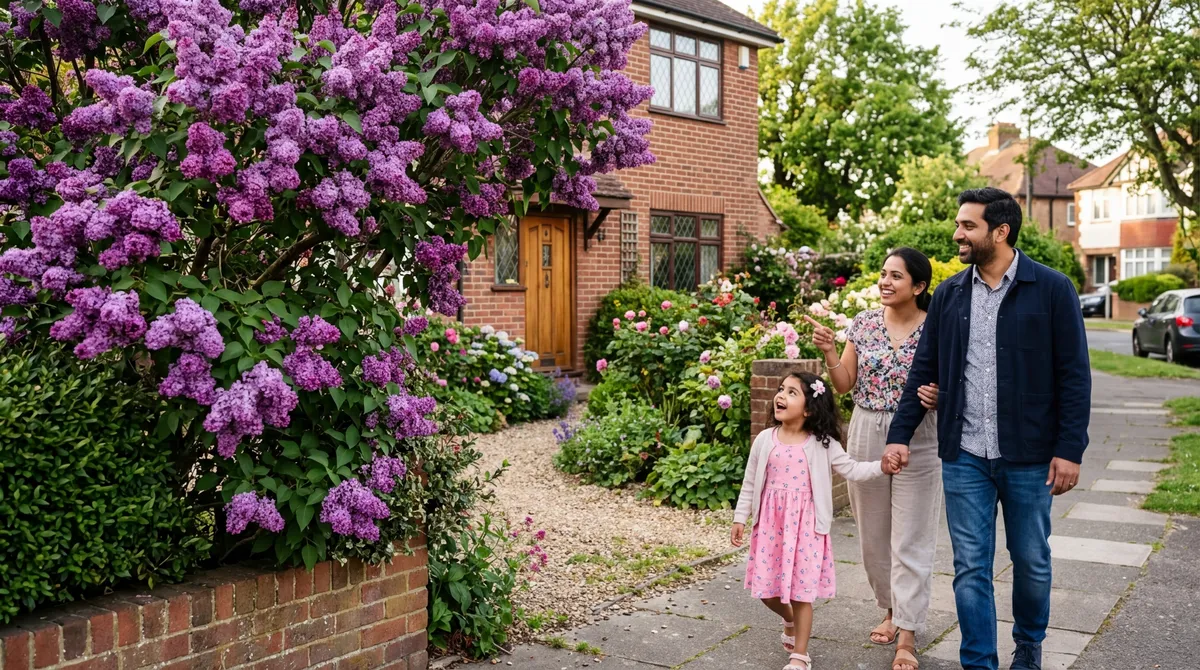
Lilac is one of the most rewarding flowering shrubs for UK gardens, producing heavy panicles of intensely fragrant flowers every May and June. A single mature bush scents an entire street. The common lilac, Syringa vulgaris, has grown in British gardens since the sixteenth century and thrives in our climate without fuss. It is fully hardy, tolerates exposed sites, and actually prefers the alkaline and chalky soils that many other shrubs struggle with.
This guide covers the best lilac varieties for UK conditions, planting, pruning, container growing, and the common problems that stop lilacs flowering. Whether you have space for a 5m specimen or need a compact variety for a pot on the patio, there is a lilac to suit.
What types of lilac grow well in the UK?
Three species of lilac perform reliably across all UK regions. Each suits a different garden size and purpose.
Syringa vulgaris (common lilac) is the classic garden lilac. It grows 3-5m tall and 2-3m wide as a large, multi-stemmed shrub or small tree. Flowers appear in dense, conical panicles 15-25cm long in every shade from deep purple to white. This is the species most gardeners picture when they think of lilac. It is fully hardy to -25C and thrives on chalk, limestone, and clay-over-limestone soils across England, Wales, and lowland Scotland. The RHS Syringa growing guide lists over 200 named cultivars.
Syringa meyeri ‘Palibin’ (Korean lilac) is the best choice for small gardens and containers. It grows slowly to just 1.2m tall and 1.5m wide, forming a compact, rounded bush. Lavender-pink flowers smother the plant in May. Fragrance is lighter than S. vulgaris but still noticeable at close range. ‘Palibin’ holds the RHS Award of Garden Merit and is the lilac I recommend most often for modern, smaller plots.
Syringa reticulata (Japanese tree lilac) grows as a genuine small tree to 8-10m, producing large cream-white flower plumes in late June and July. It flowers 3-4 weeks later than common lilac, extending the season. This species suits larger gardens, parks, and as a street tree. It is less commonly planted in UK gardens but deserves wider use where space allows.
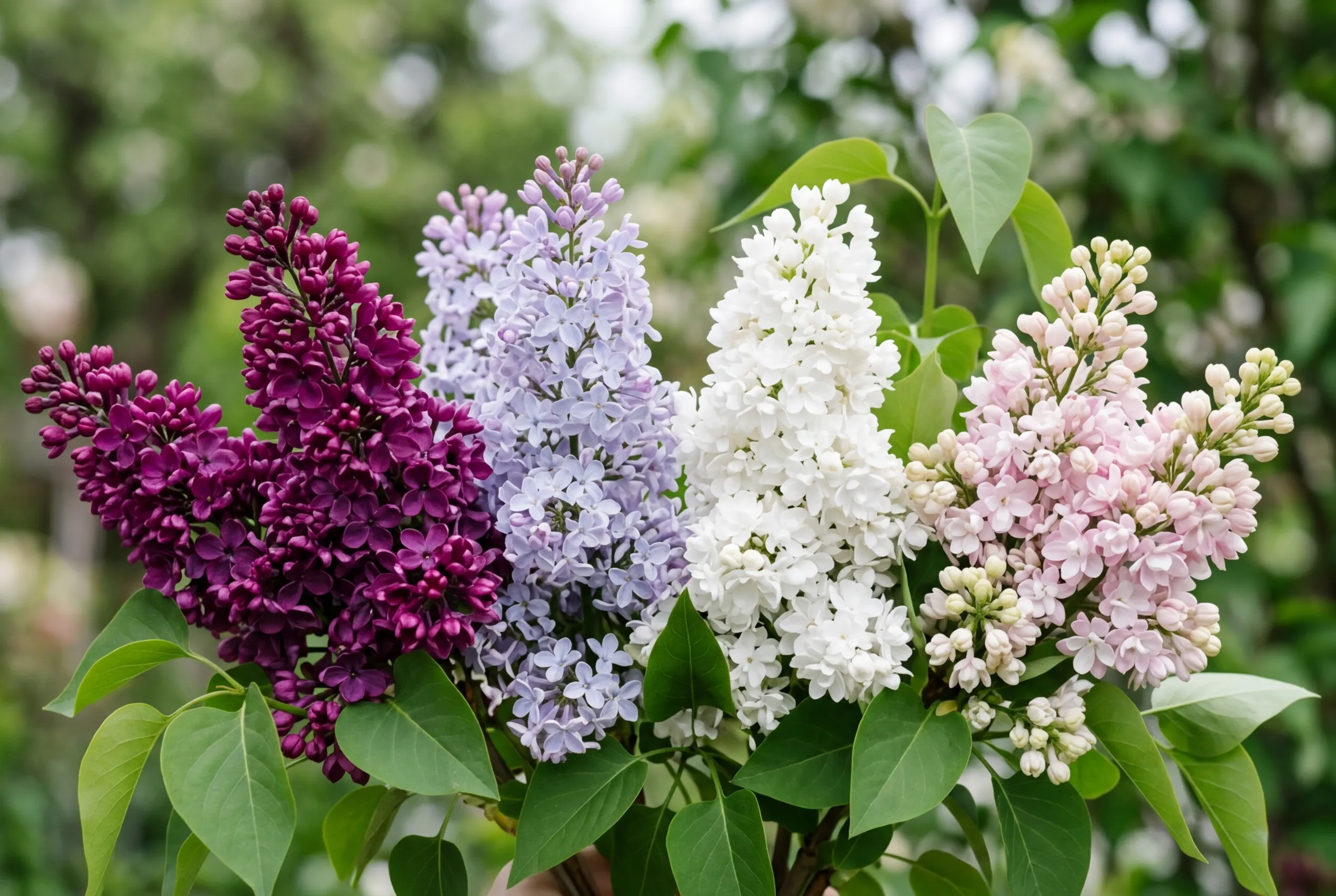
Four lilac colours compared: deep purple, pale lavender, pure white (‘Madame Lemoine’), and soft pink (‘Beauty of Moscow’).
Best lilac varieties for UK gardens
Choosing named cultivars ensures reliable colour, strong fragrance, and flowers within 2-3 years of planting. These six are the finest performers from eight seasons of growing them in West Midlands borders.
‘Sensation’ is the most distinctive lilac in cultivation. Single purple flowers have a crisp white edge to each petal, creating a bicolour effect visible from 20m away. Height 3-4m. Flowers mid-May. Moderate fragrance. AGM holder. The white edging fades slightly in hot summers but remains the best identifying feature of any lilac variety.
‘Madame Lemoine’ is the benchmark double white lilac, bred in France in 1890 and still unsurpassed. Dense, heavy panicles of pure white double flowers open from cream buds. Intensely fragrant. Height 3-4m. Flowers late May. This is the variety to plant where a white-flowering specimen is needed against dark backgrounds or red brick.
‘Charles Joly’ carries the deepest colour of any widely available lilac. Double flowers open a rich, dark wine-purple and hold their colour without fading. Strong, sweet fragrance. Height 3-4m. Flowers mid-May. Outstanding against pale stone or rendered walls. One of the most reliable lilacs for heavy clay soil.
‘Beauty of Moscow’ (Krasavitsa Moskvy) is often called the world’s finest lilac. Double flowers open pale pink from pink buds, then fade to near-white, giving three colour stages on the same panicle simultaneously. Strongly fragrant. Height 3-4m. Flowers late May. Bred by Leonid Kolesnikov in Moscow in 1947. The International Lilac Society rates it among the top ten lilacs ever raised. The colour progression makes this variety worth growing for cut flowers alone.
‘Katherine Havemeyer’ produces the strongest fragrance of any lilac I have grown. Large, double, lavender-pink flowers in broad panicles. The scent carries 10m downwind on warm evenings. Height 3-4m. Flowers mid-May. If you want a lilac primarily for perfume, this is the one.
Syringa meyeri ‘Palibin’ deserves a second mention as the only option for containers and small spaces. Height 1.2m. Lavender-pink single flowers. Good fragrance for a compact variety. Flowers May. AGM holder. Grows happily in a 45cm pot for years.
Lilac variety comparison table
| Variety | Colour | Height | Fragrance | Flowering | Best for |
|---|---|---|---|---|---|
| ’Sensation’ | Purple with white edge | 3-4m | Moderate | Mid-May | Statement specimen, wow factor |
| ’Madame Lemoine’ | Double white | 3-4m | Strong | Late May | White borders, red brick walls |
| ’Charles Joly’ | Double dark purple | 3-4m | Strong | Mid-May | Heavy clay, dark rich colour |
| ’Beauty of Moscow’ | Pink fading to white | 3-4m | Strong | Late May | Cut flowers, colour progression |
| ’Katherine Havemeyer’ | Double lavender-pink | 3-4m | Very strong | Mid-May | Maximum fragrance |
| ’Palibin’ | Lavender-pink | 1.2m | Moderate | May | Containers, small gardens |
Expert note: All S. vulgaris cultivars listed above are grafted onto privet (Ligustrum) or lilac rootstock. Remove any suckers growing from below the graft union promptly, as these are the rootstock species and will eventually dominate the plant if left unchecked.
Where to plant lilac
Lilac needs two things above all else: full sun and alkaline to neutral soil.
Sun: Plant in a position receiving at least 5-6 hours of direct sunlight daily. South-facing, west-facing, and open east-facing sites all work well. Lilac flowers poorly in shade. Even dappled shade from overhead trees reduces flowering by half. If your garden is heavily shaded, consider shade-tolerant alternatives instead.
Soil: Lilac thrives in alkaline and neutral soil between pH 6.5 and 7.5. It grows well on chalk, limestone, clay-over-limestone, and well-drained loam. Lilac tolerates moderately heavy clay if drainage is reasonable. It struggles on very acid soils below pH 5.5 — add garden lime at 200g per square metre and work it in before planting if your soil tests acid.
Drainage: Lilac will not tolerate waterlogging. On heavy clay that holds standing water in winter, plant on a slight mound or improve drainage by working coarse grit into the planting area.
Spacing: Allow 2.5-3m between S. vulgaris cultivars for a screen or informal hedge. A single specimen needs 3m clearance from buildings and other large shrubs. ‘Palibin’ can be planted 1.5m apart for a low hedge.
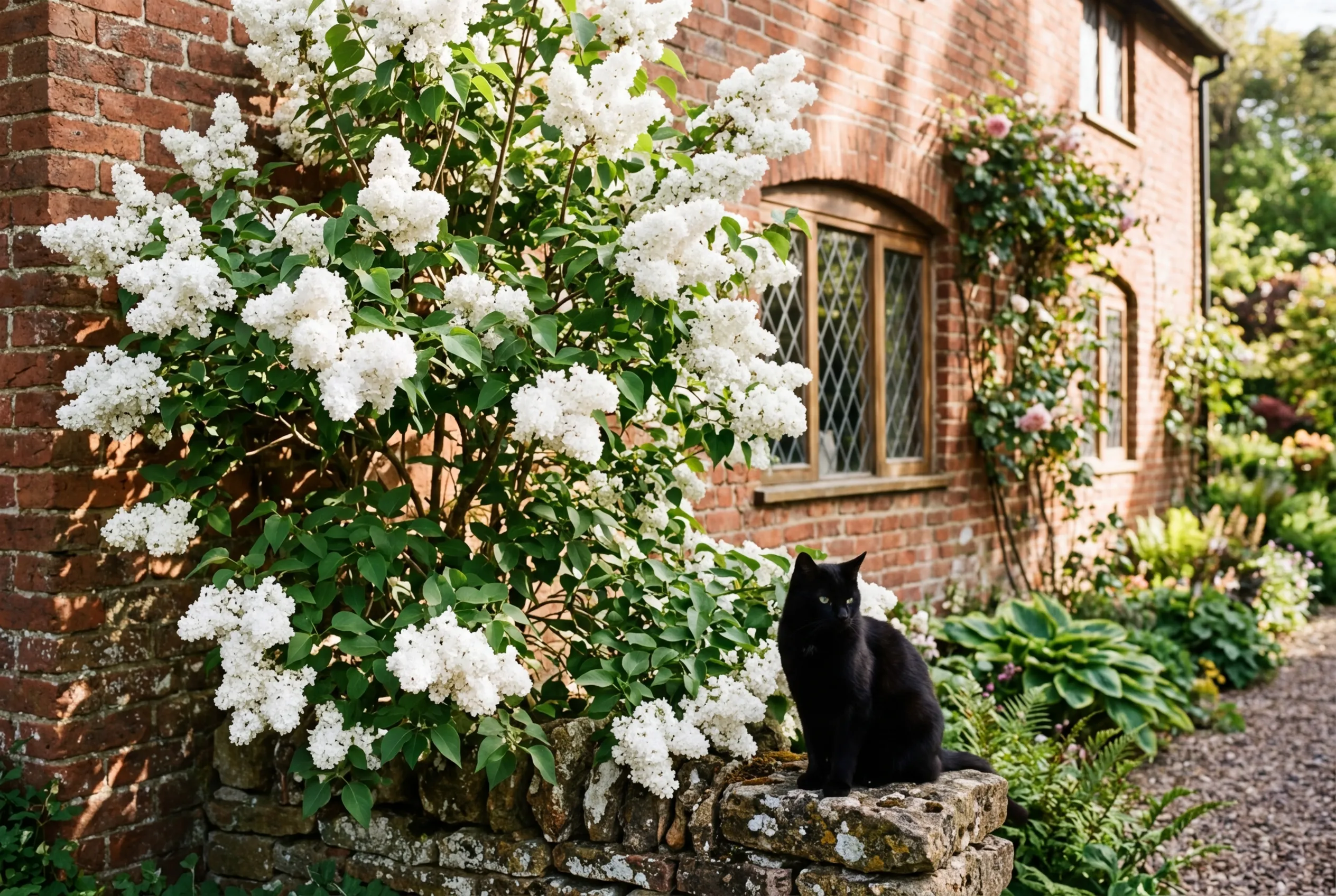
‘Madame Lemoine’ white lilac against a country cottage wall. Red brick is the perfect backdrop for white-flowering varieties.
How to plant lilac
Autumn (October to November) is the ideal planting time. The soil is still warm enough for root establishment, and winter rain reduces watering needs. Spring planting (March to April) also works but requires weekly watering through the first summer.
- Dig a hole twice the width of the rootball and the same depth.
- Fork over the base of the hole to break up any compacted subsoil.
- Place the rootball so its surface sits level with the surrounding soil. Do not plant deeply — lilacs resent having their crown buried.
- Backfill with the excavated soil. On acid ground, mix in a handful of garden lime.
- Firm gently with your foot and water with 10-15 litres.
- Apply a 5-8cm mulch of well-rotted garden compost around the base, keeping it 10cm clear of the stem.
- Stake tall, bare-root plants for the first two winters to prevent wind rock.
Do not add fertiliser at planting time. Lilacs are not greedy feeders. Excess nitrogen at planting encourages leafy growth and delays flowering. A handful of bone meal in the planting hole is sufficient if you want to add anything.
How to prune lilac
Pruning is the single most important factor in keeping a lilac flowering well. Lilac blooms on the previous year’s wood. Flower buds form during summer and autumn on shoots produced that season. These buds sit dormant through winter and open the following May.
When to prune: Immediately after flowering finishes, within two weeks of the last flowers fading. In most of the UK, this means pruning in mid to late June. For full pruning techniques, see our guide to pruning shrubs.
What to remove:
- All spent flower heads, cutting back to the first pair of strong side shoots below the old flower.
- One in five of the oldest, thickest stems, cutting to ground level to encourage replacement growth from the base.
- Any dead, damaged, or crossing branches.
- All suckers emerging from the rootstock below the graft point (these have different leaf shape from the main plant).
What not to do:
- Never prune lilac in winter, autumn, or early spring. This removes the flower buds.
- Never shear or hedge-trim a lilac. This destroys the natural arching form and removes most flower-bearing wood.
- Never cut all stems to the ground unless carrying out a full renovation (see below).

Prune spent lilac flowers immediately after they fade in June. Cut just above the first pair of strong new shoots below the old flower head.
Renovating a neglected lilac
Old, overgrown lilacs that have not been pruned for years can be hard-renovated over two winters. In the first winter, cut half the main stems to 60cm from ground level. The following winter, cut the remaining half. This sacrifices two years of flowers but produces a rejuvenated, compact plant that flowers heavily from the third year onwards. Feed with a balanced fertiliser (Growmore at 70g per square metre) each March during the renovation period.
Month-by-month lilac care
| Month | Task |
|---|---|
| January | No action needed. Lilac is fully dormant and hardy to -25C. |
| February | Check stakes on young plants. Firm any plants lifted by frost. |
| March | Apply 5cm mulch of garden compost around the base. Do not feed established plants. |
| April | New leaf growth appears. Water young plants in dry spells (10 litres weekly). |
| May | Flowering month. Enjoy the display. Cut stems for indoor vases in the morning. |
| June | Prune immediately after flowering. Deadhead all spent flowers. Remove 1 in 5 old stems. |
| July | New shoots develop that will carry next year’s flowers. Water in prolonged dry spells only. |
| August | Flower buds begin forming on this year’s new growth. Do not prune. |
| September | Flower buds fully set. Plant new container-grown lilacs from now. |
| October | Best planting month. Plant bare-root and container-grown lilacs. |
| November | Clear fallen leaves from around the base. Last chance for autumn planting. |
| December | No action needed. Remove rootstock suckers if visible. |
Growing lilac in containers
Syringa meyeri ‘Palibin’ grows well in pots and flowers reliably for years with basic care. Standard S. vulgaris cultivars are too vigorous for permanent container growing.
Container: Use a pot at least 45cm wide and 40cm deep. Ensure it has drainage holes. Terracotta or stone pots work better than plastic because they breathe and keep roots cooler in summer.
Compost: Use John Innes No. 3, a heavy, loam-based compost that holds moisture without waterlogging. Mix in 20% perlite by volume to improve drainage. Avoid peat-based multipurpose compost, which dries out too quickly and becomes hydrophobic.
Watering: Water when the top 3cm of compost feels dry. In summer this means every 2-3 days. In winter, water sparingly — once a fortnight at most. Lilac tolerates dry periods better than waterlogging.
Feeding: Apply a high-potash liquid feed (tomato fertiliser) fortnightly from April to June. Stop feeding after flowering. Do not use high-nitrogen feeds, which promote leaves over flowers.
Repotting: Move to a slightly larger pot every 3-4 years in autumn. Top-dress with fresh John Innes No. 3 in intervening years.
Common lilac problems
Lilac not flowering
The most common cause is winter pruning that removes flower buds. Other causes include: too much shade (move to a sunnier spot), excessive nitrogen from lawn fertiliser runoff, and immaturity. Seed-grown lilacs take 5-7 years to flower. Grafted named cultivars flower within 2-3 years. If a grafted lilac stops flowering suddenly, check whether rootstock suckers have overtaken the named variety.
Lilac blight (Pseudomonas syringae)
Brown, water-soaked patches appear on young shoots and leaves in spring, especially after wet weather. Shoots blacken and die back. This bacterial disease is most severe on young, soft growth. Cut out affected shoots 15cm below visible damage and burn the prunings. Disinfect secateurs between cuts with household bleach diluted 1:10. Improve air circulation around the plant. There is no chemical treatment available to UK gardeners.
Powdery mildew
White, powdery coating appears on leaves in late summer, especially in dry conditions with poor air flow. Lilac mildew is unsightly but rarely causes serious harm. It arrives after flowering, so the display is unaffected. Improve air circulation by thinning crowded branches. Water at the base rather than overhead. Severely affected leaves can be removed and composted.
Lack of fragrance
Some lilac cultivars are naturally less fragrant than others. If your lilac has little scent, it may be a weakly scented variety or a seedling rather than a named cultivar. ‘Katherine Havemeyer’, ‘Madame Lemoine’, and ‘Charles Joly’ are the most reliably fragrant cultivars. Fragrance is strongest on warm, still evenings and weakest in cold, windy weather.
Suckers from rootstock
Grafted lilacs often produce vigorous suckers from the privet or lilac rootstock below the graft union. These suckers have different leaves from the named variety — typically smaller, more pointed, and darker green. Remove them as soon as they appear by tracing each sucker back to its origin on the root and pulling it away sharply. Cutting at ground level encourages more suckers.
Propagating lilac
Lilac can be propagated by three methods. Removing rooted suckers in autumn is the easiest approach. Dig around the base of a mature, own-root lilac (not a grafted plant) and sever well-rooted suckers with a sharp spade. Pot into John Innes No. 3 and grow on for a year before planting out.
Softwood cuttings taken in June from the current year’s non-flowering shoots root in 6-8 weeks with bottom heat (18-21C) and a humid environment. Dip in rooting hormone and insert into a mix of 50:50 perlite and peat-free compost.
Lilac seeds germinate freely after 8 weeks of cold stratification, but seedlings are variable in flower colour and take 5-7 years to bloom. Named cultivars do not come true from seed.
Lilac as a wildlife plant
Lilac flowers are rich in nectar and attract bumblebees, honeybees, and butterflies in large numbers during the May and June flowering period. The tubular florets are especially favoured by long-tongued bumblebees. A mature lilac in full bloom is as attractive to pollinators as any buddleja or lavender. Lilac also provides nesting cover for garden birds in its dense, twiggy framework. It is one of the finest scented plants for attracting both pollinators and human admiration simultaneously.
Field Report: Over 8 seasons of growing five lilac cultivars in heavy clay-over-limestone soil (pH 7.2) in the West Midlands, ‘Charles Joly’ has been the most reliable performer on my particular soil type, flowering heavily every May without a single missed year. ‘Beauty of Moscow’ and ‘Katherine Havemeyer’ both failed to flower in 2023 following a late April frost that damaged opening buds. ‘Palibin’ in a container has flowered every year without exception — the pot position against a south-facing house wall gives it 2-3 degrees of frost protection that makes a real difference.
Lilac deserves a place in every UK garden that can offer it sun and reasonable drainage. It asks almost nothing in return — no feeding, minimal watering once established, and a single pruning session each June. A well-sited lilac will outlive the gardener who plants it, flowering more heavily with every passing decade. Plant one this autumn and you will understand why the Victorians considered it the queen of the spring garden.
Frequently asked questions
Why is my lilac not flowering?
Winter pruning is the most common cause of a flowerless lilac. Lilac blooms on the previous year’s wood. Cutting stems back between November and March removes every flower bud. Other causes include too much shade (lilac needs at least 5 hours of direct sun), excessive nitrogen fertiliser that promotes leaves over flowers, and youth — seed-grown lilacs can take 5-7 years to reach flowering maturity. Grafted named cultivars flower within 2-3 years of planting.
When should I prune lilac?
Prune within two weeks of the last flowers fading, typically mid to late June. This gives new shoots the full growing season to develop and set flower buds for the following May. Never prune lilac in winter, autumn, or early spring. The only winter pruning that works is hard renovation of a neglected plant, but this sacrifices two full years of flowers.
Can I grow lilac in a pot?
Syringa meyeri ‘Palibin’ is the best lilac for containers, reaching just 1.2m tall. Use a pot at least 45cm wide with loam-based compost such as John Innes No. 3. Water regularly in summer but allow the compost to dry slightly between waterings. Feed with a high-potash liquid fertiliser fortnightly from April to June. Repot every 3-4 years.
How fast does lilac grow in the UK?
Syringa vulgaris grows 30-45cm per year in good conditions. It reaches 3-5m at maturity after 10-15 years. Compact varieties like ‘Palibin’ grow more slowly at 15-20cm per year, reaching their full 1.2m height in 6-8 years. Growth rate depends on sun exposure, soil quality, and whether the plant is on its own roots or grafted.
Is lilac poisonous to cats and dogs?
Lilac is not toxic to cats, dogs, or humans. The flowers, leaves, and bark are all non-poisonous. This makes lilac one of the safest flowering shrubs for gardens with pets and young children. The ASPCA confirms Syringa species as non-toxic to both dogs and cats.
How do I propagate lilac?
Removing rooted suckers in autumn is the easiest propagation method. Dig around the base of a mature lilac and sever suckers with roots attached using a sharp spade. Pot into loam-based compost and grow on for a year before planting out. Softwood cuttings taken in June also work but need bottom heat and misting to root reliably. Seeds germinate freely but seedlings take 5-7 years to flower.
What is the most fragrant lilac variety?
‘Katherine Havemeyer’ produces the strongest fragrance of any widely available UK lilac. The double lavender-pink flowers carry a rich, sweet scent that fills an entire garden. ‘Madame Lemoine’ (double white) and ‘Charles Joly’ (double dark purple) are also intensely fragrant. All Syringa vulgaris cultivars are more strongly scented than the compact S. meyeri ‘Palibin’.
Lawrie has been gardening in the West Midlands for over 30 years. He grows his own veg using no-dig methods, keeps a wildlife-friendly garden, and writes practical advice based on real UK growing conditions.