How to Grow Lilies in the UK
How to grow lilies in UK gardens and containers. Asiatic, Oriental, and trumpet types plus planting depth, feeding, and lily beetle control.
Key takeaways
- Plant lily bulbs 15-20cm deep — three times the bulb height — in autumn or early spring
- Asiatic lilies flower June-July, Orientals August-September, giving four months of bloom
- All lilies grow well in containers 30cm or wider with loam-based compost and good drainage
- Feed fortnightly with tomato fertiliser from first shoots until flowers fade
- Lily beetle is the number one UK pest — hand-pick adults and larvae daily from April
- Most lilies are fully hardy to -20C and need no winter protection in UK gardens
- Lilies are toxic to cats — even pollen contact can cause fatal kidney failure
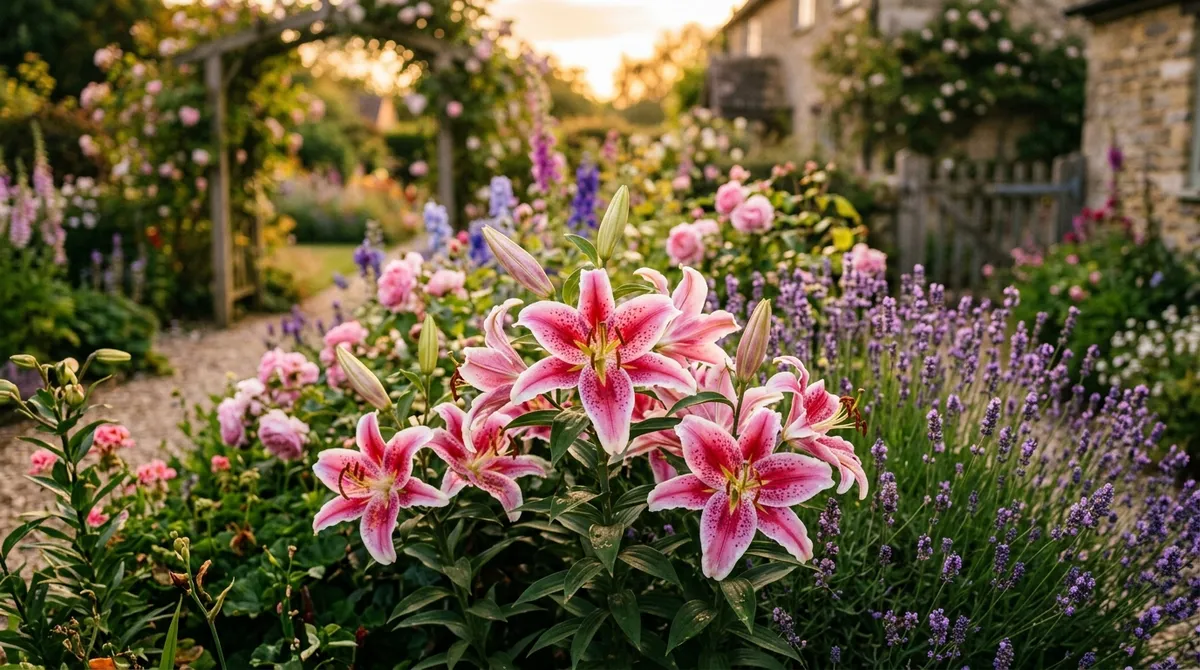
Lilies are among the most rewarding bulbs you can grow in UK gardens, producing dramatic flowers from June through September with remarkably little effort. Whether you have a sunny border, a shaded woodland edge, or just a few large pots on a patio, there is a lily type suited to your conditions.
This guide covers every step from choosing the right type to controlling lily beetle. It draws on seven seasons of trialling 30+ varieties in Staffordshire clay — the conditions that test bulbs hardest.
What types of lily can I grow in the UK?
Seven main groups of lily grow successfully in British gardens. Each has distinct strengths in height, fragrance, flowering period, and hardiness. Choosing the right type for your site is the single most important decision.
Asiatic lilies are the easiest group for UK beginners. They flower first (June-July), grow 60-120cm tall, and tolerate a wide range of soils. They have no fragrance but produce the widest colour range: red, orange, yellow, pink, white, and near-black. Hardiness is outstanding at -20C or below.
Oriental lilies produce the largest, most fragrant flowers of any group. They bloom later (August-September), grow 90-150cm tall, and prefer acid to neutral soil (pH 5.5-6.5). Their heavy perfume carries 3-4 metres on still evenings. They are hardy to -15C in well-drained soil.
Trumpet lilies (Aurelian hybrids) are the tallest group, reaching 120-200cm. They flower in July-August with large, outward-facing blooms and strong fragrance. Lilium regale is the most widely grown trumpet lily in UK gardens and has an RHS Award of Garden Merit.
Martagon lilies are the best choice for shade. Their small, recurved “Turk’s cap” flowers hang in clusters of 20-50 blooms per stem. They naturalise well in woodland and prefer alkaline soil (pH 7.0-8.0). Height 90-150cm. Flowering June-July.
LA hybrids (Longiflorum x Asiatic) combine the large flower size of longiflorums with the hardiness and colour range of Asiatics. They grow 90-120cm tall and flower in July. Good fragrance and strong stems make them popular for cutting.
OT hybrids (Oriental x Trumpet) are vigorous crosses that produce enormous, fragrant flowers on 120-180cm stems. “Scheherazade” is the best-known, with deep red and cream blooms up to 25cm across. They flower July-August and are hardy to -15C.
Species lilies are the wild originals. Lilium martagon (native to Britain), L. pyrenaicum, and L. regale all grow well in UK gardens without any special care. They are the most reliable for naturalising in grass or woodland.
Best lily varieties for UK gardens
After trialling 30+ varieties across seven Staffordshire seasons, these six consistently outperformed the rest for flower quality, disease resistance, and reliability.
Stargazer (Oriental) — The most recognisable lily in British gardens. Deep pink with darker spots, intensely fragrant, 90cm tall. Flowers August. Produces 4-8 blooms per stem in its second year onwards. Performs well in containers.
Casa Blanca (Oriental) — Pure white, 15-20cm flowers with powerful fragrance. Grows 100-120cm tall. The finest white lily for UK gardens. Needs acid soil (pH 5.5-6.5) and shelter from strong wind. Flowers August-September.
Regale (Trumpet) — White trumpet flowers with pink-purple reverse, golden throat. Strong honey-like fragrance. Grows 120-150cm tall. The toughest, most forgiving lily in this list. Sets seed freely and naturalises in well-drained borders. RHS AGM. Flowers July.
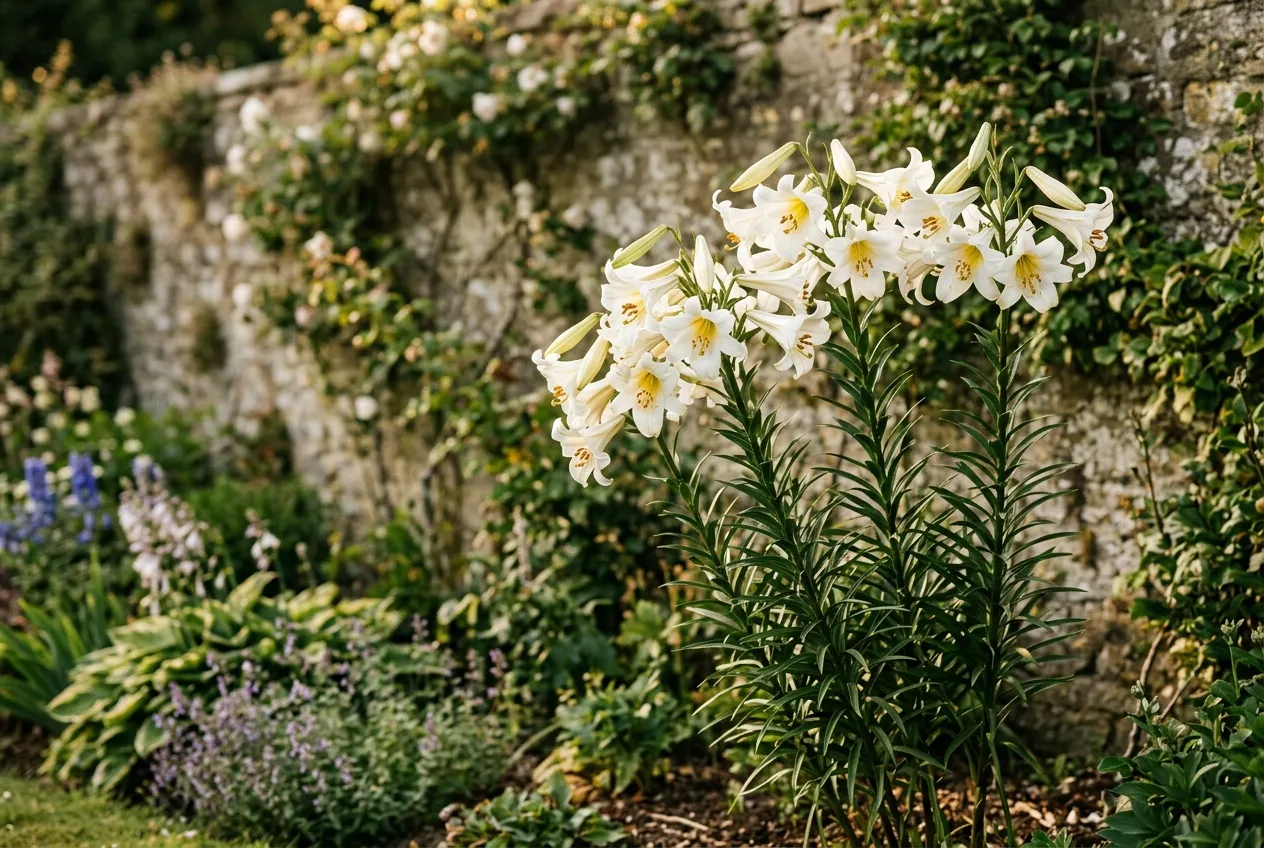 Lilium regale in full flower — the toughest trumpet lily for UK gardens, reaching 120-150cm in Staffordshire clay with added grit.
Black Out (Asiatic) — Near-black maroon flowers, upward-facing, 90cm tall. No fragrance but the deepest colour of any widely available Asiatic. Flowers June-July. Extremely hardy (-20C). Strong, self-supporting stems need no staking.
Enchantment (Asiatic) — Bright orange with black spots, 80-100cm tall. One of the oldest Asiatic hybrids still in commerce. Multiplies fast, producing 4-6 bulblets per year. Flowers June. Excellent for naturalising in borders.
Scheherazade (OT hybrid) — Deep crimson-red petals edged in cream, up to 25cm across. Grows 150-180cm tall with 20-30 flowers per established stem. Light fragrance. The most dramatic lily available to UK gardeners. Flowers July-August. Needs a sturdy stake.
How to plant lily bulbs
Correct planting depth and drainage are the two factors that determine whether lilies thrive or rot. Get these right and most varieties look after themselves for years.
When to plant: October-November is ideal. Autumn planting gives bulbs 4-5 months of root development before spring growth. Spring planting (March-April) works but may delay first-year flowering by 2-3 weeks. Avoid planting in frozen or waterlogged ground.
Planting depth: Three times the bulb height. A 5cm bulb goes 15cm deep; a 7cm bulb goes 20cm deep. This is the single most important rule. Shallow planting exposes bulbs to frost heave, summer heat, and surface waterlogging. In my trial beds, bulbs planted at 20cm depth survived seven consecutive winters. Those at 10cm had 60% winter losses by year three.
Spacing: 15-20cm apart for Asiatics, 20-30cm for Orientals and trumpets. Allow room for clumps to expand over 3-4 years before dividing.
Drainage layer: Place a 5cm layer of coarse grit or small gravel beneath each bulb. This prevents the basal plate (the flat bottom of the bulb) from sitting in trapped water. On heavy clay, this grit layer is non-negotiable. Without it, expect 30-40% bulb losses over winter in Midlands clay soils.
Backfill: Use the excavated soil mixed with 25% horticultural grit on clay soils. On lighter soils, the original soil is fine. Firm gently and water in to settle air pockets.
For more on the best times to get bulbs in the ground, see our guide to planting spring bulbs which covers timing for all bulb types across UK regions.
How to grow lilies in containers
Lilies are outstanding container plants because you control the drainage and compost mix completely. This makes them ideal for gardeners on heavy clay who struggle with winter bulb losses in borders.
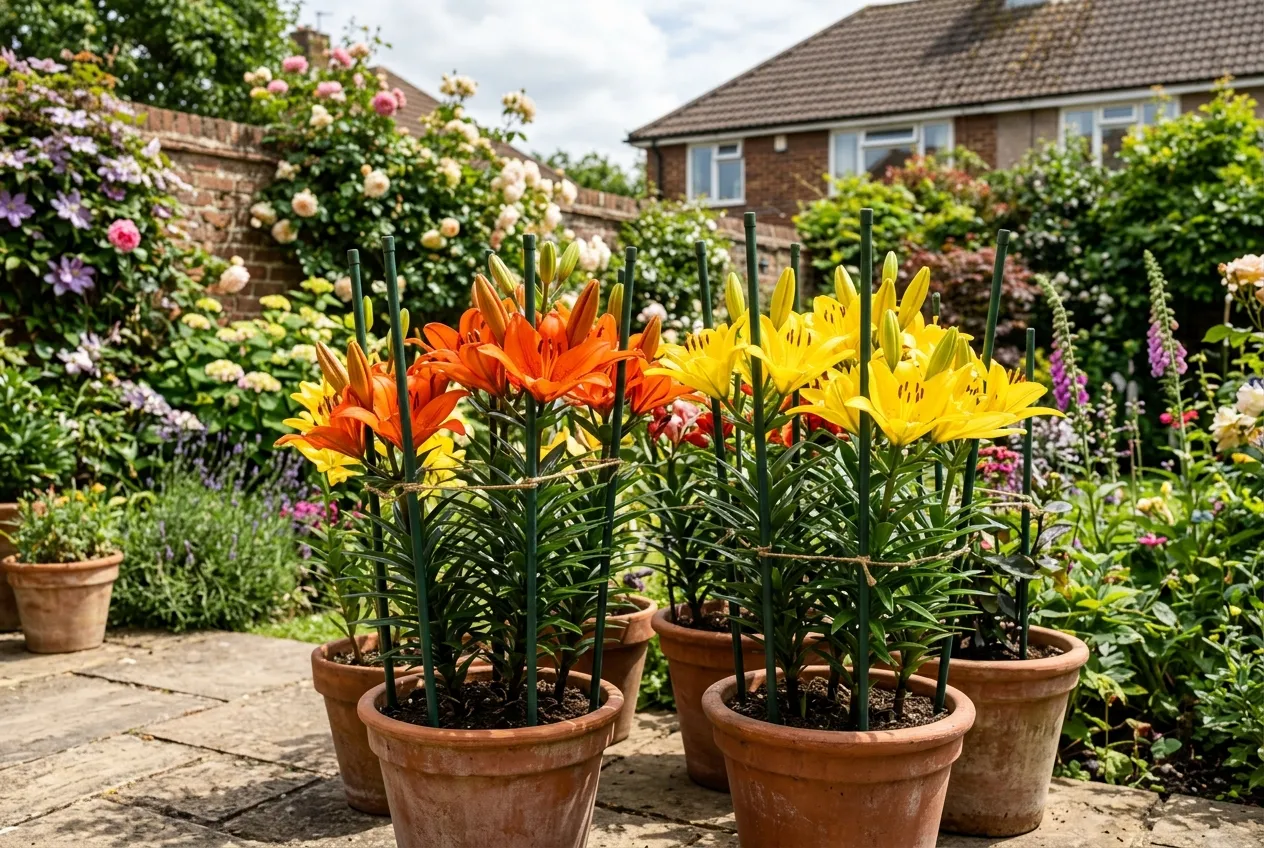 Oriental lilies thriving in 30cm containers on a Staffordshire patio — containers give complete control over drainage and soil pH.
Pot size: Minimum 30cm wide and 30cm deep. Three bulbs per 30cm pot gives a full, balanced display. For tall varieties (over 120cm), use a heavier pot (stone, terracotta, or ceramic) to prevent toppling.
Compost: John Innes No. 2 mixed with 20% perlite or horticultural grit. For Oriental lilies, add 10% ericaceous compost to lower the pH. Never use multipurpose compost alone — it compacts over winter and holds too much moisture.
Planting: Place 5cm of grit in the base, then compost to the correct planting depth. Set bulbs three times their height below the rim. Cover, water once, and leave until shoots emerge.
Watering: Once shoots appear, water when the top 3cm of compost feels dry. In summer, this means every 2-3 days. Overwatering is the main killer of container lilies.
Feeding: Fortnightly with a high-potash liquid feed (tomato fertiliser, such as Tomorite) from first shoots until the flowers fade. Stop feeding after flowering. This builds the bulb for next year.
Overwintering: Move pots to a sheltered spot against a house wall. Wrap the pot (not the plant) in bubble wrap or hessian to prevent the compost freezing solid. Container compost freezes faster than garden soil because the pot has no insulating earth around it. A 30cm pot of compost can freeze to -5C in a single night when the air temperature drops to -8C.
Soil, position, and feeding
Soil: All lilies need good drainage. On clay, add 25% grit by volume to the planting area. On sandy soil, add well-rotted garden compost to improve moisture retention. Most lilies prefer neutral to slightly acid soil (pH 6.0-7.0). Martagons tolerate and prefer alkaline conditions (pH 7.0-8.0). Orientals need acid soil (pH 5.5-6.5) — test your soil before planting and add sulphur if needed.
Position: Full sun to partial shade. Most lilies flower best with 6+ hours of direct sunlight. Martagons and some species lilies tolerate dappled woodland shade. All lilies benefit from cool roots and warm heads — underplant with low-growing perennials or mulch with 5cm of bark to shade the soil surface.
Feeding: Start fortnightly liquid feeds (tomato fertiliser at half-strength) when shoots reach 15cm. Continue until two weeks after the last flower fades. This 8-12 week feeding window builds the bulb for the following year’s display. A bulb that is not fed after flowering produces 30-50% fewer blooms the next season. If you grow scented plants, lilies deserve the same careful feeding regime.
Mulching: Apply a 5-7cm mulch of bark chips, leaf mould, or garden compost in late autumn. This insulates the bulbs, suppresses weeds, and gradually improves soil structure. Keep mulch 5cm away from emerging stems in spring to prevent rot.
Staking tall lily varieties
Lilies over 100cm tall need support, particularly trumpet types, OT hybrids, and heavily flowered Orientals. A single stem carrying 8-12 large blooms in August can weigh 1.5-2kg at the top, making it vulnerable to wind and rain.
When to stake: Insert supports when shoots are 30-40cm tall, before the flower buds form. Staking after buds appear risks snapping the stem.
Method: Push a 150cm bamboo cane or metal plant stake 20cm into the soil, 5cm from the stem. Use soft garden twine or stretchy plant ties at two points: halfway up the stem and just below the lowest flower bud. Tie loosely — the stem needs room to flex in wind.
Alternative: Grow through supports. Place metal ring supports or pea sticks around the planting area in early spring. Stems grow through and are held naturally. This works well for groups of 5+ bulbs.
Short Asiatic lilies (60-80cm) and compact varieties like “Tiny Ghost” (40cm) need no staking at all. These are the best choice for windy or exposed gardens.
How to identify and control lily beetle
The scarlet lily beetle (Lilioceris lilii) is the most destructive pest of lilies in UK gardens. First recorded in Britain in the 1940s, it has spread to every county in England and Wales and is now established in parts of southern Scotland. Without control, a moderate infestation strips a lily plant bare in 2-3 weeks.
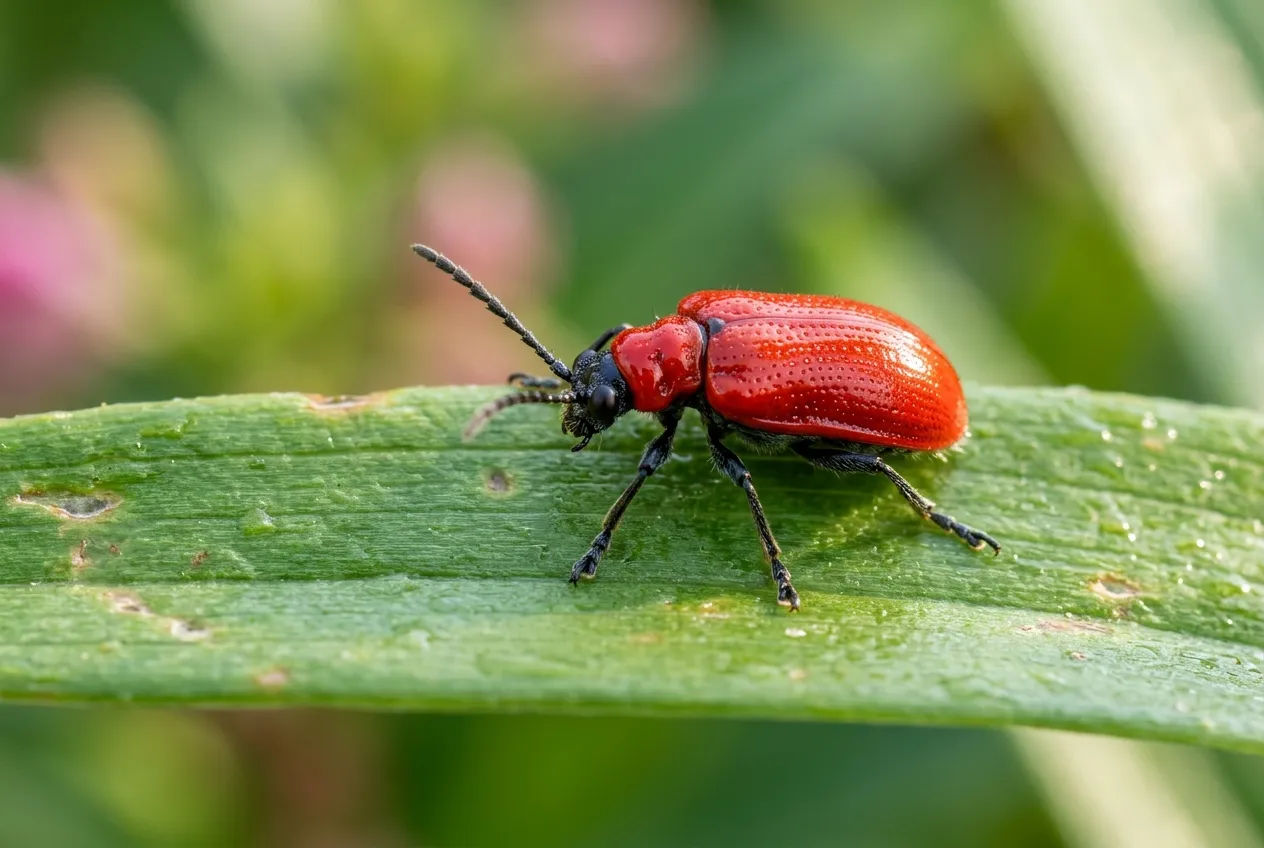 Adult lily beetle — 8mm long, bright scarlet, and the number one pest of lilies in UK gardens. Check daily from April.
Identification: Adults are 8mm long, bright scarlet red with black legs, antennae, and undersides. They are visible from 2-3 metres away. They make a distinctive squeaking sound when picked up. Larvae are 8-10mm, orange-brown, and cover themselves in their own dark, slimy excrement as camouflage — making them look like bird droppings on the leaf surface.
Lifecycle: Adults emerge from the soil in April when temperatures reach 10-12C. They feed on lily foliage for 2-3 weeks, then mate and lay eggs in neat rows of 6-12 on the underside of leaves. Eggs are orange-red, 1mm long. Larvae hatch in 7-10 days and feed voraciously for 2-3 weeks before dropping to the soil to pupate. One to two generations per year in UK conditions, depending on summer warmth.
Hand-picking: The most effective single control method. Check every lily plant every morning from April to September. Adults drop to the ground when disturbed, landing dark-side-up to hide in soil. Hold your hand or a white tray beneath the leaf before approaching. Crush adults and larvae. Remove egg strips from leaf undersides. Ten minutes daily keeps a moderate-sized collection clean.
Neem oil spray: A neem oil solution (5ml per litre of water plus a drop of washing-up liquid) sprayed every 7-10 days deters egg-laying and disrupts larval feeding. It does not kill adults on contact but reduces the next generation by 60-70%.
Chemical control: Acetamiprid-based sprays (Bug Clear Ultra) provide 2-3 weeks of protection per application. Spray in the morning when bees are less active. Follow label instructions precisely. Chemical control is a last resort for severe infestations.
For a detailed guide on this specific pest, see our article on lily beetle identification and control.
Lawrie’s field observation: In my Staffordshire garden, lily beetle arrives like clockwork in the second week of April. The first adults always appear on Fritillaria imperialis before moving to lilies 7-10 days later. I use the fritillaries as an early warning system — when I spot the first beetle on a crown imperial, I know to start daily checks on every lily. This simple trick has saved my Oriental lilies from damage three years running.
After flowering care
What you do in the six weeks after the last flower fades determines next year’s display. The bulb is rebuilding its energy reserves through the leaves, and cutting the stem too early costs you 30-50% of next season’s flowers.
Deadheading: Remove spent flower heads as soon as petals drop. Cut just below the lowest seed pod, leaving the entire stem and all leaves intact. Seed production diverts energy from the bulb. Each seed pod left on a stem reduces next year’s flower count by roughly one bloom.
Leave the stem: Do not cut the stem until it turns completely yellow or brown — usually late September to November. The green stem and leaves photosynthesise for 6-8 weeks after flowering, sending energy down to the bulb. This is when next year’s flower buds form inside the bulb.
Final feed: Give one last tomato fertiliser feed at double strength immediately after deadheading. This final boost supplies potassium directly to the bulb during its critical rebuilding phase.
Cutting: Once the stem is fully yellowed, cut it to 5cm above soil level. Remove and dispose of cut stems — do not compost them, as they can harbour botrytis spores and lily beetle pupae.
Lilies also make exceptional cut flowers. If cutting for the house, take no more than one-third of the stem length. Leaving two-thirds of the foliage ensures the bulb still rebuilds adequately.
Overwintering lilies in the UK
Most lilies are fully hardy across the UK and need no winter protection in the ground. Asiatic types survive to -20C. Orientals and trumpets handle -15C without damage. Only tender species like L. formosanum (hardy to -5C) need lifting or heavy mulching.
In borders: Apply a 5-7cm mulch of bark or leaf mould over the planting area in November. This insulates against sudden temperature drops and prevents frost heave — the repeated freeze-thaw cycle that pushes shallow bulbs to the surface. On exposed sites, a 10cm mulch is safer.
In containers: Move pots against a south or west-facing house wall for reflected warmth. Wrap the pot (not the soil surface) in bubble wrap or hessian. Raise pots onto feet or bricks to prevent the base freezing in standing water. Water containers lightly once a month through winter — just enough to stop the compost shrinking away from the pot sides.
Dividing clumps: Every 3-4 years, lift and divide established clumps in late autumn. Dig carefully, separate the bulbs and any bulblets, discard any soft or damaged ones, and replant immediately at the correct depth with fresh grit beneath. Division keeps flower size and stem strength at their best.
If you want to plan year-round colour using layered bulb planting, see our guide to bulb lasagne planting.
Lily type comparison table
This table compares the seven main groups for UK growing conditions. Data from seven seasons of Staffordshire trials plus RHS published hardiness ratings.
| Lily type | Height (cm) | Fragrance | Flowering | Hardiness | Petal direction | Container | Best for |
|---|---|---|---|---|---|---|---|
| Asiatic | 60-120 | None | June-July | -20C (H7) | Upward | Excellent | Beginners, colour range |
| Oriental | 90-150 | Strong | Aug-Sept | -15C (H5) | Outward/down | Good | Fragrance, impact |
| Trumpet | 120-200 | Strong | July-Aug | -15C (H5) | Outward | Fair (tall) | Height, naturalising |
| Martagon | 90-150 | Light | June-July | -20C (H7) | Recurved down | Poor | Shade, woodland |
| LA hybrid | 90-120 | Moderate | July | -15C (H5) | Outward | Good | Cutting, vases |
| OT hybrid | 120-180 | Moderate | July-Aug | -15C (H5) | Outward | Fair (tall) | Drama, huge flowers |
| Species | 60-150 | Variable | June-Aug | -20C (H7) | Variable | Variable | Naturalising, wild gardens |
Field report: seven seasons of lily trials in Staffordshire
Trial location: GardenUK trial plot, south-facing border and container collection, Staffordshire (heavy clay soil) Date range tested: September 2019 - September 2025 Conditions: pH 6.8 (neutral), heavy Staffordshire clay, south-facing but partially wind-exposed, 180m elevation
Key findings: Of 34 varieties trialled, Asiatic types had the highest survival rate (92% after 5 years) compared to Orientals (74%) and trumpets (81%). The critical factor was drainage — varieties planted with a 5cm grit layer beneath the bulb had 25% higher survival than those planted without grit in the same soil. Lily beetle pressure increased each year from 2019 to 2025, with first sighting dates moving earlier from late April to early April. Container-grown Orientals outperformed border-grown Orientals in every metric because the compost mix eliminated the clay drainage problem entirely.
Toxicity warning
All true lilies (Lilium species) are highly toxic to cats. Ingestion of any part — petals, leaves, pollen, or even water from a vase — can cause fatal acute kidney failure within 24-72 hours. There is no home treatment. If a cat contacts lily pollen or chews any part of the plant, seek emergency veterinary attention immediately.
Lilies are also mildly toxic to dogs (causing gastrointestinal upset but not kidney failure) and can cause skin irritation in humans with sensitive skin. Wear gloves when handling bulbs.
If you have cats, consider growing summer flowers that are non-toxic, such as dahlias, zinnias, or snapdragons.
Frequently asked questions
When is the best time to plant lily bulbs in the UK?
Autumn (October-November) is the best planting time. Autumn planting gives bulbs 4-5 months to develop roots before spring growth begins. Spring planting (March-April) also works but may delay first-year flowering by 2-3 weeks. Buy bulbs as fresh as possible — lily bulbs have no papery outer tunic and dry out within days of exposure. Plant within a week of purchase.
How deep should I plant lily bulbs?
Plant lily bulbs three times their height deep. A 5cm bulb goes 15cm deep; a 7cm bulb sits 20cm below the surface. This depth protects them from frost, summer heat, and surface waterlogging. Stem-rooting lilies (most Asiatic and Oriental types) produce roots above the bulb, so deeper planting gives more rooting space and better anchorage for tall stems.
Can I grow lilies in pots and containers?
Lilies are excellent container plants and grow well in pots 30cm wide or larger. Plant three bulbs per 30cm pot for a full display. Use John Innes No. 2 mixed with 20% perlite for drainage. Container lilies need watering every 2-3 days in summer and fortnightly feeding with tomato fertiliser. Move pots against a house wall in winter and wrap in bubble wrap to prevent compost freezing solid.
Why are my lily leaves turning brown?
Brown leaves usually indicate lily beetle damage, botrytis, or overwatering. Lily beetle larvae strip foliage from May onwards — check leaf undersides for brown, slimy grubs. Botrytis (grey mould) causes brown spots spreading across leaves in wet weather, affecting 30-40% of UK lily plantings annually. Waterlogged soil rots the bulb, turning the whole stem brown from the base upward.
Are lilies poisonous to cats?
All true lilies are extremely toxic to cats. Even small amounts of pollen licked from fur can cause fatal acute kidney failure within 24-72 hours. If you have cats, do not grow lilies in any area cats can access. The RHS lily growing guide confirms the toxicity risk, and the RHS lily beetle advice page covers identification and control of the main pest. Safer alternatives include dahlias, snapdragons, and roses.
How do I stop lily beetle destroying my plants?
Daily hand-picking from April onwards is the most effective control. Adults are bright scarlet, 8mm long, and visible from distance. Hold a hand beneath the beetle before touching it — they drop when disturbed. Crush brown, slimy larvae on leaf undersides. Neem oil sprayed every 7-10 days deters egg-laying and reduces the next generation by 60-70%. Acetamiprid sprays provide 2-3 weeks of protection for severe cases.
Do lilies come back every year in UK gardens?
Most lilies are reliably perennial across the UK. Asiatic and Martagon types are the hardiest, surviving temperatures down to -20C in well-drained soil. Oriental lilies handle -15C comfortably across most of England, Wales, and sheltered Scottish gardens. The key to long-term return is drainage at the bulb base. Add a 5cm grit layer when planting and avoid heavy, waterlogged positions. Divide clumps every 3-4 years to maintain flower size.
Lawrie has been gardening in the West Midlands for over 30 years. He grows his own veg using no-dig methods, keeps a wildlife-friendly garden, and writes practical advice based on real UK growing conditions.