How to Grow Marigolds in the UK
How to grow marigolds in UK gardens. French, African, and pot marigolds from seed, deadheading, companion planting, and best varieties.
Key takeaways
- French marigolds (Tagetes patula) deter whitefly and root-knot nematodes near tomatoes
- Pot marigolds (Calendula officinalis) are edible flowers used in salads and herbal teas
- Sow indoors March-April or direct sow after last frost in May for flowers by June
- Deadhead spent blooms weekly to keep plants flowering until first frost
- French marigold roots release thiopenes that suppress soil nematodes for up to 3 years
- Seed saving is simple: let flower heads dry on the plant and collect in September
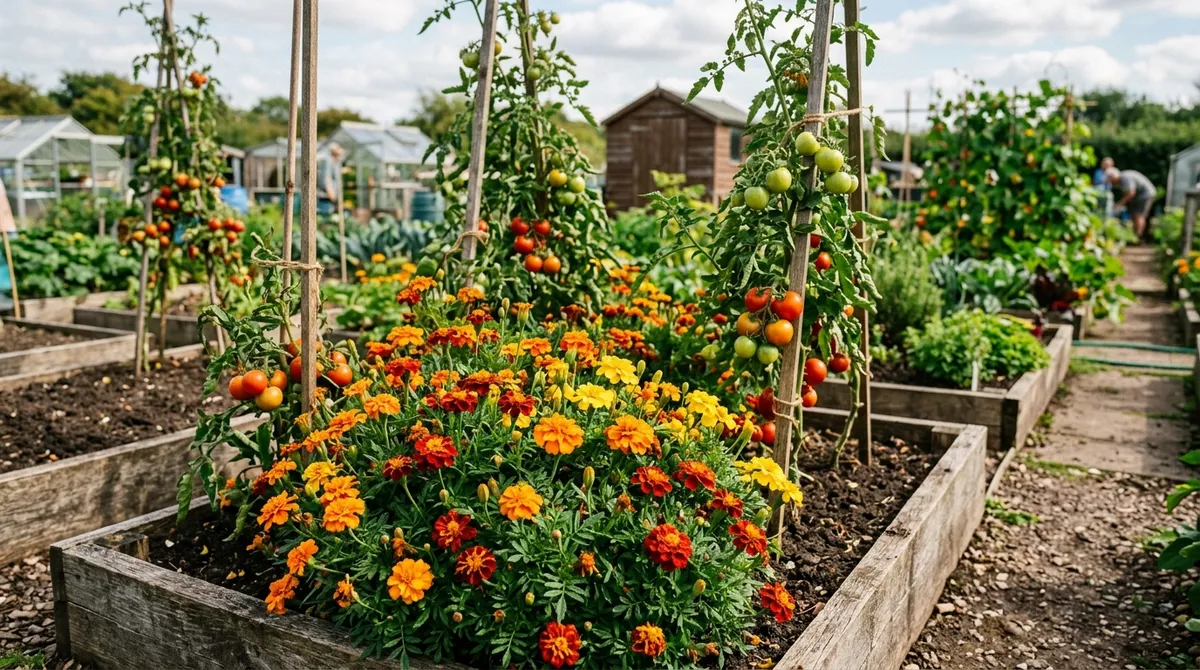
Growing marigolds in the UK is one of the most rewarding things a gardener can do. These bright, reliable flowers germinate fast and bloom for months. They earn their place in any vegetable garden through genuine pest-deterring ability.
The word “marigold” covers three quite different plants. French marigolds, African marigolds, and pot marigolds (calendula) look similar but belong to different species. Understanding the differences matters, because each has distinct strengths in the garden.
What are the three types of marigold?
The name “marigold” causes more confusion than almost any other flower. Three distinct plants share it, and they behave differently in UK gardens.
French marigolds (Tagetes patula) are compact, bushy plants reaching 20-35cm. They produce masses of small, ruffled flowers in orange, yellow, red, and bicolour forms. Despite the name, they originate from Central America. French marigolds are half-hardy annuals killed by frost.
African marigolds (Tagetes erecta) are taller, reaching 60-90cm. They produce large, globe-shaped double flowers up to 12cm across. Colours range from pale yellow to deep orange. Like French marigolds, they are half-hardy annuals from Central America. The “African” name is a historical misnomer.
Pot marigolds (Calendula officinalis) are a completely different genus. They are hardy annuals native to southern Europe. Calendula grows 30-60cm tall with single or double daisy-like flowers in orange and yellow. Unlike Tagetes, calendula is frost-tolerant, self-seeds reliably, and has edible petals with genuine herbal properties.
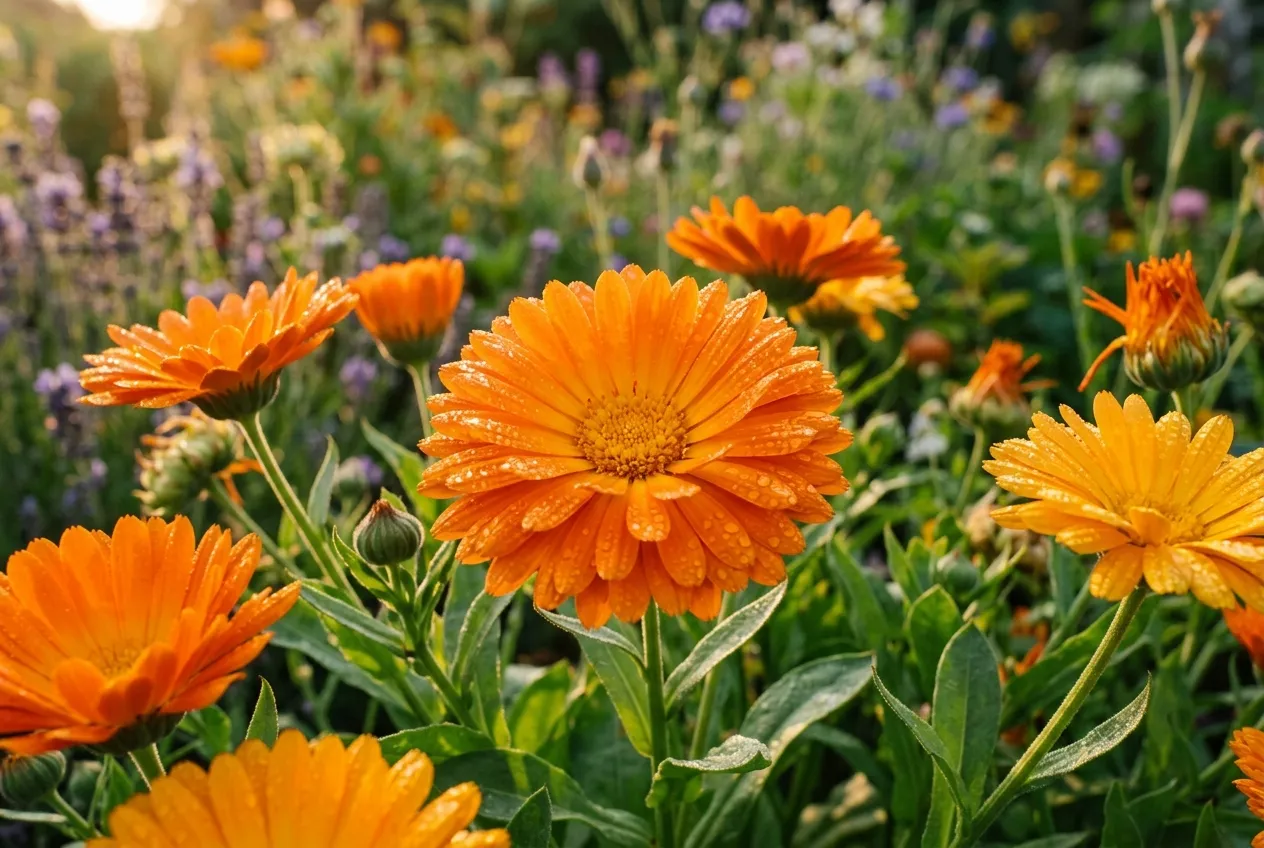
Pot marigolds (Calendula officinalis) are edible, frost-hardy, and self-seed freely in UK gardens.
Which marigold varieties grow best in the UK?
After growing twelve varieties side by side in Staffordshire over five seasons, clear winners emerged for UK conditions.
French marigold varieties
Bonanza series is the best all-rounder. Compact at 25-30cm with large double flowers and excellent branching. Available in orange, yellow, gold, and bicolour. Flowers from June to November with regular deadheading.
Safari series produces unusual crested flowers in tangerine, scarlet, and yellow. Slightly taller at 30cm. Strong performers in wet summers thanks to good grey mould resistance.
Durango series has the largest flowers of any French type at 6-7cm across. Bold colours and a tidy, compact habit at 25cm. Ideal for container growing and edging beds.
African marigold varieties
Inca series reaches 35-40cm with huge 10cm blooms. Shorter than older African types, so it resists wind damage. Gold, orange, and yellow forms are all excellent.
Vanilla is the only true cream-white African marigold. Reaches 35cm with 8cm double flowers. Striking planted among orange varieties.
Calendula varieties
Indian Prince is outstanding. Deep orange petals with dark red reverses reaching 60cm. Strong stems for cutting. Self-seeds generously.
Art Shades is a mix of apricot, orange, and cream shades. Grows 45cm tall. Softer colours work well in cottage garden borders and wildflower meadows.
Lawrie’s experience: “Bonanza Orange is the one I replant every year without fail. It flowers first and flowers longest. The compact shape means I can tuck three plants around each tomato without shading anything out.”
How do I sow marigold seeds?
Marigold seeds are large, easy to handle, and germinate rapidly. This makes them excellent for children and beginners. They are among the easiest flowers to grow from seed in the UK.
Sowing indoors (March-April)
Fill module trays with seed compost and water well. Push one seed per module about 1cm deep. Cover with a thin layer of vermiculite or compost. Place on a warm windowsill or in a propagator at 18-21C. Seeds germinate in 5-7 days.
Grow on in good light. Pot up into 9cm pots when seedlings have two pairs of true leaves. Pinch out the growing tip when plants reach 10cm to encourage bushy growth.
Direct sowing outdoors (May)
Wait until after the last frost, usually mid to late May in England. Sow seeds directly where they are to flower. Rake the soil to a fine tilth, scatter seeds thinly, and cover with 1cm of soil. Thin seedlings to 20-30cm apart once they have their first true leaves.
Direct-sown marigolds flower 3-4 weeks later than indoor-sown plants. However, they often produce stronger root systems and cope better with dry spells later in summer.
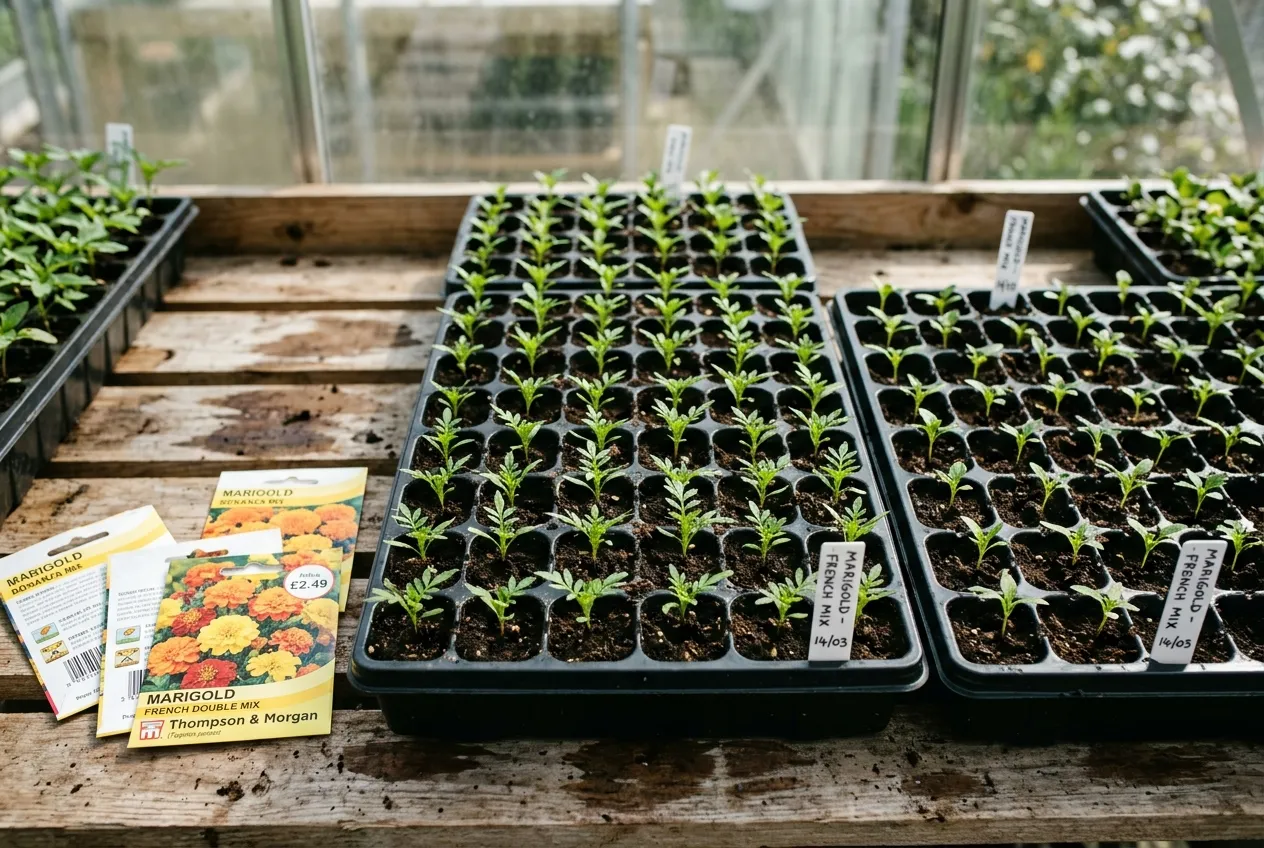
Sow marigold seeds in modules from March. They germinate in 5-7 days and grow fast in a warm greenhouse.
When should I plant marigolds outside?
Harden off indoor-raised seedlings over 7-10 days in late May. Move them outdoors during the day and back inside at night. After hardening off, plant out into their final positions.
Spacing: French marigolds need 20-30cm between plants. African types need 30-40cm. Calendula needs 25-35cm.
Soil: Marigolds tolerate almost any well-drained soil. They actually flower better in average soil than in rich, heavily composted ground. Over-feeding produces lush foliage at the expense of blooms.
Position: Full sun is essential for maximum flowering. Marigolds cope with partial shade but produce far fewer blooms. South-facing beds, borders, and containers are ideal.
How do I use marigolds as companion plants?
This is where French marigolds earn their keep in any vegetable garden. Their pest-deterring properties are backed by genuine research, not just folklore.
Whitefly deterrent. French marigolds planted alongside tomatoes reduce whitefly numbers. The RHS confirms this effect in their companion planting research. The strong scent of Tagetes foliage confuses whitefly seeking host plants. Space marigolds 30cm apart around tomato plants for best protection. This is one of the most effective companion planting combinations tested in UK conditions.
Nematode control. French marigold roots release thiophenes, chemicals toxic to root-knot nematodes. Dig spent Tagetes plants into the soil in autumn as a green manure. This suppresses nematode populations for up to 3 years. It is particularly useful on allotments with persistent nematode problems.
Hoverfly attraction. Both Tagetes and Calendula attract hoverflies. Adult hoverflies feed on pollen. Their larvae eat up to 50 aphids per day. Garden Organic recommends planting marigold rows along vegetable bed edges as a biological pest control corridor.
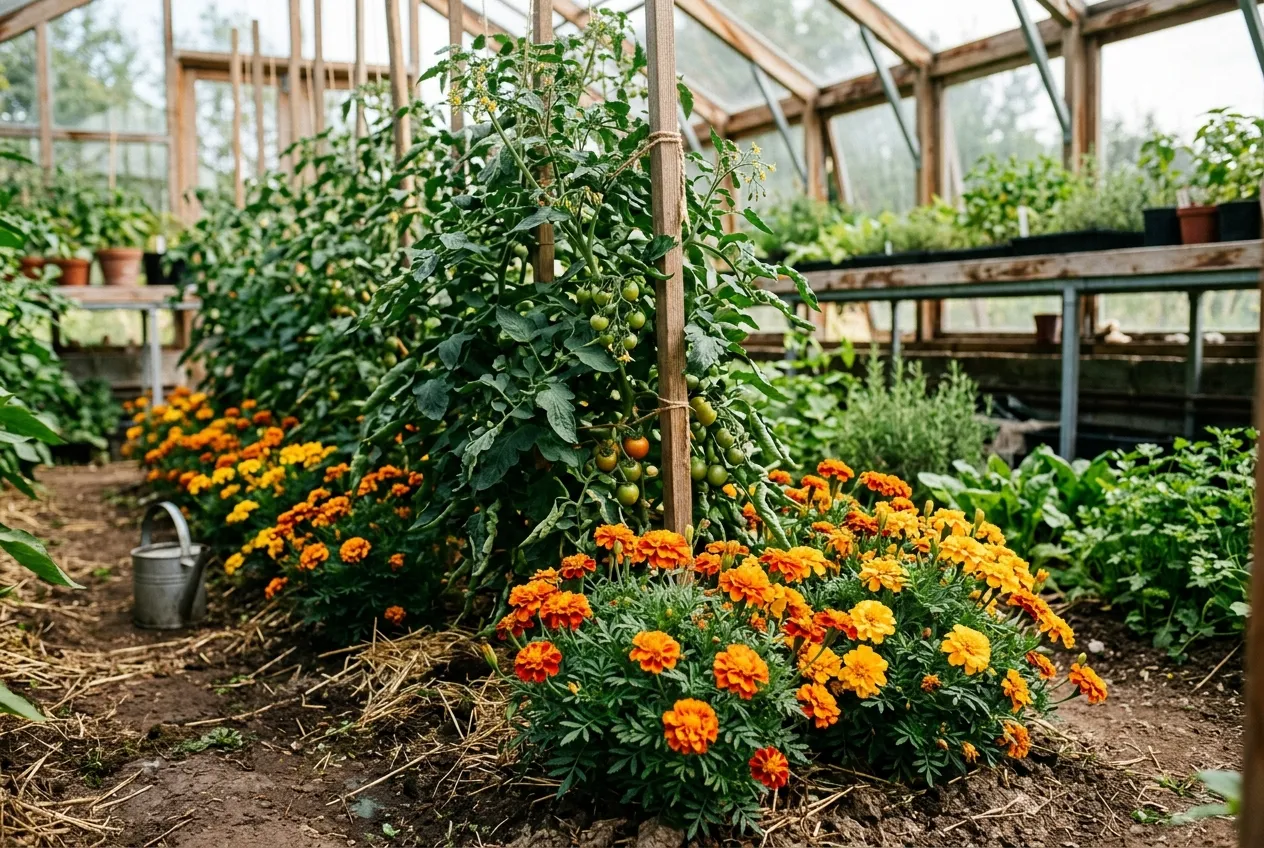
French marigolds around greenhouse tomatoes. The scent deters whitefly and the roots suppress soil nematodes.
How do I deadhead marigolds for continuous flowering?
Deadheading is the single most important task for a long marigold season. A neglected plant sets seed and stops flowering. A deadheaded plant flowers from June until November.
Check plants weekly. Pinch off spent flower heads just above the next set of leaves. Remove the entire seed pod, not just the faded petals. Use thumb and forefinger for French types. Use secateurs for the thicker stems of African varieties.
In wet summers, also remove any flowers showing signs of grey mould (Botrytis). Cut these back further to healthy growth.
Can I eat pot marigold (calendula) flowers?
Calendula officinalis petals are edible and have been used in food and medicine for centuries. The petals have a mild, slightly peppery flavour with a hint of saffron.
In the kitchen. Scatter fresh petals into salads for colour. Stir into rice to give a golden tint. Add to baked goods. Dry petals store well in an airtight jar.
Herbal uses. Calendula is used in skin balms, lip balms, and healing salves. Infuse dried petals in oil for 4-6 weeks to make calendula oil. The anti-inflammatory properties are well documented in herbal medicine traditions.
Important note: Only eat calendula flowers, not French or African marigolds. Tagetes petals are technically non-toxic but taste unpleasantly bitter. Only eat flowers grown without pesticides. Calendula is one of the best edible flowers for UK gardens alongside nasturtiums and violas.
How do I save marigold seeds?
Saving seed is straightforward and saves money for next season. Allow a few flower heads to mature and dry on the plant in late summer.
French and African marigolds. Leave spent flowers on the plant until the seed head is brown and papery. Pull apart the dried head to reveal long, thin black and white seeds. Spread on newspaper to dry for a week. Store in a labelled paper envelope in a cool, dry place.
Calendula. Seeds are curled, comma-shaped, and easy to spot. They ripen inside the dried flower head. Shake the head over a container to collect them. Calendula self-seeds so freely that you may not need to save any deliberately.
Seeds stored in paper envelopes in a cool drawer remain viable for 2-3 years.
What problems affect marigolds?
Marigolds are tough plants with few serious problems. Two issues are worth watching for.
Slugs and snails. Young seedlings are vulnerable, especially in wet springs. Protect transplants with copper tape, organic slug pellets, or beer traps for the first 2-3 weeks after planting out. Once stems toughen, slug damage drops significantly.
Grey mould (Botrytis). In wet summers, grey fluffy mould can develop on spent flowers and damaged stems. Prevention is better than cure: deadhead regularly, space plants for good air circulation, and avoid overhead watering. Remove affected material promptly. This is more common with dense double-flowered varieties. For more advice on garden troubles, see our hardy annual guide.
Marigold variety comparison table
| Variety | Type | Height | Flower Colour | Companion Benefit | Edible |
|---|---|---|---|---|---|
| Bonanza | French (Tagetes patula) | 25-30cm | Orange, yellow, gold, bicolour | Deters whitefly, suppresses nematodes | No |
| Safari | French (Tagetes patula) | 30cm | Tangerine, scarlet, yellow | Deters whitefly, good mould resistance | No |
| Durango | French (Tagetes patula) | 25cm | Bold orange, yellow, red | Deters whitefly, large flowers attract hoverflies | No |
| Inca | African (Tagetes erecta) | 35-40cm | Gold, orange, yellow | Attracts hoverflies, nematode control | No |
| Vanilla | African (Tagetes erecta) | 35cm | Cream-white | Attracts hoverflies | No |
| Indian Prince | Calendula (C. officinalis) | 60cm | Deep orange with red reverse | Attracts hoverflies and lacewings | Yes |
| Art Shades | Calendula (C. officinalis) | 45cm | Apricot, orange, cream | Attracts hoverflies and lacewings | Yes |
Frequently asked questions
When should I sow marigold seeds in the UK?
Sow indoors from mid-March to April. Start in module trays on a warm windowsill or in a heated propagator at 18-21C. Germination takes 5-7 days. Harden off seedlings in May and plant outdoors after the last frost, usually mid to late May in most of England. You can also direct sow into the ground from late May, though flowering will start 3-4 weeks later.
Are marigolds and calendula the same plant?
No, they are different species in different genera. French and African marigolds belong to the genus Tagetes in the daisy family. Pot marigolds are Calendula officinalis, also in the daisy family but not closely related. Tagetes marigolds are half-hardy annuals from Central America. Calendula is a hardy annual native to southern Europe. Both are called marigolds, which causes confusion.
Do marigolds really deter pests?
French marigolds deter whitefly effectively. Research by the Royal Horticultural Society confirmed that Tagetes patula planted alongside tomatoes reduces whitefly numbers. Their roots also release thiophenes that suppress root-knot nematodes in the soil. This nematode-suppressing effect can last up to 3 years after the marigolds are removed. Calendula attracts hoverflies and lacewings, which eat aphids.
How do I deadhead marigolds?
Pinch or snip spent flower heads weekly. Remove the entire flower head including the seed pod beneath it, cutting back to the next set of leaves. Regular deadheading prevents the plant from setting seed and redirects energy into new blooms. French marigolds treated this way will flower continuously from June until the first hard frost in October or November.
Can I eat marigold flowers?
Calendula (pot marigold) petals are edible. They have a mild, slightly peppery flavour and add colour to salads, rice dishes, and baked goods. Calendula has been used in herbal medicine for centuries as a skin balm and anti-inflammatory. French marigold (Tagetes) petals are technically edible but taste bitter and are not usually eaten. Only eat flowers you have grown yourself without pesticides.
Will marigolds come back every year?
Marigolds are annual plants that die after the first frost. However, both Tagetes and Calendula self-seed freely in UK gardens. Calendula is particularly reliable at self-seeding and often reappears year after year without intervention. To guarantee plants, save seed from dried flower heads in September and store in a paper envelope in a cool dry place over winter.
What is the best marigold for companion planting?
French marigold (Tagetes patula) is the best choice. The Bonanza and Safari series are compact at 25-30cm and produce dense flowers over a long season. Their roots release thiophenes that kill root-knot nematodes. Plant them 20-30cm apart around tomatoes, peppers, and aubergines. For attracting beneficial insects, Calendula officinalis draws in hoverflies and lacewings that eat aphids.
Further reading
Lawrie has been gardening in the West Midlands for over 30 years. He grows his own veg using no-dig methods, keeps a wildlife-friendly garden, and writes practical advice based on real UK growing conditions.