How to Grow Olive Trees in the UK
Grow olive trees in UK gardens with this practical guide. Hardy varieties, planting, winter protection, pruning, and fruiting tips.
Key takeaways
- Hardy olive varieties tolerate minus 10 degrees C for short periods, making them viable across most of the UK
- Arbequina and Leccino are the two most reliable varieties for British gardens, both self-fertile
- Free-draining soil is essential: olives die in waterlogged ground faster than from cold
- Container olives need a minimum 50cm diameter pot with 30% grit mixed into the compost
- Winter protection with fleece is needed when temperatures drop below minus 5 degrees C overnight
- Fruiting is possible in southern England after warm summers, but most UK olives are grown as ornamentals
- Prune in late spring (April-May) to maintain shape and remove frost-damaged growth
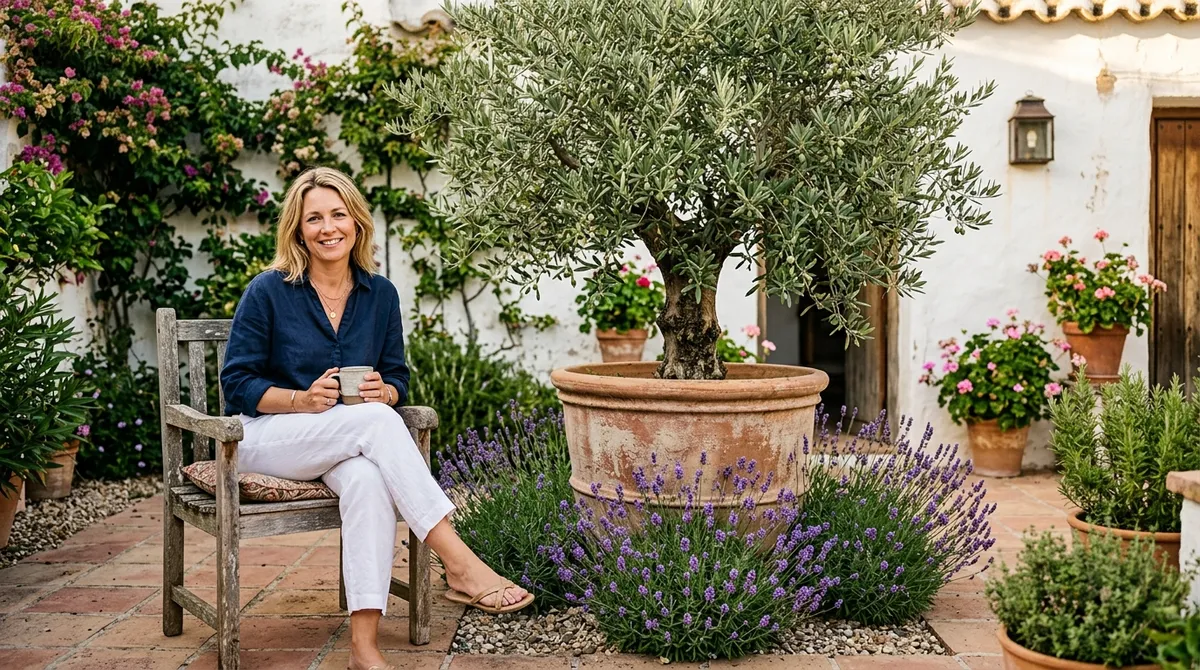
Olive trees are among the hardiest Mediterranean plants you can grow in a British garden. Their silver-green evergreen foliage, gnarled bark, and drought tolerance make them a striking focal point in containers and borders alike. With the right variety, good drainage, and basic winter protection, an olive tree will thrive for decades across most of the UK.
The olive (Olea europaea) has been cultivated for over 6,000 years around the Mediterranean basin. British gardeners have grown them since the 16th century, though widespread garden planting only took off in the early 2000s. Today, mature olive trees are a common sight in gardens from Cornwall to Yorkshire. The key is choosing a hardy variety, providing sharp drainage, and knowing when to protect against hard frost. This guide covers everything from variety selection to winter care, based on seven years of hands-on growing in the West Midlands. For more sun-loving plants that suit a similar approach, see our guide to Mediterranean garden planting.
Can olive trees survive UK winters?
Hardy olive varieties tolerate temperatures down to minus 10 degrees C for short periods when established in free-draining soil. The Royal Horticultural Society lists Olea europaea as hardy in most of the UK (RHS hardiness rating H4-H5). Cold damage depends on three factors: the absolute minimum temperature, the duration of the cold spell, and soil drainage.
Short sharp frosts of minus 7 to minus 10 degrees C overnight cause little damage to established trees if the soil is dry. Prolonged cold below minus 5 degrees C for 48 hours or more causes branch dieback, especially on young trees. Wet soil around the roots during cold weather is the real killer. Waterlogged roots freeze solid and rot when they thaw.
During the 2022-23 cold snap in Staffordshire, my ground-planted Arbequina against a south-facing stone wall survived minus 8 degrees C with no fleece protection. It lost a few branch tips but pushed fresh growth in May. The container-grown Leccino on an exposed patio suffered more dieback because the pot froze through. Root damage in containers starts at minus 5 degrees C because the roots lack the insulating ground mass.
Biosecurity note: Buy UK-grown olive trees from reputable nurseries. Imported trees from southern Europe carry a risk of Xylella fastidiosa, a devastating bacterial disease currently spreading through Mediterranean olive groves. The RHS olive growing guide provides current biosecurity advice for UK buyers.
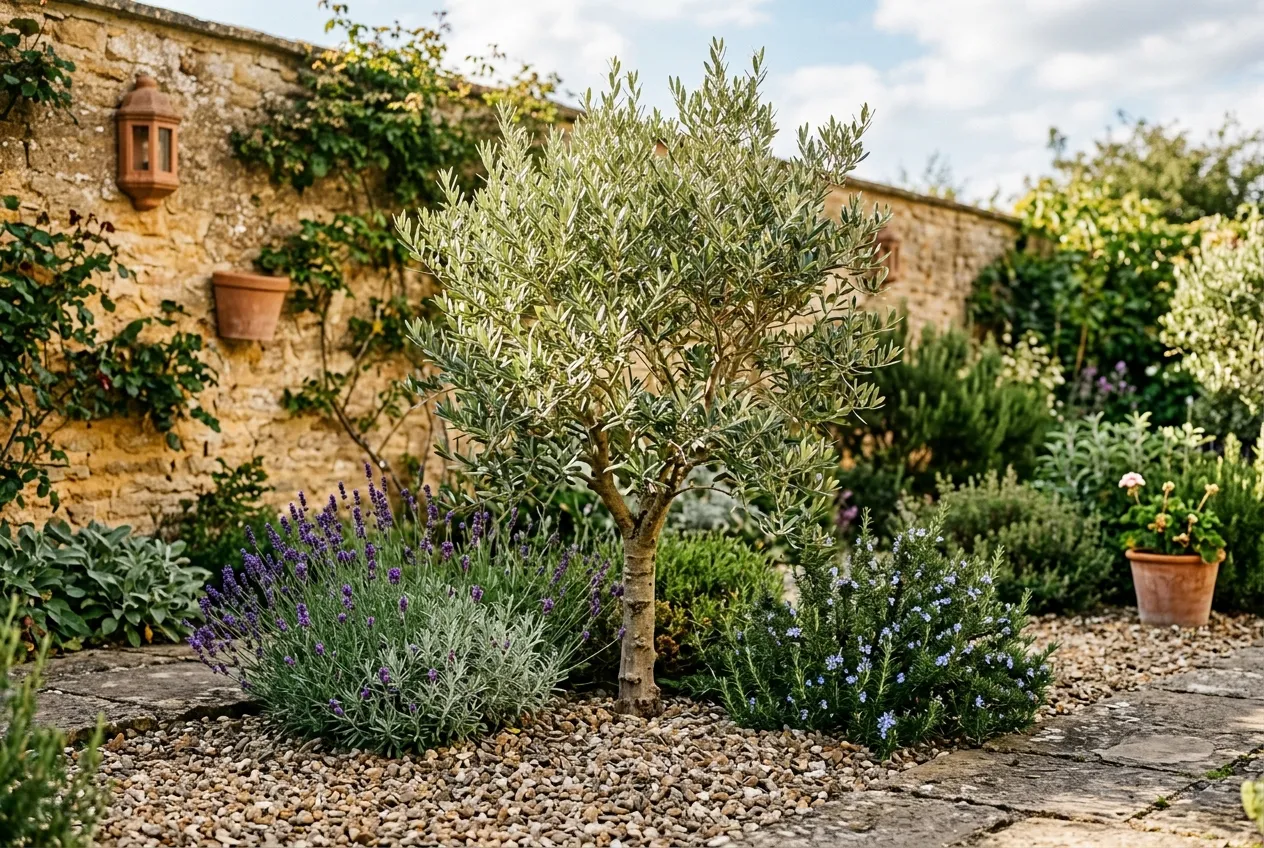 A ground-planted olive tree thriving against a south-facing stone wall in a UK garden, surrounded by lavender and rosemary
Best olive tree varieties for UK gardens
Not all olive varieties suit British conditions. The best performers combine cold hardiness, compact habit, and self-fertility. This table compares the four most reliable varieties for UK gardens.
| Variety | Hardiness | Height (UK) | Self-fertile | Fruiting potential | Best for |
|---|---|---|---|---|---|
| Arbequina | Minus 10C | 3-4m | Yes | Good (south England) | Containers, small gardens |
| Leccino | Minus 12C | 4-5m | Partial | Moderate | Cold/exposed gardens |
| Cipressino | Minus 10C | 3-5m | Yes | Moderate | Narrow spaces, hedging |
| Frantoio | Minus 8C | 4-6m | No | Good (south England) | Large gardens, oil production |
Arbequina
Arbequina is the best all-round olive for British gardens. It is fully self-fertile, compact (3-4m in UK conditions), and the most likely variety to produce fruit in southern England. Originally from Catalonia, it handles cold to minus 10 degrees C. The small, rounded fruit ripen to dark purple. Growth habit is bushy and slightly weeping. This is the variety I recommend for first-time olive growers. It suits pots of 50cm diameter or larger and copes well with annual pruning to maintain size.
Leccino
Leccino is the toughest olive for exposed or northern UK gardens. It tolerates brief dips to minus 12 degrees C, making it the hardiest commonly available variety. The tree produces large, handsome leaves with a pronounced silver underside. Growth is vigorous at 20-30cm per year. Leccino is partially self-fertile but fruits better with a pollination partner like Frantoio nearby. A strong choice for the Midlands, Yorkshire, and sheltered Scottish gardens.
Cipressino
Cipressino has an upright, columnar habit that suits narrow spaces. It grows 3-5m tall but stays relatively slim at 1.5-2m wide. This makes it useful for flanking doorways, lining paths, or growing against walls where horizontal space is limited. Hardy to minus 10 degrees C. Self-fertile with moderate fruiting potential. The compact growth means less pruning than spreading varieties.
Frantoio
Frantoio is a traditional Italian oil olive with outstanding flavour. It is the least cold-hardy on this list at minus 8 degrees C but produces the highest-quality fruit for pressing. Growth reaches 4-6m in UK conditions. Frantoio needs a pollination partner and reliably fruits only in the warmest parts of southern England. Choose this variety if you have a large, sheltered garden in London, the south coast, or the south-west and want to attempt a genuine UK olive harvest.
Container vs ground planting
Both methods work in the UK. The choice depends on your climate, garden layout, and how much winter protection you are willing to provide. If you grow other fruit in pots, see our guide to growing fruit in pots and containers for general advice on soil mixes and feeding.
Planting in the ground
Ground planting gives olive trees the best long-term prospects. Roots spread into surrounding soil, providing better insulation from frost, greater drought tolerance, and stronger growth. A ground-planted olive against a south-facing wall benefits from radiated heat and rain shadow.
Requirements for ground planting:
- South or west-facing position with 6+ hours direct sun
- Free-draining soil (sandy, gravelly, or chalky)
- Shelter from cold north and east winds
- Space of 3-4m diameter for a mature tree
On heavy clay soil, create a raised planting mound 30-40cm above ground level using a 50/50 mix of topsoil and horticultural grit. Line the base of the planting hole with 10cm of gravel. Clay that stays wet around olive roots in winter causes fatal root rot within 2-3 seasons.
Container growing
Containers offer flexibility. You can position the tree in the sunniest spot in summer and move it to shelter in winter. Container growing also restricts root growth, keeping trees smaller and more manageable at 1.5-2.5m.
Container requirements:
- Minimum 50cm diameter pot (terracotta or frost-proof ceramic)
- Drainage holes covered with crocks or mesh
- Compost mix of 70% John Innes No. 3 and 30% horticultural grit
- Pot feet or risers to prevent waterlogging
- Repotting every 3-4 years into a pot one size larger
Container olives need more attention than ground-planted trees. Water when the top 5cm of compost is dry from April to September. Stop watering almost entirely from November to February, allowing just enough to prevent the compost from turning to dust. Feed fortnightly with a half-strength liquid tomato feed from May to August. For more drought-tolerant plants that suit a similar watering approach, see our dedicated guide.
Soil and drainage for olive trees
Drainage is the single most critical factor for olive tree survival in the UK. An olive tree in poor, stony, dry soil will outperform one in rich, moist garden loam every time. Olives evolved on thin, rocky limestone soils around the Mediterranean. They do not need or want rich, moisture-retentive ground.
Ideal soil conditions
- pH: 6.0-8.5 (olive trees tolerate a wide range, from slightly acid to very alkaline)
- Texture: Sandy, gravelly, or chalky
- Drainage: Fast — water should drain through within minutes, not hours
- Fertility: Low to moderate — do not add compost or manure at planting
Improving heavy soil
If your soil is clay or heavy loam, you have two options. Either plant in a container (see above) or create a raised mound. Dig out a 1m diameter area to 40cm deep. Backfill with a mix of 50% excavated soil and 50% grit. Raise the finished planting level 30-40cm above the surrounding ground. Mulch with gravel, not bark. Gravel keeps the crown dry and reflects warmth. Bark holds moisture and encourages stem rot.
How to protect olive trees in winter
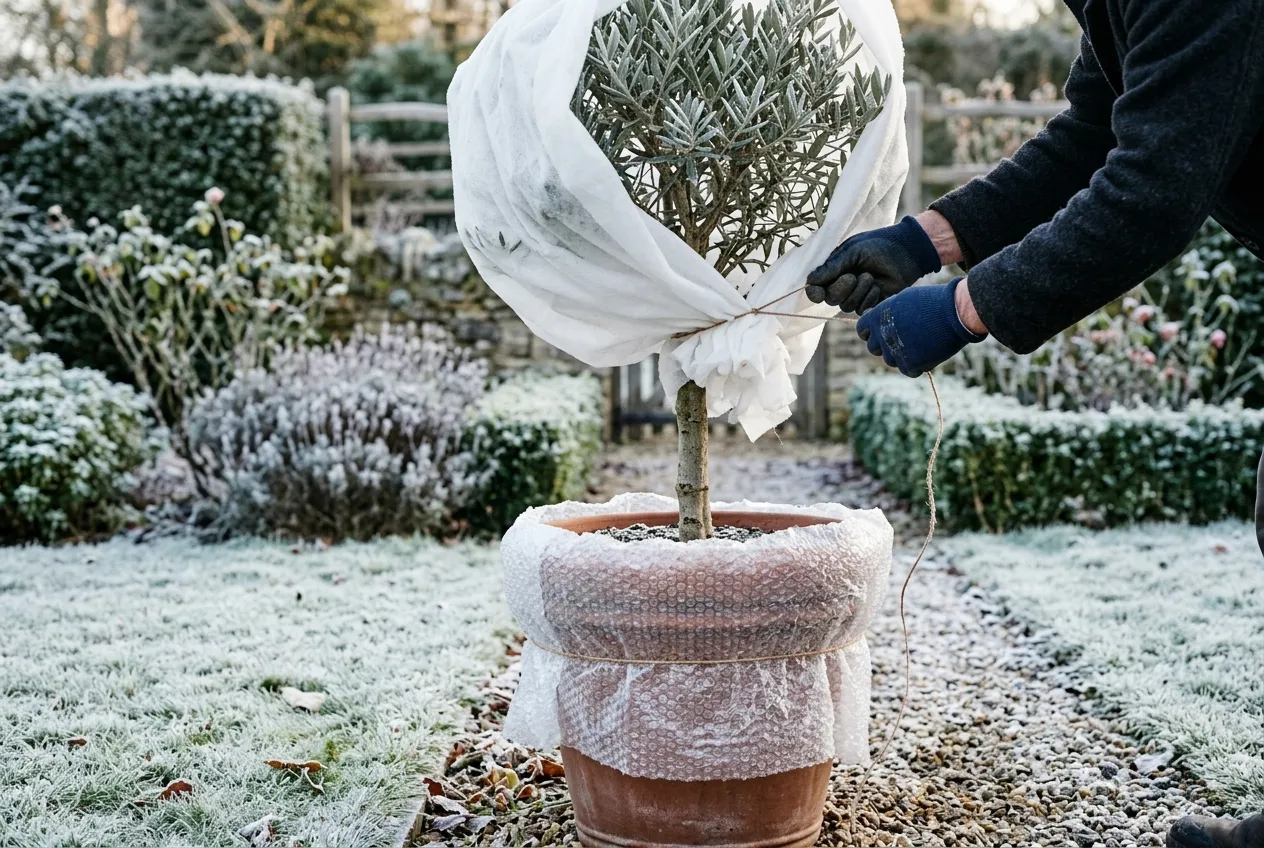 Wrapping an olive tree in horticultural fleece and insulating the pot with bubble wrap protects against hard frost
Winter protection is straightforward. Most UK winters require minimal intervention. Hard frost events — sustained temperatures below minus 5 degrees C — demand action.
Ground-planted trees
Established ground-planted olives in sheltered positions rarely need protection south of Birmingham. In colder regions or during severe cold snaps, wrap the canopy loosely in two layers of horticultural fleece. Remove it once temperatures rise above zero. Never use plastic sheeting, which traps moisture and causes more damage than the cold.
Container trees
Container olives need more protection because roots are exposed to air temperature on all sides. When hard frost is forecast:
- Move the pot against a south-facing wall for radiated heat
- Wrap the pot in bubble wrap or hessian to insulate the root ball
- Wrap the canopy in horticultural fleece (2 layers for minus 5 to minus 10 degrees C)
- Stand the pot on feet to prevent the base freezing to the ground
- Remove all wrapping once the cold spell passes
Do not bring olive trees indoors. They need a cold dormancy period of 6-8 weeks below 10 degrees C. Central heating triggers leaf drop, weakens growth, and attracts scale insects. For more winter care strategies, see our guide on how to protect plants from frost.
Pruning olive trees
Prune olive trees in late spring, from late April to May, once the risk of hard frost has passed. This timing allows you to see and remove any winter-damaged growth before the tree puts energy into it. Olive trees respond well to pruning and tolerate hard cutting if needed.
Annual maintenance pruning
- Remove dead, damaged, and crossing branches
- Thin the centre of the canopy to improve air circulation
- Cut back any shoots that spoil the shape by one third
- Remove suckers from the base of the trunk
- Trim to maintain desired height and spread
Shaping
Olive trees can be trained as single-stemmed standards (lollipop shape), multi-stemmed bushes, or left to develop naturally. The classic ornamental form is a clear 60-90cm trunk topped by a rounded canopy. Achieve this by removing low side branches over 2-3 years until the trunk is clear, then maintaining the canopy shape with annual trimming.
Renovation pruning
Neglected or overgrown olives can be cut back hard in late April. They regenerate from old wood, unlike lavender. Cut main branches back to 60-90cm from the ground and the tree will produce a flush of new shoots within 8-12 weeks. Select 4-5 well-spaced shoots to form the new framework and remove the rest. Olive trees are among the best evergreen trees for UK gardens precisely because they tolerate this hard renewal.
Will my olive tree produce fruit?
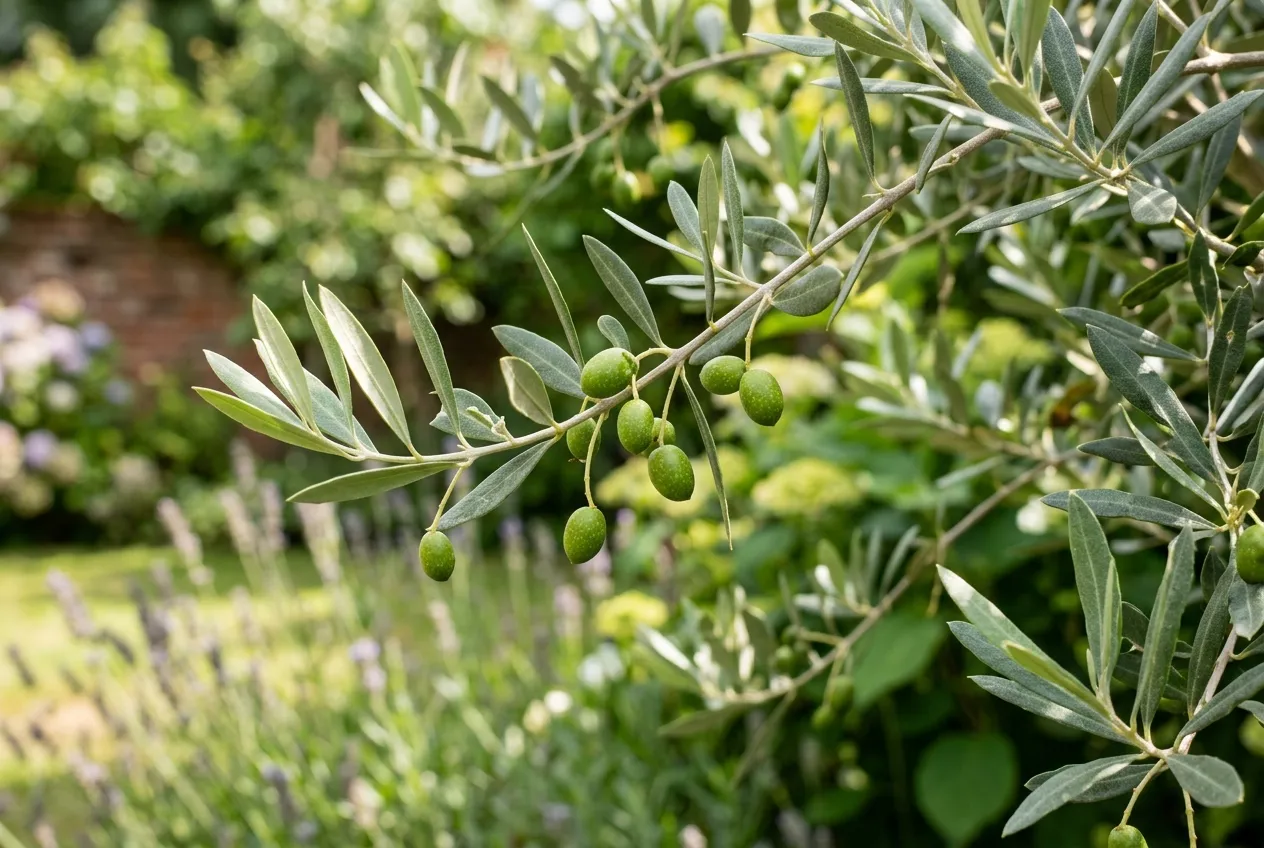 Small green olives forming on a UK-grown olive tree after a warm summer — fruiting is possible in southern England with the right variety
Olive fruiting in the UK is possible but not guaranteed. Fruit set requires two conditions: a cold winter dormancy period (6-8 weeks below 10 degrees C) followed by a long, warm summer with extended periods above 25 degrees C. Most UK summers deliver enough cold dormancy but fall short on summer heat.
Where fruiting happens
In London, the south coast, East Anglia, and the south-west, self-fertile varieties like Arbequina produce small crops after particularly warm summers. The 2022 and 2023 summers produced fruit on UK olives as far north as the Cotswolds. North of the Midlands, fruiting is very rare.
Maximising your chances
- Choose a self-fertile variety (Arbequina or Cipressino)
- Plant against a south-facing wall to maximise heat
- Use gravel mulch to reflect warmth upwards
- Avoid high-nitrogen feeds, which promote leaves over fruit
- Be patient — trees under 5 years old rarely fruit, even in ideal conditions
What to do with UK olives
If your tree does fruit, harvest when olives turn from green to purple-black (typically October-November). UK-grown olives are too small and few for pressing into oil. Cure them in brine or salt for table olives. Soak in water for 2 weeks, changing daily, then cure in a 10% salt brine for 6-8 weeks.
Buying tips for UK olive trees
Expect to pay £30-60 for a healthy young tree (60-90cm tall) from a UK nursery. Mature specimen trees with gnarled trunks sell for £150-500+ depending on size and age. Garden centres stock olive trees year-round, but the best selection is available from March to June.
What to look for:
- Bushy, well-branched growth (not a single bare whip)
- Healthy silver-green leaves with no yellowing or brown edges
- A named variety on the label, not just “olive tree”
- UK-grown stock (check the label for nursery origin)
- Firm root ball with white root tips visible at drainage holes
Avoid trees that have been standing in waterlogged trays or have yellowing lower leaves. These have likely suffered root damage already. Olive trees sold cheaply at supermarkets are often unnamed varieties of unknown hardiness.
For a smaller tree that suits confined spaces, see our guide to the best trees for small gardens. Olive trees combine well with other sun-loving plants in a Mediterranean garden planting scheme.
Month-by-month olive tree care
| Month | Task |
|---|---|
| January | Check fleece wrapping on container trees. Water sparingly if compost is bone dry. |
| February | Order new olive trees for spring planting. Check for scale insects on stems. |
| March | Remove winter fleece once hard frosts pass. Prepare planting positions. |
| April | Plant new trees. Begin feeding containers fortnightly. Start pruning. |
| May | Complete pruning. Water containers as needed. Mulch with gravel. |
| June | Enjoy new growth. Water containers in dry spells. Flowers appear in warm areas. |
| July | Water containers regularly. Monitor for olive moth in southern gardens. |
| August | Continue watering containers. Reduce feeding to monthly. |
| September | Stop feeding. Reduce watering. Harvest any ripe fruit in the south. |
| October | Move containers to sheltered positions. Harvest late fruit. |
| November | Wrap containers in bubble wrap if hard frost forecast. Stop watering. |
| December | Check fleece. Water only if compost is completely dry. Enjoy the evergreen foliage. |
Frequently asked questions
Can olive trees survive UK winters?
Hardy varieties survive most UK winters without damage. Arbequina, Leccino, and Cipressino tolerate short-term temperatures down to minus 10 degrees C when established in free-draining soil. Prolonged cold below minus 7 degrees C for more than 48 hours causes branch dieback. Container olives are more vulnerable because roots freeze faster in pots. Wrap pots in bubble wrap and canopies in fleece when overnight temperatures drop below minus 5 degrees C.
Do olive trees fruit in the UK?
Olive trees can fruit in southern England after warm summers. Self-fertile varieties like Arbequina produce small crops without a pollination partner. Fruiting requires a long, hot summer with temperatures above 25 degrees C for extended periods, followed by a mild winter. In the Midlands and further north, fruiting is rare. Most UK growers treat olive trees as ornamental evergreens rather than fruit crops.
What is the best olive tree variety for the UK?
Arbequina is the best all-round variety for British gardens. It is self-fertile, compact enough for containers, cold-hardy to minus 10 degrees C, and the most likely variety to fruit in southern England. Leccino is the toughest choice for colder or more exposed gardens, tolerating minus 12 degrees C for brief spells.
How big do olive trees grow in the UK?
UK olive trees typically reach 3-5 metres in height after 15-20 years. Growth rate is 15-30cm per year, much slower than in Mediterranean climates. Container-grown olives stay smaller at 1.5-2.5 metres depending on pot size. Regular pruning keeps trees at any desired height.
When should I plant an olive tree in the UK?
Plant olive trees in late spring from mid-April to early June. Spring planting gives roots the full growing season to establish before winter. Avoid autumn and winter planting when cold, wet soil causes root rot. Container-grown trees from garden centres can be potted on at any time between April and September.
Do olive trees need feeding in the UK?
Feed olive trees once in April with a balanced slow-release fertiliser such as Vitax Q4 or fish, blood, and bone. Container olives benefit from a liquid tomato feed every two weeks from May to August. Do not overfeed. Excess nitrogen produces soft growth vulnerable to frost damage. Olives are adapted to poor, thin soils and thrive without heavy feeding.
Should I bring my olive tree indoors for winter?
Do not bring olive trees indoors for winter. They need a cold dormancy period of 6-8 weeks below 10 degrees C to stay healthy and set fruit. Central heating causes leaf drop, pest problems, and weakened growth. Instead, leave outdoor olives in position and protect with fleece when hard frost is forecast. Move container olives to a sheltered spot against a south-facing wall.
Lawrie has been gardening in the West Midlands for over 30 years. He grows his own veg using no-dig methods, keeps a wildlife-friendly garden, and writes practical advice based on real UK growing conditions.