How to Grow Sweet Peas from Seed
Step-by-step guide to growing sweet peas from seed in the UK. Covers autumn and spring sowing, pinching out, support, and regular picking.
Key takeaways
- Autumn sowing in October produces the strongest plants with the most flowers
- Pinch out the growing tip at 10cm tall to encourage bushy growth and more stems
- Sweet peas need support of at least 1.8 metres — use cane wigwams, obelisks, or netting
- Pick flowers every 2-3 days to prevent seed pods forming and keep plants flowering
- Soak seeds overnight before sowing to speed germination, especially dark-seeded varieties
- Sweet peas are annual climbers that flower from June to September with intense fragrance
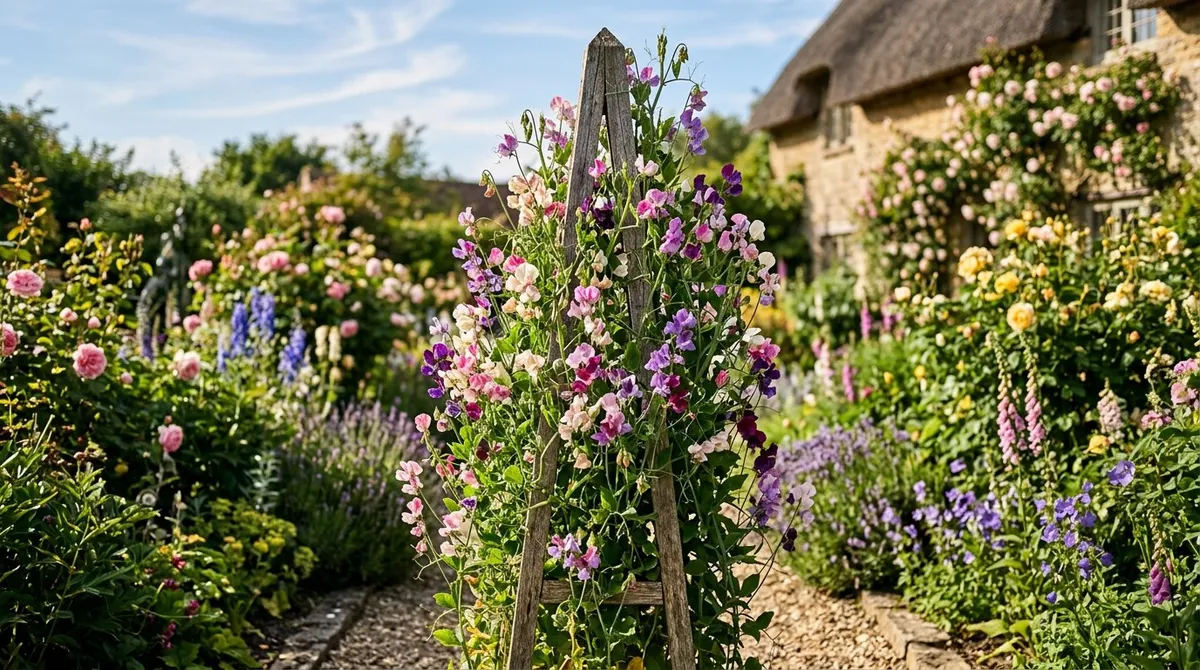
Sweet peas are one of the great joys of a British summer garden. Their fragrance is unmatched by any other annual climber. A handful of freshly cut sweet peas in a vase fills an entire room with scent. They flower prolifically from June to September, and the more you pick, the more they produce.
Growing sweet peas from seed is straightforward and far cheaper than buying plug plants. A packet of seed costs a few pounds and gives you dozens of plants. The key decisions are when to sow (autumn or spring) and how to support them. This guide covers both approaches. For more on when to plant sweet peas, see our dedicated timing guide.
Should I sow sweet peas in autumn or spring?
Both work well, but autumn sowing produces stronger plants with more flowers.
Autumn sowing (October to November)
Sow seeds individually in root trainers or 9cm deep pots filled with multipurpose compost. Place in a cold frame, unheated greenhouse, or against a sheltered house wall. The seedlings grow slowly through winter, developing extensive root systems that fuel vigorous growth once spring arrives. Autumn-sown plants typically flower 2-3 weeks earlier and produce 30-40% more blooms than spring-sown. Check our seed sowing calendar for the full schedule.
Spring sowing (February to March)
Sow indoors in February or March at 15-18 degrees C. Seeds germinate in 10-14 days. This approach is simpler and avoids the need for winter protection. Spring-sown plants catch up surprisingly well and flower from late June or early July. Our guide to sowing seeds indoors covers the technique in detail.
Preparing the seeds
Dark-seeded varieties have hard seed coats that benefit from soaking. Place seeds in lukewarm water for 12-24 hours before sowing. Any seeds that have not swollen after soaking should be nicked gently with a nail file on the opposite side to the eye (the small scar where the seed was attached). Pale-seeded varieties usually germinate without treatment.
Sow one seed per module or pot, 2cm deep. Sweet peas have long roots, so deep root trainers or toilet roll tubes are ideal. They allow the roots to grow straight down without circling.
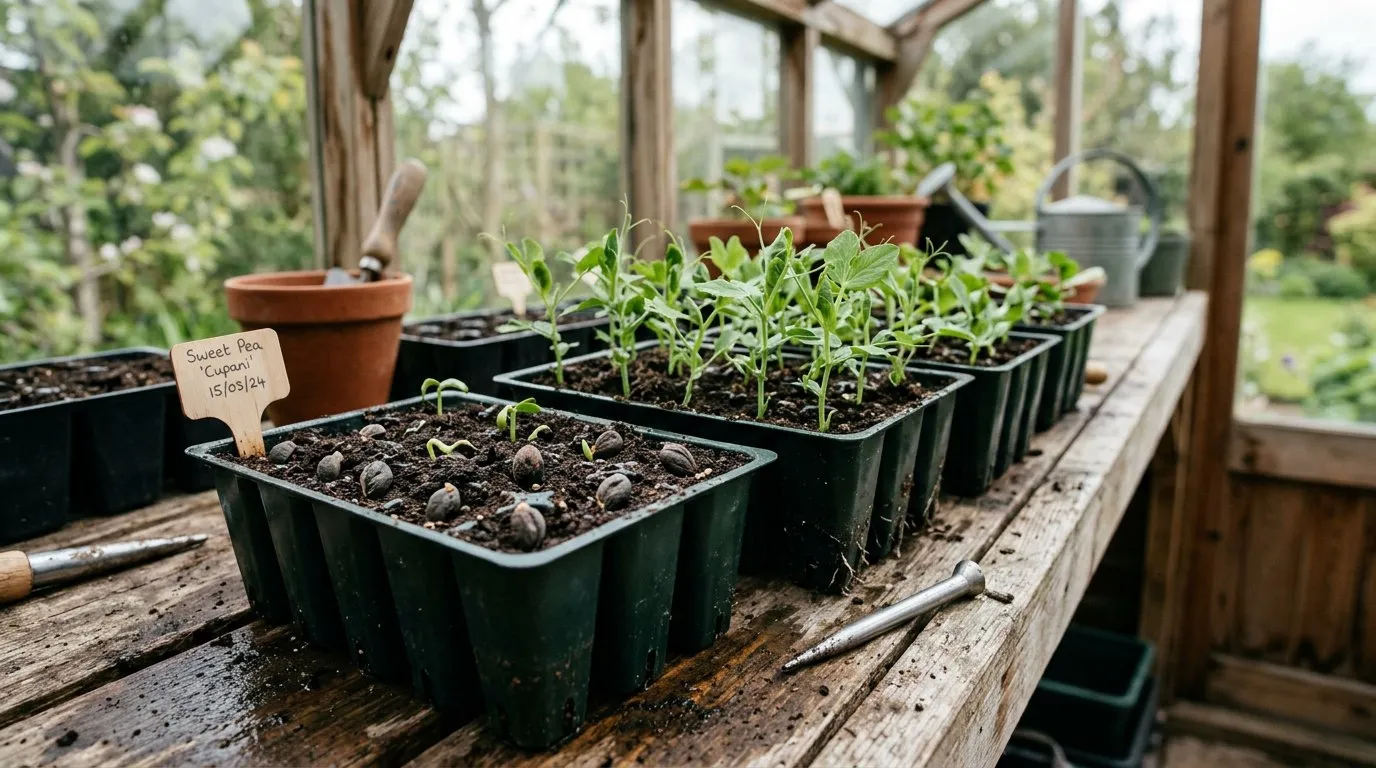
Sow sweet peas in deep root trainers or toilet roll tubes to allow the long taproot to develop straight
How do I pinch out sweet peas?
Pinching out is the single most important technique for bushy, multi-stemmed plants. When seedlings reach 10cm tall with 3-4 pairs of leaves, pinch out the growing tip just above the third pair of leaves. Use your thumb and forefinger or sharp scissors.
This removes the plant’s natural tendency to grow as a single stem and forces it to produce side shoots from the leaf joints below. Each side shoot becomes a flowering stem, so pinching out roughly doubles or triples the number of flowers per plant.
If side shoots grow strongly, you can pinch their tips too when they reach 10cm, creating an even bushier plant with more flowering potential.
How should I support sweet peas?
Sweet peas climb using tendrils and need support from 1.5 to 2 metres tall. Without it, they collapse into a tangled heap on the ground.
Cane wigwams and obelisks
Push 5-8 bamboo canes in a circle and tie them together at the top to form a wigwam. Sweet peas scramble up the canes, creating a colourful tower in the border. Metal obelisks provide a more permanent structure. Space plants 15cm apart around the base.
Netting on a fence or wall
Fix plastic or wire netting (15cm mesh) to a fence, wall, or between posts. This creates a wall of colour and is the best method for growing sweet peas in rows for cutting. The tendrils grip the netting easily. Space plants 15-20cm apart along the base.
The cordon system
For the longest stems and largest flowers (ideal for showing or cutting), train each plant up a single cane as a cordon. Remove all side shoots and tendrils, tying the main stem to the cane with sweet pea rings. When the plant reaches the top, untie it, lay the base along the ground, and re-tie to a neighbouring cane. This method takes more effort but produces exhibition-quality blooms on 45cm stems.
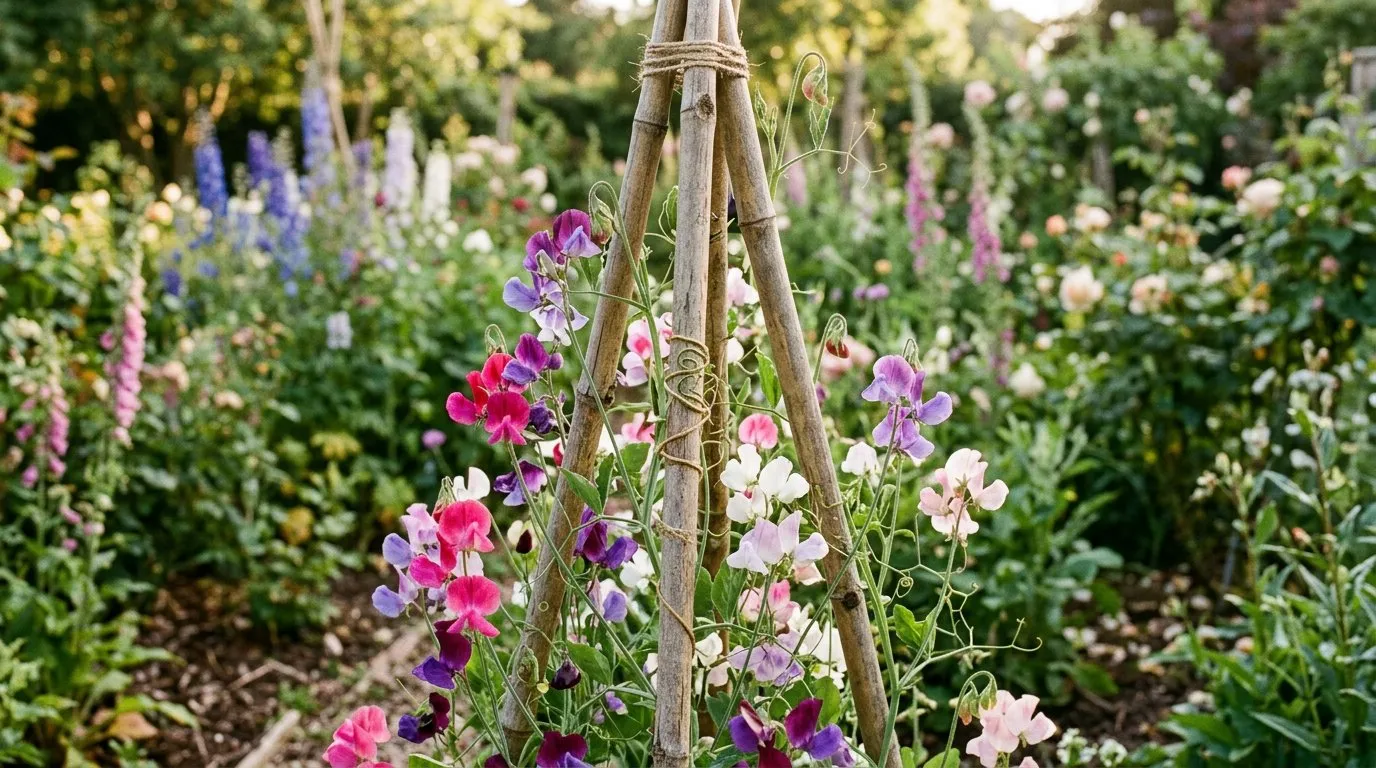
A cane wigwam is the simplest support for sweet peas — push 5-8 canes in a circle and tie at the top
When and how should I plant sweet peas outdoors?
Plant out autumn-sown sweet peas in late March to early April, once they are well hardened off. Plant spring-sown seedlings from late April to mid-May, after the last frost.
Prepare the planting site in advance by digging a trench 30cm deep and filling the bottom with well-rotted compost or manure. Backfill with the excavated soil. This creates a moisture-retentive root zone that keeps plants growing through summer dry spells.
Space plants 15-20cm apart around or along the support structure. Water well after planting and apply a 5cm mulch of compost or bark to retain moisture. Sweet peas are hardy annuals and tolerate light frost, but protect newly planted seedlings from hard frost with fleece.
How do I keep sweet peas flowering?
The most important rule is simple: pick, pick, pick. Cut or pick sweet pea flowers every 2-3 days. The moment seed pods start forming, the plant shifts its energy from flower production to seed development and stops blooming.
Even if you do not want cut flowers, remove fading blooms before they set seed. Deadheading keeps plants in peak flower for 12 weeks or more. If you go on holiday and miss picking for a week, remove all seed pods on your return and the plant will resume flowering within a fortnight.
Water regularly at the base during dry weather. Sweet peas in well-mulched, moisture-retentive soil flower more consistently than those that dry out. Feed weekly with liquid tomato feed from first flower to keep blooms coming.
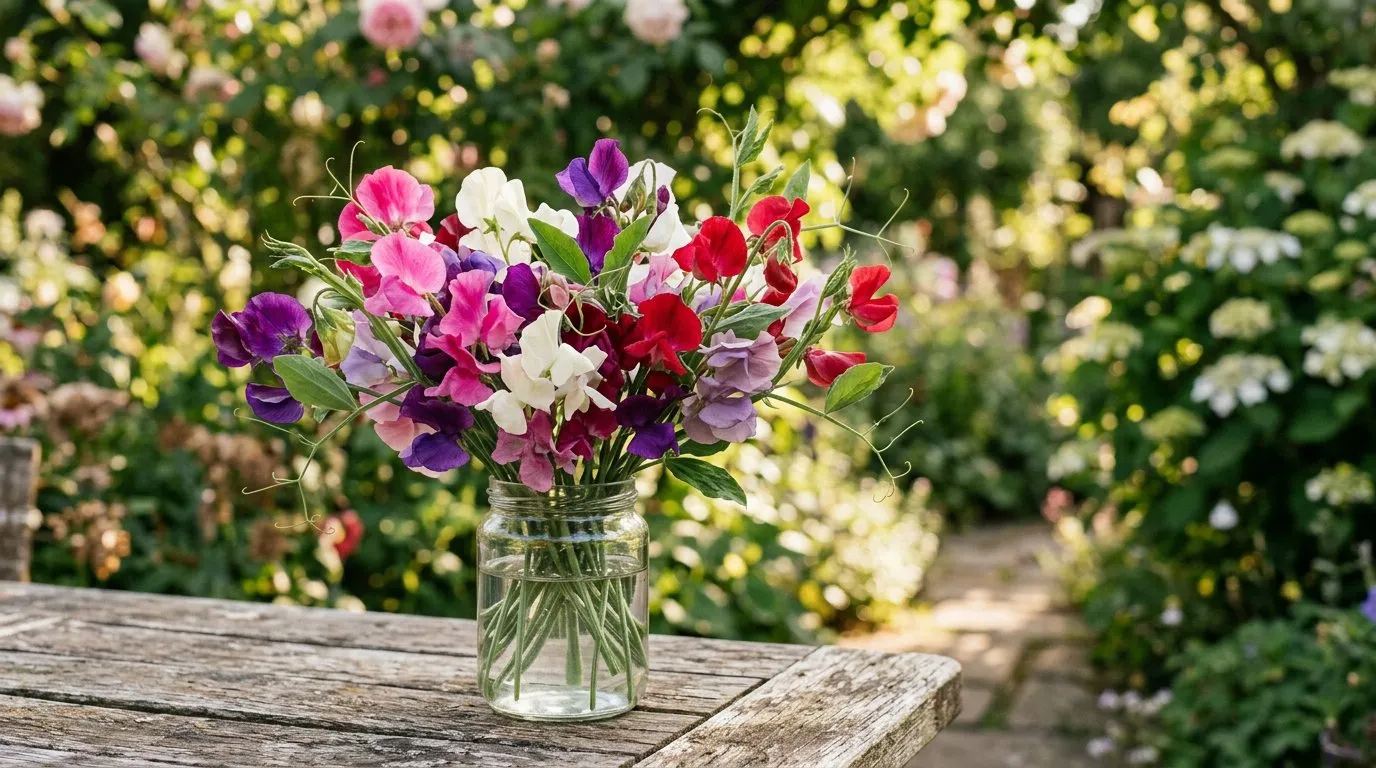
Pick sweet peas every 2-3 days — the more you cut, the more they flower
What are the best sweet pea varieties?
For fragrance
‘Matucana’ — intense scent, maroon and violet bicolour, the most fragrant sweet pea available. ‘Cupani’ — the original sweet pea from 1699, purple and maroon with exceptional scent. ‘High Scent’ — bred specifically for perfume, cream and lavender blooms.
For large flowers
‘Spencer’ types produce the largest, most ruffled flowers on long stems. ‘Beaujolais’ (burgundy), ‘Jilly’ (cream and pink), ‘Gwendoline’ (lilac and mauve), and ‘Mollie Rilstone’ (cream flushed pink) are all outstanding Spencers. These are the best for cutting and showing.
For containers
‘Patio Mixed’ and ‘Little Sweetheart’ are dwarf sweet peas reaching just 30-45cm. They trail from hanging baskets and window boxes or form compact mounds in pots. Fragrance is lighter than climbing types but the colour range is excellent.
For cottage gardens
Grandiflora types including ‘Painted Lady’ (pink and white, dating from 1737) and ‘America’ (red and white striped) suit a traditional cottage garden planting plan. They have smaller flowers than Spencers but better scent and a more relaxed, natural habit.
Common sweet pea problems
| Problem | Cause | Solution |
|---|---|---|
| No flowers | Seed pods forming, too much shade | Pick every 2-3 days, grow in full sun |
| Powdery mildew | Dry roots, poor air flow | Water base consistently, remove affected leaves |
| Bud drop | Drought stress, extreme heat | Mulch well, water deeply in hot spells |
| Short stems | Hot weather, poor soil | Add compost, water regularly, try cordon method |
| Yellow lower leaves | Natural ageing, nitrogen deficiency | Feed with balanced liquid fertiliser |
| Pea moth | Caterpillars in pods | Only a concern if saving seed, no treatment needed |
Sweet peas attract bees, butterflies, and hoverflies, making them valuable for bee-friendly garden planting. Grow them alongside other cottage garden favourites such as lavender, roses, cosmos, and foxgloves for a border that buzzes with life all summer.
Why we recommend ‘Matucana’ sweet peas: After 30 years of trialling sweet pea varieties in UK cottage gardens, ‘Matucana’ consistently produces the most intense fragrance of any variety available. A single vase of 12 stems fills a 5m x 4m room with scent for over a week — no modern Spencer type comes close.
Now you’ve mastered sweet peas, read our guide on when to plant sweet peas for precise regional sowing dates and a month-by-month timing guide.
Frequently asked questions
The RHS sweet pea growing guide has further variety recommendations and care advice for UK conditions.
Lawrie has been gardening in the West Midlands for over 30 years. He grows his own veg using no-dig methods, keeps a wildlife-friendly garden, and writes practical advice based on real UK growing conditions.