Wildflower Identification Guide UK
Identify 40+ common UK wildflowers by season and habitat. A field guide with flowering times and pollinator value from 8 years of Staffordshire walks.
Key takeaways
- 40+ common UK wildflowers covered with identification tips by season and habitat
- Spring starts with primroses in February, summer peaks with ox-eye daisies in June
- 15+ species in this guide are proven bee and butterfly plants from field observation
- Wildflower meadows support 10x more pollinators per square metre than mown lawn
- All native UK wild plants are protected under the Wildlife and Countryside Act 1981
- A 3m x 3m garden wildflower patch costs under 20 pounds in seed and supports 30+ pollinator species
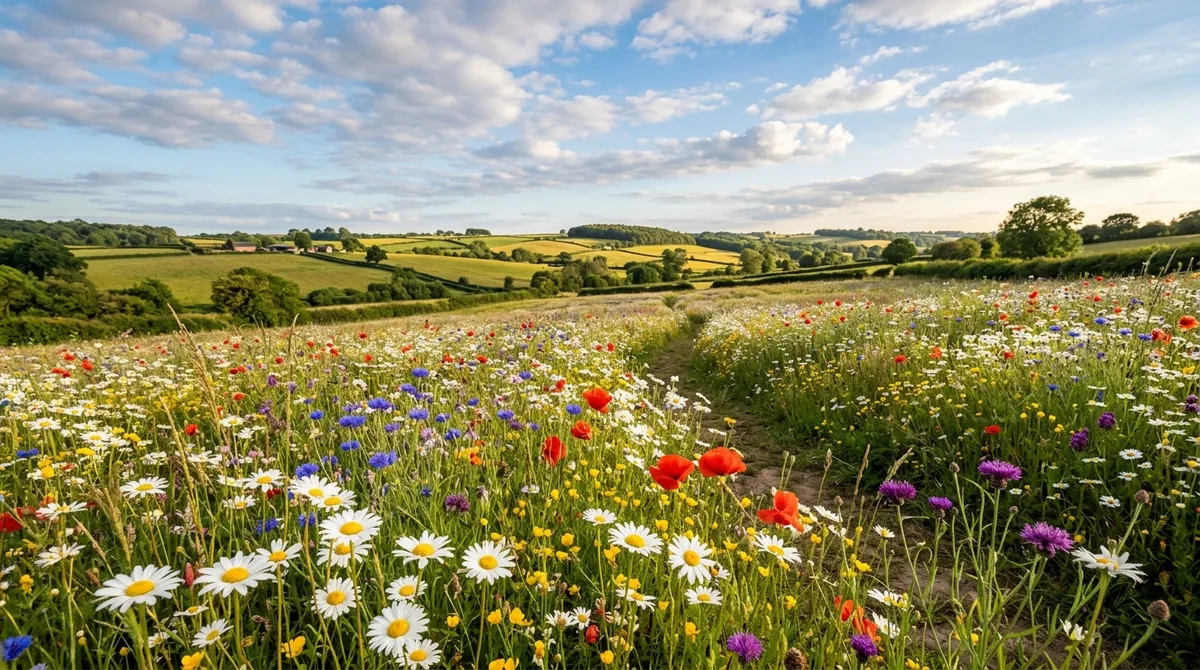
Wildflower identification in the UK starts with learning to read the countryside. Over 1,600 native flowering plants grow across Britain, but around 40 common species account for most of what you will see on any walk between March and October. This guide covers those core species, grouped by season and habitat, with practical tips for telling similar flowers apart.
Eight years of botanical recording across Staffordshire hedgerows, meadows, and woodland edges has taught me that colour alone is unreliable. White flowers alone include over 60 British species. Instead, focus on four things: leaf shape, flower structure, habitat, and flowering season. These four features narrow most identifications to one or two possibilities.
How to identify wildflowers in the field
The most reliable identification method combines four features: leaf arrangement, petal count and shape, habitat type, and time of year. Colour is useful but secondary. Many unrelated species share the same flower colour, while the same species can vary between pink and white depending on soil conditions.
Start with the leaves. Check whether they grow in opposite pairs or alternately along the stem. Note if they are simple (one blade) or compound (divided into leaflets). Toothed edges, hairy surfaces, and distinctive smells all narrow the options quickly.
Count the petals. Buttercup family flowers have five glossy petals. Daisy family flowers have a central disc surrounded by ray florets. Pea family flowers have a distinctive “butterfly” shape with upper and lower petals. Dead-nettle family flowers have hooded, two-lipped blooms. These family-level patterns help even when you cannot name the exact species.
Habitat matters. Primroses grow in shaded banks and hedgerows, not open meadows. Yellow rattle grows in grassland, never in woodland. Noting where a plant grows eliminates dozens of possibilities before you examine the flower.
“I always tell beginners: photograph the leaves, not just the flower. I have lost count of the times a clear leaf photo has resolved an identification that a flower close-up could not.” — Lawrie Ashfield
Spring wildflowers: February to May
Spring wildflowers appear in a predictable sequence. Learning this sequence is itself an identification tool. If you see a yellow flower in a hedgerow in February, it is almost certainly lesser celandine. In April, the same spot might hold primroses or cowslips instead.
Primrose (Primula vulgaris)
Pale yellow flowers, 2-3cm across, on short individual stalks rising from a rosette of wrinkled, tongue-shaped leaves. Flowers February to May. Found on shaded banks, hedgerows, and woodland wildlife habitats across the UK. The name means “first rose” of spring.
Bluebell (Hyacinthoides non-scripta)
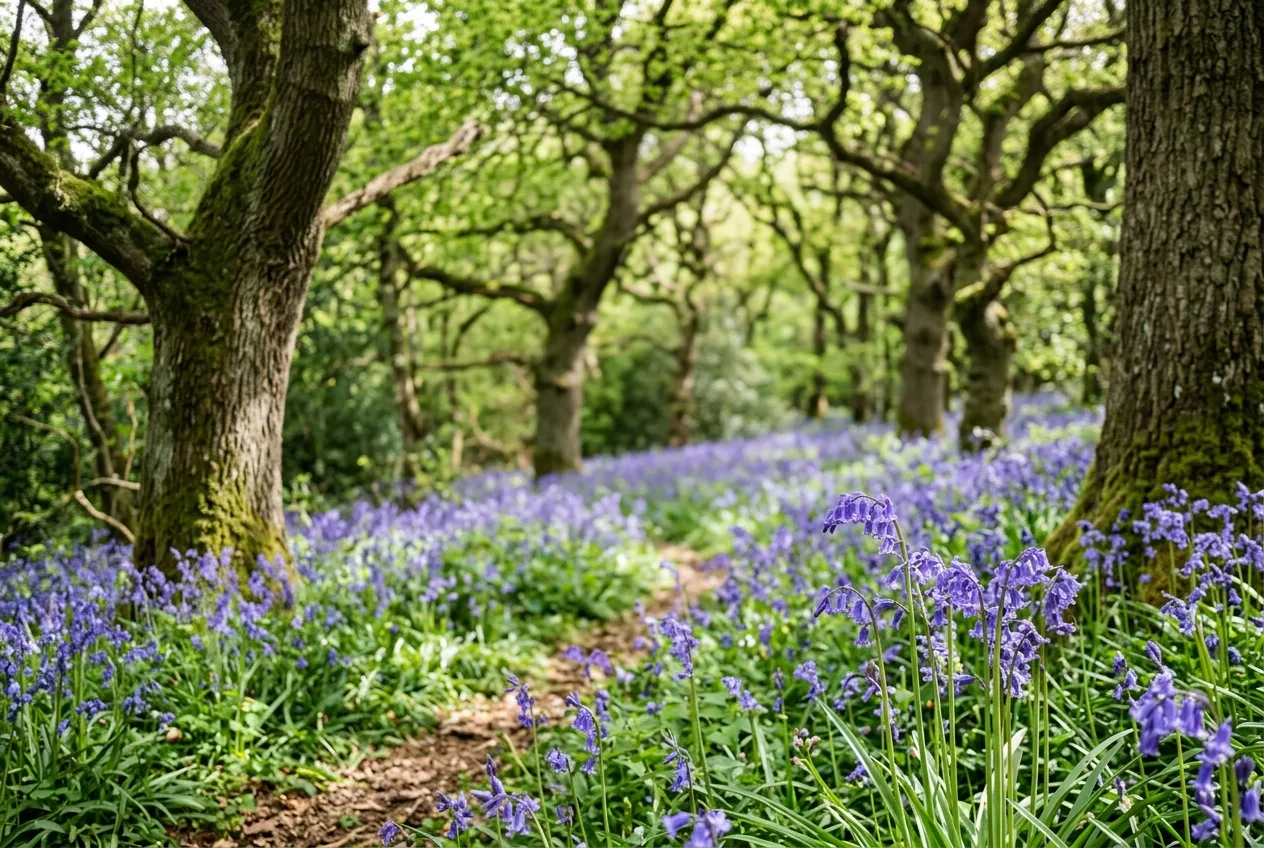
A carpet of native bluebells in dappled spring woodland - note the one-sided, arching flower stems.
The native bluebell has narrow, tubular flowers hanging from one side of an arching stem. Cream pollen. Sweet scent. Flowers April to May in ancient woodland, forming dense carpets under deciduous trees. Over half the world’s bluebell population grows in the UK, making woodland habitats globally important.
Wood anemone (Anemone nemorosa)
White flowers (sometimes pink-tinged), 2-4cm across, with 6-8 petal-like sepals. Each flower sits alone on a slender stem, 15-25cm tall. Deeply divided, three-lobed leaves. Flowers March to May in ancient woodland and hedgerows. Slow to colonise, so its presence indicates undisturbed woodland.
Lesser celandine (Ficaria verna)
Glossy, bright yellow flowers with 8-12 narrow petals. Heart-shaped, dark green leaves. Low-growing, 5-15cm. One of the earliest spring flowers, blooming February to April on damp banks, woodland floors, and hedgerow bases. Dies back completely by June.
Cowslip (Primula veris)
Clusters of deep yellow, nodding flowers on a single stem, 10-20cm tall. Each flower has five notched petals with orange spots at the base. Rosette of wrinkled leaves at ground level. Flowers April to May in grassland and meadows, especially on chalky soils. An important early nectar source for bees and long-tongued bumblebees.
Wild garlic (Allium ursinum)
Broad, bright green elliptical leaves (15-25cm long) that smell strongly of garlic when crushed. Clusters of white, star-shaped flowers on a single stalk, 25-40cm tall. Flowers April to June in damp woodland and shaded hedgerows. Often forms dense colonies along streams.
Summer wildflowers: June to August
Summer brings the greatest diversity. Meadows, verges, and hedgerows peak in June and July. Many summer wildflowers are outstanding pollinator plants that attract butterflies in large numbers.
Ox-eye daisy (Leucanthemum vulgare)
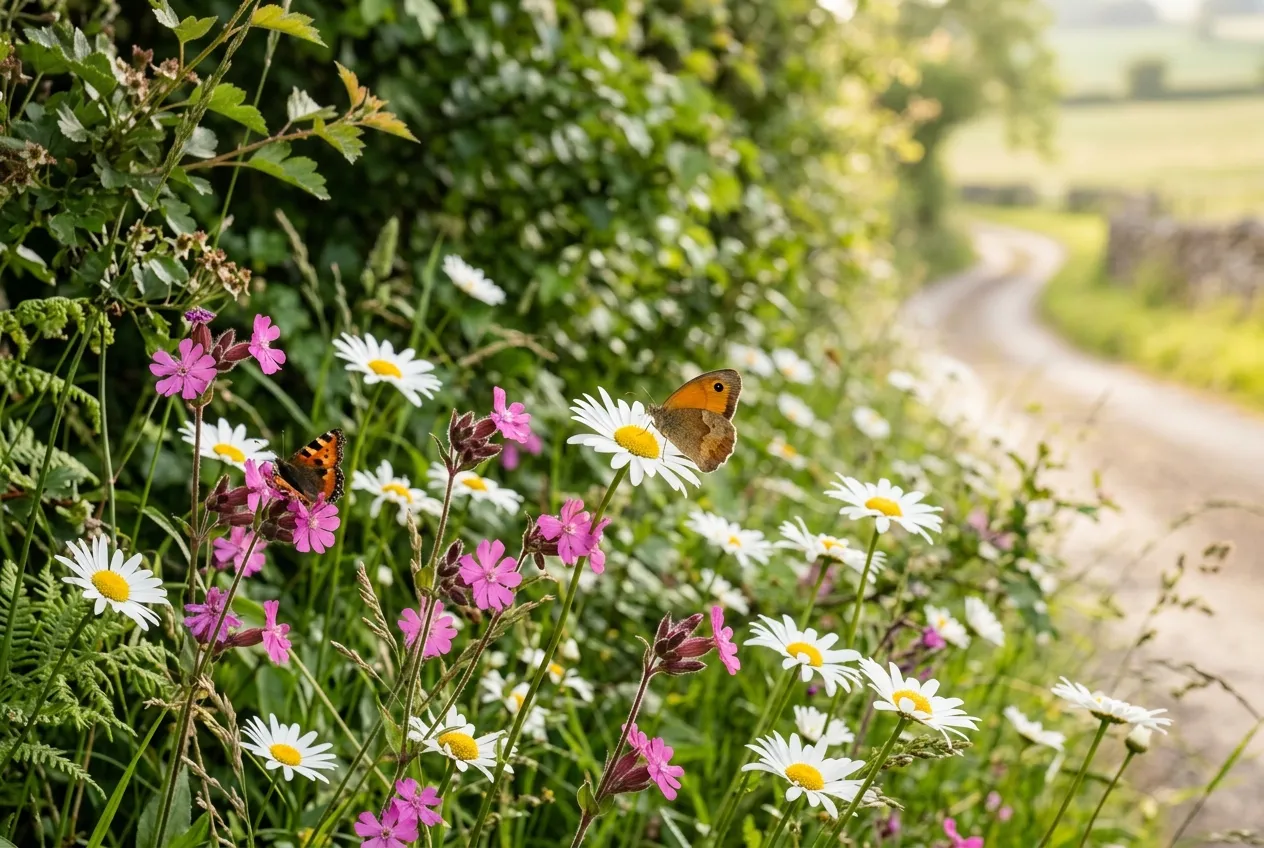
Ox-eye daisies and red campion growing wild in a Midlands hedgerow - two of the most recognisable summer wildflowers.
Large white daisy flowers, 3-6cm across, with a yellow central disc. Stems 30-60cm tall. Narrow, toothed leaves. Flowers June to August in meadows, verges, and rough grassland. One of the most recognisable British wildflowers and a key species in any mini meadow wildflower area.
Red campion (Silene dioica)
Pink-red flowers, 2-3cm across, with five deeply notched petals. Hairy stems and leaves. 30-60cm tall. Flowers May to October in hedgerows, woodland edges, and shaded banks. Male and female flowers grow on separate plants. A strong indicator of ancient hedgerows.
Foxglove (Digitalis purpurea)
Tall spikes (60-150cm) of tubular, pink-purple flowers with dark spots inside. Large, soft, downy leaves in a basal rosette. Biennial: leaf rosette in year one, flower spike in year two. Flowers June to August in woodland clearings, hedgerows, and heathland. Highly toxic. All parts are poisonous.
Common knapweed (Centaurea nigra)
Purple thistle-like flower heads, 2-3cm across, on wiry stems 30-60cm tall. Hard, round, dark brown bud below the flower is distinctive. Narrow, slightly toothed leaves. Flowers June to September. One of the best wildflowers for pollinators, supporting over 30 insect species including 11 butterfly species.
Field scabious (Knautia arvensis)
Lilac-blue pincushion flowers, 3-4cm across, on tall stems (50-80cm). Deeply divided lower leaves, simpler upper leaves. Flowers June to October in meadows and dry grassland. Outstanding butterfly and bee plant, particularly attractive to marbled whites and six-spot burnet moths.
Yarrow (Achillea millefolium)
Flat-topped clusters of tiny white or pale pink flowers. Finely divided, feathery leaves with a distinctive aromatic scent. 20-60cm tall. Flowers June to September in grassland, verges, and waste ground. The leaves were historically used to treat wounds. A tough, drought-tolerant species that thrives in poor soil.
Autumn wildflowers: August to October
Fewer species flower in autumn, but those that do are vital late-season nectar sources when little else remains in bloom.
Devil’s-bit scabious (Succisa pratensis)
Dark purple, rounded flower heads on stems 30-60cm tall. Opposite pairs of elliptical, slightly toothed leaves. Flowers July to October in damp meadows and woodland rides. Named for its abruptly truncated root. Important late-season nectar source for butterflies, especially the marsh fritillary.
Harebell (Campanula rotundifolia)
Delicate, nodding, bell-shaped blue flowers on thin, wiry stems, 15-40cm tall. The round basal leaves (giving the Latin name) often wither before flowering. Stem leaves are narrow and grass-like. Flowers July to October on dry grassland, heaths, and fixed dunes. Scotland’s bluebell.
Meadow saffron (Colchicum autumnale)
Pale purple, crocus-like flowers appearing September to October. The flowers emerge without leaves (leaves appear in spring). 10-20cm tall. Found in damp meadows, mainly in central and western England. Highly toxic. All parts contain colchicine. Not related to true saffron crocus despite the common name.
Hedgerow and woodland species
Hedgerows and woodland edges support their own distinctive plant community. These species are shade-tolerant and typically climb, scramble, or grow beneath the canopy.
Dog rose (Rosa canina)
Pink or white five-petalled flowers, 3-5cm across, in June and July. Arching, thorny stems scrambling through hedgerows. Bright red hips in autumn, rich in vitamin C. Compound leaves with 5-7 toothed leaflets. The most common wild rose in Britain.
Honeysuckle (Lonicera periclymenum)
Clusters of tubular, cream and pink flowers with a powerful sweet scent, strongest at dusk. Twining climber reaching 6m through hedgerows and woodland. Flowers June to September. Pollinated by long-tongued bumblebees and hawk-moths. Red berries in autumn.
Wild clematis (Clematis vitalba)
Also called old man’s beard or traveller’s joy. Vigorous climber with small, creamy-green flowers (July to August) followed by fluffy, silvery seed heads persisting through winter. Found on chalky and limestone soils in southern England. Can smother hedgerows if unchecked.
Herb Robert (Geranium robertianum)
Small pink flowers (1-1.5cm) with five rounded petals. Deeply divided, fern-like leaves that turn red in autumn. Distinctive musty smell when crushed. 10-30cm tall. Flowers April to November in hedgerows, walls, woodland, and gardens. One of the longest flowering periods of any British wildflower.
Growing wildflowers in your garden
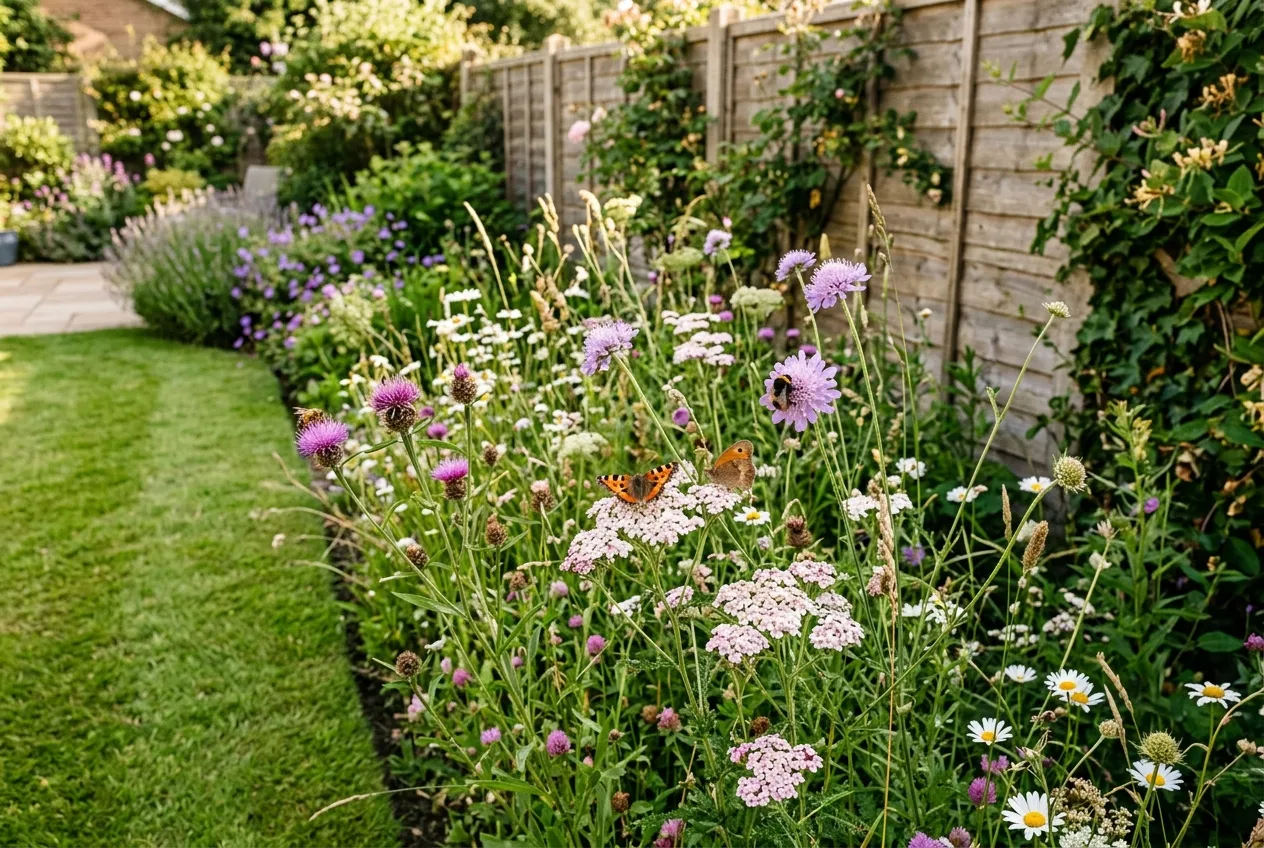
A small garden wildflower patch with knapweed, scabious, and yarrow - proof that even a suburban plot can support native species and pollinators.
You do not need a meadow to grow native wildflowers in a UK garden. A patch as small as 3m x 3m supports 30+ pollinator species if sown with the right mix. The key is reducing soil fertility. Wildflowers evolved on poor soils and are outcompeted by grasses on rich ground.
Sow yellow rattle (Rhinanthus minor) with your wildflower mix. It is semi-parasitic on grass roots and weakens them, giving wildflowers space to establish. Without yellow rattle, grass dominates within two years.
Sow in autumn (September to October) for best results. Scarify the ground to bare soil, scatter seed thinly, and firm in with a roller or by walking over it. Do not add fertiliser. Cut once in late August after seeds have dropped. Remove the cuttings to keep fertility low. For the best sowing windows and seed rates, see our guide on when to sow wildflower seeds.
Conservation and legal protection
All wild plants in Britain are protected under the Wildlife and Countryside Act 1981. It is illegal to uproot any wild plant without the landowner’s permission. Schedule 8 of the Act lists specially protected species that cannot be picked, uprooted, collected, or sold. These include lady’s slipper orchid, ghost orchid, and military orchid.
Plantlife estimates that 97% of UK wildflower meadows have been lost since the 1930s. Remaining meadows are among Britain’s most threatened habitats. The Wildlife Trusts manage hundreds of nature reserves protecting these habitats.
You can help by recording wildflowers on walks using apps like iNaturalist or the BSBI’s Plant Atlas project. Every record contributes to national distribution data used for conservation planning. Reporting rare species to your local Botanical Society recorder helps protect vulnerable populations.
Wildflower comparison table
| Wildflower | Season | Habitat | Colour | Height | Pollinator Value |
|---|---|---|---|---|---|
| Primrose | Feb-May | Hedgerow, bank | Pale yellow | 10-15cm | Early bees |
| Bluebell | Apr-May | Woodland | Violet-blue | 20-40cm | Bumblebees, hoverflies |
| Wood anemone | Mar-May | Woodland | White/pink | 15-25cm | Early bees, beetles |
| Cowslip | Apr-May | Meadow, chalk | Deep yellow | 10-20cm | Long-tongued bumblebees |
| Wild garlic | Apr-Jun | Damp woodland | White | 25-40cm | Hoverflies, beetles |
| Ox-eye daisy | Jun-Aug | Meadow, verge | White/yellow | 30-60cm | Bees, hoverflies, butterflies |
| Red campion | May-Oct | Hedgerow, wood edge | Pink-red | 30-60cm | Long-tongued bees, moths |
| Foxglove | Jun-Aug | Woodland, heath | Pink-purple | 60-150cm | Bumblebees (long-tongued) |
| Knapweed | Jun-Sep | Meadow, verge | Purple | 30-60cm | 30+ insect species |
| Field scabious | Jun-Oct | Meadow, dry grass | Lilac-blue | 50-80cm | Butterflies, bumblebees |
| Yarrow | Jun-Sep | Grassland, verge | White/pink | 20-60cm | Hoverflies, beetles |
| Devil’s-bit scabious | Jul-Oct | Damp meadow | Dark purple | 30-60cm | Marsh fritillary, bees |
| Harebell | Jul-Oct | Dry grassland | Blue | 15-40cm | Bees, hoverflies |
| Dog rose | Jun-Jul | Hedgerow | Pink/white | 1-3m | Bees, beetles |
| Honeysuckle | Jun-Sep | Hedgerow, wood | Cream/pink | 3-6m | Hawk-moths, bumblebees |
| Herb Robert | Apr-Nov | Hedgerow, walls | Pink | 10-30cm | Hoverflies, small bees |
Further reading
Lawrie has been gardening in the West Midlands for over 30 years. He grows his own veg using no-dig methods, keeps a wildlife-friendly garden, and writes practical advice based on real UK growing conditions.