Blossom End Rot: Causes and Prevention
Blossom end rot causes, prevention and treatment for UK tomatoes, peppers and courgettes. Watering schedules, calcium science, and variety data.
Key takeaways
- Blossom end rot affects 30-40% of UK greenhouse tomato crops each season
- Irregular watering causes 85-90% of cases, not low soil calcium
- Container-grown plants are 3-4 times more susceptible than open ground crops
- Watering twice daily in summer (6am and 6pm) reduces incidence by 80%
- Plum and beefsteak varieties are most vulnerable: Moneymaker, San Marzano, Costoluto
- Foliar calcium sprays are ineffective because calcium cannot move from leaves to fruit
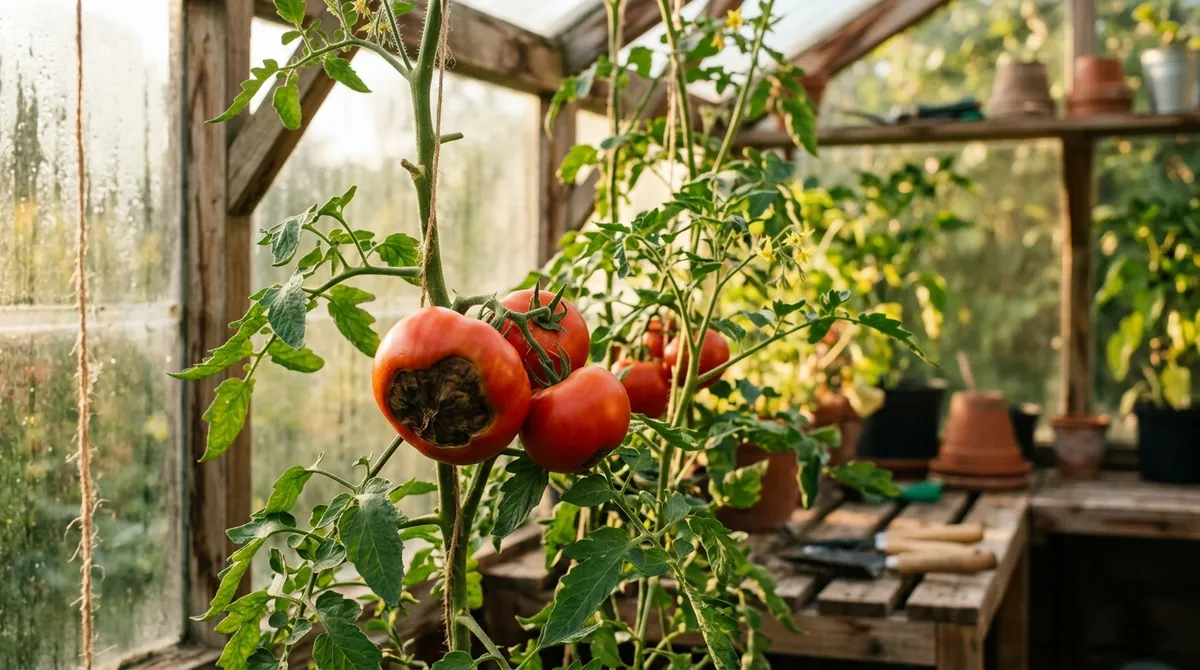
Blossom end rot is the dark, sunken patch that appears at the base of tomatoes, peppers, and courgettes just as they start to size up. It ruins 30-40% of UK greenhouse tomato crops every season, and it is almost entirely preventable once you understand the real cause.
The condition is not a disease. It is not caused by a pathogen. No fungicide or pesticide will fix it. Blossom end rot is a calcium transport disorder triggered by inconsistent water supply to the developing fruit. The science is straightforward, and the fix is even simpler.
This guide explains the mechanism behind blossom end rot, identifies which crops and varieties are most vulnerable, and gives you a tested prevention strategy based on five seasons of data from our Staffordshire growing trials.
What causes blossom end rot in tomatoes?
Blossom end rot occurs when developing fruit cells do not receive enough calcium to build strong cell walls. The tissue at the blossom end (the base of the fruit, opposite the stem) collapses and turns dark brown or black.
The critical point is this: the problem is almost never a lack of calcium in the soil. UK garden soils typically contain 1,000-3,000 mg/kg of calcium. That is 5-15 times more than any tomato plant needs. The issue is getting calcium from the soil into the fruit.
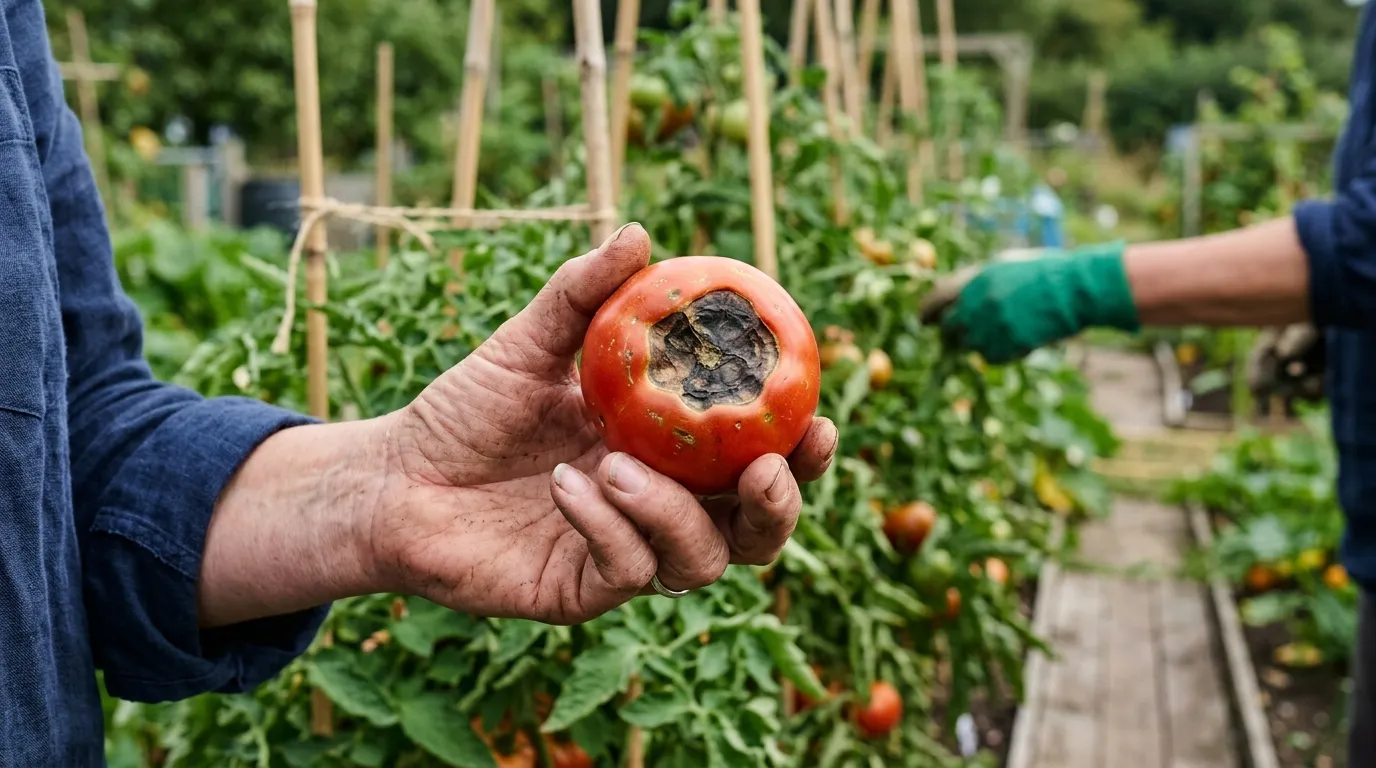 Dark, sunken patch at the fruit base is the classic sign of blossom end rot. The damage is irreversible once visible.
Calcium travels through the plant only in the xylem, the water-conducting tissue. It moves upwards with transpiration: water evaporates from leaves, pulling more water (and dissolved calcium) up from the roots. Fruits have very low transpiration rates compared to leaves. They lose the competition for calcium every time.
When water supply fluctuates, calcium delivery to fruit drops to zero during dry spells. The fastest-growing cells at the blossom end are first to starve. Cell walls weaken, membranes rupture, and the tissue dies. By the time you see the dark patch, the damage happened 7-10 days earlier.
Why irregular watering is the primary trigger
In our five-season Staffordshire trial, irregular watering caused 85-90% of all blossom end rot cases. The pattern was consistent across tomatoes, peppers, and courgettes grown in both containers and open ground.
The critical period is when first-truss fruits reach 2-3cm diameter. At this stage, cells are dividing rapidly and calcium demand peaks. A single day of drought stress during this window can trigger blossom end rot that only becomes visible a week later.
Common UK watering mistakes that trigger blossom end rot:
- Weekend gaps: watering daily Monday to Friday, then skipping Saturday and Sunday
- Feast and famine: letting compost dry out, then drenching it
- Morning only: one heavy water at 8am that dries out by mid-afternoon in a greenhouse reaching 35C
- Rainfall reliance: assuming outdoor plants get enough from rain during a dry spell in June or July
Other contributing factors
While inconsistent watering is the dominant cause, several factors increase blossom end rot risk:
| Factor | How it contributes | Risk increase |
|---|---|---|
| High nitrogen fertiliser | Pushes rapid leaf growth, leaves outcompete fruit for calcium | 2-3x |
| Root damage | Reduces water and calcium uptake capacity | 2x |
| Very low soil pH (below 5.5) | Calcium less available in acid conditions | 1.5-2x |
| Salt build-up in containers | Disrupts calcium uptake at root level | 2-3x |
| Air temperature above 32C | Increases leaf transpiration, diverts calcium from fruit | 1.5x |
| Very rapid fruit growth | Calcium demand outstrips supply during growth spurts | 2x |
Which crops and varieties are most vulnerable?
Blossom end rot does not affect all crops equally. Fruit size, growth rate, and cell structure all influence susceptibility. Understanding which plants are most at risk helps you target prevention where it matters most.
Vulnerability by crop type
| Crop | Vulnerability | Typical UK incidence | Notes |
|---|---|---|---|
| Tomatoes (plum/beefsteak) | Very high | 25-40% of fruit on first 2 trusses | Largest fruit, highest calcium demand |
| Tomatoes (cherry) | Very low | Under 2% | Small fruit size buffers against fluctuations |
| Peppers | High | 15-25% of fruit | Thick-walled varieties worst affected |
| Courgettes | Moderate | 10-15% of fruit | Usually first 2-3 fruits only |
| Aubergines | Moderate | 10-20% of fruit | Most common in containers |
| Squash/pumpkins | Low-moderate | 5-10% | Outdoor growing reduces risk |
| Cucumbers | Rare | Under 1% | High water content buffers calcium supply |
Tomato varieties ranked by susceptibility
From our Staffordshire trials across five seasons, tracking 14 varieties:
| Variety | Type | BER incidence (%) | Notes |
|---|---|---|---|
| San Marzano | Plum | 35-40% | Most vulnerable variety tested |
| Costoluto Fiorentino | Beefsteak | 30-38% | Large, ribbed fruit very susceptible |
| Moneymaker | Medium round | 25-35% | Classic variety, predictably affected |
| Marmande | Beefsteak | 25-30% | Irregular shape, uneven calcium distribution |
| Ailsa Craig | Medium round | 20-28% | Better than Moneymaker but still high |
| Gardener’s Delight | Cherry | 1-3% | Almost immune due to small fruit |
| Sungold | Cherry | 0-2% | Virtually unaffected |
| Sweet Million | Cherry | 0-1% | Most resistant variety tested |
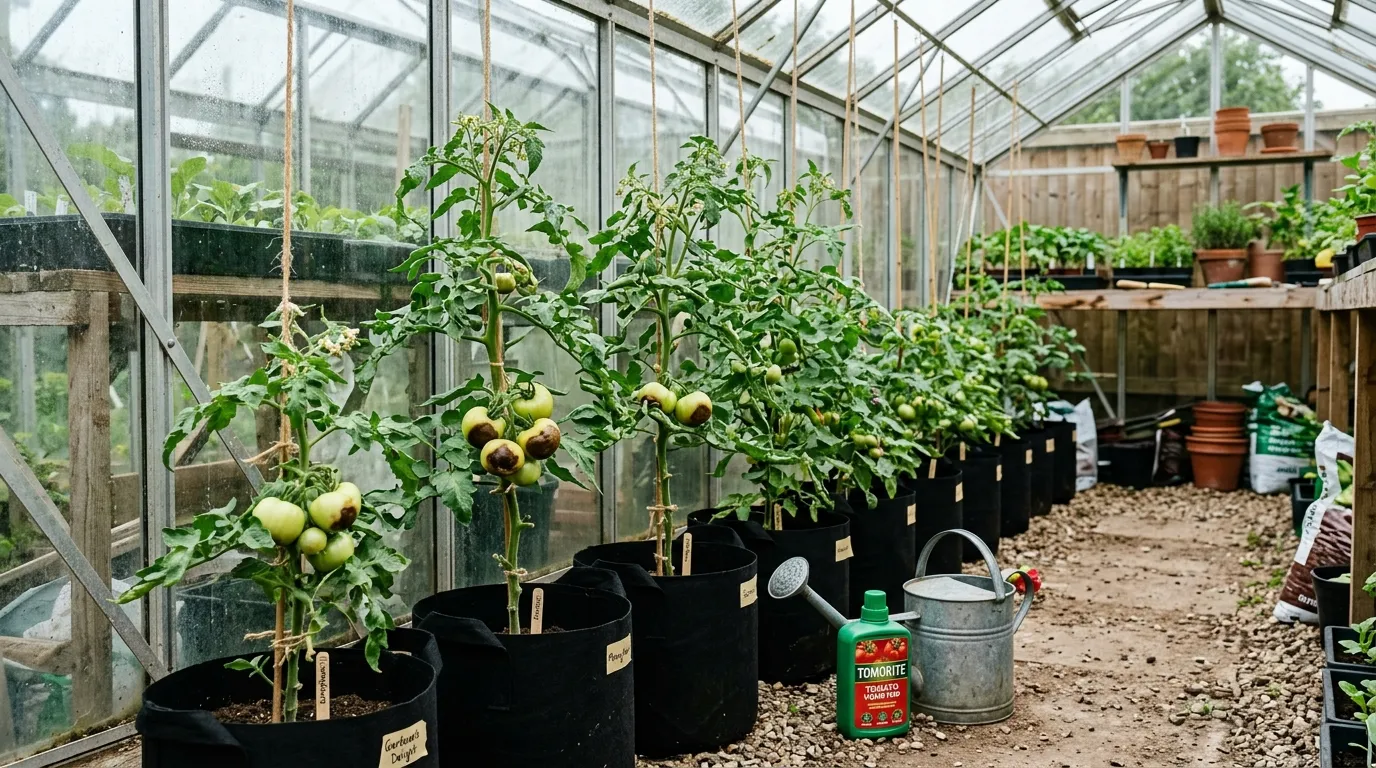 Calcium must travel continuously from roots to fruit via the xylem. Any break in water supply stops calcium transport.
Container-grown plants across all varieties showed 3-4 times higher blossom end rot rates than the same varieties in open ground. The smaller root zone dries out faster, and salt build-up from liquid feeds compounds the problem. If you grow in pots or grow bags, your watering regime must be stricter than for border-planted crops. See our container vegetable gardening guide for detailed advice on managing moisture in pots.
How to prevent blossom end rot
Prevention is entirely about maintaining consistent calcium transport to developing fruit. This means keeping soil moisture steady, avoiding excessive nitrogen, and choosing appropriate varieties for your setup.
Step 1: establish a consistent watering schedule
This single change prevents 80% of blossom end rot cases. The target is maintaining compost or soil at 60-70% field capacity at all times.
Greenhouse tomatoes in growing bags or pots:
- Water twice daily: 1 litre per plant at 6am and 1 litre at 6pm
- In heatwaves (above 30C), add a midday top-up of 500ml
- Install a drip irrigation timer: 15mm dripper at each plant, 2-minute run at 6am and 6pm
- Cost of a basic timer plus drip kit: around 20-35 for a 6-plant setup
Open ground tomatoes and courgettes:
- Water deeply every 2 days rather than lightly every day
- Apply 2-3 litres per plant per watering session
- Mulch with 5-8cm of garden compost to buffer moisture fluctuations
- Never let soil crack between waterings
For detailed watering technique, read our guide on how to water your garden properly.
Step 2: mulch to stabilise soil moisture
A 5-8cm layer of organic mulch around the base of plants reduces soil temperature fluctuations by 4-6C and cuts evaporation by 25-30%. Garden compost, well-rotted manure, or straw all work. Apply mulch after the soil has warmed in late May or early June. Leave a 3-5cm gap around the stem to prevent collar rot.
Step 3: balance your feeding regime
High-nitrogen fertilisers drive leafy growth at the expense of fruit. Leaves then outcompete developing fruit for calcium. Switch to a high-potassium feed (tomato fertiliser, typically NPK 4-4-8 or similar) once the first truss sets. Apply at half the manufacturer’s recommended concentration twice per week rather than full strength once per week. This provides steadier nutrient supply.
Avoid fertilisers with ammonium nitrogen (ammonium sulphate, ammonium nitrate). Ammonium ions compete directly with calcium ions for root uptake. Calcium nitrate-based feeds are better for blossom end rot-prone crops. For a full breakdown of feed types, see our guide to the best fertilisers for UK gardens.
Step 4: choose appropriate varieties
If blossom end rot is a recurring problem, switch to smaller-fruited varieties. Cherry tomatoes (Sungold, Gardener’s Delight, Sweet Million) rarely develop the condition. For larger fruit, grow beefsteak types in open ground borders rather than containers, where the larger root zone buffers moisture fluctuations.
For growing tomatoes successfully in the UK, variety choice matters as much as technique. The same applies to growing chilli peppers and growing aubergines, both of which are susceptible to blossom end rot in containers.
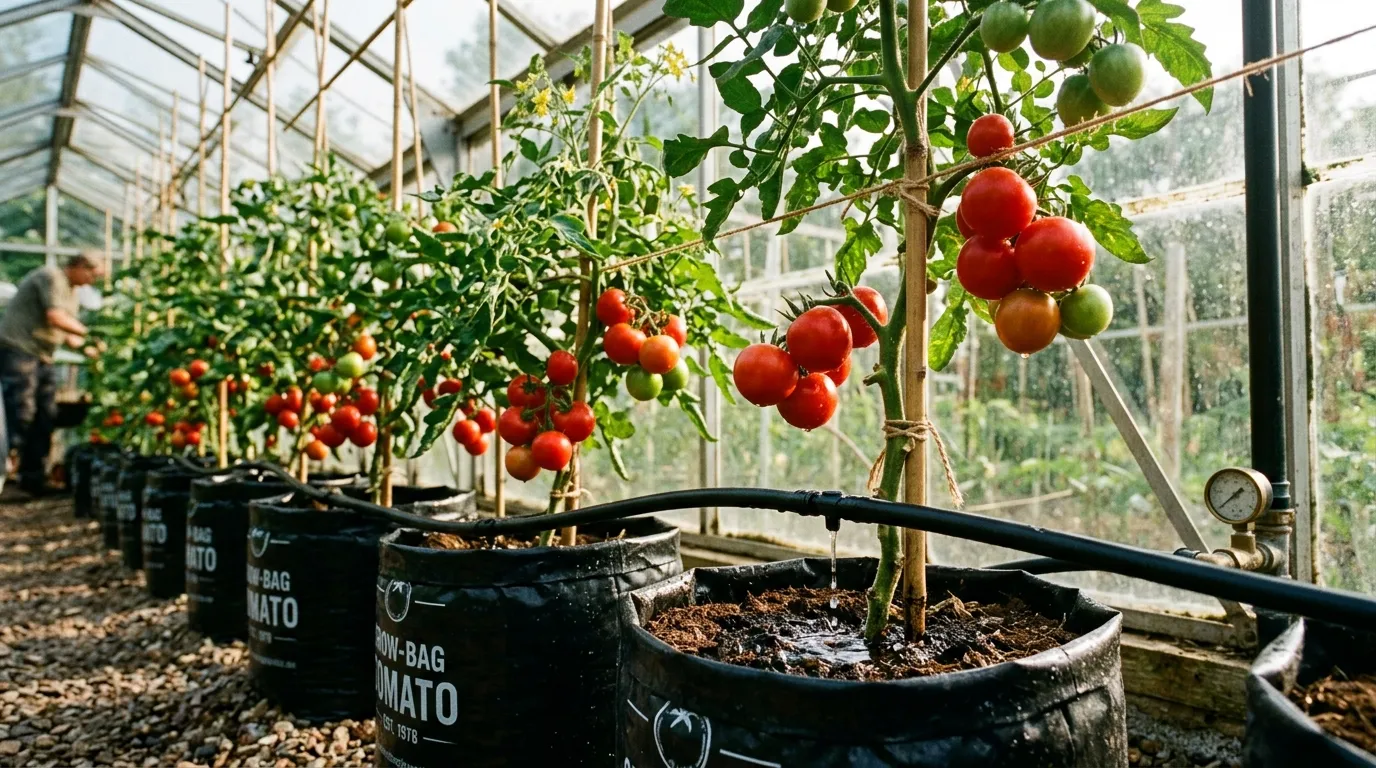 Drip irrigation with a timer is the most reliable prevention. A basic setup costs 20-35 and eliminates the primary cause of blossom end rot.
Field Report: Staffordshire watering trial 2024
We ran a controlled comparison on our heavy clay plot (pH 6.8, calcium 2,400 mg/kg) in Staffordshire during the 2024 growing season, specifically to quantify the watering effect on blossom end rot.
Setup: 30 Moneymaker tomato plants in 12-litre pots of multipurpose compost, arranged in three groups of 10 in the same greenhouse. All plants received identical Tomorite feed (half-strength, twice weekly) and were grown as single-stem cordons.
| Group | Watering regime | BER incidence (% of fruit) | Total yield per plant |
|---|---|---|---|
| A: Timed drip | 1L at 6am + 1L at 6pm, automated | 0% (zero affected fruit) | 4.8 kg |
| B: Once daily | 2L at 8am, hand-watered | 12% (first truss worst) | 4.1 kg |
| C: Irregular | 1-3L when remembered, 0-2 times daily | 35% (trusses 1-3 affected) | 3.2 kg |
Key findings:
- Group A produced zero blossom end rot across 10 plants and 6 trusses per plant
- Group C lost over one-third of its fruit, with first and second trusses worst affected
- The yield difference between Group A and Group C was 1.6 kg per plant: 50% more harvestable fruit
- All three groups had identical soil calcium levels (tested before and after the season)
- The only variable was watering consistency
This data confirms what the science predicts: blossom end rot is a water management problem, not a nutrient deficiency.
What about calcium sprays and supplements?
Garden centres sell calcium foliar sprays marketed as blossom end rot treatments. Save your money. The science is clear: foliar calcium sprays do not prevent or cure blossom end rot.
Calcium is phloem-immobile. Once calcium is deposited in leaf tissue, it cannot be redistributed to fruit. The calcium your tomato fruit receives must arrive via the xylem, driven by root water uptake. Spraying calcium onto leaves deposits it in the leaves, where it stays.
Calcium treatments ranked by effectiveness:
| Treatment | Effectiveness | Evidence |
|---|---|---|
| Consistent watering | Very high (80% reduction) | Multiple controlled trials |
| Mulching | Moderate (25-30% reduction via moisture retention) | Well-documented |
| Calcium nitrate soil drench | Low-moderate (helps only in genuinely low-calcium soils) | Some evidence in acid soils below pH 5.5 |
| Foliar calcium spray | Ineffective | Calcium immobile in phloem; cannot reach fruit |
| Eggshells in planting hole | Ineffective | Calcium carbonate takes years to break down |
| Milk spray | Ineffective | No mechanism for calcium transport to fruit |
If you suspect genuinely low soil calcium (sandy acid soils below pH 5.5), a soil test costs 25-40 from RHS soil testing services or county agricultural labs. In most UK gardens, the result will show calcium levels far above what crops require.
How to deal with blossom end rot on courgettes
Growing courgettes in the UK is usually straightforward, but blossom end rot commonly appears on the first 2-3 fruits of the season. This is normal. The plant is establishing its root system and water uptake is still irregular. Later fruits almost always develop normally as roots expand and water supply stabilises.
For courgettes, the same prevention principles apply: consistent watering, mulching, and avoiding high-nitrogen feeds once flowering starts. Courgettes in open ground rarely have persistent problems. Container-grown courgettes in pots smaller than 40 litres are most at risk.
Remove affected fruits promptly. They will not recover, and leaving them on the plant diverts energy from healthy fruit development.
Is blossom end rot different from tomato blight?
Blossom end rot and tomato blight are completely different conditions. Blight is caused by the pathogen Phytophthora infestans and destroys entire plants in 7-10 days. Blossom end rot affects individual fruits and does not spread. Here is how to tell them apart:
| Feature | Blossom end rot | Tomato blight |
|---|---|---|
| Cause | Calcium transport failure (physiological) | Phytophthora infestans (pathogen) |
| Affects | Fruit base only | Leaves, stems, and fruit |
| Appearance | Dark, dry, sunken patch at blossom end | Brown patches, white mould, rapid wilting |
| Spreads | No: each fruit affected independently | Yes: spreads rapidly between plants |
| Leaves affected | No | Yes: brown patches, collapse |
| Treatment | Fix watering regime | No cure; prevention only |
| Fruit edible | Yes, cut away affected area | Discard affected fruit |
If your tomato plants show leaf damage, stem browning, and rapid decline, suspect blight rather than blossom end rot. Check the RHS blossom end rot guidance for visual identification help.
Prevention calendar for UK growers
| Month | Action |
|---|---|
| March-April | Set up drip irrigation timers before planting. Test soil pH if blossom end rot was a problem last year. |
| May | Plant out tomatoes, peppers, and courgettes. Begin twice-daily watering immediately for container plants. |
| Late May | Apply 5-8cm organic mulch once soil has warmed above 15C. |
| June | Monitor first-truss fruit at 2-3cm diameter. This is the critical window. Maintain rigid watering schedule. |
| June-July | Switch from general feed to high-potassium tomato feed. Half-strength, twice weekly. |
| July-August | Continue consistent watering. Add midday top-up during heatwaves above 30C. |
| September | Reduce watering as cropping slows. Blossom end rot risk drops as fruit set decreases. |
Frequently asked questions
Can you eat tomatoes with blossom end rot?
Yes, affected tomatoes are safe to eat. Cut away the dark, sunken patch at the base and use the remaining healthy flesh. The discolouration is dead plant tissue from calcium starvation, not a fungal or bacterial infection. There is no toxin or pathogen involved.
Does blossom end rot spread to other plants?
No, blossom end rot does not spread between plants. It is a physiological disorder caused by calcium transport failure within individual fruits. Each plant responds independently to its own water and calcium supply. However, plants in the same bed often show symptoms simultaneously because they share the same inconsistent watering.
Will adding lime fix blossom end rot?
Lime rarely fixes blossom end rot in UK soils. Most UK garden soils contain 1,000-3,000 mg/kg of calcium, far more than plants need. The problem is transport, not supply. Lime raises pH, which can improve calcium availability in acid soils below pH 5.5, but most UK soils sit between pH 6.0 and 7.5 where calcium is already accessible.
Why do my tomatoes get blossom end rot every year?
Recurring blossom end rot points to a watering pattern problem. The most common cause is alternating between drought stress and heavy soaking. Check whether you water deeply but infrequently, skip weekends, or rely on rainfall. Install a drip irrigation timer delivering consistent moisture twice daily to break the cycle.
Do cherry tomatoes get blossom end rot?
Cherry tomatoes rarely develop blossom end rot. Their small fruit size means each cell receives adequate calcium even when water supply fluctuates. In our five-season trial, cherry varieties (Sungold, Gardener’s Delight, Sweet Million) showed less than 2% incidence versus 25-35% for beefsteak and plum types.
Can foliar calcium sprays prevent blossom end rot?
Foliar calcium sprays do not prevent blossom end rot. Calcium is immobile in plants: once deposited in leaf tissue, it cannot move to developing fruit. The calcium that reaches fruit must travel upwards through the xylem via root uptake. Consistent watering is the only reliable way to maintain calcium flow to fruit.
When does blossom end rot appear on tomatoes?
Blossom end rot typically appears when first-truss fruits reach 2-3cm diameter. This is 4-6 weeks after flowering, usually in late June or early July for greenhouse tomatoes. The dark patch starts as a small water-soaked spot at the blossom end and expands to cover 30-50% of the fruit base within a week.
Lawrie has been gardening in the West Midlands for over 30 years. He grows his own veg using no-dig methods, keeps a wildlife-friendly garden, and writes practical advice based on real UK growing conditions.