Club Root: Identification and Treatment
Identify and manage club root in brassicas. Causes, symptoms, resistant varieties, and practical UK allotment prevention strategies.
Key takeaways
- Club root spores persist in soil for 20+ years, making eradication practically impossible once established
- Raising soil pH above 7.2 with garden lime is the single most effective prevention, reducing infection by 70-90%
- Resistant varieties Kilaton (cabbage) and Clapton (cauliflower) grow successfully in heavily infected ground
- Starting transplants in deep modules with clean compost gives roots a head start before soil contact
- No chemical treatment is available to amateur UK gardeners, so prevention and soil management are critical
- Contaminated soil on boots, tools, and transplant rootballs is the primary way club root spreads between plots
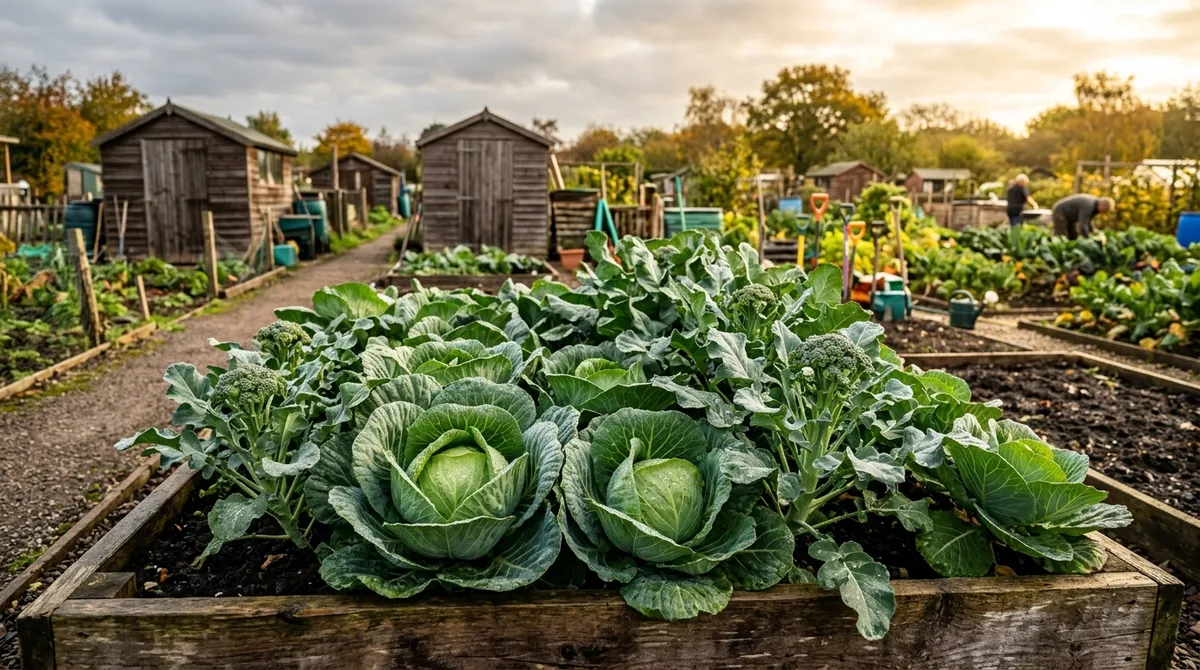
Club root brassica disease is the most persistent soil-borne problem facing UK vegetable growers. Caused by the organism Plasmodiophora brassicae, this disease distorts and swells roots into useless, clubbed masses that cannot absorb water or nutrients. Once established in your soil, it stays for decades.
This guide covers identification, spread, and every practical strategy for growing healthy brassicas on infected ground. Prevention is everything with club root, because no cure exists.
What is club root?
Club root is a soil-borne disease caused by Plasmodiophora brassicae, a protist (not a true fungus) that attacks the roots of all brassica family plants. It was first described in 1878 and has been a serious problem on UK allotments and market gardens ever since. The organism produces microscopic resting spores that lie dormant in soil until brassica roots grow nearby.
When a susceptible root tip passes within a few millimetres of resting spores, chemical signals from the root trigger germination. The spores release zoospores that swim through soil water and penetrate root cells. Once inside, the organism hijacks cell division and causes massive, uncontrolled root swelling. A single gram of infected soil can contain 10 million resting spores, each capable of surviving without a host for over 20 years.
The disease thrives in acidic, poorly drained soils. UK allotments with heavy clay and a pH below 6.5 are particularly vulnerable. Wet seasons make infection worse because zoospores need soil water to swim to host roots.
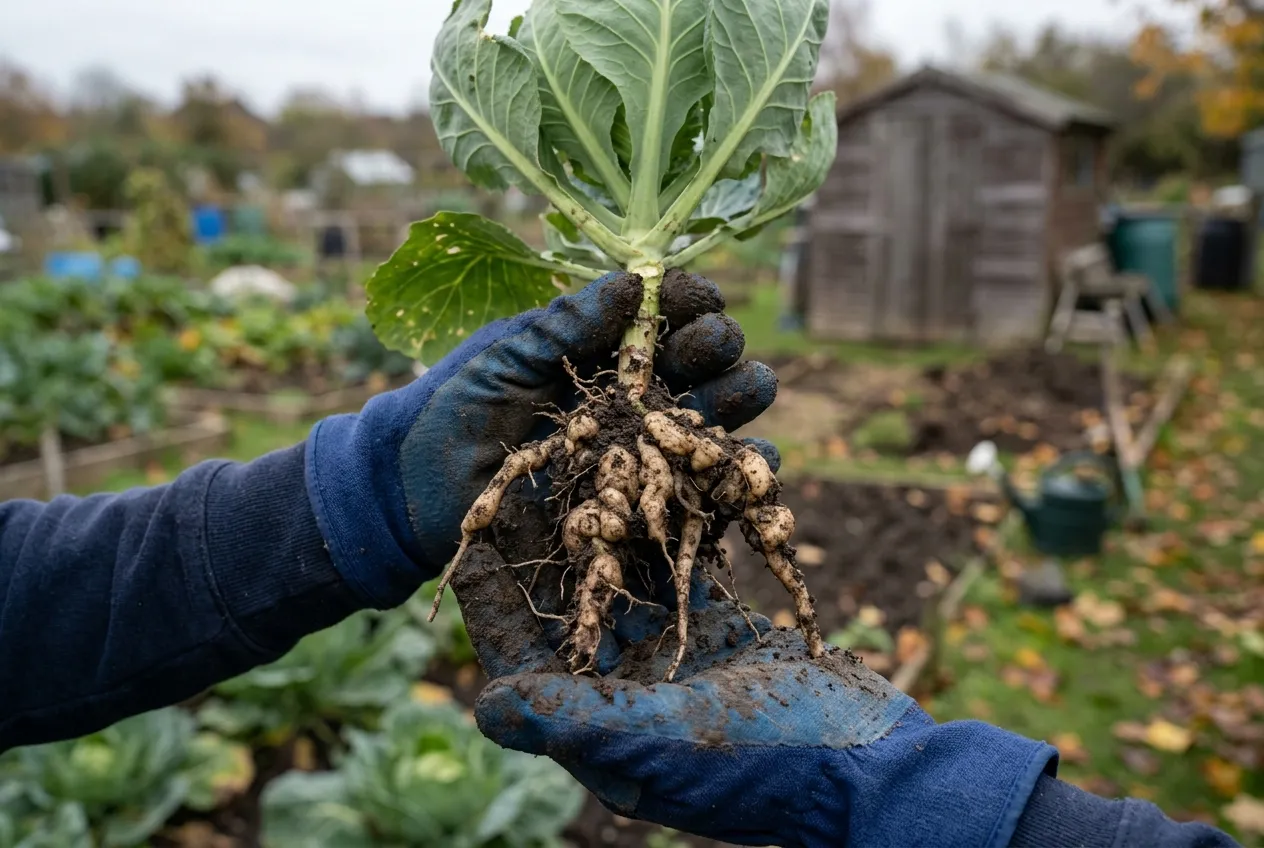
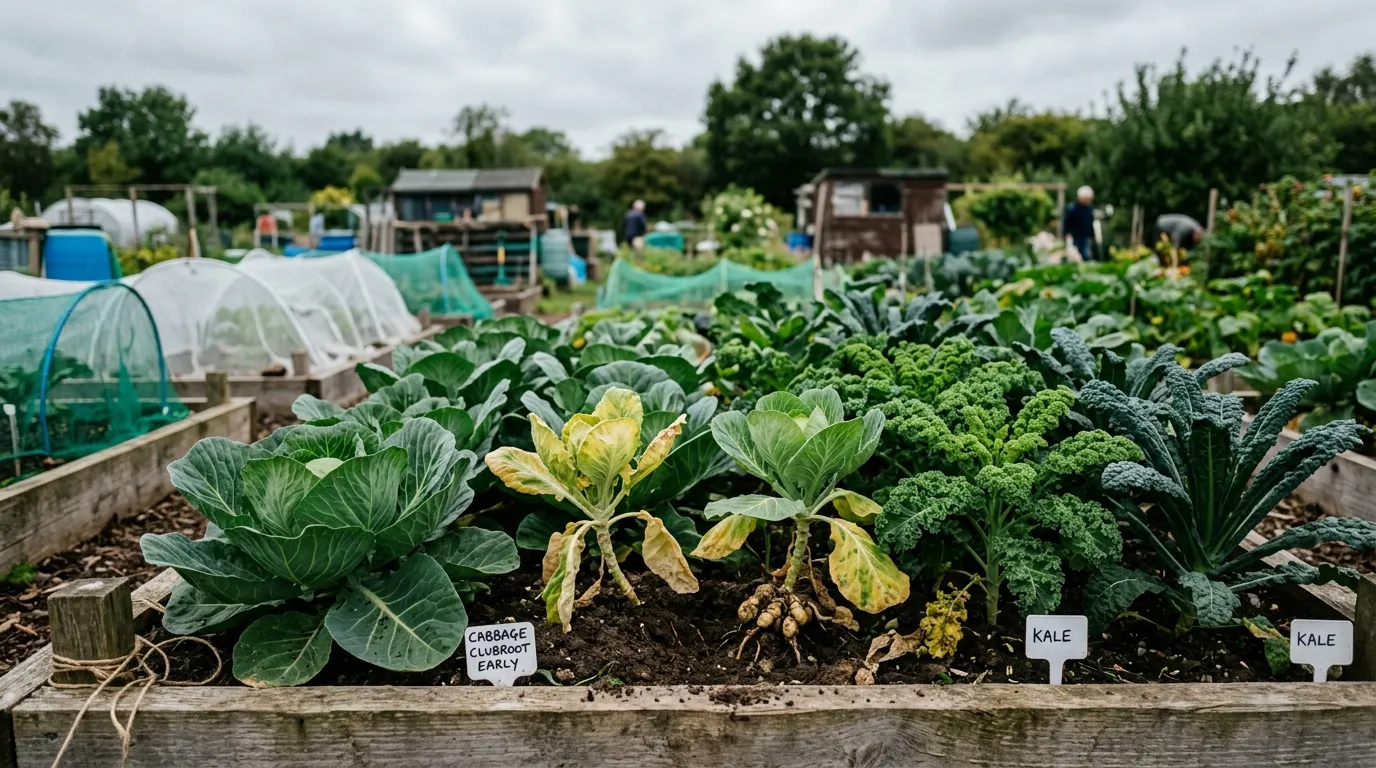
Characteristic swollen, clubbed roots of a brassica plant infected with Plasmodiophora brassicae.
How to identify club root symptoms
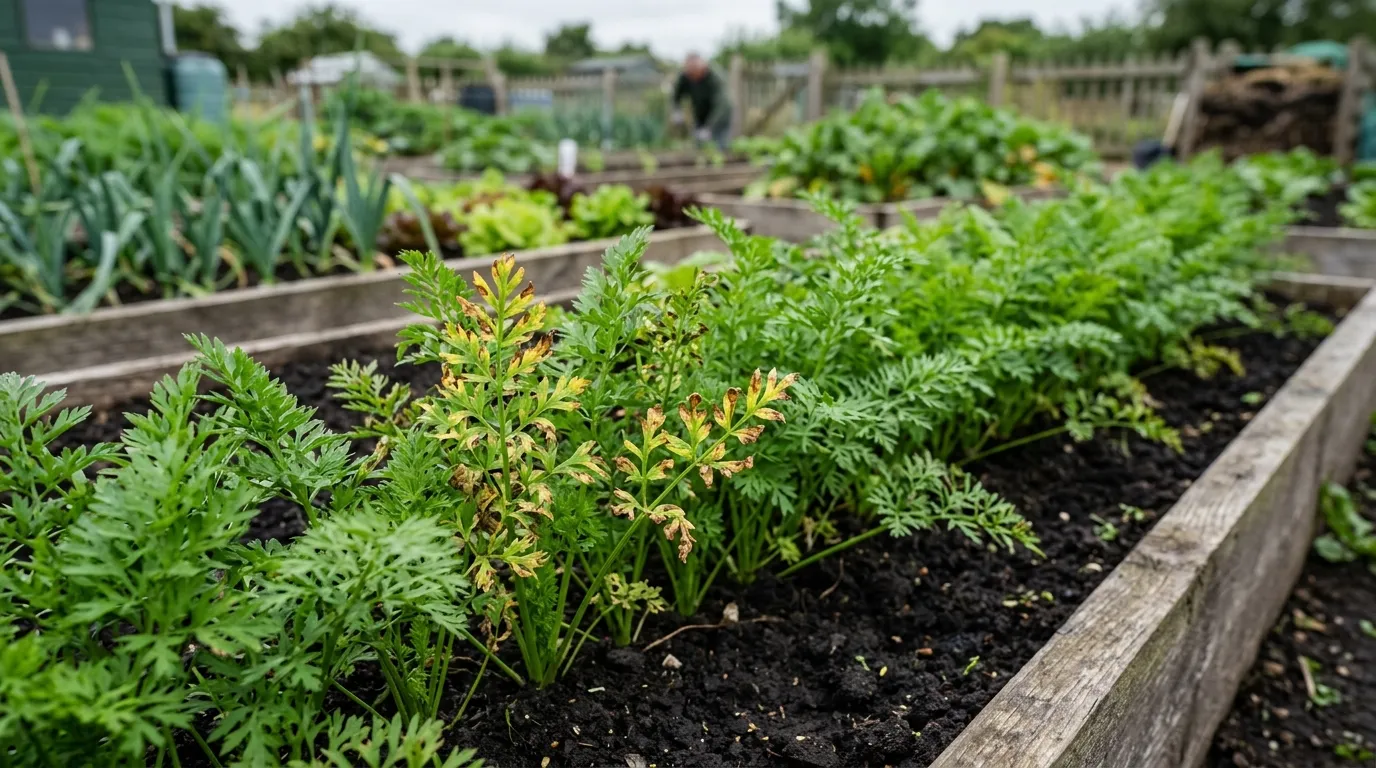
The first above-ground symptom is wilting on warm days. Infected plants droop in afternoon sun, then recover overnight as temperatures fall. This pattern occurs because damaged roots cannot supply water fast enough during peak transpiration. Gardeners often mistake this for drought stress and water more heavily, which actually helps zoospore movement.
As infection progresses, leaves turn yellow-purple and growth slows dramatically. Outer leaves may drop. Cabbages fail to heart up. Cauliflower curds stay small and loose. Brussels sprouts produce tiny, blown buttons. The plant looks starved despite adequate soil fertility because the root system is too damaged to function.
Pulling up an affected plant reveals the diagnostic sign. Roots are swollen into irregular, rounded galls rather than the normal fibrous network. Early infections show pea-sized swellings on lateral roots. Advanced cases produce massive, fused galls the size of a fist. The galls eventually rot to a foul-smelling brown mush, releasing billions of fresh resting spores into the soil.
Identification check: club root galls are smooth-surfaced and form part of the root tissue itself. Do not confuse them with cabbage root fly damage (tunnels in the root) or beneficial root nodules on legumes (small, firm, round attachments).
Which plants does club root affect?
All members of the Brassicaceae family are susceptible. This includes every vegetable brassica: cabbage, broccoli, cauliflower, Brussels sprouts, kale, turnip, swede, kohlrabi, and radish. The disease does not discriminate by variety unless specific genetic resistance has been bred in.
Ornamental brassicas are also hosts. Wallflowers (Erysimum), stocks (Matthiola), aubrieta, honesty (Lunaria), and alyssum all carry and amplify club root spores. Planting wallflowers in a bed that later grows cabbages is a common route to infection on allotments.
Wild brassica weeds maintain the spore reservoir between crops. Shepherd’s purse (Capsella bursa-pastoris), charlock (Sinapis arvensis), and wild radish are ubiquitous UK weeds that host club root without showing obvious symptoms. Keeping these weeds under control on paths, headlands, and bed edges reduces the background spore load in your soil.
No plants outside the Brassicaceae family are affected. Legumes, alliums, root vegetables, and solanaceous crops are completely immune and can be grown safely in infected ground as part of a crop rotation plan.
How club root spreads
Contaminated soil is the primary transmission route. A thumbnail-sized clod of infected earth on a boot sole carries enough resting spores to infect a clean bed. Shared tools, wheelbarrows, and rotavators spread spores efficiently across an allotment site. Surface water runoff carries spores downhill, which is why plots at the bottom of a slope are often infected first.
Transplants are a major risk. Brassica seedlings raised in infected soil carry spores on and within their rootballs. Buying transplants from market stalls, plant sales, or neighbours with unknown soil status has introduced club root to countless previously clean plots. Always raise your own transplants in clean, fresh compost or buy from certified nurseries.
Soil on potato tubers, root vegetables, and even plant pots moved between sites can transfer spores. Animal hooves and bird feet are possible but minor vectors. Once spores reach new soil, a single season of brassica growing is enough to establish a permanent population.
Why club root persists for decades
Resting spores of P. brassicae have a uniquely tough biology. Each spore has a thick, chitinous cell wall that resists desiccation, freezing, and microbial attack. Laboratory studies confirm viability after 18-20 years in soil without any host plant. Some researchers estimate survival beyond 25 years in undisturbed ground.
The spores do not germinate spontaneously. They require specific chemical exudates from brassica roots to trigger germination. This means they simply wait, completely dormant, until the next brassica crop arrives. Fallowing a bed or growing non-brassica crops does not kill the spore bank. It merely delays activation.
Each infected plant releases billions of new spores as galled roots decompose. A single diseased cabbage can produce enough resting spores to contaminate the surrounding 2-3 square metres of soil. Spore numbers accumulate with every successive brassica crop, making infection progressively worse over the years if no control measures are taken.
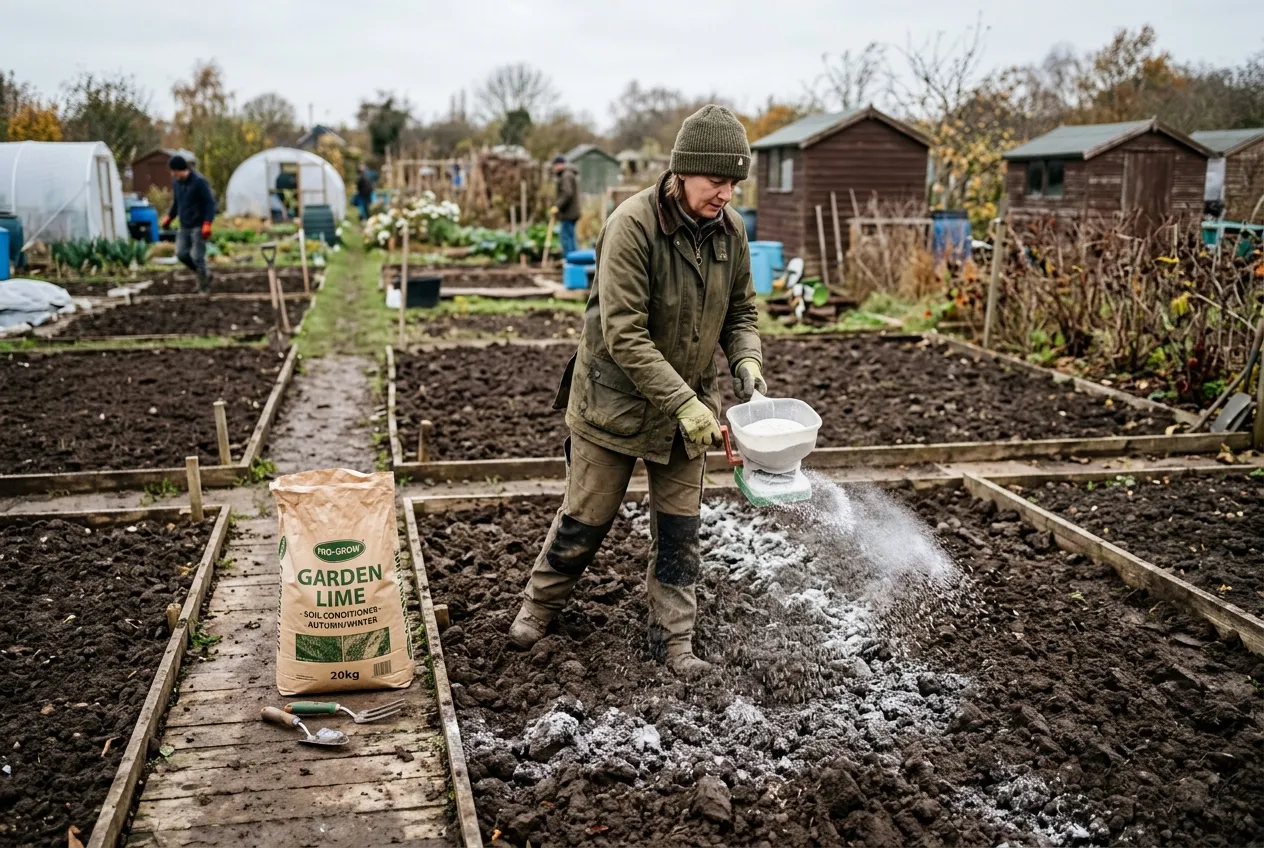
Applying garden lime to raise soil pH above 7.2, the single most effective cultural defence against club root.
Prevention strategies that work
Prevention is the only realistic approach to club root management. No chemical treatment is approved for amateur gardeners in the UK, and the organism cannot be eradicated from soil once established. These strategies, used in combination, reduce infection severity by 70-90%.
Lime your soil to pH 7.2 or above. This is the most effective single intervention. P. brassicae zoospores struggle to infect roots in alkaline conditions. Apply calcified seaweed or ground limestone at 200-400g per square metre in autumn, at least 8 weeks before planting brassicas. Test your soil pH annually, as rainfall and plant growth re-acidify treated beds over time. On my Staffordshire allotment, raising pH from 6.2 to 7.5 reduced visible galling by roughly 80%.
Practise strict hygiene. Clean boots and tools with a stiff brush after working infected beds. Do not share tools between clean and infected areas without washing them. Dedicate specific tools to infected sections of your plot if possible.
Raise transplants in deep modules. Use 9cm or deeper cells filled with clean multipurpose compost. Transplants with large, established rootballs cope better than bare-root seedlings when roots eventually contact infected soil. The 3-4 week head start in clean compost is measurable at harvest.
Remove brassica weeds. Shepherd’s purse, charlock, and wild radish maintain spore numbers between crops. Pull them before they set seed and before their roots decompose to release spores.
Use a long rotation. While rotation alone cannot eliminate club root, a minimum 4-year gap between brassica crops in any bed slows spore accumulation. Combine rotation with liming for meaningful reduction. See our full crop rotation planner for allotment layouts that keep brassica families separated.
Resistant varieties for infected ground
Breeding programmes have produced brassica varieties with genetic resistance to club root. These varieties are the most reliable option for severely infected plots where even liming and raised beds are insufficient.
Kilaton F1 cabbage is the most widely available resistant variety. Bred by Syngenta, it produces solid, medium-sized heads on infected ground where susceptible varieties collapse completely. Related varieties Kilaxy and Kilazol also carry resistance. Kilaton is available from most UK seed suppliers including Marshalls and Dobies.
Clapton F1 cauliflower offers club root resistance in a cauliflower for the first time. Heads are slightly smaller than non-resistant types but consistently form on contaminated soil. Without resistance, cauliflower is often the first crop to fail on infected plots.
Crispus F1 and Mila F1 are newer resistant options for winter cabbage and spring greens respectively. The range of resistant varieties expands each year as breeders recognise the commercial demand from allotment holders dealing with contaminated soil.
Resistance is not total immunity. In heavily infected soil with extremely high spore counts, resistant varieties can still develop minor root galling. They produce harvestable crops regardless, but yields improve further when resistance is combined with liming to pH 7.2+.
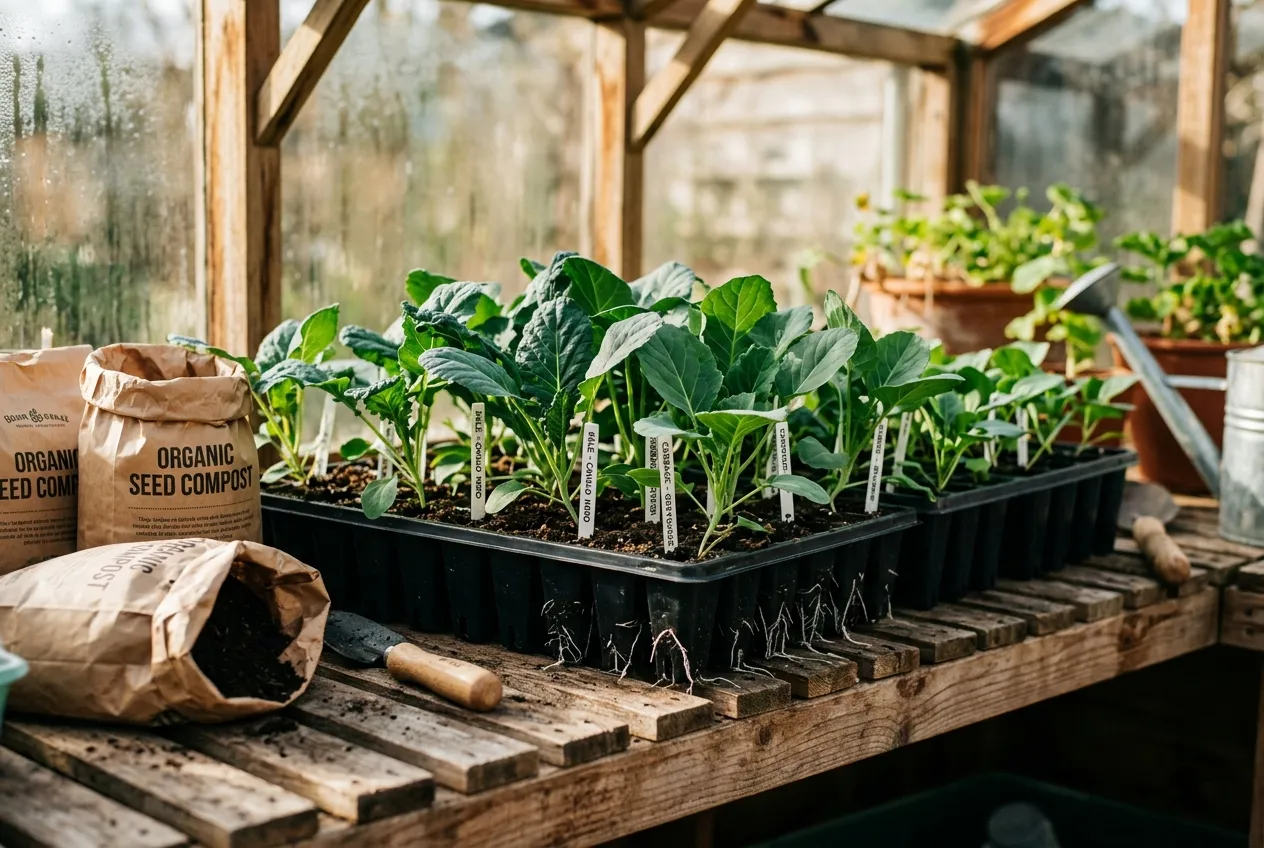
Raising transplants in deep modules with clean compost gives brassicas a strong root system before they contact infected soil.
Growing brassicas in infected ground
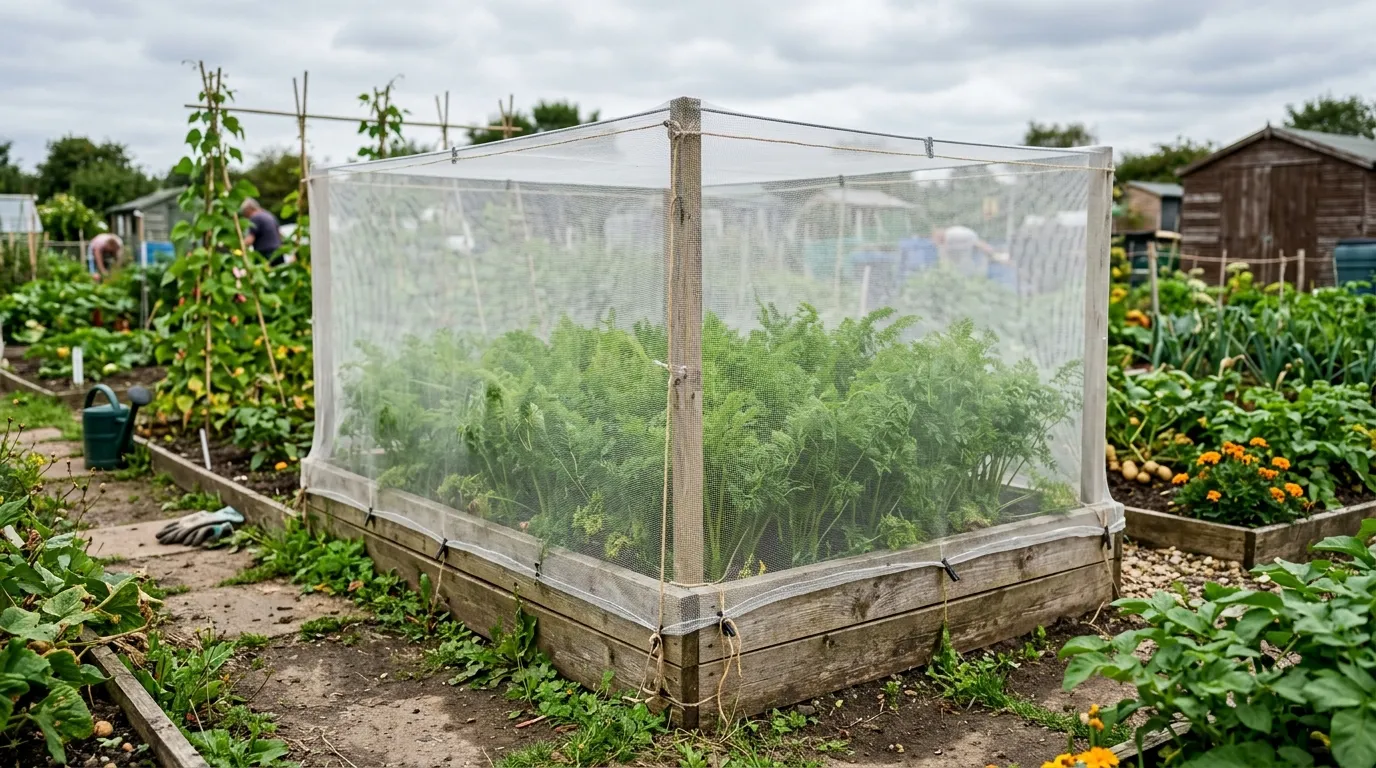
When soil contamination is severe, bypassing infected ground entirely is the most reliable approach. Raised beds built on top of infected soil and filled with clean compost create a disease-free root zone. Line the base with weed-suppressing membrane to prevent spore migration from below.
Beds 30cm deep suit cabbages, broccoli, and cauliflowers. Brussels sprouts and tall kale need 45cm depth for root anchorage. Fill beds with multipurpose compost mixed 50:50 with composted bark for drainage. Add garden lime to achieve pH 7.2 before planting. Replace or refresh the top 10cm of compost each season to prevent spore build-up from any surface contamination.
Deep containers are another option. 30-litre pots or 45-litre builders’ buckets with drainage holes grow excellent individual cabbages. Stand containers on paving or membrane, not directly on infected soil. Never reuse compost that grew brassicas on an infected site. See our container vegetable gardening guide for pot sizes and compost advice.
Lawrie’s field note: on my allotment, I grow Kilaton cabbage directly in limed open ground alongside Clapton cauliflower in raised beds. The cauliflowers always outperform because they never contact infected soil at all. Both approaches produce harvestable crops, but the raised bed cauliflowers are 30-40% larger at maturity.
Treatment options: what works and what does not
Honesty matters here. There is no chemical cure for club root available to UK amateur gardeners. The professional agricultural product cyazofamid (Ranman) is licensed for farm use only and cannot be purchased over the counter. No biological control agent is commercially available in the UK for garden use as of 2026.
Liming is the closest thing to a treatment. It does not kill resting spores, but it creates soil conditions where zoospore infection is suppressed. Think of it as disease management rather than cure.
Removal of infected plants reduces fresh spore release. Pull up and destroy (burn or council green waste) any plant showing club root symptoms. Do not compost infected roots, even in hot heaps. The galls contain billions of spores that can survive composting temperatures.
Soil solarisation (covering beds with clear polythene in summer) has shown some promise in southern England trials but is impractical on most UK allotments. The soil temperature must exceed 45C for several weeks, which requires sustained hot weather rarely seen in the Midlands or North.
Biofumigation with mustard green manures has been trialled by Garden Organic and other research bodies. Results are inconsistent. Digging in a thick stand of mustard before flowering releases isothiocyanates that may suppress spore germination, but the effect is short-lived and unreliable as a standalone treatment.
Prevention method comparison
| Method | Effectiveness | Cost | Difficulty | Notes |
|---|---|---|---|---|
| Liming to pH 7.2+ | High (70-90% reduction) | Low (under 10 per year) | Easy | Apply autumn, test annually, repeat each year |
| Resistant varieties | High (reliable harvest) | Low (standard seed price) | Easy | Kilaton, Clapton, Kilaxy most available |
| Raised beds (clean compost) | Very high (near 100%) | Medium (initial build cost) | Moderate | Membrane-lined, 30cm+ deep, refresh compost yearly |
| Deep containers | Very high (near 100%) | Low-medium | Easy | 30L+ pots, fresh compost each year |
| Deep module transplants | Moderate (head start only) | Low | Easy | 9cm+ cells, clean compost, transplant with rootball intact |
| 4+ year crop rotation | Low-moderate alone | None | Easy | Combine with liming, ineffective alone on infected soil |
| Tool and boot hygiene | Preventive only | None | Easy | Stops spread between beds, does not reduce existing infection |
| Biofumigation (mustard) | Low-inconsistent | Low | Moderate | Research ongoing, not reliable as standalone treatment |
| Soil solarisation | Low in northern UK | Low | Hard (weather dependent) | Needs sustained 45C+ soil temperature, impractical in most areas |
Recognising club root early
Early detection limits damage and prevents the worst spore accumulation. Check brassica plants weekly from June to September. The telltale afternoon wilt on warm days, when surrounding plants look fine, is the first warning sign. Gently rock a suspect plant at ground level. Healthy brassicas resist movement. Club root plants pull free easily because the root system is destroyed.
Lift one suspect plant completely and examine the roots. Any swelling or galling confirms infection. Act immediately by removing all brassicas from that bed, liming heavily, and switching to resistant varieties or raised beds for the following season. Early intervention prevents a minor infection from becoming a permanent, severe contamination problem.
For more guidance on recognising common garden plant diseases, including other soil-borne problems, see our full identification guide. The RHS club root guide also provides authoritative identification photographs and current research updates.
Frequently asked questions
Can club root be cured once soil is infected?
There is no cure for club root in infected soil. Resting spores of Plasmodiophora brassicae persist for 20+ years, and no chemical treatment is approved for amateur gardeners in the UK. Management focuses on raising soil pH above 7.2, growing resistant varieties like Kilaton and Clapton, and using clean compost in raised beds or containers to bypass contaminated ground.
What pH level prevents club root?
A soil pH of 7.2 or above significantly reduces club root infection. Apply calcified seaweed or ground limestone at 200-400g per square metre in autumn, at least 8 weeks before planting. Test soil pH annually with a reliable kit or meter, because rainfall and plant growth gradually re-acidify treated beds. Maintaining pH at 7.5 provides the strongest suppression of zoospore activity.
Does crop rotation prevent club root?
Rotation alone does not prevent club root because spores survive 20+ years in soil. A 4-year rotation reduces spore build-up in lightly infected ground but cannot eliminate established populations. Combine rotation with liming, resistant varieties, and strict tool hygiene for meaningful results. Never grow brassicas in the same bed two years running on any infected plot.
Which brassica varieties resist club root?
Kilaton cabbage and Clapton cauliflower carry genetic resistance bred specifically against club root. Other resistant options include Kilaxy and Kilazol cabbages from Syngenta, plus Crispus for winter heads. Resistant varieties still develop minor root galling in heavily infected soil but produce harvestable crops where susceptible types fail completely. Combine resistance with liming for the best results.
Can I grow brassicas in containers to avoid club root?
Growing brassicas in deep containers with clean multipurpose compost avoids club root entirely. Use pots at least 30cm deep for cabbages and cauliflowers, or 45cm deep for Brussels sprouts. Never reuse compost from containers that previously held brassicas. Stand containers on paving or membrane rather than infected soil to prevent spore migration through drainage holes.
How does club root spread between allotment plots?
Contaminated soil on boots, tools, and transplant rootballs is the primary vector. Surface water runoff carries spores downhill between plots. Shared wheelbarrows and rotavators are efficient spreading agents. Always clean boots and tools before moving between beds. Raise your own transplants in clean compost rather than buying from sources with unknown soil status.
Does club root affect any plants besides brassicas?
Club root affects all plants in the Brassicaceae family. This includes ornamental wallflowers, stocks, aubrieta, and honesty, plus common weeds like shepherd’s purse and charlock. These non-crop hosts maintain spore levels between brassica plantings. Remove brassica-family weeds from allotment paths and bed edges promptly to reduce the reservoir of infection in your soil.
Lawrie has been gardening in the West Midlands for over 30 years. He grows his own veg using no-dig methods, keeps a wildlife-friendly garden, and writes practical advice based on real UK growing conditions.