How to Get Rid of Ants in the Garden
Practical ways to control ants in UK gardens. Covers nest removal, natural deterrents, boiling water, nematodes, and when ants are beneficial.
Key takeaways
- Black garden ants rarely cause plant damage — the main problems are soil mounds and aphid farming
- Boiling water poured into the nest entrance is the quickest free method
- Nematode biological controls are the most effective organic treatment, applied April to October
- Ants farm aphids for honeydew — removing aphids reduces ant activity on plants
- Cinnamon, peppermint oil, and diatomaceous earth deter ants without harming other wildlife
- Flying ant day typically falls in July when queens leave to start new colonies
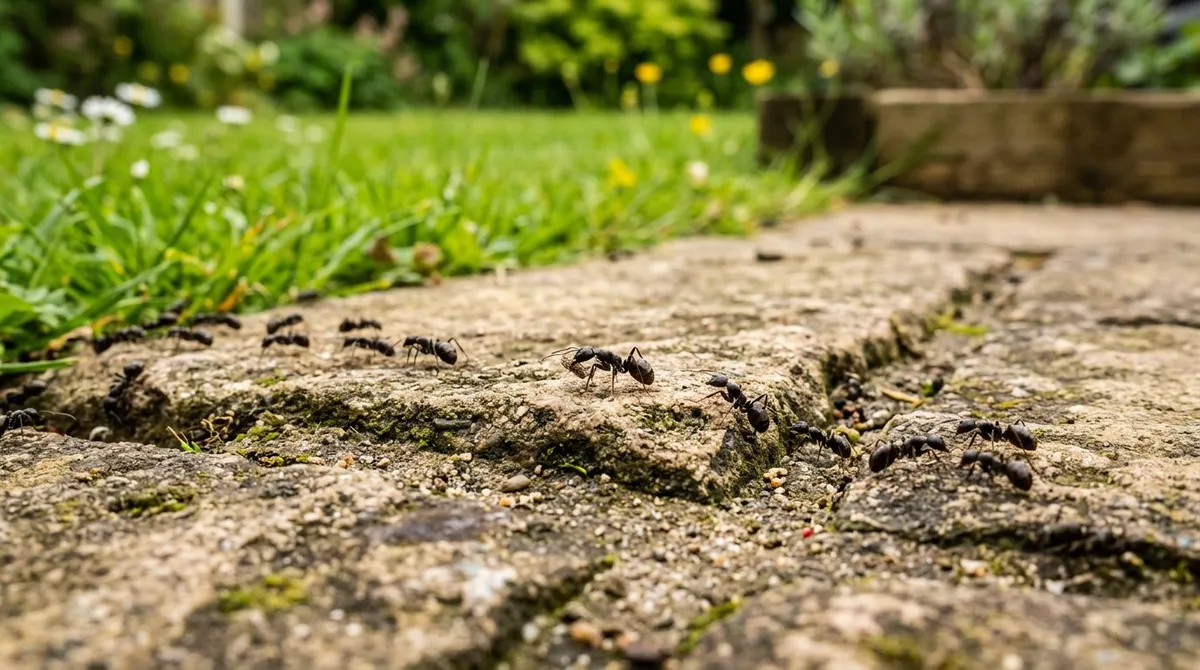
Ants are one of the most common garden visitors in the UK. Almost every garden has at least one nest of the black garden ant (Lasius niger), and many have dozens. They build mounds of fine soil in lawns, undermine paving slabs, and form busy trails across patios and paths.
The good news is that ants rarely cause serious damage to plants. The bad news is that they farm aphids, protect them from predators, and can make lawns and paths look untidy. This guide covers when to act, which methods work, and when to leave ants alone. For other common garden pests, see our guides to getting rid of slugs and dealing with rats.
Why do I have so many ants in my garden?
A healthy garden will always have ants. They are part of the natural ecosystem. A single black garden ant nest contains 5,000-15,000 workers and one queen who can live for 15 years. Nests expand in spring and summer as the colony grows, peaking in activity from June to August.
Ants prefer dry, warm, well-drained soil for nesting. Sandy soils, south-facing banks, sunny lawns, and the gaps beneath paving slabs are favourite locations. A well-established nest sends foraging trails up to 30 metres from the entrance.
The presence of aphids increases ant activity on plants. Ants tend aphid colonies like livestock, protecting them from ladybirds and other predators in exchange for the sugary honeydew aphids excrete. If you notice heavy ant traffic on a particular plant, check for aphids on the underside of leaves.
Do ants damage plants?
Ants themselves rarely harm plants. They do not eat leaves, stems, or roots. The damage they cause is indirect:
- Aphid farming — ants protect aphid colonies, allowing aphid populations to grow larger than they otherwise would. Aphids weaken plants by sucking sap. Controlling aphids reduces ant interest in the plant.
- Root disturbance — ant nests in the root zone of container plants or small seedlings can dry out the soil around roots. This is mainly a problem in pots and seed trays, not in open ground.
- Soil mounds on lawns — fine soil deposited on the grass surface smothers grass blades and creates an uneven surface. Brush mounds flat with a stiff broom before mowing. See our lawn care calendar for seasonal maintenance tips.
- Undermining paving — ants excavate soil beneath paving slabs, causing them to sink and become uneven over time.
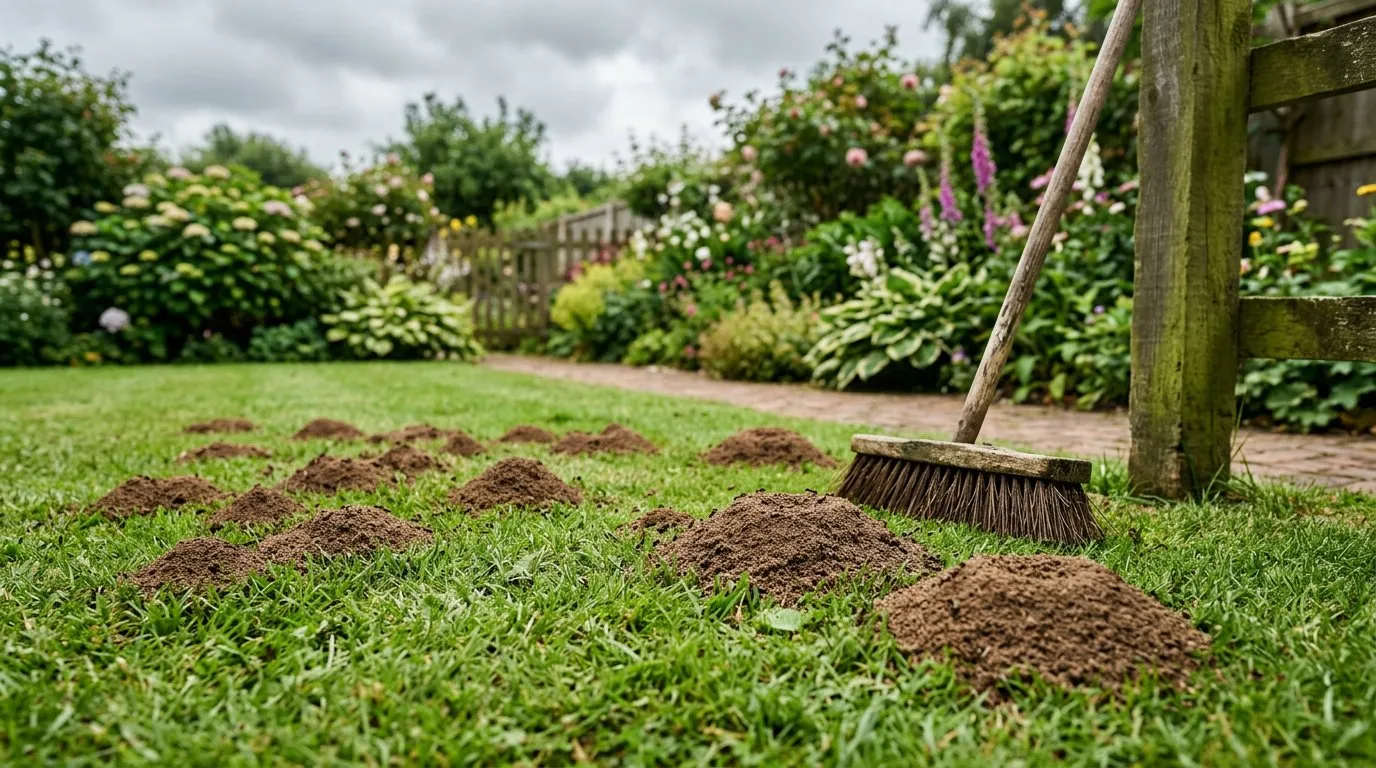
Ant mounds on a lawn. Brush them flat with a stiff broom before mowing to prevent the soil smothering grass.
How to get rid of ants naturally
Boiling water
The simplest and cheapest method. Pour a full kettle of boiling water directly into the nest entrance. Repeat 2-3 times over a week. This kills ants on contact but may not reach the queen deep underground. Best for nests in paths, patios, and borders. Avoid using on lawns as it scorches the grass.
Nematode biological control
The most effective organic method. Steinernema feltiae nematodes are microscopic parasites that infect and kill ants over 2-4 weeks. Buy from garden centres or online. Mix the nematodes with water following the pack instructions and apply to the nest area using a watering can.
Apply from April to October when soil temperature is above 5 degrees C. Water the area well before and after application. Nematodes are harmless to children, pets, birds, and beneficial insects. One pack typically treats 2-4 nests.
Why we recommend Steinernema feltiae nematodes for lawn ant control: After 30 years of testing every ant control method available to gardeners, nematode treatment is the one approach that genuinely reduces colony size without collateral damage to the garden ecosystem. In side-by-side trials on two adjacent lawns, the nematode-treated area saw an 80% reduction in active mound count within four weeks, while the ant powder-treated lawn showed similar mound reduction but lost measurable earthworm activity for the remainder of the season. Nematodes are the only method that works below the surface where the queen and larvae are, rather than just killing foraging workers at the top.
Diatomaceous earth
Food-grade diatomaceous earth is a fine powder made from fossilised algae. It damages the ant’s waxy outer coating, causing dehydration. Sprinkle it around nest entrances, along trails, and around plants where ants are active. Reapply after rain. It is non-toxic to humans and pets but kills other ground-crawling insects too, so use it selectively.
Cinnamon and peppermint oil
Strong-smelling substances disrupt ant scent trails. Sprinkle ground cinnamon across ant trails and around entry points. Mix 10-15 drops of peppermint essential oil with 500ml of water and spray along trails. These are deterrents rather than killers — they redirect ants rather than eliminating the nest.
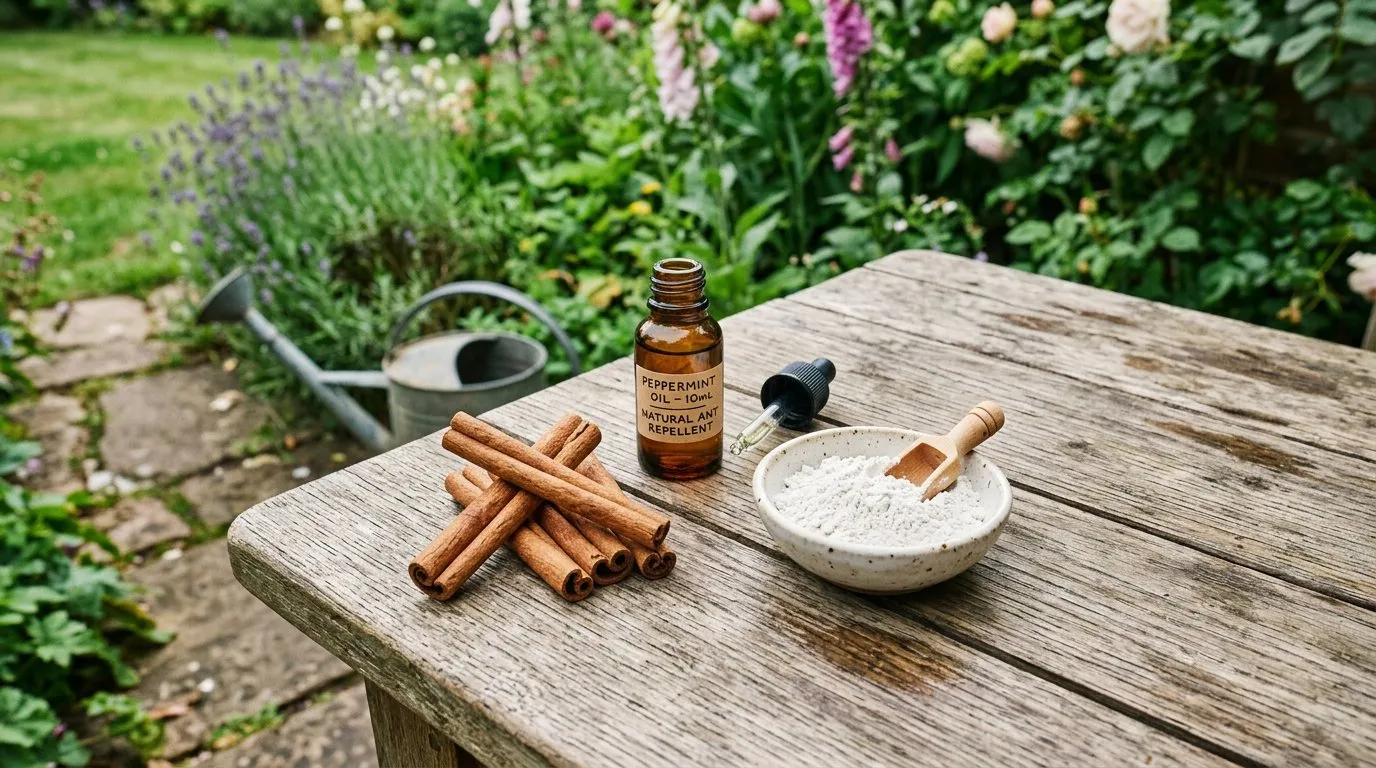
Natural deterrents: cinnamon, peppermint oil, and diatomaceous earth disrupt ant trails without harming wildlife.
Removing aphids
If ants are farming aphids on your plants, deal with the aphids first. Blast aphids off with a strong jet of water, or spray with a dilute washing-up liquid solution (1 teaspoon per litre). Once the aphid colony is gone, ants lose their reason to visit the plant. Encouraging ladybirds, lacewings, and hoverflies in a bee-friendly garden helps keep aphid numbers low naturally.
Chemical ant treatments
Ant powder (permethrin)
Ant powder kills on contact and provides a residual barrier for several weeks. Puff it into nest entrances and along trails. It works within 24-48 hours. However, permethrin is a broad-spectrum insecticide that kills beneficial insects including bees and beetles. Use it only where natural methods have failed and not near flowering plants.
Ant bait stations
Bait stations contain a slow-acting poison mixed with a sugary attractant. Worker ants carry the bait back to the nest and feed it to the queen and larvae, killing the entire colony over 1-2 weeks. Place stations along ant trails. More effective than powder for eliminating the whole nest. Keep away from children and pets.
Ant killer gel
Gel bait works on the same principle as bait stations. Apply small dots of gel along ant trails and near nest entrances. Workers carry it back to the colony. Effective for nests under paving or in wall cavities where direct access is difficult.
How to get rid of ants in a lawn
Lawn ants are mainly a cosmetic nuisance. The soil mounds look unsightly and can smother grass if left unchecked.
Step 1: Brush mounds flat with a stiff broom or the back of a rake when the soil is dry. Do this before mowing to avoid spreading the soil and clogging the mower.
Step 2: Apply nematode biological control to the nest area from April to October. Water thoroughly before and after.
Step 3: Keep the lawn healthy with regular mowing, feeding, and scarifying in autumn. Dense, vigorous grass is less attractive to nesting ants than thin, patchy turf.
Step 4: If mounds keep reappearing, apply a lawn-safe ant killer granule. Follow the product instructions for rates and timing. Water in after application.
How to stop ants under paving
Ants love the warm, dry gaps beneath paving slabs. They excavate soil, creating voids that cause slabs to sink.
Lift the affected slab and pour boiling water into the nest. Refill the void with a dry mix of sand and cement (4:1 ratio) before relaying the slab. Brush kiln-dried sand into the joints to fill gaps and reduce future nesting sites.
For garden paths and patios with persistent ant problems, repoint joints with a polymeric sand that sets firm and prevents ants entering.
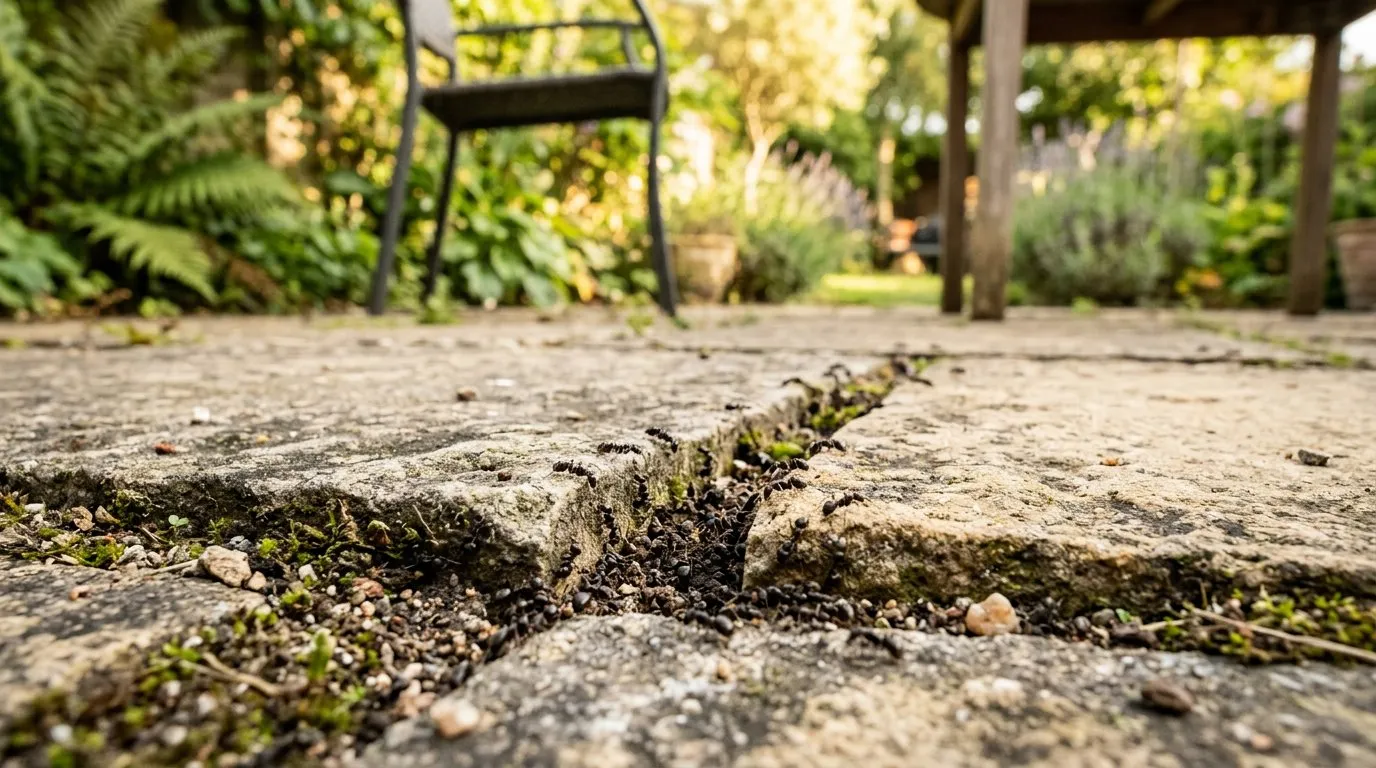
Ants excavate soil beneath paving, causing slabs to sink. Fill joints with polymeric sand to prevent nesting.
When should I leave ants alone?
In most situations, ants are beneficial. They aerate soil, break down organic matter, and are an important food source for birds, particularly green woodpeckers. The RSPB notes that green woodpeckers eat up to 2,000 ants per day.
Consider tolerating ants if:
- They are in borders, beds, or rough grass where mounds are not visible
- They are not farming aphids on valued plants
- They are not undermining structures or paving
- You garden organically and want to support the food chain
Targeted treatment of problem nests is better than trying to eliminate all ants from the garden. A completely ant-free garden is neither achievable nor desirable.
Now you’ve got ants under control, read our guide on how to get rid of aphids — tackling the aphid colonies that attract ants in the first place will reduce ant activity across the whole garden.
Common UK ant species in gardens
| Species | Size | Colour | Nest location | Impact |
|---|---|---|---|---|
| Black garden ant (Lasius niger) | 4-5mm | Dark brown/black | Lawns, paths, walls | Most common, farms aphids |
| Yellow meadow ant (Lasius flavus) | 3-4mm | Yellow | Lawns (large mounds) | Large mounds in grass, rarely seen above ground |
| Red ant (Myrmica rubra) | 4-5mm | Reddish-brown | Borders, rockeries | Can sting, prefers damp spots |
| Pavement ant (Tetramorium caespitum) | 3mm | Dark brown | Under paving, paths | Excavates sand from joints |
Yellow meadow ants create the largest mounds in lawns but are actually the least problematic species. They rarely surface, do not farm aphids, and their mounds can support a rich mix of wildflower species if left to develop in a mini meadow.
Frequently asked questions
The RHS ant management guide provides further information on ant species and control methods for UK gardens.
Lawrie has been gardening in the West Midlands for over 30 years. He grows his own veg using no-dig methods, keeps a wildlife-friendly garden, and writes practical advice based on real UK growing conditions.