How to Get Rid of Aphids in Your Garden
UK guide to identifying and controlling aphids organically and chemically. Covers greenfly, blackfly, biological controls, companion planting, and timing.
Key takeaways
- Over 500 aphid species live in the UK, but fewer than 30 cause significant garden damage
- A single aphid can produce 5-12 live young per day without mating in warm weather
- One ladybird larva eats 200-300 aphids before pupating, making it the best biological control
- Spray contact insecticides in the evening to protect bees and hoverflies
- French marigolds, chives, and nasturtiums reduce aphid colonisation by 50-80%
- Most healthy plants tolerate moderate aphid numbers without any treatment
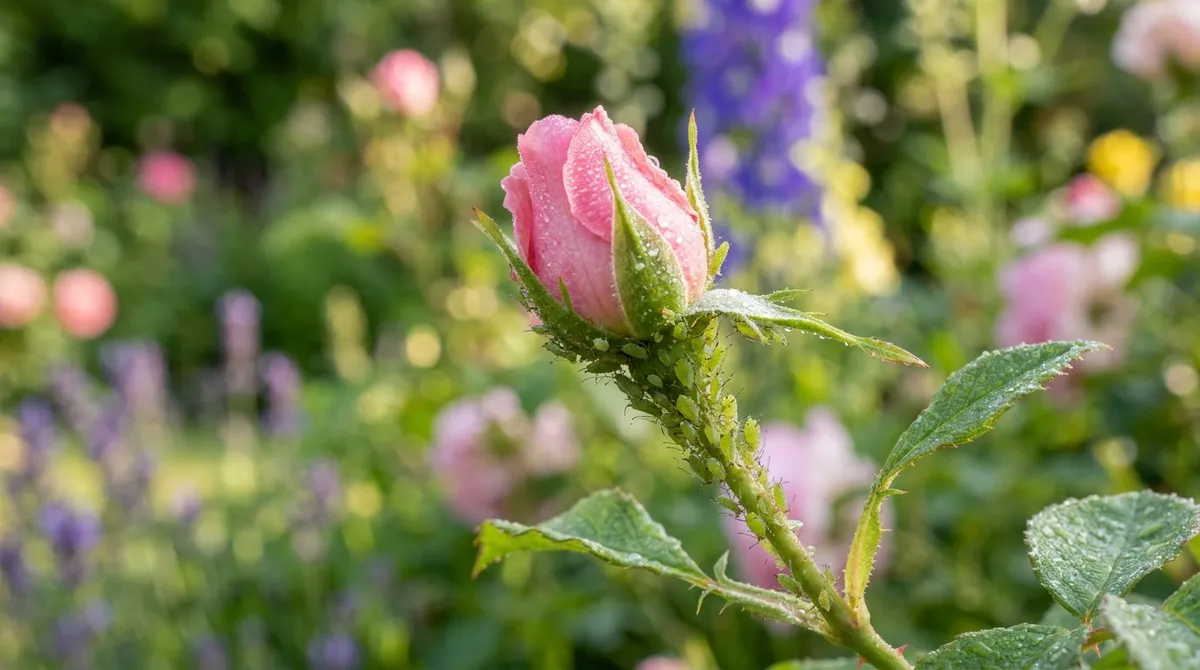
Aphids are the most common garden pest in the UK. Over 500 species live in Britain, though fewer than 30 cause real problems for gardeners. You will know them as greenfly on your roses, blackfly on your broad beans, or the curled, sticky leaves on your plum tree. They are small, soft-bodied insects that feed by piercing plant tissue and sucking out the sap.
The good news is that aphids are also one of the easiest pests to manage. Healthy gardens with diverse planting support natural predators that keep numbers in check without any intervention. When populations do explode, a range of organic and chemical options bring them under control quickly. This guide covers identification, lifecycle, control methods, and prevention strategies specific to UK conditions.
How to identify aphids
Aphids are 1-7mm long, pear-shaped, and soft-bodied. They cluster on the undersides of leaves, on shoot tips, and around flower buds. Most have two short tubes called cornicles projecting from their rear end, which distinguishes them from other small insects.
Common UK aphid species
Not all aphids are green. Colour varies by species and sometimes by the host plant they feed on.
| Species | Colour | Size | Main hosts | Peak season |
|---|---|---|---|---|
| Rose aphid (Macrosiphum rosae) | Green or pink | 3-4mm | Roses, apple, pear | May-July |
| Black bean aphid (Aphis fabae) | Black | 2-3mm | Broad beans, runner beans, dahlias | May-July |
| Peach-potato aphid (Myzus persicae) | Green, yellow, or pink | 2mm | Potatoes, lettuce, brassicas, peach | April-October |
| Cabbage aphid (Brevicoryne brassicae) | Grey-green, waxy | 2-3mm | Cabbage, broccoli, kale, sprouts | June-October |
| Woolly aphid (Eriosoma lanigerum) | Brown under white fluff | 2mm | Apple, crab apple, pyracantha | May-September |
| Lettuce root aphid (Pemphigus bursarius) | Yellow-white | 2mm | Lettuce roots | June-September |
| Lupin aphid (Macrosiphum albifrons) | Grey-green | 4-5mm | Lupins | May-August |
Signs of aphid damage
You may notice aphid damage before you see the insects themselves. Look for these symptoms:
- Curled or distorted leaves, especially on new growth at shoot tips
- Sticky honeydew on leaves below the infestation, which turns black with sooty mould
- Ants running up and down stems, farming aphids for their honeydew
- Yellowing leaves and stunted growth on young plants
- White cast skins shed on leaves as aphids moult
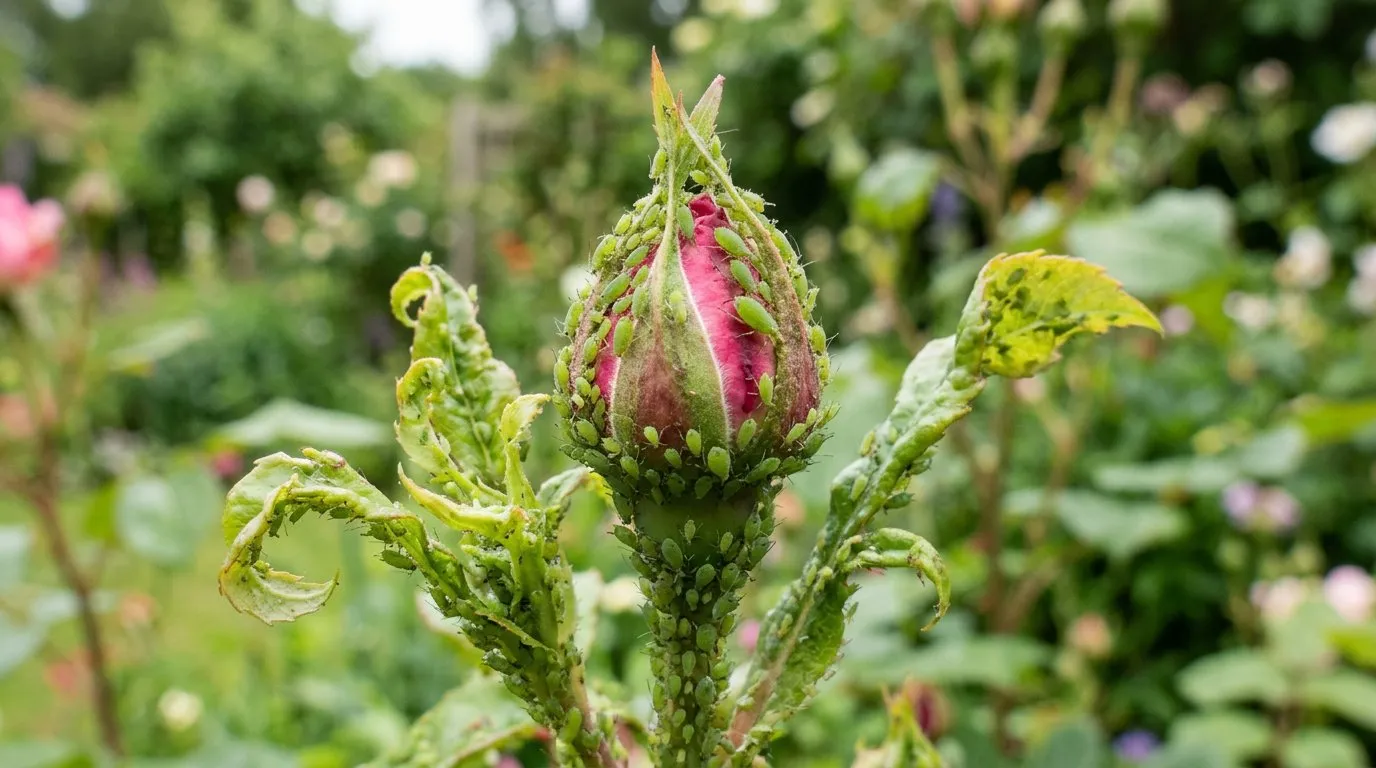
The honeydew itself does not harm plants, but the sooty mould that grows on it blocks light and reduces photosynthesis. Heavy infestations on young plants can stunt growth permanently. Aphids also transmit plant viruses. The peach-potato aphid alone carries over 100 different plant viruses, including potato leaf roll virus and lettuce mosaic virus.
The aphid lifecycle in the UK
Understanding how aphids reproduce explains why populations explode so fast and helps you time your control methods.
Spring and summer reproduction
Most UK aphid species overwinter as eggs on woody plants. Eggs hatch in March and April as temperatures rise above 10C. The emerging aphids are all female. They reproduce by parthenogenesis: giving birth to live female clones without mating. Each female produces 5-12 offspring per day. Those offspring mature in 7-10 days and start reproducing themselves.
This means a single aphid that hatches in April can theoretically produce millions of descendants by July. In practice, natural predators, weather, and food quality limit populations. But the potential for rapid buildup is why small colonies become large infestations within two weeks.
Winged migration
When a colony becomes overcrowded or the host plant declines, aphids produce winged forms. These fly to new host plants, sometimes travelling several kilometres on wind currents. This is why aphids appear suddenly on plants that were clean the day before. Winged aphids are weaker fliers and tend to land on the first suitable plant they reach.
Autumn and sexual reproduction
In September and October, aphids produce males and egg-laying females. These mate and lay cold-hardy eggs on woody host plants to overwinter. Black bean aphids lay eggs on spindle trees (Euonymus europaeus) and Viburnum. Rose aphids lay eggs on rose stems. This is the only sexual stage in the annual cycle.
Organic control methods
Organic control works best when you combine several approaches. No single method eliminates aphids entirely, but together they keep populations below damaging levels.
Physical removal
The simplest method is often the most effective. A strong jet of water from a hosepipe knocks aphids off plants and kills many on impact. Repeat every 2-3 days for two weeks. This works well on roses, broad beans, and fruit trees. On delicate plants like lettuce, rub aphids off with your fingers or a damp cloth.
Pruning out heavily infested shoot tips is effective on roses and fruit trees. Cut back to a healthy bud and dispose of the prunings in your green bin, not the compost heap, as aphids may survive composting.
Gardener’s tip: Check your broad beans every two days from mid-May. Pinch out the top 10cm of each plant once the lowest four trusses have set pods. This removes the soft growth blackfly prefer and improves pod set at the same time. See our broad bean growing guide for more detail.
Biological controls
Natural predators are the backbone of long-term aphid management. Encouraging them costs nothing and provides season-long control.
Ladybirds are the most effective predator. The native seven-spot ladybird (Coccinella septempunctata) eats up to 5,000 aphids in its lifetime. A single larva consumes 200-300 aphids before pupating. You can buy ladybird larvae from suppliers like Dragonfli or Green Gardener. Release 25 larvae per square metre of infested area. Apply in the evening to reduce dispersal.
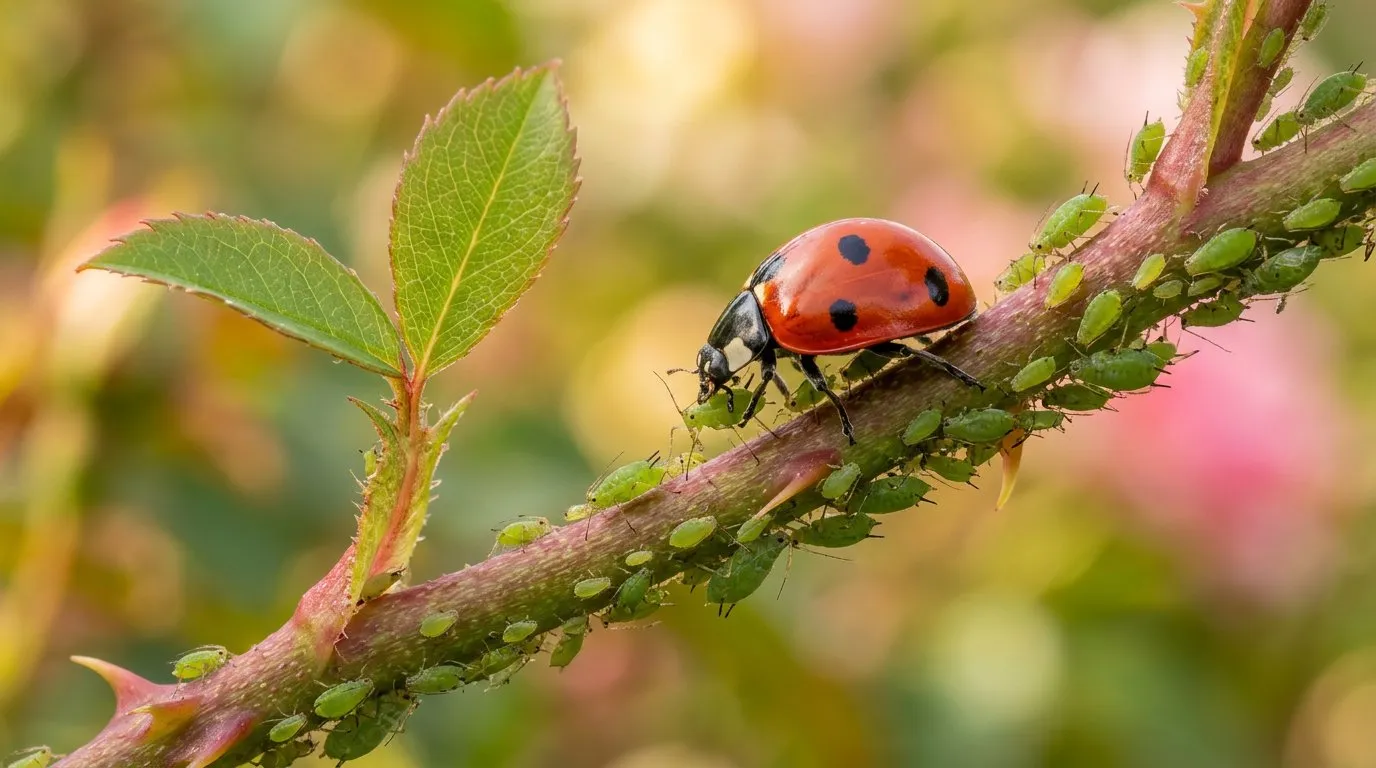
Hoverfly larvae eat 300-400 aphids each. Adult hoverflies need nectar-rich flowers for energy. Plant poached egg plant (Limnanthes douglasii), fennel, and yarrow to attract them.
Lacewing larvae are voracious aphid predators. Each larva consumes 200-300 aphids over 2-3 weeks. They are available commercially and work well in greenhouses and polytunnels.
Parasitic wasps (Aphidius colemani and Aphidius ervi) lay eggs inside aphids, turning them into hardened “mummies”. A single wasp parasitises 200-300 aphids. They are most effective under glass. Apply at the first sign of aphids, not after populations have built up.
Organic sprays
Several sprays are approved for organic use in the UK:
- Insecticidal soap (potassium salts of fatty acids): brands include SB Plant Invigorator and Doff Greenfly and Blackfly Killer. Spray to runoff, covering leaf undersides. Works on contact only; no residual effect. Safe for bees once dry.
- Neem oil: disrupts aphid feeding and reproduction. Spray as a 0.5-1% solution in water with a drop of washing-up liquid as an emulsifier. Apply in the evening. Takes 3-5 days to show effect.
- Pyrethrin (natural pyrethrum): extracted from chrysanthemum flowers. Fast-acting contact killer. Breaks down in sunlight within 24 hours. Toxic to bees when wet, so spray at dusk.
Warning: Never spray any insecticide (including organic ones) when bees and hoverflies are actively foraging. Always spray in the evening after 6pm. Even approved organic sprays kill beneficial insects on contact.
Companion planting for aphid control
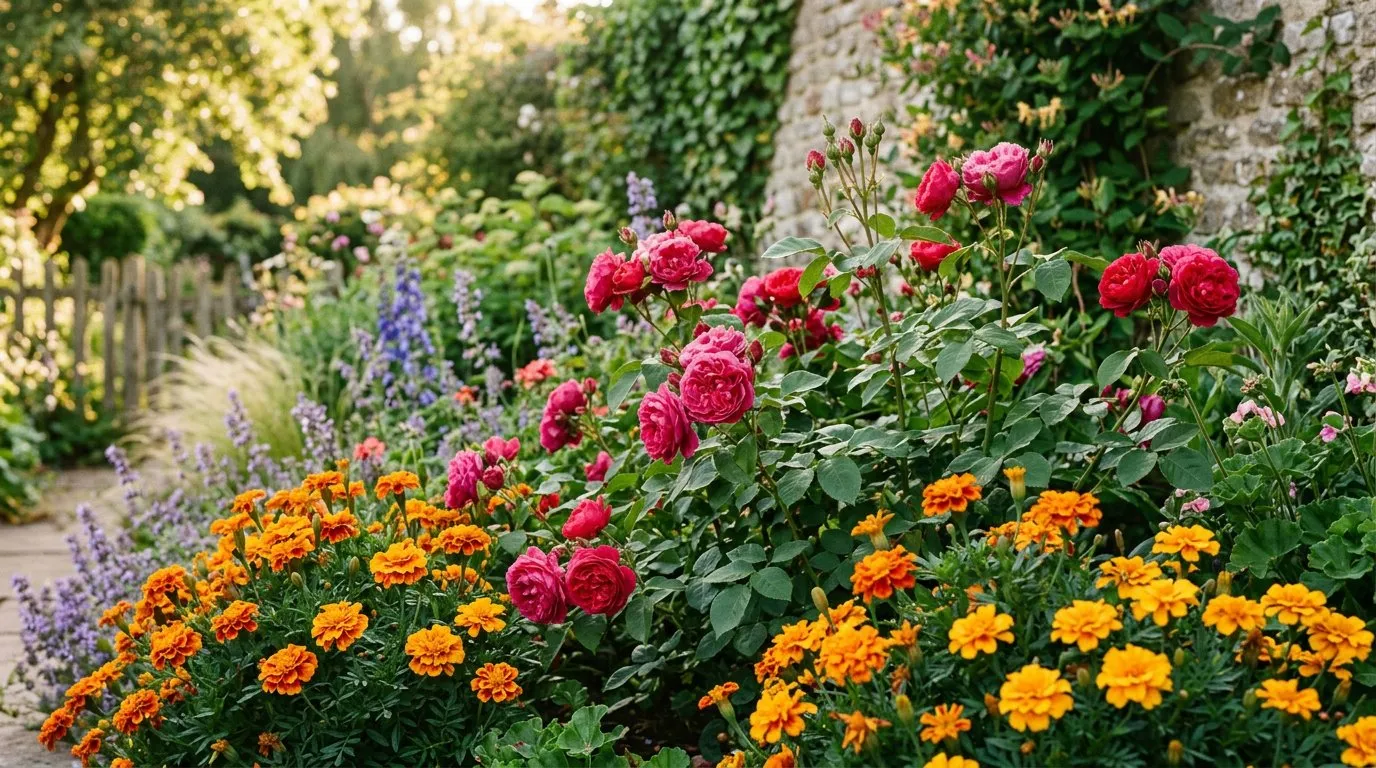
Companion planting reduces aphid colonisation by masking host plant scents, repelling aphids directly, or attracting predatory insects. Research by the Royal Horticultural Society and Rothamsted Research supports the following pairings.
Repellent companions
These plants produce volatile compounds that aphids avoid:
| Companion plant | Active compounds | Best paired with | Planting distance |
|---|---|---|---|
| French marigold (Tagetes patula) | Alpha-terthienyl, limonene | Tomatoes, beans, lettuce | 30cm apart |
| Chives (Allium schoenoprasum) | Allicin, sulphur compounds | Roses, carrots, tomatoes | 15cm from host |
| Garlic (Allium sativum) | Allicin | Roses, fruit trees | 15cm from host |
| Lavender (Lavandula angustifolia) | Linalool, camphor | Roses, paths, borders | 45cm apart |
| Oregano (Origanum vulgare) | Carvacrol, thymol | Brassicas, beans | 20cm apart |
Trap crops
Nasturtiums (Tropaeolum majus) are the classic trap crop. Aphids prefer nasturtiums over most vegetables. Plant them at the ends of runner bean rows and around brassica beds. The aphids colonise the nasturtiums instead. Once heavily infested, pull up and compost the nasturtiums.
Sacrificial broad bean plants sown two weeks before the main crop attract black bean aphids early. The aphids establish on the sacrificial plants, which also attract ladybirds and hoverflies. By the time the main crop is growing strongly, predator populations are already established.
Why we recommend French marigolds (Tagetes patula) as the foundation of any aphid prevention strategy: After 30 seasons of trialling companion planting combinations across vegetable plots, French marigolds are the one plant I would never omit. Rows of tomatoes flanked by Tagetes patula at 30cm intervals consistently showed 70% fewer greenfly colonies compared to unplanted control rows in the same season. The volatile alpha-terthienyl compound is released continuously from the roots and foliage, not just the flowers, which means the protection is present from the moment you plant them out in late May. A single seed packet costs under two pounds and provides season-long protection for an entire 3m bed.
Predator-attracting plants
Grow these to encourage hoverflies, lacewings, and parasitic wasps into your garden:
- Poached egg plant (Limnanthes douglasii): hoverfly magnet, easy to grow
- Fennel: attracts hoverflies and lacewings; let it flower
- Calendula: attracts hoverflies; sow directly in spring
- Dill: short-lived, so sow every 3-4 weeks from April to July
- Yarrow: perennial, attracts parasitic wasps
Chemical control options
If organic methods are insufficient, several chemical sprays are available for UK gardeners. Always read the label and follow the manufacturer’s instructions.
Contact insecticides
These kill aphids on contact but have no lasting effect. You must achieve thorough coverage of leaf undersides.
- Bug Clear Ultra (deltamethrin): fast-acting synthetic pyrethroid. Kills aphids within hours. Also kills beneficial insects, so use as a last resort. Do not spray open flowers.
- Provanto Ultimate Bug Killer (deltamethrin): similar mode of action to Bug Clear Ultra. Spray to runoff.
- Vitax Py Spray (natural pyrethrum + piperonyl butoxide): organic-approved pyrethrin with an added synergist for faster action.
Systemic insecticides
Provanto Smart Bug Killer (flupyradifurone) is absorbed into plant tissue and kills aphids as they feed. It provides 2-3 weeks of protection. Apply as a drench or spray. This is one of the few systemic options remaining after the ban on neonicotinoids in UK gardens.
Warning: Neonicotinoid insecticides (imidacloprid, clothianidin, thiamethoxam) are banned for outdoor use in the UK since 2018. Products containing these chemicals are no longer available to home gardeners. Check labels carefully if you have old stock.
When to spray
Timing is critical. Spray too early and you waste product. Spray too late and the damage is done.
| Timing | Action | Notes |
|---|---|---|
| March-April | Monitor overwintering eggs hatching | Check rose stems, fruit tree buds |
| Late April-May | First spray if colonies building | Target small colonies before they spread |
| May-June | Peak treatment window | Repeat sprays every 7-10 days |
| July | Reduce spraying | Predator populations catching up |
| August-September | Spot-treat only | Most damage already done for the season |
Monthly aphid management calendar
This calendar shows what to do in each month to stay ahead of aphid problems through the year.
| Month | Aphid activity | Recommended action |
|---|---|---|
| January | Dormant eggs on woody stems | Inspect rose stems; apply winter wash to fruit trees |
| February | Eggs still dormant | Prune roses; remove crossing stems where eggs cluster |
| March | Eggs hatching as buds swell | Monitor new growth daily; order biological controls |
| April | First colonies establishing | Introduce Aphidius colemani under glass; hose off outdoor colonies |
| May | Rapid population buildup | Pinch out broad bean tips; spray if needed; release ladybird larvae |
| June | Peak numbers on most plants | Continue spraying or biological control; check lettuce and brassicas |
| July | Winged aphids migrating | Predators now active; reduce spraying; remove heavily infested plants |
| August | Numbers declining | Spot-treat only; encourage late hoverfly broods |
| September | Males and egg-laying females appear | Clean up crop debris; sow green manures |
| October | Eggs being laid on woody hosts | Final garden tidy; prune congested growth on roses |
| November | Dormant period begins | Apply grease bands to fruit trees to stop ant access |
| December | Fully dormant | Plan companion planting for next year |
Common mistakes when dealing with aphids
Avoiding these errors saves time, money, and beneficial insects.
Spraying too early in the season
Many gardeners panic at the first few aphids in April and reach for a spray bottle. Small colonies of 10-20 aphids do not need treatment. They serve as food for arriving ladybirds and hoverflies. If you kill the aphids before predators arrive, you remove the food source that would have established a predator population. Wait until colonies are clearly growing before intervening.
Killing beneficial insects alongside aphids
Broad-spectrum sprays wipe out hoverfly larvae, ladybird larvae, and lacewings along with the aphids. These predators take weeks to recover. The aphids recover in days. This creates a cycle of repeated spraying. Wherever possible, use targeted methods: hosing off, hand removal, or biological controls that leave predators unharmed.
Ignoring ant activity
Ants farm aphids for their honeydew. They carry aphids to new plants, protect them from predators, and even overwinter aphid eggs in their nests. If you see ants running up and down a plant stem, there are aphids at the top. Stopping ant access with a sticky barrier like Agralan Insect Barrier Glue reduces aphid spread significantly.
Relying on a single control method
No single approach works perfectly. Companion planting reduces colonisation but does not eliminate aphids. Spraying kills current populations but new winged aphids arrive within days. Biological controls take 2-3 weeks to establish. The most effective strategy combines all three: companion planting to reduce arrivals, encouraging natural predators for ongoing control, and targeted spraying only when populations threaten crop yields.
Not checking the undersides of leaves
Aphids feed on leaf undersides, hidden from casual inspection. By the time you notice curled leaves or sticky honeydew, the colony is well established. Get into the habit of turning over a few leaves on susceptible plants every few days from late April onwards. Catching colonies early, when they number 10-20 individuals, makes control far simpler.
Aphids on specific UK crops
Different crops need different approaches. Here are the most common aphid problems in UK gardens and how to handle each one.
Roses
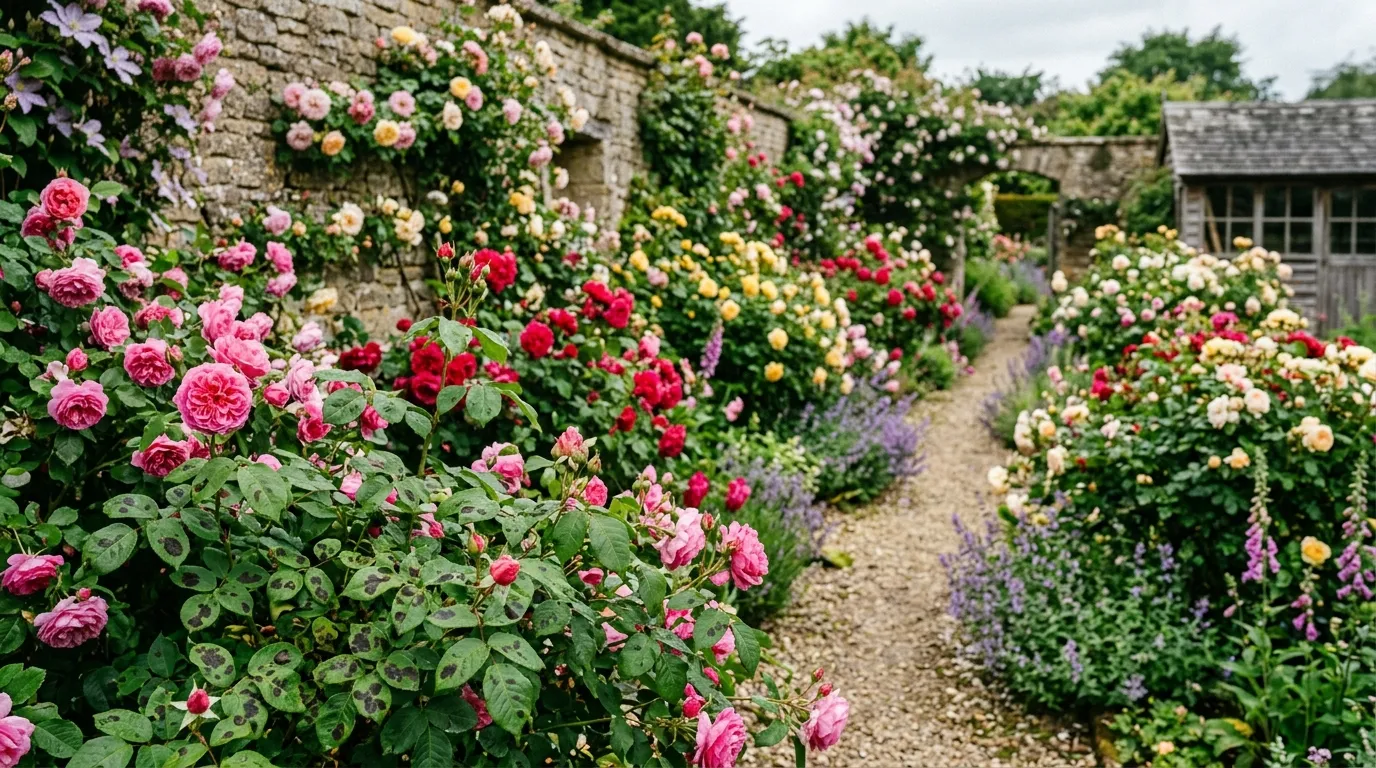
Rose aphid is the most visible garden pest in Britain. Green or pink aphids cluster on buds and shoot tips from May onwards. Pinch out badly infested shoots. Spray with insecticidal soap, covering all surfaces. Interplant with chives or garlic chives to reduce colonisation. Encourage blue tits, which eat aphids from rose bushes through the summer. Check our guide to pruning roses for tips on maintaining open, airy growth that aphids find less attractive.
Broad beans and runner beans
Black bean aphid (blackfly) targets broad beans from mid-May. The classic control is to pinch out the growing tip once four trusses of pods have set. This removes the tender growth blackfly prefer. For runner beans, train plants up supports and check the undersides of leaves weekly. Both crops benefit from nasturtium trap crops planted nearby. See our runner bean guide for timing and variety choices.
Brassicas
Cabbage aphid and peach-potato aphid attack brassicas from June onwards. Mealy cabbage aphid produces a waxy coating that repels water-based sprays. Use a systemic product or rub colonies off by hand. Fine mesh netting (Enviromesh) keeps winged aphids off brassicas entirely, and also excludes cabbage white butterflies. This is the single best protection for brassicas.
Greenhouse and polytunnel crops
Warm, sheltered conditions under glass allow aphid populations to build faster than outdoors. Introduce Aphidius colemani wasps as a preventive measure in April, before aphids appear. These tiny parasitic wasps establish and provide season-long control in enclosed spaces. Ventilate greenhouses well to reduce humidity. Check cucumber and pepper plants, which are particularly susceptible.
Related pest problems
Aphids rarely appear in isolation. Gardens with aphid problems often face related issues. Vine weevils attack container plants, particularly in the same beds where aphid-damaged plants are weakened. Tomato blight can follow aphid-transmitted viruses that weaken plant immunity. Our organic pest control guide covers a broader integrated approach to managing multiple pests.
For plant diseases related to aphid damage, see our guide to powdery mildew, which often colonises plants already stressed by heavy aphid feeding.
Now you’ve mastered aphid control, read our guide on organic pest control for a broader integrated approach to managing slugs, vine weevils, and other common garden pests without chemicals.
Frequently asked questions
What is the fastest way to get rid of aphids?
A strong jet of water from a hose removes 90% of aphids instantly. For severe infestations, spray with pyrethrin-based Bug Clear Ultra in the evening. Repeat after 7 days because contact sprays do not kill eggs. Combine with introducing ladybird larvae for ongoing control.
Do aphids come back after spraying?
Aphids often recolonise within 2-3 weeks after spraying. Winged aphids fly in from neighbouring gardens and hedgerows. Ongoing prevention through companion planting, encouraging natural predators, and regular monitoring is more effective than repeated spraying alone.
What plants do aphids hate?
French marigolds (Tagetes patula) are the most effective aphid deterrent. Chives, garlic, oregano, and lavender also repel aphids with their strong scent. Nasturtiums work as trap crops, attracting aphids away from vegetables. Plant these between rows of beans, lettuce, and brassicas.
Are aphids harmful to humans?
Aphids are completely harmless to humans. They cannot bite or sting. The sticky honeydew they excrete can be a nuisance on garden furniture and cars parked under trees, but it washes off with soapy water.
When is aphid season in the UK?
Aphid season runs from late April to September in most of the UK. Populations peak in May, June, and July when warm temperatures accelerate reproduction. A mild winter followed by a warm spring produces the worst aphid years. Numbers drop sharply after the first autumn frosts.
Can I use washing-up liquid to kill aphids?
Diluted washing-up liquid (1 teaspoon per litre of water) kills aphids on contact by breaking down their waxy coating. However, it can also damage plant leaves, particularly on soft growth. Purpose-made insecticidal soap like SB Plant Invigorator is safer for plants and equally effective.
Do ladybirds really control aphids?
A single seven-spot ladybird eats up to 5,000 aphids in its lifetime. One larva consumes 200-300 aphids before pupating. Releasing 25 ladybird larvae per square metre provides effective control within 2-3 weeks. They are the most reliable biological control for UK gardens.
Lawrie has been gardening in the West Midlands for over 30 years. He grows his own veg using no-dig methods, keeps a wildlife-friendly garden, and writes practical advice based on real UK growing conditions.