How to Get Rid of Bindweed
How to control and remove bindweed from UK gardens. Covers field and hedge bindweed identification, glyphosate timing, organic methods, and suppression.
Key takeaways
- Bindweed roots can grow 5m deep, making single treatments ineffective
- A 5cm root fragment left in the soil will regenerate a new plant within 14 days
- Glyphosate is most effective when applied to 30-45cm stems in June-August
- Organic control requires cutting or pulling every 7-10 days for at least two full growing seasons
- Black polythene mulch suppresses bindweed after 12-18 months of total light exclusion
- Field bindweed has smaller pink-striped flowers (2cm); hedge bindweed has large white trumpets (5-7cm)
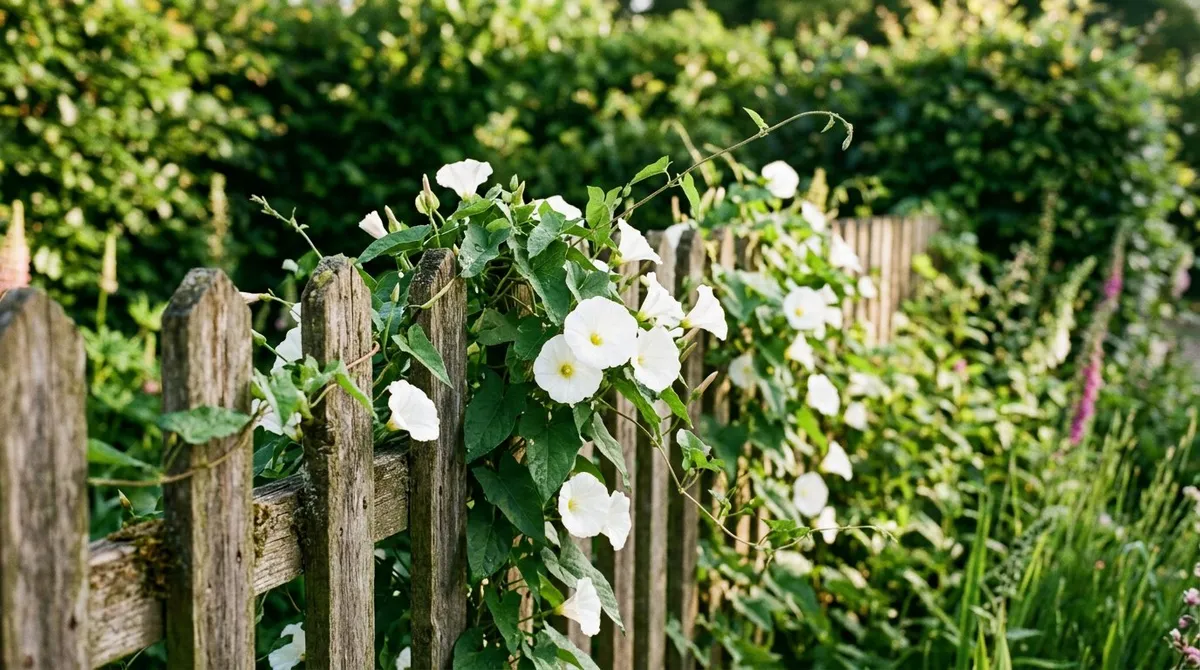
Bindweed is the weed that makes experienced gardeners despair. It twines around everything it touches, smothering shrubs, pulling down runner bean supports, and threading through hedges with relentless determination. Two species cause problems in UK gardens: field bindweed (Convolvulus arvensis) and hedge bindweed (Calystegia sepium). Both are native to Britain and have been here for thousands of years.
What makes bindweed so difficult is underground. The root system of an established plant can extend 5m deep and spread 3-4m laterally. A root fragment just 5cm long will regenerate a full plant within 14 days. No single treatment eliminates bindweed in one season. Eradication is a multi-year commitment that rewards patience and punishes neglect. This guide sets out every effective method, from glyphosate to mulching, so you can choose the approach that suits your garden.
How to Identify Bindweed
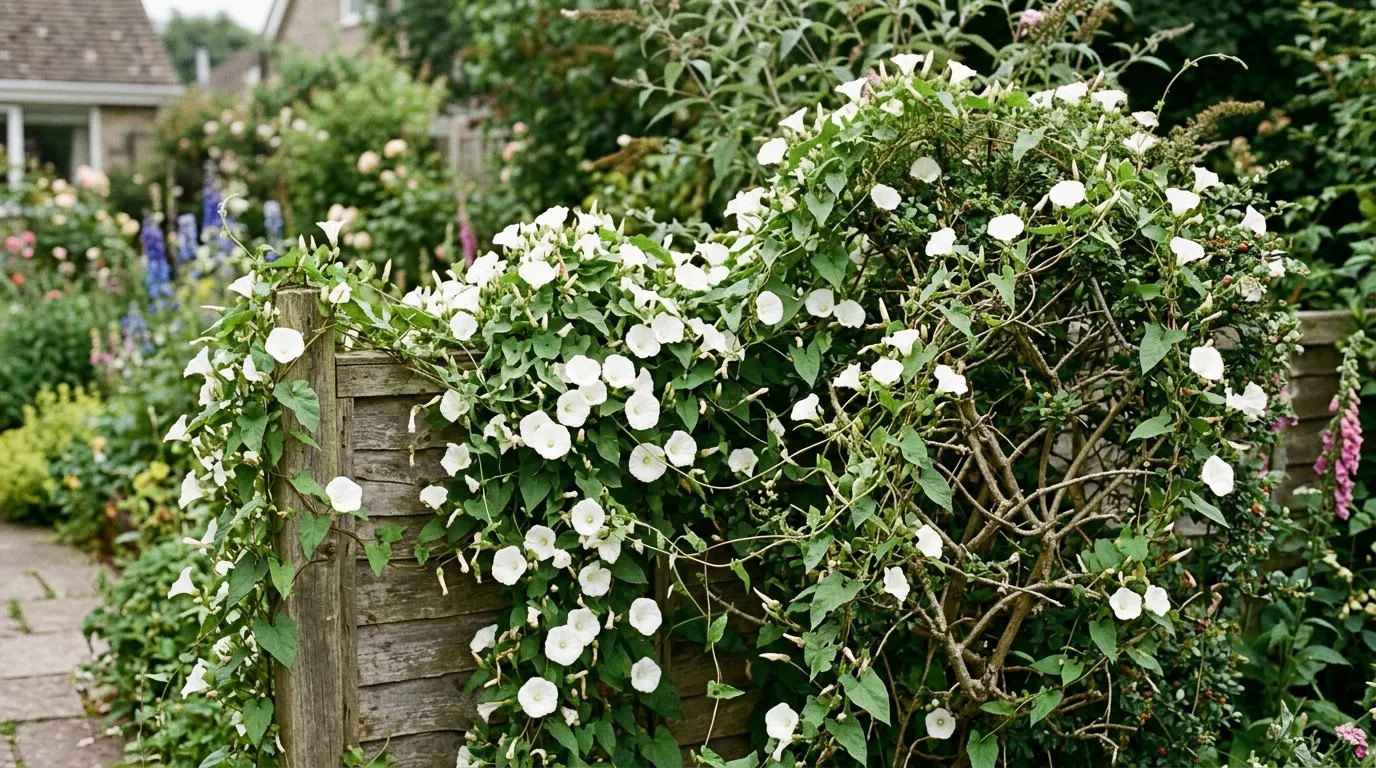
Accurate identification matters because the two species respond slightly differently to treatment, and confusing bindweed with other climbers leads to wasted effort.
Field Bindweed (Convolvulus arvensis)
Field bindweed is the more common species in UK gardens. It grows to about 2m, twining anti-clockwise around anything it can reach. The leaves are arrow-shaped, 2-5cm long, with pointed lobes at the base. The flowers are trumpet-shaped, 2-3cm across, white or pale pink with five darker pink stripes radiating from the centre.
Field bindweed is more drought-tolerant than hedge bindweed and thrives in open, sunny spots. It is common on allotments, in vegetable plots, and along fence lines. The root system is the deeper of the two species, routinely reaching 5m in lighter soils.
Hedge Bindweed (Calystegia sepium)
Hedge bindweed is the larger species. Stems reach 3m or more, climbing vigorously through hedges, shrubs, and trees. The leaves are larger than field bindweed, 5-15cm long, with a more rounded arrow shape. The flowers are the giveaway: large white trumpets 5-7cm across, with two green bracts at the base that partly enclose the flower.
Hedge bindweed prefers damper, more fertile soil. It is common in hedgerows, along riverbanks, and in gardens with rich, moist borders. Its root system spreads further laterally than field bindweed, sending up new shoots 3-4m from the parent plant.
Identification Comparison Table
| Feature | Field bindweed | Hedge bindweed |
|---|---|---|
| Scientific name | Convolvulus arvensis | Calystegia sepium |
| Maximum height | 2m | 3m+ |
| Leaf size | 2-5cm | 5-15cm |
| Flower size | 2-3cm | 5-7cm |
| Flower colour | White/pink with stripes | Pure white |
| Root depth | Up to 5m | Up to 3m |
| Lateral spread | 2-3m | 3-4m |
| Preferred habitat | Dry, sunny, open ground | Damp, fertile, hedgerows |
| Twining direction | Anti-clockwise | Anti-clockwise |
Why Bindweed Is So Hard to Kill
Understanding the biology explains why this weed resists most control methods.
The Root System
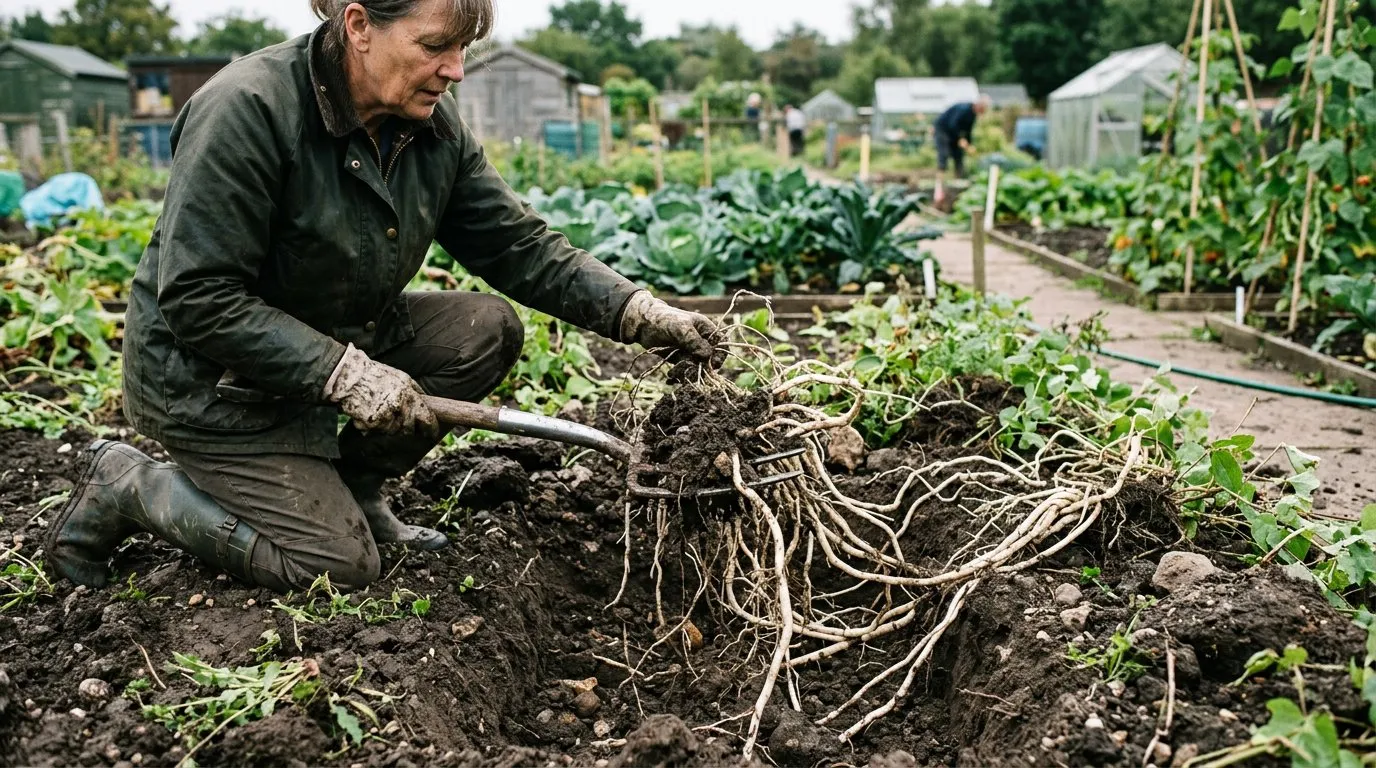
Bindweed stores most of its energy in thick, white, fleshy roots that branch and extend far deeper than any normal digging reaches. The roots are brittle and snap easily when disturbed. Each broken fragment becomes a new plant. Rotavating a patch of bindweed does not kill it. It multiplies it, turning one plant into dozens.
The root system also produces adventitious buds at intervals along its length. Even when all top growth is removed, these buds push new shoots to the surface within 7-14 days. The roots hold enough energy reserves to support multiple rounds of regrowth without any photosynthesis from leaves.
Regeneration Speed
After cutting, bindweed regrows faster than most gardeners expect. New shoots appear in 7-14 days and can reach 30cm within three weeks. This speed means that missing a single cutting window gives the plant time to replenish root reserves through photosynthesis.
Seed Longevity
Field bindweed seeds remain viable in the soil for up to 50 years. Each plant produces 25-300 seeds per year. Even after years of root control, new seedlings can appear from the existing seed bank. Hedge bindweed produces seeds less reliably in the UK climate but still contributes to the seed bank.
Seasonal Treatment Calendar
Timing is critical. Treating at the wrong time wastes effort and chemicals.
| Month | Bindweed activity | Recommended action |
|---|---|---|
| January-March | Dormant. Roots alive but no top growth. | Plan your strategy. Prepare mulch materials. Install root barriers. |
| April | First shoots emerge from root buds. | Mark locations of emerging shoots. Do not treat yet. |
| May | Shoots growing rapidly, reaching 15-30cm. | Begin organic cutting/pulling regime. Too early for glyphosate. |
| June | Stems 30-45cm. Flower buds forming. Peak photosynthesis. | First glyphosate application window. Cut organic plots every 7-10 days. |
| July | Full growth. Flowering. Maximum leaf area. | Best month for glyphosate treatment. Continue organic cutting regime. |
| August | Continued flowering. Energy moving to roots for winter storage. | Second glyphosate application window. Continue cutting. |
| September | Growth slowing. Leaves beginning to yellow. | Final opportunity for chemical treatment before translocation slows. |
| October | Stems dying back. Roots entering dormancy. | Apply or renew mulch for light exclusion. Clear dead stems. |
| November-December | Fully dormant above ground. | Lay black polythene or deep mulch on cleared areas. |
Glyphosate Treatment
Glyphosate (sold as Roundup, Gallup, and various own-brand products) is the most effective chemical treatment for bindweed. It is a systemic herbicide that is absorbed through the leaves and translocated down into the root system.
How to Apply Glyphosate to Bindweed
- Wait until stems are 30-45cm long with several fully expanded leaves. Shorter stems absorb too little chemical. Longer stems indicate the plant is already diverting energy to flowering rather than root storage.
- Unwind bindweed from desired plants carefully. Lay the stems on the ground or over a sheet of cardboard away from plants you want to keep.
- Apply glyphosate by painting or careful spraying. A gel formulation (like Roundup Gel) allows precise application to individual leaves without spray drift. Alternatively, use a small paintbrush to apply diluted glyphosate directly to leaves.
- Do not disturb treated stems for at least 7 days. The chemical needs time to translocate from the leaves down into the root system. Cutting or pulling treated stems too soon breaks the translocation pathway.
- Wait 3-4 weeks for regrowth, then repeat the treatment on new shoots.
The Cane Method
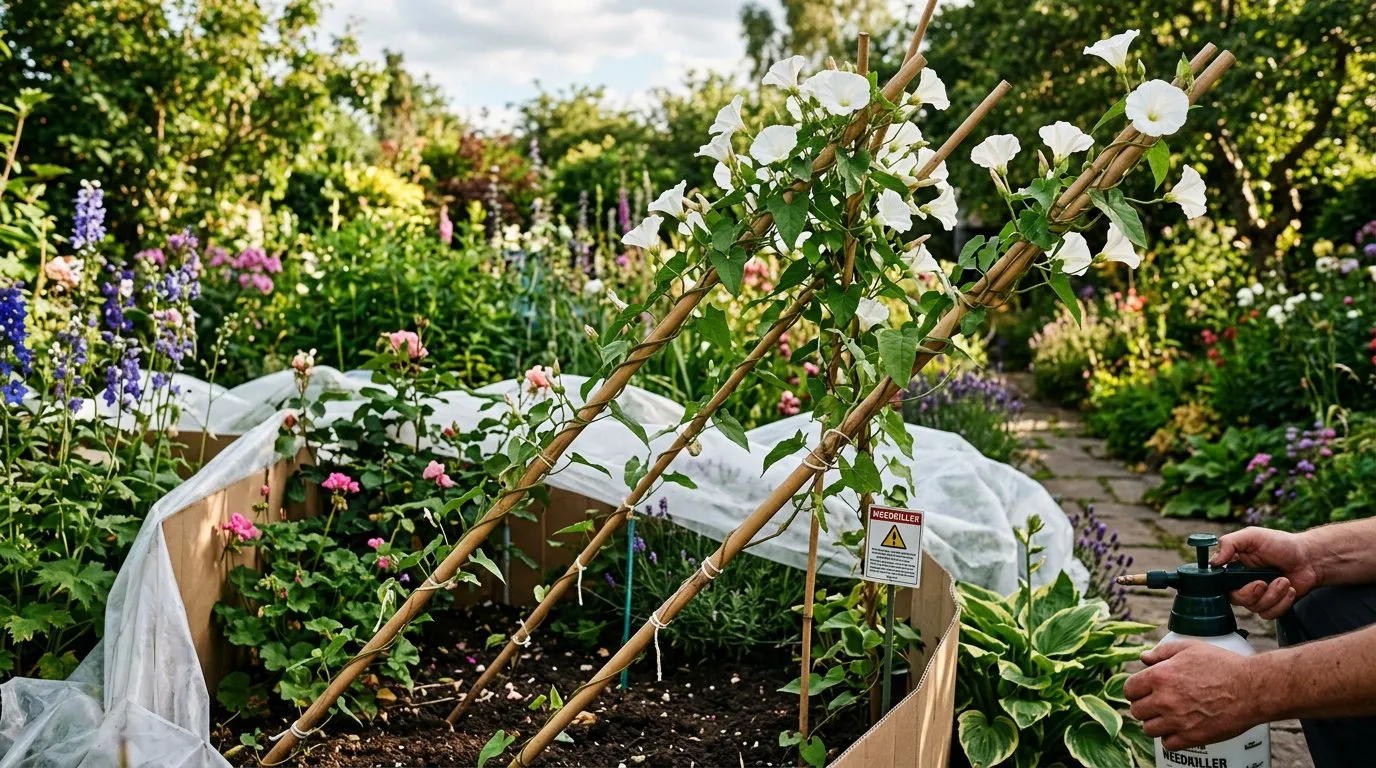
This technique is highly effective for treating bindweed growing among desirable plants.
- Push a 1.2m bamboo cane into the ground near each bindweed shoot
- Allow the bindweed to climb the cane for 2-3 weeks until it has 30-45cm of stem and several leaves
- Carefully paint glyphosate onto the leaves while they are wrapped around the cane
- The cane keeps the treated stems away from other plants, preventing accidental damage
Warning: Glyphosate is a non-selective herbicide. It kills any green plant tissue it contacts. Even fine spray drift can damage neighbouring plants. Always apply on calm, still days. Never spray near ponds, streams, or ditches. Keep children and pets away from treated areas until dry.
Realistic Expectations
A single glyphosate treatment will not kill established bindweed. Expect to treat 2-3 times per growing season for 2-3 consecutive years. Each treatment weakens the root system further. You will see progressively thinner, weaker regrowth each year until the roots are exhausted.
Why we recommend the bamboo cane method with glyphosate gel over spray application: After 30 years of tackling bindweed in mixed borders where spray drift is a constant risk, the cane-and-gel approach delivers better results with far less collateral damage. Treating bindweed trained up individual canes rather than spraying into mixed planting eliminated accidental herbicide contact on adjacent perennials in every case. In a heavily infested border trial, three cane-method treatments over one season achieved 85% reduction in new shoot emergence the following spring, compared to 60% reduction from spray application at the same concentration — because the cane method encourages a longer stem with more leaf area to absorb the translocation dose before treatment.
Organic Control Methods
If you prefer not to use glyphosate, organic methods work but demand greater commitment over a longer period.
Repeated Cutting
The principle is simple: prevent the plant from photosynthesising for long enough that the root reserves are exhausted.
Cut or pull every new shoot the moment it appears, ideally every 7-10 days. Each time bindweed pushes a shoot to the surface, it uses stored root energy. If the shoot is removed before it produces enough leaf area to replenish that energy, the roots weaken.
This method requires persistence for two to three full growing seasons (April to October). Missing a month of cutting during summer can undo several months of previous work, as the plant rapidly photosynthesises and restores root energy.
Pull shoots gently rather than yanking them out. Yanking breaks roots and creates more fragments. Grip the base of the shoot and ease it upwards, removing as much stem as possible without disturbing the root.
Mulch and Light Exclusion
Depriving bindweed of light works, but requires total coverage with no gaps.
Black polythene or woven landscape fabric laid over bindweed-infested ground will suppress growth if maintained for 12-18 months. The process:
- Cut all visible bindweed stems to ground level
- Lay black polythene (at least 200 microns thick) or heavy-duty landscape fabric over the entire affected area
- Overlap sheets by at least 30cm and weight the edges with bricks, stones, or buried soil
- Leave in place for at least 12 months, ideally 18
- Check edges monthly for shoots finding gaps
Cardboard and organic mulch are less effective than polythene because bindweed can push through decomposing cardboard. If using organic mulch, apply at least 15cm depth and top up regularly. For more on mulching techniques, our guide to what is mulch and how to use it covers materials and application.
Smothering With Competitive Planting
Dense, competitive ground cover can suppress (not eliminate) bindweed once you have reduced its vigour through cutting or mulching. Plants like comfrey, geraniums, and dense ornamental grasses shade the soil and compete for light. This works as a follow-up strategy, not a first-line treatment.
Gardener’s tip: On allotments, plant potatoes in bindweed-infested ground. The dense canopy shades out bindweed shoots, and regular earthing up buries emerging stems. After lifting the potatoes, dig out any weakened bindweed roots you can reach. Two years of potato crops noticeably reduces bindweed pressure.
Flame Weeding
A gas-powered flame weeder destroys bindweed top growth instantly. It does not kill the roots but achieves the same effect as cutting: forcing the plant to use root energy to regrow. Flame weed every 7-10 days during the growing season. This method suits paths, drives, and open ground where there is no risk of scorching desirable plants.
Bindweed in Specific Situations
In Hedges
Bindweed in hedges is difficult because you cannot spray or mulch without affecting the hedge itself. The cane method with painted glyphosate is the most practical chemical approach. For organic control, trace each bindweed stem back to its base and cut it at ground level every 7-10 days. Over time, the roots weaken.
Consider planting the hedge species densely to shade the ground beneath. A thick, vigorous hedge eventually outcompetes weakened bindweed. For help with similar invasive plants in hedgerows, see our article on Japanese knotweed identification.
In Borders and Beds
Lift plants growing near bindweed in autumn or spring. Wash the soil from their roots and carefully remove all entwined bindweed roots (white, fleshy, and brittle). Replant in clean soil. Treat the cleared ground with glyphosate or mulch before replanting.
For established borders where lifting plants is not practical, use the cane method or paint glyphosate directly onto bindweed leaves with a small brush. Protect neighbouring plants with a sheet of cardboard while applying.
On Allotments
Allotments often inherit decades of bindweed. Start with a dedicated clearing year: cover the worst areas with black polythene and grow crops elsewhere. Rotate polythene and cropping areas annually. Potatoes and squash are good companion crops because their dense foliage suppresses bindweed regrowth. For wider allotment planning, our vegetable planting calendar helps schedule crops around weed control windows.
In Lawns
Bindweed in lawns is less common because regular mowing acts as repeated cutting. However, field bindweed can survive close mowing, lying flat and flowering at ground level. Spot-treat individual plants with glyphosate gel, taking care to apply only to the bindweed leaves. The surrounding grass will fill the small dead patches within a few weeks.
Common Mistakes
Rotavating Bindweed-Infested Ground
Rotavating chops bindweed roots into hundreds of fragments. Each fragment regenerates a new plant. A patch of bindweed that produces 5-10 stems before rotavating can produce 50-100 stems afterwards. Never rotavate ground known to contain bindweed.
Treating Too Early in the Season
Spraying glyphosate on 10cm shoots in April is ineffective. The leaf area is too small to absorb enough chemical, and the plant is growing upwards rather than sending energy down to the roots. Wait until stems are 30-45cm with fully expanded leaves, typically in June or July.
Giving Up After One Season
Bindweed eradication is a multi-year project. Many gardeners treat for one season, see significant regrowth the following spring, and conclude the treatment has failed. It has not. Each season of treatment weakens the roots further. The weaker regrowth is evidence of progress, not failure.
Pulling Stems Forcefully
Yanking bindweed out of the ground snaps roots and creates fragments that each produce new plants. Grip the base of the stem gently and ease it out, or cut it at soil level with secateurs. The goal is to remove top growth without breaking roots.
Allowing Seed Set
Bindweed flowers are attractive to pollinators, and some gardeners leave them for this reason. However, each plant can produce 25-300 seeds that remain viable for 50 years. Allowing seed production creates problems for decades. Remove flowers before they set seed, even if you are taking a tolerance-based approach to the roots. For strategies on managing other persistent weeds, our guide on how to get rid of brambles covers similar principles of persistent root systems.
Root Barrier Installation
For gardens where bindweed invades from neighbouring land, a root barrier along the boundary prevents lateral root spread.
Materials needed:
- Heavy-duty HDPE or polypropylene root barrier, 60cm wide
- A narrow trench along the boundary, 60cm deep and 10cm wide
Installation:
- Dig the trench along the boundary line
- Stand the root barrier vertically in the trench, leaving 5cm above soil level
- Overlap sheets by 30cm, sealing the joins with waterproof tape
- Backfill the trench, compacting soil against both sides of the barrier
- Any bindweed shoots that appear on your side can be treated individually
Root barriers cost approximately £3-5 per linear metre and last 20+ years. This is a worthwhile investment for boundaries with persistent bindweed neighbours. The Garden Organic website has further guidance on barrier installation for organic growers.
Now you’ve got a plan for bindweed, read our guide on how to get rid of brambles for the next most persistent perennial weed problem in UK gardens.
Frequently asked questions
How deep do bindweed roots go?
Bindweed roots reach 5m deep in favourable soil. Lateral roots spread 3-4m from the main plant. Even vigorous digging rarely removes the entire root system. Any fragment longer than 5cm left in the soil will produce a new plant, typically within 14 days. This depth is why surface treatments alone never achieve full control.
Will glyphosate kill bindweed permanently?
A single glyphosate application rarely kills bindweed permanently. The chemical translocates down the stems into the roots, but the root system is so extensive that some portions survive. Expect to need 2-3 applications over consecutive growing seasons. Allow 3-4 weeks between applications for regrowth to reach 30-45cm before retreating.
Can I dig out bindweed?
Digging is not practical for established bindweed. The brittle roots snap easily, and every fragment left behind regenerates. Digging actually multiplies the problem by breaking roots into dozens of viable pieces. It works only for very young seedlings in the first few weeks before the root system establishes deeper than spade depth.
How long does it take to get rid of bindweed?
Complete eradication takes 3-5 years of consistent treatment. Glyphosate users typically see major reduction after 2 growing seasons, with only scattered weak regrowth by year 3. Organic methods take longer, often 3-5 seasons of relentless cutting. Skipping even one month of treatment during summer allows roots to rebuild their energy reserves significantly.
Is bindweed the same as Japanese knotweed?
No, they are completely different plants. Bindweed is a slender climbing vine with trumpet-shaped flowers, reaching 2-3m. Japanese knotweed is an upright plant reaching 3m with thick, bamboo-like hollow stems, heart-shaped leaves, and sprays of white flowers. Both are invasive, but Japanese knotweed has legal reporting obligations and can affect property sales.
Does salt kill bindweed?
Salt kills bindweed top growth temporarily but sterilises the soil. Salt builds up in the soil profile and prevents any plant from growing for years. It damages soil structure, kills beneficial organisms, and can leach into groundwater. Never use salt as a weedkiller in garden soil or anywhere near planting areas.
How do I stop bindweed spreading from my neighbour’s garden?
Install a root barrier along the boundary. A vertical sheet of heavy-duty polypropylene or HDPE buried 60cm deep blocks lateral root spread effectively. Alternatively, maintain a regularly mown 30cm strip along the boundary and cut any bindweed shoots the moment they appear on your side. Both methods starve the invading roots of energy over time.
Lawrie has been gardening in the West Midlands for over 30 years. He grows his own veg using no-dig methods, keeps a wildlife-friendly garden, and writes practical advice based on real UK growing conditions.