How to Get Rid of Moss in Your Lawn
Practical guide to removing lawn moss in the UK. Covers ferrous sulphate, scarifying, aeration, drainage fixes, overseeding, and prevention.
Key takeaways
- Ferrous sulphate at 4g per square metre kills moss within 7-10 days
- Scarify dead moss within 14 days of treatment or it suffocates healthy grass
- March and April are the best months to treat lawn moss in the UK
- Soil compaction is the number one cause of moss in British lawns
- Aerate compacted areas with a hollow-tine aerator to a depth of 7-10cm
- Overseed bare patches within 48 hours of scarifying to prevent moss returning
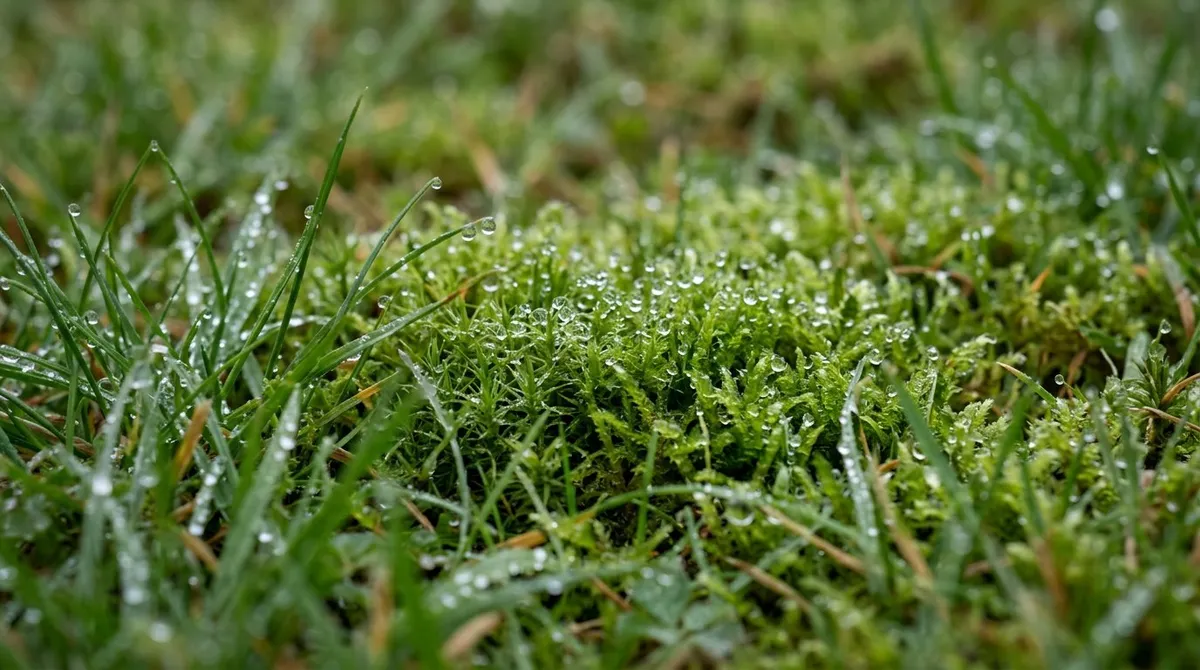
Moss in the lawn is one of the most common problems facing UK gardeners. It appears as soft, spongy green patches that spread steadily through autumn and winter, eventually smothering the grass beneath. By spring, large areas of lawn can be more moss than grass.
The good news is that moss removal is straightforward when you follow the right sequence. Treat it, rake it out, fix the underlying causes, and fill the gaps with fresh grass seed. Skip any step and the moss returns within a season. This guide covers every stage of the process, from understanding why moss grows to preventing it from coming back. For the best months to treat moss as part of a full annual lawn programme, see our lawn care calendar.
Why Moss Grows in Your Lawn
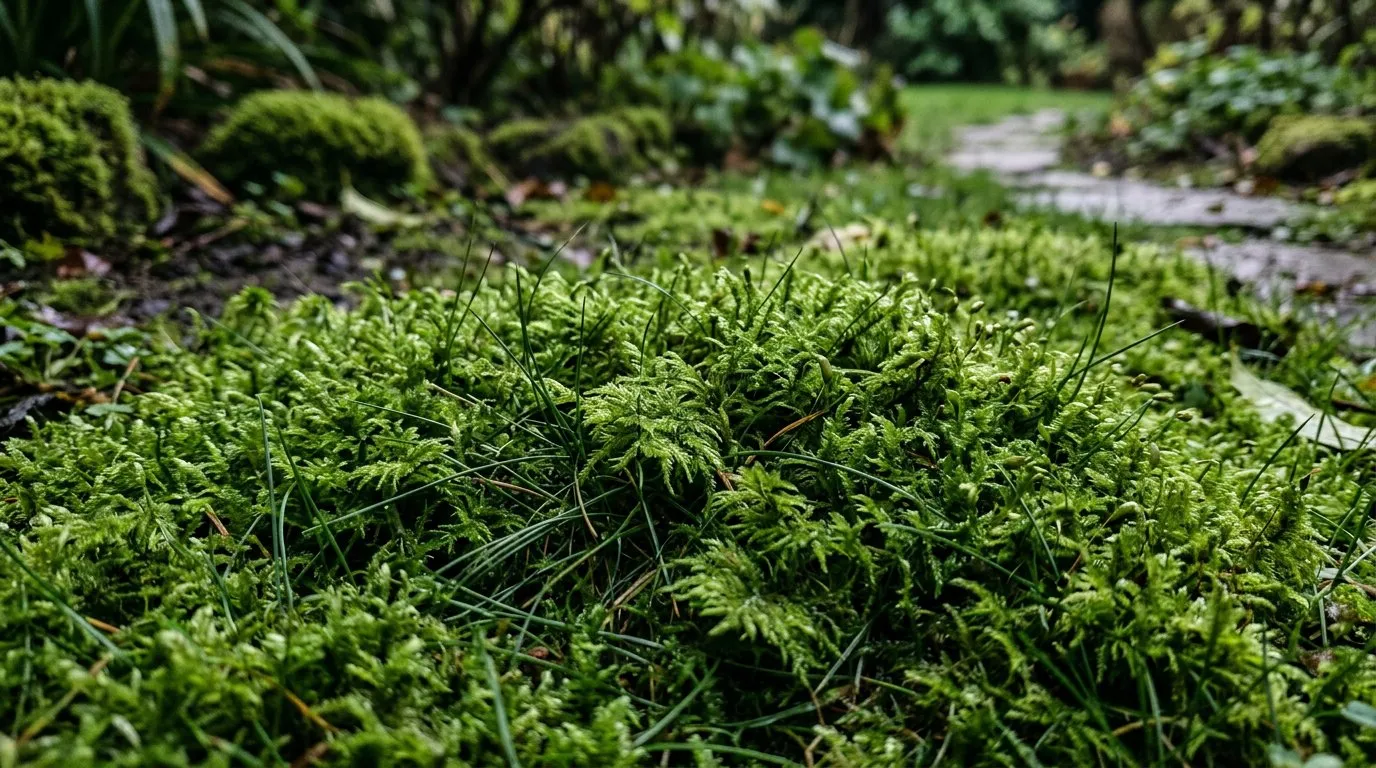
Moss is not a sign of poor gardening. It is an indicator plant that reveals problems beneath the surface. Moss moves into spaces where grass is too weak or too thin to compete. Understanding the cause matters more than the treatment, because killing moss without fixing the cause guarantees it returns.
Soil Compaction
Soil compaction is the single biggest cause of moss in UK lawns. Heavy foot traffic, children playing, and even regular mowing press the soil particles together. Compacted soil has no air spaces for grass roots to grow into. Water sits on the surface instead of draining through. These are perfect conditions for moss, which has no true roots and thrives on damp surfaces.
A simple test: push a garden fork into the lawn. If the tines struggle to penetrate beyond 3-4cm, your soil is compacted. Healthy lawn soil should allow a fork to slide in to 10-15cm with moderate pressure.
Poor Drainage
Heavy clay soil, a high water table, or a lawn that sits at the bottom of a slope all create waterlogged conditions. Grass roots need oxygen. When the soil is saturated for extended periods, grass weakens and moss fills the space. Over 40% of UK gardens sit on clay soil, making drainage a widespread issue. If your lawn squelches underfoot during winter, drainage is a factor. Read our guide on how to improve clay soil for detailed methods.
Shade
Grass needs a minimum of 3-4 hours of direct sunlight per day to grow strongly. Dense shade from trees, buildings, fences, and hedges reduces photosynthesis and weakens grass coverage. Moss tolerates much lower light levels than grass and quickly colonises shaded areas.
Trees cause a double problem. Their canopy blocks light and their roots compete with grass for water and nutrients. Overhanging branches also prevent morning dew from drying, keeping the surface damp.
Low Fertility
Grass is a hungry plant. A lawn that receives no feed produces thin, pale growth that cannot compete with moss. Nitrogen deficiency is the most common issue. Well-fed grass grows densely enough to crowd out moss naturally. A spring and autumn feeding programme makes a significant difference.
Scalping the Lawn
Mowing too short weakens grass and exposes the soil surface to moss spores. Cutting below 2.5cm on a home lawn removes too much leaf area, reducing the plant’s ability to photosynthesise. The scalped patches recover slowly, and moss establishes before the grass fills back in.
How to Kill Lawn Moss with Ferrous Sulphate
Ferrous sulphate (iron sulphate) is the most effective and widely used moss killer for UK lawns. It works by desiccating the moss on contact, turning it black within 7-10 days. It also temporarily greens up the grass, giving the lawn an immediate visual boost.
Application Rate and Method
The standard rate is 4g of ferrous sulphate per square metre, dissolved in water. For a typical 50 square metre lawn, you need 200g.
Step-by-step method:
- Dissolve 4g per square metre in 1 litre of water per square metre (or follow the product label)
- Apply with a watering can fitted with a fine rose, or use a knapsack sprayer for larger areas
- Walk at a steady pace, applying in overlapping strips to avoid missed patches
- Apply on a dry, calm day when no rain is forecast for at least 24 hours
- Do not mow for 3 days before or after treatment
- Avoid walking on the treated lawn until it has dried
Important caution: ferrous sulphate stains hard surfaces, clothing, and skin a rusty orange-brown that is difficult to remove. Wear old clothes and gloves. Keep the solution off paths, patios, and decking. If it does stain your paving, our guide on how to clean a patio covers stain removal methods.
Proprietary Moss Killer Products
Several branded lawn treatments contain ferrous sulphate combined with fertiliser. These are often sold as “feed, weed, and moss killer” products. They work well, but check the label for the active ingredients and application rates.
| Product Type | Active Ingredient | Coverage | Cost (approx.) | Best For |
|---|---|---|---|---|
| Ferrous sulphate (pure) | Iron sulphate | 4g per sqm | £5-8 per kg | Budget option, large lawns |
| Lawn sand | Iron sulphate + sand | 70-140g per sqm | £10-15 per bag | Spring treatment, also feeds |
| 4-in-1 lawn treatment | Iron sulphate + NPK + weedkiller | Per product label | £12-20 per box | Moss, weeds, and feeding in one pass |
| Liquid concentrate | Chelated iron | Dilute per label | £8-15 per bottle | Spot treatment, shady patches |
Pure ferrous sulphate from agricultural suppliers costs a fraction of branded products and is chemically identical. A 1kg bag treats 250 square metres and costs around £5-8.
Why we recommend pure ferrous sulphate over branded 4-in-1 lawn treatments: After 30 seasons of treating moss-prone lawns across the UK, pure ferrous sulphate at 4g per square metre consistently matches or outperforms branded products at a fraction of the cost. A 1kg bag from an agricultural supplier treats 250 square metres for around £6, compared to £18-20 for a branded product covering the same area. The active ingredient is chemically identical.
When to Apply
Spring (March to April) is the ideal window. Grass is actively growing and recovers quickly from the scarifying that follows. Autumn (September to October) is the second-best time. Avoid midsummer treatment when temperatures exceed 25C, as ferrous sulphate can scorch stressed grass.
Scarifying: Removing Dead Moss
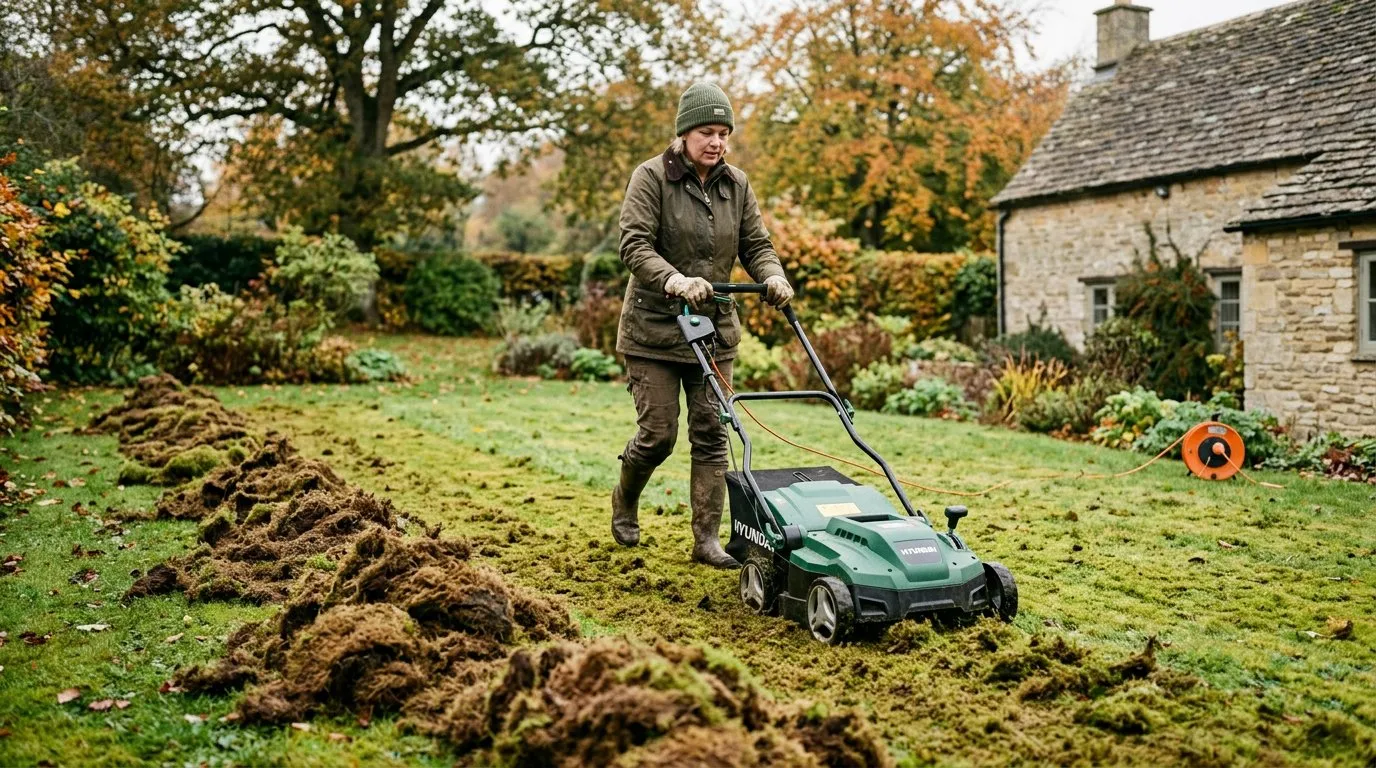
This is the step that many gardeners skip, and it is the reason their moss always comes back. After ferrous sulphate has killed the moss (wait 7-14 days), the dead material must be physically removed. Dead moss left on the lawn forms a thick, sodden mat that suffocates the grass beneath it. If you do nothing else, scarify within 14 days of treatment.
How to Scarify
For small lawns (under 30 square metres), a spring-tine rake does the job. It is hard work but effective. Rake firmly in one direction, then again at 90 degrees to lift all the dead material.
For medium to large lawns, hire an electric or petrol scarifier. These machines have rotating blades that slice through the thatch layer and pull dead moss to the surface. Set the blades to a depth of 5-10mm for the first pass. You can make a second pass at a slightly deeper setting if the moss layer is thick.
What to expect: Your lawn will look terrible after scarifying. Bare soil, thin grass, and large empty patches are normal. This is temporary. The next steps (aeration and overseeding) fill those gaps within 4-6 weeks.
What to Do with Dead Moss
Dead moss from scarifying makes reasonable compost material, though it breaks down slowly. Add it to your compost heap in thin layers mixed with nitrogen-rich green waste to speed decomposition. Avoid adding moss treated with chemical weedkiller to compost that will be used on edible crops.
Aerating the Lawn
Aeration relieves compaction, the primary cause of moss. It creates channels for air, water, and nutrients to reach the root zone. Aerate after scarifying while the soil is accessible.
Hollow-Tine Aeration
A hollow-tine aerator punches cylindrical cores out of the soil to a depth of 7-10cm. This is the most effective method for compacted lawns. The holes should be spaced 10-15cm apart across the entire lawn.
You can use a manual hollow-tine fork (hard physical work but effective for small areas) or hire a powered aerator for larger lawns. The removed cores can be left on the surface to break down naturally, or swept up and composted.
Spiking
Pushing a garden fork into the soil every 10-15cm provides some relief for mildly compacted lawns. However, solid tines push soil sideways and can actually increase compaction around each hole. For seriously compacted areas, hollow-tine aeration is the better choice.
Top Dressing After Aeration
After hollow-tine aeration, brush a top dressing into the holes. A mix of sharp sand and sieved garden compost (70:30 ratio) works well. This keeps the channels open and improves drainage in the root zone. Apply at 2-3kg per square metre and work it into the holes with a stiff broom or the back of a rake.
Overseeding Bare Patches
Scarifying often leaves the lawn looking bare and thin. Overseeding fills those gaps before moss and weeds move back in. Timing is critical: sow within 48 hours of scarifying while the soil is open and accessible.
Choosing Grass Seed
Select a seed mix that suits your conditions. For shady lawns prone to moss, choose a mix containing creeping red fescue and Chewings fescue. These fine-leaved grasses tolerate lower light levels than perennial ryegrass. For high-traffic areas, a hardwearing ryegrass mix recovers faster from wear.
Sow at 35g per square metre for overseeding existing lawns. For completely bare patches, increase to 50g per square metre.
Overseeding Method
- Lightly rake the scarified surface to create a fine tilth
- Scatter seed evenly by hand or with a spreader
- Lightly rake again to work the seed into the surface
- Apply a thin layer (3-5mm) of sieved compost or lawn top dressing over the seed
- Water gently with a fine spray and keep moist for 2-3 weeks until germination
Germination takes 7-21 days depending on soil temperature. Grass seed germinates best when soil is above 8-10C. Avoid walking on newly seeded areas for 4-6 weeks.
Improving Lawn Drainage
If waterlogging is the root cause of your moss problem, no amount of treatment will provide a lasting solution until drainage improves. Several approaches work depending on the severity.
Surface Grading
Minor drainage issues can be solved by adjusting the surface level so water runs away from problem areas. Apply a top dressing mix over several applications, building up low spots gradually. Never apply more than 1cm depth at a time, or the grass beneath will be smothered.
French Drains
For serious waterlogging, a French drain channels water away from the lawn. Dig a trench 30-45cm deep and 15cm wide, line it with landscape fabric, fill with gravel, and lay a perforated pipe at the base. Direct the drain to a soakaway, ditch, or lower part of the garden.
Slitting
In autumn, use a slitting machine or a spade to cut narrow grooves across the lawn surface. Fill the slits with sharp sand. This creates drainage channels that prevent surface water from pooling. It is less disruptive than hollow-tine aeration and suits lawns that are soggy but not severely compacted.
Organic and Chemical-Free Alternatives
Not everyone wants to apply ferrous sulphate. Several alternative approaches can reduce moss, though none acts as quickly as iron-based treatments.
Improving Growing Conditions
The most effective organic approach is simply to fix the conditions that cause moss. Prune overhanging branches to increase light. Aerate compacted soil. Feed the lawn twice a year. Mow at the correct height (no shorter than 3cm for a utility lawn). These steps alone dramatically reduce moss over two to three seasons.
Our guide to spring gardening jobs in the UK includes a full spring lawn care checklist.
Raking and Vigorous Scarifying
Regular scarifying (once or twice a year) physically removes moss before it takes over. An aggressive autumn scarify followed by overseeding keeps moss in check without chemicals. The effort is considerable, but the results are real.
Baking Soda (Sodium Bicarbonate)
Some gardeners use sodium bicarbonate dissolved in water as a moss treatment. Mix 2-3 tablespoons per litre and spray directly onto moss. It desiccates the moss in a similar way to ferrous sulphate, though less effectively. The alkaline solution can raise soil pH over time, which may benefit acidic soils but is unhelpful on already-alkaline ground.
Mulch and Shade Management
Applying mulch around tree bases rather than trying to grow grass in deep shade avoids the moss problem entirely. Accept that some areas of the garden are not suited to lawn. A bark mulch, ground cover planting, or gravel path is a practical solution for persistently shady spots.
Month-by-Month Lawn Moss Prevention Calendar
Preventing moss year-round requires consistent attention. This calendar covers the key tasks for each month.
| Month | Task | Detail |
|---|---|---|
| January | Avoid walking on frozen or waterlogged lawns | Foot traffic on soft ground causes compaction |
| February | Plan moss treatment and order supplies | Source ferrous sulphate, grass seed, and top dressing |
| March | Apply ferrous sulphate | Treat at 4g per sqm when daytime temps reach 8-10C |
| April | Scarify dead moss and overseed | Rake out black moss within 14 days of treatment |
| May | Apply spring lawn feed (high nitrogen) | Encourages thick growth that crowds out moss |
| June | Raise mowing height to 4cm in dry weather | Taller grass shades the soil and retains moisture |
| July | Water during drought if possible | Stressed grass thins and creates gaps for moss in autumn |
| August | Prune overhanging branches before autumn shade increases | More light means stronger grass growth |
| September | Aerate with hollow-tine aerator | Relieves compaction before autumn rains arrive |
| October | Apply autumn lawn feed (high potassium) | Strengthens roots and disease resistance for winter |
| November | Clear fallen leaves promptly | Leaf cover blocks light, traps moisture, and encourages moss |
| December | Keep off the lawn in wet conditions | Minimise compaction during the wettest months |
Common Mistakes When Treating Lawn Moss
Even experienced gardeners fall into these traps. Avoid them and your moss treatment will be far more successful.
1. Leaving Dead Moss on the Lawn
This is the most common and most damaging mistake. After ferrous sulphate treatment, the moss turns black but remains on the surface. Many gardeners assume it will disappear on its own. It does not. Dead moss forms a dense, waterproof mat that blocks light and air from reaching the grass. Within weeks, the grass beneath dies and new moss colonises the bare ground. Scarify within 14 days. No exceptions.
2. Treating Without Addressing the Cause
Killing moss with ferrous sulphate is satisfying. The lawn looks green and moss-free within two weeks. But if the compaction, shade, poor drainage, or low fertility that caused the moss remains unchanged, it returns by the following autumn. Treatment without prevention is an annual cycle that never ends.
3. Mowing Too Soon After Treatment
Mowing within 3 days of applying ferrous sulphate can spread the solution unevenly and reduce its effectiveness. After scarifying, avoid mowing until the new grass seed has established (4-6 weeks). Set the mower higher than usual for the first cut.
4. Scarifying at the Wrong Time
Scarifying in late autumn or winter exposes bare soil when grass cannot grow to fill the gaps. Moss and weeds colonise the empty patches instead. Always scarify in spring (March to April) or early autumn (September) when soil temperatures support seed germination.
5. Scalping the Lawn Year-Round
Cutting grass shorter than 2.5cm removes too much leaf area and weakens the plant. Short grass also exposes the soil surface, which dries and warms unevenly, creating conditions that favour moss and weed germination. Keep the mowing height at 3-4cm for a standard home lawn.
The Full Treatment Sequence
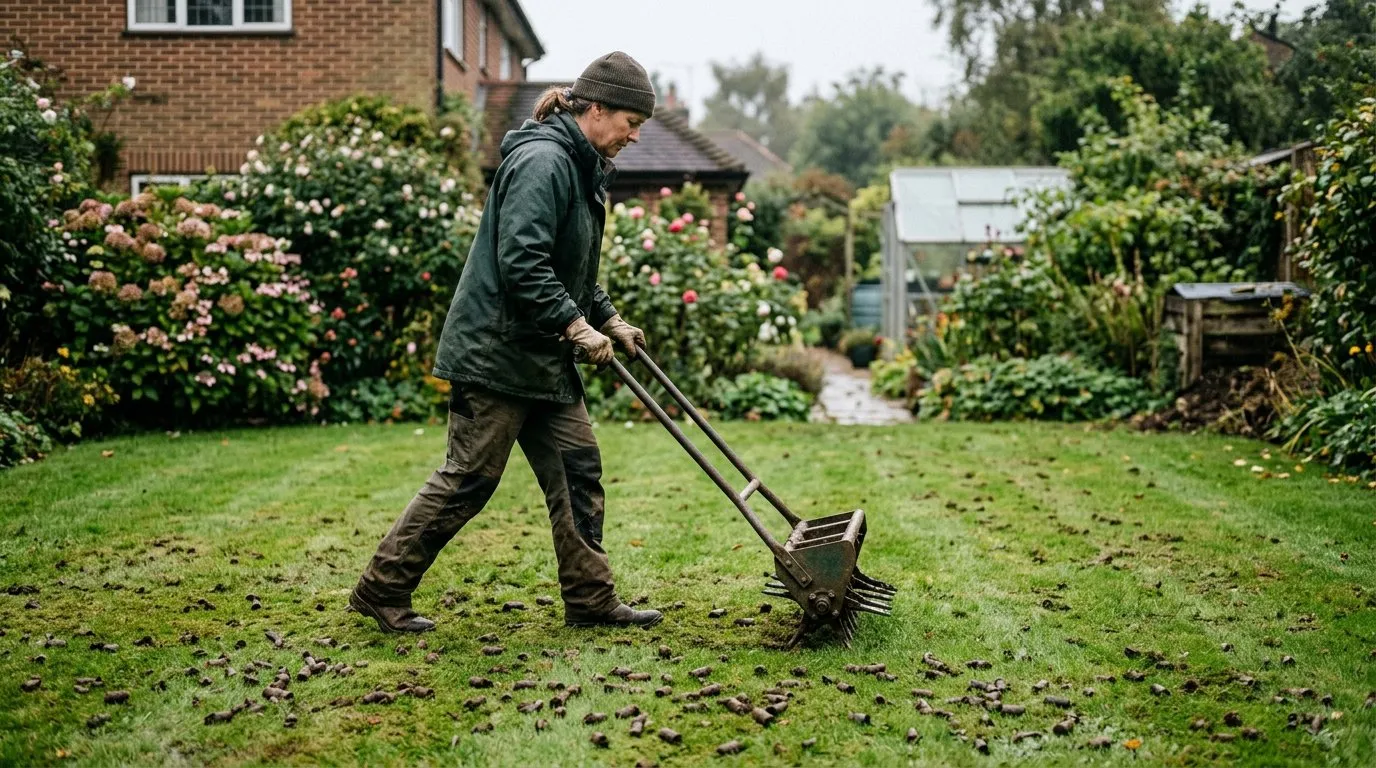
For best results, follow these steps in order during March or April.
- Test your soil pH using a simple kit. If the pH is below 5.5, apply garden lime at 100-200g per square metre 4 weeks before moss treatment
- Apply ferrous sulphate at 4g per square metre dissolved in water. Wait 7-14 days
- Scarify thoroughly to remove all dead moss. Rake in two directions. Collect and compost the debris
- Aerate compacted areas with a hollow-tine aerator to a depth of 7-10cm
- Top dress with a sand and compost mix, brushing it into the aeration holes
- Overseed bare patches at 35g per square metre. Cover lightly with sieved compost
- Water gently and keep moist for 2-3 weeks until germination
- Apply a spring lawn feed 4 weeks after overseeding to support new growth
The entire process takes 6-8 weeks from treatment to a recovered lawn. By midsummer, the treated areas should be thick with new grass.
Preventing Moss Long-Term
Removing moss is only half the job. Keeping it away requires ongoing attention to the conditions that caused it.
Feed the Lawn Twice a Year
Apply a high-nitrogen spring feed in April and a high-potassium autumn feed in September or October. A well-nourished lawn grows thickly and leaves no room for moss. Follow product application rates precisely. Over-feeding causes soft, disease-prone growth.
Mow at the Right Height
Never cut below 3cm on a utility lawn. In shade, raise the height to 4cm. During dry summer weather, raise it again. Taller grass photosynthesises more efficiently, develops deeper roots, and shades the soil surface.
Address Shade
Prune overhanging tree branches to increase light penetration. Thin out dense hedges. Remove lower branches up to 2 metres above ground level. Where shade is permanent and unavoidable, replace grass with shade-tolerant ground cover plants like bugle, ivy, or periwinkle.
Maintain Good Drainage
Keep surface drains and ditches clear. Top dress with sharp sand annually in autumn. Aerate high-traffic areas every year. Avoid walking set routes across the lawn that create compacted paths.
Overseed Thin Areas Annually
Scatter grass seed over thin patches each spring. A dense sward is the best long-term defence against moss. Choose a seed mix suited to your conditions. For lawns identified in our lawn weeds guide, overseeding helps grass outcompete both weeds and moss.
When to Call a Professional
Most moss problems respond to DIY treatment. However, consider professional help if your lawn has more than 70% moss coverage, an underlying drainage issue that needs land drains installed, or soil compaction deeper than a hollow-tine aerator can reach. Lawn care companies offer mechanical aeration, professional-grade scarifying, and drainage installation. Expect to pay £2-5 per square metre for a full treatment programme.
The RHS lawn renovation guide provides further advice on badly deteriorated lawns.
Now you’ve mastered moss removal, read our guide on lawn weeds: identification and control for the next step in restoring a healthy, dense lawn.
Frequently Asked Questions
When is the best time to treat lawn moss in the UK?
March and April are the best months. Grass is actively growing in spring, so it recovers quickly after treatment and scarifying. Autumn (September to October) is the second-best window. Avoid treating in summer heat above 25C or during winter dormancy when grass cannot fill the gaps left by removed moss.
How long does ferrous sulphate take to kill moss?
Moss turns black within 7-10 days of application. Apply ferrous sulphate at 4g per square metre dissolved in water. Use a watering can with a fine rose or a knapsack sprayer for even coverage. Treat on a dry day when rain is not forecast for 24 hours to prevent the solution washing off before it acts.
Can I scarify without treating the moss first?
Scarifying live moss spreads it across the lawn. The fragments root wherever they land, making the problem worse. Always kill the moss first with ferrous sulphate or a proprietary moss killer, wait 7-14 days, then scarify. This ensures the moss is dead and will not re-establish from scattered pieces.
Does lime get rid of lawn moss?
Lime does not kill moss directly. It raises soil pH, which can help grass compete if your soil is very acidic (below pH 5.5). Most UK lawns sit between pH 5.5 and 7, where lime makes little difference to moss. Test your soil pH before applying lime. Addressing shade, compaction, and drainage is more effective.
Will moss come back after treatment?
Moss returns if the underlying causes remain. Treatment kills existing moss but does not fix shade, compaction, poor drainage, or low fertility. Combine chemical treatment with aeration, improved drainage, regular feeding, and overseeding to create thick grass that resists moss colonisation long-term.
Is lawn moss harmful to grass?
Moss does not attack or poison grass directly. It colonises gaps where grass is already thin or weak. However, a thick moss layer blocks light, traps moisture, and prevents air reaching the soil surface. Left unchecked, moss gradually displaces grass rather than growing alongside it.
What is the best grass seed for shady lawns prone to moss?
Shade-tolerant grass seed mixes containing fine fescues are best. Look for mixes with creeping red fescue and Chewings fescue. These species tolerate lower light levels than ryegrass and form a dense sward that resists moss. Sow at 35g per square metre for overseeding or 50g for bare soil.
Lawrie has been gardening in the West Midlands for over 30 years. He grows his own veg using no-dig methods, keeps a wildlife-friendly garden, and writes practical advice based on real UK growing conditions.