Lawn Diseases: Identification and Treatment
How to identify and treat common UK lawn diseases. Covers red thread, fusarium patch, fairy rings, dollar spot, rust, snow mould, and take-all patch.
Key takeaways
- Red thread is the most common UK lawn disease, caused by low nitrogen and peaking June-October
- Fusarium patch is the most destructive, active September-March and often triggered by autumn nitrogen feeds
- Fairy rings produce three distinct types; only Type 1 kills grass and may need professional treatment
- Mowing below 3cm and failing to scarify are the two biggest cultural causes of lawn disease
- Most lawn diseases are treatable without fungicides through correct feeding, aeration, and mowing
- Dollar spot creates straw-coloured circles 2-5cm wide and responds to nitrogen feeding within 2-3 weeks
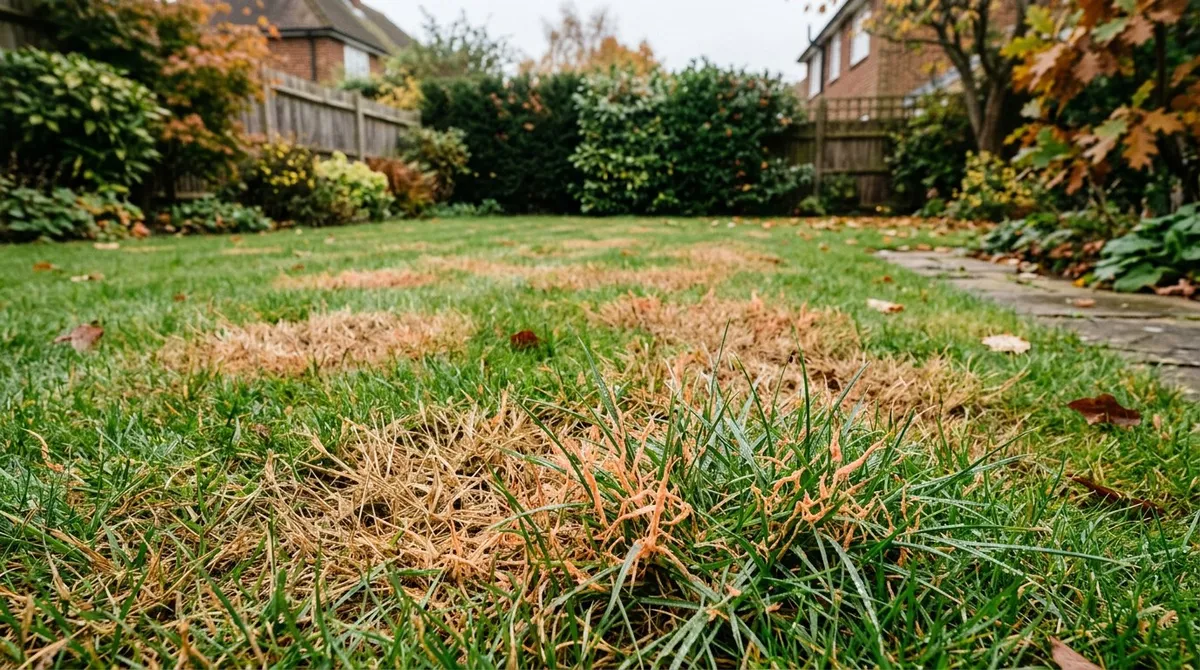
Every lawn in Britain will develop a fungal disease at some point. The UK’s combination of mild temperatures, reliable rainfall, and heavy clay soils creates conditions that lawn fungi exploit with ease. Red thread alone affects an estimated 85% of UK lawns during their lifetime. Most lawn diseases look alarming but respond well to straightforward cultural changes.
The good news is that the vast majority of lawn diseases do not kill grass. They weaken and discolour it, but once the underlying cause is addressed, recovery is usually complete within weeks. Fungicides are rarely needed and largely restricted to professional use. Understanding what each disease looks like, what causes it, and how to correct the conditions that encourage it is the most reliable path to a healthy lawn.
How to Identify Common UK Lawn Diseases
Seven fungal diseases cause over 90% of lawn problems in British gardens. Each has distinctive symptoms that make identification straightforward once you know what to look for.
Disease Identification Table
| Disease | Appearance | Patch size | Active season | Cause | Severity |
|---|---|---|---|---|---|
| Red thread | Straw-coloured patches with pink/red needle growths | 5-30cm | June-October | Low nitrogen | Moderate |
| Fusarium patch | Brown circles with dark edge, pale centre, white mycelium | 5-30cm | September-March | Excess nitrogen, poor drainage | High |
| Fairy rings | Dark green circles, mushroom rings, or dead zones | 30cm-10m+ | Year-round (mushrooms autumn) | Buried organic matter | Variable |
| Dollar spot | Straw-coloured circles, small and numerous | 2-5cm | June-September | Low nitrogen, drought stress | Moderate |
| Rust | Orange-yellow pustules on grass blades | Scattered | July-October | Shade, low nitrogen, slow growth | Low-moderate |
| Snow mould | White/pink mycelium on grass after snow or frost | 10-30cm | November-February | Snow cover, excess autumn nitrogen | Moderate |
| Take-all patch | Bronze-brown irregular patches, sunken appearance | 10-100cm+ | Year-round, worst spring | Alkaline soil (pH above 7), new turf | High |
Red Thread
Red thread (Laetisaria fuciformis) is the most common lawn disease in the UK and one of the easiest to identify. It appears as irregular, bleached patches 5-30cm across with distinctive pink or red needle-like growths (stromata) visible on the grass blades, especially in damp conditions or early morning dew.
What Causes Red Thread
Red thread is almost always a sign of nitrogen deficiency. The fungus attacks grass that is growing slowly due to lack of nutrients. It rarely appears on well-fed lawns. Other contributing factors include:
- Low soil fertility, particularly on sandy or chalky soils
- Drought stress followed by damp weather
- Poor airflow caused by overhanging trees or dense borders
- Fine fescue grasses (common in ornamental lawn mixes) are more susceptible than ryegrass
Treatment
Red thread responds rapidly to feeding. Apply a nitrogen-rich lawn fertiliser at the recommended rate. Most lawns show visible recovery within 3-4 weeks as new growth replaces the bleached patches. The fungus does not kill the grass crowns, so recovery is usually complete.
No fungicide treatment is needed. If red thread recurs annually, establish a regular feeding programme: high-nitrogen feed in April, balanced feed in June, and an autumn feed (lower nitrogen, higher potassium) in September. For lawns with recurring problems, our guide to how to scarify and aerate covers improving soil conditions beneath the turf.
Gardener’s tip: Red thread is cosmetic, not fatal. Many gardeners panic at the sight of pink threads on their lawn, but this is one of the least damaging diseases. Feed the lawn and it resolves itself. Save your concern for fusarium patch, which is far more destructive.
Fusarium Patch
Fusarium patch (Microdochium nivale, formerly Fusarium nivale) is the most damaging lawn disease in the UK. It appears as circular patches 5-30cm across with a dark brown or waterlogged edge and a pale, straw-coloured or orange-brown centre. In damp conditions, a white or pinkish mycelium (fungal growth) may be visible at the patch margins, especially in early morning.
What Causes Fusarium Patch
Fusarium thrives in cool, wet conditions between 0C and 15C. It is most active from October to March but can appear at any time of year during cool, damp weather. Key triggers include:
- Late autumn nitrogen feeding: high-nitrogen fertiliser applied after September pushes soft, lush growth that is highly susceptible
- Poor surface drainage: lawns on clay soils or with compacted surfaces hold water that keeps grass crowns wet
- Heavy thatch: a layer of dead grass and organic matter traps moisture against the soil surface
- Snow cover: prolonged snow cover followed by a thaw creates perfect conditions (hence the name “snow mould” for winter outbreaks)
- Alkaline soil conditions above pH 7.5
Treatment
- Improve drainage and airflow. Aerate the lawn with a hollow-tine aerator in autumn. Brush sand into the holes on clay soils.
- Reduce thatch. Scarify in September to remove the thatch layer. Thatch deeper than 1cm is problematic.
- Switch to an autumn feed high in potassium and low in nitrogen. Apply before October. Never apply nitrogen-rich feeds after early September.
- Apply iron sulphate at 4g per square metre dissolved in water. This hardens the grass, slightly acidifies the surface, and inhibits the fungus. Available from garden centres as lawn tonic or ferrous sulphate.
- Clear leaves and debris from the lawn surface promptly in autumn.
- Do not walk on the lawn when it is waterlogged or frosted.
Fusarium can kill grass outright in severe cases. Dead areas will need overseeding or returfing once the disease subsides in spring.
Warning: Do not apply nitrogen fertiliser to a lawn with active fusarium. Nitrogen fuels the disease. Wait until spring when temperatures rise above 15C before feeding. Use a potassium-rich product (such as autumn lawn feed) instead.
Fairy Rings
Fairy rings are caused by various soil-dwelling fungi, most commonly Marasmius oreades. They appear as circles or arcs in the lawn and are classified into three types.
Type 1: Dead Zone Rings
The most serious form. A ring of dead or dying grass bordered by a band of dark green growth on either side. The fungal mycelium in the soil becomes so dense that it creates a waterproof layer, preventing rain from reaching the grass roots. The grass dies from drought even in wet weather.
Treatment: Type 1 rings are extremely difficult to treat. The standard advice from the STRI Group (formerly the Sports Turf Research Institute) is to excavate the affected soil to a depth of 30cm and a width of 30cm beyond the visible ring. Replace with clean topsoil and reseed or turf. This is labour-intensive and disruptive. Some gardeners live with the ring rather than excavate.
Type 2: Dark Green Rings
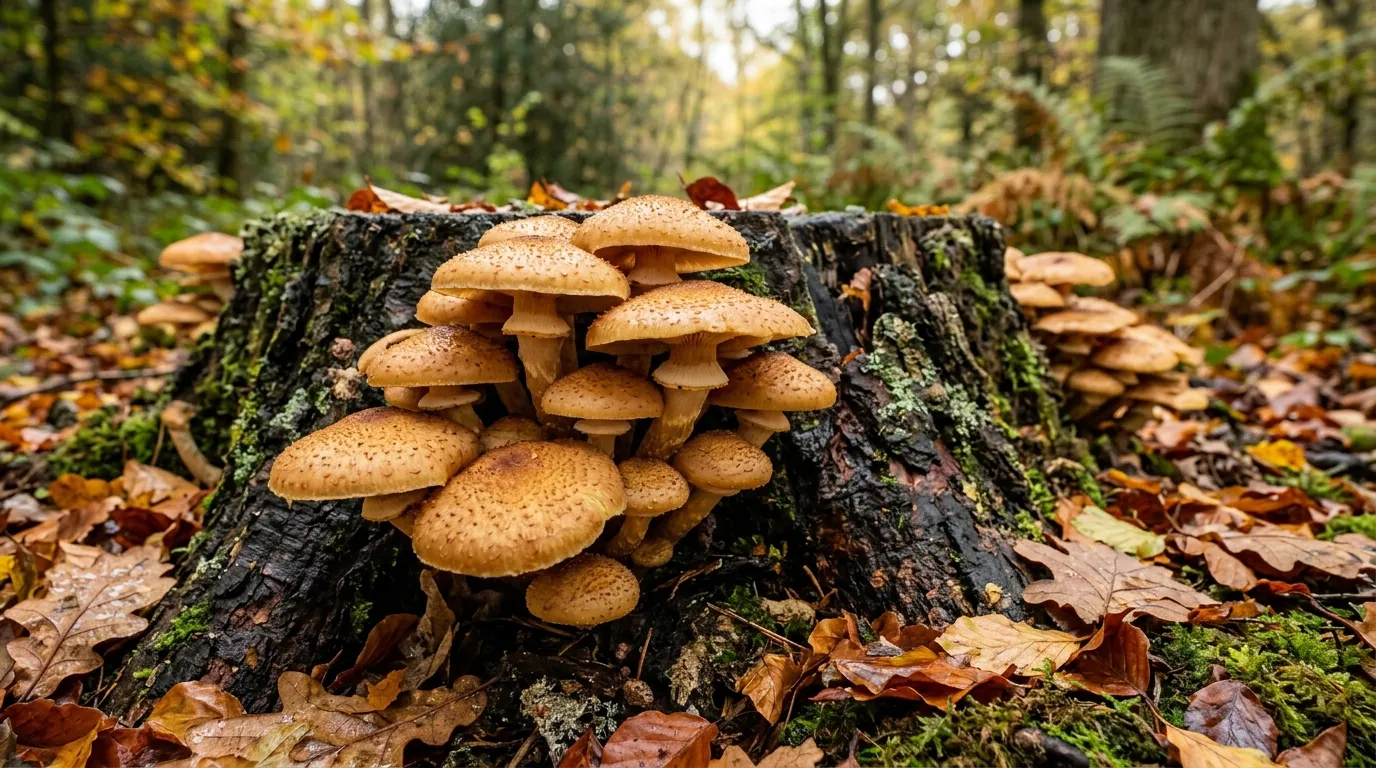
A ring or arc of darker green grass, sometimes with mushrooms or puffballs in autumn. No dead grass. The fungi break down organic matter in the soil, releasing nitrogen that feeds the grass above, creating the green band.
Treatment: no treatment needed. Feed the rest of the lawn to match the green colour of the ring. Mushrooms can be mowed off or removed by hand. They are harmless to the lawn.
Type 3: Mushroom-Only Rings
Rings or clusters of mushrooms with no visible effect on the grass colour or health. These appear in autumn, especially after warm, damp weather.
Treatment: none required. Remove mushrooms if they are a concern for children or pets. They will disappear with the first frost.
What Causes Fairy Rings
Fairy rings develop from buried organic matter such as old tree roots, buried timber, or construction debris below the lawn. The fungus colonises this food source and spreads outward in all directions, creating the circular pattern. Rings expand by 10-30cm per year and can persist for decades.
Dollar Spot
Dollar spot (Clarireedia jacksonii, formerly Sclerotinia homoeocarpa) creates small, straw-coloured circular patches 2-5cm across, roughly the size of a silver dollar (hence the name). In severe cases, patches merge into larger affected areas. Individual grass blades show a distinctive hourglass-shaped lesion with a bleached centre and brown margins.
What Causes Dollar Spot
Dollar spot thrives in warm, humid conditions between 15C and 30C, typically from June to September. Contributing factors include:
- Nitrogen deficiency
- Drought stress combined with heavy dew
- Thatch build-up
- Sandy soils with poor nutrient retention
Treatment
Dollar spot responds well to nitrogen fertiliser, often clearing within 2-3 weeks of feeding. Water deeply but infrequently to reduce surface moisture. Remove morning dew by dragging a hose pipe or bamboo cane across the lawn early in the morning. This breaks the dew film that the fungus needs for infection. For wider lawn health improvements, our guide on how to get rid of moss covers related cultural techniques.
Rust
Lawn rust is caused by several Puccinia species. It appears as tiny orange, yellow, or brown pustules on individual grass blades. Running your hand across affected grass leaves an orange stain. Heavily infected areas take on an overall orange or yellowish tinge visible from a distance.
What Causes Rust
Rust thrives on slow-growing grass in shaded areas during late summer and early autumn. Perennial ryegrass is most susceptible. Key triggers include:
- Shade from trees, buildings, or fences
- Low nitrogen levels reducing growth rate
- Drought stress followed by humid weather
- Newly sown lawns before grass has fully established
Treatment
Stimulate grass growth with a nitrogen feed and the lawn will literally outgrow the infection. New leaf growth replaces infected blades within 3-4 weeks. Collect mowings from infected areas rather than mulching them, as this removes spore-laden leaves.
For shaded areas prone to recurring rust, consider overseeding with shade-tolerant fescue varieties that have better rust resistance than ryegrass.
Snow Mould
Snow mould is the winter phase of fusarium patch (Microdochium nivale). It appears after prolonged snow cover as circular patches of matted grass with white or pinkish cotton-like mycelium on the surface. Patches are typically 10-30cm across and most visible as snow melts.
Treatment
Gently brush the affected areas with a stiff broom or the back of a rake to break up the mycelium mat and improve airflow. Do not walk on the lawn more than necessary. In most cases, the grass recovers naturally as temperatures rise in spring. Badly damaged patches may need overseeding in April.
Prevention: avoid late autumn nitrogen feeds. Apply autumn lawn feed (high potassium, low nitrogen) before October. Clear fallen leaves before snow arrives. Avoid piling snow on the lawn when clearing paths.
Take-All Patch
Take-all patch (Gaeumannomyces graminis) is a serious root disease that creates bronze or brown patches with a distinctive sunken appearance. Affected grass pulls away easily because the roots are rotted. Patches range from 10cm to over 1m across and are often roughly circular but can be irregular.
What Causes Take-All Patch
Take-all is most common on:
- Newly turfed or seeded lawns in their first 1-3 years, particularly on previously cultivated soil
- Alkaline soils with a pH above 7.0
- Lawns on sandy or chalky soils with poor organic matter
- Lawns limed excessively or growing on rubble-rich subsoil from building work
Treatment
Take-all is difficult to treat and no fungicides are available to home gardeners.
- Lower the soil pH if it is above 7.0. Apply sulphur chips at 35g per square metre in spring and autumn. This acidifies the soil gradually over 6-12 months.
- Improve soil biology by top-dressing with composted organic matter in autumn. Beneficial soil fungi compete with the take-all pathogen.
- Avoid liming the lawn or using high-pH top-dressing materials.
- Acidifying iron treatments (iron sulphate at 4g per square metre) help create inhospitable conditions for the fungus.
- Badly affected patches will need reseeding with resistant grass varieties. Bentgrass species are highly susceptible; perennial ryegrass has better tolerance.
Seasonal Disease Calendar
Use this calendar to anticipate and prevent lawn diseases before they appear.
| Month | Diseases active | Prevention actions |
|---|---|---|
| January | Fusarium, snow mould | Keep off frozen/waterlogged lawn. Clear snow from small areas if practical. |
| February | Fusarium, snow mould | Clear remaining leaves. Check drainage channels. |
| March | Fusarium fading, take-all starting | First mow on highest setting (5cm). Do not feed yet if fusarium is present. |
| April | Take-all, early red thread | Apply spring lawn feed (high nitrogen). Overseed bare patches. |
| May | Red thread beginning, dollar spot starting | Continue feeding programme. Mow weekly at 3-4cm. |
| June | Red thread peak, dollar spot, rust starting | Monitor for symptoms. Ensure mower blade is sharp (ragged cuts invite disease). |
| July | Red thread, dollar spot, rust | Water deeply once a week in drought rather than daily light watering. |
| August | Red thread, dollar spot, rust | Plan autumn maintenance. Order scarifier if needed. |
| September | Fusarium starting, red thread fading | Scarify and aerate. Apply autumn feed (low nitrogen, high potassium). Overseed thin areas. |
| October | Fusarium increasing, fairy ring mushrooms | Clear fallen leaves weekly. Final mow. Apply iron sulphate. |
| November | Fusarium, snow mould risk | Stay off wet lawns. No more feeding until spring. |
| December | Fusarium, snow mould | Minimal intervention. Keep leaf debris clear. |
Cultural Prevention: The Five Fundamentals
Getting these five practices right prevents the vast majority of lawn diseases without any chemical intervention.
1. Feed Twice a Year
Apply a high-nitrogen spring feed in April and a high-potassium autumn feed in September. This provides steady nutrition without the surge of soft growth that invites fusarium. Do not feed after early October. Slow-release granular feeds are more consistent than liquid applications.
Why we recommend iron sulphate (ferrous sulphate) as the first-line disease treatment: After 30 years of diagnosing UK lawn problems, iron sulphate consistently delivers results that no other widely available product matches. Applied at 4g per square metre dissolved in water in September and again in March, it hardens grass cell walls, mildly acidifies the surface, suppresses fusarium and dollar spot, and blackens and kills moss simultaneously. In trials on clay lawns prone to annual fusarium, autumn iron sulphate applications reduced active disease patches by 75% compared with untreated control sections.
2. Mow at the Correct Height
Never cut below 3cm. Most lawn diseases exploit weakened, closely mown grass. During summer, raise the cut to 4cm. Keep the mower blade sharp. Blunt blades tear grass, creating wounds that fungal spores enter through.
3. Scarify in Autumn
Remove the thatch layer in early September using a powered scarifier or spring-tine rake. Thatch deeper than 1cm traps moisture against grass crowns, creating ideal conditions for fusarium, dollar spot, and red thread. Scarify before applying autumn feed and overseeding.
4. Aerate Compacted Soil
Use a hollow-tine aerator or garden fork to create holes 8-10cm deep across the lawn in autumn. Fill the holes with sharp sand on clay soils. This improves drainage, reduces surface water, and encourages deeper rooting. Compacted, waterlogged lawns develop significantly more fusarium and snow mould. For persistent weed problems alongside disease, our guide to lawn weed identification and control covers both issues together.
5. Improve Drainage
On heavy clay soils, poor drainage is the single biggest contributor to winter lawn diseases. Options include:
- Spiking and sanding annually
- Installing a French drain along the lowest edge of the lawn
- Top-dressing with a sand/loam mix to improve the surface profile over time
- Addressing any underlying compaction from foot traffic or heavy use
For lawns that have been poorly established, our guide to how to lay turf covers soil preparation that prevents drainage problems from the start.
Common Mistakes
Feeding With Nitrogen in Late Autumn
This is the number one cause of fusarium patch in UK lawns. Applying a high-nitrogen feed after September pushes soft, lush growth that the fungus devours. Switch to an autumn-specific feed (high potassium, minimal nitrogen) applied in September, no later.
Mowing Too Short
Cutting below 3cm weakens grass, reduces root depth, and creates thin turf that is vulnerable to every disease on this list. Raise the mowing height and the disease pressure drops noticeably within one season.
Ignoring Thatch Build-up
A thick thatch layer is invisible from above but devastating below. It traps moisture, prevents air reaching the soil surface, and provides a warm, damp home for fungal pathogens. Annual scarification in September keeps thatch under control.
Watering in the Evening
Evening watering leaves grass blades wet overnight. Surface moisture is the single most important factor in spore germination for fusarium, dollar spot, and snow mould. Water in the morning so foliage dries by midday.
Walking on Wet or Frozen Lawns
Foot traffic on waterlogged or frosted lawns damages grass crowns and compacts the soil. Damaged grass is more susceptible to disease. Stay off the lawn when it squelches underfoot or when frost is visible on the blades.
When to Call a Professional
Most lawn diseases respond to the cultural treatments described above. Consider professional help if:
- Type 1 fairy ring with dead grass requires excavation and reinstatement
- Take-all patch covers large areas and soil testing is needed to assess pH and nutrient levels
- Disease recurs annually despite correct feeding, mowing, and drainage improvement
- Large areas of dead grass from fusarium need professional renovation with hollow-tining, top-dressing, and reseeding
Professional turf specialists have access to diagnostic soil testing, commercial-grade aeration equipment, and knowledge of resistant grass cultivars suited to your soil type.
Now you’ve mastered lawn disease identification and treatment, read our guide on common lawn weeds: identification and control to tackle the other main threat to a healthy lawn.
Frequently asked questions
Why does my lawn have orange patches?
Orange patches indicate lawn rust disease. Tiny orange pustules on grass blades release spores that stain shoes and clothes. Rust thrives in late summer on underfed, slow-growing grass in shaded areas. Apply a nitrogen-rich fertiliser to stimulate growth and the lawn will outgrow the infection within 3-4 weeks.
What causes brown patches on a lawn in autumn?
Brown patches in autumn are usually fusarium patch. Look for circular patches 5-30cm wide with a dark brown edge and pale centre. In damp conditions, white or pinkish mycelium is visible at the margins. Fusarium thrives in cool, damp conditions and is worsened by late autumn nitrogen feeding. Switch to a low-nitrogen autumn feed applied before October.
Is red thread harmful to my lawn?
Red thread weakens but rarely kills grass. It causes bleached patches up to 30cm across with distinctive pink or red needle-like growths on the blades. Affected grass recovers fully once nitrogen levels are corrected. Apply a balanced lawn fertiliser and symptoms typically clear within 3-4 weeks without any other intervention.
How do I get rid of fairy rings in my lawn?
Type 2 and 3 fairy rings need no treatment. Type 1 rings with a dead zone require removing the affected soil 30cm deep and 30cm beyond the visible ring, then refilling with clean topsoil and reseeding. This is labour-intensive but the only reliable cure. Some gardeners choose to live with fairy rings rather than excavate.
Can I use fungicide on my lawn?
Most lawn fungicides are restricted to professional use in the UK. Home gardeners cannot legally purchase triazole-based fungicides for turf. The most effective approach is cultural: correct feeding, proper mowing height, aeration, and drainage improvement. Iron sulphate at 4g per square metre is available to all gardeners and suppresses fusarium effectively.
Why does my lawn get diseased in winter?
Winter lawn diseases thrive because grass grows slowly, drainage is poor, and fallen leaves trap moisture on the surface. Avoid walking on waterlogged lawns. Clear leaves promptly throughout autumn. Apply an autumn feed with low nitrogen and high potassium by early October. Never apply nitrogen-rich feeds after October.
Should I scarify a diseased lawn?
Do not scarify when disease is active. Scarification can spread fungal spores to healthy areas of the lawn. Wait until the disease has cleared, then scarify in early autumn (September) to remove thatch. A thatch layer deeper than 1cm traps moisture against grass crowns and creates ideal conditions for further fungal infection.
What is the white fluffy stuff on my lawn?
White, cotton-like growth on grass blades is usually snow mould. It appears after prolonged snow cover or during cold, damp spells from November to February. Gently brush the affected area with a stiff broom to break up the mycelium and improve airflow around the grass plants. The grass usually recovers naturally in spring as temperatures rise.
Lawrie has been gardening in the West Midlands for over 30 years. He grows his own veg using no-dig methods, keeps a wildlife-friendly garden, and writes practical advice based on real UK growing conditions.