Plants Toxic to Cats: UK Garden Guide
Plants toxic to cats in UK gardens and homes. Covers lilies, foxglove, yew, indoor plants, severity levels, symptoms, and cat-safe alternatives.
Key takeaways
- All true lilies (Lilium and Hemerocallis) can kill a cat within 72 hours, even from pollen contact alone
- Cats groom pollen from their fur, making lilies uniquely dangerous compared to all other toxic plants
- The Animal Poison Line (01202 509000) provides 24-hour emergency toxicology advice for cat owners
- Common house plants including peace lily, monstera, and aloe vera are toxic to cats
- Safe alternatives exist for every toxic plant, from roses replacing lilies to spider plants replacing philodendrons
- Spring and summer are peak risk periods, with lilies, foxgloves, and daffodils all in bloom or sold as cut flowers
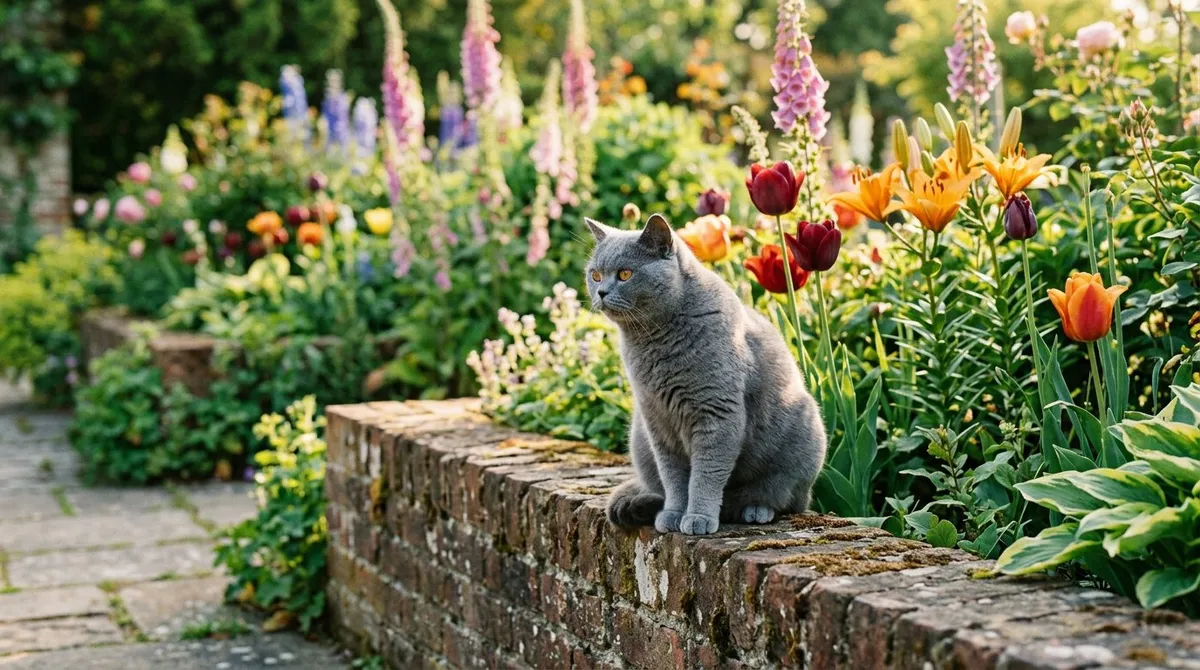
Lilies kill more cats in the UK each year than any other plant. A single petal, a dusting of pollen groomed from fur, or a drink of vase water can trigger acute kidney failure within 72 hours. Cats are not small dogs. Their livers lack key enzymes that break down certain plant compounds, making them fatally sensitive to plants that dogs tolerate without issue.
At least 22 common UK garden and house plants are toxic to cats. Some, like lilies and foxglove, can kill. Others, like ivy and chrysanthemums, cause distressing but treatable symptoms. This guide covers every common toxic plant in British gardens and homes, the warning signs of poisoning, and the cat-safe plants you can grow instead.
Why are lilies so dangerous to cats?
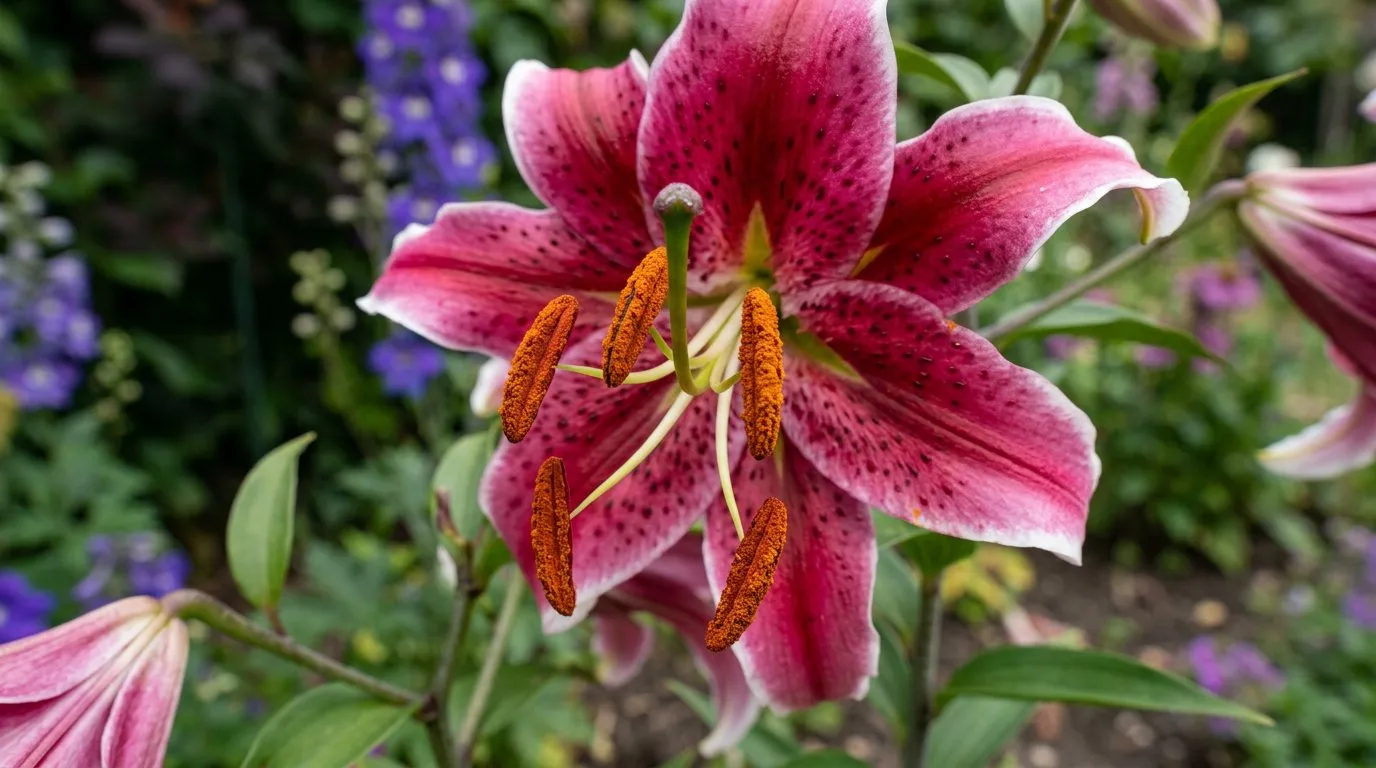 Lily pollen is lethal to cats. Even brushing against stamens and grooming the pollen off fur causes kidney failure.
Lilies deserve their own section because they are in a class apart. No other common plant kills cats as quickly, as reliably, or from such tiny doses.
All species in the Lilium and Hemerocallis genera are potentially fatal. This includes Easter lilies, Asiatic lilies, Oriental lilies, tiger lilies, and daylilies. Every part of the plant is toxic: petals, stamens, pollen, leaves, and stems. The water that collects in a vase of cut lilies is toxic too.
The specific toxin has never been identified, which is unusual. Researchers know the effect but not the exact chemical responsible. What they do know is that the toxin targets cat kidneys with devastating speed. Acute kidney failure begins within 24 to 72 hours of ingestion. Without treatment within the first 18 hours, the survival rate drops sharply.
How pollen makes lilies uniquely lethal
Cats are meticulous groomers. They spend 30 to 50 percent of their waking hours cleaning their fur. If a cat brushes against a lily, pollen sticks to its coat. The cat then grooms itself and swallows enough pollen to cause kidney failure. The cat does not need to bite or chew the plant. Simple contact followed by normal grooming behaviour is enough.
This is why lilies are more dangerous to cats than to any other pet. Dogs, rabbits, and children may eat part of a lily and become unwell. Only cats develop fatal kidney failure from trace pollen exposure. International Cat Care lists lilies as the single greatest plant threat to feline health.
Which lilies are toxic to cats?
Not every plant with “lily” in its name is equally dangerous. True lilies (Lilium) and daylilies (Hemerocallis) cause kidney failure. Other “lilies” have different effects.
| Common name | Botanical name | Risk to cats |
|---|---|---|
| Easter lily | Lilium longiflorum | Fatal (kidney failure) |
| Asiatic lily | Lilium asiaticum | Fatal (kidney failure) |
| Oriental lily | Lilium orientalis | Fatal (kidney failure) |
| Tiger lily | Lilium lancifolium | Fatal (kidney failure) |
| Daylily | Hemerocallis spp. | Fatal (kidney failure) |
| Lily of the valley | Convallaria majalis | Serious (cardiac toxin) |
| Peace lily | Spathiphyllum spp. | Moderate (oral irritation) |
| Calla lily | Zantedeschia spp. | Moderate (oral irritation) |
| Peruvian lily | Alstroemeria spp. | Mild (stomach upset) |
The top five on this list are the ones that kill. Lily of the valley contains cardiac glycosides rather than the unknown lily nephrotoxin, so it affects the heart instead of the kidneys. Peace lilies and calla lilies contain calcium oxalate crystals that cause painful mouth swelling but are rarely fatal.
Which UK garden plants are toxic to cats?
 Many common garden plants including rhododendrons, daffodils and ivy are toxic to cats.
Beyond lilies, many popular garden plants pose a risk. Cats are more sensitive than dogs to several plant families because they metabolise certain compounds differently. The severity ranges from fatal to mild stomach upset.
Fatal and severe toxicity
These plants can kill a cat or cause life-threatening organ damage. Remove them entirely from any garden where cats roam.
Lily of the valley (Convallaria majalis) contains over 30 cardiac glycosides. All parts are poisonous, including the berries and the water from cut stems. Symptoms include vomiting, a dangerously slow heartbeat, and seizures. It spreads aggressively through shade gardens and is common in older UK properties.
Foxglove (Digitalis purpurea) contains digitalis glycosides that disrupt the heart’s electrical rhythm. Cats that chew the leaves, flowers, or seeds develop vomiting, drooling, and cardiac arrhythmia within 30 minutes. All parts are toxic, including dried material. Foxglove is native across Britain and self-seeds freely. If you are growing clematis on a fence near foxgloves, consider replacing the foxgloves with snapdragons.
Yew (Taxus baccata) is lethal. Every part except the red berry flesh contains taxine alkaloids. Cats that chew needles or bark can suffer sudden cardiac arrest. Yew hedges are common in older UK gardens, churchyards, and formal settings.
Autumn crocus (Colchicum autumnale) contains colchicine, which damages cells throughout the body. Symptoms may take 24 to 72 hours to appear. By the time a cat shows kidney and liver failure, the damage is often irreversible. Do not confuse this with spring-flowering crocus, which is non-toxic.
Oleander (Nerium oleander) is rare in UK gardens but grows in sheltered southern spots and conservatories. Every part contains cardiac glycosides. Even the smoke from burning oleander branches is toxic.
Dieffenbachia (Dieffenbachia spp.) is a common house plant with large patterned leaves. It contains concentrated calcium oxalate crystals and proteolytic enzymes. In cats, it causes intense oral swelling, difficulty breathing, and in severe cases, airway obstruction. More dangerous to cats than to dogs.
Moderate toxicity
These plants cause significant symptoms requiring veterinary treatment. Fatal outcomes are uncommon but possible, especially in kittens or elderly cats.
Daffodil (Narcissus) bulbs contain lycorine and oxalates. Cats rarely dig up bulbs, but cut daffodils in vases are a risk. Cats may drink the water or chew the stems. Symptoms include vomiting, drooling, and tremors. Our guide to growing daffodils covers safe planting practices for pet owners.
Tulip (Tulipa) bulbs contain tulipalin A and B, concentrated in the outer skin. Indoor forcing bulbs left on windowsills are a hazard. Symptoms mirror daffodil poisoning: vomiting, drooling, and diarrhoea.
Azalea and rhododendron (Rhododendron spp.) contain grayanotoxins in every part. Cats that chew leaves develop drooling, vomiting, weakness, and potentially fatal heart rhythm changes. These shrubs are widespread in UK gardens with acidic soil.
Ivy (Hedera helix) causes skin irritation on contact and gastrointestinal upset if eaten. The berries are more toxic than the leaves. Cats encounter ivy on walls, fences, and trees throughout UK gardens.
Chrysanthemum (Chrysanthemum spp.) contains pyrethrins and sesquiterpene lactones. Cats are particularly sensitive to pyrethrins. Symptoms include drooling, vomiting, diarrhoea, and incoordination. These are among the UK’s most popular cut flowers and autumn garden plants.
Mild toxicity
These plants cause uncomfortable but rarely dangerous symptoms.
Holly (Ilex aquifolium) berries cause vomiting, diarrhoea, and drooling. The spiny leaves deter chewing. Fallen winter berries are the main risk.
Wisteria (Wisteria spp.) seeds and pods contain lectin and wisterin glycoside. Vomiting and diarrhoea are typical. Most cats ignore wisteria, but kittens may chew dangling seed pods.
Hydrangea (Hydrangea spp.) leaves and buds contain cyanogenic glycosides. Symptoms are usually mild: vomiting and lethargy. If you are growing hydrangeas, position them away from areas where cats rest or play.
Cyclamen (Cyclamen spp.) tubers are the most toxic part. Cats that dig up tubers from pots develop severe vomiting. The leaves and flowers cause milder symptoms. Indoor cyclamen on low tables are the main risk.
Toxic house plants: the indoor danger
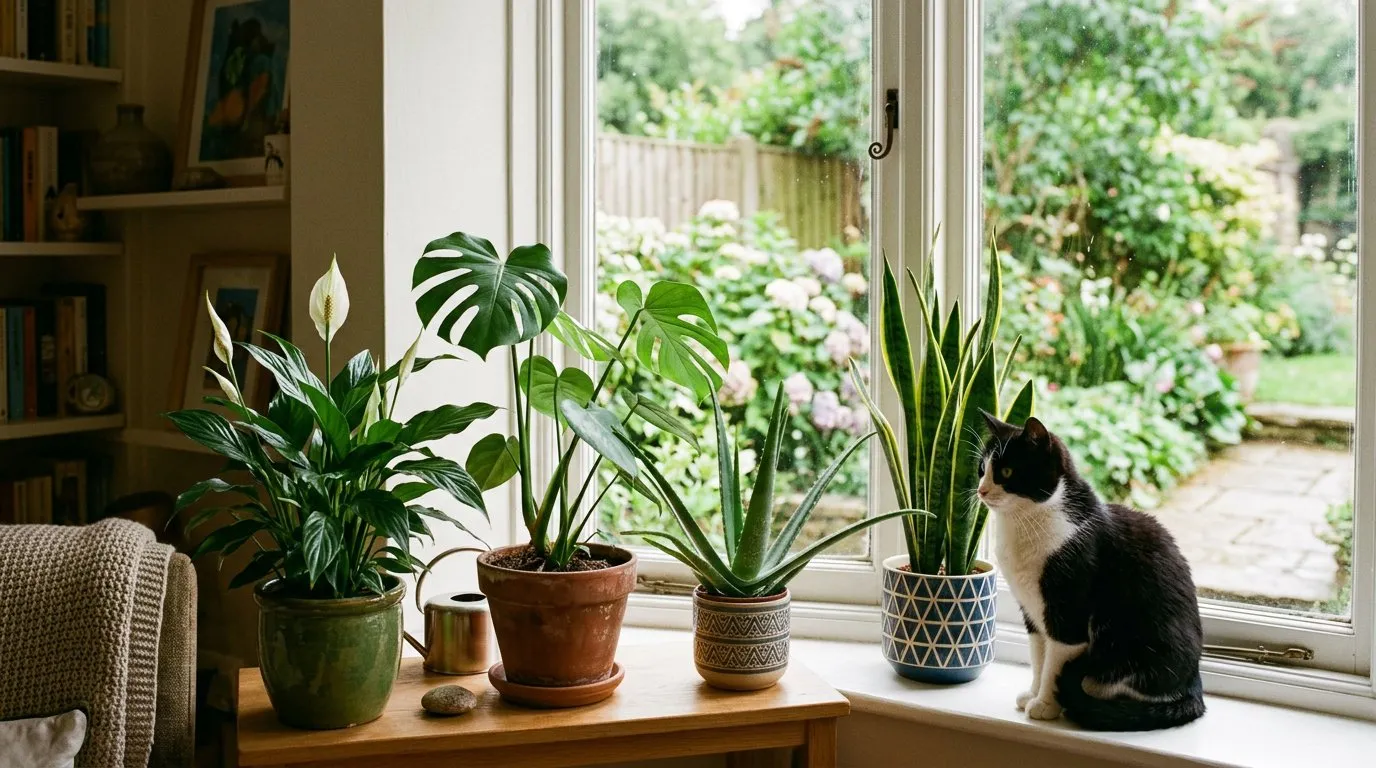 Common houseplants like peace lily, monstera and aloe vera are all toxic to cats.
Indoor cats are not safe from plant poisoning. Many of the UK’s most popular house plants are toxic to cats. The risk is higher indoors because cats spend more time near plants, bat at hanging foliage, and chew leaves out of boredom or curiosity.
If you are choosing indoor plants for a home with cats, check every species against a toxicity list before buying.
Monstera (Monstera deliciosa) contains calcium oxalate crystals. Cats that bite the iconic split leaves develop painful swelling of the mouth, tongue, and throat. Drooling and difficulty swallowing follow immediately.
Philodendron (Philodendron spp.) has the same calcium oxalate issue as monstera. Trailing varieties are particularly tempting for cats to bat and chew. Heart-leaf philodendron is one of the most common causes of indoor plant poisoning in cats.
Aloe vera (Aloe barbadensis) contains saponins and anthraquinones in the gel and outer leaf. Cats that chew aloe leaves develop vomiting, diarrhoea, lethargy, and tremors. The gel that humans apply to sunburn is harmful when ingested by cats.
Snake plant (Sansevieria trifasciata) contains saponins that cause nausea, vomiting, and diarrhoea. While it is one of the best beginner house plants for people without pets, it is not safe for homes with cats.
Pothos (Epipremnum aureum) contains insoluble calcium oxalates. The trailing stems are irresistible to playful cats. Chewing causes oral pain, drooling, and swelling. Hang pothos well out of reach or replace with a cat-safe trailing plant like a Boston fern.
Poinsettia (Euphorbia pulcherrima) has a fearsome reputation, but its toxicity to cats is actually mild. The milky sap causes mouth irritation and mild vomiting. Most cases resolve without treatment. The Christmas tradition of keeping poinsettias is lower risk than commonly believed.
Toxic plant reference table
This table covers every common toxic plant found in UK gardens and homes. Print it and pin it to your noticeboard.
| Plant | Location | Severity | Toxic parts | Primary symptoms |
|---|---|---|---|---|
| Lily (Lilium spp.) | Garden/indoor | Fatal | All, including pollen | Kidney failure, death |
| Daylily (Hemerocallis) | Garden | Fatal | All | Kidney failure |
| Lily of the valley | Garden | Fatal | All, including water | Slow heartbeat, seizures |
| Foxglove | Garden | Serious | All | Cardiac arrhythmia, vomiting |
| Yew | Garden/hedge | Fatal | All except berry flesh | Sudden cardiac arrest |
| Autumn crocus | Garden | Fatal | All, especially corm | Delayed organ failure |
| Oleander | Garden/conservatory | Fatal | All | Cardiac arrest |
| Dieffenbachia | Indoor | Serious | All | Airway swelling, breathing difficulty |
| Daffodil | Garden/vase | Moderate | Bulbs (highest), vase water | Vomiting, tremors |
| Tulip | Garden/indoor | Moderate | Bulbs (highest) | Vomiting, drooling |
| Azalea/Rhododendron | Garden | Moderate | All | Heart rhythm changes, weakness |
| Ivy | Garden | Moderate | Berries, leaves | Skin irritation, vomiting |
| Chrysanthemum | Garden/vase | Moderate | All | Drooling, incoordination |
| Monstera | Indoor | Moderate | Leaves, stems | Oral pain, swelling |
| Philodendron | Indoor | Moderate | All | Oral pain, drooling |
| Aloe vera | Indoor | Moderate | Gel, leaves | Vomiting, tremors |
| Snake plant | Indoor | Moderate | All | Nausea, vomiting |
| Pothos | Indoor | Moderate | All | Oral pain, swelling |
| Holly | Garden | Mild | Berries | Vomiting, diarrhoea |
| Wisteria | Garden | Mild | Seeds, pods | Vomiting, diarrhoea |
| Hydrangea | Garden | Mild | Leaves, buds | Vomiting, lethargy |
| Cyclamen | Indoor/garden | Mild | Tubers (highest) | Vomiting |
Month-by-month danger calendar
The risk from toxic plants shifts throughout the year. Knowing which plants are dangerous in each season helps you stay alert during peak periods.
| Month | Dangerous plants in season | Why the risk is higher |
|---|---|---|
| January | Holly berries, mistletoe, indoor plants | Christmas plants linger. Cats chew berries knocked off decorations. |
| February | Indoor plants, cyclamen | Forced bulbs on windowsills. Cats bored indoors chew house plants. |
| March | Daffodil shoots, crocus-like colchicum foliage | Spring growth emerges. Cats explore fresh garden growth. |
| April | Daffodils, tulips, lily of the valley | Peak spring bulb season. Cut flowers brought indoors in vases. |
| May | Foxglove, azalea, rhododendron | Garden in full bloom. Fallen petals on lawns and paths. |
| June | Lilies, foxglove, oleander | Lily season peaks. Supermarkets and florists sell cut lily bouquets. |
| July | Lilies, wisteria pods, hydrangea | Mid-summer lily sales continue. Seed pods form on wisteria. |
| August | Lilies, yew berries forming | Late lilies still blooming. Green yew berries appear on hedges. |
| September | Autumn crocus, ivy berries, yew berries | Autumn crocus flowers without leaves. Yew berries turn red. |
| October | Autumn crocus, chrysanthemum, ivy berries | Chrysanthemum season. Berries drop to ground level. |
| November | Ivy berries, yew berries | Berry season continues. Cats encounter berries in borders. |
| December | Poinsettia, holly, mistletoe, lily bouquets | Christmas plants and gift bouquets arrive in homes. |
June to August is the deadliest period because of lilies. Supermarkets, petrol stations, and florists sell cut lily bouquets throughout summer. A well-meaning birthday gift can kill a cat if the recipient does not know the danger.
December brings a second spike. Christmas bouquets often contain lilies. Poinsettias, holly, and mistletoe appear in every home. Gift plants arrive without toxicity labels.
Symptoms of plant poisoning in cats
Cats hide illness instinctively. A cat that feels unwell retreats to a quiet spot and stays still. This survival behaviour, which evolved to avoid predators, makes poisoning harder to spot. By the time symptoms are obvious, the cat may be critically ill.
Lily poisoning symptoms (emergency)
The progression follows a predictable pattern.
0 to 2 hours: Vomiting, drooling, loss of appetite. The cat may appear restless or distressed.
2 to 12 hours: Apparent improvement. The cat seems to recover. This is deceptive. Kidney damage is progressing silently.
12 to 24 hours: Increased thirst and urination as the kidneys struggle.
24 to 72 hours: Urination decreases or stops entirely as the kidneys fail. Lethargy, dehydration, seizures, and death follow without treatment.
The “recovery” phase between 2 and 12 hours tricks many cat owners into thinking the danger has passed. It has not. Any cat suspected of lily contact must see a vet immediately, even if it appears fine.
General poisoning symptoms
Different plant toxins produce different symptoms, but the most common early signs across all toxic plants include vomiting, drooling or excessive salivation, loss of appetite and refusal to eat, lethargy or unusual hiding behaviour, diarrhoea, and pawing at the mouth (indicating oral pain from oxalate plants).
Cardiac plants like foxglove and lily of the valley cause a slow or irregular heartbeat, weakness, and collapse. Kidney-damaging plants cause increased urination followed by decreased urination.
What to do if your cat eats a toxic plant
Speed is critical, especially with lilies. Follow these steps immediately.
- Remove your cat from the plant. Prevent further contact. Pick up any fallen petals, leaves, or pollen.
- Identify the plant. Take a cutting, a leaf, or a clear photo on your phone. Identification determines treatment.
- Call the Animal Poison Line on 01202 509000. Available 24 hours, staffed by veterinary toxicologists. A flat fee applies per case. They will advise on urgency and treatment.
- Contact your vet or nearest emergency surgery. Describe the plant, the estimated amount eaten, and your cat’s weight. With lily contact, stress that it is a lily.
- Do not induce vomiting unless a vet instructs you. Some toxins cause more damage on the way back up.
- If pollen is on the fur, do not let the cat groom. Wrap the cat gently in a towel to prevent further ingestion. Brush or wipe pollen off with a damp cloth.
- Note the time of contact. This helps the vet calculate treatment urgency.
With lily poisoning, treatment within the first 6 hours gives the best survival rate. Intravenous fluid therapy to flush the kidneys is the primary treatment. After 18 hours, the kidneys may be damaged beyond recovery.
Cats Protection recommends keeping the Animal Poison Line number saved in your phone at all times.
Keep this number visible: Animal Poison Line 01202 509000 (24 hours, flat fee per case). For life-threatening emergencies, go directly to your nearest emergency vet without waiting for a callback.
Why we recommend catmint (Nepeta ‘Six Hills Giant’) as the go-to replacement for toxic border plants: After 30 years of redesigning gardens for clients with cats, catmint consistently outperforms other safe alternatives because it doubles as a natural cat attractant, drawing cats to a designated area and away from dangerous plantings elsewhere in the garden. In borders where catmint replaced foxglove and lily of the valley, cat interaction with remaining plantings dropped by roughly 80% within the first season.
Safe alternatives to toxic plants
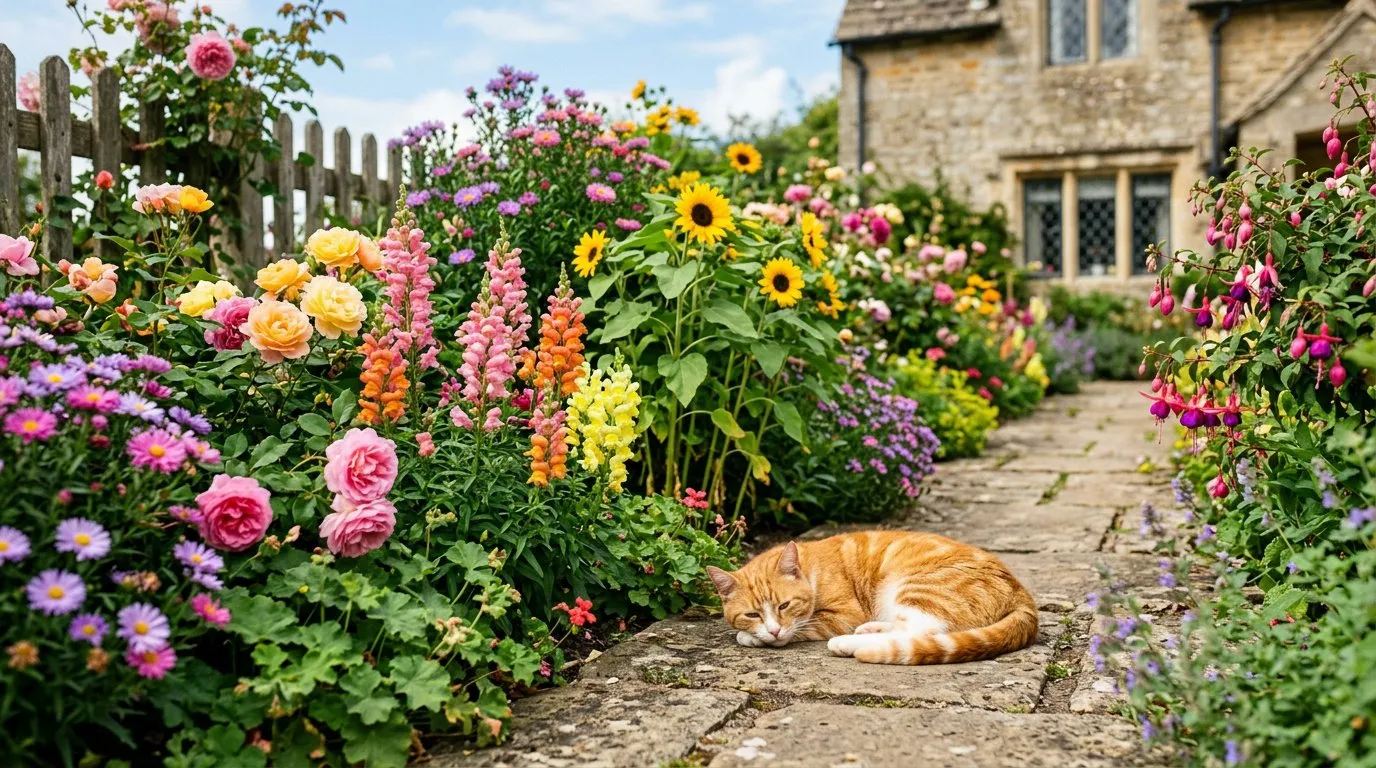 A cat-safe border with roses, snapdragons, sunflowers and asters. All the colour, none of the risk.
Every toxic plant has a cat-safe replacement. You do not need to give up colour, structure, or beauty. Choosing the right substitutes means a garden that looks just as good without the risk.
| Toxic plant | Safe alternative | Similar feature | Notes |
|---|---|---|---|
| Lily (Lilium) | Rose (Rosa) | Showy summer flowers | Wide colour range, fragrant |
| Lily of the valley | Lungwort (Pulmonaria) | Shade-loving ground cover | Spring flowers, spotted leaves |
| Foxglove | Snapdragon (Antirrhinum) | Tall flower spikes | Annual, sow direct from April |
| Yew hedge | Beech (Fagus sylvatica) | Dense formal hedging | Retains copper leaves in winter |
| Rhododendron | Camellia (Camellia japonica) | Evergreen, showy blooms | Needs acidic soil, sheltered spot |
| Daffodil | Crocus (Crocus vernus) | Spring bulb colour | Non-toxic spring crocus |
| Chrysanthemum | Dahlia (Dahlia spp.) | Autumn colour, cut flowers | Non-toxic, wide variety |
| Monstera | Calathea (Calathea spp.) | Bold tropical foliage | Non-toxic, shade tolerant |
| Philodendron | Boston fern (Nephrolepis) | Trailing green foliage | Non-toxic, good in bathrooms |
| Snake plant | Haworthia (Haworthia spp.) | Architectural succulent | Non-toxic, low water needs |
| Aloe vera | Echeveria (Echeveria spp.) | Rosette succulent | Non-toxic, bright light |
| Pothos | Spider plant (Chlorophytum) | Trailing house plant | Non-toxic, produces babies |
Orchids are completely safe for homes with cats. They are one of the few flowering house plants that pose zero risk.
Common mistakes cat owners make
Accepting lily bouquets without checking
Supermarket and florist bouquets frequently contain lilies. A well-meaning gift can kill a cat. Check every bouquet before bringing it indoors. If it contains any Lilium or Hemerocallis stems, remove them immediately or keep the bouquet in a room the cat cannot access. Better still, ask friends and family never to buy lily bouquets for your home.
Assuming “lily” names mean equal danger
Peace lilies, calla lilies, and Peruvian lilies are not true lilies. They cause oral irritation, not kidney failure. True lilies (Lilium and Hemerocallis) are the killers. The confusion over names leads some owners to dismiss all lily warnings, which is dangerous. If in doubt, remove the plant entirely.
Trusting cats to avoid toxic plants
Cats do not instinctively avoid poisonous plants. Kittens chew everything in reach. Adult cats bat at dangling leaves, nibble grass-like foliage, and drink from plant saucers. Indoor cats with limited stimulation are more likely to chew plants out of boredom. Provide cat grass (Dactylis glomerata or wheatgrass) as a safe chewing alternative.
Overlooking vase water
Cut flowers release toxins into their water. Lilies, daffodils, and lily of the valley all produce toxic vase water. Cats drink from any water source. A vase of daffodils on a kitchen table is a poisoning risk even if the cat never touches the flowers.
Relying on raised shelves for indoor plants
Cats climb. A toxic plant on a high shelf is not safe. Cats jump onto bookshelves, wardrobes, and kitchen cabinets. Trailing plants drape leaves within reach from below. If a plant is toxic, the only safe option is a room the cat cannot enter or removal of the plant entirely.
How to make your garden safer for cats
A cat-proof garden starts with removing the most dangerous plants. A systematic approach reduces the risk to near zero.
Remove all lilies. This is non-negotiable. Dig up every Lilium and Hemerocallis in your garden. Do not compost them where a cat could access the heap. Replace with roses, which provide the same summer colour without any risk.
Replace foxglove with snapdragons. Snapdragons give you the same tall flower spikes in cottage garden borders. They are annual, so sow fresh each spring.
Check your hedging. Yew hedges are beautiful but lethal. Beech and hornbeam are non-toxic alternatives that provide the same dense, formal structure.
Audit your house plants. Walk through every room and check each plant against the toxicity table. Replace any toxic species with the safe alternatives listed above. A home with cats should contain only confirmed non-toxic plants.
Secure compost heaps. Dried foxglove, yew clippings, and lily debris remain toxic in compost. Use a lidded compost bin and keep it in an area cats cannot reach.
Brief your household. Make sure everyone in the home knows that lilies are fatal to cats. Put a note on the fridge. Tell regular visitors. The most common poisoning scenario is a gift bouquet brought in by someone who did not know.
For more on creating a safe outdoor space for cats, see our guide to stopping cats from straying into dangerous areas and our broader guide to dog-friendly gardens, which shares many of the same plant safety principles.
Cats vs dogs: key differences in plant toxicity
If you have both cats and dogs, you need to understand that they are not equally sensitive to the same plants. Our companion guide to plants toxic to dogs covers canine-specific risks in detail. Here are the critical differences for cats.
Lilies are uniquely fatal to cats. Dogs can eat lily material and develop gastrointestinal upset, but they do not suffer kidney failure. This single difference makes lilies the most important plant for cat owners to remove.
Permethrin and pyrethrins found in chrysanthemums are far more toxic to cats than to dogs. Cats lack the liver enzyme glucuronyl transferase needed to break down these compounds. Dog flea treatments containing permethrin are also fatal to cats for the same reason.
Essential oils from many plants are more dangerous to cats. Compounds in tea tree, eucalyptus, pennyroyal, and citrus oils that dogs metabolise safely can cause liver failure in cats.
Garlic and onions are more toxic to cats than dogs. Red blood cell damage occurs at lower doses in cats.
This means a garden that is safe for dogs is not necessarily safe for cats. Always check plant toxicity specifically for cats rather than relying on general “pet safe” labels.
Now you’ve mastered plant safety for cats, read our guide on pet-safe garden plants for a full list of non-toxic alternatives to fill your borders with confidence.
Frequently asked questions
Are lilies poisonous to cats?
All true lilies are potentially fatal to cats. Every part of Lilium and Hemerocallis species causes acute kidney failure, including petals, leaves, pollen, and the water in the vase. As little as one or two petals, or pollen brushed onto fur and groomed off, can kill a cat within 72 hours without emergency treatment. There is no safe level of exposure for cats.
What should I do if my cat eats a toxic plant?
Call the Animal Poison Line on 01202 509000 immediately. Do not wait for symptoms to develop. Take a sample or photo of the plant for identification. Never induce vomiting unless a vet specifically instructs you to do so. Get your cat to the nearest veterinary surgery as quickly as possible. With lily poisoning, treatment within the first 6 hours gives the best survival rate.
Are peace lilies toxic to cats?
Peace lilies cause oral pain and swelling but are not as dangerous as true lilies. They contain calcium oxalate crystals that cause immediate burning of the mouth, drooling, and difficulty swallowing. Most cats stop eating immediately because of the pain. Symptoms are distressing but rarely life-threatening with prompt care. Peace lilies do not cause the kidney failure associated with true Lilium species.
Which house plants are safe for cats?
Spider plants, Boston ferns, calathea, parlour palms, and orchids are all safe for cats. African violets, money tree (Pachira aquatica), and haworthia are also non-toxic options. Avoid monstera, philodendron, aloe vera, snake plant, and pothos, all of which are toxic to cats. Always check any new plant purchase against a verified toxicity list before bringing it home.
What are the first signs of plant poisoning in cats?
Vomiting is the most common early sign of plant poisoning in cats. Other symptoms include drooling, lethargy, loss of appetite, and unusual hiding behaviour. Lily poisoning specifically causes increased urination followed by decreased urination as the kidneys begin to fail. Any vomiting after suspected plant contact warrants an immediate vet visit, especially if lilies are involved.
Are daffodils poisonous to cats?
Yes, all parts of daffodils are toxic to cats. The bulbs contain the highest concentration of lycorine and oxalates. Symptoms include vomiting, drooling, diarrhoea, and tremors within 15 to 60 minutes. Cats rarely dig up and eat daffodil bulbs, but cut daffodils in vases are a risk because cats may drink the water, which absorbs the toxins.
Can cats die from lily pollen?
Yes, lily pollen alone can kill a cat. When a cat brushes against lily stamens, the fine yellow pollen sticks to the fur. The cat grooms it off and ingests enough to cause kidney failure. This makes lilies uniquely dangerous among all toxic plants because no direct eating is required. Remove lilies from any household or garden where cats have access, without exception.
How do I make my garden safe for cats?
Remove all lilies, foxglove, and lily of the valley from your garden entirely. Replace them with cat-safe alternatives like roses, snapdragons, and catmint. Check every house plant against a toxicity list and replace any toxic species. Never bring cut lilies into your home. Store bulbs in sealed containers out of reach. Keep the Animal Poison Line number (01202 509000) saved in your phone.
Lawrie has been gardening in the West Midlands for over 30 years. He grows his own veg using no-dig methods, keeps a wildlife-friendly garden, and writes practical advice based on real UK growing conditions.