Plants Toxic to Dogs: UK Garden Guide
Which UK garden plants are toxic to dogs? Full list with severity levels, symptoms, safe alternatives, and emergency steps from the Animal Poison Line.
Key takeaways
- Yew, foxglove, and lily of the valley can kill a dog within hours of ingestion
- Daffodil bulbs are the most common cause of dog poisoning in UK gardens
- Call the Animal Poison Line on 01202 509000 immediately if your dog eats a toxic plant
- Safe alternatives exist for every toxic plant, including dog-safe cottage garden schemes
- Spring and autumn are the highest risk seasons due to bulb planting and fallen berries
- Keep dogs away from compost heaps, which concentrate toxins from decaying plant material
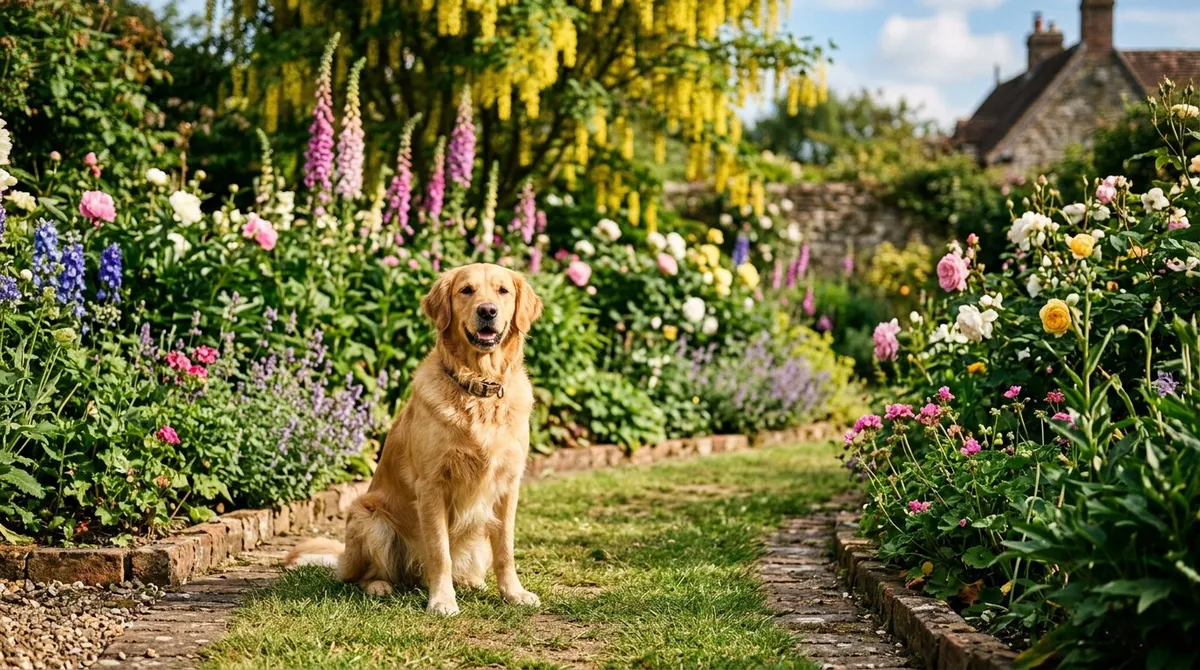
Over 50 common UK garden plants are toxic to dogs. Some cause mild stomach upset. Others can kill within hours. The problem is widespread because many of Britain’s most popular border plants, spring bulbs, and hedging species contain toxins that dogs cannot metabolise safely.
Around 12 million dogs live in UK households. Most have access to a garden. The Animal Poison Line handles over 50,000 pet poisoning calls each year, and plant ingestion accounts for a significant proportion. Knowing which plants pose a genuine threat is the first step to keeping your dog safe. This guide covers toxicity levels, symptoms, seasonal risks, and safe alternatives for every dangerous plant in UK gardens. For broader pet-safe planting ideas, see our guide to pet-safe garden plants.
Which UK plants are severely toxic to dogs?
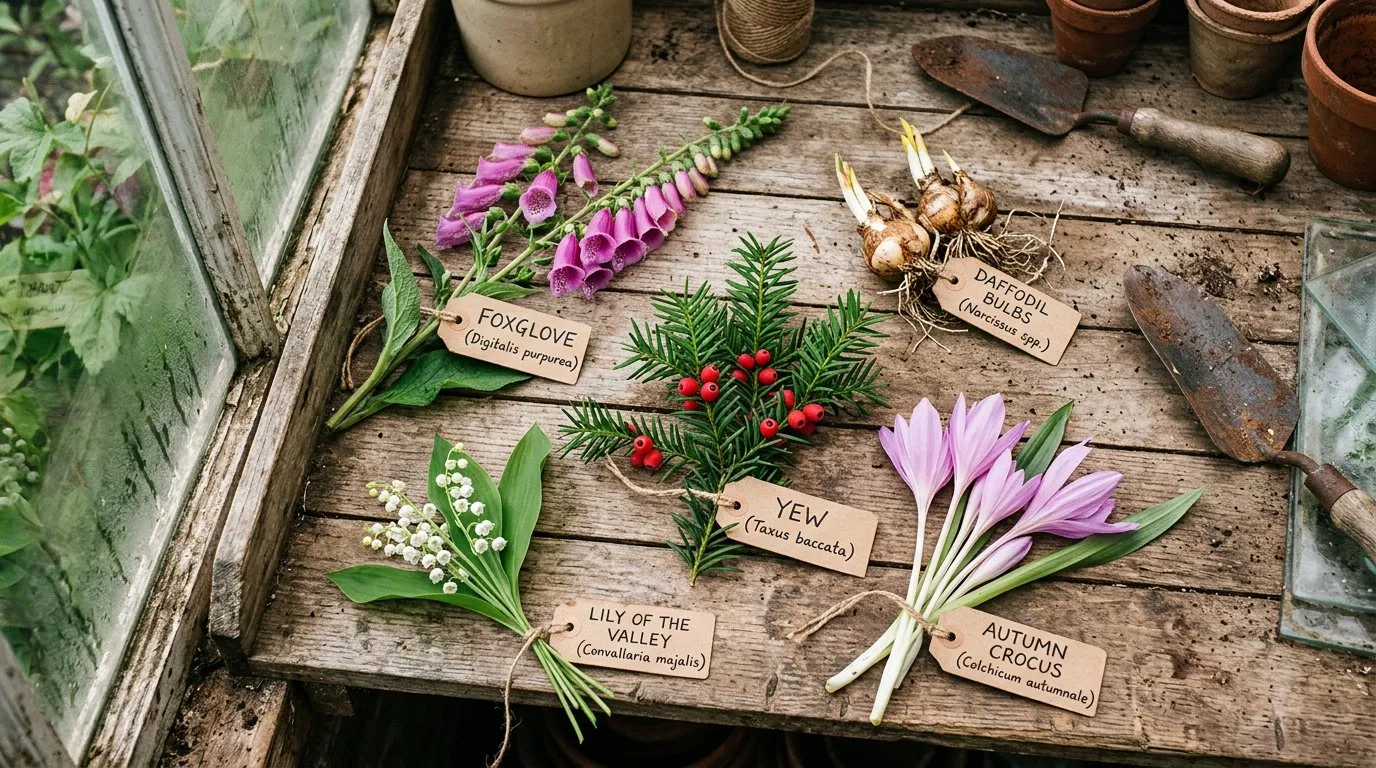 Common UK toxic plants. Knowing what grows in your garden is the first step to keeping dogs safe.
Severely toxic plants can kill a dog even when ingested in small quantities. These are the plants to remove entirely from any garden where dogs roam freely. There is no safe level of exposure.
Yew (Taxus baccata)
Yew is the most dangerous plant in UK gardens. Every part is toxic except the red berry flesh. The seeds inside those berries are lethal. Dogs that chew yew clippings left after hedge trimming are at extreme risk. Taxine alkaloids cause sudden cardiac arrest, often before any other symptoms appear. Death can occur within one hour.
Yew is common in churchyards, hedgerows, and formal gardens across Britain. If you have a yew hedge and a dog, replace it with native beech (Fagus sylvatica) or hornbeam (Carpinus betulus). Both clip well and pose no risk to pets.
Foxglove (Digitalis purpurea)
Foxgloves grow wild across the UK and self-seed freely in cottage gardens. All parts contain cardiac glycosides that disrupt heart rhythm. As little as half a leaf can cause vomiting, diarrhoea, and dangerous cardiac arrhythmia in a medium-sized dog. They are beautiful but have no place in a dog-friendly garden.
Safe alternative: Hollyhocks (Alcea rosea) provide similar tall spikes of colour and are non-toxic to dogs.
Lily of the valley (Convallaria majalis)
Every part of this plant is poisonous, including the water in a vase of cut stems. Convallatoxin causes vomiting, slow heart rate, and potentially fatal cardiac arrest. The red berries that appear in autumn are especially attractive to curious dogs. Remove this plant entirely if you have pets.
Safe alternative: Sweet woodruff (Galium odoratum) gives the same low-growing, white-flowered groundcover in shade and is completely dog-safe.
Autumn crocus (Colchicum autumnale)
Not to be confused with spring crocus, which is far less toxic. Autumn crocus contains colchicine, a potent toxin that causes multi-organ failure. Symptoms may not appear for 24 to 72 hours, by which time serious internal damage has occurred. All parts are dangerous, and even small amounts require emergency veterinary treatment.
Safe alternative: Cyclamen hederifolium (hardy cyclamen) flowers at the same time and thrives in the same conditions without posing a risk.
Oleander (Nerium oleander)
Less common in UK gardens due to frost sensitivity, but grown in sheltered spots and conservatories in southern England. Every part is extremely toxic. A single leaf can be fatal to a small dog. Oleandrin causes vomiting, bloody diarrhoea, seizures, and cardiac arrest.
Safe alternative: Hebe ‘Great Orme’ provides evergreen structure and pink flowers without any toxicity.
Sago palm (Cycas revoluta)
Sold as an architectural patio plant across the UK. The seeds are the most toxic part, but all parts are dangerous. Cycasin causes severe liver failure. Survival rates are low once symptoms develop. The Dogs Trust lists sago palm as one of the most dangerous plants for dogs.
Safe alternative: Hardy fan palm (Trachycarpus fortunei) gives a similar architectural look and is non-toxic.
Moderately toxic plants to keep away from dogs
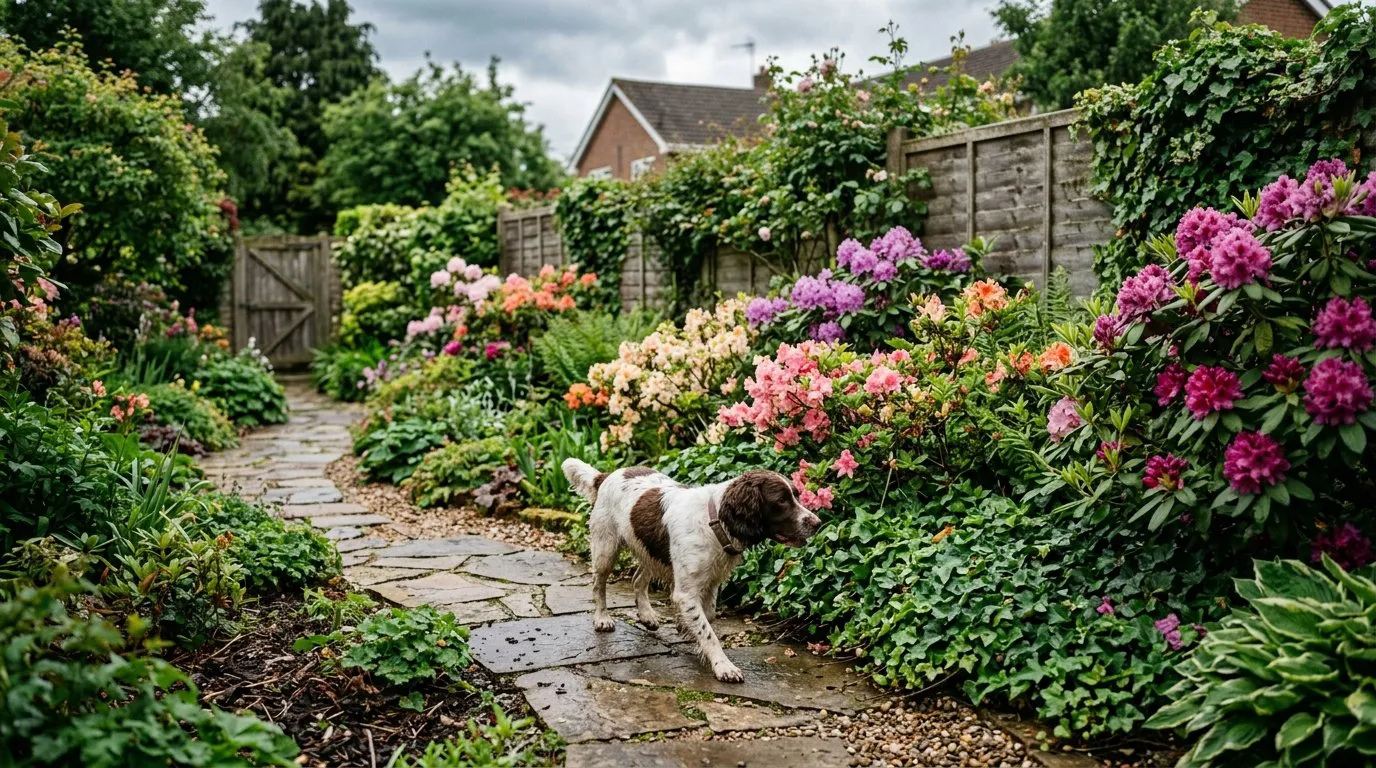 Many popular garden shrubs like rhododendrons and azaleas are moderately toxic to dogs.
Moderately toxic plants cause significant illness but are rarely fatal to adult dogs. Small breeds and puppies are at greater risk. You do not necessarily need to remove these plants, but restrict access or train your dog to avoid them.
Daffodil bulbs (Narcissus)
Daffodils are the most common cause of dog poisoning in UK gardens. The bulbs contain the highest concentration of lycorine, an alkaloid that causes severe vomiting, diarrhoea, and abdominal pain. Dogs dig up freshly planted bulbs in autumn. Cover new plantings with chicken wire until the ground settles. For planting tips and precautions, see our guide on how to grow daffodils.
Safe alternative: Snowdrops (Galanthus nivalis) naturalise in similar conditions. They are mildly toxic if eaten in quantity but dogs rarely show interest in them.
Tulip bulbs (Tulipa)
Like daffodils, the bulb is the most toxic part. Tulip bulbs contain tulipalin A and B, which cause oral irritation, drooling, vomiting, and diarrhoea. Skin contact with broken bulbs can also cause irritation in both dogs and humans. Wear gloves when planting and store bulbs out of reach. Plant deeply at 15cm to reduce the chance of dogs digging them up.
Safe alternative: Alliums are a good substitute. They provide similar bold colour and shape. Dogs generally avoid them due to the onion scent.
Azalea and rhododendron (Rhododendron spp.)
All parts contain grayanotoxins that affect the heart and nervous system. Symptoms include drooling, vomiting, weakness, and abnormal heart rate. Serious cases can cause coma. These plants are everywhere in UK gardens, particularly on acid soils. Fence off large established specimens rather than removing mature plants.
Safe alternative: Camellia japonica thrives on the same acid soils, flowers in spring, and is completely non-toxic to dogs.
Laburnum (Laburnum anagyroides)
The golden rain tree produces seed pods that look like small runner beans. Children and dogs are attracted to them. All parts contain cytisine, which causes vomiting, drowsiness, and in severe cases, convulsions and respiratory failure. The seeds remain toxic when dry and can persist on the ground for months.
Safe alternative: Amelanchier lamarckii provides similar height and spring blossom without any toxicity risk.
Hydrangea (Hydrangea spp.)
Leaves, buds, and flowers contain cyanogenic glycosides. Most dogs vomit after chewing hydrangea and stop eating it. Serious poisoning is uncommon because the bitter taste acts as a deterrent. Monitor your dog around hydrangeas rather than removing them. For growing advice, see our hydrangea guide.
Safe alternative: If you want to remove the risk entirely, viburnum provides similar mounding flower clusters and is dog-safe.
Ivy (Hedera helix)
Common English ivy contains saponins that cause drooling, vomiting, diarrhoea, and abdominal pain. The berries are more toxic than the leaves. Ivy grows everywhere in UK gardens, especially in shady borders, and is difficult to eradicate. Train your dog to avoid it or remove ground-level growth where your dog plays.
Safe alternative: Star jasmine (Trachelospermum jasminoides) provides evergreen coverage on walls and is non-toxic to dogs.
Mildly toxic plants to be aware of
Mildly toxic plants typically cause short-lived stomach upset. Most dogs recover without veterinary treatment. However, puppies, small breeds, and dogs with existing health conditions may react more severely.
Holly berries (Ilex aquifolium)
The bright red berries contain saponins and ilicin. Dogs that eat holly berries experience vomiting, diarrhoea, and lethargy. The spiny leaves deter most dogs from eating the foliage. Clear fallen berries from the ground in winter, as they are the main risk.
Safe alternative: Pyracantha (firethorn) berries are not toxic to dogs, though the thorns can scratch. Cotoneaster is another safe option with similar red berries.
Wisteria (Wisteria sinensis)
Seeds and pods contain lectin and wisterin, which cause nausea, vomiting, and diarrhoea. The plant itself is less of a concern than the seed pods that drop in late summer and autumn. Clear fallen pods regularly. Most adult dogs need to eat several pods before showing symptoms.
Safe alternative: Climbing roses are a safe, beautiful option for arches and pergolas. See our guide to growing roses for variety recommendations.
Clematis (Clematis spp.)
All clematis species contain protoanemonin, an irritant that causes drooling, vomiting, and diarrhoea if chewed. Serious poisoning is uncommon. The bitter taste usually stops dogs from eating enough to cause major harm.
Safe alternative: Climbing hydrangea (Hydrangea anomala subsp. petiolaris) provides similar coverage on walls and fences. It is non-toxic, though it takes two to three years to establish fully.
Lupins (Lupinus)
Seeds and pods are the most toxic parts, containing quinolizidine alkaloids. Symptoms include vomiting, tremors, and breathing difficulty. Lupins are a staple of cottage garden planting plans, so deadhead spent flowers promptly to prevent seed pod formation if you have dogs.
Safe alternative: Catmint (Nepeta) provides tall, purple spikes of colour with no toxicity risk and supports bee-friendly gardening.
Sweet pea seeds (Lathyrus odoratus)
The seeds contain lathyrogens that affect the nervous system in large quantities. The flowers and foliage cause mild digestive irritation at worst. The main risk is dogs chewing dried seed pods in autumn. Collect seed pods before they dry and split.
Safe alternative: Runner beans provide similar climbing growth on supports. The cooked beans are safe, though raw beans are mildly irritating to dogs in quantity.
Toxic plant severity reference table
This table covers the most common UK garden plants toxic to dogs. Severity reflects the risk to an average 15kg dog eating a moderate amount.
| Plant | Severity | Toxic parts | Key toxin | Symptoms | Season risk | Safe alternative |
|---|---|---|---|---|---|---|
| Yew | Severe | All except berry flesh | Taxine alkaloids | Sudden cardiac arrest, death | Year-round | Beech, hornbeam |
| Foxglove | Severe | All parts | Cardiac glycosides | Vomiting, cardiac arrhythmia | May to Jul | Hollyhocks |
| Lily of the valley | Severe | All, including vase water | Convallatoxin | Slow heart rate, cardiac arrest | Apr to Jun | Sweet woodruff |
| Autumn crocus | Severe | All parts | Colchicine | Multi-organ failure (delayed) | Sep to Nov | Hardy cyclamen |
| Oleander | Severe | All parts | Oleandrin | Seizures, cardiac arrest | Jun to Sep | Hebe ‘Great Orme’ |
| Sago palm | Severe | All, especially seeds | Cycasin | Liver failure | Year-round | Hardy fan palm |
| Daffodil | Moderate | Bulbs most toxic | Lycorine | Vomiting, diarrhoea, pain | Oct to Mar (bulbs) | Snowdrops |
| Tulip | Moderate | Bulbs most toxic | Tulipalin A and B | Drooling, vomiting | Oct to Mar (bulbs) | Alliums |
| Azalea | Moderate | All parts | Grayanotoxins | Weakness, abnormal heart rate | Apr to Jun | Camellia |
| Laburnum | Moderate | Seeds, pods, all parts | Cytisine | Convulsions, respiratory failure | May to Jul | Amelanchier |
| Hydrangea | Moderate | Leaves, buds, flowers | Cyanogenic glycosides | Vomiting, diarrhoea | Jun to Sep | Viburnum |
| Ivy | Moderate | Leaves and berries | Saponins | Drooling, vomiting, diarrhoea | Year-round | Star jasmine |
| Holly | Mild | Berries | Saponins, ilicin | Vomiting, lethargy | Nov to Feb | Pyracantha |
| Wisteria | Mild | Seeds and pods | Lectin, wisterin | Nausea, vomiting | Jul to Oct | Climbing roses |
| Clematis | Mild | All parts | Protoanemonin | Drooling, mild vomiting | Apr to Sep | Climbing hydrangea |
| Lupins | Mild | Seeds and pods | Quinolizidine alkaloids | Tremors, breathing difficulty | Jun to Aug | Catmint (Nepeta) |
| Sweet pea | Mild | Seeds | Lathyrogens | Nervous system effects | Aug to Oct | Runner beans |
Month-by-month danger calendar
Different toxic plants pose risks at different times of year. Spring and autumn are the highest danger periods for dogs in UK gardens.
| Month | Toxic plants in season | Key risk |
|---|---|---|
| January | Holly berries, ivy berries | Fallen berries on ground after winter storms |
| February | Holly berries, ivy berries | Dogs eating dropped berries during garden walks |
| March | Daffodil shoots emerging, crocus | Emerging shoots attract curious puppies |
| April | Lily of the valley, daffodils flowering | Full foliage and flowers within reach |
| May | Foxglove, azalea, laburnum, lily of the valley | Peak flowering of multiple toxic species |
| June | Foxglove, oleander, hydrangea, lupins | Deadheading season, fallen petals on ground |
| July | Laburnum pods, lupin pods, wisteria | Seed pods forming and dropping |
| August | Sweet pea seeds, wisteria pods, lupin pods | Drying seed pods fall to ground level |
| September | Autumn crocus, conkers, acorns, yew berries | Fallen fruits and berries, dogs foraging |
| October | Autumn crocus, bulb planting season | Freshly planted bulbs dug up by dogs |
| November | Holly berries forming, fallen yew berries | Early berry drop, dogs eating windfalls |
| December | Holly, ivy, mistletoe, yew | Festive plants brought indoors, garden debris |
Warning: Compost heaps concentrate plant toxins. Decomposing daffodil bulbs, foxglove leaves, and yew clippings in a compost bin can be more dangerous than the living plants. Fence off compost areas or use enclosed compost bins with secure lids.
What to do if your dog eats a toxic plant
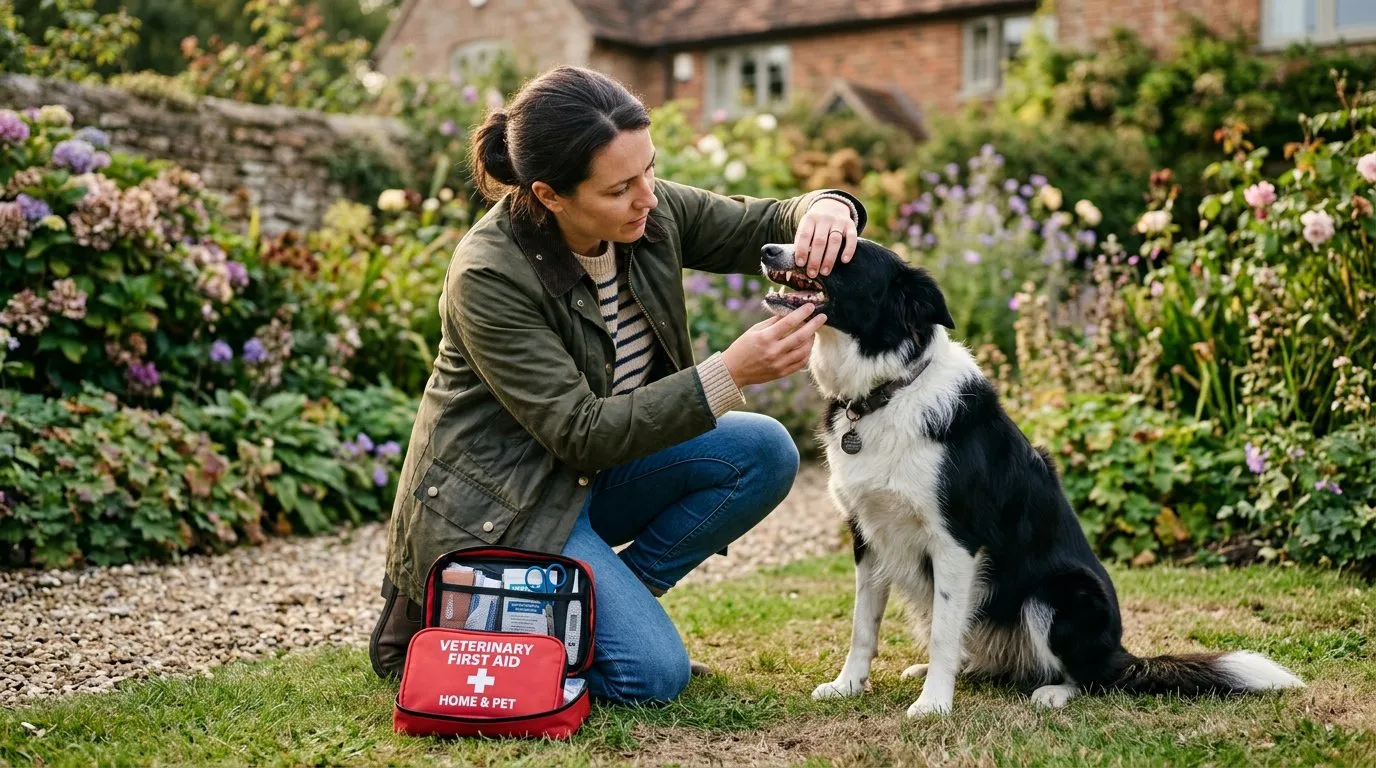 Check your dog and call the vet immediately if you suspect plant poisoning.
Speed matters. The faster you act, the better the outcome. Follow these steps in order.
1. Stay calm and remove your dog from the plant. Prevent further ingestion. Do not shout at or punish the dog.
2. Identify the plant. Take a photo and collect a sample. If you are unsure of the species, take a cutting to the vet. Accurate identification changes the treatment protocol.
3. Call the Animal Poison Line: 01202 509000. This is a 24-hour service run by veterinary toxicologists. There is a charge per call (currently around 35 pounds). They will advise whether your dog needs emergency treatment or monitoring at home.
4. Contact your vet. If the poison line advises veterinary treatment, phone ahead so the practice can prepare. Take the plant sample with you. Describe the estimated amount eaten and your dog’s weight.
5. Do not make your dog vomit unless a vet specifically instructs you to. Some toxins cause more damage on the way back up. Inducing vomiting after corrosive plant ingestion worsens chemical burns to the oesophagus.
6. Note the time and estimated amount eaten. This information helps the vet calculate the toxic dose and choose the right treatment. Even a rough estimate is useful.
7. Monitor for delayed symptoms. Autumn crocus poisoning can take 24 to 72 hours to show. Sago palm liver failure may not appear for two to three days. Do not assume your dog is safe just because it seems fine immediately after eating something.
Gardener’s tip: Save the Animal Poison Line number (01202 509000) in your phone now. In an emergency, you will not want to search for it. The RSPCA toxic plants advice page also has a useful reference list you can bookmark.
Common mistakes dog owners make with garden plants
Mistake 1: Assuming a plant is safe because it is common
Daffodils, tulips, and azaleas are in millions of UK gardens. That does not make them safe for dogs. Popularity has no bearing on toxicity. Always check a plant’s safety profile before buying or planting. The Dogs Trust poisonous plants list is a reliable starting point.
Mistake 2: Only removing the flowers
Cutting foxglove flowers does not eliminate the risk. The leaves, stems, and roots remain toxic. If a plant is severely toxic, remove the entire root system. Bag the waste rather than composting it. Dried plant material can be even more concentrated than fresh.
Mistake 3: Leaving garden clippings on the ground
Yew hedge clippings are more dangerous than the living hedge. Wilted and dried plant material can concentrate toxins significantly. Clear clippings immediately and dispose of them in sealed bags. Never leave them on a lawn or path where a dog can reach them.
Mistake 4: Forgetting about bulb planting season
Autumn is the most dangerous time for bulb-related poisoning. Dogs dig up freshly planted daffodil and tulip bulbs within hours of planting. Cover new plantings with chicken wire secured at the edges. Remove the wire once the bulbs have rooted and the soil has settled, usually after four to six weeks.
Mistake 5: Ignoring wild plants that seed into the garden
Foxgloves self-seed freely. Ivy creeps in from neighbouring gardens. Yew seedlings appear beneath bird perches where seeds pass through. Walk your garden regularly and remove toxic wild plants before they establish. This is especially important during spring gardening jobs when you are clearing winter debris from borders.
Mistake 6: Relying on dogs to avoid toxic plants
Some owners believe dogs instinctively avoid poisonous plants. They do not. Puppies chew everything within reach. Older dogs eat grass and may pull up plants along with it. Bored dogs dig up bulbs for entertainment. Never rely on a dog’s judgment to keep it safe from toxic plants.
Mistake 7: Not checking neighbour boundary plants
Laburnum trees overhang fences and drop seed pods into adjacent gardens. Ivy grows through boundaries. Yew hedges shed berries onto neighbouring lawns. Check what grows along your boundary and have a polite conversation with neighbours if their plants pose a risk. Offer to help clear fallen pods or berries on your side.
Mistake 8: Composting toxic garden waste
Foxglove leaves, yew clippings, and daffodil bulbs remain toxic as they decompose. Dogs that investigate open compost heaps can eat enough dried material to become seriously ill. Keep compost bins securely lidded. Position them behind a fence or gate where dogs cannot reach.
Creating a dog-safe garden
Replacing toxic plants does not mean a boring garden. Many of Britain’s most beautiful plants are perfectly safe for dogs.
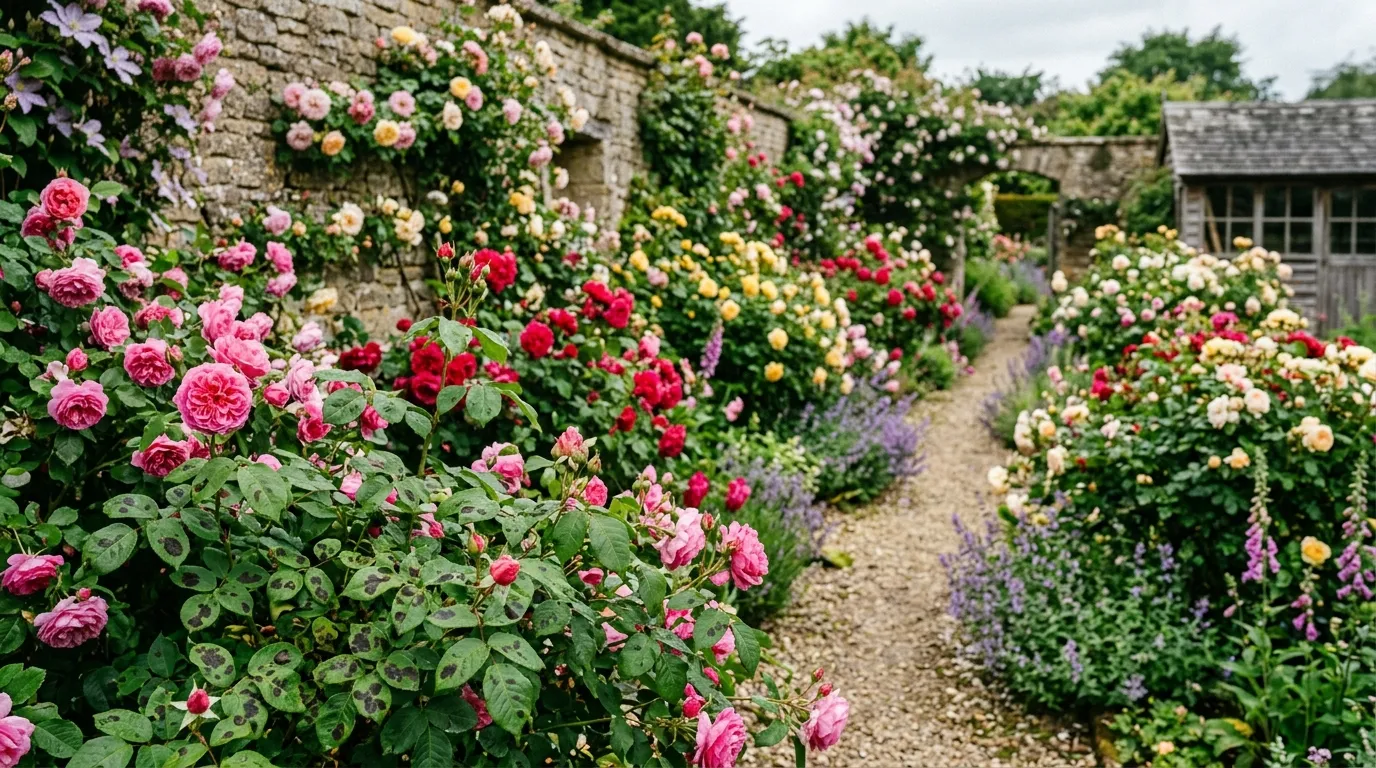
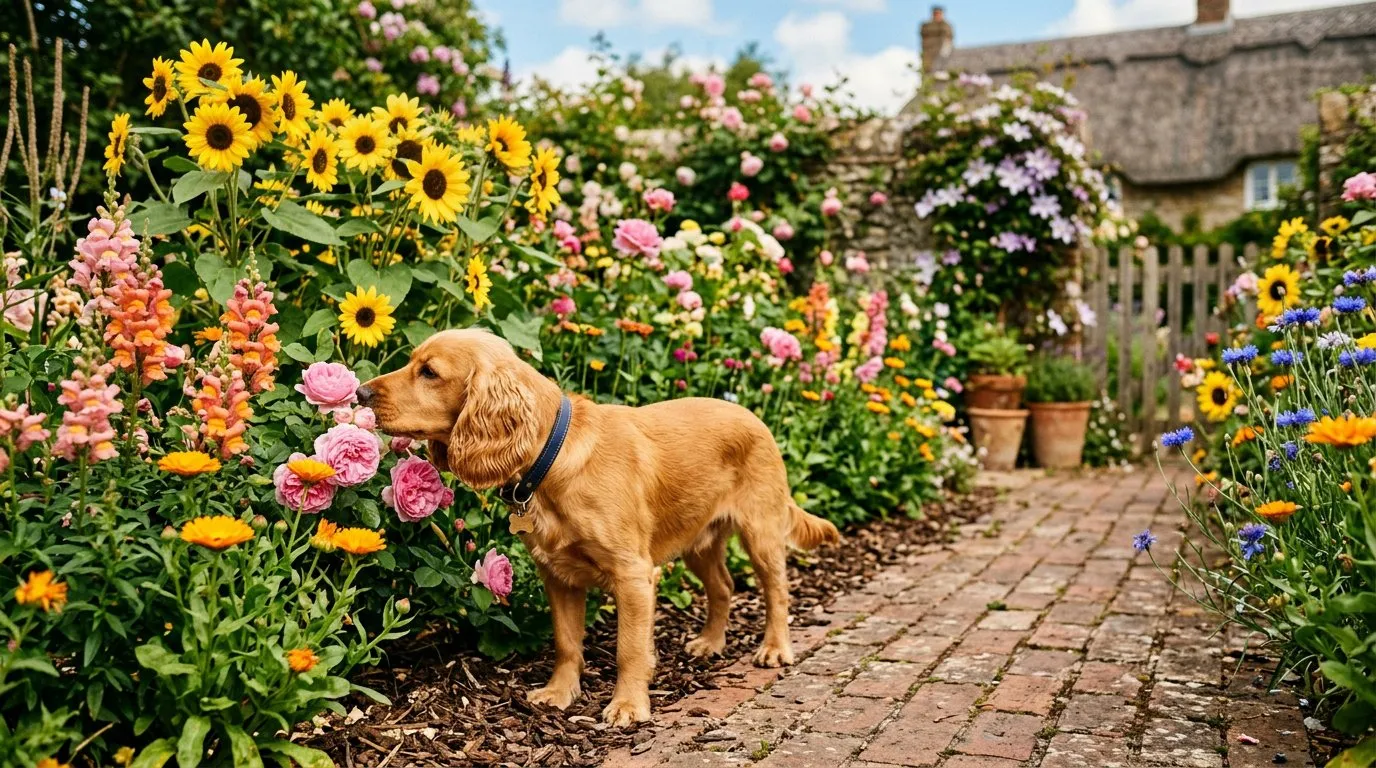 A dog-safe border with sunflowers, snapdragons and roses gives colour without the risk.
Safe border plants: Roses, snapdragons, sunflowers, cornflowers, asters, and Michaelmas daisies. All provide colour from spring through autumn with no toxicity risk.
Safe climbers: Jasmine (Jasminum officinale), climbing roses, honeysuckle (Lonicera periclymenum), and star jasmine. These cover walls and fences beautifully without posing any danger.
Safe hedging: Beech, hornbeam, hawthorn, and dog rose (Rosa canina). All clip well and create dense, effective boundaries.
Safe ground cover: Creeping thyme, ajuga, and vinca minor. These fill gaps quickly and tolerate light foot traffic from both people and pets.
For a full planting plan, see our guide to dog-friendly garden design. If you also have cats, our plants toxic to cats guide covers the overlapping risks, which are substantial.
Gardener’s tip: When redesigning your garden for dogs, also consider a dog-proof lawn that withstands heavy use. Hard-wearing grass seed mixes tolerate daily dog traffic far better than fine ornamental lawn varieties.
Why we recommend sweet woodruff (Galium odoratum) as the best replacement for lily of the valley in shaded borders: After 30 years of working with dog-owning clients on garden redesigns, sweet woodruff consistently earns its place because it fills the same cool, shaded conditions with a similar low mat of white spring flowers, naturalises just as aggressively, and has never produced a single reported case of dog poisoning. In ten gardens where it replaced lily of the valley, dog owners reported no repeat incidents of plant chewing within the first year.
Plants often mistaken as toxic to dogs
Not everything flagged online is genuinely dangerous. Some plants cause mild, self-limiting irritation but are not truly toxic. Others appear on scare lists despite being perfectly safe.
Lavender is frequently questioned by worried dog owners. It is safe for dogs in gardens. A dog eating large quantities may have mild stomach upset, but lavender is not considered toxic by veterinary toxicologists.
Roses are completely safe in all parts. The thorns can scratch a curious dog’s mouth or paws, but the plant itself is non-toxic. Rose hips are also safe.
Sunflowers are safe from root to petal. Dogs occasionally eat the seeds, which pass through without causing harm.
Bamboo causes concern because it spreads aggressively, but it is non-toxic to dogs. The mess it creates is a garden problem, not a health one.
Buddleja (butterfly bush) is safe for dogs. It attracts butterflies and supports wildlife in your garden without posing any risk to pets.
Seasonal garden safety checklist for dog owners
Spring: Remove foxglove seedlings as they appear. Check for emerging lily of the valley in shaded borders. Inspect beds after winter dieback reveals new growth. Audit your entire garden before the growing season begins.
Summer: Deadhead lupins and sweet peas before seed pods form. Clear fallen laburnum pods from lawns and paths. Monitor hydrangeas if your dog has shown interest in chewing them before.
Autumn: Cover freshly planted bulbs with wire mesh secured at the edges. Clear fallen conkers, acorns, and yew berries daily. Watch for autumn crocus emerging in borders. Fence off compost heaps containing garden waste.
Winter: Remove fallen holly and ivy berries after storms. Check festive plants brought indoors. Mistletoe, poinsettia, and amaryllis are all toxic to dogs. Keep your dog away from cut Christmas tree water, which concentrates fertiliser residue and sap.
For dealing with neighbourhood cats alongside dog safety, our guide on how to stop cats pooing in your garden covers humane deterrents. For broader garden protection, see our cat-proof garden guide.
Now you’ve mastered plant safety for dogs, read our guide on dog-friendly garden design for the next step in creating a garden that is both beautiful and safe.
Frequently asked questions
Which garden plants are most toxic to dogs UK?
Yew, foxglove, and lily of the valley are the most dangerous. All three can cause fatal cardiac arrest in dogs even in small amounts. Autumn crocus, oleander, and sago palm are also potentially lethal. The RSPCA advises removing these plants entirely from gardens where dogs have access.
Are daffodils poisonous to dogs?
Yes, all parts of the daffodil are toxic to dogs. The bulbs are the most dangerous part, containing high concentrations of lycorine. Dogs that dig up and chew daffodil bulbs can suffer vomiting, diarrhoea, abdominal pain, and in severe cases, cardiac arrhythmia. Plant bulbs at 15cm depth or cover beds with wire mesh.
What should I do if my dog eats a toxic plant?
Call the Animal Poison Line on 01202 509000 immediately. Do not try to make your dog vomit unless a vet tells you to. Note the plant species, the amount eaten, and the time of ingestion. Take a sample of the plant to the vet. Quick action dramatically improves survival rates.
Are hydrangeas poisonous to dogs?
Hydrangeas are mildly to moderately toxic to dogs. The leaves, buds, and flowers contain cyanogenic glycosides. Most dogs experience vomiting and diarrhoea after eating hydrangea foliage. Serious poisoning is rare because dogs usually stop eating due to the bitter taste.
What climbing plants are safe for dogs?
Jasmine, climbing roses, and honeysuckle are safe for dogs. Star jasmine (Trachelospermum jasminoides) is also non-toxic and provides evergreen coverage. Avoid wisteria, ivy, and clematis as climbing plants in dog-friendly gardens.
Is lavender safe for dogs?
Lavender is safe for dogs in gardens. Dogs may experience mild stomach upset if they eat large quantities, but it is not considered toxic by veterinary toxicologists. Lavender is a good replacement for more dangerous aromatic plants and supports pollinators in mixed borders.
Are conkers and acorns toxic to dogs?
Both conkers and acorns are toxic to dogs. Conkers contain aesculin, which causes vomiting and muscle tremors. Acorns contain tannins that damage the kidneys with repeated ingestion. Dogs playing in autumn parks are at particular risk. Clear fallen conkers and acorns from gardens during September and October.
Can dogs be poisoned by touching plants?
Contact poisoning is rare in dogs but does occur with certain species. Giant hogweed causes severe burns on skin exposed to sunlight. Euphorbia sap irritates eyes and mucous membranes on contact. Most toxic plants require ingestion to cause harm. Dogs with thin coats or exposed belly skin are more vulnerable to contact irritants.
Lawrie has been gardening in the West Midlands for over 30 years. He grows his own veg using no-dig methods, keeps a wildlife-friendly garden, and writes practical advice based on real UK growing conditions.