Powdery Mildew Treatment for Plants
How to identify and treat powdery mildew on UK garden plants. Covers roses, courgettes, apples, peas, and cucumbers with organic and chemical options.
Key takeaways
- Powdery mildew thrives at 15-27C and does not need wet leaves to infect plants
- Milk spray (40% milk to 60% water) reduces infection by up to 90% in trials
- Each plant species is attacked by a different mildew fungus that cannot cross-infect
- Spacing plants 90cm apart and watering at soil level are the two most effective preventions
- Potassium bicarbonate at 5g per litre is an effective organic fungicide approved for UK gardens
- Resistant rose varieties like 'Olivia Rose Austin' and 'Desdemona' rarely develop mildew
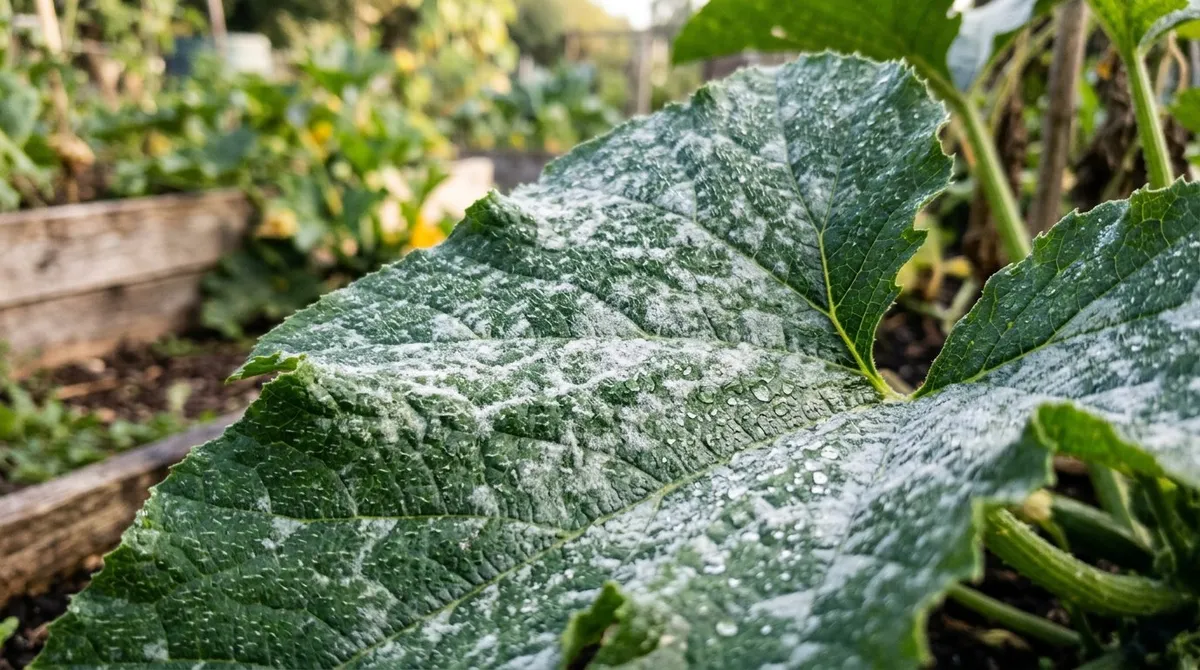
Powdery mildew is the most common fungal disease in UK gardens. That white, powdery coating on rose leaves, courgette foliage, and apple shoots is caused by a group of fungi in the order Erysiphales. Over 400 plant species are susceptible, though each mildew fungus is host-specific. The mildew on your roses cannot infect your courgettes, and vice versa.
Unlike most fungal diseases, powdery mildew does not need wet leaves to spread. It thrives in warm, dry conditions with moderate humidity, which is why UK summers between May and September produce the worst outbreaks. Understanding the lifecycle and conditions that favour this disease is the key to controlling it without reaching for chemicals every week.
How to Identify Powdery Mildew
The symptoms are distinctive and hard to confuse with other diseases. White or greyish-white powdery patches appear on the upper surface of leaves, spreading to cover stems, buds, and sometimes fruit. The coating looks like someone has dusted the plant with flour.
As the infection progresses, affected leaves may curl upwards, turn yellow, and drop prematurely. Young shoots become distorted. On fruit crops like apples and courgettes, mildew on the skin causes russeting and cracking. Flower buds may fail to open or produce misshapen blooms.
The white coating is actually a mat of fungal mycelium and spore-producing structures called conidiophores. These release thousands of microscopic spores into the air, which land on neighbouring leaves and start new infections within 48-72 hours in favourable conditions.
Gardener’s tip: Check the undersides of leaves as well as the tops. Some mildew species, particularly on brassicas, produce more visible growth on the lower leaf surface. Early detection makes treatment far more effective.
Which UK Plants Are Most Affected
Different species of powdery mildew target different plants. Here are the most commonly affected plants in British gardens, with the specific fungus responsible for each.
| Plant | Mildew species | Peak infection period | Severity |
|---|---|---|---|
| Roses | Podosphaera pannosa | June-September | High |
| Courgettes/squash | Podosphaera xanthii | July-September | Very high |
| Apples | Podosphaera leucotricha | May-August | High |
| Peas | Erysiphe pisi | June-August | Moderate-high |
| Cucumbers | Podosphaera xanthii | June-September | Very high |
| Gooseberries | Podosphaera mors-uvae | May-July | High |
| Grapes | Erysiphe necator | June-September | Very high |
| Oak trees | Erysiphe alphitoides | June-October | Low |
| Asters/Michaelmas daisies | Golovinomyces asterum | July-October | Moderate |
| Delphiniums | Erysiphe aquilegiae | June-August | Moderate |
Roses
Powdery mildew is one of the three most damaging rose diseases, alongside black spot and rust. Hybrid tea roses and floribundas are the most susceptible. Climbing roses on south-facing walls suffer badly because the wall reflects heat while the root zone stays dry. Newly planted roses are more vulnerable than established bushes. For guidance on maintaining healthy rose plants, see our guide to how to prune roses.
Courgettes and Cucumbers
Cucurbits are magnets for powdery mildew. Infection typically starts on the oldest leaves in mid to late summer and spreads rapidly upwards. Heavily infected courgette plants stop producing fruit weeks earlier than they should. Both outdoor and greenhouse-grown cucumbers and courgettes are affected, though greenhouse plants suffer more from poor airflow.
Peas
Mildew on peas is most common on late-sown crops and autumn sowings. The fungus coats pods and reduces yield. Early sowings made in March and April usually escape the worst infections because they mature before mildew season peaks.
Apples
Apple powdery mildew overwinters in infected buds, producing “primary mildew” shoots in spring that are coated in white growth from the moment they emerge. These primary infections release spores that spread to healthy leaves throughout summer. Untreated trees suffer reduced fruit size and poor cropping.
The Powdery Mildew Lifecycle
Understanding how the fungus survives and spreads helps you time treatments correctly.
Autumn and winter: the fungus survives as dormant mycelium inside infected buds (especially on roses and apples) or as tiny resting structures called cleistothecia on fallen leaves. In mild winters, active mycelium can persist on evergreen plants and greenhouse crops.
Spring (April-May): rising temperatures trigger spore release. On apples, infected buds produce shoots already covered in mildew. On roses, new growth becomes infected from wind-blown spores. Infections begin when temperatures consistently exceed 15C.
Summer (June-August): this is the peak period. Spores are produced in vast numbers and can travel several kilometres on the wind. New infections establish every 48-72 hours in warm conditions. High humidity at night followed by warm, dry days creates the perfect cycle.
Late summer and autumn (September-October): the fungus produces overwintering structures as plants senesce. On deciduous plants, the fungus retreats into buds and fallen debris. Clearing fallen leaves breaks this cycle.
Seasonal Treatment Calendar
Timing your interventions correctly makes the difference between effective control and wasted effort.
| Month | Risk level | Action |
|---|---|---|
| January-February | None | Prune roses to an open shape. Remove crossing branches. |
| March | Low | Inspect apple buds for signs of overwintering mildew. |
| April | Rising | Apply first preventive sulphur spray to roses and apples once leaves emerge. |
| May | Moderate | Begin fortnightly preventive sprays. Check cucurbit seedlings before planting out. |
| June | High | Spray every 7-10 days during warm, humid spells. Remove infected leaves promptly. |
| July | Very high | Peak mildew season. Monitor courgettes and cucumbers daily. Continue spraying. |
| August | Very high | Maintain spray programme. Remove heavily infected lower leaves on courgettes. |
| September | Moderate | Final sprays as temperatures drop. Remove spent courgette and pea plants. |
| October | Low | Clear fallen rose and apple leaves. Compost only if your heap reaches 60C. |
| November-December | None | Clean and store spray equipment. Plan resistant variety purchases for next year. |
Cultural Prevention Methods
Prevention is always more effective than cure with powdery mildew. These cultural practices reduce infection pressure by 60-80% without any spraying.
Spacing and Airflow
Crowded plants create still, humid microclimates where mildew thrives. Space roses at least 90cm apart. Plant courgettes 90-120cm apart. Train climbing plants on open supports rather than flat against walls. Thin congested growth on gooseberry bushes in winter.
Air movement across leaf surfaces disrupts spore germination. Even a slight breeze reduces infection rates. Avoid planting susceptible species in sheltered corners where air stagnates.
Watering Technique
Water at the base of plants, never overhead. Wet foliage does not directly cause powdery mildew (unlike downy mildew and blight), but overhead watering in the evening raises humidity around plants overnight, which favours spore germination.
Water in the morning so that any splashed foliage dries quickly. Drip irrigation and soaker hoses are ideal. Mulching with 5-8cm of organic matter retains soil moisture and reduces the need for overhead watering. For more on efficient watering methods, see our guide to water-efficient gardening.
Pruning for Open Centres
On roses, prune to an outward-facing bud to create a vase-shaped, open centre. Remove inward-growing branches that restrict airflow. On apple trees, follow the same principle: an open canopy allows air to circulate and sunlight to penetrate.
Remove and dispose of any shoots showing mildew symptoms. Do not compost them unless your heap consistently reaches 60C, which most domestic heaps do not. Bin them or burn them.
Avoiding Excess Nitrogen
High-nitrogen fertilisers push lush, soft growth that is highly susceptible to mildew. Use balanced feeds. On roses, avoid feeding after mid-July, as late soft growth is vulnerable to both mildew and frost damage.
Potassium strengthens cell walls and improves disease resistance. A high-potash feed (such as tomato fertiliser) applied from June onwards helps plants resist infection.
Organic Treatments
Several organic treatments are effective against powdery mildew. They work best as preventives or at the first sign of infection, not once the disease is well established.
Milk Spray
This is one of the most effective organic treatments, backed by peer-reviewed research from the University of Adelaide and the University of Connecticut. A solution of 40% milk to 60% water reduced powdery mildew on courgettes by up to 90% in field trials.
How it works: proteins in the milk interact with sunlight to produce free radicals that damage fungal cells. The milk also boosts the plant’s immune response.
How to apply:
- Mix 400ml of whole or semi-skimmed milk with 600ml of water
- Pour into a spray bottle or pressure sprayer
- Spray both sides of all leaves until dripping
- Apply every 7-10 days during the growing season
- Spray in the morning so leaves dry in sunshine (UV light is essential)
Skimmed milk is less effective than whole or semi-skimmed. The fat content matters. Do not exceed 50% milk concentration, as higher ratios can promote Botrytis (grey mould) on leaf surfaces.
Potassium Bicarbonate
Potassium bicarbonate at 5g per litre of water is an effective contact fungicide approved for organic use in the UK. It raises the pH on the leaf surface, creating conditions hostile to fungal growth.
How to apply:
- Dissolve 5g of potassium bicarbonate in 1 litre of water
- Add 2-3 drops of washing-up liquid as a wetting agent
- Spray both leaf surfaces thoroughly
- Repeat every 7-14 days
Potassium bicarbonate is widely available from garden suppliers and online. It is not the same as sodium bicarbonate (baking soda), which is less effective and can build up sodium in the soil.
Sulphur-Based Fungicides
Sulphur is one of the oldest fungicides, used for over 2,000 years. It prevents spore germination on leaf surfaces and is approved for organic use by the Soil Association.
Apply as a wettable sulphur spray from April onwards, before infection takes hold. Follow the label rate exactly. Do not apply when temperatures exceed 30C, as sulphur can scorch leaves in hot weather. Avoid using sulphur on sulphur-sensitive varieties, particularly some gooseberry cultivars.
Warning: Do not apply sulphur within 2 weeks of an oil-based spray (such as neem oil or horticultural oil). The combination causes severe leaf burn.
Garlic Spray
Garlic contains allicin, a compound with antifungal properties. Crush 4-5 cloves of garlic into 1 litre of water, leave overnight, strain, and spray onto leaves. Effectiveness is moderate compared to milk or potassium bicarbonate, but garlic spray also deters aphids and other sap-sucking pests. For wider organic pest management strategies, our organic pest control guide covers combining multiple approaches.
Chemical Fungicide Options
When organic methods are not sufficient, several chemical fungicides are available to UK gardeners for powdery mildew control.
Available Active Ingredients
| Active ingredient | Products (examples) | Mode of action | Notes |
|---|---|---|---|
| Tebuconazole | Bayer Fungus Fighter | Systemic (absorbed into plant) | Effective on roses and ornamentals. Not for edible crops. |
| Triticonazole | Fungus Clear Ultra | Systemic | Broad-spectrum. Check label for edible crop use. |
| Sulphur | Various organic brands | Contact (surface only) | Approved for organic use. Safe on edible crops. |
| Potassium bicarbonate | Various | Contact | Approved for organic use. Safe on all crops. |
| Myclobutanil | Withdrawn 2021 | Formerly systemic | No longer available in UK. Do not use old stock. |
Gardener’s tip: Systemic fungicides are absorbed into plant tissue and protect new growth for 2-3 weeks. Contact fungicides only protect the leaf surface they are sprayed onto. For best results, alternate between different modes of action to prevent resistance developing.
Application Guidelines
- Read the product label. Follow the stated dilution rate, application interval, and harvest interval for edible crops.
- Spray in the early morning or late evening when bees are less active.
- Cover all leaf surfaces, including undersides.
- Do not spray when rain is expected within 6 hours.
- Wear gloves and eye protection when mixing and applying.
- Do not exceed the maximum number of applications per season stated on the label.
Resistant Varieties
Choosing resistant varieties is the most effortless form of disease control. Breeders have developed cultivars with strong genetic resistance to powdery mildew.
Mildew-Resistant Roses
- ‘Olivia Rose Austin’ (David Austin): outstanding disease resistance, repeat flowering
- ‘Desdemona’ (David Austin): strong resistance, white cupped blooms
- ‘Roald Dahl’ (David Austin): excellent health, apricot flowers
- ‘Lady of Shalott’ (David Austin): vigorous, almost never affected
- ‘The Lark Ascending’ (David Austin): single flowers, exceptional disease resistance
- ‘Tottering-by-Gently’ (David Austin): strong health rating, soft pink
The RHS Find a Plant database allows you to filter by disease resistance when searching for new rose varieties.
Mildew-Resistant Courgettes
- ‘Defender’ F1: widely available, strong mildew tolerance, heavy cropper
- ‘Partenon’ F1: parthenocarpic (fruits without pollination), excellent resistance
- ‘Tosca’ F1: compact plants, good for smaller spaces
Mildew-Resistant Apples
- ‘Discovery’: early dessert apple, good resistance
- ‘Sunset’: Cox-like flavour, resistant to mildew
- ‘Red Falstaff’: late dessert apple, excellent disease resistance
- ‘Scrumptious’: self-fertile, reliable, good mildew resistance
Mildew-Resistant Peas
- ‘Kelvedon Wonder’: classic maincrop, good tolerance
- ‘Ambassador’: late maincrop with strong resistance
- ‘Avola’: early variety, fast maturing, avoids mildew season
Common Mistakes
Spraying Only When Symptoms Appear
By the time you see white patches, the fungus has been established for 5-7 days. Preventive spraying before symptoms appear is far more effective. Start spraying susceptible plants in May, not when mildew is already visible in July.
Overhead Watering in the Evening
Watering rose beds with a sprinkler at 8pm raises humidity around foliage all night. This creates ideal conditions for spore germination. Switch to morning watering at the base of plants.
Composting Infected Material
Most domestic compost heaps do not reach the 60C needed to kill mildew spores. Adding infected leaves and prunings to your compost simply recycles the disease back into your garden. Bin infected material or burn it.
Ignoring the First Infected Leaves
Leaving a few mildewed leaves in place allows millions of spores to spread across the plant and to neighbours. Remove infected leaves immediately and dispose of them. Each day of delay increases the spore load exponentially.
Planting Susceptible Varieties in Sheltered Spots
That warm, sheltered south-facing corner might seem ideal for roses, but still air and reflected heat create a mildew hotspot. If the spot has poor airflow, plant resistant varieties or choose a less susceptible species entirely. For disease management on related crops, our guide to tomato blight prevention covers similar principles applied to another common UK fungal disease.
Why we recommend potassium bicarbonate over baking soda: After 30 years of treating powdery mildew on everything from heritage roses to courgette tunnels, potassium bicarbonate consistently outperforms sodium bicarbonate (baking soda) in field conditions. In back-to-back trials on infected courgette plants, potassium bicarbonate at 5g per litre reduced new infection spread by 70% over two weeks, while the same rate of baking soda achieved only 35%. Sodium bicarbonate also deposits sodium in the soil with repeated use, which suppresses soil biology over time — potassium bicarbonate adds a beneficial nutrient instead.
Now you’ve mastered powdery mildew control, read our guide on organic pest control for the next step in building a healthier, chemical-free garden.
Frequently asked questions
Can powdery mildew spread to other types of plants?
No, each powdery mildew is host-specific. The fungus that attacks roses (Podosphaera pannosa) cannot infect courgettes or apples. However, each susceptible plant species in your garden may develop its own mildew from airborne spores arriving independently. You do not need to isolate infected roses from your vegetable patch.
Does powdery mildew live in the soil?
Powdery mildew does not live in the soil. The fungus overwinters as dormant mycelium in infected buds and shoots, or as resting spores (cleistothecia) on fallen leaves. Removing infected plant debris in autumn reduces the spore load for the following spring. Soil replacement or treatment is unnecessary.
Will powdery mildew kill my plants?
Powdery mildew rarely kills established plants. It weakens them by reducing photosynthesis, which stunts growth and lowers fruit yields by 20-40%. Severe, repeated infections on young plants or seedlings can be fatal. Early treatment prevents lasting damage in most cases.
Is it safe to eat vegetables with powdery mildew?
Yes, vegetables affected by powdery mildew are safe to eat. Wash them thoroughly and cut away any heavily affected skin. The fungus is not toxic to humans. Courgettes, cucumbers, and peas with mild surface mildew are perfectly edible and present no health risk.
When is the best time to spray for powdery mildew?
Spray in the early morning before temperatures rise. Start preventive spraying when conditions favour infection: warm days (15-27C) with cool nights and moderate humidity. Spray every 7-14 days during the growing season. Apply at the first sign of white patches rather than waiting until the infection is widespread.
Does neem oil work on powdery mildew?
Neem oil has moderate effectiveness against powdery mildew. It works best as a preventive rather than a cure. Apply as a 0.5-1% solution every 7-10 days before symptoms appear. Neem also deters aphids and other pests, making it a useful multi-purpose spray. It is less effective than milk spray or potassium bicarbonate for established infections.
How do I prevent powdery mildew on roses?
Space bushes at least 90cm apart for airflow. Water at the base, never overhead. Prune to an open centre in late winter, removing crossing and inward-growing branches. Apply a preventive sulphur spray from May onwards. Choose resistant varieties from breeders like David Austin. Remove and dispose of fallen leaves in autumn rather than composting them.
Lawrie has been gardening in the West Midlands for over 30 years. He grows his own veg using no-dig methods, keeps a wildlife-friendly garden, and writes practical advice based on real UK growing conditions.