Vine Weevil Treatment and Prevention
UK guide to vine weevil control. Covers identification of adults and grubs, nematode treatment timing, chemical controls, and container protection.
Key takeaways
- Vine weevil larvae kill plants by eating roots from September to April beneath the soil surface
- All adult vine weevils are female, each laying 500-800 eggs per season
- Nematode treatment (Steinernema kraussei) is 80-95% effective when soil is above 5C
- Container plants in peat-based compost are most vulnerable to vine weevil attack
- Check pots for C-shaped white grubs when repotting in spring or autumn
- Provanto Vine Weevil Killer drench protects containers for up to 4 months
Vine weevil is the single most destructive pest of container plants in British gardens. The damage is invisible until it is too late. A perfectly healthy-looking fuchsia, heuchera, or strawberry plant suddenly wilts and dies. When you lift it from the pot, the roots are gone. White, C-shaped grubs have eaten every root over the preceding months.
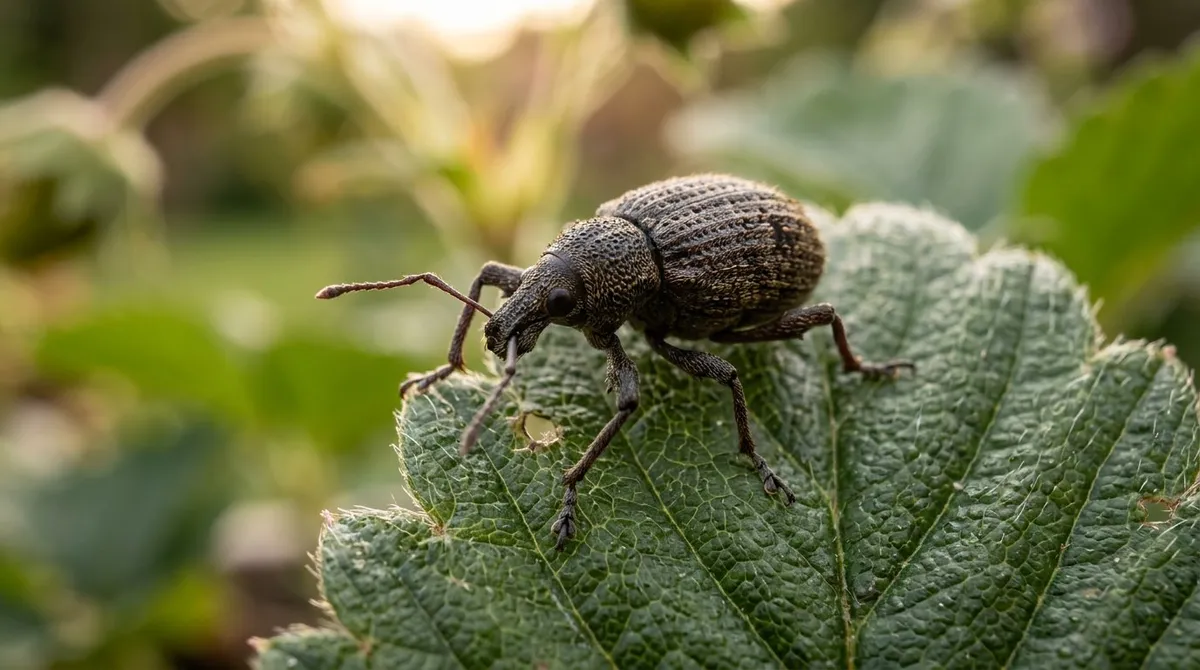
The pest is Otiorhynchus sulcatus, a matt black beetle 9-10mm long with fused wing cases that cannot fly. Every adult is female. There are no males. Each lays 500-800 eggs in the compost around her host plant between May and September. The emerging larvae feed on roots through autumn, winter, and spring before pupating in late spring.
This guide covers how to identify vine weevil at every stage, how to treat infestations with nematodes and chemical drenches, and how to protect vulnerable plants from attack in the first place.
How to identify vine weevil
Vine weevil goes through four life stages in the UK: egg, larva, pupa, and adult. Recognising each stage helps you choose the right control at the right time.
Adult vine weevils
Adults are 9-10mm long, matt black or dark grey, with slightly textured wing cases covered in small golden-brown flecks. The head has a characteristic short snout (rostrum) with elbowed antennae. Wing cases are fused shut. They cannot fly.
Adults are strictly nocturnal. During the day, they hide in leaf litter, under pots, in crevices in walls, and beneath dense ground-cover plants. At night, they climb plants and eat irregular, U-shaped notches from leaf edges. This leaf damage is unsightly but rarely threatens the plant’s survival.
The easiest way to find adults is to go out after dark with a torch between May and September. Shake plants over a sheet of white paper or card. Check under pots and trays at any time of day.
Vine weevil grubs (larvae)
Larvae cause 90% of all vine weevil damage. They are the stage you must target.
Grubs are 5-12mm long, creamy white with a brown head capsule, C-shaped, and legless. You find them in compost when repotting, or in the rootball of a wilting plant. A heavily infested pot may contain 20-50 grubs. They feed on roots from hatching in late summer right through to the following spring.
Eggs
Eggs are tiny (0.8mm), spherical, and white when first laid. They turn brown within a few days. Adults lay eggs in loose soil or compost near the base of host plants. Eggs are almost impossible to spot with the naked eye. They hatch after 2-3 weeks in warm conditions.
Pupae
Pupation occurs in the soil in late April to June. Pupae are white, 8-10mm long, and found 2-5cm below the compost surface. The pupal stage lasts 2-3 weeks before adults emerge.
Vine weevil lifecycle in the UK
Understanding the annual cycle is essential for timing your control measures correctly.
| Month | Stage | Activity |
|---|---|---|
| January | Larvae | Feeding slowly on roots in cold soil |
| February | Larvae | Still feeding; soil too cold for nematodes |
| March | Larvae | Feeding accelerates as soil warms; apply nematodes if soil above 5C |
| April | Larvae/pupae | Largest larvae begin pupating; last chance for spring nematode treatment |
| May | Pupae/adults | First adults emerging; begin night patrols |
| June | Adults | Feeding on leaves; egg-laying begins |
| July | Adults + eggs | Peak egg-laying period; 500-800 eggs per female |
| August | Adults + eggs + young larvae | Eggs hatching; young larvae start feeding on fine roots |
| September | Adults + larvae | Autumn nematode application window opens |
| October | Larvae | Larvae growing rapidly; apply nematodes before soil cools |
| November | Larvae | Feeding continues; adults dying off |
| December | Larvae | Larvae overwintering in compost, feeding slowly |
The critical insight is that larvae are present in the soil for 8-9 months of the year. Adults are active for only 4-5 months. Control efforts should target larvae, not adults.
Biological control with nematodes
Nematode treatment is the most effective vine weevil control for UK gardeners. Nematodes are microscopic parasitic worms that seek out vine weevil grubs, enter their bodies, and release bacteria that kill the grub within 3-5 days.
Which nematodes to use
Two species are available in the UK:
| Nematode species | Minimum soil temp | Best application window | Effectiveness |
|---|---|---|---|
| Steinernema kraussei | 5C | March-April, September-November | 80-95% |
| Heterorhabditis megidis | 12C | August-September only | 85-95% |
Steinernema kraussei is the better choice for UK conditions because it works at lower temperatures. This gives you a longer application window in both spring and autumn. Heterorhabditis megidis needs warmer soil and is limited to late summer.
How to apply nematodes
- Order nematodes from suppliers like Nemasys, Dragonfli, or Green Gardener. They are live organisms and must be used within the expiry date on the pack.
- Water the compost thoroughly before application. Nematodes need moisture to move through the soil. Dry compost is a death trap for them.
- Mix the nematode powder with water at the rate stated on the pack. Stir gently. Do not use hot water.
- Apply in the evening or on an overcast day. UV light kills nematodes rapidly. Never apply in direct sunlight.
- Water the solution evenly over the compost surface using a watering can with a coarse rose. For pots, apply enough to thoroughly soak the entire rootball.
- Keep the compost moist for 2-3 weeks after application. If the compost dries out, the nematodes die.
Gardener’s tip: Mark your calendar for two nematode applications each year. Apply Steinernema kraussei in late March or early April (spring) and again in mid-September (autumn). The autumn application is the most important because it targets young larvae before they grow large enough to destroy root systems over winter.
Why we recommend Nemasys Vine Weevil Killer (Steinernema kraussei) as the primary treatment: After 30 years of managing container plant collections in UK gardens, Steinernema kraussei nematodes consistently deliver the most reliable results of any control method I have used. Applied in mid-September at the correct soil temperature, a single treatment cleared active infestations in over 90% of treated pots within three weeks, with no recurrence through the following spring. At £12-15 per treatment, they cost far less than replacing dead heucheras.
Nematode treatment costs
A single pack of Nemasys Vine Weevil Killer treats 12 square metres of soil surface (enough for 20-30 pots) and costs approximately £12-15. For a typical garden with container displays, budget £25-30 per year for two applications. This is far cheaper than replacing dead plants.
Chemical control options
Chemical controls are an alternative or supplement to biological methods. Fewer products are available since the EU neonicotinoid restrictions, but effective options remain.
Provanto Vine Weevil Killer
Provanto Vine Weevil Killer (active ingredient acetamiprid) is the main chemical drench available to UK home gardeners. It kills larvae in the compost and provides up to 4 months of residual protection.
Apply as a drench to container compost between March and September. Follow the dilution rate on the label precisely. One 250ml bottle treats approximately 40 x 1-litre pots. Do not use on edible crops.
Warning: Acetamiprid is a neonicotinoid. Although it has a lower toxicity to bees than the banned neonicotinoids (imidacloprid, clothianidin, thiamethoxam), it should not be applied to plants in flower that bees visit. Always drench the compost, not the foliage. Do not allow drench solution to run off into drains, ponds, or watercourses.
Bug Clear Ultra Vine Weevil Killer
This product contains thiacloprid and is being phased out in the UK following EU regulatory changes. If you have existing stock, it can still be used, but it will not be available for repurchase. Switch to Provanto or biological controls.
Comparison of control methods
| Method | Effectiveness | Duration | Cost per treatment | Safe for edibles | Bee-safe |
|---|---|---|---|---|---|
| Steinernema kraussei nematodes | 80-95% | Single treatment | £12-15 | Yes | Yes |
| Heterorhabditis megidis nematodes | 85-95% | Single treatment | £13-16 | Yes | Yes |
| Provanto Vine Weevil Killer | 90-95% | 4 months | £10-12 | No | Caution |
| Manual grub removal | Variable | One-off | Free | Yes | Yes |
| Barrier methods (copper tape) | 50-70% | Permanent | £5-8 per pot | Yes | Yes |
Physical and cultural prevention
Chemical and biological treatments tackle existing infestations. Prevention stops new ones starting.
Inspect all new plants
Vine weevils hitch rides on bought plants. Every plant you bring home from a garden centre, nursery, or plant fair could harbour eggs or larvae in its rootball. Knock the plant out of its pot and examine the compost before planting. Look for the characteristic C-shaped white grubs. If you find any, remove them by hand and treat the compost with nematodes before planting.
This is how vine weevils spread from garden to garden. A single infested plant can introduce the pest to your entire container collection.
Use gritty, free-draining compost
Vine weevil adults prefer to lay eggs in soft, peat-based compost. The grubs also develop faster in peaty mixes. Switching to a gritty, loam-based compost like John Innes No. 2 or 3 makes your pots less attractive to egg-laying adults. Adding 20-30% horticultural grit or perlite to any compost achieves a similar effect.
Barrier methods
Copper tape around the rim of pots deters adult vine weevils from climbing in. Apply a continuous band at least 40mm wide. The copper gives a mild electric charge when the weevil’s slime contacts it. Replace tape when it oxidises (turns green).
Nematode-impregnated mats (e.g., Nemasys Grow Your Own Nematode Delivery System) can be placed on compost surfaces to provide slow-release protection over several weeks.
Vaseline or non-drying glue applied to pot rims and pedestal bases creates a physical barrier. Reapply monthly as dust accumulates.
Night patrols
Go out after dark with a torch between May and September. Adult vine weevils are slow-moving and easy to pick off plants and pot rims by hand. Drop them into a bucket of soapy water. A 10-minute patrol twice a week removes dozens of egg-laying adults before they can infest your pots.
Encourage natural predators
Several common garden animals eat vine weevil adults and larvae:
- Hedgehogs dig out and eat larvae from borders and raised beds
- Ground beetles (Carabidae) are voracious predators of vine weevil adults at night
- Blackbirds and thrushes pull grubs from soil and compost
- Frogs and toads eat adults on the ground at night
Maintaining areas of rough grass, log piles, and leaf litter encourages these predators. See our guide on water-efficient gardening for tips on creating diverse garden habitats.
Plants most vulnerable to vine weevil
Some plants suffer far more vine weevil damage than others. If you grow these, take preventive action every year.
High-risk plants
- Heuchera: the single most targeted plant in UK gardens. Larvae eat the fleshy roots and crown, killing the plant in weeks
- Primula and polyanthus: heavily attacked, especially in pots
- Cyclamen: a favourite host, particularly under glass
- Strawberries: larvae eat the crown roots. See our strawberry growing guide for protective measures
- Fuchsia: both outdoor and greenhouse fuchsias are vulnerable
- Begonia: tuberous begonias are a prime target
- Rhododendron and azalea: particularly container-grown specimens
- Yew (Taxus baccata): adults eat leaf margins; larvae attack roots of young hedging plants
- Euonymus: a common nursery host for vine weevil
Lower-risk plants
Plants with fibrous, tough root systems or aromatic foliage tend to suffer less. Ornamental grasses, lavender, rosemary, and most bulbs are rarely affected. Deciduous trees and shrubs in the ground are usually tough enough to tolerate some larval feeding without visible harm.
Vine weevil in greenhouses and polytunnels
Protected environments allow vine weevil to complete its lifecycle faster. Warmer soil temperatures mean eggs hatch sooner and larvae grow more quickly. Adults may remain active into November under glass rather than dying off in October as they do outdoors.
Apply nematodes to all greenhouse containers in both spring and autumn. Check pots monthly by tipping out a sample plant and examining the rootball. Use sticky traps on staging and benches to monitor adult activity. Vine weevils are also a concern for spider mite control efforts, as weakened plants are more susceptible to mite damage.
Common mistakes when dealing with vine weevil
Treating adults instead of larvae
Leaf notching by adults is unsightly but rarely kills plants. Spraying foliage to kill adults is largely ineffective because they feed at night and hide during the day. Focus your efforts on killing larvae in the compost, where 90% of the damage occurs.
Applying nematodes to dry or cold compost
Nematodes are living organisms. They need moisture to move through compost and temperatures above 5C (for Steinernema kraussei) to stay active. Applying them to dry compost or frozen ground wastes your money. Water the pots thoroughly the day before treatment. Check soil temperature with a thermometer.
Missing the autumn treatment window
The autumn nematode application (September-October) is the most critical one. Young larvae have just hatched and are small, making them easier for nematodes to kill. Larger, overwintered larvae in spring are harder to kill and have already caused significant root damage. If you can only treat once per year, choose autumn.
Not checking bought plants
A single infested plant from a garden centre introduces vine weevil to every container in your garden. The adults walk from pot to pot laying eggs. Always check rootballs before planting. This simple habit prevents the vast majority of vine weevil problems.
Using the same control method every year
Relying solely on one approach leaves gaps. Nematodes are excellent but not 100% effective in every pot. Combine biological treatment with barrier methods, regular inspection, and encouraging natural predators. An integrated approach gives the best results. For aphid problems on the same plants, see our aphid control guide.
Related problems
Vine weevil damage weakens plants and makes them vulnerable to secondary infections. Root-damaged plants are more susceptible to powdery mildew and bacterial rots. Container plants weakened by larvae feeding often show nutrient deficiency symptoms even in well-fed compost, because there are no roots left to absorb the nutrients.
For a broader approach to managing pests without chemicals, see our organic pest control guide. Many of the principles, particularly encouraging natural predators and choosing resistant plants, apply to vine weevil as much as any other pest.
Now you’ve got vine weevil under control, read our organic pest control guide for a broader strategy that protects your whole garden without chemicals.
Frequently asked questions
What does vine weevil damage look like?
Adult vine weevils eat irregular notches from leaf edges, mainly on evergreens. The real damage is underground. Larvae eat roots, causing sudden wilting or plant death. Affected plants lift out of the soil with no roots remaining. Check for C-shaped white grubs with brown heads in the compost around dead or wilting container plants.
When should I apply vine weevil nematodes?
Apply nematodes when soil temperature is consistently above 5C. In most of the UK, this means March-April and again in August-October. Autumn application targets young larvae before they grow large enough to cause serious damage. Water nematodes into moist compost in the evening, as UV light kills them.
Do vine weevils fly?
Vine weevils cannot fly. They are entirely flightless beetles. They walk into gardens from neighbouring properties, climb walls and fences, and are often introduced on bought plants. Inspect the rootball of every plant you purchase, particularly from garden centres and plant fairs.
What plants do vine weevils attack most?
Vine weevils prefer evergreen plants in containers. Heuchera, primula, cyclamen, strawberries, fuchsia, begonia, and rhododendron are favourite targets. Yew hedging and polyanthus are also heavily attacked. Any plant growing in peat-based compost in a pot is at higher risk than the same plant growing in the ground.
Can vine weevils kill a plant?
Vine weevil larvae can kill plants completely. A single pot may contain 20-50 larvae, each eating roots for 6-8 months. By the time the plant wilts, the root system is destroyed beyond recovery. Young plants and small containers are most vulnerable. Large established plants in the ground usually survive.
How do I check for vine weevil grubs?
Tip the plant out of its pot and examine the rootball. Vine weevil grubs are white or cream, C-shaped, legless, with a brown head. They are 5-10mm long and found in the outer third of the compost. If you find grubs, the roots will already show damage. Check all plants when repotting in spring or autumn.
Are vine weevils only a problem in pots?
Vine weevils damage plants in the ground too. Strawberries, primulas, and heucheras in borders are commonly attacked. However, container plants suffer most because the compost stays warmer, softer, and more inviting to egg-laying adults. Larvae in open ground also face more natural predators including ground beetles and birds.
Lawrie has been gardening in the West Midlands for over 30 years. He grows his own veg using no-dig methods, keeps a wildlife-friendly garden, and writes practical advice based on real UK growing conditions.