Best Plants for Butterflies in the UK
Top nectar and caterpillar food plants for UK butterflies. Covers 59 species, seasonal planting, host plants, and garden design for butterflies.
Key takeaways
- The UK has 59 butterfly species, with over three-quarters declining since the 1970s
- Buddleia is the single best nectar plant, attracting up to 20 butterfly species at peak
- Stinging nettles feed caterpillars of four common species including red admiral and small tortoiseshell
- Nectar plants feed adults, but caterpillar food plants are essential for breeding populations
- A sunny, sheltered border with flat stones for basking attracts the most butterflies
- Avoiding pesticides is critical because caterpillars are highly sensitive to all insecticides
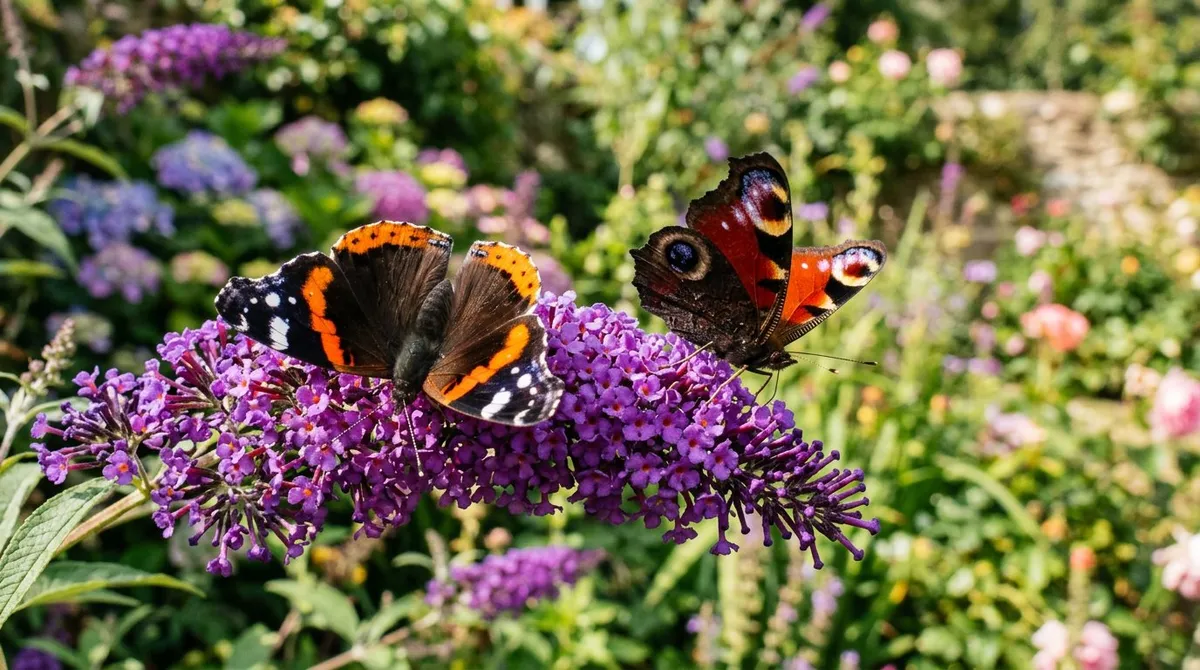
The UK has 59 butterfly species that breed here or visit regularly. It is a number that sounds healthy until you learn that over three-quarters of them have declined since the 1970s. Habitat loss is the main driver. Intensive farming, urban expansion, and tidier gardens have removed the wildflowers, hedgerows, and rough grassland that butterflies depend on. The good news is that gardens can fill part of that gap. Collectively, UK gardens cover more area than all the nature reserves combined.
Attracting butterflies means understanding two distinct needs. Adult butterflies need nectar plants for energy. But nectar alone does not sustain populations. Caterpillars need specific food plants to grow. A garden with buddleia but no nettles attracts passing adults but supports no breeding. Planting both nectar sources and caterpillar host plants creates a garden where butterflies complete their entire life cycle. This guide covers both, season by season.
Nectar plants: feeding adult butterflies
Adult butterflies drink nectar through a long, coiled proboscis. They are attracted to brightly coloured, flat-topped or tubular flowers in sunny, sheltered positions. Butterflies are cold-blooded and need sun-warmed air to fly. A shaded border, however well planted, will see few visitors.
The top nectar plants
Buddleia (Buddleja davidii) is the single best butterfly plant in the UK. A mature buddleia in full flower from July to September attracts up to 20 species. Peacocks, red admirals, painted ladies, small tortoiseshells, commas, and brimstones all feed on it. Plant in full sun. Prune hard in March to 60cm to keep compact and produce the biggest flower spikes.
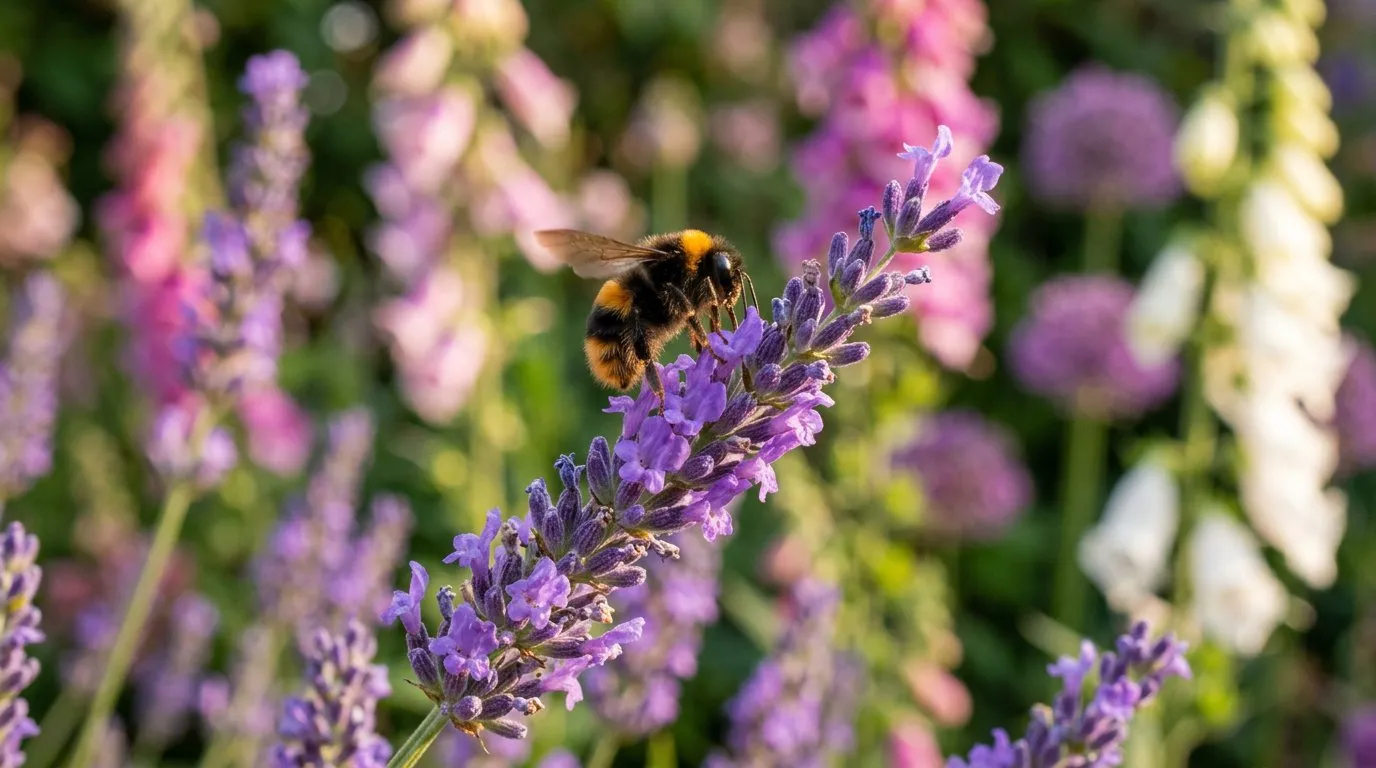
Lavender (Lavandula angustifolia) flowers from June to August and attracts both butterflies and bees. ‘Hidcote’ and ‘Munstead’ are the best UK varieties. Plant in well-drained soil in full sun. Our full lavender growing guide covers planting and care.
Verbena bonariensis produces clusters of tiny purple flowers on tall, wiry stems from July to October. Butterflies land on the flat flower heads and feed for long periods. Self-seeds freely. Plant in groups of 5-7 for the best visual and nectar impact.
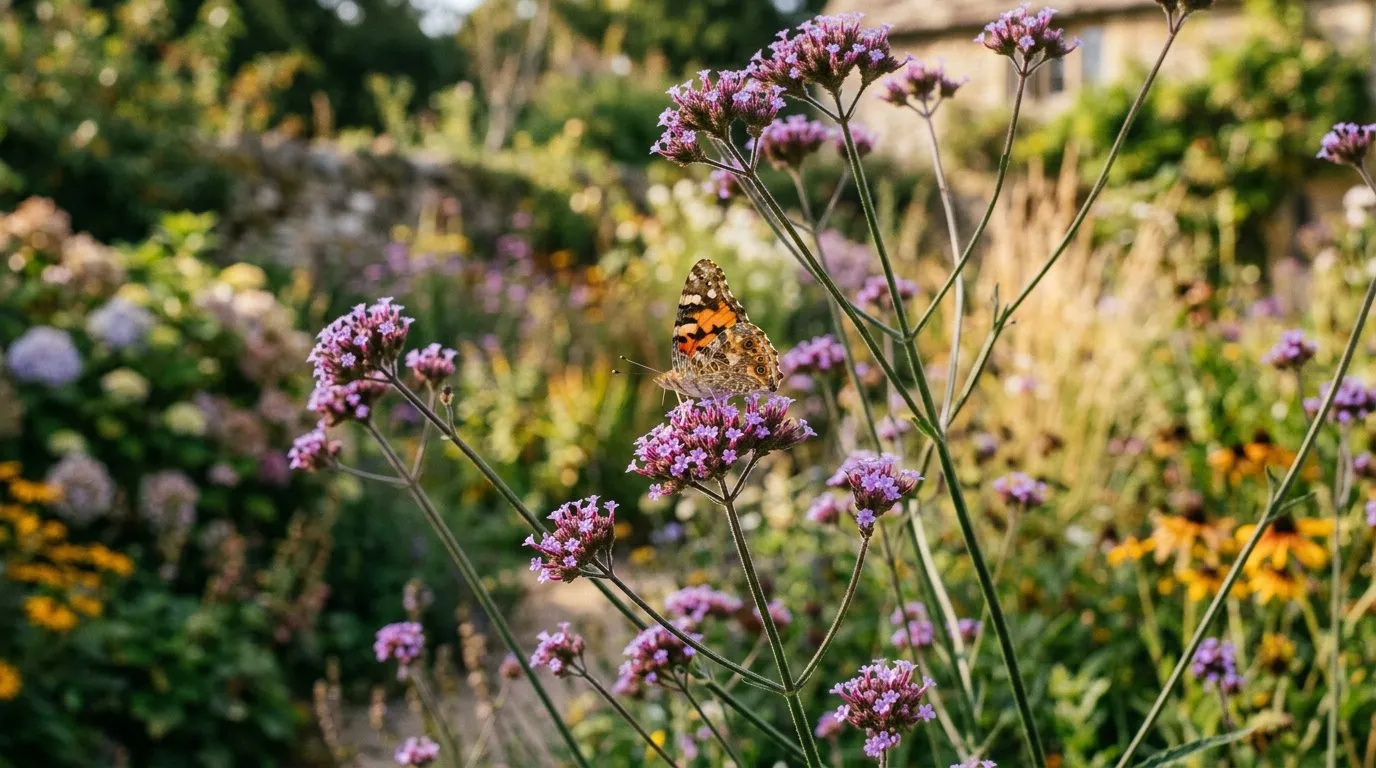
Verbena bonariensis is a magnet for painted ladies and other butterflies from July to October.
Sedum (Hylotelephium spectabile) flowers from September onwards, providing essential late-season nectar. Red admirals and commas feed heavily on sedum before hibernation or migration. ‘Herbstfreude’ (Autumn Joy) is the standard variety.
Marjoram (Origanum vulgare) is a native herb that attracts more butterfly species per square metre than almost any other plant. The flat pink flower heads from July to September are covered in small blues, browns, and skippers. Thrives on poor, dry soil in full sun.
Best nectar plants by season
Butterflies fly from March to October in the UK. Planting for continuous nectar across that period is essential. A gap in flowering means a gap in food.
Spring nectar (March - May)
Spring is critical for butterflies emerging from hibernation. Brimstones, commas, peacocks, and small tortoiseshells wake hungry and need immediate food.
- Aubrieta - cascading purple flowers from March. Grows over walls and path edges. Brimstones and orange tips visit regularly.
- Honesty (Lunaria annua) - purple or white flowers from April. A vital nectar source for orange tip butterflies. Self-seeds freely.
- Bluebell - native bluebells flower in April and May. Woodland edge species like the speckled wood feed on them.
- Wallflower (Erysimum) - flowers from March to May. Rich nectar source in a range of warm colours. Biennial.
Summer nectar (June - August)
The peak butterfly season. The widest range of nectar plants is needed now.
- Buddleia - the main event from July. See above.
- Lavender - June to August. Reliable, drought tolerant, and long-flowering.
- Marjoram - July to September. Outstanding for smaller species.
- Verbena bonariensis - July to October. Tall, airy, and a butterfly magnet.
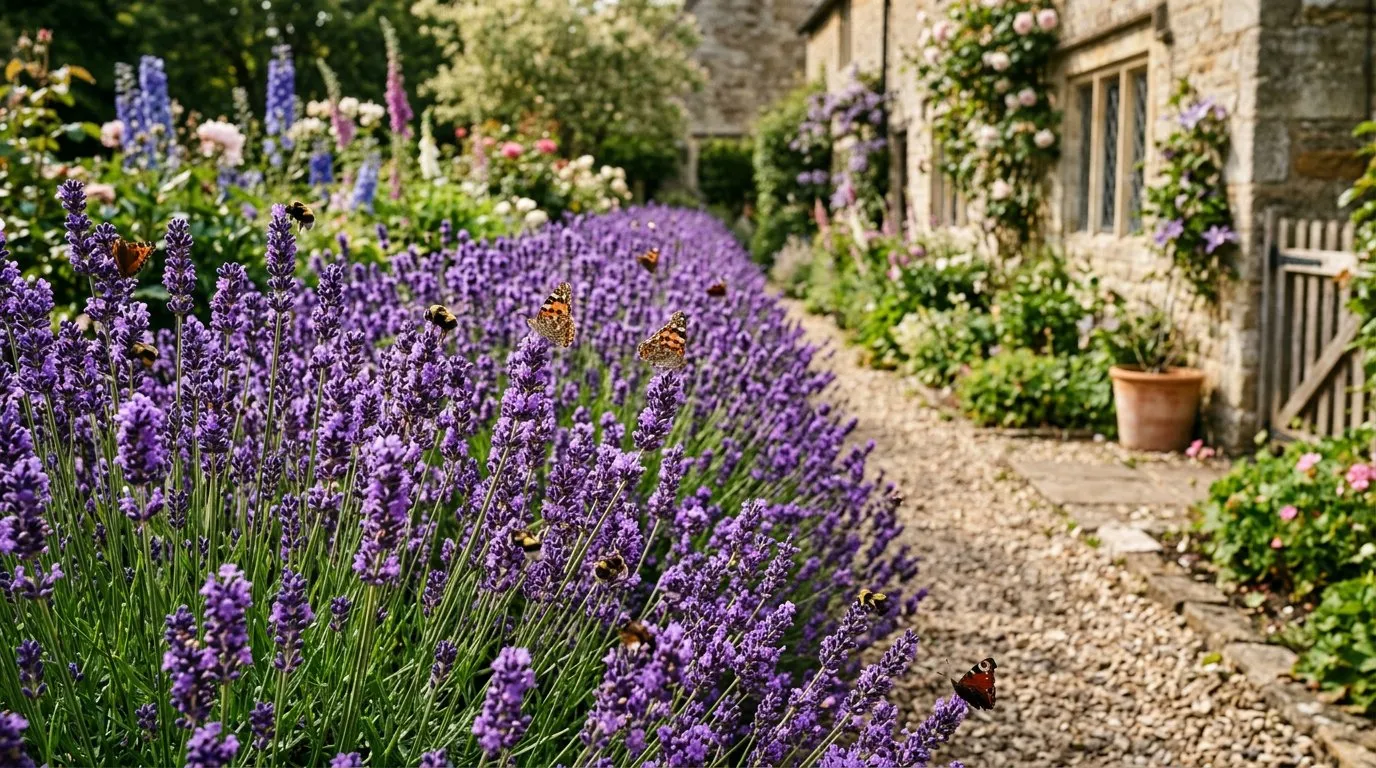
A long lavender border in full summer bloom provides weeks of nectar for butterflies and bees alike.
- Scabious (Knautia arvensis) - purple pincushion flowers from June. A favourite of marbled whites and meadow browns.
- Red valerian (Centranthus ruber) - flowers all summer on walls and dry banks. Painted ladies and hummingbird hawk-moths visit frequently.
Autumn nectar (September - October)
Late nectar fuels hibernation and migration. Red admirals migrating south and peacocks fattening for hibernation depend on autumn flowers.
- Sedum - September to October. The most important late nectar source.
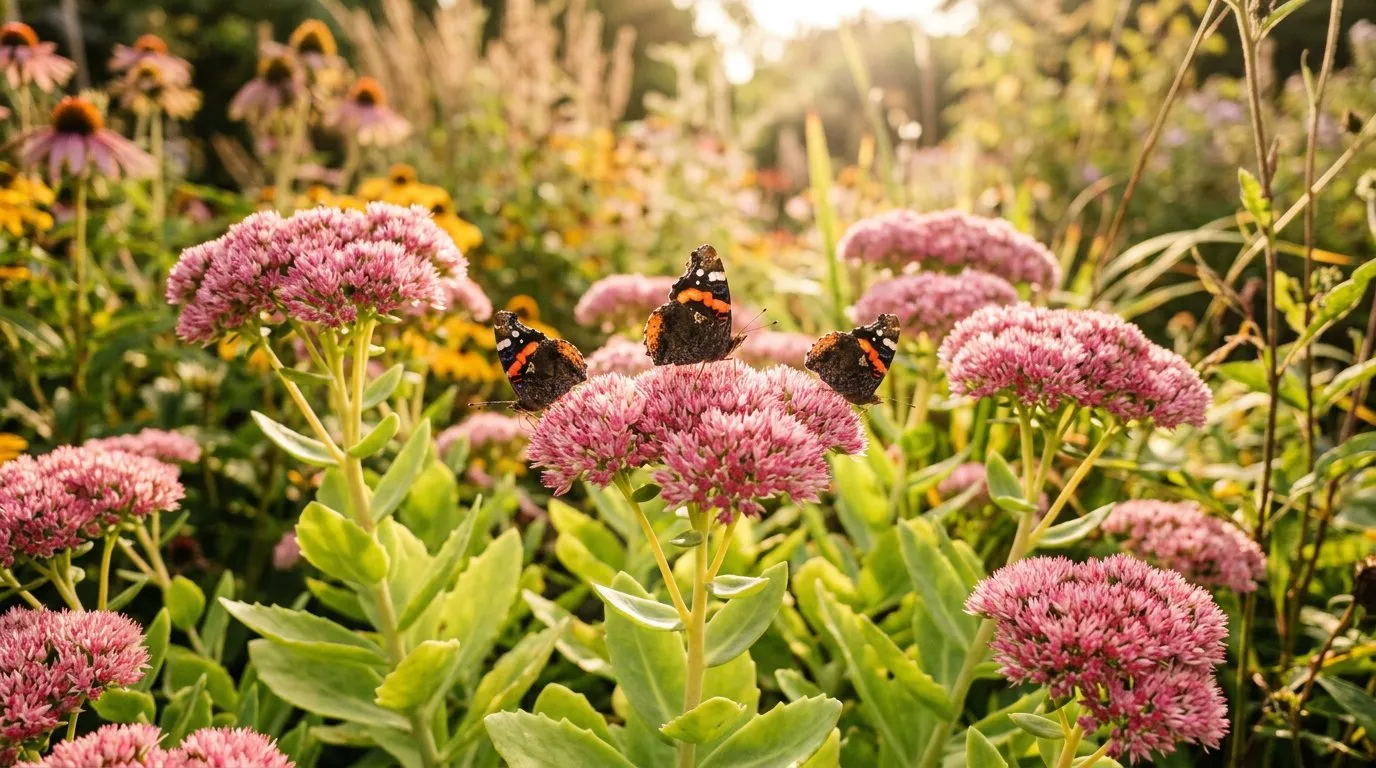
Sedum Autumn Joy is the most important late-season nectar plant, fuelling red admirals before migration.
- Ivy (Hedera helix) - flowers in October. The final nectar source before winter. Red admirals, commas, and speckled woods feed on ivy flowers.
- Michaelmas daisies - September to October. Flat flower heads provide easy landing platforms.
- Single dahlias - flower until the first hard frost. ‘Bishop of Llandaff’ is a reliable single-flowered form.
| Season | Top nectar plants | Key butterfly species |
|---|---|---|
| Spring (Mar-May) | Aubrieta, honesty, wallflower, bluebell | Brimstone, orange tip, comma, peacock |
| Summer (Jun-Aug) | Buddleia, lavender, marjoram, verbena, scabious | Painted lady, red admiral, small tortoiseshell, meadow brown |
| Autumn (Sep-Oct) | Sedum, ivy, Michaelmas daisy, single dahlia | Red admiral, comma, speckled wood |
Caterpillar food plants: the missing piece
This is where most butterfly gardens fall short. Nectar plants feed adults. But without the specific plants that caterpillars eat, butterflies cannot breed. Every UK butterfly species has a limited set of food plants its caterpillars accept. Some use only a single plant species.
Stinging nettles: the most important food plant
Stinging nettles (Urtica dioica) feed the caterpillars of four of the UK’s most common butterflies: small tortoiseshell, red admiral, painted lady, and comma. No other single plant supports as many species. A patch of nettles just 2 metres square is enough for multiple broods.
Grow nettles in a sunny position. Caterpillars need warmth to develop. A nettle patch in shade produces fewer butterflies. Cut half the patch to the ground in June. The fresh regrowth provides tender leaves for the second brood of caterpillars in July and August.
Nettles also support a healthy compost system. They are rich in nitrogen and make an excellent compost activator when cut.
Other key caterpillar food plants
Lady’s smock (Cardamine pratensis) is the sole food plant for orange tip caterpillars. It flowers in damp meadows and lawn edges from April. Let it self-seed in a damp patch of lawn. Garlic mustard (Alliaria petiolata) is an alternative host plant for orange tips.
Buckthorn (Rhamnus cathartica) is the food plant for brimstone caterpillars. Alder buckthorn (Frangula alnus) is also used. Plant one in a native hedgerow or woodland edge within your garden.
Holly and ivy feed holly blue caterpillars. The spring generation feeds on holly flower buds. The summer generation feeds on ivy flower buds. Leaving both plants unclipped supports this species. Holly and ivy also provide excellent bird habitat.
Grasses feed many species. Meadow brown, ringlet, gatekeeper, speckled wood, and wall brown caterpillars all eat native grasses. A patch of uncut grass or a wildflower lawn provides habitat. Leave areas of long grass from March to October.
Bird’s-foot trefoil (Lotus corniculatus) feeds common blue and dingy skipper caterpillars. It grows naturally in short grass on poor soil. Do not feed or improve the soil where it grows.
Common UK butterflies and their food plants
This table shows the most frequently seen garden butterflies, their caterpillar food plants, and their preferred nectar sources. Use it to plan a planting scheme that supports both life stages.
| Butterfly | Caterpillar food plant | Adult nectar plants | Flight period |
|---|---|---|---|
| Small tortoiseshell | Stinging nettle | Buddleia, sedum, marjoram | Mar - Oct |
| Red admiral | Stinging nettle | Buddleia, ivy, sedum, rotting fruit | May - Nov |
| Painted lady | Stinging nettle, thistles | Buddleia, lavender, red valerian | May - Oct |
| Comma | Stinging nettle, hop | Buddleia, ivy, bramble | Mar - Oct |
| Peacock | Stinging nettle | Buddleia, marjoram, dandelion | Mar - Oct |
| Brimstone | Buckthorn, alder buckthorn | Buddleia, bluebell, red campion | Mar - Oct |
| Orange tip | Lady’s smock, garlic mustard | Honesty, bluebell, dame’s violet | Apr - Jun |
| Holly blue | Holly buds (spring), ivy buds (autumn) | Holly, ivy, bramble | Apr - Sep |
| Meadow brown | Native grasses (fescues, bents) | Marjoram, bramble, scabious | Jun - Sep |
| Speckled wood | Couch grass, false brome | Bramble, aphid honeydew | Apr - Oct |
| Common blue | Bird’s-foot trefoil | Marjoram, clover, scabious | May - Sep |
| Large white | Brassicas, nasturtium | Buddleia, lavender, red valerian | Apr - Oct |
| Small white | Brassicas, nasturtium | Lavender, marjoram, aubrieta | Mar - Oct |
| Gatekeeper | Fine grasses (fescues, bents) | Marjoram, bramble, ragwort | Jul - Aug |
Designing a butterfly-friendly garden
You do not need acres to attract butterflies. A 3m x 3m sunny border with the right plants attracts 10-15 species from April to October. The key elements are sunlight, shelter, nectar, food plants, and the absence of pesticides.
Sun and shelter
Butterflies fly only when warm. A south-facing border backed by a wall or hedge creates a sun trap. Reflected heat from walls and paving raises the local temperature. A sheltered position out of wind is essential. Butterflies cannot feed in exposed, breezy sites. Even a small front garden with a south-facing aspect works well.
Basking spots
Butterflies bask on flat, sun-warmed surfaces to raise their body temperature. Flat stones, paving slabs, bare soil, and low walls all serve as basking platforms. Place a few flat stones in the sunniest part of the border. You will see butterflies spreading their wings on them on cool mornings.
Avoid pesticides completely
This is non-negotiable for a butterfly garden. All insecticides kill caterpillars. Pyrethrin, neem, and other organic sprays are just as lethal as synthetic chemicals. Herbicides remove food plants. A butterfly garden must be entirely chemical-free. Accept some caterpillar damage on brassicas. Use companion planting and physical barriers instead. Net cabbages if large white caterpillars are a problem, but leave all other caterpillars alone.
A sample butterfly border (3m x 3m)
Back: 1x buddleia (pruned hard annually), 3x verbena bonariensis Middle: 5x lavender, 3x marjoram, 3x scabious, 1x sedum ‘Herbstfreude’ Front: 5x aubrieta, dwarf wallflowers, 3x bird’s-foot trefoil Nearby: A 2m x 2m nettle patch in a sunny corner. A flat basking stone.
This combination provides nectar from March to October and caterpillar food for at least five common species. Total cost is under thirty pounds in plug plants and seeds. For broader planting ideas, our garden ideas guide has options at every price point.
What not to plant
Not all colourful flowers attract butterflies. Some popular garden plants offer nothing.
Roses (most varieties) produce little accessible nectar. The complex petal structure blocks the butterfly’s proboscis. Single wild roses are better, but still not among the top nectar plants.
Bedding plants such as petunias, busy lizzies, and begonias are bred for colour, not nectar. They provide almost nothing for butterflies. Replace them with cosmos, calendula, and nasturtiums for a colourful annual display that also feeds wildlife.
Double flowers of any species are poor. Extra petals obstruct nectar access. Always choose single-flowered forms where the flower centre is visible.
Exotic grasses such as miscanthus and pampas are not eaten by any UK butterfly caterpillar. Native grasses are the food plants. Leave a strip of uncut native grass rather than planting ornamentals.
Helping rare and declining species
Some UK butterflies need very specific conditions. If you live near colonies of rarer species, targeted planting helps.
Small copper caterpillars eat common sorrel and sheep’s sorrel. Both grow on poor, acidic soil. If these plants grow naturally near you, leave them undisturbed.
Painted lady butterflies migrate from North Africa each spring. Their caterpillars eat nettles and thistles. In good migration years, populations boom. A nettle patch supports their UK breeding cycle.
Wall brown butterflies have declined by 36% since the 1970s. Their caterpillars eat fine grasses on walls, banks, and dry slopes. Leaving grass uncut on south-facing banks helps this species.
Butterfly Conservation tracks population trends through the UK Butterfly Monitoring Scheme. The Big Butterfly Count each July and August is the easiest way to contribute. Recording what flies in your garden helps scientists track population changes across the country.
Why we recommend buddleia as your first butterfly plant: After 30 years of planting wildlife gardens across Britain, buddleia delivers results that nothing else matches in the first season. In the first summer after planting a single Buddleja davidii ‘Black Knight’ pruned hard to 60cm in March, I counted 17 species visiting the same bush on a warm August morning, including three painted ladies, two peacocks, and a comma — all within a two-hour window. No other plant I have grown produces that kind of concentrated wildlife activity so quickly.
Now you’ve mastered the best plants for butterflies, read our guide on bee-friendly garden plants for the next step.
Month-by-month butterfly calendar
| Month | What to expect | Garden tasks |
|---|---|---|
| March | Brimstone, comma, peacock emerge from hibernation | Plant aubrieta and wallflowers in sun |
| April | Orange tips appear. Holly blues on the wing | Leave lady’s smock and garlic mustard to flower |
| May | Painted ladies arrive from the continent | Check nettles for caterpillar colonies |
| June | Meadow browns, large skippers in long grass | Sow marjoram and scabious if not already planted |
| July | Peak season. Buddleia in full bloom | Deadhead buddleia to extend flowering. Big Butterfly Count |
| August | Gatekeepers, brown argus, common blues | Cut half the nettle patch for second brood regrowth |
| September | Red admirals on sedum and ivy. Commas feeding up | Leave seed heads and fallen fruit |
| October | Speckled woods still flying. Ivy in flower | Last nectar source before winter. Leave ivy unclipped |
Frequently asked questions
What is the best plant for butterflies UK?
Buddleia is the best single nectar plant. A mature bush in full July flower attracts up to 20 species at once, including peacock, red admiral, painted lady, small tortoiseshell, and comma. For caterpillar food, stinging nettles are the most important plant, supporting four common species that cannot breed without them.
Do butterflies need nettles?
Yes, nettles are essential for breeding populations. Small tortoiseshell, red admiral, painted lady, and comma caterpillars feed exclusively on stinging nettles. Without a nettle patch, these species visit for nectar but cannot complete their life cycle in your garden. A sunny 2m x 2m patch is sufficient for multiple broods.
How do I attract butterflies to a small garden?
Plant buddleia, lavender, and marjoram in the sunniest, most sheltered spot. Even a single square metre attracts species if it faces south and is out of wind. Add a flat basking stone and a small nettle patch behind a shed or fence. Avoid all pesticides. Container-grown verbena and lavender on a sunny patio work too.
When do butterflies appear in UK gardens?
Brimstone and comma butterflies emerge from hibernation in March on warm days. Orange tips appear in April. Painted ladies and red admirals arrive from the continent from May. Peak activity runs from June to August. Late species like the speckled wood fly into October in mild autumns.
Are pesticides harmful to butterflies?
Yes, all insecticides kill caterpillars and adult butterflies on contact. This includes organic pyrethrin and neem sprays. Herbicides destroy food plants like nettles and wildflowers. The single most effective action for butterflies is stopping all pesticide use in the garden. Use companion planting and physical barriers for pest control instead.
What flowers do red admirals like?
Red admirals take nectar from buddleia, ivy flowers, sedum, Michaelmas daisies, and marjoram. They also feed on rotting fruit, especially windfall apples and pears in autumn. In spring, they visit aubrieta and bluebell. Red admiral caterpillars feed on stinging nettles, making nettles essential for breeding.
Should I deadhead buddleia for butterflies?
Yes, removing spent flower spikes encourages new growth and extends the flowering season by 4-6 weeks. Cut each faded spike back to the next pair of side shoots. In March, prune the whole bush hard to 60cm above ground. This produces the biggest, most nectar-rich flower spikes in summer.
For detailed species identification, flight period data, and conservation status of all 59 UK butterfly species, Butterfly Conservation maintains the most authoritative UK reference.
Lawrie has been gardening in the West Midlands for over 30 years. He grows his own veg using no-dig methods, keeps a wildlife-friendly garden, and writes practical advice based on real UK growing conditions.