Bird Feeding Guide by Season UK
Month-by-month guide to feeding garden birds in the UK. Covers food types, breeding season rules, moulting needs, and winter survival tips.
Key takeaways
- Winter birds need high-fat food before 8am to survive freezing nights
- Breeding season March to August requires mealworms and soft food for fledglings
- Moulting season July to September demands extra protein for feather regrowth
- Annual bird feeding costs fifty to eighty pounds for a typical UK garden
- Sunflower hearts are the best year-round food, eaten by over 90% of species
- Migrant species like swallows, house martins, and fieldfares change the garden calendar
Feeding garden birds is not a winter-only activity. Each month brings different species, different nutritional demands, and different risks. Get the timing wrong and you can harm the birds you are trying to help. Whole peanuts in May kill fledglings. Fat-only diets in August leave moulting birds short of protein. The BTO Garden BirdWatch tracks seasonal shifts in garden bird populations across the UK.
This guide covers what to feed, when to feed it, and which species to expect each month. For advice on feeder types, nest boxes, and planting for birds, see our main guide to attracting birds to your garden. If you are building a broader wildlife garden, our guide to creating a wildlife garden covers the full picture.
How much does bird feeding cost per year?
A typical UK garden feeding station costs fifty to eighty pounds per year to maintain. Buying in bulk cuts costs significantly. Here is a breakdown of common foods and their annual costs.
| Food | Pack size | Cost per pack | Lasts | Annual cost |
|---|---|---|---|---|
| Sunflower hearts | 12.5kg sack | Fifteen pounds | 6-8 weeks | Ninety to one hundred and twenty pounds |
| Fat balls (no nets) | 50 pack | Eight pounds | 4-6 weeks | Seventy to one hundred pounds |
| Mealworms (dried) | 1kg bag | Ten pounds | 8-12 weeks | Forty to sixty-five pounds |
| Nyjer seed | 2kg bag | Five pounds | 6-8 weeks | Thirty to forty-five pounds |
| Mixed seed (quality) | 12.5kg sack | Twelve pounds | 4-6 weeks | One hundred to one hundred and fifty pounds |
Most gardens use two or three food types, not all five. A sunflower heart and fat ball combination covers the widest range of species for roughly fifty to eighty pounds per year.
Tip: Buy in the largest sack sizes and store in a metal bin with a tight lid. Mice, rats, and squirrels will find any food left in bags. Metal bins also keep food dry, which prevents mould.
Spring feeding: March to May
Spring is one of the most demanding seasons for garden birds. Natural food is at its lowest. Last autumn’s berries are gone. Insects are only just emerging. Birds are establishing territories, building nests, and producing eggs. Energy demand is enormous.
March
Resident species are pairing up and singing from dawn. Great tits, blue tits, and robins become territorial. Provide sunflower hearts, mealworms, and seeds. Early-nesting species like blackbirds may already have eggs by late March.
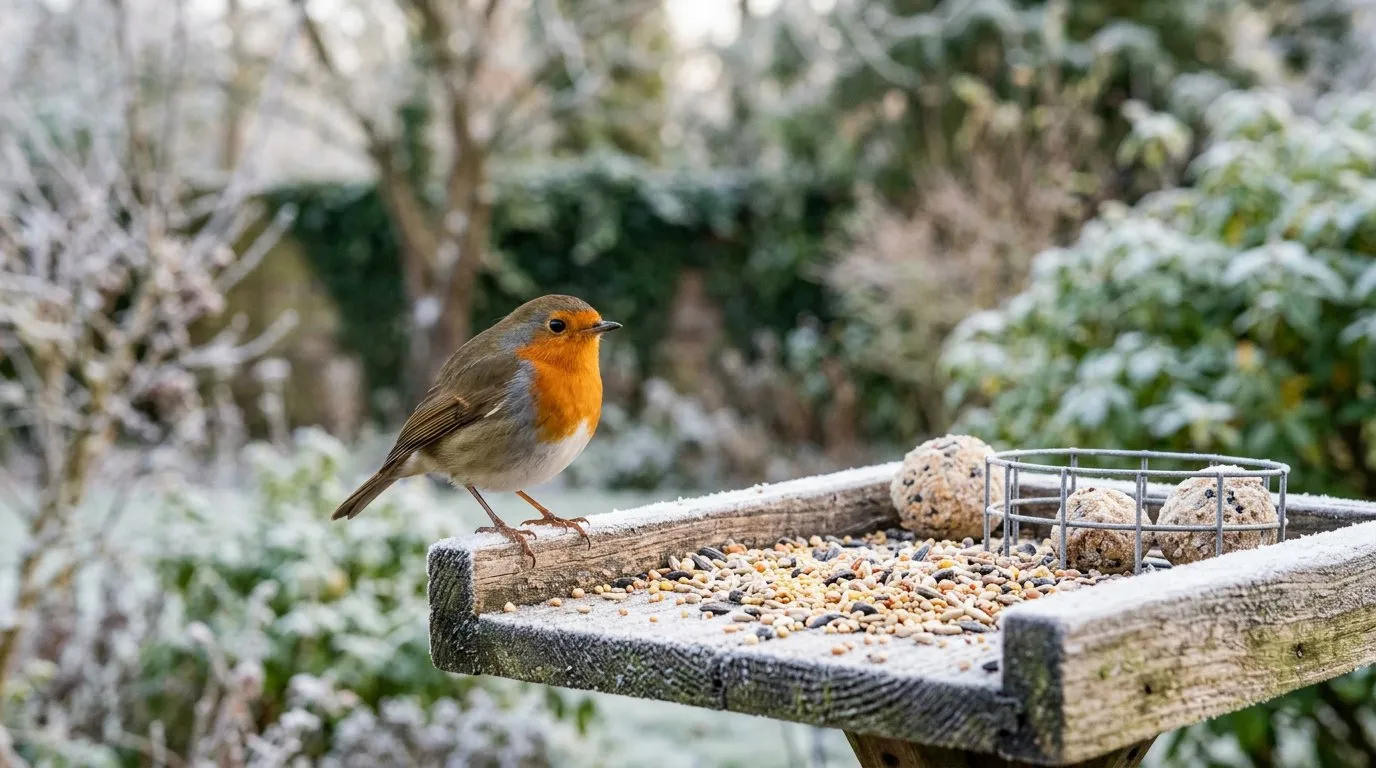
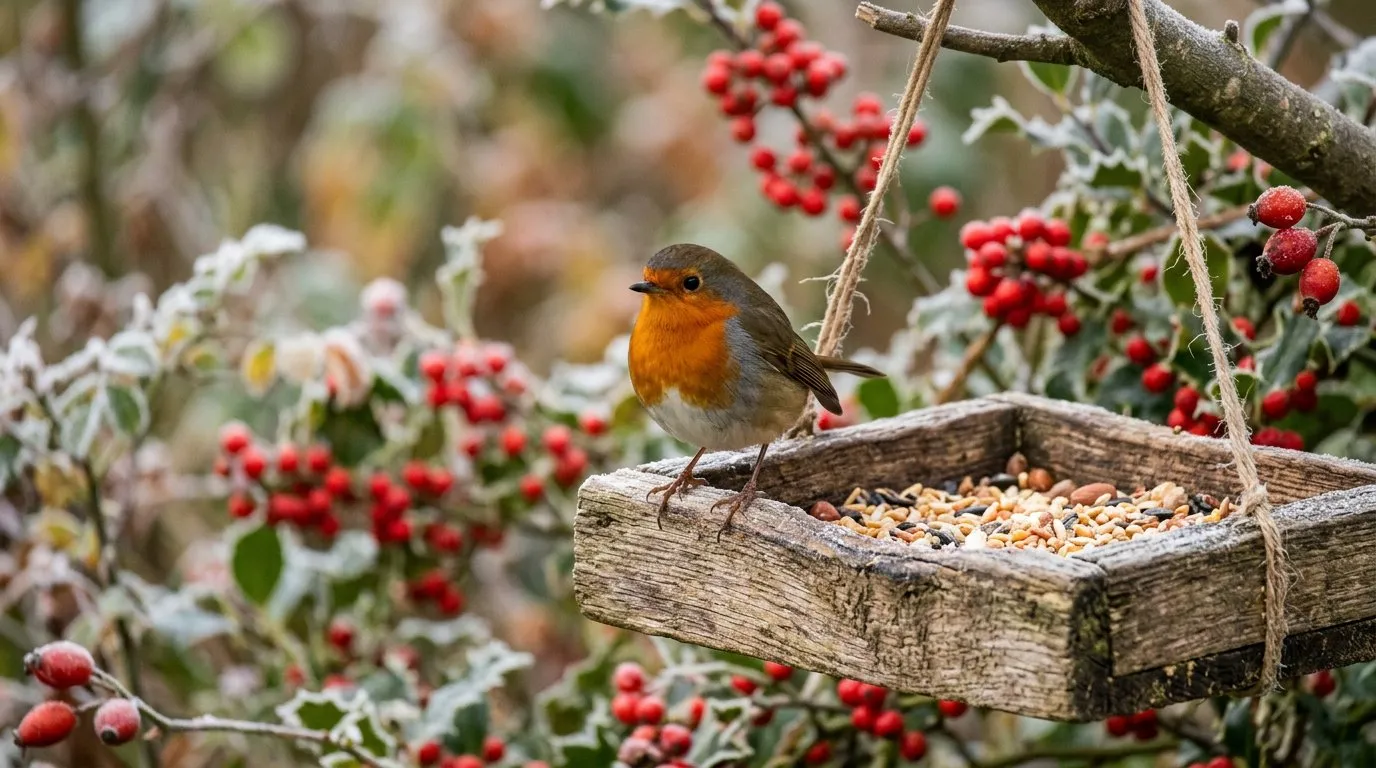
A robin visits a seed-and-suet feeding table on a frosty morning — one of the first species to appear at dawn feeders.
Fieldfares and redwings, winter visitors from Scandinavia, are still present in many gardens. They feed on any remaining windfall fruit and berries before departing north in April.
April
Breeding is fully underway. Most small birds are on eggs or feeding first broods. Switch to soft foods. Soaked mealworms are the single best food this month. Breeding females need the protein for egg production. Males need the energy to defend territories and feed sitting partners.
Remove or avoid: whole peanuts, large bread pieces, and dry hard food. Fledglings cannot swallow these and choke. Use peanut granules instead of whole nuts.
Chiffchaffs and willow warblers arrive from Africa. They feed on insects, not feeders, but the habitat in your garden matters. Growing herbs like thyme and oregano attracts the insects these migrants need.
May
The first fledglings appear. Young blue tits, great tits, and robins leave the nest and visit feeders with their parents. Soaked mealworms are critical. Young birds have not yet learned to crack seeds. Soft food keeps them alive in the first vulnerable days.
Swallows and house martins arrive. They feed on aerial insects, not feeders. But a wildlife pond produces the insects they hunt.
Summer feeding: June to August
Summer seems abundant, but birds face specific challenges. Second and third broods need feeding. Moulting begins in July. Water becomes scarce in dry spells.
June
Second broods are common for blackbirds, song thrushes, and robins. Continue providing soaked mealworms and sunflower hearts. Fat balls are less important now. Birds do not need the same calorie density as winter, and fat can smear feathers in warm weather.
Spotted flycatchers arrive, the last summer migrants. They catch insects from a perch and return. Garden planting that attracts insects supports these declining visitors. See our guide on bee-friendly plants for flowers that draw insect life.
July: moulting begins
July is the hidden crisis month for garden birds. Most species begin their annual moult, replacing every flight and body feather over six to eight weeks. Moulting is energy-intensive. Birds need 25-30% more protein than normal. They also become secretive and quiet because damaged feathers reduce their ability to escape predators.
Best July foods:
- Soaked mealworms (high protein)
- Sunflower hearts (protein and fat)
- Live mealworms if available (the best protein source)
- Peanut granules
Birds may seem to vanish from feeders in July and August. They have not left. They are hiding in dense cover while vulnerable during the moult. A cottage garden with dense mixed planting provides exactly the cover moulting birds need.
August
Moulting continues. Juvenile birds from all summer broods are now independent and learning to feed themselves. Feeders become busy again as young birds discover them. Keep providing protein-rich food. Newly fledged goldfinches arrive in groups, often visiting nyjer seed feeders for the first time.
Swifts depart for Africa in early August. House martins and swallows begin gathering for migration.
Autumn feeding: September to November
Autumn is transition season. Summer migrants leave. Winter visitors arrive. Resident birds build fat reserves for the cold months ahead.
September
The moult is completing for most species. Birds emerge from cover with fresh plumage and start feeding actively. Reintroduce fat balls and suet blocks. Birds need to start building fat reserves now.
The last swallows and house martins depart by late September. Robins become more visible and vocal, establishing winter territories. Both males and females hold separate winter territories, unlike the shared breeding territories of spring.
October
Fieldfares and redwings arrive from Scandinavia. These thrush-family birds feed on berries first, then move to gardens when hedgerow fruit runs out. Windfall apples left on the lawn attract them. Planting berry-bearing shrubs helps all autumn birds. Our guide to plants for shade includes several berry-producing species that thrive in darker spots.
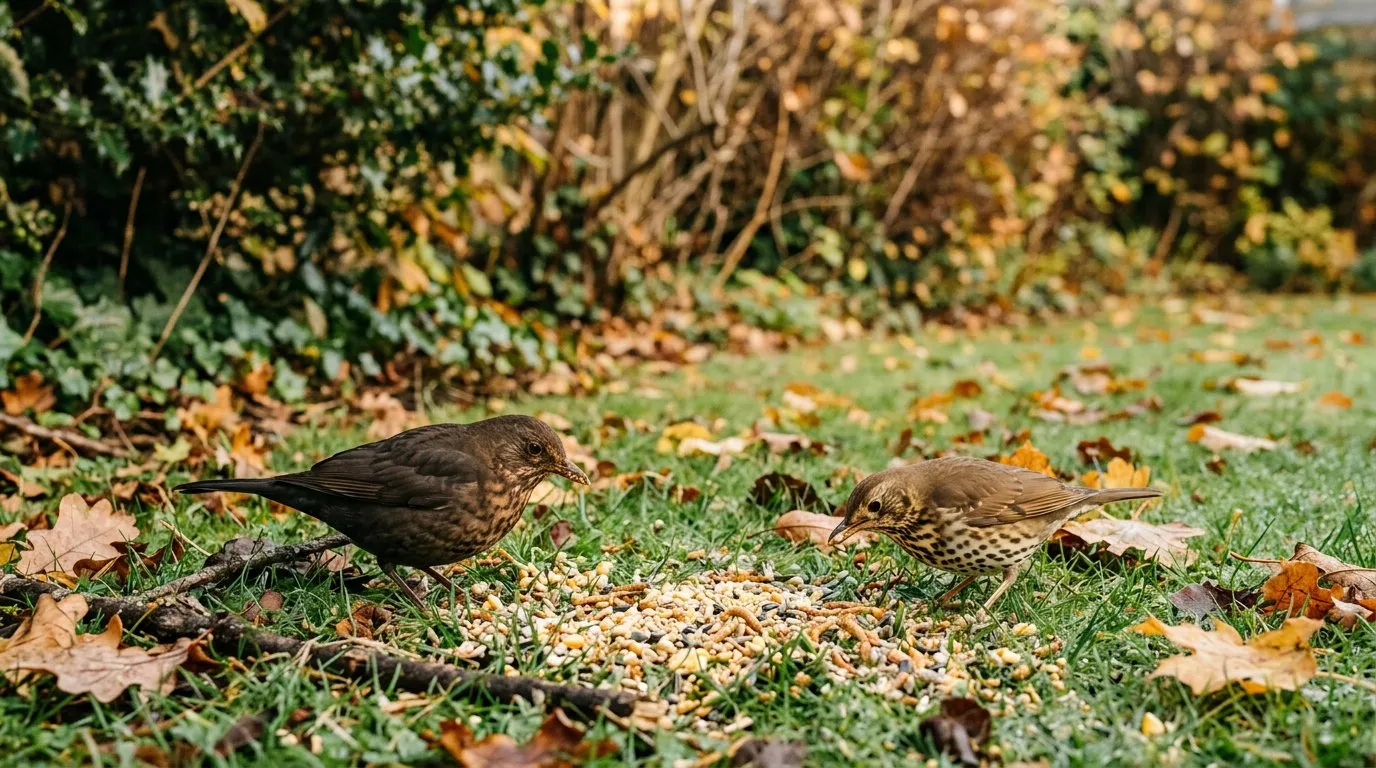
A blackbird and song thrush feed from scattered seed on an autumn lawn — ground-feeding stations attract thrushes that rarely visit hanging feeders.
Goldcrests and long-tailed tits form roving mixed flocks that pass through gardens. They move on quickly but appreciate suet and fat balls.
November
Feeding becomes critical. Days are short, temperatures drop, and natural food is diminishing. Top up feeders twice daily: once before 8am and once by 3pm. Birds need to fill up before the long overnight fast.
| Species | Autumn arrival/departure | What they eat |
|---|---|---|
| Fieldfare | Arrives October from Scandinavia | Berries, windfall fruit, earthworms |
| Redwing | Arrives October from Scandinavia | Berries, windfall fruit |
| Brambling | Arrives October from northern Europe | Beech mast, seeds, sunflower hearts |
| Siskin | Arrives October from northern forests | Nyjer seed, sunflower hearts |
| Waxwing | Arrives November (irruption years) | Berries, especially rowan and cotoneaster |
| Swallow | Departs September for Africa | Insects only (not feeder birds) |
| House martin | Departs September-October for Africa | Insects only (not feeder birds) |
| Swift | Departs August for Africa | Insects only (not feeder birds) |
Winter feeding: December to February
Winter feeding saves lives. Small birds like wrens and long-tailed tits lose body heat rapidly. A blue tit can lose 10-20% of its body weight overnight in freezing conditions. Without food by dawn, it dies.
December
The shortest days mean the least feeding time. Put food out before 8am. Many birds begin feeding at first light, around 7:30am in December. High-fat food is essential. Fat balls, suet blocks, and sunflower hearts provide the calorie density birds need.
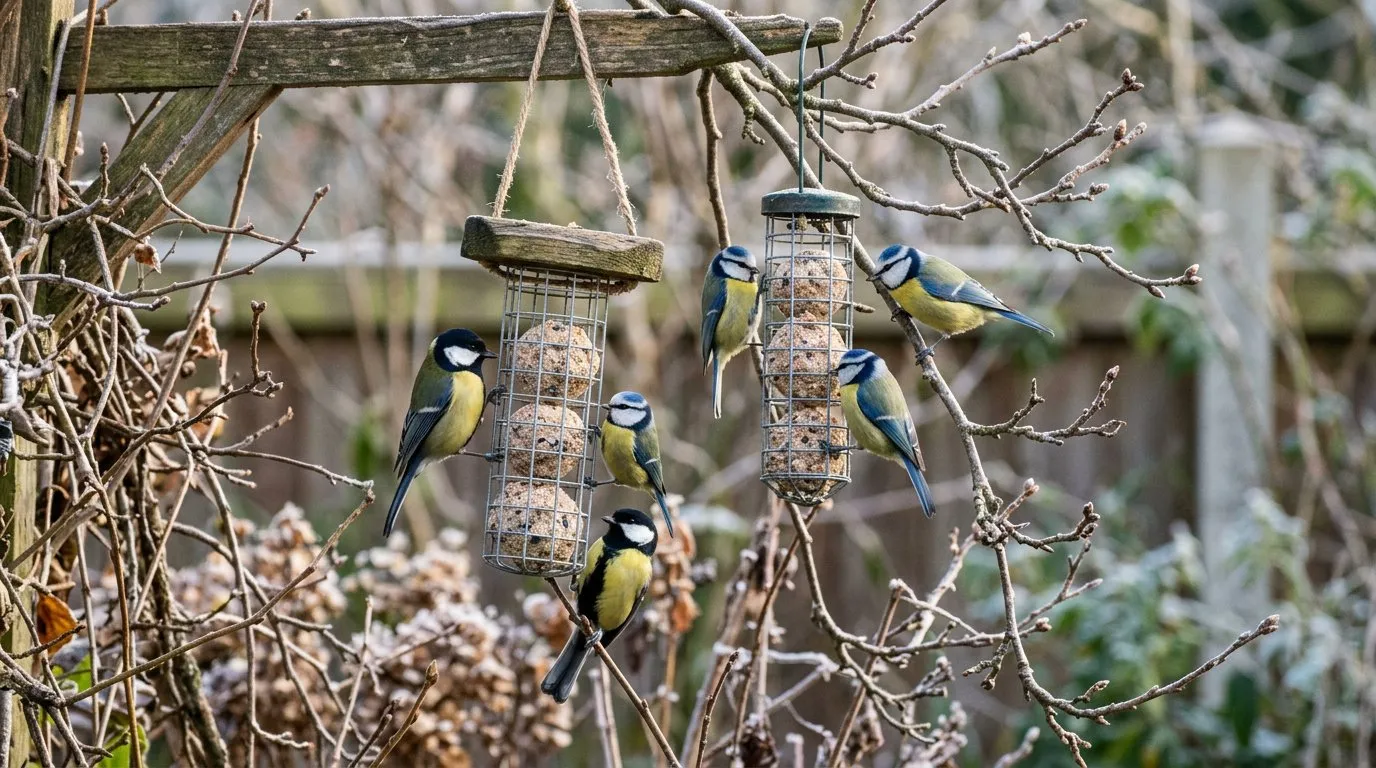
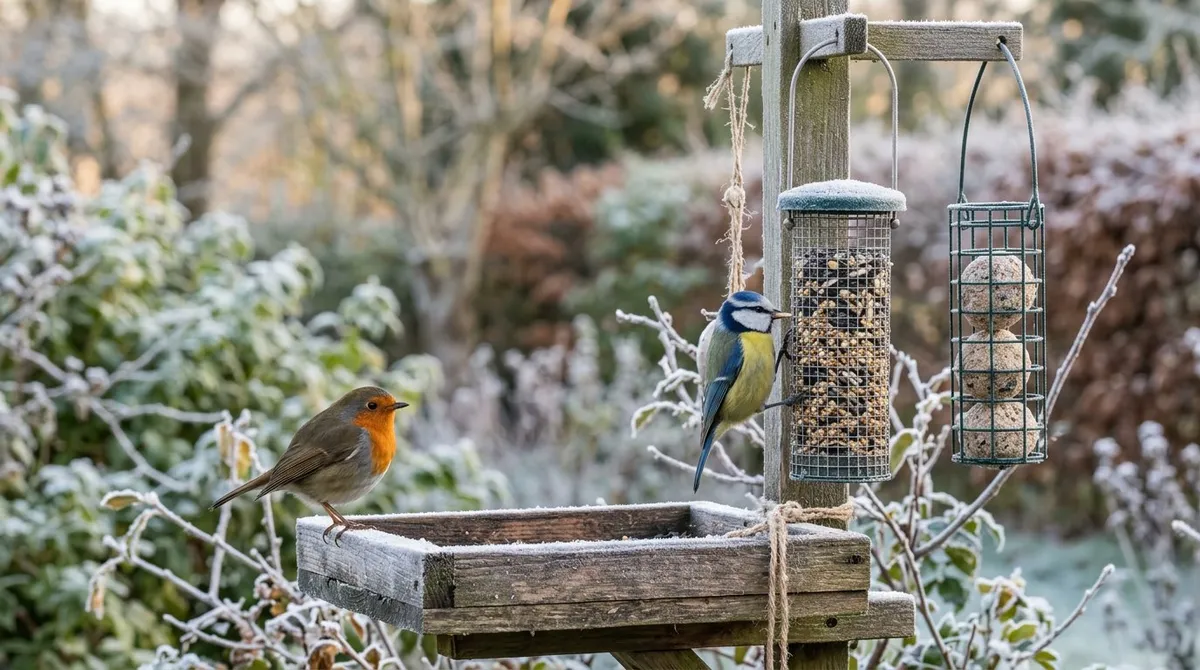
Blue tits and great tits crowd hanging fat ball feeders in winter — high-fat food is critical when small birds lose up to 20% of body weight overnight.
Ground-feeding species like blackbirds, dunnocks, and wrens benefit from food scattered under hedges and shrubs. A low-maintenance garden with evergreen shrubs provides both shelter and ground-feeding sites.
Warning: Never put out salted food, milk, desiccated coconut, or mouldy food. Salt poisons birds. Milk causes digestive failure. Desiccated coconut swells in the stomach. Mould produces aflatoxins.
January
The coldest month. RSPB Big Garden Birdwatch takes place in late January. The average garden records seven to ten species during the count hour. Feed before dawn and top up before dusk. The overnight fast from 4pm to 8am is sixteen hours in January. Birds must store enough energy to survive.
Wrens roost communally in nest boxes and dense ivy to conserve heat. Up to sixty wrens have been recorded in a single nest box. If you have nest boxes, leave them up year-round. They are winter shelters, not just breeding sites. Consider planting climbing plants like ivy that provide roosting cover.
February
Days are lengthening. Great tits and blue tits start singing breeding songs on mild days. Continue full winter feeding. Natural food is at its absolute lowest in February. The autumn berry crop is gone. Insects are not yet active. This is the hungriest month.
Song thrushes begin nesting in February, earlier than most species. They build in dense hedges and evergreen shrubs. If your garden has dense planting from a cottage garden scheme, check for nests before pruning.
Month-by-month feeding summary
| Month | Priority foods | Key species events | Feeding notes |
|---|---|---|---|
| January | Fat balls, suet, sunflower hearts | Big Garden Birdwatch, coldest month | Feed before dawn and at dusk |
| February | Fat balls, suet, mealworms | Song thrushes nesting, tits singing | Hungriest month, food scarcest |
| March | Mealworms, seeds, sunflower hearts | Pairing, territory, early nests | Fieldfares still present |
| April | Soaked mealworms, peanut granules | Full breeding, summer migrants arrive | No whole peanuts or hard food |
| May | Soaked mealworms, soft seed | First fledglings emerge | Soft food only near nests |
| June | Mealworms, sunflower hearts | Second broods, long days | Reduce fat balls |
| July | High-protein: mealworms, peanut granules | Moult begins, birds hide | Protein-rich food critical |
| August | Protein foods, seeds | Moult continues, swifts depart | Juvenile birds at feeders |
| September | Fat balls, suet, seeds | Moult ends, fat-building starts | Reintroduce high-fat foods |
| October | Fat balls, berries, fruit | Fieldfares and redwings arrive | Leave windfall apples on lawn |
| November | Fat balls, suet, sunflower hearts | Winter flocks form | Top up feeders twice daily |
| December | Fat balls, suet, sunflower hearts | Shortest days, coldest nights | Feed before 8am |
Feeder hygiene and disease prevention
Dirty feeders kill birds. Trichomoniasis, a disease spread by contaminated food and water, has caused severe declines in greenfinch populations since 2005. Salmonellosis clusters around feeders in winter.
Cleaning routine:
- Scrub all feeders with warm soapy water every two weeks
- Rinse thoroughly and dry before refilling
- Remove any damp, mouldy, or sprouting food weekly
- Move feeder positions every month to prevent droppings building up
- Clean bird baths every two to three days
- Disinfect with a wildlife-safe solution monthly
If you find sick or dead birds near feeders, stop feeding for two weeks. Clean everything. This breaks the disease cycle. Report unusual deaths to the RSPB or BTO.
Making your own bird food
Home-made bird food saves money and avoids the filler ingredients in cheap shop mixes.
Winter fat cake recipe
Melt 500g of lard or suet (never cooking fat or dripping). Stir in a mix of sunflower hearts, oats, dried fruit, and peanut granules at a ratio of one part fat to two parts dry mix. Pour into moulds (yoghurt pots or coconut shells) and refrigerate until set. Hang in wire cages.
Seed mix for tube feeders
Combine sunflower hearts (60%), peanut granules (20%), and flaked maize (20%). This mix attracts tits, finches, sparrows, and nuthatches. Avoid wheat, barley, and split peas, which most garden birds reject.
Summer protein mix
Soak dried mealworms in warm water for thirty minutes. Mix with finely grated mild cheese and small seed. Scatter on a ground feeder for robins, blackbirds, and dunnocks. This mix supports breeding birds and fledglings from April to August.
Why we recommend sunflower hearts as your single year-round bird food: After 30 years of maintaining feeding stations, I have tried every food on the market. Sunflower hearts consistently attract the widest range of species with the least waste — no husks to clear up, no filler seeds birds leave behind. In my own garden, switching from a mixed seed blend to sunflower hearts increased the number of species visiting in a single week from nine to fourteen, based on counts kept over two consecutive Januaries.
Building a hedgehog-friendly feeding area
Ground-feeding stations that attract dunnocks, robins, and thrushes also benefit other wildlife. A hedgehog-friendly garden shares many features with a good bird feeding garden. Leave leaf litter under hedges. Keep ground feeders low. Provide water at ground level. Compost heaps attract the invertebrates that both birds and hedgehogs eat. See our composting guide for how to set one up.
Now you’ve mastered seasonal bird feeding, read our guide on attracting birds to your garden for the next step.
Frequently asked questions
What is the best all-round bird food UK?
Sunflower hearts are the best single food. Over 90% of UK garden bird species eat them. They are high in oil, protein, and energy. They leave no husks or mess. Buy in 12.5kg sacks for the best value. Combine with fat balls in winter and mealworms in breeding season for a complete offering.
Why have birds stopped visiting my feeders?
Birds often disappear temporarily for several reasons. In July and August, moulting birds hide in cover. In autumn, natural food like berries is abundant and birds leave feeders. A sparrowhawk visiting the area causes all small birds to vanish for days. Dirty feeders also drive birds away. Clean feeders, wait a week, and birds usually return.
Can I feed birds bread?
Small amounts of brown bread are acceptable. Crumble it finely and soak in water first. Never put out large dry pieces. Bread has low nutritional value compared to seeds and mealworms. It fills birds up without providing the protein and fat they need. Use it sparingly as a supplement, not a main food.
Are fat balls safe for birds in summer?
Fat balls can smear feathers in hot weather, reducing their insulating properties. Switch to suet pellets or blocks in summer, which are less sticky. Remove any fat-based food that becomes soft or rancid in warm conditions. Mealworms and sunflower hearts are better summer choices.
How do I stop squirrels eating bird food?
Use squirrel-proof feeders with weight-activated shutters. These close when anything heavier than a bird lands on them. Place feeders on poles with squirrel baffles rather than hanging from trees. Position feeders at least 2.5 metres from any surface a squirrel can jump from. Cage feeders with mesh openings also work for small birds while excluding squirrels.
For more on supporting garden wildlife through the year, visit the RSPB’s seasonal bird feeding advice.
Lawrie has been gardening in the West Midlands for over 30 years. He grows his own veg using no-dig methods, keeps a wildlife-friendly garden, and writes practical advice based on real UK growing conditions.