How to Create a Wildlife Garden UK
Turn any UK garden into a wildlife haven. Covers ponds, native planting, hedgehog access, bird feeding, bug hotels, and seasonal wildlife tasks.
Key takeaways
- UK gardens cover 400,000+ hectares — more than all National Nature Reserves combined
- A wildlife pond is the single most impactful addition, attracting amphibians, dragonflies, and birds
- Five key elements: water, food, shelter, nesting sites, and wild or unmown areas
- Hedgehog highways (13cm x 13cm fence gaps) connect gardens into corridors for declining hedgehogs
- Quick wins like hanging a feeder or building a log pile take under an hour and help immediately
- Native plants support 50 times more insect species than non-native ornamentals
UK gardens cover over 400,000 hectares. That is more than all the National Nature Reserves combined. Your back garden, however small, is part of a network of green space that sustains wildlife across the country. As farmland intensifies and wild habitats shrink, gardens have become critical refuges for hedgehogs, songbirds, amphibians, and pollinating insects. The Royal Horticultural Society runs a nationwide campaign encouraging gardeners to make space for nature.
A wildlife garden does not mean abandoning your garden to weeds. It means making deliberate choices about what you plant, where you leave things undisturbed, and which small features you add. This is the overview guide for our wildlife gardening series. It covers the key principles and links to detailed guides on each topic. Even if you only do one thing from this article, that one thing makes a difference.
The five habitat elements every wildlife garden needs
Every animal needs five things: water, food, shelter, nesting sites, and connectivity to other habitat. A garden that provides all five supports the widest range of species. You do not need to provide everything at once. Start with one or two and build over time.
| Element | What it provides | Example features | Species helped |
|---|---|---|---|
| Water | Drinking, bathing, breeding | Pond, bird bath, dish of water | Frogs, newts, dragonflies, birds, hedgehogs |
| Food | Nectar, seeds, berries, insects | Native plants, feeders, compost heap | Bees, butterflies, birds, hedgehogs |
| Shelter | Cover from weather and predators | Log pile, dense hedge, long grass | Amphibians, insects, small mammals |
| Nesting | Safe breeding sites | Bird boxes, bat boxes, bug hotel | Birds, bats, solitary bees |
| Connectivity | Movement between gardens and habitats | Fence gaps, hedgehog highways, corridors | Hedgehogs, amphibians, slow worms |
Water: the single most impactful feature
A pond is the most effective wildlife addition to any garden. A single pond attracts frogs, toads, newts, dragonflies, damselflies, water beetles, pond skaters, bathing birds, and drinking hedgehogs. No other feature supports as many species. Our full wildlife pond guide covers construction step by step.
Pond basics
- Size: Even 1m x 1m works. Larger ponds support more species.
- Depth: At least 60cm in one area. Prevents complete freezing in winter.
- Edges: Gently sloping sides (1:3 gradient). Allows amphibians, hedgehogs, and invertebrates to climb in and out safely.
- No fish: Fish eat spawn, tadpoles, and aquatic larvae. A wildlife pond must be fish-free.
- Plants: Submerged plants oxygenate the water. Marginal plants provide cover and egg-laying sites. See our pond plant guide for species choices.
If you cannot dig a pond
Not every garden suits a wildlife pond. If you prefer an ornamental pond with fish or a fountain, our guide on how to build a garden pond covers that approach. Rental gardens, balconies, and paved courtyards still benefit from water. A shallow dish of water on the ground provides a drinking spot for birds, hedgehogs, and insects. A half-barrel water garden with a miniature water lily and marginal plants supports dragonfly larvae and water beetles. Even a wide saucer with pebbles and water gives bees and butterflies a safe drinking platform.
Our frog and toad guide explains pond requirements for amphibian breeding in detail.
Food: native planting and feeding
Why native plants matter
A native oak tree supports over 2,300 invertebrate species. A non-native ornamental cherry supports fewer than 50. The difference is centuries of co-evolution. Insects have adapted to feed on native plants, and those insects feed the birds, bats, and amphibians further up the food chain.
This does not mean ripping out every non-native plant. It means including native species alongside ornamentals. A mixed border with native foxgloves, red campion, and wild primroses among cultivated perennials provides far more food than a border of exotic cultivars alone.
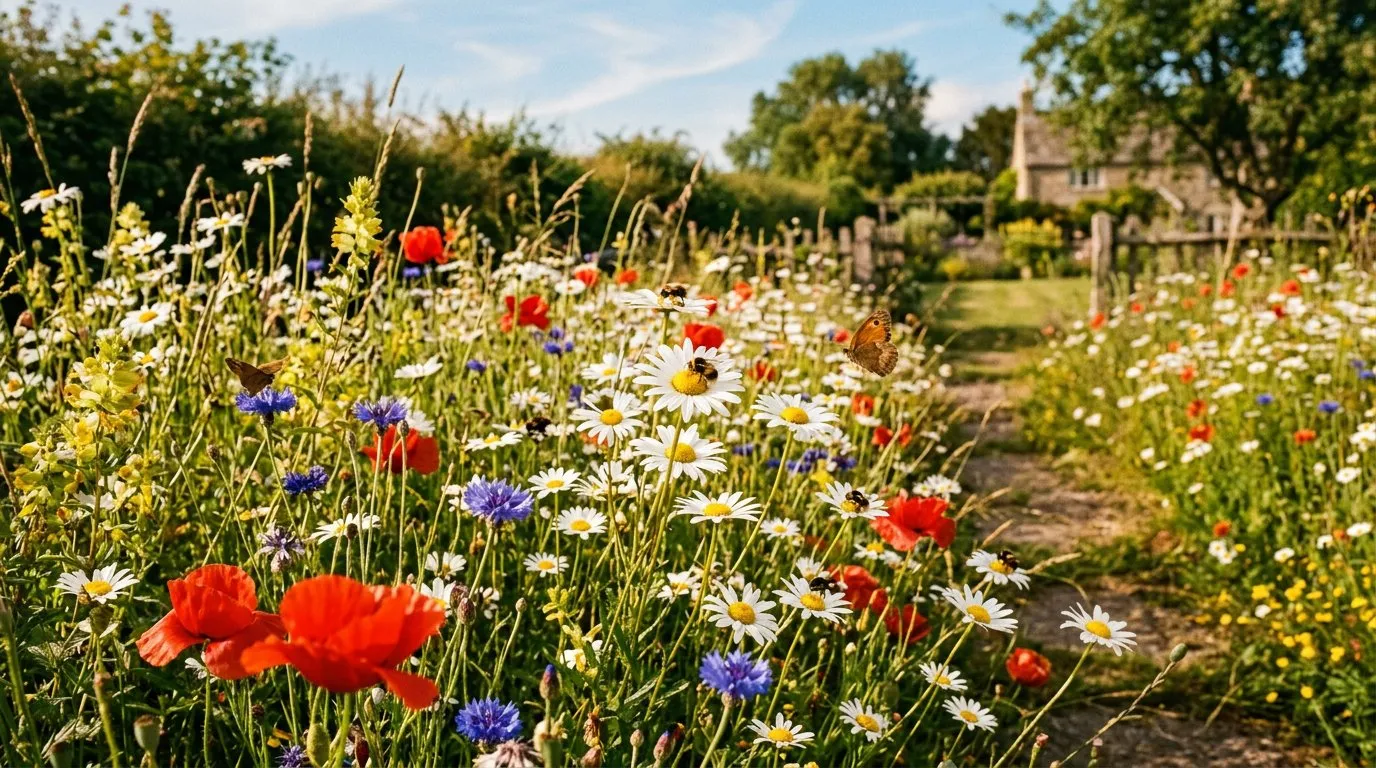
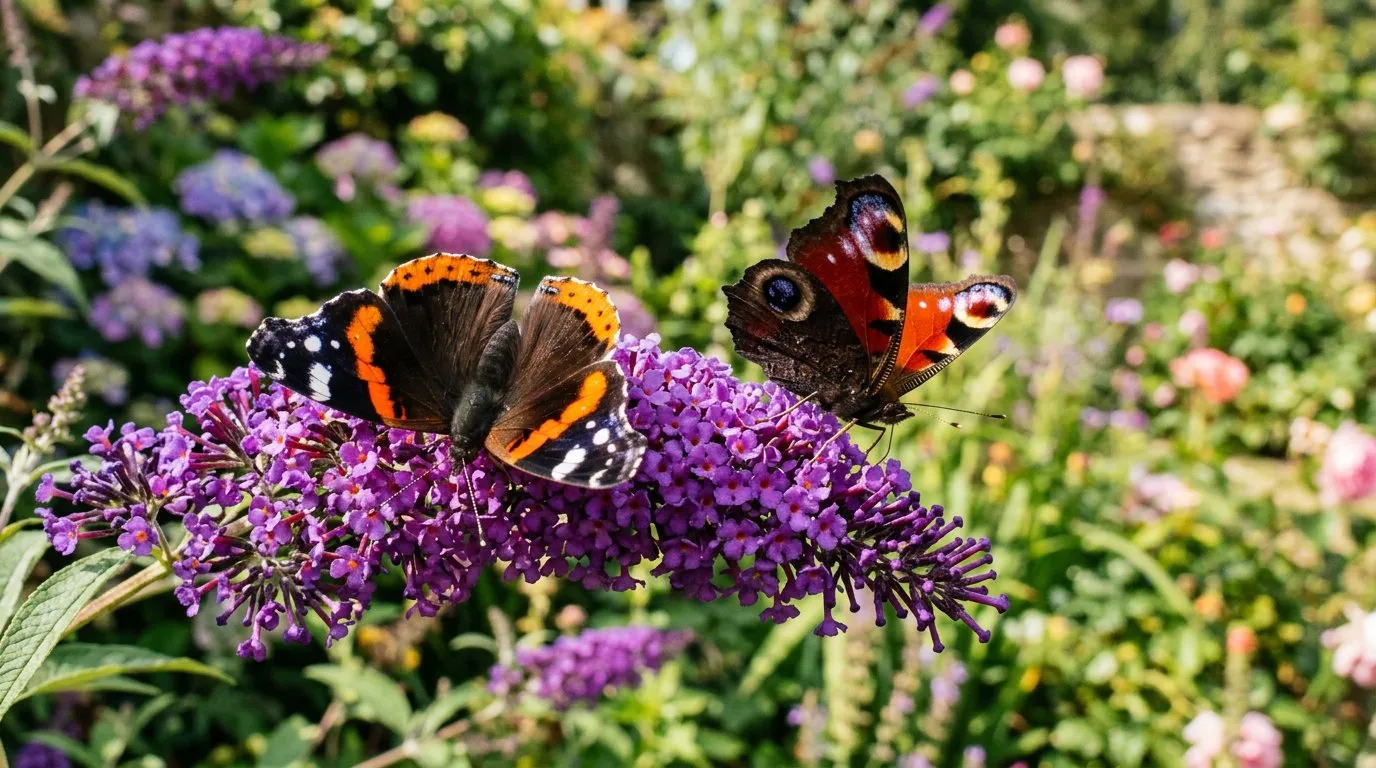
A wildflower meadow area with ox-eye daisies, poppies, and cornflowers provides nectar for bees and butterflies from May to September.
Best native plants for wildlife
| Plant | Type | Wildlife value | Flowering |
|---|---|---|---|
| Hawthorn | Hedge/tree | 300+ insect species, berries for birds | May-Jun |
| Blackthorn | Hedge | Early nectar, sloe berries for birds | Mar-Apr |
| Dog rose | Climber | Hoverflies, bees, rose hips for birds | Jun-Jul |
| Honeysuckle | Climber | Moths (especially elephant hawk-moth), berries | Jun-Sep |
| Ivy | Climber | Late nectar (Oct), berries, shelter | Sep-Nov |
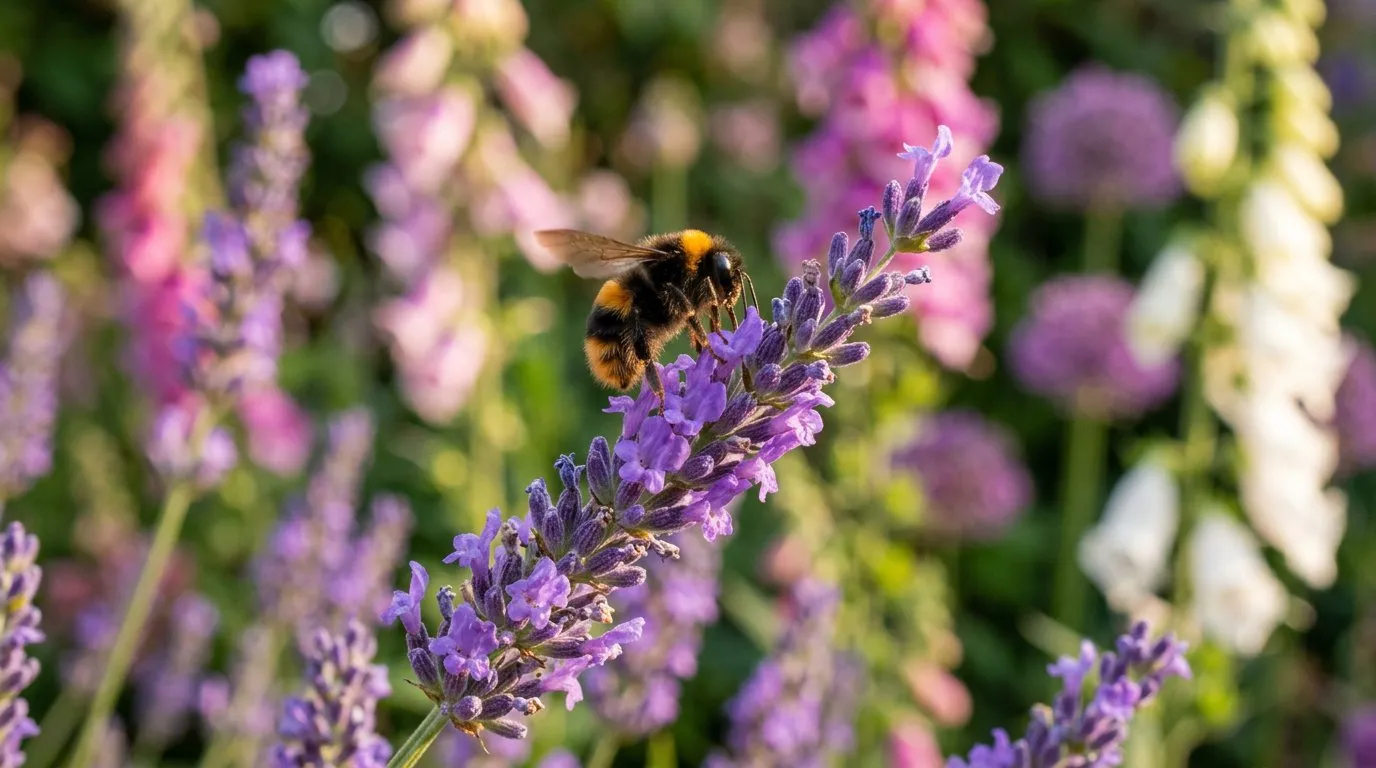
| Foxglove | Biennial | Bumblebees, especially long-tongued species | Jun-Jul |
| Red campion | Perennial | Moths, hoverflies | May-Nov |
| Ox-eye daisy | Perennial | Bees, hoverflies, beetles | Jun-Sep |
| Wild primrose | Perennial | Early bees, butterfly larvae | Mar-May |
Our guide to bee-friendly plants covers the best nectar sources for pollinators across every season.
Bird feeding
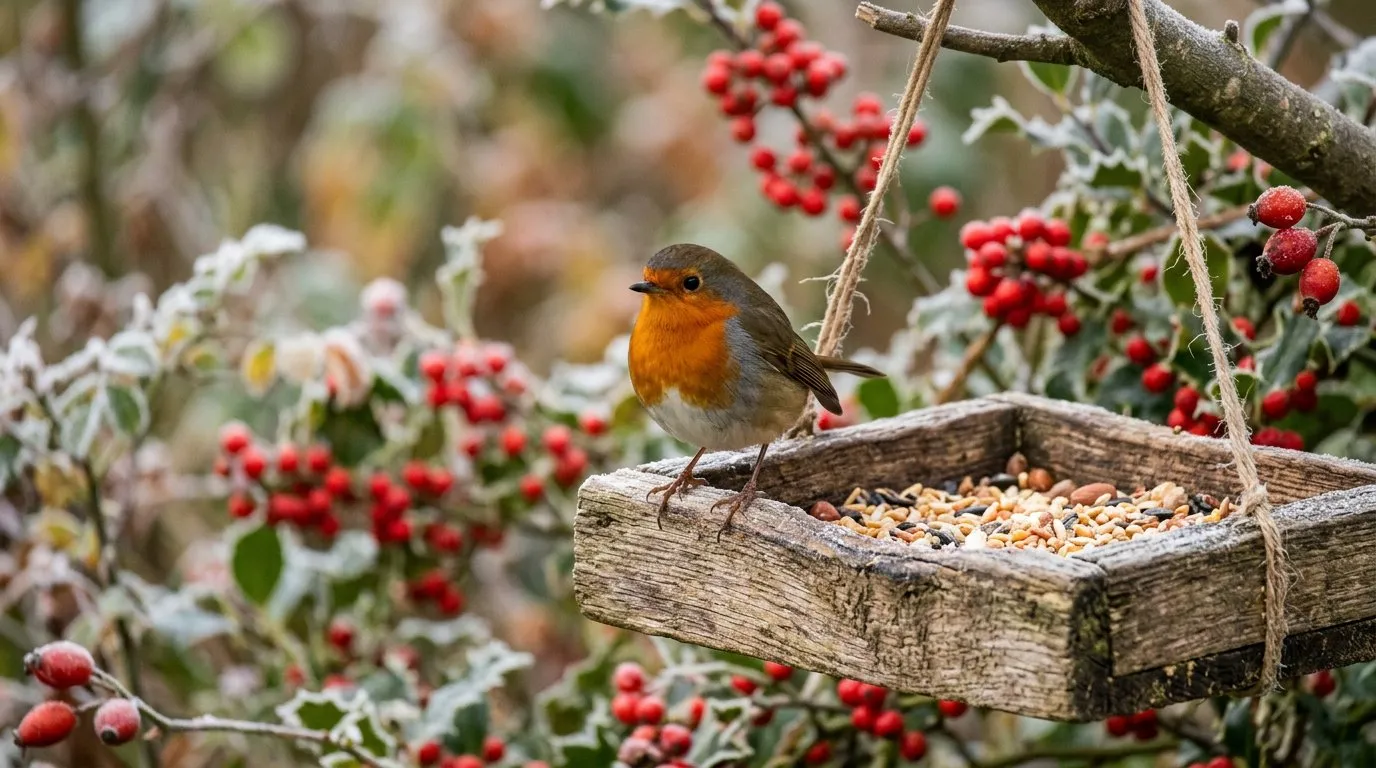
Supplementary feeding supports over 60 bird species in UK gardens. A feeding station with sunflower hearts, fat balls, and a water dish costs under thirty pounds and attracts birds within 48 hours. Feed year-round. Winter feeding is critical for survival, but spring and summer feeding helps breeding adults raise chicks.
Our seasonal bird feeding guide covers what to offer month by month.
Berry and seed plants
Berry-bearing shrubs provide autumn and winter food when insects are scarce. Cotoneaster, pyracantha, holly, rowan, and crab apple all produce fruit that thrushes, blackbirds, waxwings, and fieldfares eat through the cold months. Leave seed heads on perennials over winter rather than cutting them back. Goldfinches feed on teasel and sunflower seed heads well into December.
Shelter: log piles, hedges, and long grass
Animals need places to hide from predators, shelter from weather, and hibernate through winter. The best shelters are low-effort features that most gardens can accommodate.
Log piles
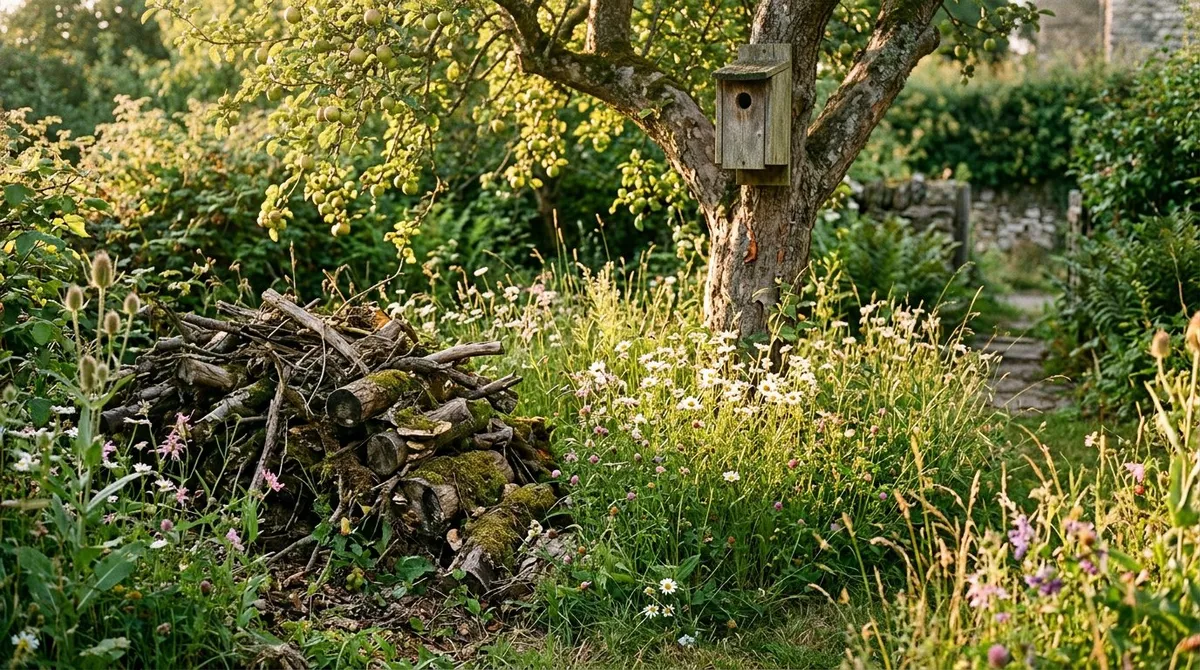
A stack of logs in a shady corner is the easiest shelter to create. Pile 5-10 logs of varying sizes with gaps between them. Frogs, toads, newts, slow worms, beetles, woodlice, centipedes, and hedgehogs all use log piles. Fungi and mosses colonise the wood over time, creating a miniature ecosystem. Place one within 10 metres of your pond.
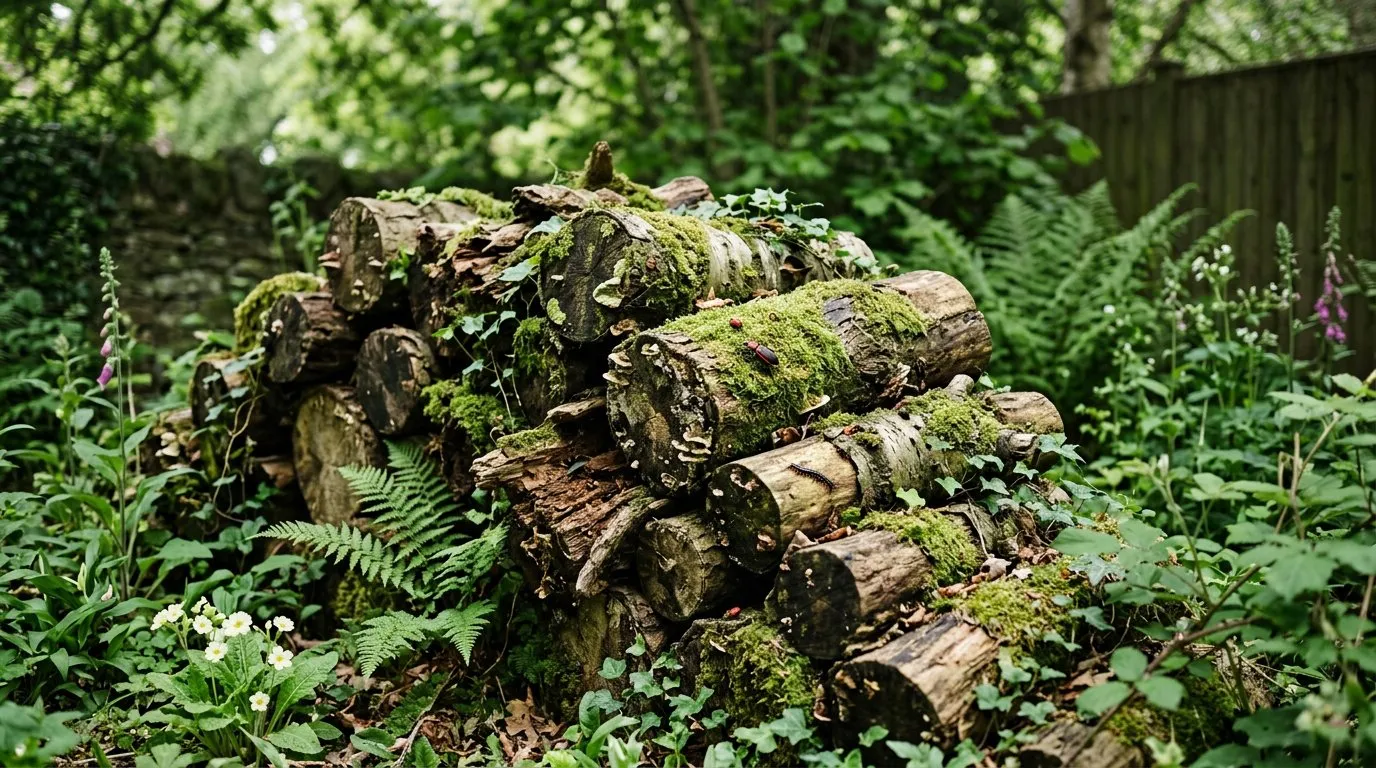
A moss-covered log pile in a shady corner provides shelter for amphibians, beetles, and hedgehogs year-round.
Native hedging
A mixed native hedge of hawthorn, blackthorn, field maple, and dog rose is the single best linear habitat in any garden. It provides nesting sites for birds, nectar for bees, berries for winter food, and corridors for hedgehogs. A native hedge supports over 1,000 insect species compared to fewer than 50 for a laurel hedge. Plant bare-root whips from November to March at 5-6 plants per metre. Our cottage garden planting guide includes advice on incorporating native hedging into ornamental designs.
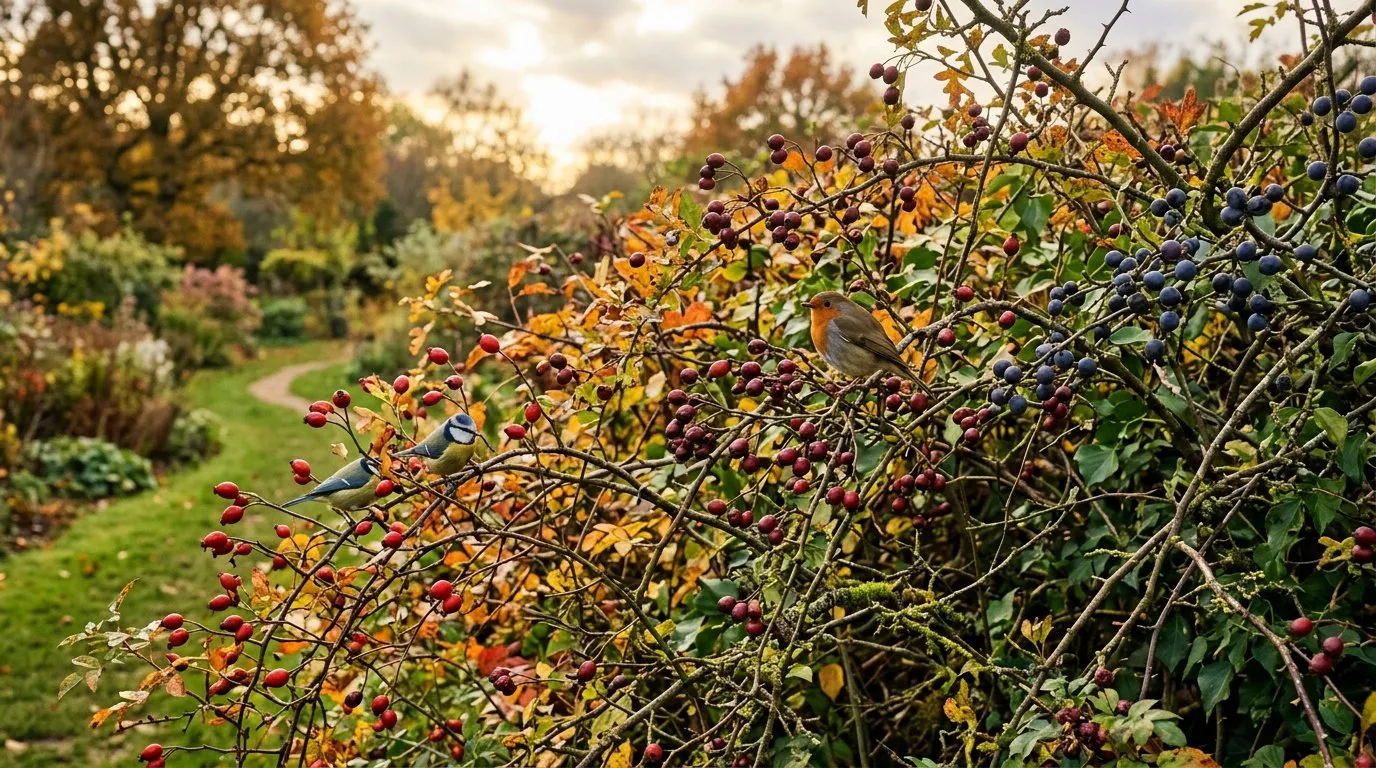
A mixed native hedgerow of hawthorn, blackthorn, and dog rose provides berries for birds and nesting habitat through autumn and winter.
Why we recommend a mixed native hedge over a laurel hedge: After 30 years of planting and observing hedges across the UK, a hawthorn-blackthorn-field maple mix consistently delivers the widest range of wildlife. Laurel supports fewer than 50 invertebrate species. A native mix supports over 1,000. In the first three seasons after planting, you will notice a measurable increase in nesting birds and overwintering hedgehogs using the base.
Long grass and wildflower areas
Leave at least one patch of grass unmown through summer. Grass 15-30cm tall provides hunting ground for frogs and toads, shelter for beetles and spiders, and food plants for butterfly caterpillars. A wildflower lawn goes further, supporting specialist pollinators and adding colour from April to August.
You do not need to sacrifice the whole lawn. A strip along a fence, a corner behind the shed, or an island bed left unmown provides habitat without looking neglected. Mow a neat path through the long grass to show it is intentional.
Compost heaps
A compost heap is a wildlife feature as much as a gardening tool. The warmth from decomposition attracts slow worms, grass snakes, and hibernating toads. The invertebrate life inside provides food for hedgehogs, robins, and wrens. An open-sided compost bay is more wildlife-friendly than a sealed bin.
Nesting: bird boxes, bat boxes, and bug hotels
Bird boxes
Many garden birds struggle to find natural nesting cavities in modern gardens. Nest boxes fill the gap. A 25mm-hole box attracts blue tits and coal tits. A 28mm hole suits great tits. An open-fronted box attracts robins and wrens. Mount boxes 2-3 metres high, facing north or east, by February. Our bird guide has full details on box types and positioning.
Bat boxes
All 18 UK bat species are legally protected. Eight species regularly use gardens for roosting and foraging. A bat box on a south-facing wall or tree, at least 4 metres above ground, provides roosting habitat. Bats eat up to 3,000 insects per night, including midges and mosquitoes. Our bat garden guide covers box placement and habitat creation.
Bug hotels
A bug hotel provides nesting sites for solitary bees, lacewings, ladybirds, and other beneficial insects. Use a mix of materials: bamboo canes (cut to 15cm, 6-10mm diameter), drilled hardwood blocks, pine cones, and bark. Place in a sunny, sheltered spot facing south or south-east. Solitary bees that use bug hotels pollinate fruit trees and garden crops.
Hedgehog houses
Hedgehog numbers have dropped by 30% since 2000. A purpose-built hedgehog house in a quiet corner provides hibernation and nesting habitat. Place it under a hedge or beside a log pile, with the entrance facing away from prevailing wind. Fill loosely with dry leaves. Our hedgehog guide covers houses, feeding, and garden hazards in detail.
Connectivity: hedgehog highways and wildlife corridors
A single garden, however well designed, is limited. Wildlife needs to move between gardens, parks, and wild areas. The biggest barrier in most neighbourhoods is solid fencing.
Hedgehog highways
Cut a 13cm x 13cm hole at the base of each garden fence. This allows hedgehogs to pass between gardens while being too small for most pets. A hedgehog needs to roam up to 2km per night to find enough food. Without fence gaps, each garden is an isolated island. Our hedgehog highway guide explains placement and how to talk to neighbours about it.
Green corridors
Plant climbers on walls and fences to create aerial highways for insects. Ivy, honeysuckle, and clematis provide nectar, shelter, and movement routes for bees, butterflies, and hoverflies. A continuous line of trees and shrubs along a street connects isolated gardens into a corridor that birds and bats use for foraging.
Reducing barriers
Replace solid fence panels with hedging where possible. Hedges provide habitat that fences never can. If you need a fence, leave the bottom 13cm open for ground-level wildlife movement. Avoid sinking gravel boards to the soil surface, as these block amphibians, hedgehogs, and beetles.
The wildlife gardening spectrum
Wildlife gardening is not all or nothing. Think of it as a spectrum from minor changes to full rewilding. Any position on this spectrum helps.
| Level | Effort | What to do | Species impact |
|---|---|---|---|
| Starter (under 1 hour) | Minimal | Hang a bird feeder. Put out a dish of water. Stop using slug pellets. | Birds, hedgehogs |
| Enthusiast (a weekend) | Moderate | Build a log pile. Cut a hedgehog highway. Plant a native climber. | Amphibians, insects, hedgehogs |
| Committed (ongoing) | Significant | Dig a wildlife pond. Plant a native hedge. Create a wildflower area. | Dragonflies, frogs, butterflies, bats |
| Rewilding (years) | Major | Remove lawn. Plant native woodland edge. Let areas self-seed. | Full ecosystem including raptors, owls |
Most wildlife-friendly gardens sit somewhere between enthusiast and committed. You do not need to turn your garden into a nature reserve. A few targeted additions alongside a conventional garden layout make a genuine difference to local biodiversity.
Quick wins: things you can do today
These take under an hour each and make an immediate difference.
Stop using chemicals. Slug pellets poison hedgehogs and thrushes that eat contaminated slugs. Weedkillers destroy wildflower seedlings. Insecticides kill the pollinators your fruit trees need. Use mulch for weeds and hand-pick slugs at dusk instead.
Leave a patch of lawn unmown. Mark out a 2m x 2m section and let it grow from April to September. Mow it once in late September and rake off the cuttings. This single act provides habitat for grasshoppers, beetles, butterfly larvae, and hunting frogs.
Stack a log pile. Gather fallen branches, prunings, or buy a few untreated logs. Stack them loosely in a shady spot. Beetles, woodlice, centipedes, slow worms, and toads will move in within weeks.
Hang a bird feeder. Fill a tube feeder with sunflower hearts. Position it 2 metres from cover. Birds will find it within 48 hours. Keep it filled. See our bird feeding guide for seasonal advice.
Put out a shallow dish of water. A terracotta saucer with a few pebbles (for insects to land on) provides drinking water for birds, hedgehogs, and bees. Place it at ground level in an open spot.
Cut a hedgehog highway. A 13cm x 13cm hole at the base of your fence takes ten minutes with a jigsaw. It connects your garden to the neighbourhood hedgehog network.
Seasonal wildlife garden calendar
| Month | Priority tasks |
|---|---|
| January | Feed birds daily. Break ice on ponds. Plan spring planting. Order bare-root hedging. |
| February | Put up bird boxes. Check hedgehog houses for occupants (do not disturb). Join a toad patrol. |
| March | Frog spawn appears. Sow wildflower seed on prepared ground. Start a compost heap. |
| April | Stop mowing the wildflower patch. First butterflies appear. Bees emerging. No hedge cutting from now until August. |
| May | Peak bird nesting. Do not disturb hedges or dense shrubs. Plant marginal pond plants. |
| June | Mow paths through long grass. Top up bird baths in dry weather. Build a bug hotel. |
| July | Deadhead native wildflowers to extend flowering. Leave some seed heads for finches. Monitor pond water level. |
| August | Butterflies peak. Provide water during dry spells. Note which plants attract the most pollinators. |
| September | Put out hedgehog food (cat biscuits, not bread and milk). Plant spring bulbs for early bee forage. |
| October | Build or refresh log piles before hibernation. Plant native hedging. Dig a new pond. Leave fallen leaves for hedgehogs. |
| November | Last hedge cutting before spring. Hang fat balls for birds. Check hedgehog highways are clear. |
| December | Keep bird feeders stocked. Break pond ice. Plan next year’s improvements. Enjoy the winter wildlife garden. |
Balancing wildlife and aesthetics
The biggest barrier to wildlife gardening is the belief that it means mess. It does not. The most effective wildlife gardens combine wild areas with structured, attractive planting.
Define the zones. Keep a neat lawn and tidy borders near the house. Let the back of the garden go wilder. A mown path through a wildflower patch creates structure and shows intention. A patio garden can incorporate container planting for pollinators alongside furniture and entertaining space.
Use native plants in borders. Foxgloves, wild geraniums, and ox-eye daisies look beautiful in a traditional cottage garden border alongside cultivated perennials. Nobody looking at a drift of foxgloves thinks “untidy.”
Hide functional features. Place the compost heap behind a screen of willow or hazel. Tuck the log pile into a border. Position the bug hotel on a wall where it becomes a feature rather than an eyesore.
Maintain the edges. Mow a crisp edge around wildflower areas. Keep paths swept. Trim the front garden neatly. The contrast between tidy and wild makes both look intentional. Our front garden ideas guide shows how to incorporate wildlife-friendly planting into a smart streetside design.
Composting for wildlife
A compost heap is both a gardening essential and a wildlife habitat. Decomposing organic matter generates heat that attracts slow worms and grass snakes. The invertebrate life inside the heap — woodlice, brandling worms, beetles — provides food for hedgehogs, robins, and wrens. A well-managed compost heap also improves your clay soil and feeds your plants.
Build an open-sided bay rather than using a sealed plastic bin. Open bays allow hedgehogs and amphibians to enter. Never fork through compost carelessly between October and March — hibernating toads and slow worms are easily injured.
Now you have the principles in place, read our guide on building a wildlife pond for the single most impactful next step.
Frequently asked questions
How do I start a wildlife garden?
Start with water and food sources. Dig a small pond, even a sunken washing-up bowl with a ramp. Hang a bird feeder with sunflower hearts. Build a log pile in a shady corner. These three actions take under two hours and attract wildlife within days. Add native planting, a bug hotel, and fence gaps for hedgehogs over time.
What is the best wildlife garden feature?
A pond is the single most effective wildlife feature. Even a 1m x 1m pond with no fish attracts frogs, newts, dragonflies, birds, and hedgehogs within one season. Submerged and marginal plants provide breeding habitat for amphibians and invertebrates. No other feature supports as many different species per square metre.
Can I have a tidy garden and still help wildlife?
Yes, a wildlife garden does not need to look unkempt. Mow most of the lawn short and leave one corner long. Plant structured borders with native and cultivated species together. Keep paths and seating areas neat. A few targeted additions — a bird feeder, a log pile, a small pond — fit into any garden style without sacrificing appearance.
What animals will visit a wildlife garden?
Expect hedgehogs, frogs, toads, slow worms, up to 60 bird species, several bat species, butterflies, bees, and dragonflies. Foxes, badgers, and deer visit larger rural gardens. Even small urban gardens host over 2,000 invertebrate species including beetles, spiders, moths, and hoverflies. A pond and native planting attract the greatest variety.
Do I need a big garden for wildlife?
No, any space supports wildlife. A window box with lavender feeds bees. A shallow dish of water gives birds and hedgehogs a drink. A wall-mounted climber provides shelter for insects and nesting birds. The smallest courtyard with a mini pond, a log pile, and a native climber supports dozens of species.
What native plants are best for wildlife?
Hawthorn supports over 300 insect species and provides berries for birds. Blackthorn offers early nectar and sloe berries. Dog rose, honeysuckle, and ivy each support hundreds of invertebrate species. For flowers, foxglove, red campion, ox-eye daisy, and wild primrose provide nectar from early spring to late autumn. Native plants support roughly 50 times more insect life than non-native ornamentals.
When is the best time to create a wildlife garden?
Autumn is ideal for major work. Dig ponds in October when the ground is workable. Plant bare-root native hedging from November to March. Build log piles and bug hotels at any time of year. Hang bird feeders immediately. Spring is best for sowing wildflower seed and planting marginal pond plants. Start with quick wins and add features each season.
Lawrie has been gardening in the West Midlands for over 30 years. He grows his own veg using no-dig methods, keeps a wildlife-friendly garden, and writes practical advice based on real UK growing conditions.