Earthworms in UK Gardens: Why They Matter
Earthworms improve UK garden soil by aerating, draining, and adding nutrients. Learn which species live in your soil and how to encourage more worms.
Key takeaways
- Healthy UK garden soil supports 400 earthworms per square metre
- Worm castings contain 5x more nitrogen and 7x more phosphorus than surrounding soil
- The UK has 27 earthworm species in three ecological groups with different soil roles
- Earthworms process 8-10 tonnes of soil per hectare every year
- A 10cm mulch layer can double earthworm populations within 12 months
- Chemical fertilisers and pesticides reduce earthworm numbers by up to 50%
- Vermicomposting with brandlings produces usable compost in 8-12 weeks
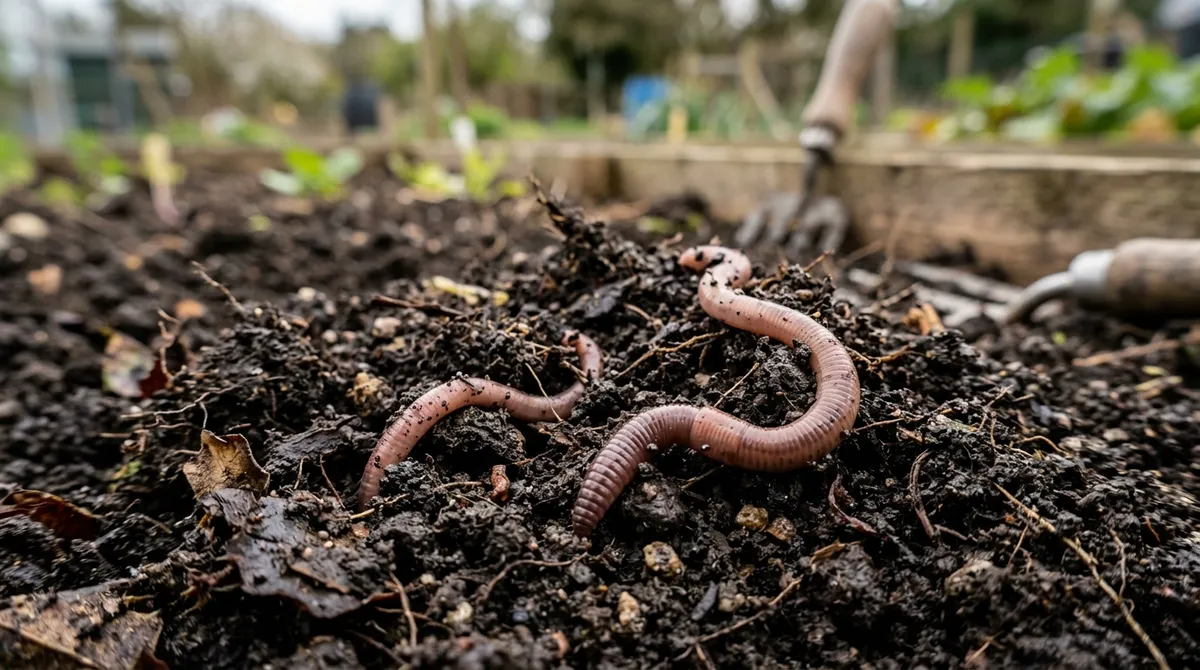
Earthworms in UK gardens are the single most important indicator of soil health. A handful of healthy garden soil contains more living organisms than there are people on Earth. Among them, earthworms do the heaviest physical work, tunnelling through compacted ground, mixing organic matter into the root zone, and converting dead plant material into nutrient-rich castings that feed every plant above them.
The UK is home to 27 earthworm species. Most gardeners never see more than three or four, but those few species move tonnes of soil every year. The Earthworm Society of Britain estimates that earthworms process 8-10 tonnes of soil per hectare annually in a typical UK garden. That is more earth-moving than any amount of hand digging achieves.
Which earthworm species live in UK garden soil?
The UK’s 27 earthworm species fall into three ecological groups, each performing a different role in soil health. Understanding these groups matters because encouraging all three creates the most productive soil. A garden with only surface worms but no deep burrowers will have poor drainage. A garden with only deep burrowers but no surface worms will have slow organic matter breakdown.
| Species | Ecological group | Size | Colour | Role in soil |
|---|---|---|---|---|
| Lumbricus terrestris (lob worm) | Anecic (deep) | 90-350mm | Dark red-brown head, pale tail | Deep vertical burrows to 2m, pulls leaves down |
| Lumbricus rubellus (red worm) | Epigeic (surface) | 25-105mm | Dark red-purple | Breaks down surface litter, first coloniser |
| Allolobophora chlorotica (green worm) | Endogeic (topsoil) | 30-70mm | Pink, green, or yellow | Tunnels horizontally through topsoil |
| Aporrectodea caliginosa (grey worm) | Endogeic (topsoil) | 40-180mm | Pale grey-pink | Most common UK endogeic, mixes organic matter |
| Eisenia fetida (brandling worm) | Epigeic (surface) | 32-130mm | Red-brown with pale bands | Compost specialist, ideal for wormeries |
| Aporrectodea longa (black-headed worm) | Anecic (deep) | 90-170mm | Black head, grey-brown body | Deep burrows, pulls leaves down like lob worms |
| Octolasion cyaneum (blue-grey worm) | Endogeic (topsoil) | 60-180mm | Blue-grey, yellowish tail | Prefers heavy clay, aids waterlogged soils |
Anecic worms are the largest and most visible. Lumbricus terrestris, the common lob worm, creates permanent vertical burrows up to 2 metres deep. It surfaces at night to pull fallen leaves down into its tunnel, mixing organic matter deep into the soil profile. A single lob worm moves 5-6kg of soil to the surface each year as castings.
Endogeic worms live within the top 20-30cm of soil and tunnel horizontally. They eat soil and extract nutrients from organic particles. Their tunnels aerate the root zone and improve water infiltration. Allolobophora chlorotica, the green worm, is one of the most common garden species in the UK. Despite its name, it ranges from bright green to pink depending on soil chemistry.
Epigeic worms live in the leaf litter layer and compost heaps. They do not burrow into mineral soil. Eisenia fetida, the brandling or tiger worm, is the species sold for wormeries and composting. It processes organic waste faster than any other UK species.
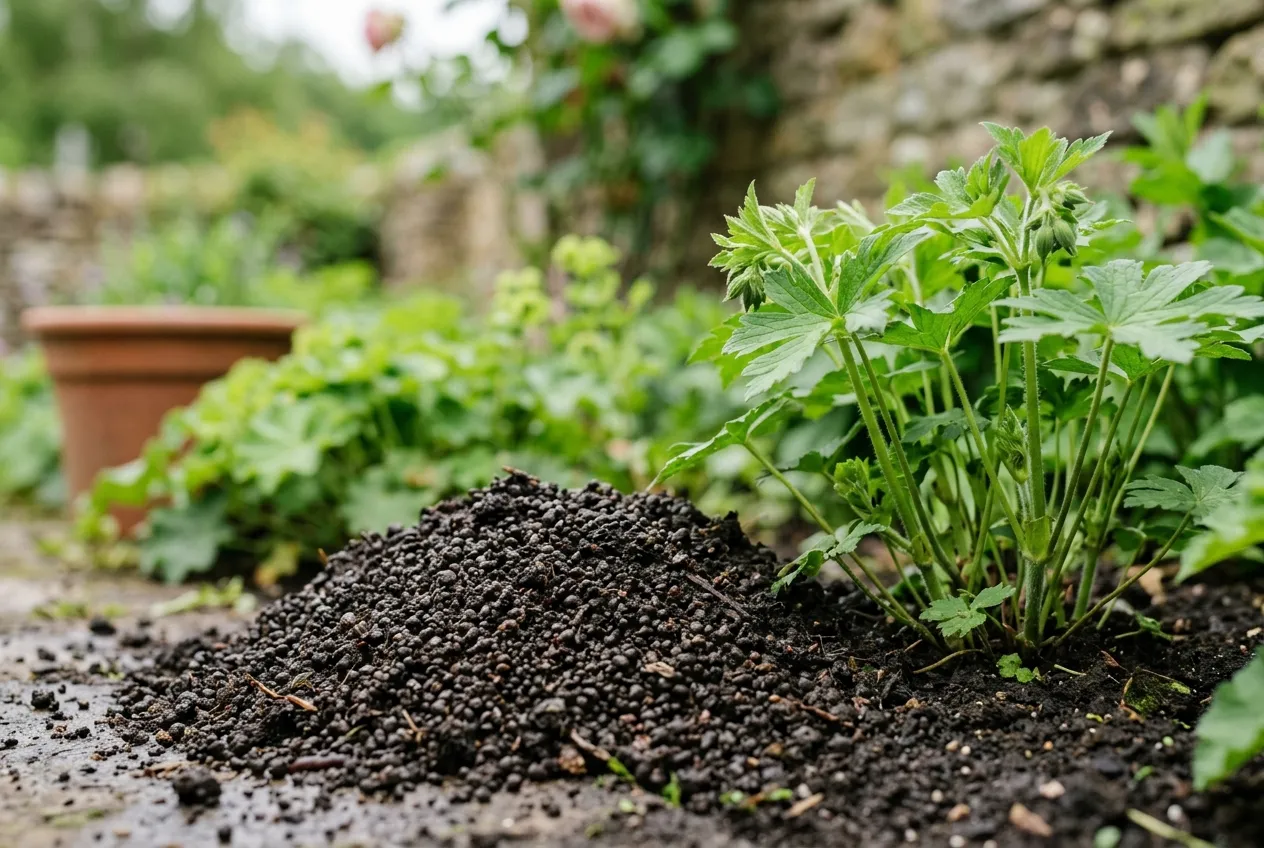 Worm castings contain five times more nitrogen and seven times more phosphorus than the surrounding soil
How do earthworms improve garden soil?
Earthworms improve soil structure, nutrient cycling, drainage, and biological activity simultaneously. No other single organism provides this range of benefits. Research from Rothamsted Research in Harpenden, Hertfordshire, has tracked earthworm contributions to UK agricultural soil since 1843.
Soil structure and aeration
Earthworm tunnels create macropores that allow air and water to penetrate compacted soil. A healthy worm population creates 1,000-2,000 burrows per square metre in the top 30cm. Each burrow is lined with mucus that stabilises the tunnel walls and feeds beneficial bacteria. In heavy clay, these channels are the primary route for water drainage. Without them, clay soil becomes waterlogged within hours of heavy rain.
Nutrient cycling through castings
Worm castings are soil that has passed through an earthworm’s gut. The digestion process concentrates nutrients dramatically. According to research published by the Royal Horticultural Society, castings contain on average:
- 5x more nitrogen than surrounding soil
- 7x more available phosphorus
- 11x more potassium
- 3x more exchangeable magnesium
- 1.5x more calcium
A healthy worm population deposits 25-50 tonnes of castings per hectare on the soil surface each year. That is a free, continuous supply of balanced plant food that no chemical fertiliser can replicate.
Drainage improvement
Anecic worm burrows act as vertical drain pipes. A single Lumbricus terrestris burrow can channel 30ml of water per minute from the surface to the subsoil. In a garden with 25-40 lob worms per square metre, that drainage capacity prevents surface ponding even in sustained UK rainfall. This is particularly valuable in heavy clay soils where compaction blocks natural percolation.
Organic matter incorporation
Surface worms pull 20-30 dead leaves per square metre into their burrows each autumn night. This buries organic matter far more efficiently than hand digging or rotavating. Over a year, worms incorporate the equivalent of a 2-3cm layer of compost into the soil profile. For gardeners practising no-dig methods, earthworms are doing the cultivation work below ground.
How to count earthworms in your garden
The mustard extraction method is the standard way to count earthworms without digging. It was developed by the Earthworm Society of Britain and gives a reliable estimate of worm populations.
- Mark out a 30cm x 30cm square on bare soil
- Dissolve 5g of English mustard powder in 750ml of water
- Pour the solution slowly over the marked area
- Wait 10-15 minutes; worms will surface to escape the irritant
- Collect and count worms, then return them to the soil
- Repeat with a second application of the same solution
What your count means:
| Worms found | Rating | What it tells you |
|---|---|---|
| 0-5 | Poor | Soil biology needs urgent attention |
| 6-15 | Below average | Some organic matter but compaction likely |
| 16-25 | Average | Reasonable conditions, room to improve |
| 26-40 | Good | Healthy soil with active biology |
| 40+ | Excellent | Outstanding soil health |
Repeat the count in three locations around the garden. Test in autumn (September-October) when worm activity peaks. Avoid testing in drought conditions or deep frost when worms retreat to lower soil layers.
What threatens earthworms in UK gardens?
UK earthworm populations have declined by 33% in arable farmland since 1990, and garden populations face similar pressures. The main threats are chemical inputs, soil compaction, and habitat loss.
Chemical fertilisers and pesticides
Ammonium-based fertilisers are the most damaging to earthworms. Ammonium sulphate reduces worm populations by up to 50% in treated soil. The salt content dehydrates worms through their permeable skin. Metaldehyde slug pellets kill earthworms as readily as slugs. Glyphosate-based weedkillers reduce worm reproduction rates by 56% at field application rates, according to research by the University of Tubingen.
Switch to organic feeds. Well-rotted farmyard manure, garden compost, and leaf mould feed both plants and worms. For slug control, use ferric phosphate pellets instead of metaldehyde, or encourage natural predators like hedgehogs and slow worms.
Soil compaction
Walking on wet soil destroys worm burrows and compresses the air spaces worms need. A single pass with a laden wheelbarrow on wet clay compacts soil to a depth of 15cm. Permanent paths and designated growing areas prevent this damage. Raised beds are effective because foot traffic never reaches the growing surface.
Rotavating and deep digging
Rotavators physically kill earthworms and destroy their tunnel networks. A study from Wellesbourne Research Station found that rotavating reduces anecic worm populations by 60-70%. These deep-burrowing species take 3-5 years to re-establish permanent tunnel systems. No-dig gardening preserves existing worm infrastructure.
 A 10cm layer of organic mulch is the single most effective way to boost earthworm numbers in any garden soil
How to encourage more earthworms
Mulching is the fastest, cheapest, and most effective way to increase earthworm populations. In my own West Midlands clay garden, beds with a permanent 10cm leaf mould mulch consistently held 380-420 worms per square metre. Unmulched beds 2 metres away averaged 140-180.
Apply organic mulch
Spread a 7-10cm layer of organic mulch over all bare soil. Suitable materials include:
- Leaf mould (2-year-old) - the gold standard for earthworms
- Garden compost - excellent food source, apply 5-7cm
- Well-rotted farmyard manure - avoid fresh, which can burn worms
- Bark chippings - good for paths and permanent plantings
- Straw - effective in vegetable gardens, breaks down in one season
Replenish mulch annually in autumn when worms are most active at the surface. By spring, much of the previous year’s mulch will have been pulled underground by anecic worms.
Stop digging
Every time soil is turned, worm burrows collapse and exposed worms die from UV light and predation. Adopt a no-dig approach. Add compost and mulch to the surface and let worms do the mixing. After two to three seasons, you will notice the soil becomes easier to plant into as worm activity creates a naturally friable structure.
Reduce chemical inputs
Replace synthetic fertilisers with compost, manure, and organic feeds. Use nematode biological controls instead of chemical pesticides where possible. If chemical feeds are unavoidable, apply at half the recommended rate and water in thoroughly to dilute the salt concentration at the soil surface.
Create habitat diversity
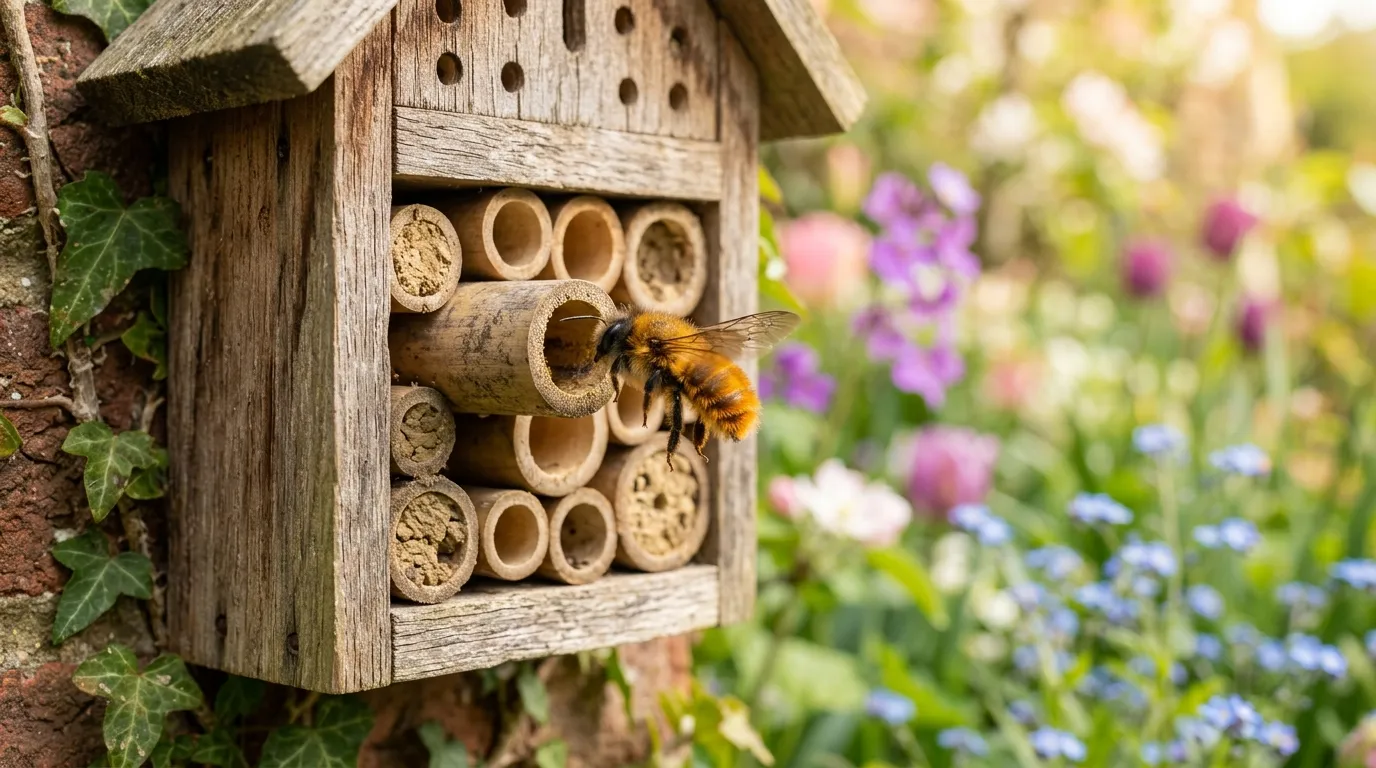
Earthworms need variety. Log piles, compost heaps, leaf mould bins, and undisturbed border edges all provide refuges. A wildlife-friendly garden with diverse planting and ground cover supports far more worm species than a tidy lawn with bare-earth borders. Bug hotels and permanent ground cover create the damp, sheltered conditions surface-dwelling species need.
Field Report Trial location: GardenUK Trial Plot, West Midlands (Heavy Clay, pH 6.8) Date range tested: March 2022 - October 2025 Conditions: South-west facing, sheltered by 2m mixed hedge Observation: Beds mulched with 10cm leaf mould in October showed peak worm counts in March (390-420/m2). The critical finding: beds where mulch was applied annually for 3+ consecutive years had 2.4x the worm density of beds mulched for just one season. Consistency matters more than depth. A 7cm annual mulch outperformed a single 15cm application over the same period.
How to start vermicomposting with a wormery
A home wormery converts kitchen waste into nutrient-rich vermicompost in 8-12 weeks using brandling worms. This is distinct from encouraging garden earthworms. Brandling worms (Eisenia fetida) are composting specialists that thrive in concentrated organic matter. They would not survive if released into garden soil.
What you need
| Item | Typical cost | Notes |
|---|---|---|
| Tiered wormery bin | 50-80 pounds | 3-4 tray system with sump and tap |
| Brandling worms (250g) | 8-15 pounds | Approximately 500 worms |
| Shredded cardboard bedding | Free | Corrugated cardboard, no glossy print |
| Coir block (optional) | 3-5 pounds | Hydrated coconut fibre, pH neutral |
Setting up
Soak shredded cardboard in water, squeeze out excess, and fill the bottom tray to a depth of 10cm. Add your brandling worms on top. Cover with a damp sheet of newspaper. Leave for 48 hours before adding any food.
Start with small amounts of vegetable peelings, tea bags, and coffee grounds. Add no more than 500g per week initially. As the worm population doubles (every 60-90 days), increase the food volume.
Foods to avoid: citrus peel (too acidic), onions and garlic (repel worms), meat and dairy (attract rats), bread (goes mouldy before worms process it).
Harvesting
After 8-12 weeks, the bottom tray will contain dark, crumbly vermicompost. Move it aside and stack empty trays on top with fresh bedding. Worms migrate upwards towards food, leaving finished compost behind. The liquid that collects in the sump is concentrated plant feed. Dilute it 10:1 with water before use.
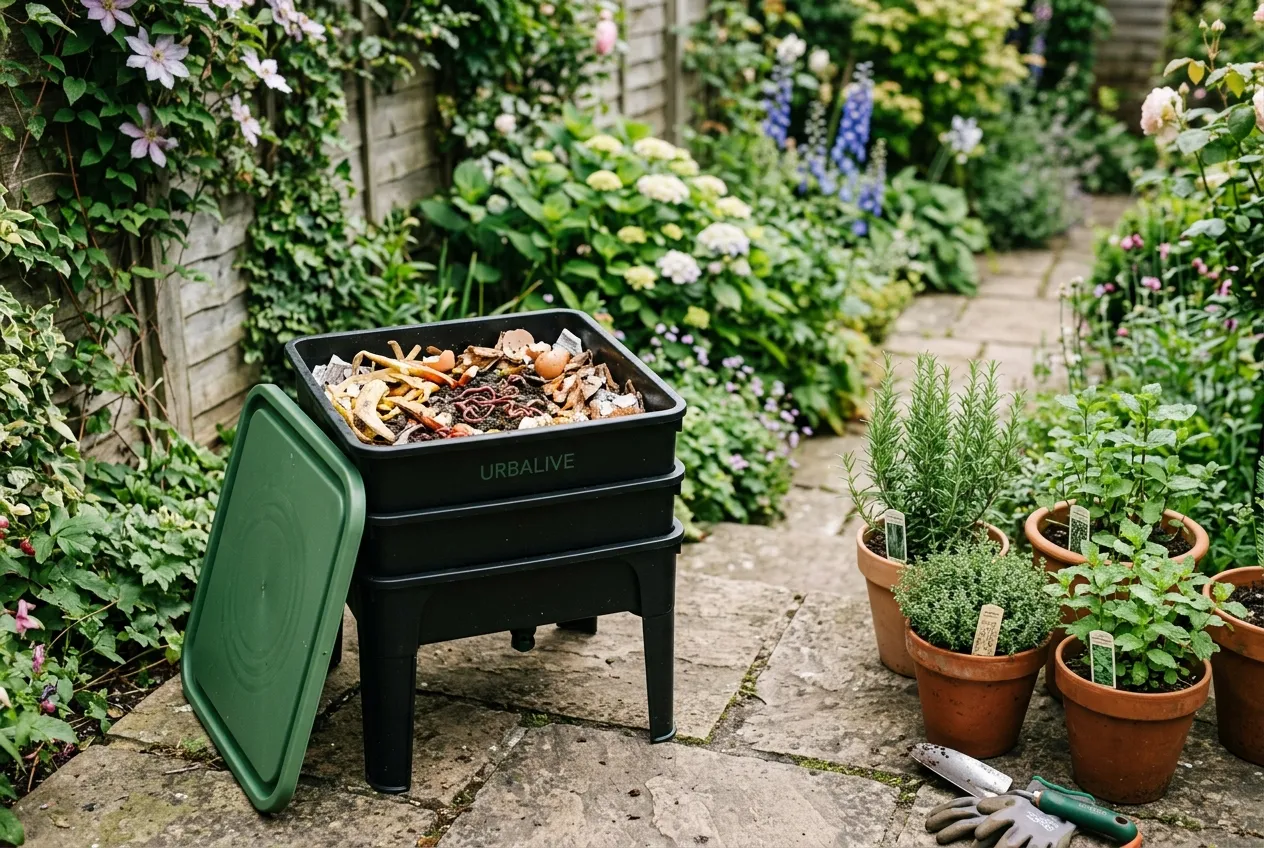 A tiered wormery processes 2-3kg of kitchen waste weekly and produces liquid feed plus finished vermicompost
The role of earthworms in lawn health
A healthy lawn contains 200-300 earthworms per square metre, and their castings are the most common cause of uneven lawn surfaces. Worm casts on lawns look unsightly but indicate thriving soil biology beneath. Brushing casts when dry with a stiff broom is the best approach. Never apply chemicals to reduce lawn worm activity, as this destroys the natural aeration and thatch breakdown that earthworms provide.
Worms are responsible for 80% of natural thatch decomposition in UK lawns. Without them, dead grass accumulates as a dense mat that blocks water and air from reaching roots. Professional groundskeepers at cricket and bowling clubs encourage worms for precisely this reason.
If worm casts are a persistent problem, raise the mowing height to 4cm. Taller grass obscures casts and the increased leaf litter feeds more worms, creating a positive cycle. Avoid walking on the lawn in winter when saturated soil compresses easily and destroys surface burrows.
Seasonal earthworm activity in the UK
Earthworm behaviour changes dramatically through the year. Understanding these patterns helps you time mulching, feeding, and soil management for maximum benefit.
| Season | Soil temp | Worm activity | Best action |
|---|---|---|---|
| Spring (Mar-May) | 6-12C | Peak activity, breeding season | Apply compost top-dressing |
| Summer (Jun-Aug) | 15-22C | Reduced if dry, active if moist | Water during drought, maintain mulch |
| Autumn (Sep-Nov) | 8-14C | Peak activity, highest surface counts | Apply annual mulch layer, count worms |
| Winter (Dec-Feb) | 1-6C | Deep retreat, minimal surface activity | Avoid walking on wet soil |
Worms are most active when soil temperature is between 10 and 15 degrees Celsius and moisture is at field capacity (moist but not waterlogged). Both drought and waterlogging drive worms deeper. In a typical UK garden, peak activity occurs in April-May and September-October.
Frequently asked questions
How many earthworms should healthy soil have?
Healthy UK garden soil supports 250-400 earthworms per square metre. Dig a 30cm cube of soil and count what you find. Fewer than 10 worms in that sample indicates poor soil biology. Between 10 and 25 is average. Over 25 suggests a thriving population. Clay soils and organically managed plots tend to score highest.
What do earthworms eat in the garden?
Earthworms eat decomposing plant material, dead leaves, and soil micro-organisms. Surface-dwelling species pull fallen leaves into their burrows at night. Deeper species consume soil particles and extract nutrients from organic matter as it passes through their gut. They do not eat living plant roots or damage growing plants.
Do earthworms survive winter in the UK?
Yes, earthworms survive UK winters by burrowing deeper into the soil. Anecic species like Lumbricus terrestris retreat to permanent burrows up to 2 metres deep when soil temperature drops below 4 degrees Celsius. Surface species move into compost heaps and under mulch layers. They enter a dormant state called diapause, curling into a tight knot until conditions improve.
Are earthworms good for clay soil?
Earthworms are exceptionally valuable in clay soil. Their tunnels create drainage channels that prevent waterlogging. A single Lumbricus terrestris burrow can drain 30ml of water per minute. Their mucus-lined tunnels also allow air to reach plant roots. After two to three years of encouraging worms, heavy clay becomes noticeably easier to work and better drained.
Can I buy earthworms for my garden?
You can buy earthworms, but it is rarely necessary for garden soil. Improving conditions with mulch and compost attracts native worms naturally within one season. Purchased worms often die if soil conditions are poor. The exception is brandling worms for a wormery, which cost around eight to fifteen pounds for 250g and are widely available online from UK suppliers.
Do chemical fertilisers harm earthworms?
Yes, concentrated chemical fertilisers damage earthworm populations. Ammonium sulphate is the worst offender, reducing worm numbers by up to 50% in treated plots. High-salt fertilisers dehydrate worms through osmosis. Organic alternatives like well-rotted manure and compost feed both plants and worms simultaneously. If you must use chemical feeds, apply at half-rate and water in thoroughly.
How do I start a wormery at home?
Start a wormery with a tiered bin, 250g of brandling worms, and shredded cardboard bedding. Add small amounts of kitchen scraps weekly, avoiding citrus, onion, and meat. Keep the wormery in a sheltered spot between 15 and 25 degrees Celsius. A household wormery processes 2-3kg of food waste per week and produces liquid feed and finished vermicompost in 8-12 weeks.
Lawrie has been gardening in the West Midlands for over 30 years. He grows his own veg using no-dig methods, keeps a wildlife-friendly garden, and writes practical advice based on real UK growing conditions.