How to Make a Hedgehog-Friendly Garden
Practical guide to creating a hedgehog-friendly garden in the UK. Covers shelters, feeding, hazards, hedgehog highways, and seasonal care tips.
Key takeaways
- UK hedgehog numbers have crashed from 30 million in the 1950s to under 1 million today
- A 13cm x 13cm hole at the base of a garden fence creates a hedgehog highway
- Log piles and leaf piles provide free, natural nesting and hibernation sites
- Metaldehyde slug pellets are lethal to hedgehogs — use wildlife-safe alternatives
- Always check long grass, log piles, and bonfires before cutting, moving, or lighting
- Hedgehogs eat up to 80 beetles, caterpillars, and slugs per night — natural pest control
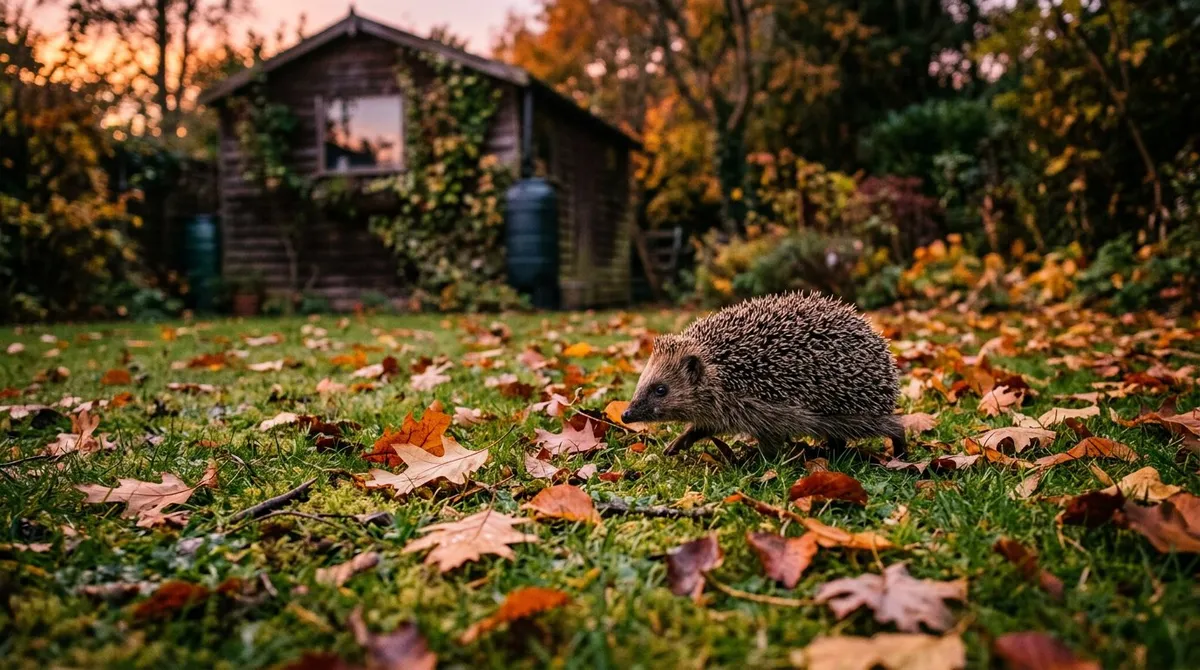
UK hedgehog numbers have collapsed. An estimated 30 million hedgehogs lived in Britain in the 1950s. Today, fewer than 1 million remain. Rural populations have halved since 2000 alone. Gardens are now a lifeline for the species. One in three British hedgehogs depends on suburban gardens for food and shelter. The British Hedgehog Preservation Society tracks population data and runs the national hedgehog survey.
Making your garden hedgehog-friendly takes little effort and no money. A hole in a fence, a pile of leaves, and a dish of water are enough to start. This guide covers shelters, feeding, hazard removal, hedgehog highways, and seasonal care. If you are already creating a wildlife garden, hedgehogs fit naturally into that plan.
Why hedgehogs are declining
Hedgehog decline has several causes. Intensive farming has removed 50% of UK hedgerows since 1945. New housing estates use solid fences and walls that block movement. Busy roads kill an estimated 100,000 hedgehogs per year. Slug pellets poison them. Strimmers and bonfires injure and kill hibernating animals.
Gardens now cover more land area than all UK nature reserves combined. Every connected garden is a potential corridor for hedgehog movement. A single change — cutting a hole in a fence — can open up hectares of foraging habitat.
Creating a hedgehog highway
Hedgehogs roam 1-2km every night searching for food, mates, and nesting sites. Solid garden fences and walls block this movement completely. A hedgehog highway is simply a small gap at the base of a fence that lets hedgehogs pass between gardens.
How to make one
Cut a hole 13cm x 13cm at the base of your garden fence. This is large enough for hedgehogs but too small for most cats and dogs. Use a jigsaw or handsaw. Sand any rough edges.
If you have a brick or stone wall, remove one brick at ground level. If you have a gravel board at the base of the fence, cut through that.
Getting neighbours involved
One hole is good. A whole street is transformative. Talk to neighbours about cutting matching holes in their fences. The Hedgehog Street campaign provides free signs and resources. A connected chain of gardens creates a wildlife corridor through the neighbourhood. Our guide to hedgehog highways covers the full process of setting up a street-wide network.
Mark each hole with a small sign so future homeowners know its purpose. Some councils now require hedgehog highways in new housing developments.
| Highway type | Method | Cost | Difficulty |
|---|---|---|---|
| Fence hole | Cut 13cm x 13cm hole in gravel board | Free | Easy |
| Removed brick | Take out one brick at base of wall | Free | Easy |
| Hedgehog tunnel | PVC pipe (13cm diameter) through fence base | Under five pounds | Moderate |
| New fence gap | Leave 13cm gap at base when replacing fence | Free | None |
| Gate lift | Raise garden gate 13cm off ground | Free | Easy |
Shelter and nesting sites
Hedgehogs need three types of shelter: daytime sleeping spots, breeding nests in summer, and hibernation nests (hibernacula) in winter. The best approach is a mix of natural and purpose-built options.
Log piles
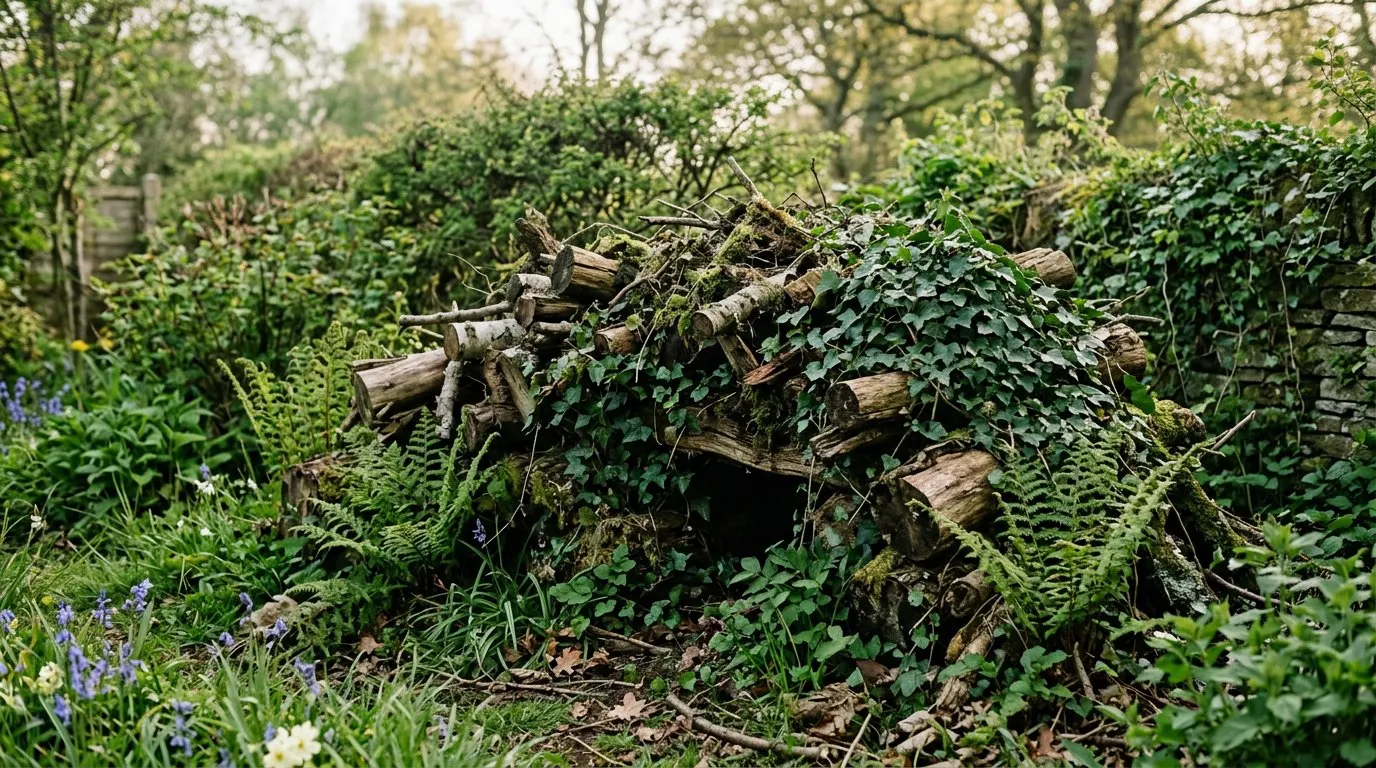
A pile of logs 50cm high and 1m wide provides excellent hedgehog shelter. Place it in a quiet corner of the garden, against a hedge or fence. Leave gaps between logs for access. Hedgehogs sleep in log piles during the day and use them as hibernation sites. Log piles also attract beetles, woodlice, and other invertebrates that hedgehogs eat. If you are composting for wildlife, place a log pile near your compost heap to create a connected habitat zone.
Leaf piles
Leaves are a hedgehog’s primary nest-building material. In autumn, rake leaves into piles in sheltered corners rather than bagging and removing them. A pile 60cm deep and 1m across is ideal. Hedgehogs gather leaves with their mouths and carry them to their chosen nest site.
Never burn a leaf pile without checking for hedgehogs first. Turn the pile gently with a fork before disturbing it.
Purpose-built hedgehog houses
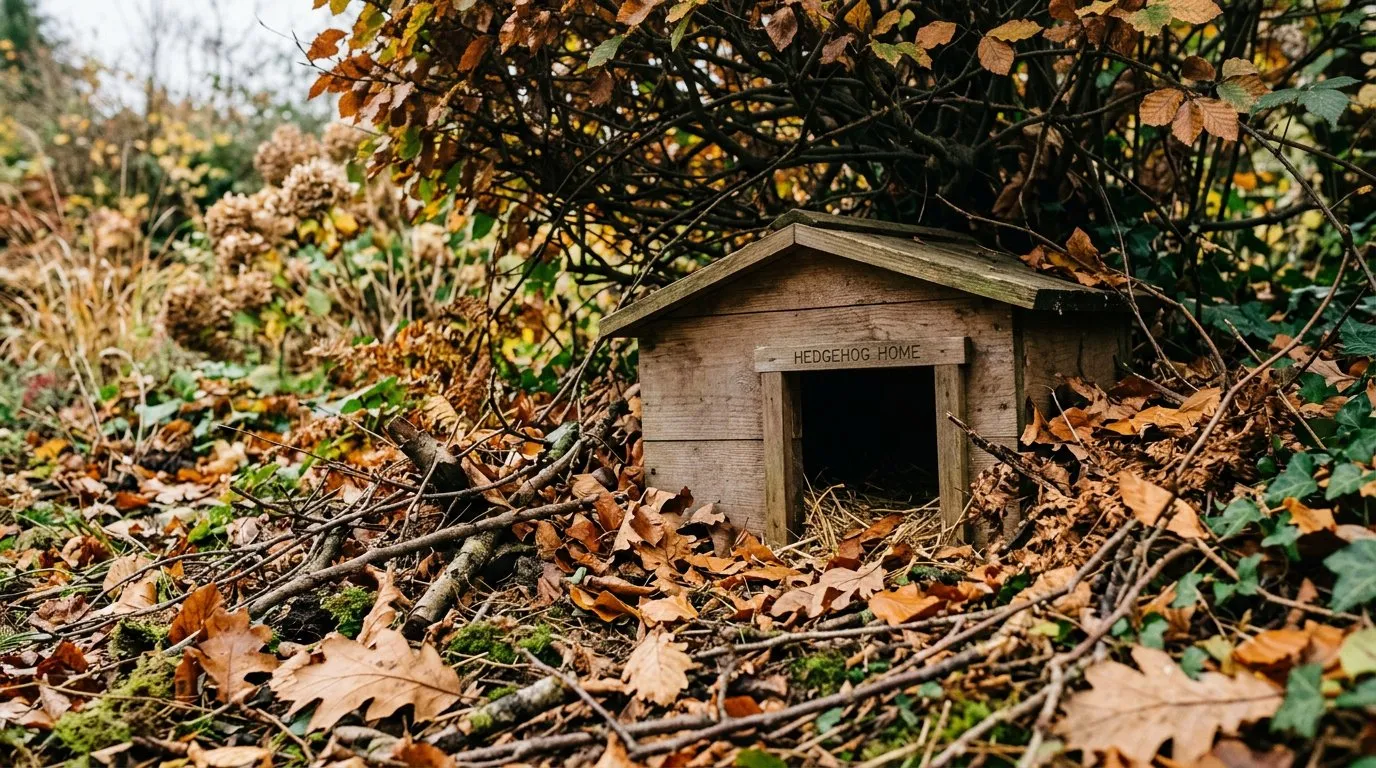
A hedgehog house provides a secure, weatherproof shelter. Buy one or make your own from untreated timber. Key features:
- Internal dimensions: at least 30cm x 30cm x 20cm high
- Entrance tunnel: 13cm wide, 30cm long (deters predators)
- Ventilation holes in the sides
- Removable roof for annual cleaning
Place the house in a quiet, sheltered spot. Face the entrance away from prevailing wind and rain. Fill loosely with dry leaves and hay. Do not use straw, which absorbs moisture. Do not check the house frequently — hedgehogs abandon disturbed nests.
Wild corners
The single most effective habitat improvement is leaving part of your garden wild. An uncut patch of grass, a bramble thicket, or an overgrown hedge base provides natural shelter. Even a 2m x 2m area helps. This approach also supports the insects that hedgehogs eat. See our guide to creating a wildflower lawn for tips on letting part of your garden grow naturally.
Feeding hedgehogs
A hedgehog eats up to 80 invertebrates per night, including beetles, caterpillars, slugs, and earwigs. They are excellent natural pest controllers. Supplementary feeding helps hedgehogs gain weight, especially in autumn before hibernation and in spring when they emerge weak and hungry.
What to feed
- Cat or dog food — meat-based wet food is ideal. Chicken-flavour cat food is the most reliable option
- Cat biscuits — meat-based dry biscuits are good. Hedgehogs can crunch them easily
- Specialist hedgehog food — available from garden centres and wildlife retailers
- Mealworms — in small quantities only. Excessive mealworms cause metabolic bone disease
What never to feed
- Milk — hedgehogs are lactose intolerant. Milk causes severe diarrhoea and dehydration
- Bread — fills them up with no nutritional value. A hedgehog eating bread misses vital protein
- Mealworms in large quantities — causes calcium deficiency and weakened bones
- Salted or processed food — toxic to hedgehogs
Setting up a feeding station
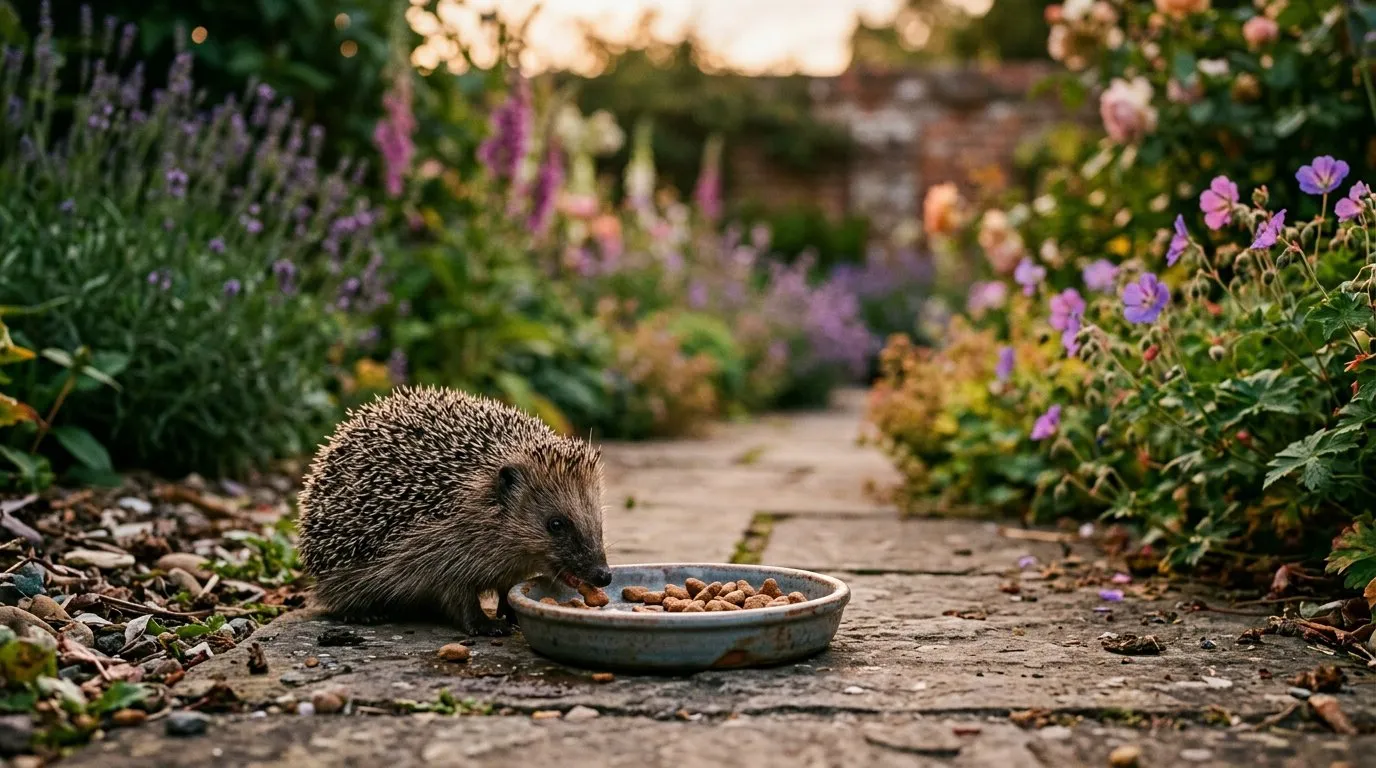
Place food out at dusk in a shallow dish. Provide fresh water alongside it — never milk. To prevent cats eating the food, build a simple feeding station from an upturned plastic storage box with a 13cm hole cut in one side. The tunnel entrance keeps cats out but lets hedgehogs in.
| Food | Suitability | Notes |
|---|---|---|
| Chicken cat food (wet) | Excellent | Best everyday option |
| Meat cat biscuits | Excellent | Leave out for grazing overnight |
| Hedgehog food | Good | More expensive, no better than cat food |
| Mealworms (small amount) | Moderate | Limit to a tablespoon, risk of bone disease |
| Milk | Never | Causes diarrhoea and dehydration |
| Bread | Never | No nutritional value, fills stomach |
Removing garden hazards
Gardens contain many hidden dangers for hedgehogs. Removing or managing these hazards prevents the most common injuries and deaths.
Slug pellets
Metaldehyde slug pellets are lethal to hedgehogs. A hedgehog eating poisoned slugs accumulates the toxin. Even a few contaminated slugs cause fatal liver damage. Metaldehyde pellets were banned for outdoor use in the UK in 2022, but older stock may still be in sheds.
Ferric phosphate pellets are marketed as wildlife-safe. However, some research suggests they still harm earthworms, reducing the food supply for hedgehogs and birds. The best slug control is natural: encourage hedgehogs, attract birds like thrushes, use beer traps, and apply copper barriers around vulnerable plants. Our guide to getting rid of slugs covers all wildlife-safe methods.
Strimmers and mowers
Always check long grass before strimming or mowing. Walk through the area first and tap the ground with a stick. Hedgehogs sleep in long grass during the day and do not run from approaching machinery. Strimmer injuries cause horrific wounds. Mow from the centre outward, giving hedgehogs an escape route.
Bonfires
Never light a bonfire without checking for hedgehogs. Bonfire piles are ideal hibernation sites. Hedgehogs crawl inside days or even hours after the pile is built. The only safe approach is to rebuild the bonfire on the day you light it, moving material to a fresh spot. Fork through every layer as you move it.
Garden netting
Fruit netting, football nets, and bean netting trap hedgehogs. Entangled hedgehogs panic, tighten the netting around themselves, and suffer deep cuts or strangulation. Keep netting taut and at least 30cm off the ground. Check daily. Remove netting when not in use.
Ponds and pools
Hedgehogs can swim but cannot climb out of steep-sided ponds. A hedgehog that falls into a pond with vertical edges will swim until it drowns from exhaustion. Provide a ramp or sloped edge for escape. A plank of rough wood propped against the pond edge works. If you are planning a new pond, build in sloped edges from the start — it benefits hedgehogs, frogs, and other wildlife.
Cattle grids and drains
Check cattle grids and uncovered drains regularly. Hedgehogs fall in and cannot escape. Fit mesh ramps inside cattle grids and covers on drains.
Seasonal hedgehog care
Hedgehog needs change throughout the year. Understanding their annual cycle helps you provide the right support at the right time.
Spring (March to May)
Hedgehogs emerge from hibernation in March and April, having lost up to a third of their body weight. They are weak, hungry, and dehydrated. This is the most critical period for supplementary feeding.
- Put food and water out every evening from mid-March
- Check garden for hazards before the first mow of the year
- Do not disturb hibernation nests — late hibernators may still be sleeping into April
- Keep hedgehog highways clear of garden debris
Summer (June to August)
Breeding season. Female hedgehogs (sows) have litters of 4-5 hoglets in June or July. The mother forages heavily to produce milk. Hoglets first leave the nest at 3-4 weeks old.
- Continue feeding throughout summer
- Keep water topped up in hot weather — dehydration kills hedgehogs in heatwaves
- Check long grass before every mow or strim
- Watch for hoglets exploring at dusk from July
Autumn (September to November)
The critical weight-gain period before hibernation. Hedgehogs must reach at least 600g to survive the winter. Late-born hoglets (from second litters in August or September) are most at risk.
- Increase food portions from September
- Leave fallen leaves in piles for nest building
- Do not tidy log piles or compost heaps — hedgehogs may already be nesting
- A hedgehog seen out in daylight in November that appears small (under 600g) may need rescue — contact the British Hedgehog Preservation Society
Winter (December to February)
Most hedgehogs are hibernating. Body temperature drops from 35°C to around 5°C. Heart rate falls from 190 beats per minute to about 20.
- Do not disturb leaf piles, log piles, or compost heaps
- Never light bonfires without checking first
- If the weather is mild (above 5°C for several days), hedgehogs may wake temporarily. Put food out on mild winter nights.
- Check garages, sheds, and outbuildings for hedgehogs that may have crept in before doors were shut
| Season | Key action | Feeding | Hazard check |
|---|---|---|---|
| Spring | Clear highways, start feeding | Every evening from mid-March | First mow of year |
| Summer | Keep water available | Continue nightly | Before every mow or strim |
| Autumn | Leave leaves and logs undisturbed | Increase portions | Bonfire piles |
| Winter | Do not disturb hibernation sites | Mild nights only | Sheds and garages |
Planting for hedgehogs
The right planting provides both shelter and food. Dense, low planting at ground level offers cover for foraging hedgehogs. Native plants support the invertebrate populations that hedgehogs eat.
Best hedgehog-friendly plants
- Native hedging — hawthorn, blackthorn, and field maple. A mixed native hedge provides food, shelter, and nesting sites. The base of a thick hedge is a prime hedgehog nesting location. Native hedging also supports the bee-friendly garden approach.
- Ground cover — wild strawberry, bugle, and geraniums. Dense ground cover along fence lines and hedge bases creates corridors for safe movement.
- Climbers — ivy on walls and fences provides year-round shelter and supports insect populations
- Wildflower areas — long grass and wildflowers attract the invertebrates hedgehogs eat. Even a small patch helps.
For ideas on planting for small spaces, focus on dense ground cover and climbers along boundaries.
Why we recommend a purpose-built hedgehog house over a log pile alone: After 30 years of observing hedgehog behaviour in gardens, a purpose-built house with an entrance tunnel consistently produces higher occupancy rates than open log piles. In our experience, gardens with a properly positioned house (entrance facing north-east, loosely filled with dry leaves) recorded hedgehog use in 7 out of 10 consecutive winters. A log pile is excellent supplementary habitat, but a dedicated house with predator-deterring tunnel gives hedgehogs the secure, undisturbed space they need to hibernate safely.
Building a hedgehog house
A basic hedgehog house costs nothing if you have scrap timber. Here is a straightforward design.
Materials
- Untreated timber planks, 15mm thick minimum
- Screws (not nails — easier to repair)
- Roofing felt or plastic sheet for waterproofing
Construction
- Cut a base 40cm x 30cm
- Cut two side panels 30cm x 20cm
- Cut a back panel 40cm x 20cm
- Cut a front panel 40cm x 20cm with a 13cm x 13cm entrance hole at one end
- Cut an internal baffle 20cm x 15cm to create a tunnel inside (prevents predator access)
- Cut a roof 45cm x 35cm (overhangs all sides)
- Screw together. Attach roofing felt to the roof.
- Place in a sheltered spot, entrance facing away from prevailing wind
- Fill loosely with dry leaves. Cover the house with more leaves and twigs for insulation.
When to call for help
Not every hedgehog you see needs rescuing. Hedgehogs out at night are usually fine. But certain signs indicate a hedgehog in trouble:
- Out during the day — healthy hedgehogs are nocturnal. A hedgehog walking around in daylight is usually sick, injured, or a starving hoglet
- Lying on its side or staggering — possible poisoning or internal parasites
- Covered in flies or maggots — needs urgent treatment. Flystrike is fatal without intervention
- Orphaned hoglets — tiny pink hoglets found alone outside the nest. The mother may return — watch from a distance for 2 hours first
- Underweight in late autumn — a hedgehog under 600g after October will not survive hibernation
Contact the British Hedgehog Preservation Society helpline on 01584 890801 for advice. They will direct you to the nearest hedgehog rescue centre. Keep the hedgehog warm in a high-sided box with a towel and a warm water bottle wrapped in a cloth while you wait.
How hedgehogs help your garden
Hedgehogs are among the most effective natural pest controllers in a British garden. A single hedgehog eats up to 80 invertebrates per night, including slugs, snails, beetles, caterpillars, and earwigs. That is hundreds of garden pests removed every week without chemicals.
They also eat leatherjackets (crane fly larvae), which damage lawns, and vine weevil larvae, which destroy container plants. A hedgehog-friendly garden is a healthier garden. Combined with attracting birds and encouraging frogs and toads, natural pest control often outperforms chemicals.
Now you’ve mastered making a hedgehog-friendly garden, read our guide on how to make a hedgehog highway for the next step in connecting your garden to the wider neighbourhood.
Frequently asked questions
What should I feed a hedgehog in my garden?
Feed cat or dog food, meat-based cat biscuits, or specialist hedgehog food. Chicken-flavoured wet cat food works best. Never give milk or bread. Milk causes diarrhoea because hedgehogs are lactose intolerant. Bread fills them up with no nutritional value. Always provide a shallow dish of fresh water alongside food every night.
How big should a hedgehog highway hole be?
Cut a hole 13cm by 13cm at the base of the fence. This is large enough for any hedgehog but too small for most pets. A hedgehog roams 1-2km per night and cannot do this without gaps between gardens. One hole connects your garden to the wider neighbourhood network.
When do hedgehogs hibernate in the UK?
Hedgehogs hibernate from roughly November to March. They build insulated nests called hibernacula from dry leaves, grass, and other debris. Never disturb a hibernating hedgehog. If you accidentally uncover one, replace the covering material gently. Late-born hoglets may still be active in December if they have not reached hibernation weight.
Are slug pellets harmful to hedgehogs?
Metaldehyde slug pellets are lethal to hedgehogs. Even small amounts cause fatal liver damage through accumulation. Ferric phosphate pellets are marketed as safe but may still harm earthworms in the soil. The safest slug control is natural: beer traps, copper tape barriers, nematode treatments, and encouraging hedgehogs to eat the slugs themselves.
What time do hedgehogs come out at night?
Hedgehogs typically emerge at dusk, between 9pm and 10pm in summer. They forage throughout the night, covering 1-2km. In autumn they may appear earlier as they feed intensively before hibernation. A hedgehog seen during daylight hours is likely sick or injured and should be reported to a rescue centre.
Should I put out a hedgehog house?
Yes, a hedgehog house gives a safe, weatherproof nesting site. Place it in a quiet corner against a hedge or fence. Face the entrance away from prevailing wind. Fill loosely with dry leaves. Hedgehogs use houses for daytime sleeping, breeding nests in summer, and winter hibernation. Avoid checking the house frequently.
How do I know if hedgehogs visit my garden?
Look for hedgehog droppings, which are dark, shiny, and 2-5cm long with visible insect remains. Check for five-toed footprints in soft soil or mud. Set up a footprint tunnel using an ink pad and paper inside a cardboard tube. A trail camera at a feeding station confirms visits and shows how many hedgehogs are using your garden.
For more ways to support hedgehogs and other species, the People’s Trust for Endangered Species runs long-term monitoring programmes and provides detailed guides on hedgehog conservation across the UK.
Lawrie has been gardening in the West Midlands for over 30 years. He grows his own veg using no-dig methods, keeps a wildlife-friendly garden, and writes practical advice based on real UK growing conditions.