How to Make a Hedgehog Highway UK
Step-by-step guide to making hedgehog highways. Covers fence holes, gravel boards, wall gaps, and connecting gardens across your street.
Key takeaways
- A hedgehog highway is a 13 cm x 13 cm hole at the base of a fence or wall
- Hedgehogs roam 1-2 km per night and need connected gardens to survive
- Gravel boards are the biggest modern barrier to hedgehog movement
- One highway takes under 30 minutes to make with basic tools
- Connecting five gardens in a row doubles local hedgehog survival rates
- Over 100,000 UK households have registered highways via Hedgehog Street
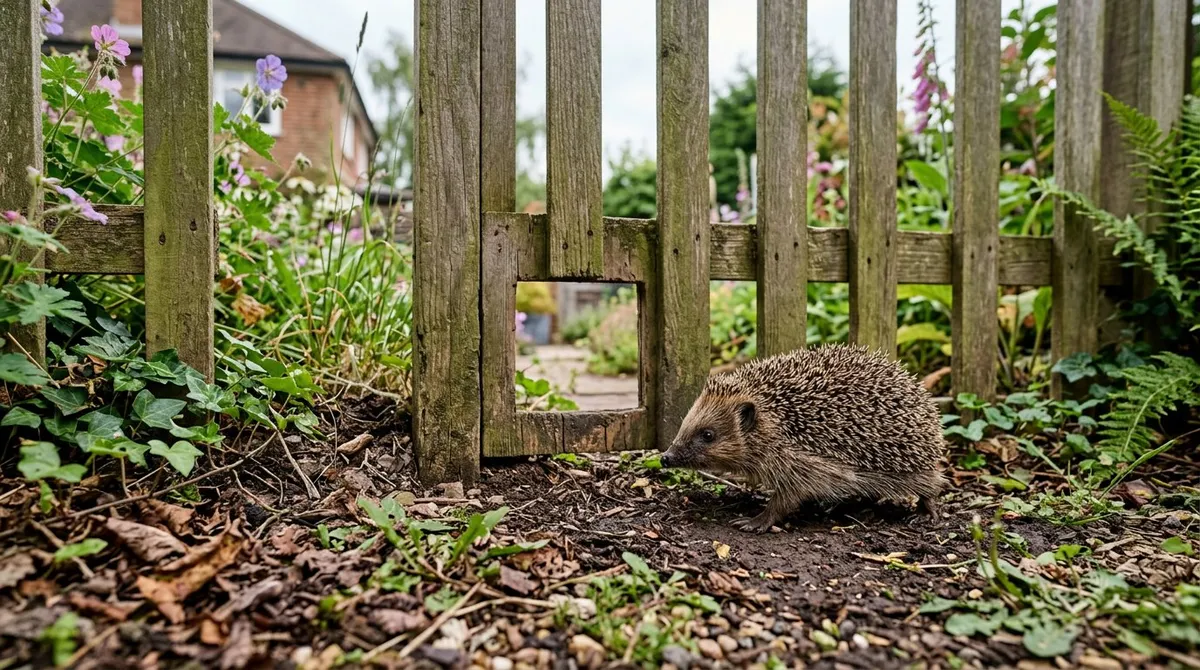
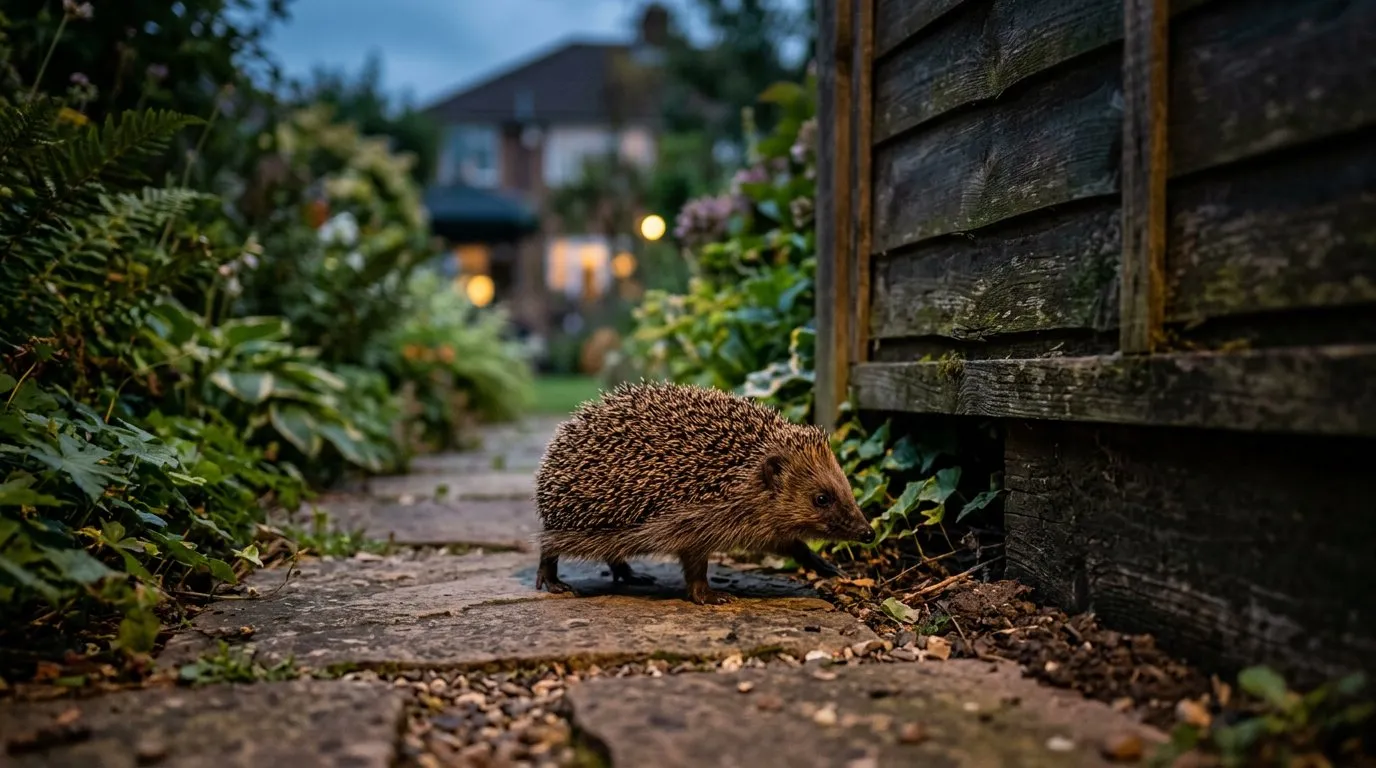
Hedgehog numbers in Britain have fallen by half since 2000. The population now sits at roughly one million, down from around 30 million in the 1950s. Fenced gardens are a major cause. A hedgehog needs to roam 1-2 km each night to find enough food, water, and mates. A standard panel fence stops them dead. The fix is simple and takes less than 30 minutes. Cut a 13 cm x 13 cm hole at the base of your fence. That is a hedgehog highway.
The Hedgehog Street campaign run by the British Hedgehog Preservation Society and People’s Trust for Endangered Species has registered over 100,000 highways across the UK since 2011. This guide covers exactly how to make one in every type of fence and wall, plus how to get your neighbours involved. For a broader guide to supporting hedgehogs, see our article on creating a hedgehog-friendly garden.
Why hedgehogs need highways
Hedgehogs are not territorial. They share overlapping home ranges of around 10-20 hectares. A single male may visit 10 or more gardens in one night during the breeding season from April to September. Females range less widely but still need access to multiple gardens to find enough slugs, beetles, caterpillars, and earthworms.
Modern fencing has changed the game. Before the 1980s, most gardens had hedges, post-and-rail fences, or walls with natural gaps at the base. Today, close-board panel fences with concrete gravel boards seal gardens completely. A hedgehog cannot climb a vertical fence, dig through concrete, or push through an overlap panel.
Without connected gardens, hedgehogs are forced onto roads. Around 100,000 hedgehogs are killed on UK roads each year. Many of these deaths happen because the animal had no alternative route between feeding areas. Planting native hedgerows is a long-term alternative to fencing that removes the barrier entirely. Our guide to cottage garden planting plans covers hedgerow species that double as wildlife corridors.
The right dimensions
The standard hedgehog highway is 13 cm wide x 13 cm tall (roughly 5 inches square). This is the size recommended by the British Hedgehog Preservation Society. A CD jewel case is exactly this size, which makes a handy template.
This size allows adult hedgehogs through comfortably. It is too small for most dogs, though cats and very small dogs can fit. If cats are a concern, a tunnel of 30-40 cm length discourages them while hedgehogs pass through happily.
| Barrier type | Hole size | Tools needed | Time | Difficulty |
|---|---|---|---|---|
| Wooden panel fence | 13 x 13 cm square | Jigsaw or hand saw | 15 mins | Easy |
| Close-board fence | 13 x 13 cm square | Jigsaw, remove one board section | 20 mins | Easy |
| Wooden gravel board | 13 x 13 cm notch | Jigsaw or hand saw | 15 mins | Easy |
| Concrete gravel board | 13 x 13 cm notch | Angle grinder with diamond blade | 30 mins | Moderate |
| Brick or stone wall | Remove one brick or fit pipe | Chisel and hammer, or 15 cm pipe | 45 mins | Moderate |
| Chain-link or wire fence | Lift base or cut opening | Wire cutters | 10 mins | Easy |
How to cut a hole in a panel fence
Panel fences are the most common type in UK gardens. The thin boards are easy to cut.
Tools needed: jigsaw or hand saw, pencil, tape measure, sandpaper.
- Mark a 13 x 13 cm square at the bottom corner of a panel, tight against the ground. Use the corner nearest to a flower bed or hedge rather than the middle of a lawn. Hedgehogs prefer to travel along edges.
- Drill a starter hole inside your marked square if using a jigsaw. Cut along the lines.
- Sand the edges smooth. Hedgehogs push through snout-first and rough wood can scratch them.
- If the panel has a bottom rail, cut through it as well. The hole must go right to ground level with no lip.
If your fence has a wooden gravel board (the horizontal plank at the base), cut the notch from the gravel board instead. This keeps the panel intact and looks neater. Gravel boards are cheaper to replace than panels if you ever want to close the gap. Our guide to garden fence repair and maintenance covers gravel board replacement and other fence fixes in detail.
Dealing with concrete gravel boards
Concrete gravel boards are the single biggest barrier to hedgehog movement in modern UK housing estates. They sit below the fence panels, are 15-20 cm tall, and form a solid wall at ground level.
You have three options.
Option 1: Buy a pre-cut gravel board. Several UK fencing suppliers now sell concrete gravel boards with a hedgehog-sized arch already cast into them. These cost around the same as a standard board. Swap one in next time you replace a panel.
Option 2: Cut a notch. Use an angle grinder with a diamond cutting disc. Wear eye protection, ear defenders, and a dust mask. Mark 13 x 13 cm and cut carefully. The concrete is only 40-50 mm thick. Score both sides deeply, then tap out the section with a hammer and bolster chisel.
Option 3: Raise the gravel board. Pack 13 cm of gravel or soil underneath one end of the board to lift it, creating a gap at ground level at the other end. This avoids cutting entirely but only works if the board is not cemented in.
Making a highway through a wall
Brick and stone walls need a different approach. You cannot simply cut a square hole without weakening the structure.
Pipe method: Bed a 15 cm diameter plastic drainage pipe through the base of the wall at ground level. Dig out the soil on both sides, push the pipe through, and mortar it in place. This works for walls up to 30 cm thick. Longer walls need a longer pipe section.
Remove a brick: For single-skin brick walls, remove one brick at ground level. This creates a gap of roughly 22 x 7.5 cm. Not quite square, but hedgehogs manage it. If the wall is a retaining wall or structural, consult a builder first.
Existing gaps: Old stone walls often have natural gaps at the base. Check before doing any work. Mark any existing gaps with a Hedgehog Street sign so nobody blocks them during maintenance.
Talking to your neighbours
A highway through one fence only works if the next garden connects too. The goal is a continuous route across multiple gardens. Five connected gardens in a row roughly doubles local hedgehog survival rates compared to isolated gardens.
Start with the neighbours either side of you. Most people are happy to help. The Hedgehog Street campaign provides free downloadable leaflets and door-hanger cards you can print and leave on doorsteps. A friendly conversation over the fence works even better.
If a neighbour is reluctant, offer to do the work yourself. A 13 cm hole in one panel is invisible once a plant grows in front of it. Some people worry about security. Reassure them that 13 cm is far too small for a person or a large dog.
For a broader street-wide effort, consider creating a hedgehog highway map. Mark which gardens are connected and where gaps remain. The Hedgehog Street website lets you register your highway and see others near you. This is also a great project for community wildlife gardens.
Why we recommend cutting the hole in a wooden gravel board rather than the panel itself: After 30 seasons of working on garden boundaries, gravel board holes consistently prove easier to maintain and restore. If a fence panel needs replacing — which happens every 10-15 years — the gravel board stays in place and the hedgehog access is automatically preserved. In gardens where we cut holes into panels directly, three out of five highways were blocked when new fence panels were fitted by contractors who had no idea the gap was intentional.
Marking your highway
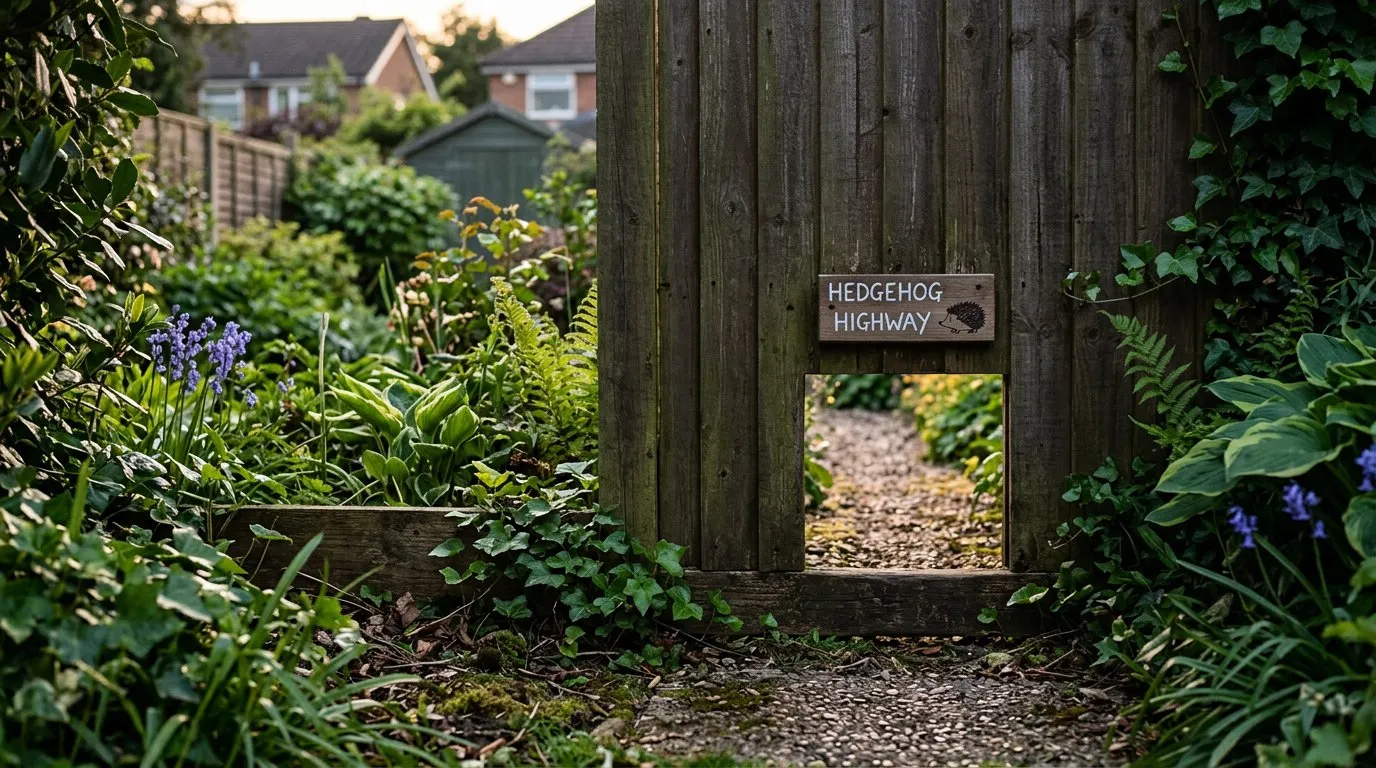
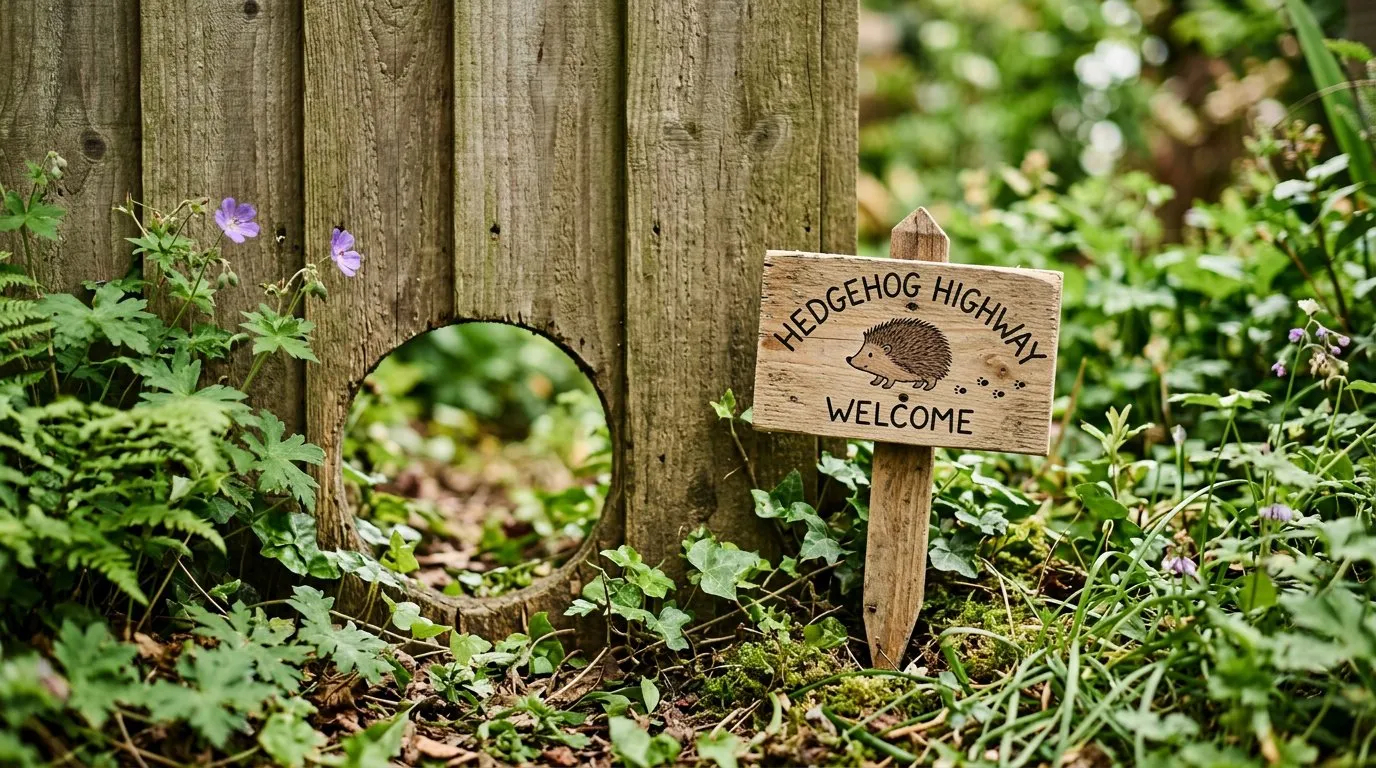
Mark each hole with a small sign so future occupants, gardeners, and fence contractors know not to block it. The Hedgehog Street campaign sells weatherproof metal signs that screw to the fence above the hole. You can also make your own from a piece of marine ply and exterior paint.
Mark both sides of the fence. The person on the other side needs to know the hole is intentional.
What else to do alongside your highway
A highway is the first step. Hedgehogs also need food, water, and shelter in the gardens they access. See our full hedgehog-friendly garden guide for details. The basics:
- Water: A shallow dish of fresh water, refreshed daily. Hedgehogs drink a surprising amount, especially in dry summers.
- Food: Wet cat food or specialist hedgehog food on a low dish. Never milk or bread.
- Shelter: A log pile, compost heap, or purpose-built hedgehog house. Leave a quiet corner of the garden untidy. Our guide to composting for wildlife explains how compost heaps double as hedgehog shelter.
- Avoid hazards: Check for hedgehogs before strimming long grass. Cover drains. Provide an escape ramp in any garden pond. Our wildlife pond guide covers this in detail.
Good garden design can include wildlife-friendly features from the start. Even a small front garden can be part of a hedgehog route if it connects to the pavement and a neighbouring garden. See our front garden ideas for designs that balance kerb appeal with wildlife access.
Month-by-month hedgehog highway calendar
| Month | Action |
|---|---|
| January - February | Plan your route. Talk to neighbours. Order pre-cut gravel boards if needed |
| March | Cut holes before hedgehogs emerge from hibernation in late March |
| April - May | Check highways are clear. Breeding season begins. Males roam widely |
| June - August | Peak activity. Top up water dishes nightly. Watch for hoglets from July |
| September | Hedgehogs feeding heavily to build fat reserves for winter |
| October | Last chance to create new highways before hibernation begins |
| November - March | Do not disturb hibernation nests. Keep highways clear of leaves and debris |
Hedgehogs are a gardener’s best friend. They eat slugs, beetles, and caterpillars that damage plants. A single hedgehog eats around 200 grams of invertebrates per night. By cutting a small hole in your fence, you gain a natural pest controller and help reverse the decline of one of Britain’s most loved wild animals.
Now you’ve mastered making a hedgehog highway, read our guide on creating a hedgehog-friendly garden for the next step in supporting hedgehogs once they arrive.
Frequently asked questions
How big should a hedgehog hole be?
The hole should be 13 cm x 13 cm. This is the size of a CD jewel case and the standard recommended by the British Hedgehog Preservation Society. It allows adult hedgehogs through comfortably while excluding most dogs. Measure carefully before cutting and sand any rough edges smooth.
Will a hedgehog highway let rats into my garden?
Rats already access most gardens by climbing or digging. A 13 cm hole does not increase rat activity. Hedgehogs help control slug and beetle populations that can attract rats. The British Hedgehog Preservation Society confirms no link between highways and rat problems.
Can I make a hedgehog highway in a brick wall?
Yes, remove a brick or fit a drainage pipe at ground level. For structural or retaining walls, consult a builder first. Old stone walls often have natural gaps already. Check before doing any cutting work.
Do I need my neighbour’s permission?
You need agreement for shared boundary fences. Most neighbours are supportive once they understand the purpose. Hedgehog Street provides free printable leaflets to explain the scheme. If the fence belongs solely to you, no permission is needed.
How many hedgehog highways do I need?
One per garden boundary is the target. A typical semi-detached house has three boundaries needing three holes. Start with the most promising boundary, where you have seen hedgehog signs or where the neighbouring garden has good habitat.
What if my gravel board is concrete?
Concrete gravel boards can be notched with an angle grinder and diamond blade. Pre-cut boards with hedgehog arches are available from fencing suppliers for the same price. Alternatively, raise one end of the board by 13 cm to create a gap underneath without cutting.
For more information and to register your hedgehog highway, visit Hedgehog Street, a joint campaign by the British Hedgehog Preservation Society and the People’s Trust for Endangered Species.
Lawrie has been gardening in the West Midlands for over 30 years. He grows his own veg using no-dig methods, keeps a wildlife-friendly garden, and writes practical advice based on real UK growing conditions.