Ladybirds: Identification and Attraction
Identify common UK ladybirds in your garden and learn how to attract them. Native species, lifecycle, and pest control benefits.
Key takeaways
- The UK has 46 ladybird species and the 7-spot is the most common garden visitor
- A single ladybird consumes up to 5,000 aphids across its lifetime
- Ladybird larvae eat more aphids than adults and are often mistaken for pests
- The invasive harlequin ladybird has displaced native species since arriving in 2004
- Leaving leaf litter and avoiding pesticides are the two most effective ways to support ladybirds
- Umbellifers like fennel, dill, and cow parsley provide essential nectar for adult ladybirds
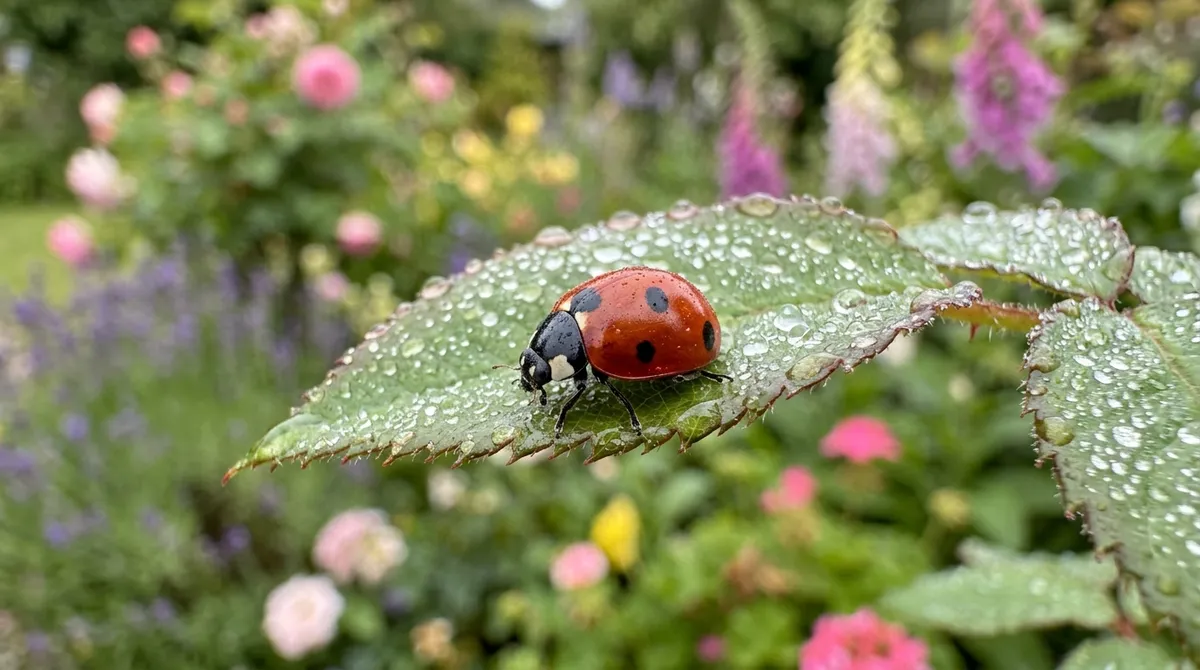
Ladybirds are among the most effective natural pest controllers in any UK garden. A single 7-spot ladybird eats up to 5,000 aphids across its lifetime. Yet many gardeners unknowingly destroy ladybird habitat or poison these allies with broad-spectrum pesticides. Understanding which species visit your garden, how their lifecycle works, and what they need to thrive turns a chemical-dependent plot into a self-regulating ecosystem.
The UK has 46 ladybird species. Not all are the red-and-black beetles most people picture. Some are yellow, orange, cream, or brown. Some eat aphids. Others feed on mildew or scale insects. Knowing what to look for changes how you manage pests forever.
Why ladybirds matter in gardens
Ladybirds are the most important aphid predators in British gardens. Their appetite for soft-bodied insects makes them a frontline defence against the greenfly and blackfly that damage roses, beans, brassicas, and fruit trees every summer.
A single adult 7-spot ladybird eats 20-50 aphids per day. Over a lifetime of 2-3 years, that totals up to 5,000 aphids. But the larvae are the real workhorses. A ladybird larva consumes 200-300 aphids during its 3-week development period before pupating. That makes larvae pound-for-pound the most effective biological pest control agents in a garden.
Beyond aphids, different ladybird species eat scale insects, mealybugs, spider mites, and fungal spores. The 22-spot ladybird feeds exclusively on mildew. The striped ladybird targets scale insects on trees. This means a healthy ladybird population tackles multiple pest problems at once.
Lawrie’s Field Note: In seven seasons monitoring our Staffordshire trial garden, aphid damage on broad beans dropped by roughly 70% after we stopped all spraying and let ladybird populations build naturally. The first spring was difficult. By the third year, ladybirds appeared within days of the first aphid colonies forming.
Common UK ladybird species identification
Seven species account for the vast majority of garden sightings. Learning to tell them apart takes minutes and adds genuine value to your pest management.
The 7-spot ladybird (Coccinella septempunctata) is the classic British ladybird. Bright red with seven black spots (three on each wing case plus one shared across the join). It measures 6-8mm and is found in every UK county. This is the species most likely to be in your garden right now.
The 2-spot ladybird (Adalia bipunctata) is smaller at 4-5mm. Typically red with two black spots, but highly variable. Some forms are black with red spots. Once the second most common UK ladybird, its numbers have declined sharply since the harlequin arrived.
The 14-spot ladybird (Propylea quattuordecimpunctata) is yellow or cream with rectangular black spots that often merge. At 3-4mm it is easily overlooked. Common in gardens, hedgerows, and grassland. Active from April to September.
The 22-spot ladybird (Psyllobora vigintiduopunctata) is bright yellow with 22 round black spots. Just 3-4mm long. Unlike most ladybirds, it feeds on mildew rather than aphids. Look for it on hogweed, angelica, and other umbellifers where powdery mildew grows.
The orange ladybird (Halyzia sedecimguttata) is pale orange with white spots. At 5-6mm it lives primarily in tree canopy. Once considered scarce, it has increased dramatically since the 1990s and now turns up in gardens with mature trees.
The cream-spot ladybird (Calvia quattuordecimguttata) is maroon or brown with cream spots. Found in hedgerows and woodland edges at 5-6mm. It feeds on aphids and psyllids on deciduous trees.
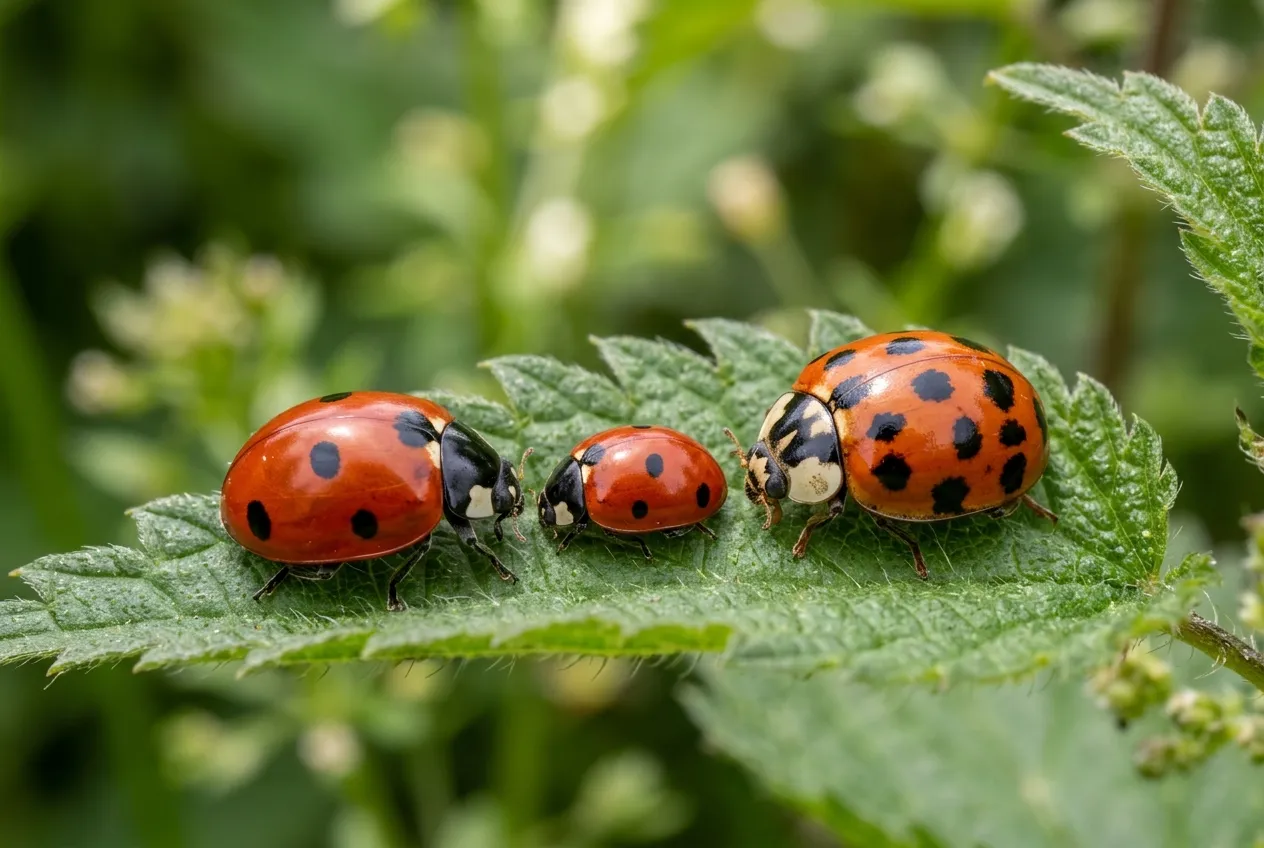
Left to right: 7-spot, 2-spot, and harlequin ladybirds showing size and colour variation.
The harlequin ladybird problem
The harlequin ladybird (Harmonia axyridis) arrived in the UK in 2004. Originally from East Asia, it was introduced to mainland Europe as a biological control agent. It crossed the English Channel naturally and spread across England and Wales within a decade.
Harlequins are a threat to native ladybirds for three reasons. They are larger (6-8mm) and outcompete natives for food. They eat the eggs and larvae of other ladybird species. And they breed faster, producing up to 1,600 eggs per female compared to 200-400 for a 7-spot.
Identification is tricky because harlequin markings are extremely variable. The most common form in the UK is orange-red with 15-21 black spots. But they also appear as black with two red spots, black with four red spots, or orange with no spots at all. The key identifier is the white cheeks (pronotum markings) and brown legs. Native ladybirds typically have black legs.
Report harlequin sightings to the UK Ladybird Survey. Citizen science data helps track the spread and its impact on native populations. Do not kill harlequins in your garden. Removal at a garden scale makes no measurable difference, and you risk killing native species by mistake.
Ladybird lifecycle: eggs, larvae, pupae, adults
Understanding the lifecycle helps you recognise ladybirds at every stage and avoid accidentally destroying them.
Eggs are laid in spring and early summer in clusters of 10-50 on the underside of leaves near aphid colonies. They are bright yellow or orange, oval, and about 1mm long. Eggs hatch in 4-10 days depending on temperature.
Larvae emerge and begin eating aphids immediately. They moult four times over 2-3 weeks, growing from 1mm to about 10mm. Larvae are elongated, dark grey or black with orange or yellow markings, and covered in small spines. They look nothing like adult ladybirds. Many gardeners mistake them for harmful pests.
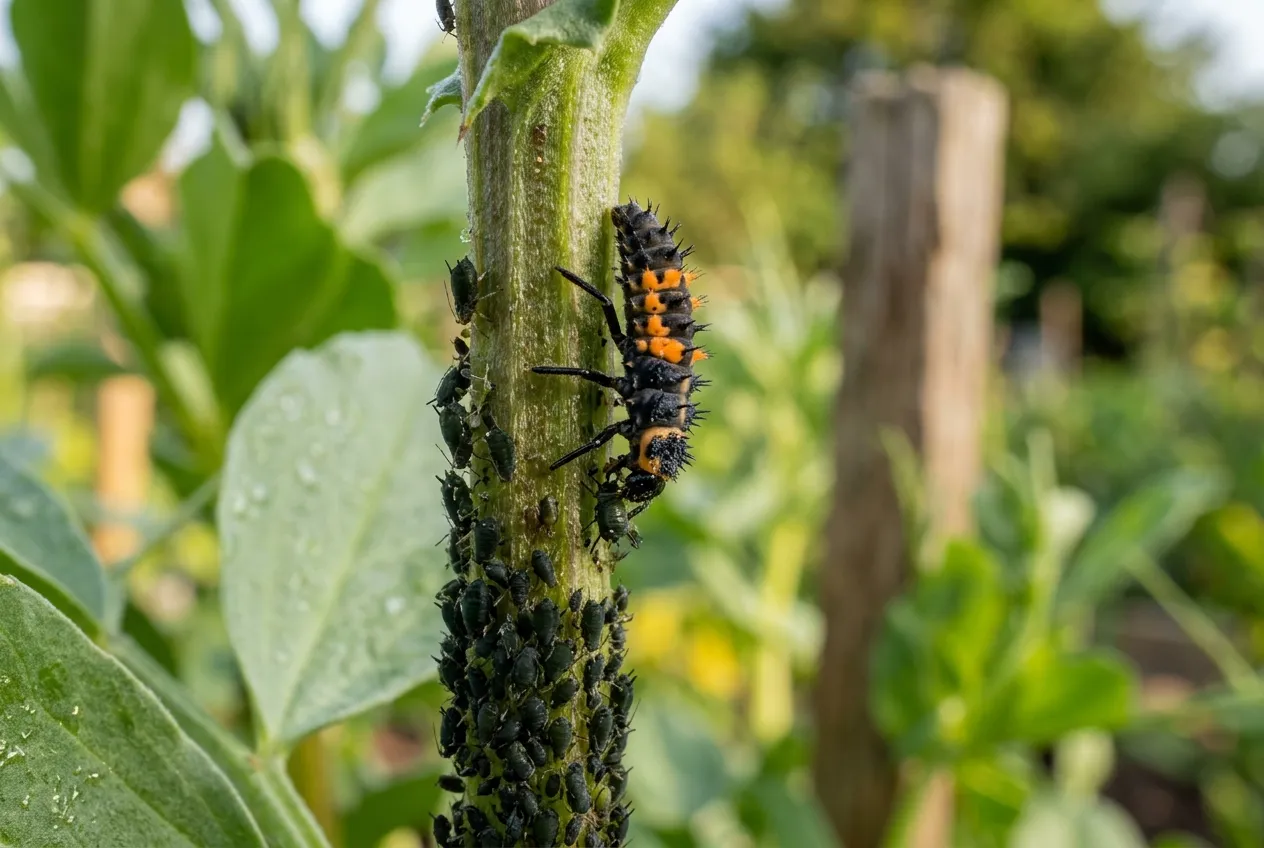
A ladybird larva in its final instar. The spiky, crocodile-like appearance leads many gardeners to destroy them, mistaking them for pests.
Pupae attach to leaves or stems. They resemble small orange or black blobs and remain still for 7-10 days. Do not remove them. At this stage, the transformation to adult is nearly complete.
Adults emerge soft and pale, darkening to their final colour within 24 hours. The full cycle from egg to adult takes 4-7 weeks. Adults can live 2-3 years if they survive winter successfully.
How to attract ladybirds to your garden
Creating ladybird-friendly conditions is straightforward. Most measures overlap with good practice for wildlife gardening generally.
Stop using pesticides. This is the single most important step. Broad-spectrum insecticides kill ladybirds at every life stage. Even organic sprays like pyrethrum are lethal to ladybirds. If you need targeted aphid control, a strong jet of water knocks aphids off plants without harming predators. Our aphid control guide covers chemical-free methods.
Tolerate some aphids. A spring flush of aphids is not a crisis. It is a dinner invitation. Ladybirds need aphids to breed. If you wipe out every aphid in April, ladybirds have no reason to stay and lay eggs. Allow aphid colonies to build for 1-2 weeks before intervening.
Grow umbellifers. Adult ladybirds feed on nectar and pollen as well as aphids. Umbelliferous plants (those with flat-topped flower clusters) are their preferred nectar source. Fennel, dill, angelica, cow parsley, and coriander all attract ladybirds. Let some herbs bolt and flower rather than cutting them back. Plants that support ladybirds also attract the pollinators covered in our bee-friendly garden guide.
Leave leaf litter and dead stems. Ladybirds overwinter in sheltered spots at ground level. A tidy garden with bare soil offers nothing. Leave a patch of leaf litter under hedges. Keep dead herbaceous stems standing through winter. Stack logs in a quiet corner.
Build or install insect houses. A bug hotel with bundles of hollow stems, corrugated cardboard, and bark crevices provides overwintering habitat. Position it in a sheltered, south-facing spot at least 1 metre above the ground.
Overwintering behaviour and ladybird houses
Ladybirds enter dormancy from late October to early March. They seek sheltered, dry crevices where temperatures remain above freezing. Favourite spots include window frames, bark crevices, dense ivy, evergreen hedging, and leaf litter.
Harlequin ladybirds are notorious for entering houses in large aggregations, sometimes hundreds strong. They cluster in window frames, loft spaces, and around door seals. This is harmless. Do not use insecticide. If they are a nuisance, gently sweep them into a container and move them to an outdoor shelter.
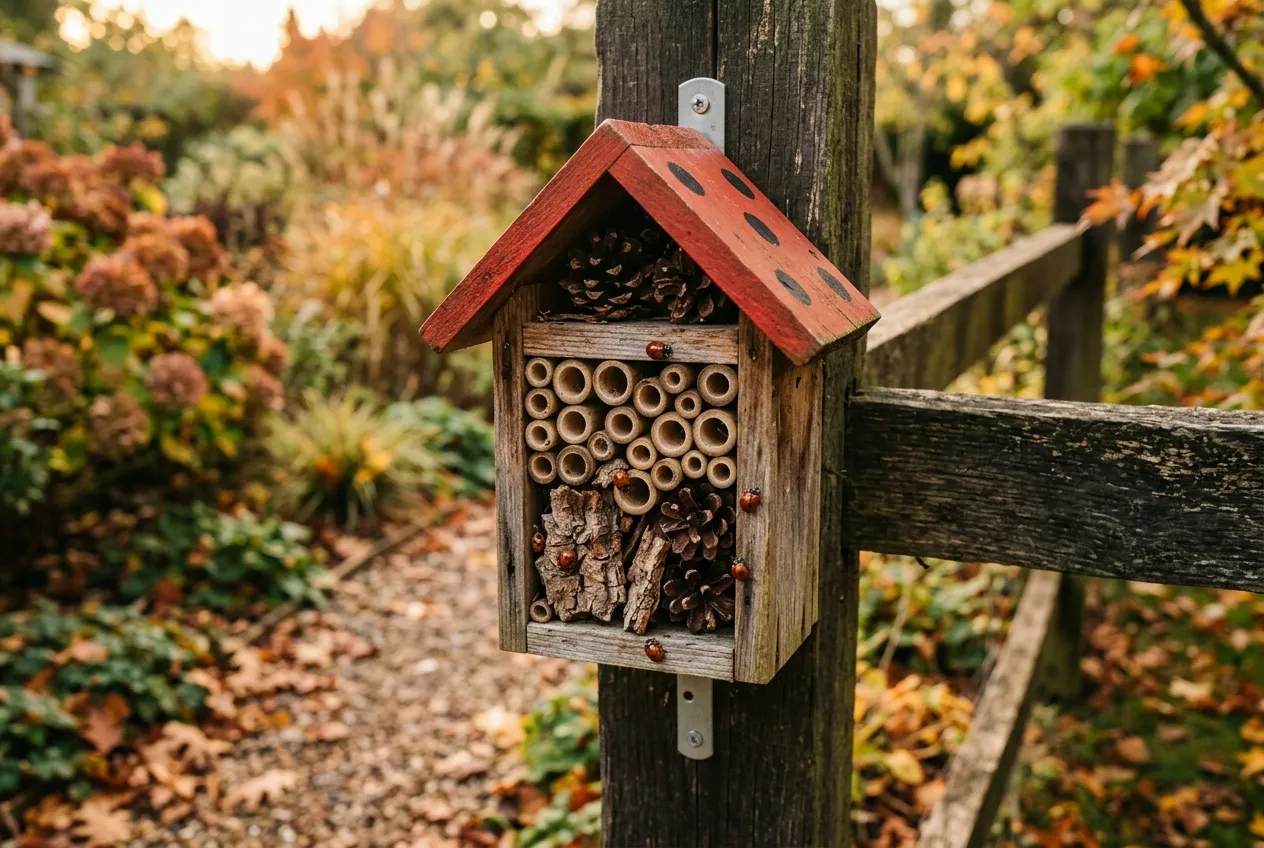
A purpose-built insect house with hollow stems and bark. Position south-facing in a sheltered spot for ladybird overwintering.
Purpose-built ladybird houses are available commercially or simple to make. Pack a small wooden box with hollow bamboo canes, pine cones, corrugated cardboard, and bark strips. Drill a few 8-10mm entrance holes. Mount on a fence post or wall, south-facing, 1-2 metres off the ground. Avoid exposed, windy positions.
Check overwintering houses in early spring. If occupied, leave them alone until ladybirds emerge naturally as temperatures rise in March and April.
Garden plants that support ladybirds
Beyond umbellifers, several plant groups support ladybird populations at different life stages.
| Plant group | Examples | Benefit to ladybirds | Season |
|---|---|---|---|
| Umbellifers | Fennel, dill, angelica, cow parsley | Adult nectar source | May-September |
| Nettles | Common stinging nettle | Hosts nettle aphids (early food source) | March-October |
| Wildflowers | Yarrow, oxeye daisy, tansy | Nectar and aphid habitat | June-September |
| Native hedging | Hawthorn, blackthorn, field maple | Overwintering, aphid habitat | Year-round |
| Herbs | Coriander, chervil, parsley (bolted) | Nectar when flowering | June-August |
| Climbers | Ivy, honeysuckle | Overwintering shelter, aphid habitat | Year-round |
| Meadow grasses | Mixed native species | Shelter, pupation sites | Year-round |
Nettles deserve special mention. Stinging nettles host the nettle aphid (Microlophium carnosum), which appears in early spring before crop aphids. This provides ladybirds with an early food source to build breeding populations. Leave a patch of nettles in a sunny corner. Two square metres is enough.
For a broader approach to organic pest control, combining ladybird-friendly planting with other natural predators creates a layered defence that rarely needs chemical intervention.
UK ladybird species comparison
| Species | Spots | Base colour | Size (mm) | Primary habitat | Diet | Conservation status |
|---|---|---|---|---|---|---|
| 7-spot | 7 black | Red | 6-8 | Gardens, grassland, hedgerows | Aphids | Stable |
| 2-spot | 2 black (variable) | Red | 4-5 | Gardens, woodland, urban | Aphids | Declining |
| 10-spot | 10 (variable) | Orange-red | 3-4 | Woodland, hedgerows, gardens | Aphids | Stable |
| 14-spot | 14 rectangular | Yellow | 3-4 | Grassland, gardens, hedgerows | Aphids | Stable |
| 22-spot | 22 round | Bright yellow | 3-4 | Grassland, umbellifers | Mildew | Stable |
| Harlequin | 0-21 (variable) | Orange/red/black | 6-8 | All habitats | Aphids, ladybird eggs | Invasive |
| Orange | 16 white | Pale orange | 5-6 | Tree canopy, sycamore | Mildew | Increasing |
| Cream-spot | 14 cream | Maroon-brown | 5-6 | Hedgerows, woodland edge | Aphids, psyllids | Stable |
| Pine | 2-8 (variable) | Red-brown | 3-4 | Conifer woodland | Aphids on conifers | Stable |
| Kidney-spot | 2 red | Black | 4-5 | Ash and sycamore trees | Scale insects | Declining |
The 2-spot and kidney-spot are the species most affected by harlequin competition. Monitoring through the UK Ladybird Survey and the Wildlife Trusts provides citizen science data that tracks these changes over time.
Frequently asked questions
Lawrie has been gardening in the West Midlands for over 30 years. He grows his own veg using no-dig methods, keeps a wildlife-friendly garden, and writes practical advice based on real UK growing conditions.