Wasps in the Garden: Why They Help
Why wasps are beneficial garden insects in the UK. Pest control, pollination, lifecycle, and how to live alongside them safely in your garden.
Key takeaways
- A single wasp nest kills up to 14,000 insects per day including aphids and caterpillars
- The UK has 9 social wasp species and over 200 solitary species
- Wasps pollinate over 100 plant species, especially ivy in autumn
- Late summer aggression is caused by colony collapse and sugar-seeking behaviour
- Most wasp nests pose no danger and should be left alone if away from doorways
- Solitary wasps are harmless to humans and excellent pollinators
Wasps are beneficial garden insects that most UK gardeners misunderstand. They kill more pest insects than any ladybird, hoverfly, or lacewing. A single nest removes thousands of aphids, caterpillars, and flies from your garden every day during summer. Yet they remain the most hated insect in Britain.
This guide covers the real value wasps bring to UK gardens. It explains their lifecycle, their role as pest controllers and pollinators, and how to live alongside them without conflict. Understanding wasp behaviour turns fear into appreciation.
Why wasps deserve a better reputation
Wasps suffer from terrible public relations. A 2018 study by University College London found that wasps are universally disliked, even by people who value bees. The reason is simple: wasps sting, and they turn up uninvited at barbecues in August. But this narrow view ignores their enormous ecological contribution.
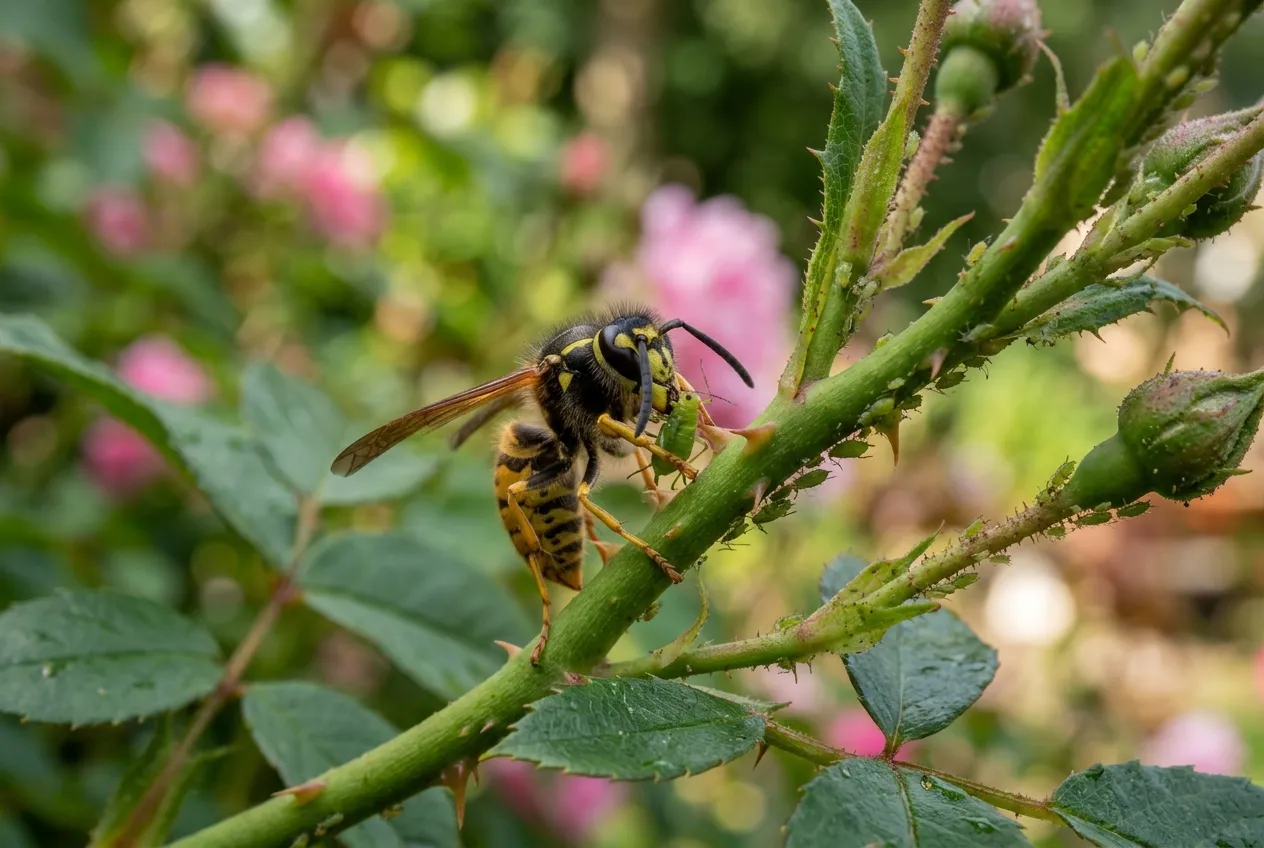 A common wasp hunting aphids on rose stems. Each worker wasp catches dozens of pest insects daily to feed the colony’s larvae.
Every wasp colony is a pest control factory. Workers spend their days hunting caterpillars, aphids, flies, and other soft-bodied insects. They chew these into a protein paste and feed it to the larvae back in the nest. The larvae, in return, produce a sugary secretion that the adult wasps drink. This protein-for-sugar exchange drives the entire colony’s hunting behaviour.
Without wasps, aphid populations would explode. Research published in Ecological Entomology estimated that social wasps in the UK kill 14 million kilogrammes of insect prey each summer. That is pest control on a national scale, delivered free to every garden with a nest nearby.
UK wasp species you might see in your garden
The UK has around 9 social wasp species and over 200 solitary species. Most people only notice two: the common wasp and the German wasp. But several other species visit gardens regularly.
The common wasp (Vespula vulgaris) is the most widespread. It has a distinctive anchor-shaped black mark on its face. Nests are typically underground in old mouse holes or in wall cavities. Colonies reach 5,000-10,000 workers by late summer.
The German wasp (Vespula germanica) is slightly larger. It has three black dots on its face rather than an anchor shape. It often nests in loft spaces, sheds, and hollow trees. German wasps tend to build bigger colonies than common wasps.
The tree wasp (Dolichovespula sylvestris) nests in hedges, shrubs, and low tree branches. Its grey papery nest hangs freely rather than being built into a cavity. Tree wasps are less aggressive than common wasps and rarely cause problems.
The Saxon wasp (Dolichovespula saxonica) arrived in Britain in the 1980s and has spread steadily northward. It nests in bushes and under eaves. Saxon wasps are notably docile and will tolerate close observation of their nest.
The median wasp (Dolichovespula media) is the largest social wasp in the UK. It nests in hedges and trees. Despite its size, it is not especially aggressive unless the nest is directly disturbed.
How wasps control garden pests
A single wasp nest kills an estimated 14,000 insects per day at peak colony size. This figure comes from studies tracking the foraging trips of worker wasps and weighing the prey they bring back. The implications for gardeners battling aphids are significant.
Worker wasps target soft-bodied insects that damage crops and ornamental plants. Their prey list includes:
- Aphids — greenfly, blackfly, and woolly aphids stripped from stems and leaves
- Caterpillars — cabbage white, winter moth, and codling moth larvae
- Flies — houseflies, bluebottles, and crane fly larvae
- Sawfly larvae — rose sawfly, gooseberry sawfly, and solomon’s seal sawfly
- Spider mites — particularly red spider mite on fruit trees
This makes wasps a cornerstone of organic pest control. A nest within 200 metres of your vegetable plot or fruit trees provides better aphid suppression than most spray programmes.
From Lawrie’s notebook: I tracked a common wasp nest in my compost bin for three summers running. The rose bed 10 metres away had virtually no aphid damage all season. The year after a cold spring killed the colony early, the same roses were covered in greenfly by June. That single observation convinced me to leave every nest alone.
The pollination role of wasps
Wasps are underrated pollinators. Research by the University of Bristol found that wasps visit over 100 plant species. They carry pollen between flowers on their smooth bodies, though less efficiently than furry bees. Their pollination value peaks at two specific times of year.
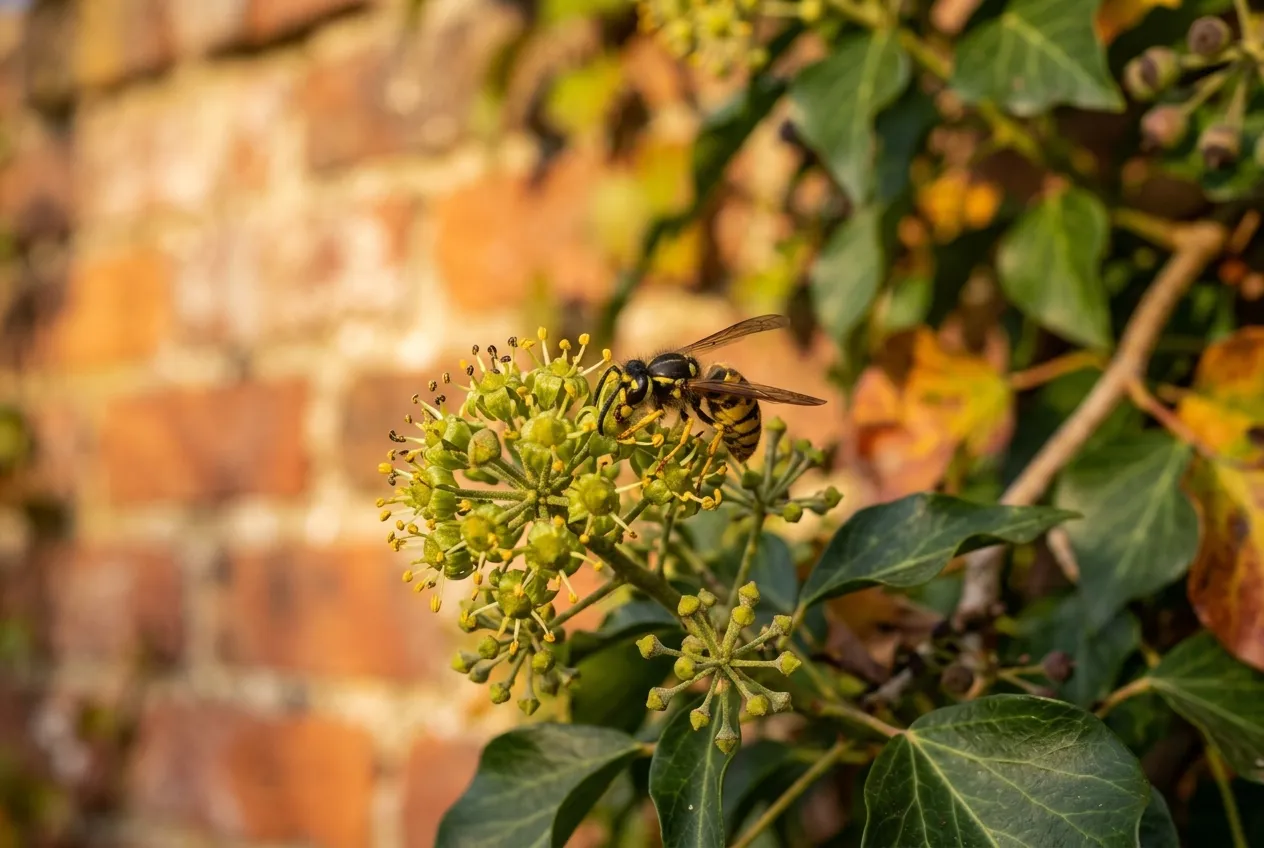 A common wasp feeding on ivy blossom in October. Ivy depends heavily on wasp pollination when bee numbers decline in autumn.
Autumn ivy pollination is the most important contribution. Ivy flowers in September and October, long after most bee colonies have wound down. Wasps, still active and seeking sugar, visit ivy flowers in huge numbers. They transfer pollen between ivy plants, ensuring berry production. These berries feed thrushes, blackbirds, and wood pigeons through winter. Without wasps, ivy berry crops would collapse.
Early spring queens also pollinate. When queen wasps emerge from hibernation in March and April, they feed on early flowers to build energy before founding new colonies. They visit willow catkins, blackthorn blossom, and dandelions. Planting bee-friendly flowers helps wasp queens too, particularly early-blooming species.
Fig wasps are a special case. Every fig species depends on a specific wasp species for pollination. The wasps crawl inside the fig fruit, pollinate the flowers, and lay their eggs. Without fig wasps, there would be no figs.
The wasp lifecycle: from queen to colony collapse
Understanding the wasp lifecycle explains why they behave differently through the year. It also explains the late summer aggression that gives wasps their bad reputation.
March-April: Queens emerge from hibernation in sheltered spots such as log piles, sheds, and bark crevices. Each queen was mated the previous autumn and carries enough sperm to found a colony. She finds a nest site and builds the first papery cells from chewed wood fibre.
May-June: The queen raises the first batch of workers alone. She hunts insects, feeds larvae, and maintains the nest. Once the first workers emerge, they take over foraging. The queen retreats inside to lay eggs full-time.
July-August: The colony reaches peak size. A common wasp nest may hold 5,000-10,000 workers. They hunt intensively, bringing back thousands of insects daily. This is the period of maximum pest control benefit.
September: The queen lays eggs that develop into new queens and males rather than workers. The existing workers have no more larvae to feed. Without larval sugar secretions, the workers become hungry and seek sugar elsewhere. This is when they arrive at your picnic.
October-November: Males and new queens leave the nest and mate. Males die shortly after. Mated queens find hibernation spots. The old queen, remaining workers, and unmated individuals die. The nest is never reused.
Why wasps become aggressive in late summer
The annual wasp nuisance in August and September has a specific biological cause. It is not random bad temper.
Throughout summer, adult wasps feed on the sugary secretion produced by their larvae. In exchange, workers hunt protein-rich insects to feed those larvae. This is a balanced system. Both parties benefit.
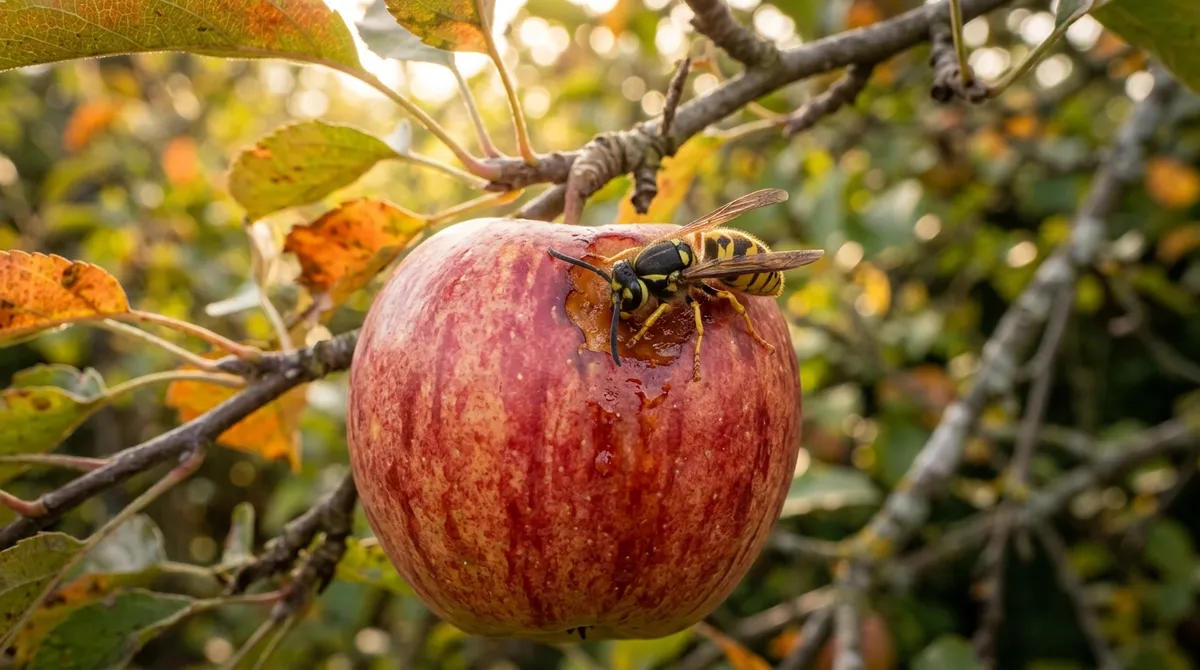
When the queen stops laying worker eggs in late summer, the number of larvae drops. Workers lose their sugar supply. They become hungry, disorientated, and desperate for carbohydrates. They seek sugar from ripe fruit, jam, fizzy drinks, and anything sweet they can find.
Fermenting fruit makes matters worse. Windfall apples and plums begin rotting in gardens. Wasps feed on the fermenting juice, which contains alcohol. Drunk wasps are sluggish, clumsy, and more likely to sting when accidentally disturbed.
This aggressive phase lasts roughly three to four weeks. The first hard frost kills the remaining workers. Patience is the best strategy.
Living alongside wasps safely
Coexistence with wasps is straightforward once you understand their behaviour. Most stings result from panic, accidental trapping, or disturbing a nest entrance.
Stay calm. A wasp investigating you is checking whether you are food. If you do not smell sweet and do not swat, it will leave. Swatting releases alarm pheromone from the wasp’s body. This chemical signal attracts every nearby wasp to investigate the threat.
Cover food and drinks outdoors. In August and September, sweet drinks are the main attractant. Use lids on cups and cover food bowls. A wasp trap baited with jam and water, placed 5 metres from your dining area, diverts wasps away from the table.
Wear neutral colours. Bright floral patterns can attract wasps. Stick to white, beige, or light green when eating outdoors in late summer.
Avoid perfume and scented products. Floral scents attract foraging wasps. This is less of an issue in early summer when wasps hunt insects rather than sugar.
Teach children to stay still. Most childhood wasp stings happen because children run and swat. Practise calm behaviour around wasps.
For a broader approach to creating a wildlife garden, managing wasp tolerance is part of accepting the full range of garden wildlife.
When to remove a wasp nest and when to leave it
Most wasp nests should be left alone. A nest in a shed roof, compost heap, or hedge away from footpaths poses minimal risk. It provides free pest control all summer and dies naturally by November.
Consider removal only if the nest is:
- Directly beside a frequently used door or path
- Inside a wall cavity where vibration disturbs the colony
- In an area used by children under five
- Near someone with a confirmed wasp venom allergy (carry adrenaline auto-injector)
If removal is necessary, contact a pest controller rather than attempting it yourself. A disturbed nest of 5,000 wasps is genuinely dangerous. Professional treatment costs twenty to sixty pounds depending on location and access.
Never block a nest entrance. Trapped wasps will find an alternative exit, often into your house. Never pour water into a nest. Never set fire to a nest. Both approaches are dangerous and ineffective.
Solitary wasps: the overlooked allies
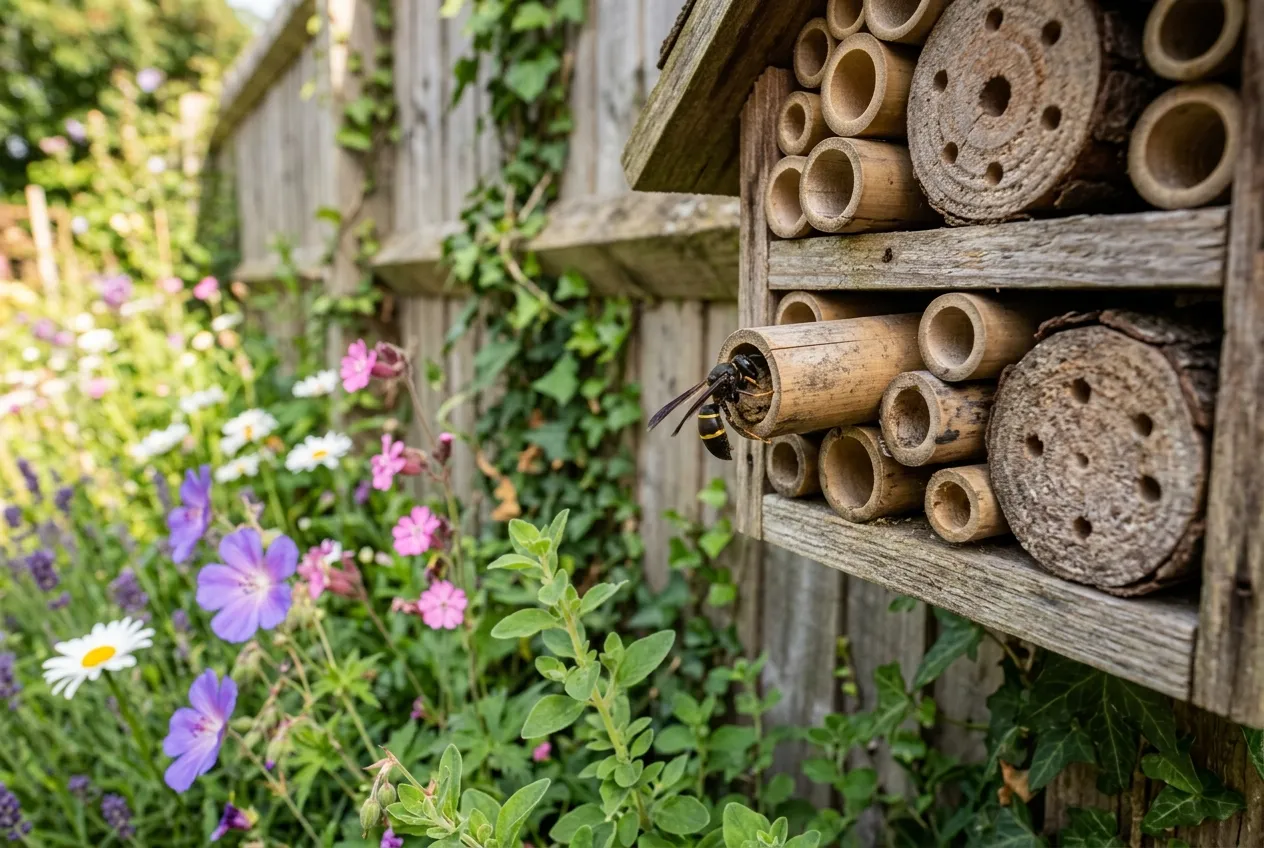 A solitary mason wasp nesting in a bug hotel. Solitary wasps are harmless to humans and are outstanding pollinators.
The UK has over 200 species of solitary wasp. Unlike social wasps, solitary females work alone. They build individual nest cells, provision each with paralysed prey, and lay a single egg. They do not form colonies, do not swarm, and almost never sting.
Mason wasps (Ancistrocerus species) nest in hollow stems, old beetle holes, and bug hotel tubes. They provision nests with small caterpillars. They are among the first wasps active in spring.
Potter wasps (Eumenes coarctatus) build tiny clay pots attached to heather stems and gorse branches. Each pot contains one egg and several paralysed caterpillars. They are rare and restricted to heathland in southern England.
Spider wasps (Pompilidae family) hunt spiders, paralysing them with a sting and dragging them into burrows. Each spider becomes food for a single wasp larva. There are around 44 spider wasp species in the UK.
Ruby-tailed wasps (Chrysis species) are cuckoo wasps that lay eggs in the nests of mason wasps and solitary bees. They are stunning metallic insects, bright red and green. Despite being parasites, they are part of a healthy ecosystem.
Providing nesting habitat for solitary wasps is easy. Drill holes of varying diameter (4-10mm) in a block of untreated hardwood. Alternatively, bundle hollow stems of bamboo or elder. Mount the structure in a sunny, sheltered position facing south or south-east. Solitary wasps also benefit from nectar-rich plantings nearby, particularly umbellifers like fennel and wild carrot.
Comparison table: UK social wasp species
| Species | Size (mm) | Nest location | Temperament | Active season |
|---|---|---|---|---|
| Common wasp (V. vulgaris) | 12-17 | Underground, wall cavities | Moderate | April-October |
| German wasp (V. germanica) | 13-18 | Lofts, sheds, hollow trees | Moderate-high | April-October |
| Tree wasp (D. sylvestris) | 11-15 | Hedges, shrubs, low branches | Low | May-September |
| Saxon wasp (D. saxonica) | 12-16 | Bushes, under eaves | Very low | May-September |
| Median wasp (D. media) | 15-22 | Hedges, trees, shrubs | Low-moderate | May-September |
| Red wasp (V. rufa) | 12-17 | Underground, banks | Low | April-September |
| Norwegian wasp (D. norwegica) | 11-15 | Bushes, low branches | Low | May-August |
| Hornet (V. crabro) | 20-35 | Hollow trees, loft spaces | Low unless provoked | May-October |
| Cuckoo wasp (V. austriaca) | 12-18 | Parasitises red wasp nests | Rare, docile | May-September |
The hornet deserves special mention. Despite its fearsome size, the European hornet (Vespa crabro) is a gentle insect. It rarely stings unless its nest is directly threatened. Hornets hunt at night as well as during the day, catching moths, beetles, and other large insects. They are less common than smaller wasps and their nests rarely exceed 400 workers.
Hornets are protected in some European countries. In the UK, they have no formal legal protection but are declining in parts of their range. If you find a hornet nest, leave it undisturbed.
For more on supporting the full range of garden wildlife, including composting to create insect-rich habitat, see our guide to composting for wildlife.
Frequently asked questions
Are wasps beneficial to gardens?
Yes, wasps are highly beneficial garden insects. A single nest kills thousands of aphids, caterpillars, and flies daily during summer. They also pollinate flowers, particularly ivy in autumn when few other pollinators are active. Without wasps, garden pest populations would increase significantly.
How many wasp species are there in the UK?
The UK has around 9 social and over 200 solitary wasp species. The common wasp and German wasp are the two most frequently seen in gardens. Solitary species like mason wasps and spider wasps are often overlooked because they do not form large colonies. The Bees, Wasps and Ants Recording Society maintains records of all UK species.
Why do wasps become aggressive in late summer?
Colony collapse drives late summer wasp aggression. The queen stops laying eggs, workers lose their larval sugar supply, and they seek carbohydrates from fruit, drinks, and food. Fermenting windfall fruit can make them sluggish and unpredictable. This lasts only three to four weeks before the first frost kills the colony.
Should I remove a wasp nest from my garden?
Most garden wasp nests do not need removing. If a nest is in a shed roof, compost bin, or hedge away from regular foot traffic, leave it alone. The colony dies naturally by November. Only consider removal if the nest is beside a doorway, path, or area used by children or people with wasp sting allergies. Professional removal costs twenty to sixty pounds.
Do wasps pollinate flowers?
Wasps pollinate over 100 plant species. They are especially important for ivy, which flowers in September and October when bee numbers decline. Fig trees depend entirely on specific wasp species for pollination. Wasp queens also pollinate early spring flowers when they emerge from hibernation in March and April.
What is the difference between wasps and bees?
Wasps have smooth bodies with a narrow waist; bees are furry and rounder. Wasps are predators that hunt insects to feed their larvae. Bees collect pollen and nectar. Wasps can sting multiple times, while honeybees die after one sting. Both are important pollinators in UK gardens.
How can I avoid getting stung by wasps?
Stay calm and do not swat. Swatting releases alarm pheromone that attracts more wasps. Cover sweet drinks and food outdoors in late summer. Wear neutral colours. Do not block the flight path to a nest entrance. Most stings happen when people accidentally trap a wasp against their skin. For more guidance, the Wildlife Trusts wasp guide offers practical advice.
Lawrie has been gardening in the West Midlands for over 30 years. He grows his own veg using no-dig methods, keeps a wildlife-friendly garden, and writes practical advice based on real UK growing conditions.