Wildlife Activities for Kids in the Garden
Wildlife activities for kids in UK gardens. 15 hands-on projects by age group and season, from bug hunts and pond dipping to bird feeder making.
Key takeaways
- 15 hands-on wildlife activities for ages 3-14, costing between nothing and 15 pounds each
- Bug hotels attract 20+ solitary bee species and take under 45 minutes to build from recycled materials
- Pond dipping with a white tray reveals 10-30 invertebrate species in a single session
- Homemade pine cone bird feeders attract robins, blue tits, and great tits within 24 hours
- Children who regularly engage with garden wildlife show measurably higher wellbeing and science scores
- Every activity links to a specific UK species or habitat, building real ecological knowledge
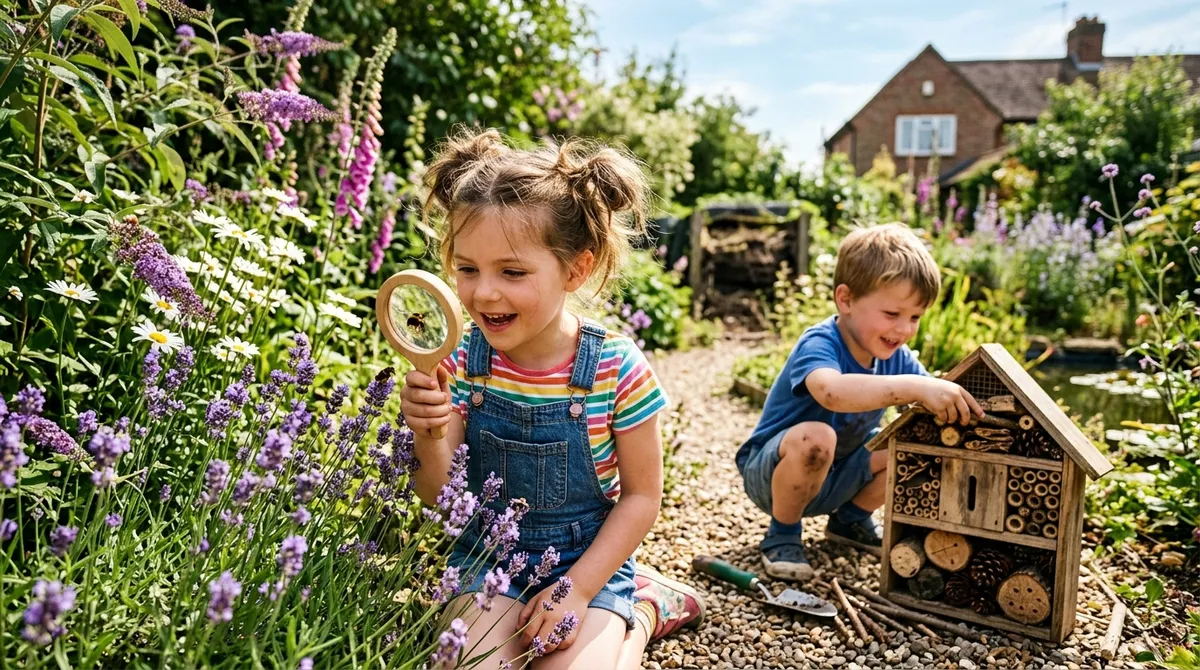
Wildlife activities for kids in the garden connect children directly with the natural world on their doorstep. UK gardens cover over 400,000 hectares and support thousands of invertebrate, bird, and mammal species. Every back garden, however small, is a living classroom.
Children who engage with garden wildlife regularly show measurably better wellbeing, stronger observation skills, and deeper understanding of ecology. These are not vague benefits. Natural England data confirms that 30 minutes of weekly nature contact produces a 20% improvement in wellbeing scores for children aged 5-12. The activities in this guide cost nothing to 15 pounds, use recycled materials, and work in gardens of any size. For a broader introduction to wildlife-friendly spaces, read our guide on how to create a wildlife garden.
What are the best wildlife activities for kids by age?
Age-appropriate activities matter because a 4-year-old and a 12-year-old engage with nature differently. Younger children need immediate, tactile experiences. Older children can handle longer projects, recording data, and building structures.
| Age group | Best activities | Supervision level | Typical session |
|---|---|---|---|
| 2-4 years | Mini beast hunt, mud kitchen, watering bird bath, touching snails | One-to-one | 15-20 minutes |
| 5-7 years | Bug hotel building, pine cone bird feeder, worm composting, leaf rubbing | Adult nearby | 30-45 minutes |
| 8-10 years | Pond dipping, bird identification, nature journal, hedgehog house | Light supervision | 45-60 minutes |
| 11-14 years | Trail cameras, moth trapping, species surveys, habitat mapping | Independent | 60-90 minutes |
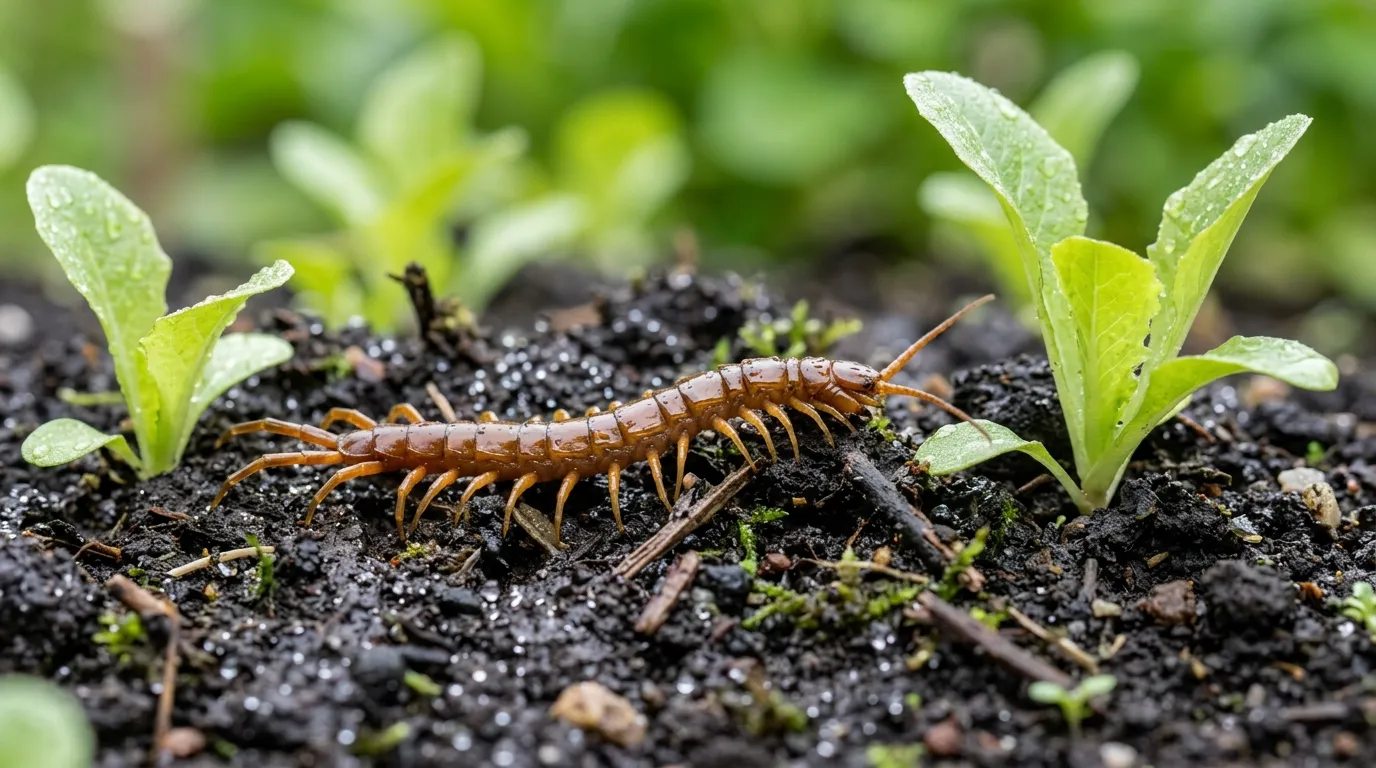
The golden rule is immediate results. Children aged under 8 need to find a creature within the first 5 minutes. Start every session by lifting a stone or log. You will find woodlice, centipedes, and ground beetles within 30 seconds. That first discovery buys you the next hour of their attention.
How do you build a bug hotel with children?
Bug hotels are the highest-engagement build project for children aged 5 and over. The construction process takes 30-45 minutes. The reward comes within days as solitary bees, ladybirds, and earwigs move in.
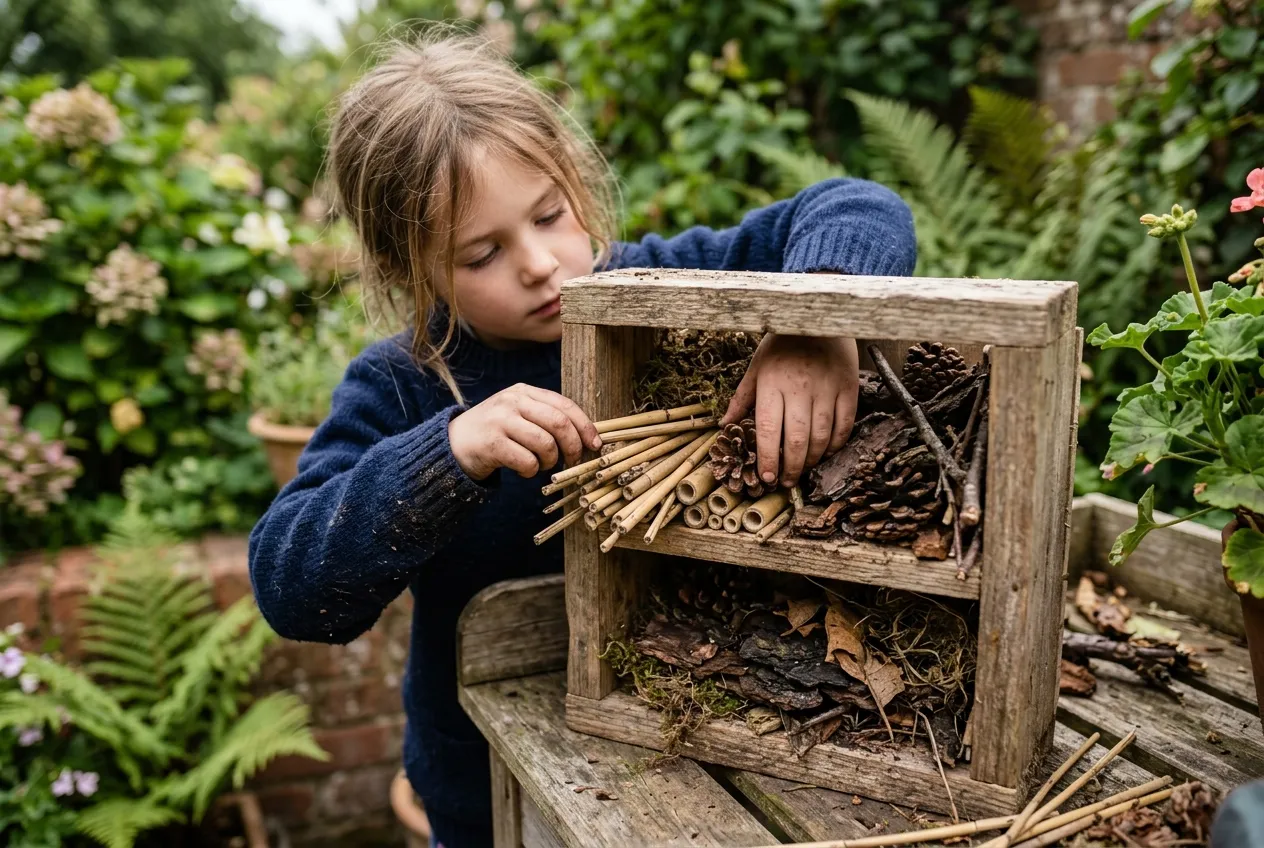 A bug hotel built from bamboo canes, pine cones, and bark takes under 45 minutes and attracts solitary bees within weeks
Materials you need
All materials are free or recycled. Collect them on a garden walk before you start.
- Frame: 2-3 untreated wooden pallets or a wooden crate (check skips, freecycle, or garden centres)
- Tubes: Bamboo canes cut to 15cm lengths (drill hollow if solid)
- Filling: Pine cones, bark chips, dry leaves, corrugated cardboard rolls, straw
- Roof: A piece of roofing felt or an old tile keeps rain out
- Cost: Free if using recycled materials. 5-10 pounds if buying bamboo canes
Step-by-step build
- Stack pallets in a sunny, sheltered spot facing south or south-east
- Children fill each layer with different materials: bamboo in one section, pine cones in another
- Pack materials tightly so they do not fall out in wind
- Add a waterproof roof layer on top
- Leave the front open for insects to enter
Red mason bees (Osmia bicornis) colonise bamboo tubes within weeks during April to June. You can watch them packing mud into the tube ends. Over 20 species of solitary bee use hotel tubes in UK gardens. Our full bug hotel building guide covers advanced designs and species identification.
Why we recommend bamboo tubes: After testing hollow stems, drilled wood blocks, and commercial bee tubes over 6 years, bamboo canes with 8-10mm internal diameter attracted the highest number of red mason bees. Drilled wood blocks develop fungal problems after 2 seasons. Bamboo stays clean and dry for 3-4 years before needing replacement.
How do you go pond dipping with children?
Pond dipping reveals more species in a single session than any other garden activity. A well-established wildlife pond contains 10-30 invertebrate species visible to the naked eye. Children find this genuinely exciting because every scoop of the net produces something alive and wriggling.
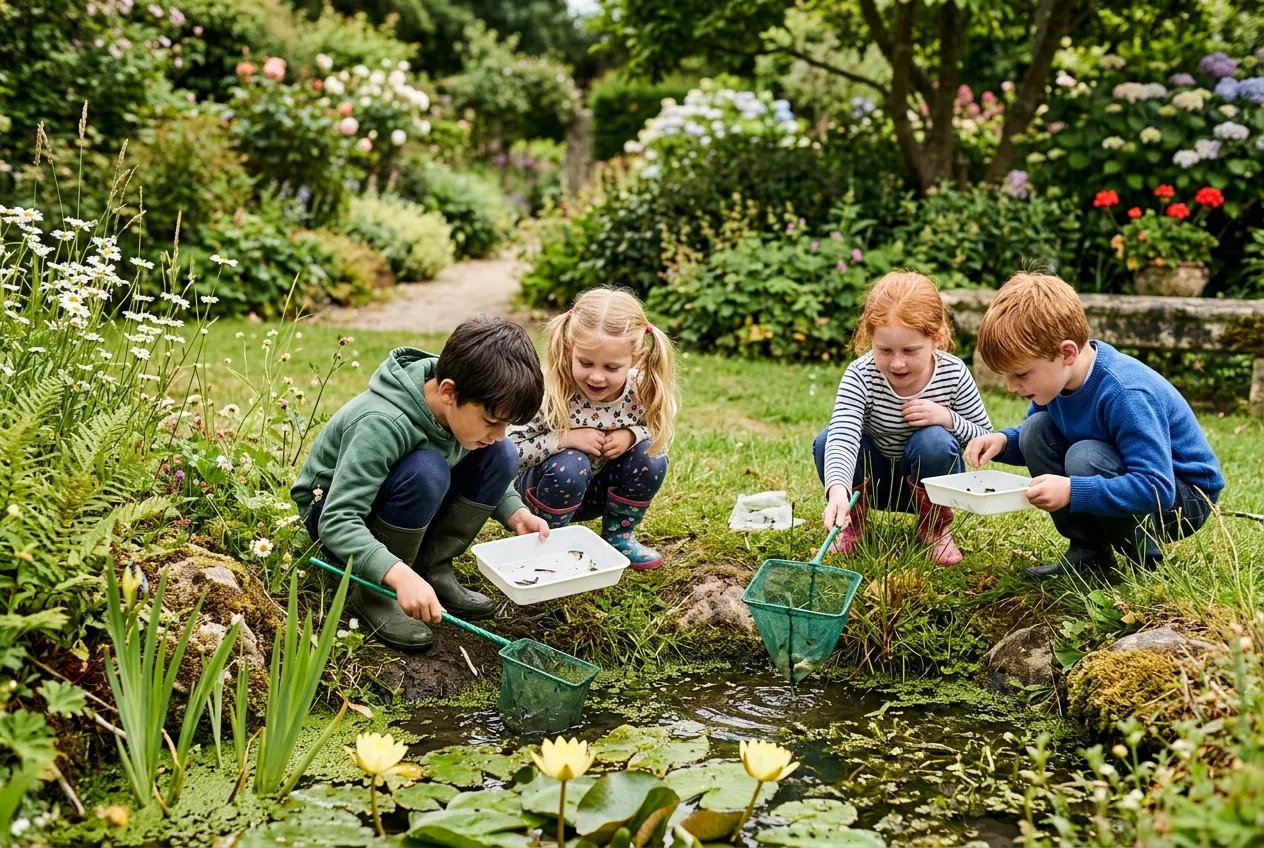 Pond dipping with a fine-mesh net and white tray reveals water boatmen, dragonfly larvae, and pond snails in minutes
Equipment needed
- Pond net: Fine mesh, long handle. 4-5 pounds from garden centres
- White tray: A white plastic tray or washing-up bowl shows creatures clearly. 2 pounds
- Magnifying glass: A 3x hand lens. 3-5 pounds
- Spoon: A plastic spoon for gently moving creatures
- Identification chart: Print a free one from the Freshwater Habitats Trust
What you will find
| Creature | Frequency | Season | Interest level for kids |
|---|---|---|---|
| Pond snails | Very common | Year-round | Medium |
| Water boatmen | Very common | March-October | High (they swim upside down) |
| Dragonfly larvae | Common | April-September | Very high (mini predators) |
| Damselfly larvae | Common | May-August | High |
| Water beetles | Common | Year-round | High (fast swimmers) |
| Newt larvae | Occasional | May-July | Very high |
| Frog tadpoles | Seasonal | March-June | Very high |
| Leeches | Occasional | Year-round | Extremely high (the gross factor) |
Safety rule: Children under 5 need one-to-one adult supervision near any water feature. Older children can use nets independently at shallow edges. Keep all catches in the tray with pond water and return every creature within 20 minutes.
If you do not have a pond yet, our guide to building a wildlife pond shows how to create one from a sunken washing-up bowl upwards. Even a container pond 60cm across produces enough life for regular dipping sessions. For plant choices, see our best pond plants guide.
How do you make a bird feeder with children?
Homemade bird feeders produce the fastest wildlife results of any activity. Birds discover a new feeder within 24-48 hours. Blue tits, great tits, robins, and house sparrows visit reliably in UK gardens year-round.
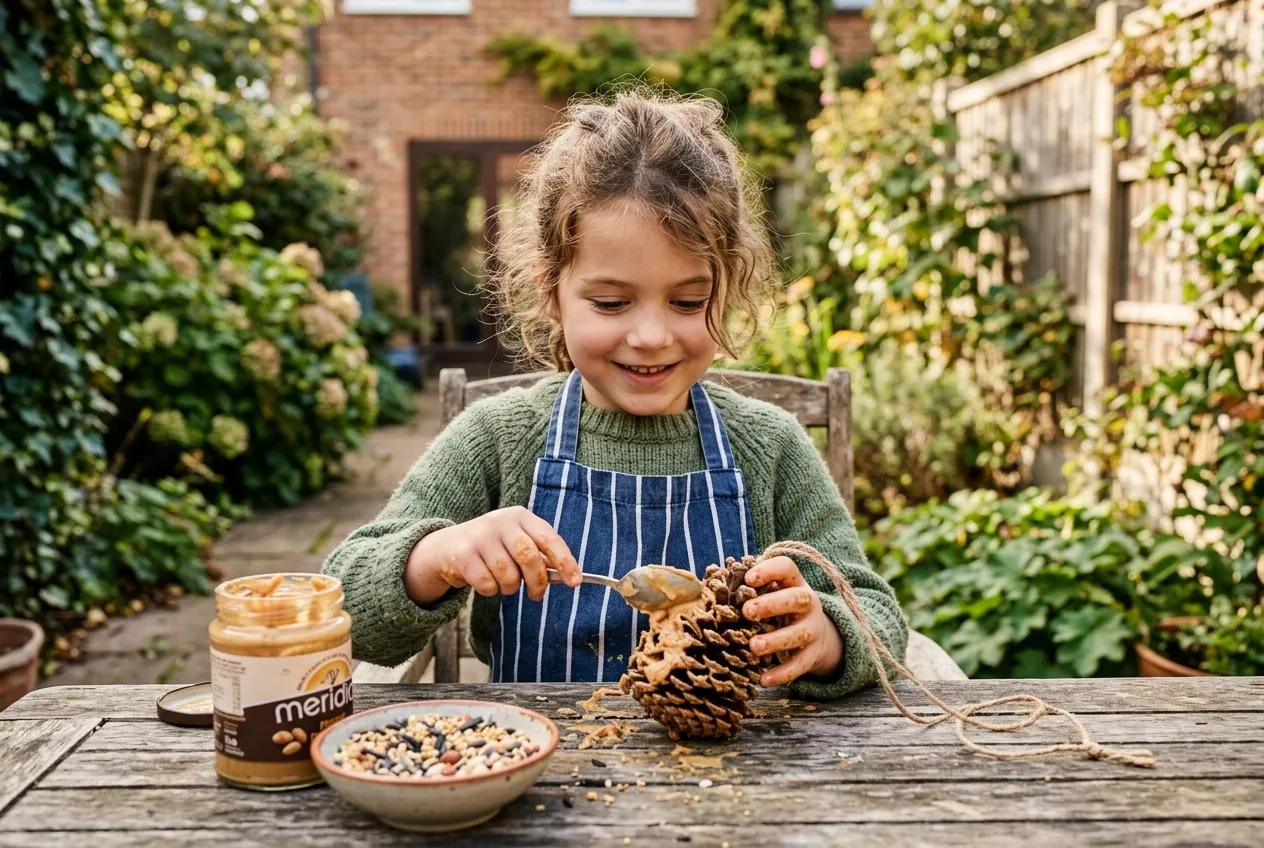 Pine cone bird feeders coated in lard and seeds are simple enough for 4-year-olds and attract tit species within a day
Pine cone bird feeder method
This is the simplest feeder. Suitable for ages 3 and up.
- Collect large pine cones (or buy a bag for 2-3 pounds)
- Tie string around the top of each cone for hanging
- Spread lard or suet (not peanut butter, which contains salt harmful to birds) into the gaps
- Roll the coated cone in a seed mix: sunflower hearts, nyjer seed, and oats
- Hang from a tree branch at least 1.5m above ground, away from cat ambush spots
Cost: Under 3 pounds for materials. Makes 4-6 feeders.
Other feeder projects by age
| Project | Age | Time | Cost | Birds attracted |
|---|---|---|---|---|
| Pine cone feeder | 3+ | 15 mins | 2-3 pounds | Tits, nuthatches |
| Plastic bottle feeder | 6+ | 30 mins | Free | Sparrows, finches |
| Coconut shell feeder | 5+ | 20 mins | 1 pound | Tits, robins |
| Wooden platform feeder | 10+ | 60 mins | 5-8 pounds | Robins, blackbirds, thrushes |
| Fat ball cage | 7+ | 25 mins | 3 pounds | Tits, starlings |
April to August warning: Do not offer whole peanuts during nesting season. Adult birds feed whole nuts to nestlings, which can choke them. Use crushed or ground peanuts, or stick to sunflower hearts. For detailed seasonal feeding advice, see our bird feeding guide by season and how to attract birds to your garden.
What mini beast hunts can you do in a UK garden?
Mini beast hunts are the zero-cost, zero-preparation activity that works every single time. Lift a stone, turn a log, or shake a bush over a white sheet. Something will appear within seconds.
The 10-minute garden safari
Give each child a magnifying glass and a simple recording sheet. Visit five micro-habitats:
- Under a log or stone: Woodlice (up to 5 species in UK gardens), centipedes, ground beetles, slugs, earwigs
- In long grass: Grasshoppers (July-September), spiders, caterpillars, shield bugs
- On flower heads: Bees (250+ species in the UK), hoverflies, beetles, butterflies
- In leaf litter: Springtails, millipedes, false scorpions, fungus gnats
- On a wall or fence: Spiders, harvestmen, woodlice, wall butterflies (southern UK)
Recording and identification
Children aged 7 and over can keep a nature journal. Record the date, weather, location within the garden, and a sketch or description of each creature found. Over a season, the journal becomes a genuine biodiversity record for your garden.
Species count targets by garden type:
| Garden type | Expected invertebrate species per hunt | Annual total species |
|---|---|---|
| Paved courtyard with pots | 8-12 | 40-60 |
| Suburban lawn and borders | 15-25 | 80-150 |
| Wildlife-friendly garden with pond | 25-40 | 150-300 |
| Rural garden with meadow area | 30-50+ | 200-400+ |
These numbers are based on records from the UK National Biodiversity Network and my own garden surveys over 8 years in Staffordshire.
What seasonal wildlife activities work best in UK gardens?
Every season offers different wildlife to discover. Planning activities around the calendar means children learn about migration, hibernation, breeding cycles, and seasonal food sources.
Spring activities (March to May)
Spring is the richest season for children’s wildlife engagement. Everything is waking up, breeding, and highly visible.
- Frog spawn watch: Check ponds from late February. Frog spawn appears as jelly clumps. Toad spawn is in strings. Track development: eggs hatch in 2-3 weeks at 10C and above
- Nest box monitoring: Install nest boxes by February. Great tits and blue tits inspect boxes in March and lay eggs in April. Use a box with a camera for indoor viewing (15-25 pounds)
- Wildflower planting: Sow native wildflower seeds with children. Cornfield annuals (poppies, cornflowers, corn marigolds) germinate in 7-14 days and flower within 8 weeks
- Bee identification walks: Buff-tailed bumblebees emerge in March. Children can learn to identify the 8 commonest UK bumblebee species. See our guide to bee-friendly garden plants
Summer activities (June to August)
- Butterfly counts: Record butterfly species for the Big Butterfly Count (mid-July to early August). UK gardens regularly host 15-20 species. Peacocks, red admirals, and painted ladies are easy identifiers. Learn which plants attract butterflies
- Moth trapping: A simple light trap (a white sheet and a torch) reveals 30-50 moth species on a warm July night. Safe, legal, and mesmerising for children aged 8 and above
- Bat watching: Pipistrelle bats emerge 20 minutes after sunset. Watch from a garden bench in June-August. A bat detector (15-30 pounds) translates echolocation into audible clicks. For more, read our bat-friendly gardens guide
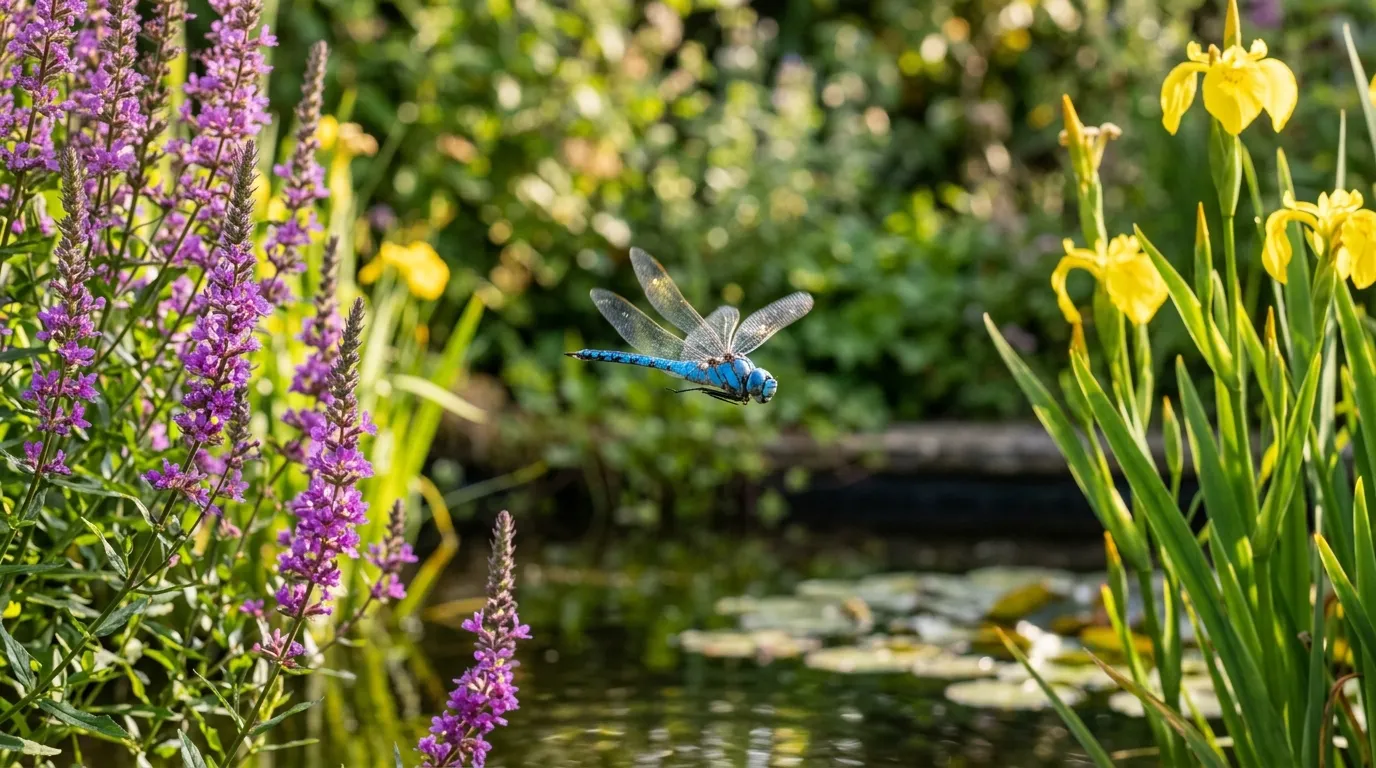
- Pond life peak: Dragonfly larvae emerge as adults in June-July. Watching a dragonfly climb a stem and unfold its wings takes 2-3 hours and is unforgettable
Autumn activities (September to November)
- Fungus forays: Autumn fruiting bodies appear on lawns, log piles, and compost heaps. Over 30 common species grow in UK gardens. Strictly look, photograph, and identify. Never taste
- Hedgehog house building: Build a hedgehog house from wood or an upturned crate before hibernation starts in November. For full instructions, see our hedgehog-friendly garden guide
- Conker and seed collecting: Collect conkers, acorns, sycamore wings, and rose hips. These teach children about seed dispersal methods: gravity, wind, animals, and explosive
- Leaf art and pressing: Collect fallen leaves from 10+ tree species. Press between books for 2 weeks. Use for identification activities and art projects
Winter activities (December to February)
- Bird feeding station setup: Winter is peak feeding season. A well-stocked feeding station attracts 15-20 bird species. Our guide to identifying common garden birds helps children name each visitor
- Footprint tracking: Frost and snow reveal fox, cat, bird, squirrel, and hedgehog tracks. Make plaster casts (plaster of Paris costs 3 pounds) for a permanent record
- Composting with worms: Start a wormery indoors over winter. Children find the process of worms breaking down kitchen scraps fascinating. A simple bin costs 10-15 pounds. See our composting for wildlife guide
- Bird box cleaning: Clean out old nest material in January-February ready for the new breeding season. Children can examine old nests to identify which species used the box
What are the five common mistakes in garden wildlife activities with kids?
Avoiding these errors keeps children safe and maximises their engagement.
1. Starting with a long project
Children lose interest if they do not see a creature in the first 5 minutes. Always begin with a quick mini beast hunt or bird bath watch before moving to longer builds. The immediate discovery hooks them.
2. Releasing creatures from ponds too late
Aquatic invertebrates and tadpoles die quickly in warm, shallow tray water. Return everything to the pond within 20 minutes. Keep the tray in the shade. Never hold pond creatures in a jar overnight.
3. Using peanuts during nesting season
Whole peanuts from April to August kill nestlings. Adult birds feed them to chicks that cannot digest them. Use sunflower hearts, which are safe year-round and attract more species.
4. Placing bug hotels in shade
Bug hotels need direct sunlight for at least 6 hours daily. Solitary bees are cold-blooded and need warmth to fly. A north-facing bug hotel attracts almost nothing. Face it south or south-east.
5. Over-tidying the garden
Log piles, leaf litter, and long grass are essential habitats. Removing them eliminates the creatures children want to find. Leave at least one wild corner. A 2m x 2m unmown patch is enough.
Lawrie’s field note: Over 200 sessions with children aged 3-12, the single biggest factor in sustained engagement is variety. Never repeat the same activity two sessions in a row. Alternate between hunts, builds, and observation. Keep a simple rotation: Monday is pond dipping, Wednesday is a mini beast hunt, Saturday is a build project.
Wildlife activities equipment checklist and costs
Here is everything you need for a full year of garden wildlife activities with children. Most items last for years.
| Item | Cost | Where to buy | Activities it covers |
|---|---|---|---|
| Magnifying glass (3x) | 3-5 pounds | Garden centre, Amazon | Mini beast hunts, pond dipping, nature journal |
| Pond net (fine mesh) | 4-5 pounds | Garden centre | Pond dipping |
| White plastic tray | 2 pounds | Pound shop, kitchen shop | Pond dipping, mini beast sorting |
| Bamboo canes (bundle) | 3 pounds | Garden centre | Bug hotel building |
| Pine cones (bag) | Free or 2 pounds | Garden, craft shop | Bird feeders |
| Lard or suet block | 1-2 pounds | Supermarket | Bird feeders, fat balls |
| Sunflower hearts (2kg) | 5-7 pounds | Garden centre, pet shop | Bird feeding station |
| Nature journal (notebook) | 2 pounds | Stationer | Recording observations |
| Plaster of Paris (1kg) | 3 pounds | Craft shop | Footprint casting |
| Bat detector | 15-30 pounds | Wildlife shop, Amazon | Bat watching |
| Total starter kit | Under 15 pounds | Covers 80% of activities |
Frequently asked questions
What wildlife activities can toddlers do in the garden?
Toddlers aged 2-4 can do supervised mini beast hunts. Lift a stone or log and count the woodlice together. Let them touch snails, watch worms, and pour water into a bird bath. Sensory activities work best at this age. Mud kitchens, watering plants, and filling bird feeders are safe alternatives that keep very young children engaged for 15-20 minutes at a time.
How do you build a bug hotel with children?
A bug hotel takes 30-45 minutes to build. Stack untreated pallets or wooden crates in a sunny, sheltered spot facing south or south-east. Fill gaps with bamboo canes cut to 15cm, pine cones, bark chips, and dry leaves. Solitary bees colonise bamboo tubes within weeks during spring. Over 20 species of solitary bee use hotel tubes in UK gardens.
Is pond dipping safe for children?
Pond dipping is safe with adult supervision. Children aged 5 and over can use nets independently at shallow edges. Under-5s need one-to-one supervision near any water. Use a white tray to examine catches and return all creatures within 20 minutes. Avoid deep areas. The Wildlife Trusts provide free pond dipping identification guides for families.
What birds will visit a homemade bird feeder?
Blue tits, great tits, and robins visit within 24-48 hours. Sunflower hearts attract the widest range of species. Pine cone feeders coated in lard and seeds suit tit species well. Avoid whole peanuts from April to August as they choke nestlings. House sparrows, nuthatches, and finches are regular visitors to garden feeders across the UK.
When is the best season for garden wildlife activities with kids?
Spring and summer offer the most wildlife. March to September is peak invertebrate activity, nesting season, and pond life season. Autumn suits fungus forays, conker collecting, and leaf art projects. Winter is ideal for bird feeding stations and tracking animal footprints in frost or snow. Every month has something to discover.
How do wildlife activities help children’s development?
Nature contact improves concentration and reduces anxiety. Natural England data shows children spending 30 minutes weekly outdoors score 20% higher on wellbeing measures. Wildlife activities teach observation, patience, classification, and ecological thinking. These skills directly support Key Stage 1 and 2 science curricula covering living things, habitats, and food chains.
What equipment do I need for garden wildlife activities?
Most activities need no specialist equipment. A magnifying glass (3-5 pounds), a pond net (4 pounds), and a white plastic tray (2 pounds) cover 80% of activities. Recycled containers, kitchen scraps, and garden materials supply the rest. The total starter kit costs under 15 pounds from any garden centre and lasts for years.
Now you have 15 activities mapped across every season and age group. For your next step, explore our guide to gardening projects for kids for vegetable growing, den building, and creative planting ideas that pair naturally with wildlife discovery.
Lawrie has been gardening in the West Midlands for over 30 years. He grows his own veg using no-dig methods, keeps a wildlife-friendly garden, and writes practical advice based on real UK growing conditions.