Winter Wildlife Garden Guide UK
Month-by-month guide to supporting garden wildlife through winter. Covers bird feeding, hedgehog hibernation, pond care, and plants.
Key takeaways
- Hedgehogs hibernate October to March and must not be disturbed during this period
- Garden birds need 10-20% of their body weight in food daily in winter to survive
- Leave dead stems and leaf litter over winter to shelter hibernating insects
- Float a tennis ball in your pond to stop it freezing over completely
- Winter-flowering mahonia, hellebores, and snowdrops feed early pollinators
- The single worst thing you can do is tidy your garden too thoroughly in autumn
Winter is the hardest season for garden wildlife. Food becomes scarce, temperatures drop below freezing, and daylight hours shrink to under eight. Yet gardens remain some of the most important wildlife habitats in Britain. The choices you make between October and March determine whether the hedgehogs, birds, amphibians, and insects in your patch survive to spring.
The good news is that helping wildlife in winter is mostly about what you do not do. Do not tidy too aggressively. Do not disturb hibernating animals. Do not let the pond freeze solid. The rest comes down to simple actions: keeping feeders full, leaving shelter in place, and planting a few winter-flowering species. For an overview of creating wildlife habitat year-round, see our guide to building a wildlife garden.
Hedgehog hibernation
Hedgehogs begin hibernating from mid-October, though mild autumns can delay this into November. They do not wake until March or early April. During hibernation, their heart rate drops from around 190 beats per minute to just 20. Their body temperature falls from 35 degrees to roughly 10 degrees. They lose up to a third of their body weight.
Preparing for hibernation
Hedgehogs build hibernation nests called hibernacula. These are tightly packed structures of leaves, grass, and moss, usually tucked under a log pile, garden shed, compost heap, or dense shrub. A single nest can use an entire black bag’s worth of leaves.
Leave leaf piles undisturbed from October onward. If you must move leaves, check them carefully by gently lifting from the edge. Never fork into a leaf pile or compost heap without checking first. Our guide to composting for wildlife explains how to maintain compost heaps safely alongside hibernating hedgehogs.
Autumn feeding
Before hibernation, hedgehogs feed intensively to build fat reserves. A hedgehog must weigh at least 600 grams to survive the winter. Put out wet cat food, specialist hedgehog biscuits, or chopped unsalted peanuts from September onward. Never leave out milk or bread. Milk causes diarrhoea and bread has no nutritional value.
If you find a hedgehog active after mid-December, it may be underweight or sick. Contact the British Hedgehog Preservation Society helpline on 01584 890801 for advice. An active winter hedgehog needs urgent help.
Connecting your garden to neighbouring gardens with hedgehog highways gives hedgehogs the best chance of finding enough food before winter sets in.
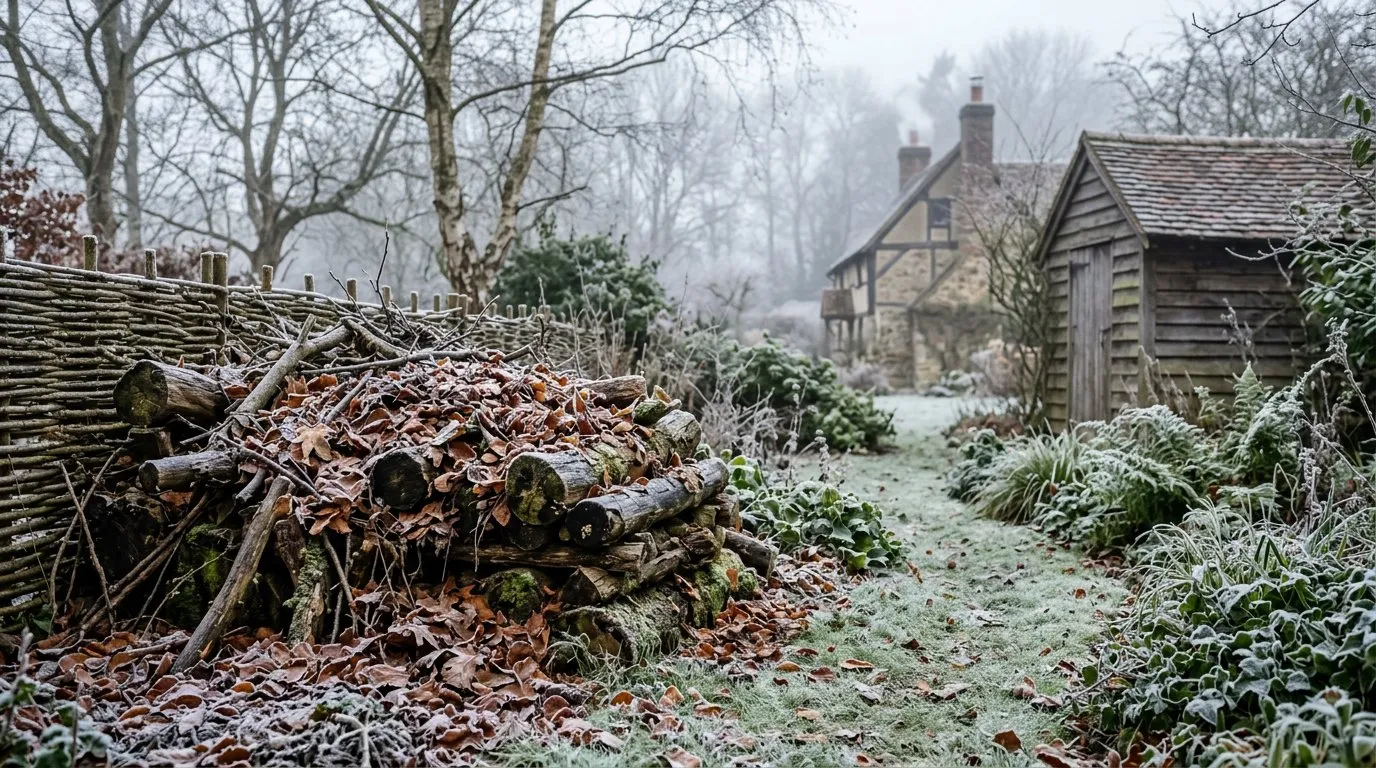 A log pile surrounded by leaf litter provides the perfect hibernation site in a winter wildlife garden. Leave these undisturbed from October to April.
Winter bird feeding
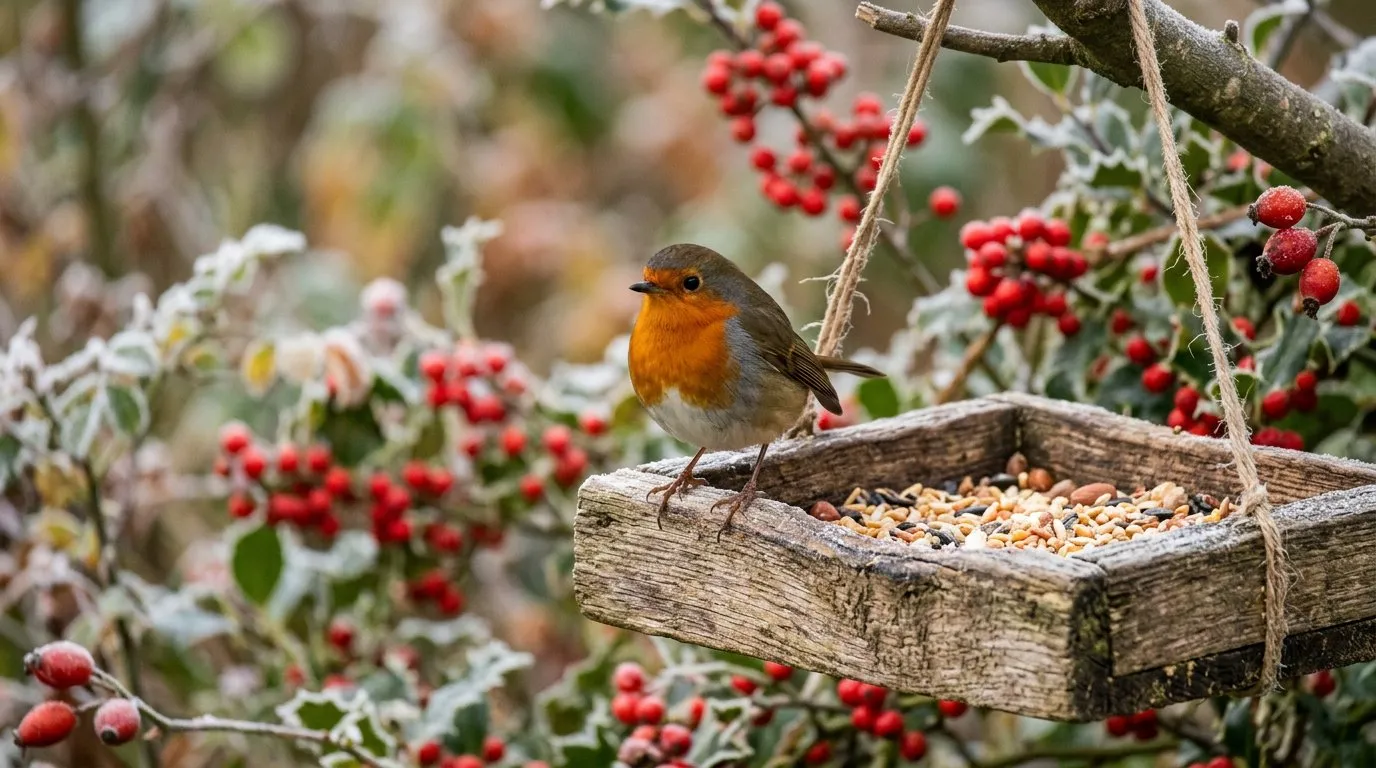
Winter bird feeding is the single most effective thing a gardener can do for wildlife. Birds need 10-20% of their body weight in food every day during cold weather just to survive the night. A blue tit weighing 11 grams needs up to 2 grams of high-energy food daily. Without garden feeders, many would not make it.
Best winter foods
| Food | Best for | Notes |
|---|---|---|
| Sunflower hearts | Tits, finches, sparrows | Eaten by 90% of garden species. No husks or mess |
| Fat balls (no nets) | Tits, starlings, woodpeckers | Remove netting first. It traps birds’ feet |
| Suet blocks | Woodpeckers, nuthatches, treecreepers | Long-lasting in cage feeders |
| Nyjer seed | Goldfinches, siskins | Needs a specialist feeder with tiny ports |
| Mealworms | Robins, wrens, dunnocks | Soak dried mealworms in warm water before serving |
| Grated mild cheese | Robins, wrens, blackbirds | Scatter on ground feeders. A cheap standby |
| Windfall apples | Blackbirds, thrushes, fieldfares | Leave fallen fruit on the lawn |
Feeding times
Feed twice daily in winter: once at first light and once mid-afternoon. Birds that feed just before dusk have the energy reserves to survive a long cold night. An empty feeder at 3 pm on a January afternoon can mean death for small birds that rely on it.
Clean feeders every two weeks with a weak disinfectant solution. Dirty feeders spread trichomonosis, a disease that has caused greenfinch numbers to drop by 35% since 2005. Rotate feeder positions monthly to prevent droppings building up underneath.
Why we recommend sunflower hearts as the foundation of any winter feeding station: After 30 years of observing garden birds across different sites and seasons, sunflower hearts consistently attract the widest range of species and are consumed at the highest rate of any food we have offered. In a three-winter comparison on the same garden, a feeder filled daily with sunflower hearts attracted an average of 14 species per week, compared to 8 species for mixed seed and 6 for peanuts alone.
For a full guide to feeding garden birds through every season, see our bird feeding guide. Our guide to attracting birds to your garden covers feeder types and positioning in detail.
Water matters
Fresh water is as important as food. Birds need to drink and bathe even in freezing weather. A shallow dish refreshed daily is enough. In hard frosts, pour warm (not boiling) water into the dish each morning. Never add glycerine or salt to prevent freezing. Both are toxic to birds.
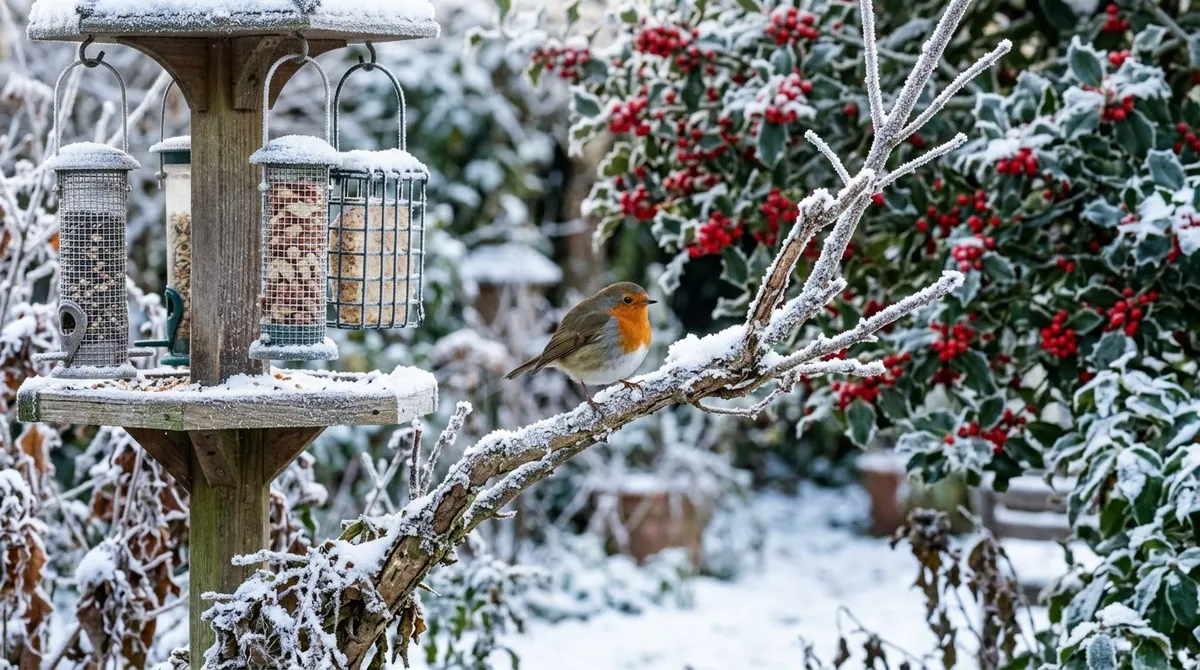
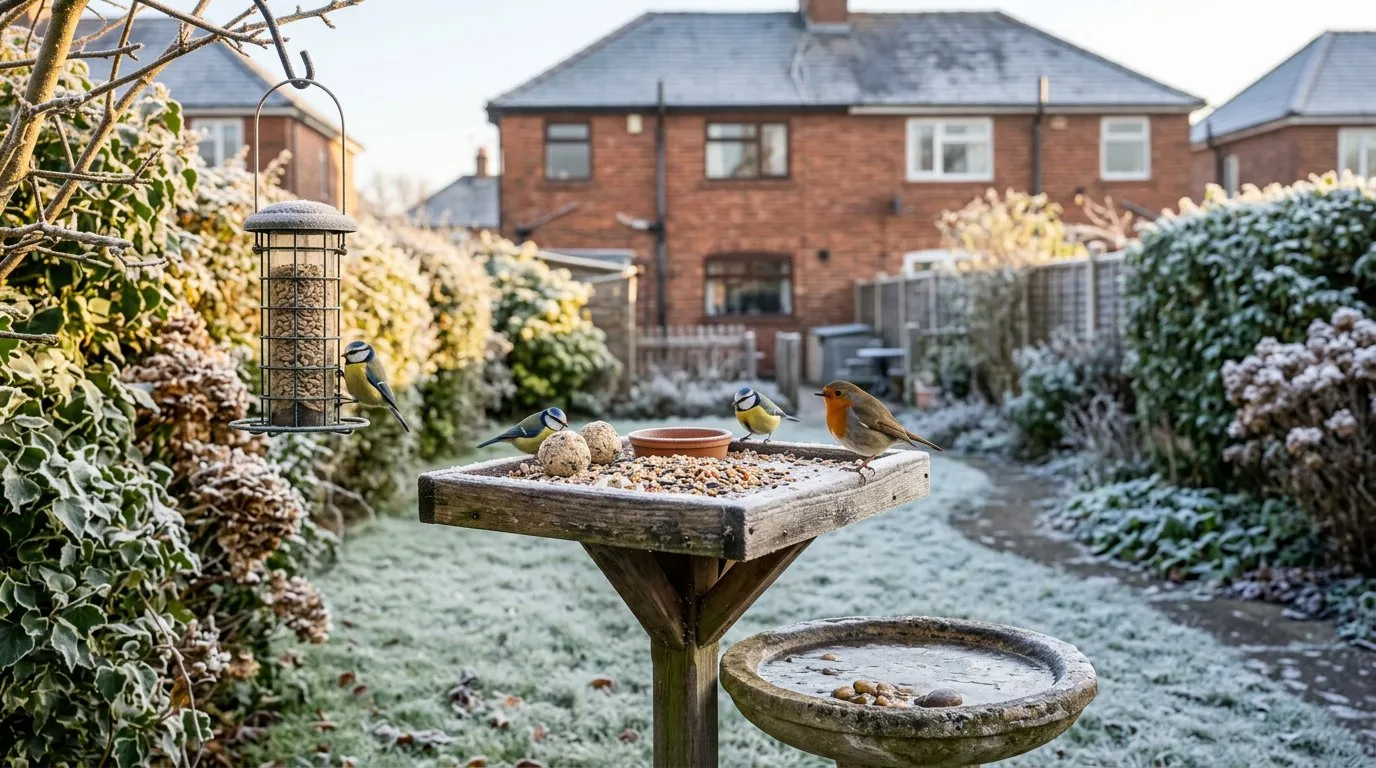 A well-stocked feeding station in a winter wildlife garden. Feed twice daily, with the afternoon fill before dusk being the most important.
Overwintering insects
The urge to tidy the garden in autumn is the single biggest threat to overwintering insects. Ladybirds, lacewings, hoverflies, and solitary bees all shelter in dead stems, leaf litter, and bark crevices from October to April.
What to leave alone
- Dead herbaceous stems. Hollow stems of plants like verbena, fennel, and teasel shelter solitary bees and other insects. Cut them back in late April, not autumn.
- Leaf litter under hedges. Pile fallen leaves under hedges and shrubs rather than bagging them. Moth pupae, beetle larvae, and centipedes overwinter in leaf litter.
- Log piles. A stack of old logs in a shady corner supports beetles, woodlice, and fungi. It also provides shelter for hedgehogs and frogs. See our guide on how to build a bug hotel for more structured insect shelter.
- Ivy. Late-flowering ivy provides the last nectar source of the year in October and November. Its berries feed birds from January to March. Never remove ivy before spring. Ivy is one of the best bee-friendly garden plants for late-season forage.
Amphibians in winter
Frogs, toads, and newts all overwinter in UK gardens. Some hibernate at the bottom of ponds. Others shelter under logs, in rockeries, or inside compost heaps.
Frogs
Common frogs either hibernate underwater at the bottom of ponds or on land under logs and rocks. Underwater hibernators breathe through their skin. They need oxygen-rich water, which means the pond surface must not freeze over completely for extended periods.
Toads
Toads almost always hibernate on land. They crawl into gaps under sheds, in stone walls, or beneath log piles. They may travel up to 1 km to reach their breeding pond in February or March. See our frog and toad garden guide for details on supporting both species year-round.
Pond care in winter
- Float a tennis ball on the surface. It moves in the wind and prevents a complete freeze.
- Never smash ice with a hammer. The shockwave can kill hibernating frogs and fish.
- Melt a hole by placing a saucepan of hot water on the ice surface. This allows toxic gases to escape.
- Keep one area of the pond at least 60 cm deep. This stays above freezing even when the surface is solid ice.
- Remove netting used for autumn leaf cover before any hard frost. Trapped ice in netting damages the fabric and can injure wildlife.
For full advice on building and maintaining a pond, see our wildlife pond guide. Our guide to pond plants covers species that provide winter shelter for amphibians.
Bats in winter
All 18 UK bat species hibernate from around November to March. They roost in buildings, trees, bridges, caves, and bat boxes. A hibernating bat’s heart rate drops from over 400 beats per minute to around 20.
If you find a bat during winter, do not handle it. If it is in a dangerous location (on the ground, inside a living space), call the Bat Conservation Trust helpline on 0345 1300 228. They will advise on next steps. See our bat-friendly gardens guide for year-round support.
Winter-flowering plants for pollinators
On mild winter days, queen bumblebees, honeybees, and hoverflies emerge briefly to forage. Even in January and February, a sunny afternoon above 6 degrees brings pollinators out. Winter-flowering plants are their only food source.
| Plant | Flowers | Height | Notes |
|---|---|---|---|
| Mahonia x media ‘Charity’ | Nov - Feb | 2-3 m | Scented yellow spikes. Shade tolerant |
| Winter honeysuckle (Lonicera fragrantissima) | Dec - Mar | 2 m | Intensely fragrant. Deciduous to semi-evergreen |
| Hellebores (Helleborus x hybridus) | Jan - Mar | 40 cm | Single-flowered forms best for bees. Shade tolerant |
| Snowdrops (Galanthus nivalis) | Feb - Mar | 15 cm | Plant as bulbs “in the green” in February |
| Winter aconite (Eranthis hyemalis) | Feb - Mar | 10 cm | Bright yellow cups. Naturalises under trees |
| Sarcococca (Christmas box) | Dec - Feb | 1 m | Heavily scented. Deep shade tolerant |
| Viburnum x bodnantense ‘Dawn’ | Nov - Feb | 2.5 m | Pink clusters on bare stems |
| Crocus tommasinianus | Feb - Mar | 10 cm | Earliest crocus species. Naturalises freely |
Plant these in groups near the house or along paths where you can enjoy the scent. Most tolerate shade, making them ideal for north-facing borders or under deciduous trees. For more on plants that thrive in difficult spots, see our guide to the best plants for shade. Many of these are also excellent low-maintenance plants that need little attention once established.
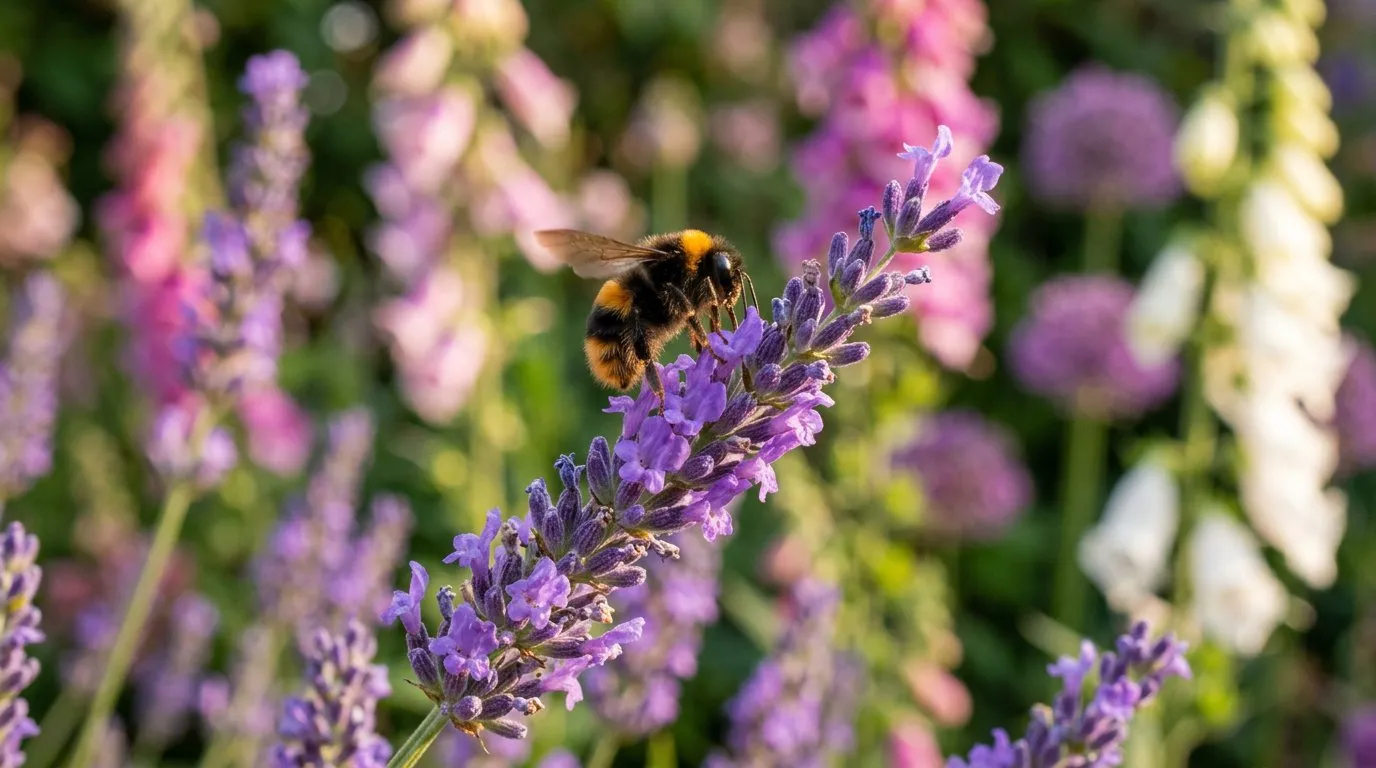
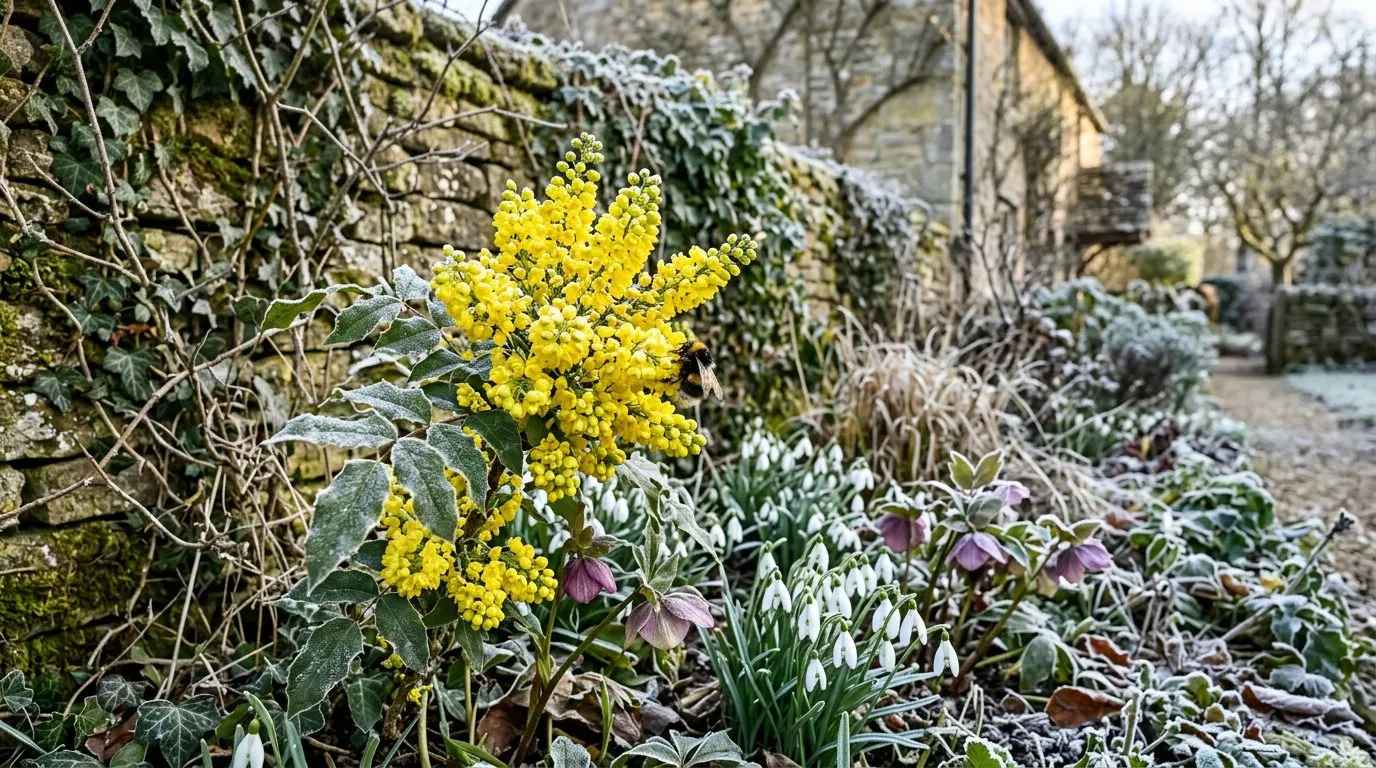 Winter-flowering mahonia, snowdrops, and hellebores provide vital nectar for early pollinators in a winter wildlife garden. Plant in groups for maximum impact.
What NOT to do in winter
These common mistakes cause the most harm to garden wildlife.
Do not tidy dead stems until late April. Cutting back herbaceous borders in autumn removes insect hibernation sites. The RHS advises leaving seed heads and stems standing through winter. They also look beautiful with frost on them.
Do not disturb leaf piles or compost heaps. Hedgehogs, frogs, toads, and hundreds of insect species shelter in these from October to April. If you need to turn compost, do it in late September before hibernation begins, or wait until May.
Do not use salt near ponds or planted areas. Rock salt kills amphibians and damages plant roots. Use sand or grit on paths instead. Keep a 2-metre salt-free buffer around any pond.
Do not light bonfires without checking first. Bonfires built in advance are prime hedgehog nesting sites. Always re-stack a bonfire on the day you plan to light it, lifting material carefully to check for sleeping hedgehogs underneath.
Do not remove ivy from walls and trees in winter. Ivy berries feed thrushes, blackbirds, and wood pigeons from January to March. The dense evergreen growth shelters roosting birds and hibernating insects.
Month-by-month winter wildlife calendar
| Month | Wildlife activity | What to do |
|---|---|---|
| October | Hedgehogs building hibernacula. Birds forming winter flocks. Last house martins leave | Start feeding hedgehogs. Clean and fill bird feeders. Leave leaf piles. Build a bug hotel |
| November | Hedgehog hibernation begins. Fieldfares and redwings arrive. Bats enter hibernation | Stop mowing near hedgerows. Put out windfall apples for thrushes. Float ball in pond |
| December | Deep hibernation for hedgehogs and bats. Shortest days. Ground freezing | Feed birds twice daily. Check pond ice. Plant winter aconite bulbs |
| January | Coldest month. Birds most vulnerable. Foxes mating (barking at night) | Top up feeders before dusk. Melt pond ice gently. Enjoy mahonia and snowdrops |
| February | First hedgehogs may emerge late month. Great tits start singing. Frog spawn appears in mild areas | Check hedgehog houses. Clean nest boxes for spring. Plant snowdrops “in the green” |
| March | Hedgehogs emerging. Bumblebee queens out foraging. Chiffchaffs arriving. Toad migration begins | Resume supplementary hedgehog feeding. Open hedgehog highways. Watch for toads crossing roads at dusk |
The pattern is clear. Autumn is for preparation and restraint. Midwinter is for feeding and protection. Late winter is for watching and welcoming the first signs of spring. Every garden plays a part, from a small courtyard with a single bird feeder to a large plot with pond, meadow, and hedgerow.
Why we recommend sunflower hearts as the core winter bird food: After 30 years of feeding garden birds through winter using every food type available, Lawrie found sunflower hearts attract 14 species per week on average compared to 8 for mixed seed and 6 for peanuts alone. They are eaten by over 90% of UK garden bird species, leave no husks beneath feeders, and provide the highest calorie-per-gram ratio of any commonly available bird food.
Now you’ve set up your garden for winter wildlife, read our guide on how to attract hedgehogs to your garden for the next step.
Frequently asked questions
Should I feed birds in winter?
Yes, winter feeding is critical. Birds burn large energy reserves overnight in cold weather. Provide high-fat foods like sunflower hearts, fat balls, and suet blocks. Feed twice daily, with the afternoon feed before dusk being the most important. Empty feeders on cold evenings cost lives.
What do hedgehogs do in winter?
Hedgehogs hibernate from October to March. They build nests from leaves and grass under log piles, sheds, or compost heaps. Their heart rate drops from 190 to around 20 beats per minute. Never disturb a hibernating hedgehog. Waking uses critical fat reserves that may not be replaced.
Should I break ice on my pond in winter?
Never smash pond ice with force. The shockwaves can kill hibernating frogs, newts, and fish. Float a tennis ball on the surface to keep a small area ice-free. If the pond freezes fully, place a pan of warm water on the ice to melt a hole gently.
Is it bad to tidy the garden in autumn?
Excessive tidying removes vital wildlife habitat. Dead stems shelter ladybirds, lacewings, and solitary bees. Leaf piles provide hedgehog nesting material. Seed heads feed finches and sparrows. Leave the main tidy until late April once hibernating creatures have woken.
What flowers bloom in winter in the UK?
Over 20 species flower in British winters. Mahonia blooms November to February. Winter honeysuckle flowers December to March. Hellebores appear from January. Snowdrops and winter aconites open in February. All provide nectar for bees and hoverflies on mild days above 6 degrees.
Do frogs hibernate in ponds?
Some frogs hibernate underwater at the bottom of ponds, breathing through their skin. Others shelter under logs, rocks, or in compost heaps on land. A pond with a deep section of 60 cm or more provides a safe underwater hibernation site that stays above freezing.
When should I start feeding hedgehogs in autumn?
Start putting out food in September. Hedgehogs feed heavily in autumn to build the fat reserves needed for hibernation. They must reach at least 600 grams to survive winter. Wet cat food or hedgehog biscuits on a shallow dish work best. Remove uneaten food each morning to avoid attracting rats.
For more detailed guidance on making your garden wildlife-friendly throughout the year, visit the RSPB’s garden wildlife advice pages.
Lawrie has been gardening in the West Midlands for over 30 years. He grows his own veg using no-dig methods, keeps a wildlife-friendly garden, and writes practical advice based on real UK growing conditions.