Narcissus 'Cheerfulness'
Narcissus 'Cheerfulness'
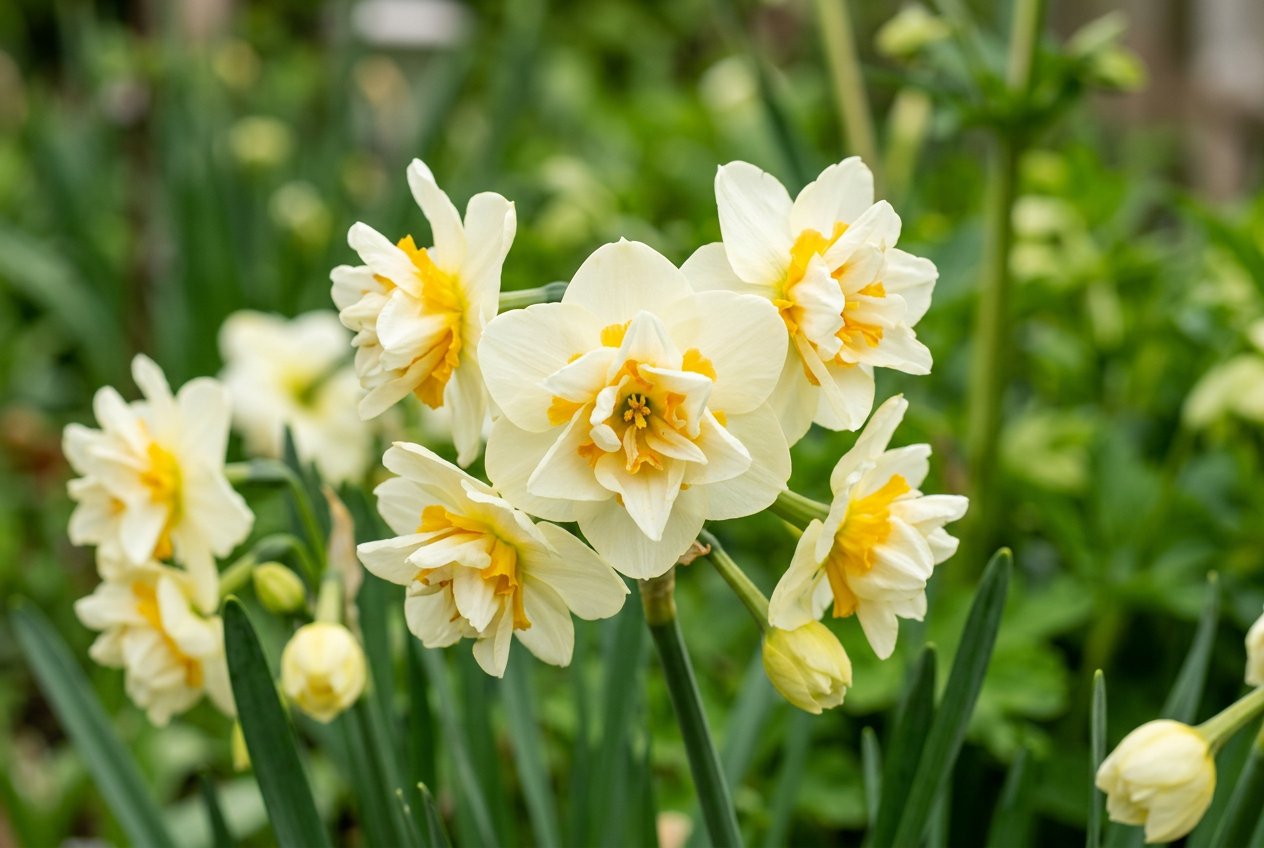
A sweetly scented double daffodil producing clusters of creamy-white rosette flowers with yellow centres in April. Each stem carries 2-4 fragrant blooms. One of the best daffodils for cutting. Late flowering so extends the daffodil season into late spring. A cottage garden favourite across the UK.
Where to plant
Best aspect
Border position
When to plant and expect flowers
Plant
Flowers
How to grow narcissus 'cheerfulness'
Plant 15cm deep in September. Late flowering so extends the season. The sweet fragrance makes it outstanding for cutting. Plant near paths and doorways to enjoy the scent. 'Yellow Cheerfulness' is the golden equivalent.
Soil requirements
Soil type
loam, sand, chalk, clay
Moisture
well drained
pH
neutral, alkaline
Aftercare
Allow foliage to die back naturally after flowering. Remove spent flower heads to prevent self-seeding.
Propagation
- Division of clumps in autumn
- Offsets
Wildlife value
Toxicity
All parts contain lycorine and calcium oxalate crystals causing nausea, vomiting, and skin irritation.
Common problems
- Narcissus bulb fly
- Basal rot
- Blindness (failure to flower)
- Slugs on young shoots
Similar bulbs to grow
Related guides
How to Attract Birds to Your Garden
Practical guide to attracting wild birds to UK gardens. Covers feeders, food types, bird baths, nest boxes, planting, and seasonal feeding.
Autumn Gardening Jobs: Complete UK Checklist
Month-by-month autumn gardening checklist for UK gardens. Covers planting, bulbs, lawn care, pruning, composting, and wildlife tasks for Sep to November.
Balcony Gardening Ideas for the UK
Practical balcony gardening ideas for UK flats and apartments. Container choices, weight limits, wind protection, and the best plants for exposed spaces.