English Bluebell
Hyacinthoides non-scripta
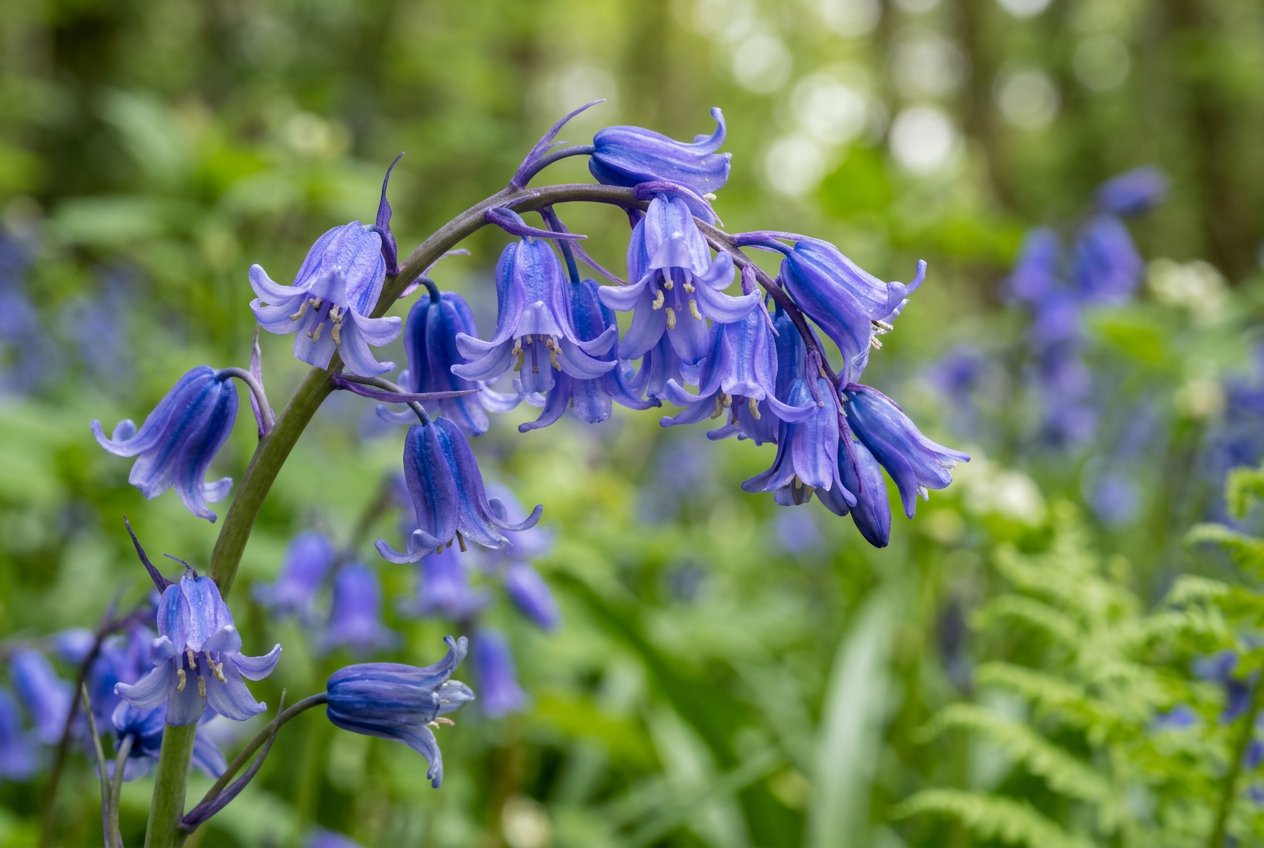
The English bluebell carpets ancient woodlands with fragrant violet-blue flowers in April and May. One of Britain's most iconic wildflowers. The narrow tubular bells hang from one side of the arching stem. Naturalises freely in shade. Protected under the Wildlife and Countryside Act. Prefers undisturbed moist woodland soil.
Where to plant
Best aspect
Border position
When to plant and expect flowers
Plant
Flowers
How to grow english bluebell
Plant 10cm deep in autumn in moist shade. Best planted in the green for reliable establishment. Do not plant Spanish bluebells which hybridise with and threaten native populations. Allow foliage to die back naturally. Never pick from the wild.
Soil requirements
Soil type
loam, clay
Moisture
moist
pH
neutral, acid
Aftercare
Allow foliage to die back naturally after flowering. Remove spent flower heads to prevent self-seeding.
Propagation
- Offsets in autumn
- Seed
Wildlife value
Toxicity
All parts contain glycosides causing gastrointestinal upset. The sap can cause skin irritation.
Common problems
- Spanish bluebell hybridisation
- Can spread aggressively in ideal conditions
Similar bulbs to grow
Related guides
The 70-30 Rule for Better Garden Borders
The 70-30 planting rule explained: 70% structure and foliage, 30% seasonal flowers, measured by area, so your UK border looks full in every month.
Air-Purifying Houseplants: What They Really Do
Do air-purifying houseplants work? The honest answer, the ten easiest plants to grow anyway, which are pet-safe, and what actually freshens indoor air.
Allotment Planner: Month-by-Month
A friendly month-by-month allotment planner for the UK: what to sow, plant, pick and tidy each month, plus a handy sowing and harvest chart.