Muscari latifolium
Muscari latifolium
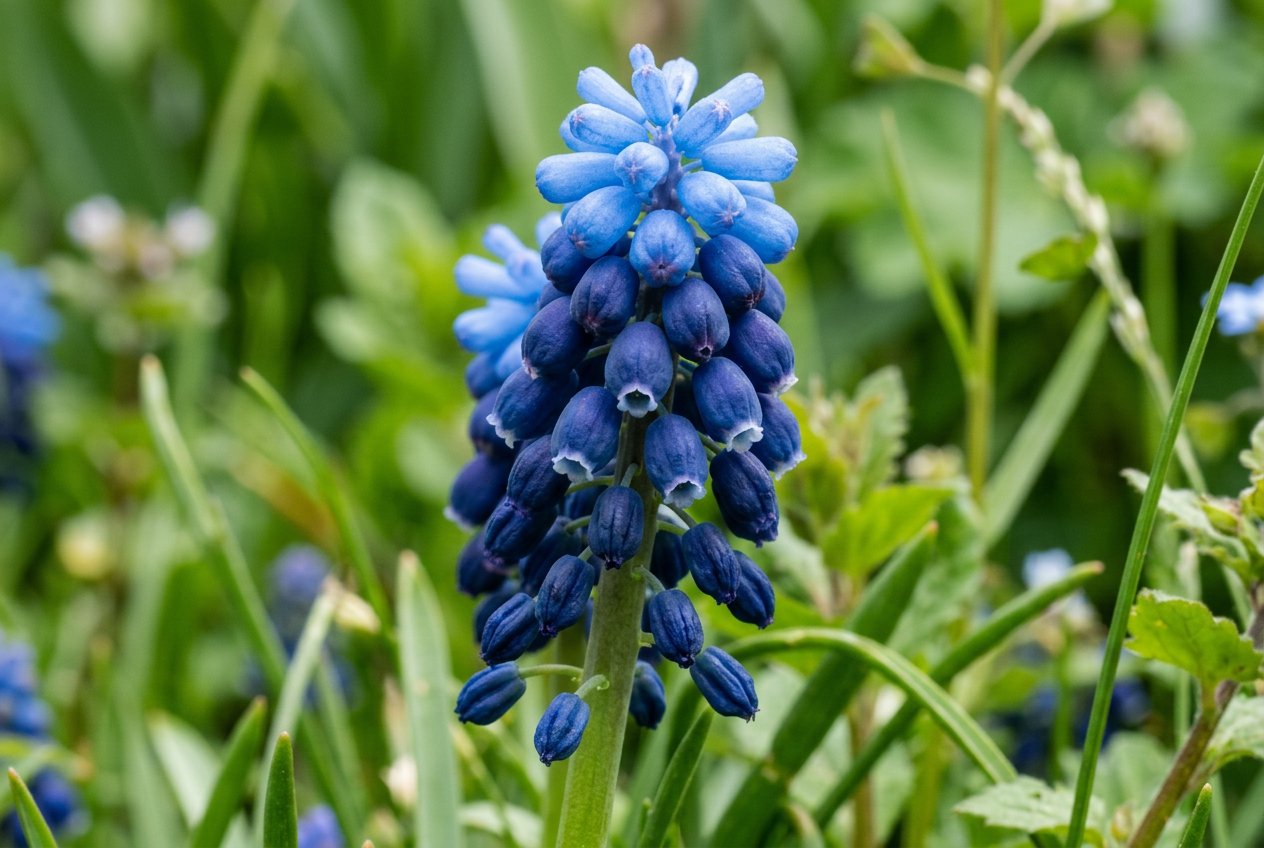
A distinctive two-tone grape hyacinth with dark indigo-blue fertile flowers at the base and a crown of paler sterile flowers at the top. Broader leaves than armeniacum and less invasive. Each bulb produces a single wide leaf and one flower spike. An elegant refined choice for containers and rock gardens.
Where to plant
Best aspect
Border position
When to plant and expect flowers
Plant
Flowers
How to grow muscari latifolium
Plant 8cm deep in autumn. Less invasive than armeniacum so better suited to mixed borders. The bicolour flower spikes are particularly attractive close up. Excellent in troughs and raised beds.
Soil requirements
Soil type
loam, sand
Moisture
well drained
pH
neutral
Aftercare
Allow foliage to die back naturally after flowering. Remove spent flower heads to prevent self-seeding.
Propagation
- Offsets in autumn
- Seed
Wildlife value
Toxicity
Mildly toxic. Contains saponins that can cause gastrointestinal discomfort if ingested in quantity.
Common problems
- Slugs
- Can be slow to multiply
Similar bulbs to grow
Related guides
How to Attract Birds to Your Garden
Practical guide to attracting wild birds to UK gardens. Covers feeders, food types, bird baths, nest boxes, planting, and seasonal feeding.
Autumn Gardening Jobs: Complete UK Checklist
Month-by-month autumn gardening checklist for UK gardens. Covers planting, bulbs, lawn care, pruning, composting, and wildlife tasks for Sep to November.
Balcony Gardening Ideas for the UK
Practical balcony gardening ideas for UK flats and apartments. Container choices, weight limits, wind protection, and the best plants for exposed spaces.