Iris reticulata
Iris reticulata
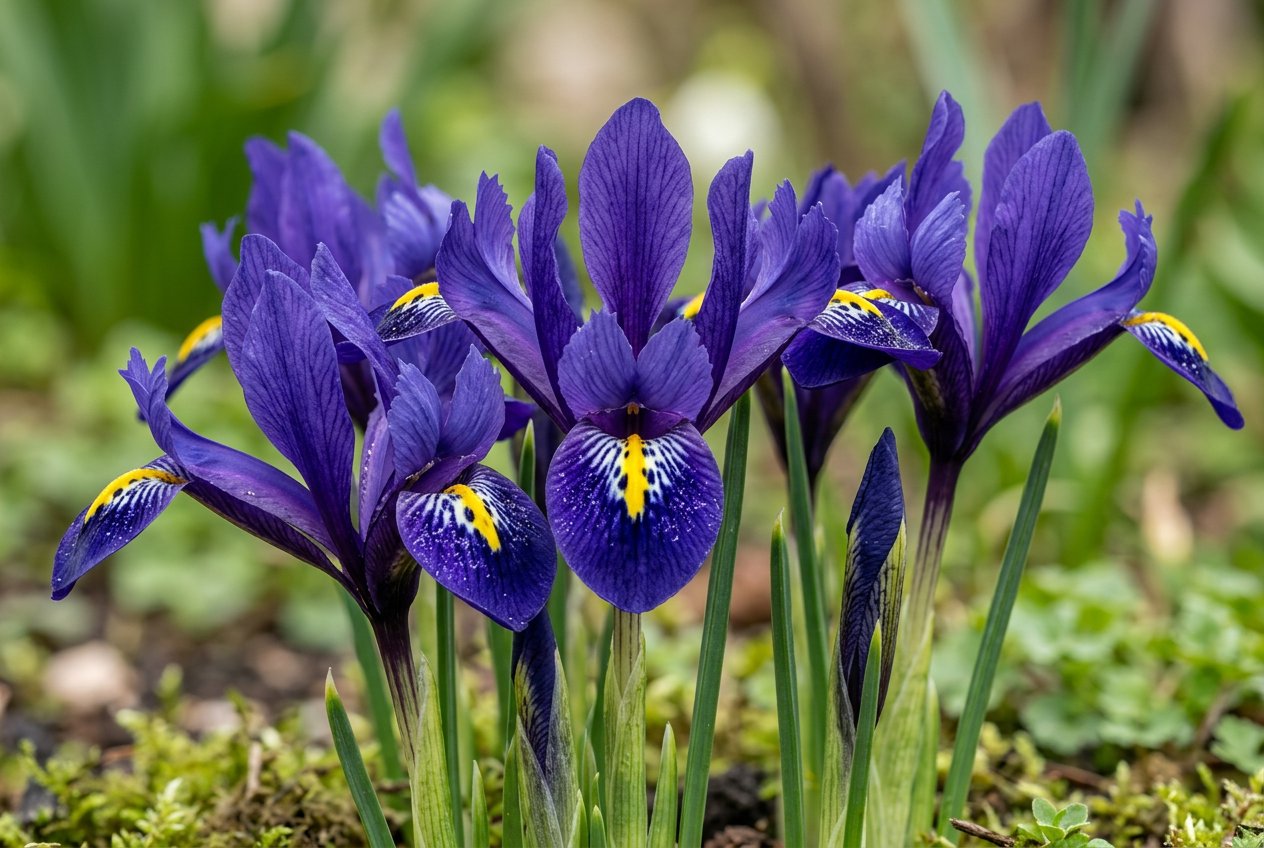
One of the earliest bulbs to flower in UK gardens, producing miniature iris blooms in vivid violet-blue with orange markings from February. Only 10-15cm tall but incredibly colourful. Perfect for rock gardens, troughs, and the front of borders. Numerous cultivars available in blue, purple, and reddish shades.
Where to plant
Best aspect
Border position
When to plant and expect flowers
Plant
Flowers
How to grow iris reticulata
Plant 8cm deep in autumn in very well-drained soil. Excellent in raised beds, troughs, and gravel gardens. Can split into non-flowering bulblets after the first year — feeding with tomato fertiliser helps. Many named cultivars: 'Harmony' (blue), 'J.S. Dijt' (purple), 'Katharine Hodgkin' (pale blue).
Soil requirements
Soil type
sand, loam, chalk
Moisture
well drained
pH
neutral, alkaline
Aftercare
Allow foliage to die back naturally after flowering. Remove spent flower heads to prevent self-seeding.
Propagation
- Offsets in autumn
- Seed
Wildlife value
Toxicity
Mildly toxic. Contains irisin compounds causing gastrointestinal upset if ingested.
Common problems
- Ink disease (fungal)
- Bulbs splitting into non-flowering offsets
- Rot in wet soil
Similar bulbs to grow
Related guides
How to Attract Birds to Your Garden
Practical guide to attracting wild birds to UK gardens. Covers feeders, food types, bird baths, nest boxes, planting, and seasonal feeding.
Autumn Gardening Jobs: Complete UK Checklist
Month-by-month autumn gardening checklist for UK gardens. Covers planting, bulbs, lawn care, pruning, composting, and wildlife tasks for Sep to November.
Balcony Gardening Ideas for the UK
Practical balcony gardening ideas for UK flats and apartments. Container choices, weight limits, wind protection, and the best plants for exposed spaces.