How to Create a Cutting Garden UK
Plan a cutting garden in the UK from just 6 sq m. 20+ best flowers, month-by-month calendar, and setup costs from a grower with 8 years' experience.
Key takeaways
- A 3m x 6m plot produces 30+ bouquets per season from 20+ varieties
- Setup costs £30 to £80 in year one for seeds, supports, and netting
- Saves £200+ per year versus buying cut flowers at £7 per bouquet average
- Succession sow every 2-3 weeks from March to June for continuous blooms April to November
- Cut stems early morning into warm water for vase life of 7 to 14 days
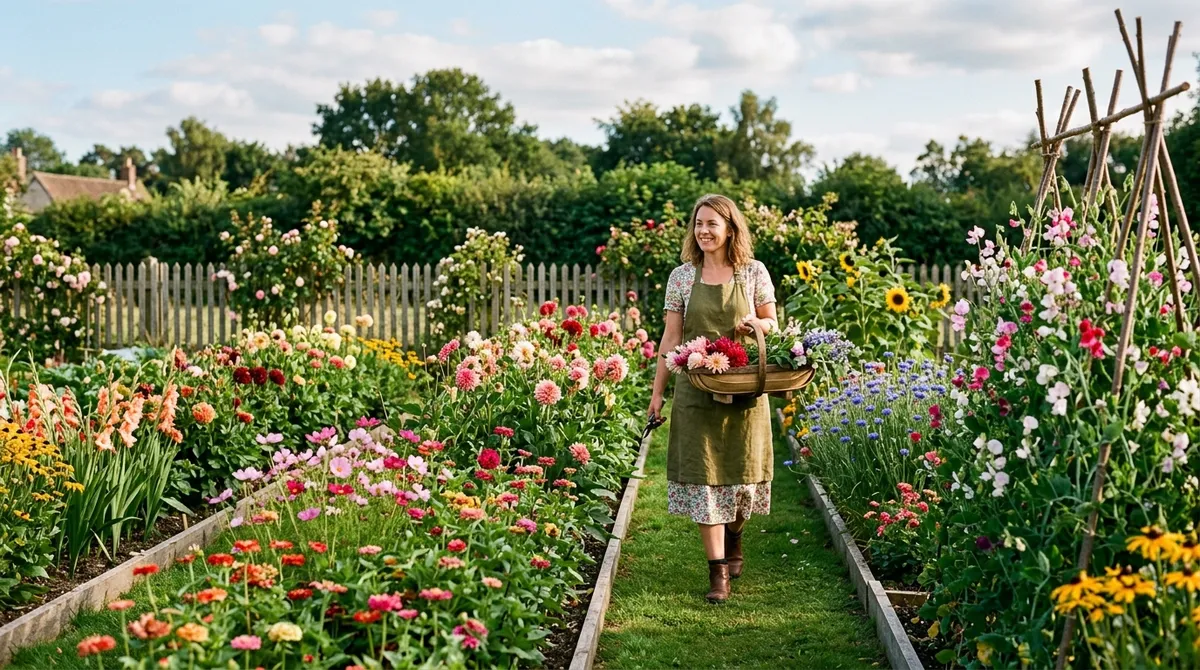
A cutting garden is a dedicated patch of ground where every plant earns its place by producing stems for the house. Unlike a display border where picking spoils the view, a cutting garden is designed to be harvested. The more you cut, the more it produces. A well-planned plot of just 3m x 6m yields 30 or more bouquets per season and pays for itself within the first year.
This guide covers everything from choosing the right plot size and layout to a full month-by-month cutting calendar and a comparison of the 20+ best UK cutting flowers. For a broader overview of annual and perennial types, see our guide to types of flowers to grow in the UK.
What size plot do I need for a cutting garden?
The minimum practical size for a cutting garden in the UK is 2m x 3m. That gives space for 6-8 varieties in short rows, producing around 15 bouquets across the season. The ideal size is 3m x 6m, which fits 20+ varieties and yields 30-40 bouquets from April to November.
Here is what each plot size realistically produces:
| Plot size | Area | Varieties | Bouquets per season | Best for |
|---|---|---|---|---|
| 1m x 2m | 2 sq m | 3-4 | 8-10 | Windowsill posies |
| 2m x 3m | 6 sq m | 6-8 | 15-20 | Weekly kitchen table vase |
| 3m x 6m | 18 sq m | 20-25 | 30-40 | Regular arrangements plus gifts |
| 3m x 10m | 30 sq m | 30+ | 50-60 | Surplus to sell or share |
Choose a spot in full sun with at least 6 hours of direct light. A south or west-facing position is ideal. Avoid overhanging trees, which drip onto flowers and create dense shade. The soil should be fertile and free-draining. Heavy clay needs improvement with garden compost and grit before planting. Our composting guide covers how to produce your own soil improver for free.
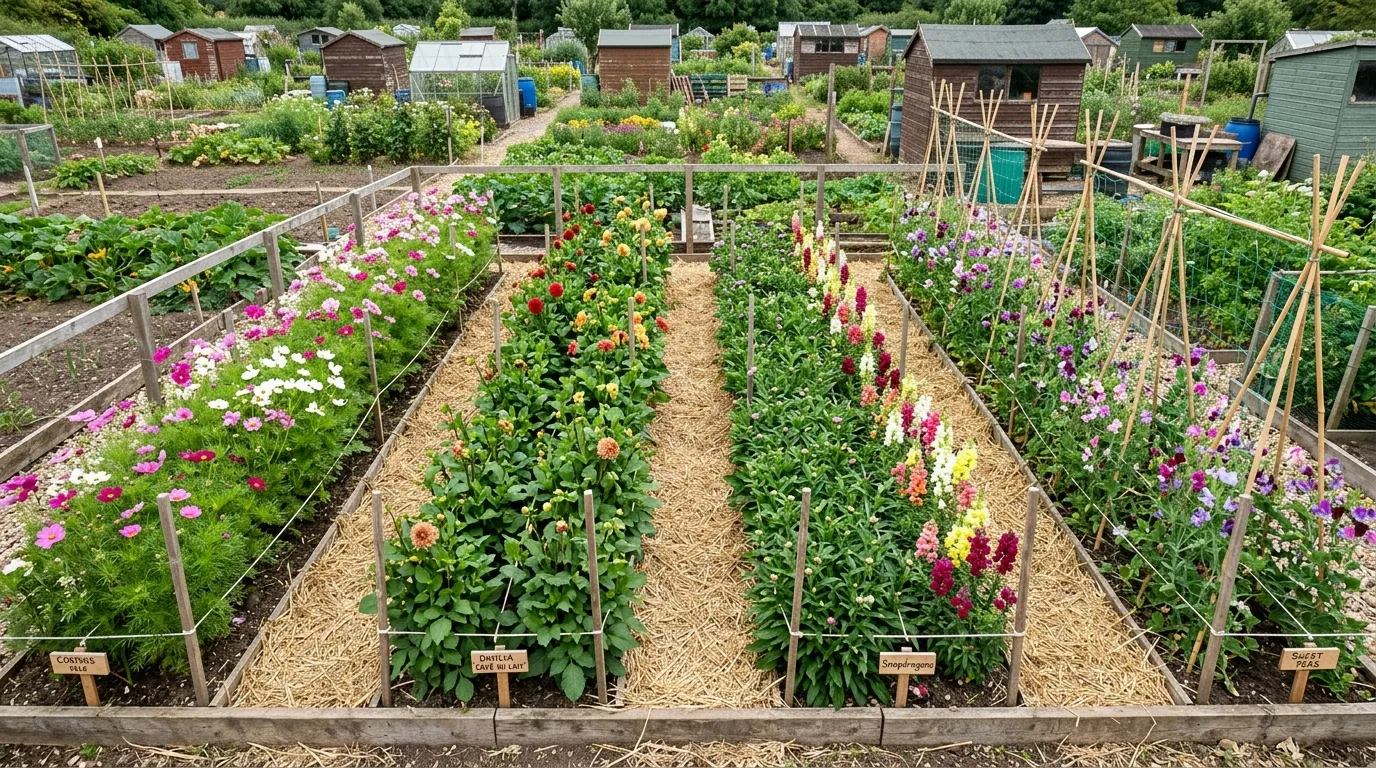
A 3m x 6m cutting garden with staggered rows gives enough variety for weekly bouquets from spring to autumn
How should I lay out a cutting garden?
Straight rows are the most efficient layout for a cutting garden. They make sowing, weeding, harvesting, and succession planting straightforward. Beds rather than borders also maximise the number of stems per square metre because every plant is accessible from both sides.
Row spacing: Set rows 30-45cm apart for annuals like cosmos and zinnias. Allow 60cm between rows of dahlias and sunflowers. Keep paths at least 30cm wide between beds so you can harvest without treading on the soil.
Support netting: Install horizontal support netting at 30cm and 60cm heights for tall, floppy stems like snapdragons, larkspur, and delphiniums. Galvanised mesh or Hortonova netting stretched between corner posts works well. Plants grow up through the grid, keeping stems perfectly straight.
Bed orientation: Run rows north to south so both sides receive equal sunlight. Place the tallest plants (sunflowers, dahlias) at the north end to avoid shading shorter varieties.
Practical layout for a 3m x 6m plot:
| Row | Width | Crop | Spacing |
|---|---|---|---|
| 1 (north end) | 60cm | Sunflowers and dahlias | 45-60cm between plants |
| 2 | 45cm | Larkspur and snapdragons | 25-30cm between plants |
| 3 | 45cm | Cosmos and zinnias | 30-40cm between plants |
| 4 | 45cm | Sweet peas on netting | 15cm between plants |
| 5 | 30cm | Ammi and bishop’s flower | 20-25cm between plants |
| 6 (south end) | 30cm | Foliage: eucalyptus and rosemary | 30-45cm between plants |
What are the best flowers for a UK cutting garden?
The table below compares 24 of the best cutting flowers for UK gardens. It covers sowing date, bloom period, average vase life, stem length, and whether each plant is annual or perennial. All have been trialled in Midlands growing conditions. The RHS recommends growing a mix of annuals and perennials for the longest cutting season.
| Flower | Sow/plant | Bloom period | Vase life | Stem length | Type |
|---|---|---|---|---|---|
| Spring | |||||
| Tulips | Oct-Nov (bulbs) | Apr-May | 5-7 days | 40-55cm | Bulb |
| Ranunculus | Oct or Feb (corms) | Apr-Jun | 7-10 days | 30-45cm | Corm |
| Anemones | Sep-Oct (corms) | Mar-May | 6-8 days | 25-35cm | Corm |
| Narcissi | Sep-Oct (bulbs) | Mar-Apr | 5-7 days | 30-45cm | Bulb |
| Wallflowers | Jun (seed) | Mar-May | 5-7 days | 30-40cm | Biennial |
| Summer | |||||
| Sweet peas | Feb-Mar (indoors) | Jun-Sep | 4-6 days | 30-45cm | Annual |
| Dahlias | May (tubers) | Jul-Oct | 5-8 days | 40-70cm | Tuber |
| Cosmos | Mar-Apr (indoors) | Jun-Oct | 5-7 days | 50-90cm | Annual |
| Zinnias | Apr (indoors) | Jul-Oct | 7-12 days | 40-70cm | Annual |
| Sunflowers | Apr-May | Jul-Sep | 7-10 days | 60-120cm | Annual |
| Larkspur | Mar-Apr (direct) | Jun-Aug | 7-10 days | 60-90cm | Annual |
| Snapdragons | Feb-Mar (indoors) | Jun-Oct | 7-10 days | 50-80cm | Annual |
| Ammi majus | Mar-Apr (direct) | Jun-Aug | 5-7 days | 60-90cm | Annual |
| Scabious | Mar (indoors) | Jul-Sep | 7-10 days | 50-70cm | Annual |
| Cornflowers | Mar-Apr (direct) | Jun-Aug | 5-7 days | 50-70cm | Annual |
| Stocks | Feb-Mar (indoors) | Jun-Aug | 7-10 days | 40-60cm | Annual |
| Autumn | |||||
| Chrysanthemums | Mar (cuttings) | Aug-Nov | 14-21 days | 40-60cm | Perennial |
| Dahlias (late) | May (tubers) | Sep-Nov | 5-8 days | 40-70cm | Tuber |
| Asters | Mar (indoors) | Aug-Oct | 7-10 days | 40-60cm | Annual |
| Ornamental grasses | Spring (division) | Aug-Nov | 14-21 days | 40-90cm | Perennial |
| Winter | |||||
| Hellebores | Autumn (plants) | Dec-Apr | 7-14 days | 20-35cm | Perennial |
| Winter jasmine | Autumn (plants) | Dec-Mar | 5-7 days | Cut sprays | Shrub |
| Pussy willow | Winter (cuttings) | Feb-Mar | 14-21 days | Cut sprays | Shrub |
| Dried seedheads | Leave standing | Nov-Feb | Months | Varies | Various |
For detailed growing guides on individual plants, see our articles on sweet peas, dahlias, cosmos, and sunflowers.
What foliage fillers should I grow?
Cut flower arrangements need foliage to frame the blooms. Without fillers, a vase of stems looks sparse. These four UK-hardy plants provide year-round greenery for arranging.
Eucalyptus gunnii: The most popular florist foliage. Hardy to -18C in the UK. Coppice hard each March to produce juvenile round leaves on straight 60-90cm stems. One plant provides enough foliage for 40+ arrangements per year. Buy a small plant for £5-8 and coppice annually.
Pittosporum tenuifolium: Evergreen, compact, and hardy to -10C. The dark stems with small glossy leaves are a staple of professional floristry. Grows well in most UK gardens south of the Scottish Highlands. Trim regularly to encourage bushy growth.
Rosemary: Already in most herb gardens. The upright varieties like ‘Miss Jessopp’s Upright’ produce straight 30-40cm stems ideal for small arrangements. Fragrant and evergreen. See our rosemary growing guide for care details.
Bronze fennel: Feathery copper-coloured foliage from May to October. Self-seeds freely. The airy texture adds movement to arrangements. Cut stems last 5-7 days in water. Grows to 1.5m and needs no support.
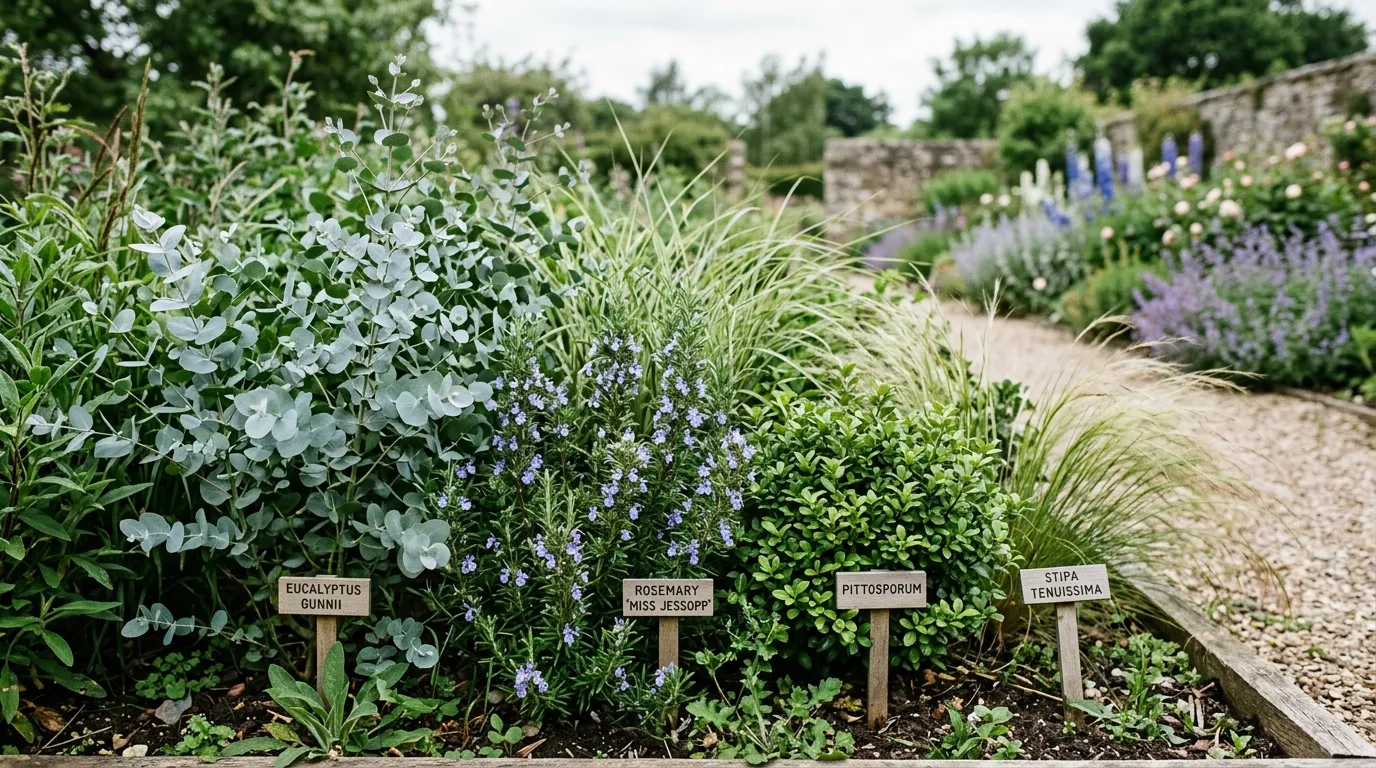
Eucalyptus, rosemary, and bronze fennel provide foliage from spring to winter for arranging alongside cut flowers
Month-by-month cutting garden calendar
This calendar shows what to sow, plant, and harvest each month. Following it ensures you always have something to cut.
| Month | Sow/plant | Harvest |
|---|---|---|
| January | Order seeds and tubers | Hellebores, pussy willow, dried seedheads |
| February | Sow sweet peas, snapdragons indoors | Hellebores, winter jasmine |
| March | Sow cosmos, zinnias, stocks indoors. Direct sow larkspur, ammi, cornflowers | Narcissi, anemones |
| April | Sow sunflowers indoors. Plant ranunculus corms | Tulips, narcissi, wallflowers |
| May | Plant out dahlia tubers and half-hardy annuals after last frost | Tulips, ranunculus, sweet williams |
| June | Succession sow cosmos and zinnias every 2-3 weeks | Sweet peas, larkspur, ammi, cornflowers |
| July | Last succession sow of cosmos | Sweet peas, dahlias, cosmos, zinnias, sunflowers, stocks |
| August | Sow hardy annuals for next spring (larkspur, ammi) | Peak harvest: dahlias, cosmos, zinnias, snapdragons, asters |
| September | Plant spring bulbs (tulips, narcissi, anemones) | Dahlias, cosmos, chrysanthemums, late sweet peas |
| October | Plant ranunculus corms. Lift dahlia tubers after first frost | Chrysanthemums, asters, ornamental grasses |
| November | Plant tulip bulbs (last chance). Mulch beds | Late chrysanthemums, dried seedheads |
| December | Plan next year. Clean supports and netting | Hellebores, holly, ivy, dried grasses |
For a broader sowing schedule covering vegetables and herbs alongside flowers, see our seed sowing calendar.
How does succession sowing extend the cutting season?
Succession sowing means planting the same variety every 2-3 weeks rather than all at once. A single sowing of cosmos flowers for 6-8 weeks. Three successive sowings, spaced 3 weeks apart from March to May, give you continuous blooms from June right through to the first frost in late October.
The flowers that respond best to succession sowing are:
| Flower | First sowing | Last sowing | Interval | Result |
|---|---|---|---|---|
| Cosmos | March (indoors) | Early June (direct) | Every 3 weeks | Continuous Jun-Oct |
| Zinnias | April (indoors) | Late May (direct) | Every 2 weeks | Continuous Jul-Oct |
| Sunflowers | April | Mid-June | Every 2 weeks | Continuous Jul-Sep |
| Sweet peas | February | Late March | 2 sowings | Extended Jun-Sep |
| Cornflowers | March (direct) | May | Every 3 weeks | Continuous Jun-Aug |
| Stocks | February | April | Every 3 weeks | Continuous Jun-Aug |
Our succession planting guide covers the technique in full detail for both flowers and vegetables.
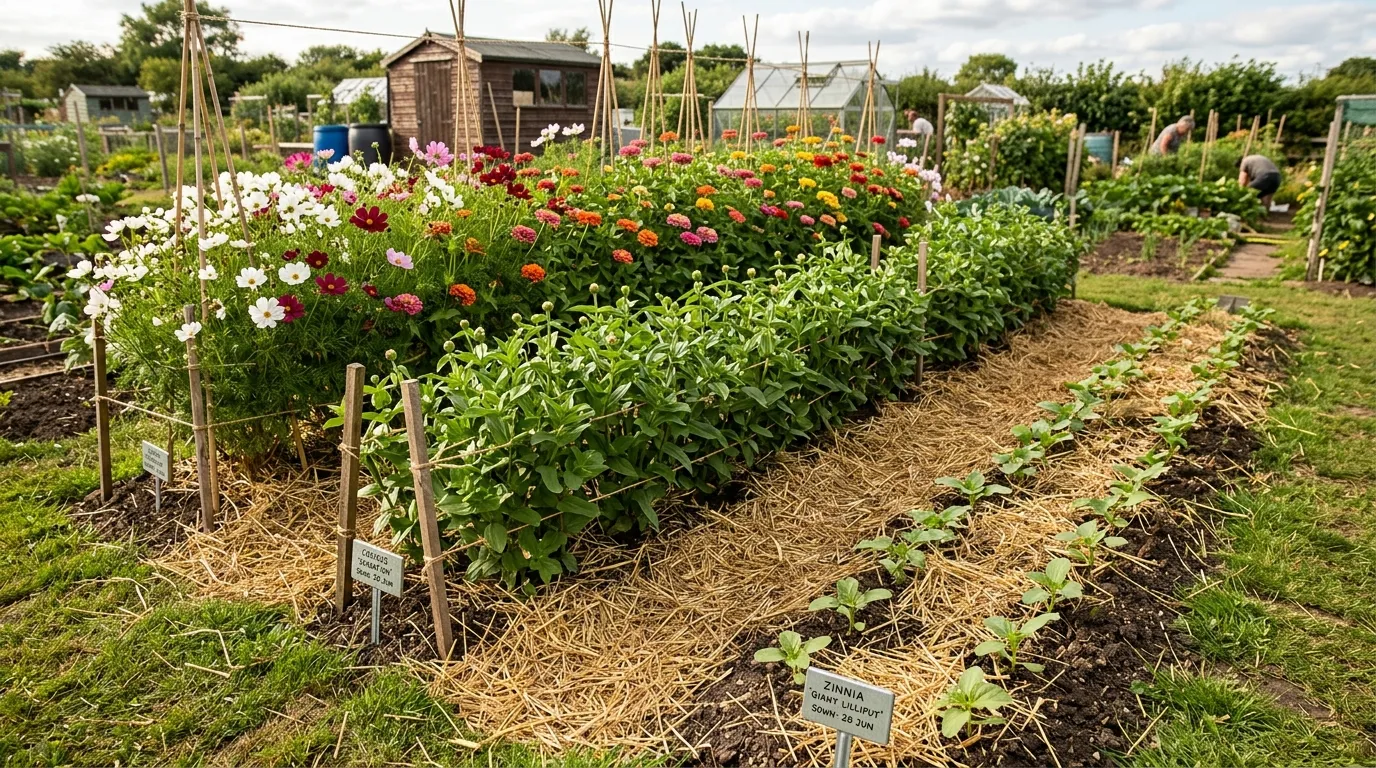
Three rows of cosmos sown 3 weeks apart create a rolling harvest from June through October
How do I condition cut flowers for the longest vase life?
Proper conditioning adds 3-5 days to the vase life of most home-grown flowers. These steps make the difference between a bouquet that wilts in 3 days and one that lasts 10-14 days.
When to cut: Harvest early morning between 6am and 9am. This is when stems hold the most water and sugars are highest. Avoid cutting in afternoon heat. If morning is not possible, cut in the evening after the sun drops.
How to cut: Use sharp, clean secateurs or a knife. Cut at a 45-degree angle to maximise the water uptake surface. Never use blunt scissors, which crush the stem and block water channels.
Strip foliage: Remove all leaves that would sit below the waterline in a vase. Submerged foliage rots within 48 hours, breeding bacteria that block stems and shorten vase life.
Conditioning bucket: Place cut stems immediately into a bucket of warm (not hot) water with commercial flower food. Warm water travels up stems faster than cold. Leave stems to drink for at least 2 hours in a cool, dark spot before arranging.
Ongoing care: Change vase water every 2-3 days. Re-cut stems 1cm shorter each time. Keep arrangements away from direct sunlight, radiators, and fruit bowls (ripening fruit releases ethylene gas, which ages flowers faster).
| Conditioning step | Why it matters | Impact on vase life |
|---|---|---|
| Cut early morning | Maximum water content in stems | +2-3 days |
| 45-degree angle cut | Larger surface area for water uptake | +1-2 days |
| Strip submerged leaves | Prevents bacterial growth | +2-3 days |
| Warm water with flower food | Faster initial hydration | +1-2 days |
| Change water every 2-3 days | Removes bacteria buildup | +2-3 days |
How much does a cutting garden cost to set up?
A cutting garden is one of the cheapest garden features to establish. Seeds are the most cost-effective starting point because a single packet of cosmos (around £2.50) produces 40-60 plants.
Year one setup costs:
| Item | Cost | Notes |
|---|---|---|
| Seeds (10-12 packets) | £15-£30 | Cosmos, zinnias, sweet peas, sunflowers, larkspur, ammi, snapdragons, cornflowers, stocks, scabious |
| Dahlia tubers (5) | £10-£25 | Multiply each year, free plants from year 2 |
| Support netting and canes | £5-£15 | Hortonova netting or string supports |
| Flower food (bulk) | £3-£5 | Chrysal or Floralife sachets |
| Bulbs for spring (50) | £8-£15 | Tulips, narcissi, ranunculus, anemones |
| Total year one | £30-£80 |
Year two onward: Replace only annual seeds (£15-£30) since dahlia tubers multiply, perennials return, and bulbs naturalise. By year two, each bouquet costs under 50p to produce.
Cost comparison with shop-bought flowers:
The average UK household buys 30 bouquets per year at an average of £7 each, spending £210 annually. A cutting garden saves £130-£180 per year after seed costs. The investment pays back fully within the first season. For flower lovers who buy weekly, the saving exceeds £300 per year.
Lawrie’s top tip: the three varieties every beginner should start with
If you have never grown cut flowers before, start with these three and expand from there. All are beginner-proof, direct-sowable, and produce armfuls of stems in their first season.
Cosmos ‘Sensation Mix’: Sow direct in May, flowers by July, and keeps going until the frost. Produces 50-80 stems per plant with regular cutting. Needs no feeding, no staking below 90cm, and no special treatment. A single £2.50 packet gives you enough plants to fill a 3m row.
Sweet peas ‘Spencer Mixed’: Sow indoors in February or October for the strongest plants. The fragrance alone justifies the effort. Pick every 2-3 days to keep them flowering from June to September. The Higgledy Garden flower farm rates Spencer types as the best all-round cutting sweet pea for UK conditions.
Zinnia ‘Benary’s Giant’: The longest vase life of any annual cut flower at 7-12 days. Sow indoors in April and plant out after the last frost. Produces dahlia-like double blooms in every colour from lime green to deep burgundy. Stems reach 60-80cm and get stronger with each successive cut.
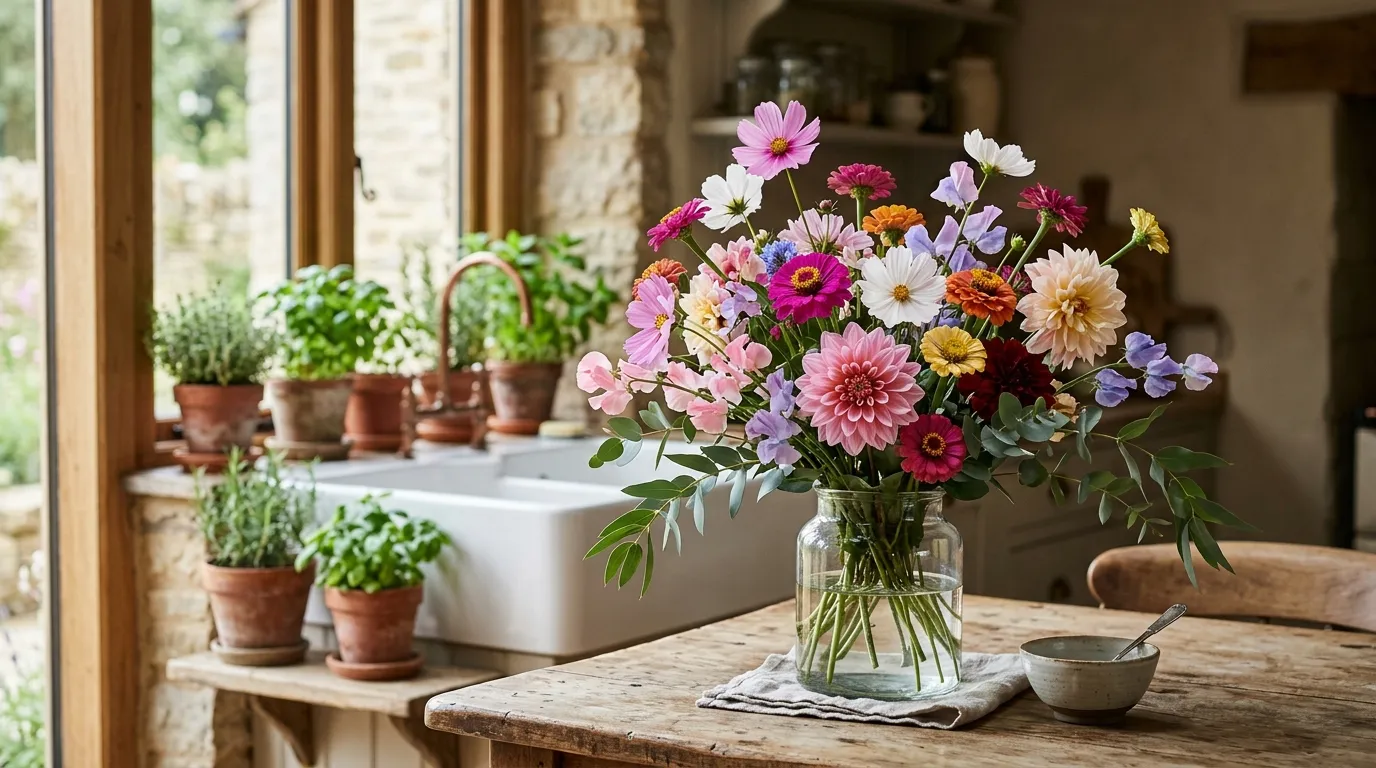
Cosmos, sweet peas, and zinnias are the three best beginner cut flowers, together providing colour from June through October
How do I plan a cutting garden for year-round flowers?
A four-season cutting garden needs a mix of bulbs, annuals, perennials, and shrubs. Here is how to structure the planting:
Spring (March to May): Plant tulip and narcissus bulbs in October for spring stems. Add ranunculus and anemone corms in autumn or early spring. These provide the first cuts of the year from March onward. Wallflowers fill the gap between bulbs and summer annuals.
Summer (June to September): This is peak season. Sweet peas, dahlias, cosmos, zinnias, sunflowers, larkspur, snapdragons, ammi, and scabious overlap to provide daily harvests. Succession sowing extends the supply. Our flower planting calendar has the full monthly schedule.
Autumn (September to November): Chrysanthemums are the backbone of autumn cutting, with a vase life of 14-21 days. Late dahlias continue until the first hard frost. Ornamental grasses like miscanthus and pennisetum add texture. Asters bridge the gap between dahlias and chrysanthemums.
Winter (December to March): Hellebores flower from December through April and last up to 14 days in a vase when conditioned correctly (sear stem ends in boiling water for 20 seconds). Winter jasmine provides bright yellow sprays. Pussy willow catkins cut in February last weeks in a vase. Dried seedheads from honesty, teasels, and ornamental grasses fill arrangements through the darkest months.
Frequently asked questions
Full FAQ answers are provided in the frontmatter above and rendered by the site’s FAQ component with FAQPage JSON-LD schema.
Related reading
- Cottage garden planting plan - traditional planting schemes that work alongside a cutting garden
- How to grow dahlias in the UK - full guide to tuber planting, pinching out, and winter storage
- How to grow sweet peas from seed - autumn and spring sowing methods for the best fragrant stems
- How to grow cosmos from seed - the easiest annual cut flower from sowing to harvest
- Seed sowing calendar UK - month-by-month sowing schedule for flowers, vegetables, and herbs
Lawrie has been gardening in the West Midlands for over 30 years. He grows his own veg using no-dig methods, keeps a wildlife-friendly garden, and writes practical advice based on real UK growing conditions.