Cold Frame Gardening UK
How to use a cold frame in the UK to harden off seedlings, overwinter tender plants, and extend the growing season. Includes positioning and crop choices.
Key takeaways
- A cold frame extends the UK growing season by 4-8 weeks at each end
- Soil inside a cold frame runs 5-10C warmer than open ground
- Position against a south-facing wall for maximum sun and wind protection
- Prop the lid open on warm days to prevent overheating and damping off
- Ideal for hardening off seedlings, overwintering herbs, and early salad crops
- Aluminium cold frames with toughened glass last decades and need minimal care
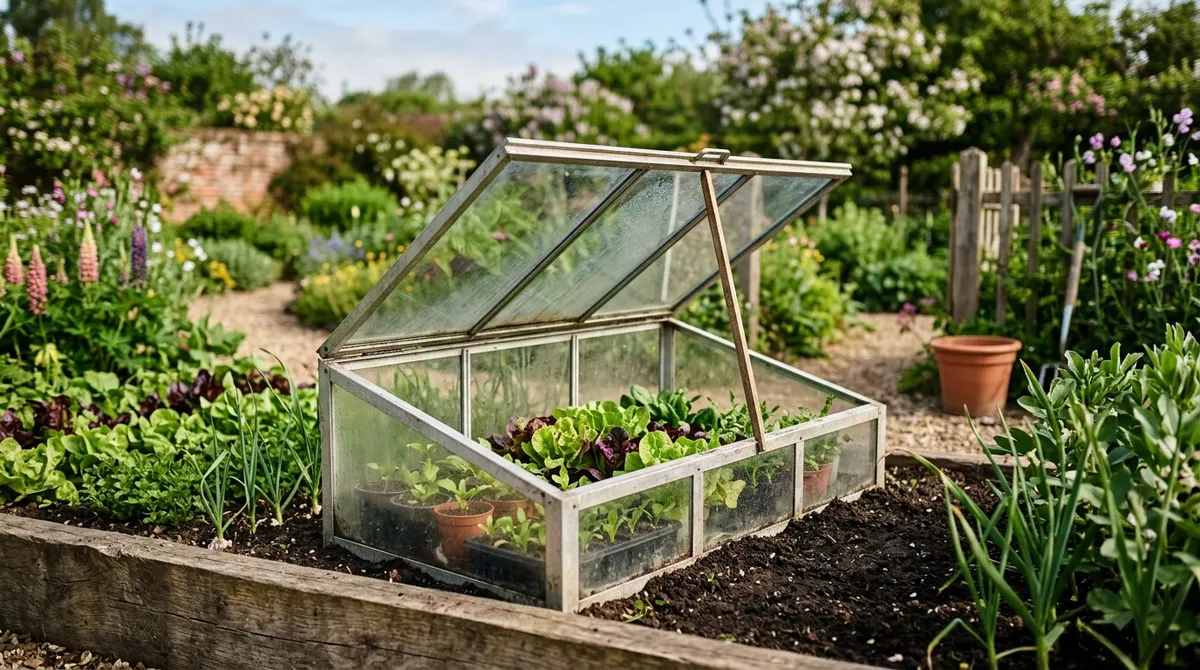
A cold frame is one of the most practical additions to any UK garden. It extends the growing season by weeks, protects seedlings during the critical hardening-off stage, and keeps salad crops producing well into autumn. Yet it takes up barely more ground space than a doormat.
This guide covers how to get the most from a cold frame in UK conditions, from positioning and ventilation to month-by-month growing plans. If you are raising seedlings indoors first, our guide on how to sow seeds indoors covers the earlier stages of that process.
What is a cold frame and how does it work?
A cold frame is an unheated, low-profile structure with a glazed lid that traps solar heat and shields plants from frost, wind, and heavy rain. The design is simple: solid sides (timber, brick, or aluminium) and a sloping transparent top that faces the sun. No electricity or heating required.
Sunlight passes through the glass and warms the soil and air inside. The enclosed space holds that warmth overnight when temperatures drop. On a clear March morning, the air inside a cold frame can reach 15-18C while the outside temperature sits at 6-8C. Soil temperature runs 5-10C warmer than open ground, which is the difference between seeds germinating and sitting dormant.
The sloping lid serves two purposes. It sheds rain so the interior stays drier than open ground. It also angles towards the sun, maximising light capture during the short days of late winter and early spring when every extra hour of sunlight matters.
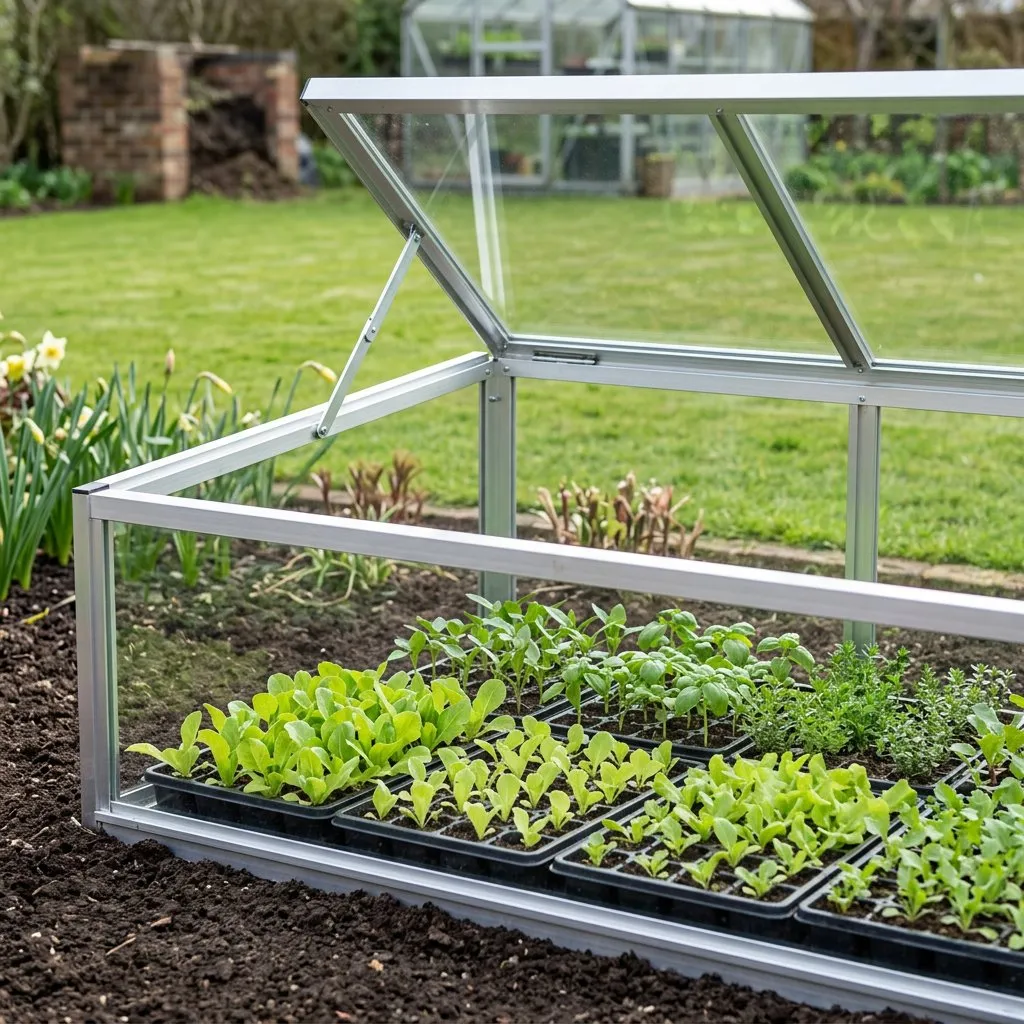 The Access 4x4 aluminium cold frame with toughened glass is ideal for hardening off seedlings in spring.
Shop the Access 4x4 Coldframe at Greenhouse Stores →
How to position a cold frame
Position your cold frame against a south-facing wall or fence for maximum sun exposure and wind protection. The wall absorbs heat during the day and radiates it back overnight, keeping the interior a few degrees warmer.
Avoid placing a cold frame under trees. Overhanging branches block light and drip water onto the glass, promoting fungal disease inside. Avoid low-lying areas that collect cold air on still nights — these frost pockets cancel out the warming benefit.
The ground beneath the frame should be level and free-draining. Waterlogged soil inside a cold frame causes root rot faster than in open ground because the enclosed space traps moisture. If your soil is heavy clay, stand the frame on a layer of gravel for drainage.
Orientation matters. The back of the cold frame (the taller side) should face north, with the sloping lid angling down towards the south. This catches the low winter sun at the best angle and prevents the lid from shading the plants inside.
Ventilation: the key to cold frame success
Ventilation is the single most important cold frame skill. Get it wrong and plants either overheat on sunny days or develop damping off from stale, humid air.
On any day above 15C, prop the lid open by mid-morning. A simple notched stay or a length of timber works fine. Close it again by late afternoon to trap warmth for the night. In summer, leave the lid fully open during the day and half-open overnight.
The consequences of poor ventilation are serious. A sealed cold frame in full sun reaches 35-40C within an hour on a spring afternoon. At those temperatures, seedlings cook. I have lost trays of lettuce seedlings by forgetting to open the lid on an unexpectedly warm April morning. It only takes once to learn that lesson.
Automatic vent openers remove the guesswork entirely. These wax-cylinder devices expand as the temperature rises and push the lid open without electricity or batteries. They close again as the air cools. If you work away from home during the day, an auto vent is worth every penny.
Why we recommend fitting an automatic vent opener from day one: After 30 seasons of using cold frames, an automatic vent opener is the single accessory that prevents the most losses. Without one, a single warm April day left unchecked costs you an entire tray of seedlings — I have lost batches worth three weeks of growing time that way. A wax-cylinder opener costs £15-£25 and pays for itself in the first season.
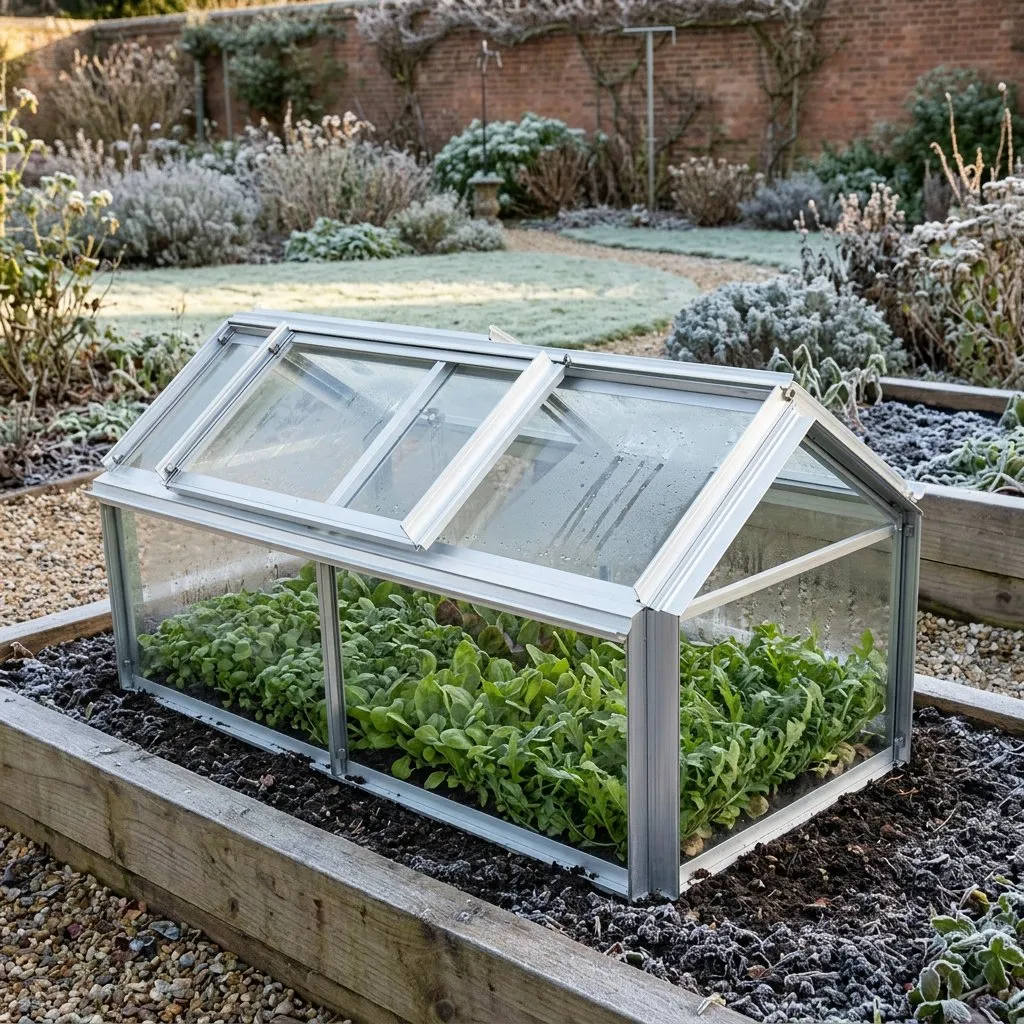 The Elite Min E Lite cold frame keeps winter salads growing when open ground is too cold and wet.
Shop the Elite Min E Lite at Greenhouse Stores →
What to grow in a cold frame
A cold frame is versatile enough to earn its space in every month of the year. The key is matching crops to seasons.
Spring: hardening off and early sowings
From March, use a cold frame to harden off seedlings that you started indoors. Move seed trays into the frame and gradually increase ventilation over 7-14 days before planting out. This is the single most common use for a cold frame and it makes a measurable difference to transplant survival.
At the same time, sow salad crops directly into the soil inside the frame. Lettuce, radish, and spring onions germinate weeks earlier in a cold frame than in open ground. Our lettuce growing guide covers the best varieties for early sowing.
Summer: herbs and tender crops
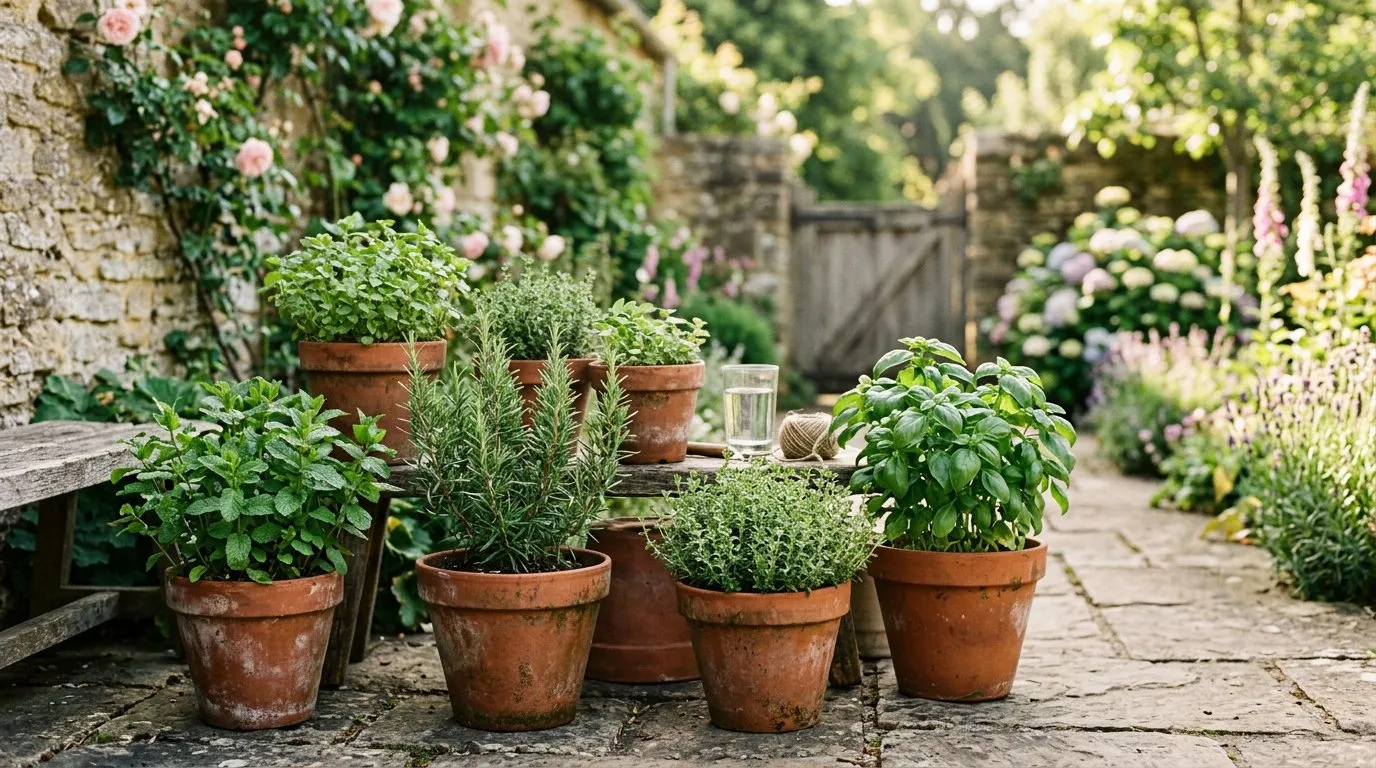
In summer, use the frame for growing herbs that appreciate extra warmth. Basil, in particular, performs far better in a cold frame than in the open, especially in northern regions. Keep the lid fully open during the day to prevent overheating.
Autumn: extending the harvest
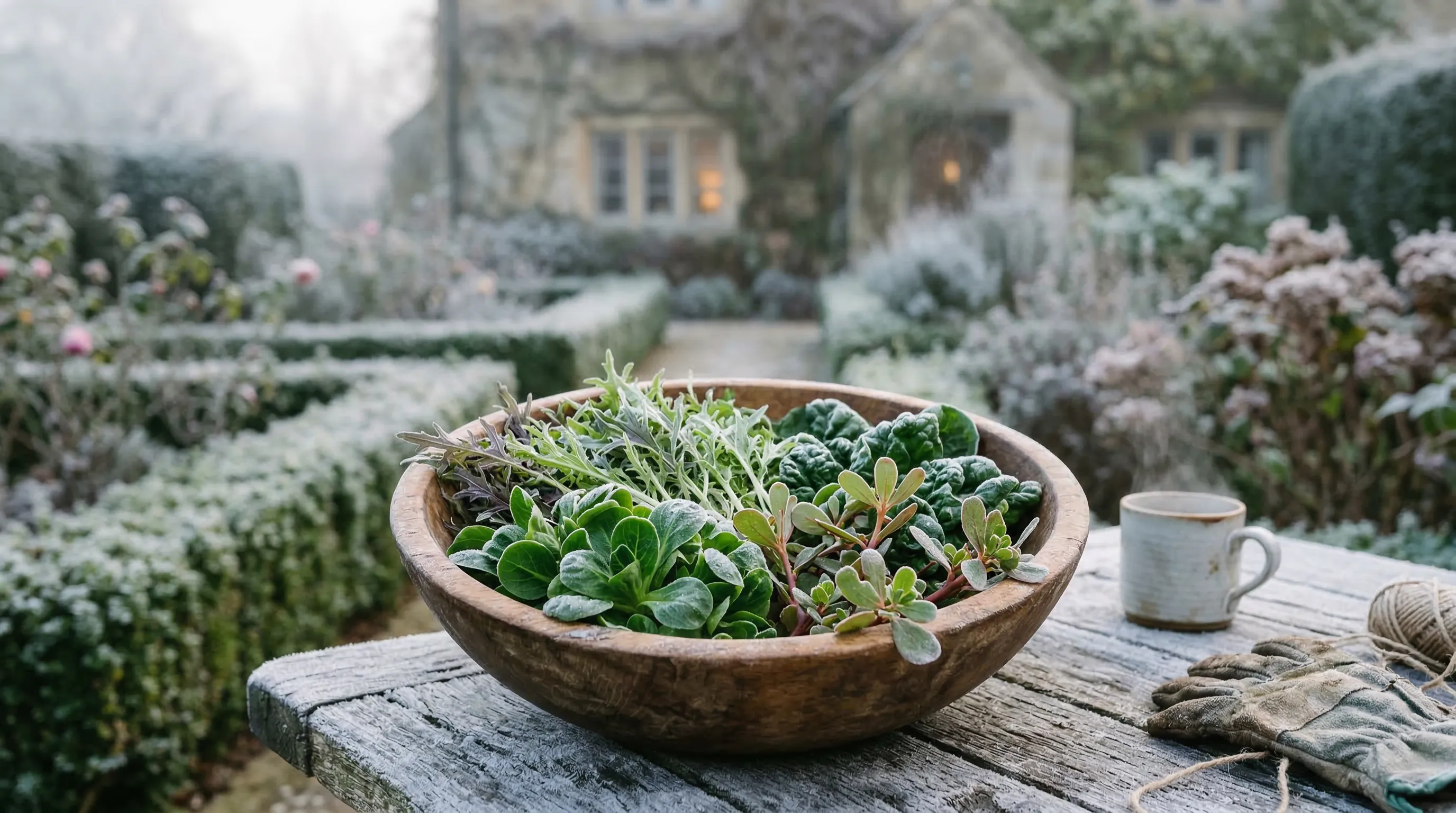
As autumn arrives, a cold frame becomes a season-extender. Sow winter lettuce, lamb’s lettuce, mizuna, and pak choi in September for harvests into December. These crops tolerate cold but not the combination of cold, wind, and wet that open ground delivers. A cold frame provides exactly the right shelter. For sowing schedules, variety rankings, and ventilation rules specific to winter salad harvesting, our dedicated guide covers the full year-round approach.
Succession planting works particularly well with a cold frame. Sow a short row every two weeks and the frame keeps each batch growing longer than open-ground sowings.
Winter: overwintering and forcing
From November to February, overwinter tender herbs like rosemary and thyme in the frame. Protect autumn-planted broad beans from the worst frosts. Force early rhubarb by covering crowns inside the frame with an upturned bucket.
You can also use a cold frame in winter to start very early sowings. Hardy lettuce varieties, spinach, and even carrots can be sown in late January inside a cold frame in southern England. The warmer soil temperature makes germination possible weeks before outdoor sowing. For a complete month-by-month plan, our greenhouse growing calendar covers what to sow under glass and in cold frames from January to December.
Choosing a cold frame
Not all cold frames are equal. The material, size, and glazing affect performance, durability, and ease of use.
Material
Aluminium frames with toughened glass are the most durable option. They resist rot, need no painting or treating, and the glass transmits more light than polycarbonate. Toughened glass is also safer than horticultural glass — it shatters into blunt granules rather than sharp shards.
Timber frames are cheaper but require regular treatment to prevent rot, especially at the base where the wood contacts damp soil.
Size
A 4x2 ft cold frame holds two standard seed trays side by side and suits a small garden or patio. A 6x4 ft frame provides enough space to harden off a serious batch of seedlings while growing salad crops alongside.
The Elite Min-E-Lite 4x2 Cold Frame (around £249) is a compact aluminium option with toughened glass that tucks against a wall without wasting space. For a wider growing area, the Elite Min-E-Lite 6x2 Cold Frame (around £299) adds extra width while keeping the same low profile.
If you want a larger growing area for direct soil sowing, the 4x4 Access Aluminium Coldframe (around £439) and 6x4 Access Aluminium Coldframe (around £579) offer toughened glass panels and enough depth to grow root vegetables directly in the soil beneath.
For raised-bed growing, the Palram Canopia Plant Inn (around £329) combines a cold frame with a raised planter. This design suits paved areas and patios where you cannot grow directly in the ground.
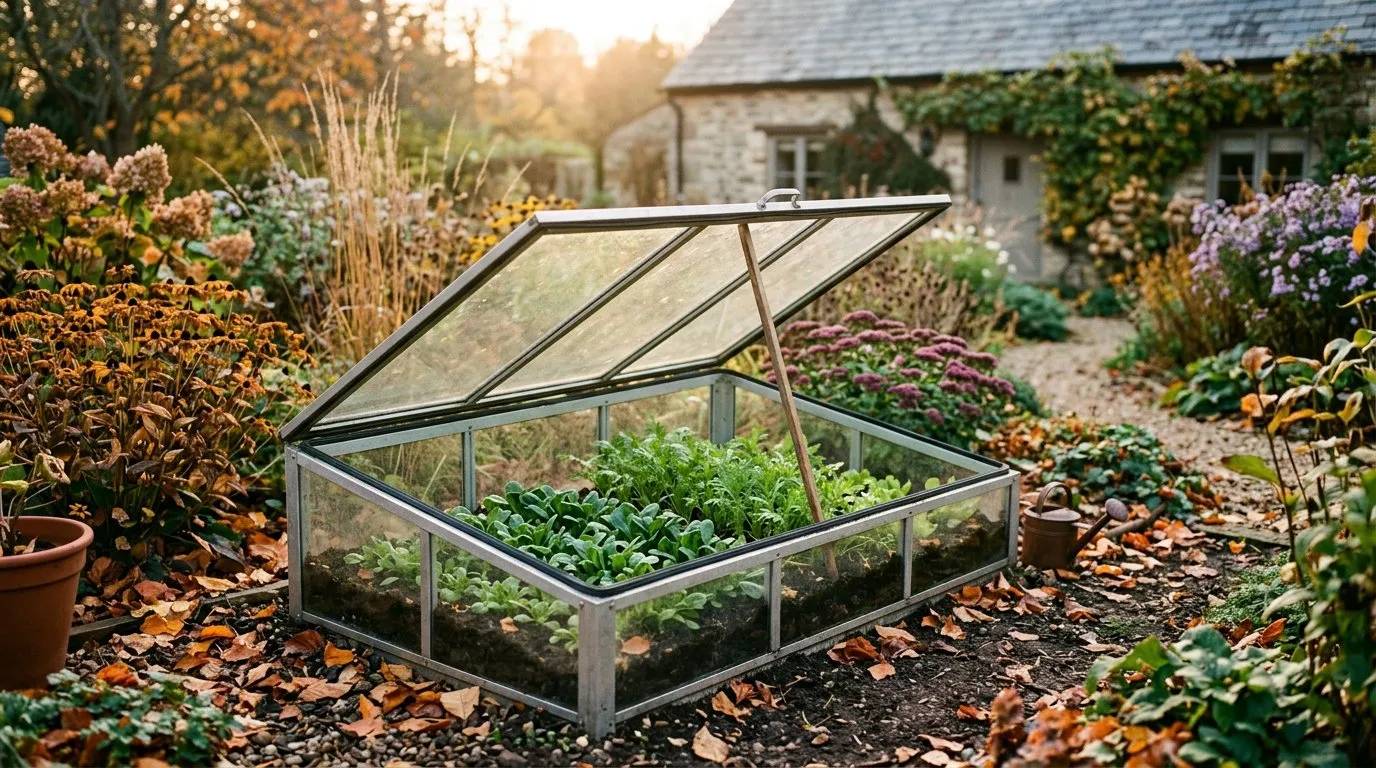 A cold frame filled with lamb’s lettuce and mizuna extends the harvest well into autumn, long after open-ground salads have finished.
Month-by-month cold frame calendar
| Month | Task |
|---|---|
| January-February | Sow hardy lettuce and spinach. Force rhubarb. Ventilate on mild days. |
| March | Start hardening off indoor-raised seedlings. Sow radish and spring onions. |
| April-May | Continue hardening off. Sow carrots and beetroot. Increase ventilation daily. |
| June-August | Grow basil and tender herbs. Leave lid open day and night in hot spells. |
| September | Sow winter salads: lamb’s lettuce, mizuna, winter lettuce, pak choi. |
| October-November | Close lid earlier. Overwinter tender herbs. Protect autumn-sown broad beans. |
| December | Harvest winter salads. Keep the glass clean for maximum light transmission. |
If you are planning your full growing year, our grow your own vegetables guide provides a broader UK planting calendar.
A cold frame is the ideal halfway house for hardening off indoor-raised seedlings before they move to open ground.
Common cold frame mistakes
Forgetting to ventilate is the most frequent error. A closed cold frame in spring sunshine kills seedlings within hours. If you cannot check daily, fit an automatic vent opener.
Overwatering causes more damage than under-watering. The enclosed space reduces evaporation. Water only when the top 2cm of soil feels dry. Early morning watering is best so the surface dries before the lid closes for the night.
Placing in shade defeats the purpose. A cold frame needs direct sunlight for at least six hours daily to maintain the temperature difference that makes it useful.
Ignoring pests is easy because the lid is closed. Check regularly for slugs, aphids, and vine weevil larvae. The warm, sheltered environment is as attractive to pests as it is to plants. Our organic pest control guide covers safe treatments for enclosed growing spaces.
Getting started with a cold frame
A cold frame rewards you from the very first season. Even a small 4x2 ft frame against a south-facing wall lets you start growing tomatoes and other tender crops weeks earlier than your neighbours. If you are unsure whether a full greenhouse is right for your garden, our guide on do you need a greenhouse weighs the costs against cheaper alternatives including cold frames and polytunnels. Combined with container vegetable gardening on a patio, a cold frame turns any small outdoor space into a productive growing area.
The Royal Horticultural Society recommends cold frames as one of the most cost-effective ways to extend the UK growing season. For the price of a few garden centre trips, a quality aluminium cold frame lasts 20 years or more and pays for itself in healthier seedlings, earlier harvests, and fresh salad leaves well into winter.
Start with a compact frame, position it in full sun, remember to ventilate, and you will wonder how you managed without one.
Now you’ve mastered cold frame gardening, read our guide on growing tomatoes in the UK for the perfect next crop to start under glass.
Lawrie has been gardening in the West Midlands for over 30 years. He grows his own veg using no-dig methods, keeps a wildlife-friendly garden, and writes practical advice based on real UK growing conditions.