Companion Planting Guide UK
Companion planting guide for UK gardens. Covers the best plant pairings, what to avoid, pest control combos, and a planting chart for vegetables.
Key takeaways
- Marigolds (Tagetes) repel whitefly and attract hoverflies that eat aphids
- Carrots and onions grown together confuse each other's main pest flies
- Nasturtiums act as a sacrifice crop, drawing aphids away from beans and brassicas
- The three sisters (sweetcorn, beans, squash) is a proven multi-crop system
- Avoid planting potatoes near tomatoes — both are susceptible to blight
- Herbs like basil, rosemary, and thyme attract pollinators and deter pests when placed near crops
Companion planting is the practice of growing specific plants together for mutual benefit. Some combinations repel pests. Others attract pollinators or improve soil fertility. A few are grown as sacrifice crops, deliberately drawing pests away from valuable plants.
The approach has been used for centuries. The three sisters system — sweetcorn, climbing beans, and squash — dates back thousands of years. French marigolds alongside tomatoes is a classic pairing in UK allotments. Not every claimed combination has scientific proof, but the evidence-based ones genuinely reduce pest damage and improve harvests. This guide covers what works, what to avoid, and how to plan companion planting in a UK vegetable garden. For more on getting started, see our beginner vegetable garden guide.
How does companion planting work?
Companion planting uses four main mechanisms. Understanding these helps you choose effective combinations rather than relying on folklore.
Pest confusion
Many pest insects find their host plants by scent. Growing a strongly scented plant alongside the target crop masks or confuses the pest. Carrots and onions are the classic example. Carrot fly finds carrots by scent. Onion scent masks the carrot, and vice versa. Growing them in alternating rows reduces damage from both carrot fly and onion fly.
Trap cropping
A trap crop is a plant that pests prefer over your main crop. Nasturtiums attract blackfly away from broad beans and French beans. The aphids colonise the nasturtiums instead, leaving the beans clean. You sacrifice the nasturtiums (or blast the aphids off with water) while your crop stays protected.
Beneficial insect attraction
Some companion plants attract predatory insects that eat pests. Marigolds (Tagetes) attract hoverflies, whose larvae consume up to 50 aphids per day. Dill, fennel, and yarrow attract lacewings and parasitic wasps. A border of bee-friendly plants alongside the vegetable plot provides a reservoir of beneficial insects.
Nitrogen fixing
Legumes (peas, beans, clover) host nitrogen-fixing bacteria in root nodules. These bacteria convert atmospheric nitrogen into a form plants can use. Growing legumes alongside or before nitrogen-hungry crops like brassicas, sweetcorn, and squash reduces the need for fertiliser.
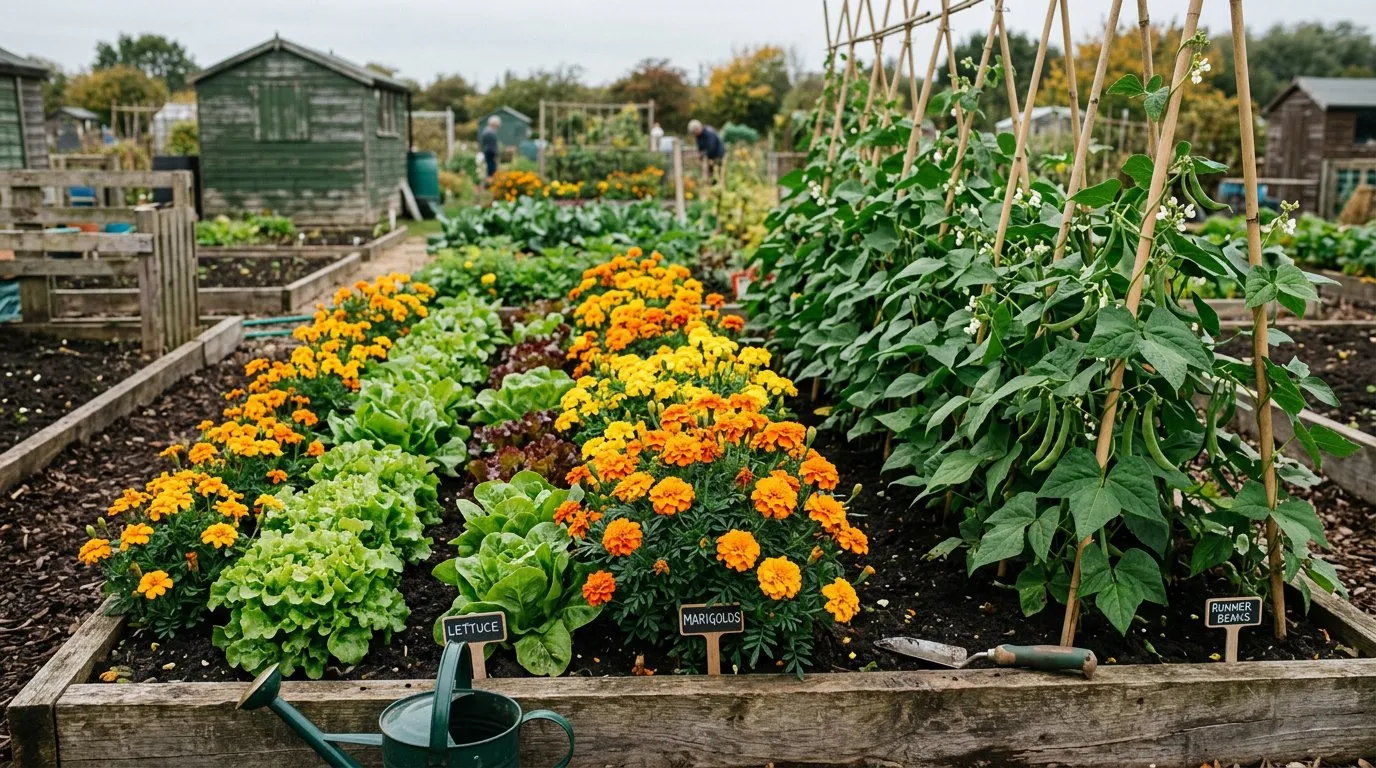
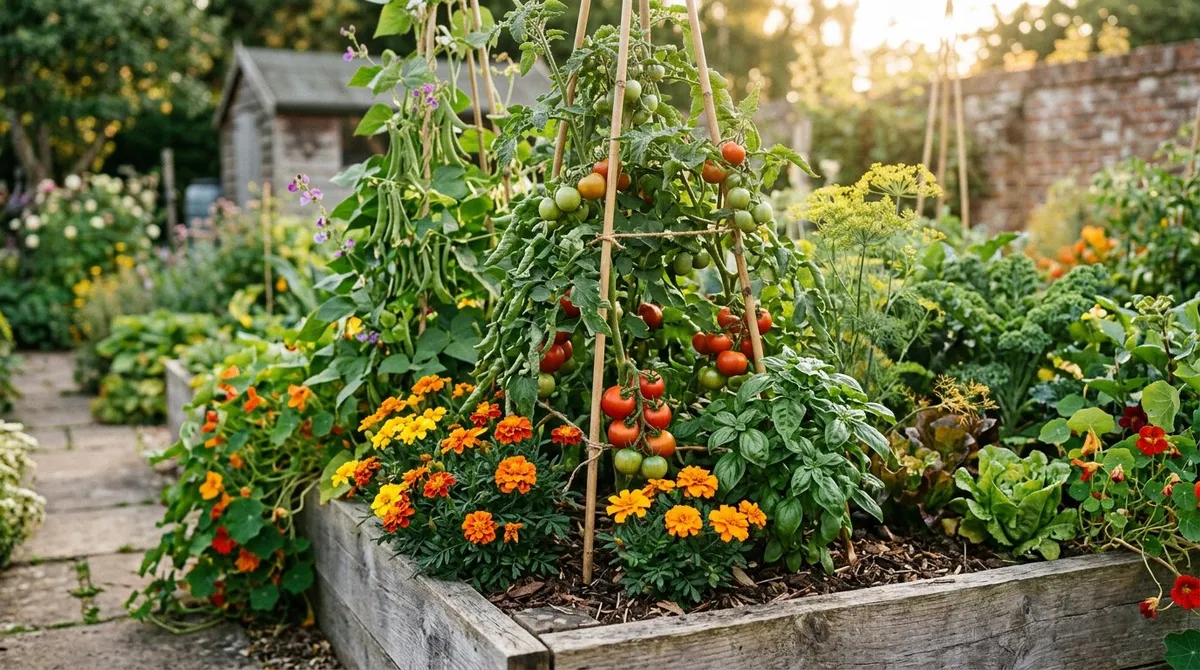
Marigolds planted between vegetable rows attract hoverflies and repel whitefly — the most effective companion flower.
The best companion planting combinations
Tomatoes and basil
The most famous pairing. Gardeners report that basil improves the flavour of nearby tomatoes. Scientific evidence for flavour improvement is limited, but basil does attract pollinators to tomato flowers and its strong scent may deter whitefly. Grow basil in the same greenhouse or at the base of outdoor tomato plants.
Carrots and onions
Grow in alternating rows. Onion scent deters carrot fly. Carrot scent deters onion fly. Both crops grow at a similar pace and harvest at similar times. This is one of the most reliable companion pairings with consistent results in UK trials. See our guides to growing carrots and growing onions for full details.
Sweetcorn, beans, and squash (the three sisters)
A three-layer growing system that uses space efficiently and improves soil.
How to plant: In late May, sow sweetcorn in a block (not a row) with plants 45cm apart. Two weeks later, sow two climbing bean seeds at the base of each sweetcorn stem. Sow a squash or courgette plant between every fourth sweetcorn plant. The beans climb the corn, fix nitrogen, and the squash leaves shade out weeds. For more on growing sweetcorn, see our sweetcorn guide.
Brassicas and nasturtiums
Plant nasturtiums around the edges of your cabbage, broccoli, and kale patch. Cabbage white butterflies lay eggs on nasturtium leaves, and blackfly colonises them in preference to brassicas. Check nasturtiums regularly and remove heavily infested leaves. Our broccoli and kale guides cover growing these crops in detail.
Roses and alliums
Ornamental alliums and garlic chives planted around roses are reported to deter aphids and reduce blackspot. The strong allium scent may confuse pests. At minimum, alliums fill the bare soil between rose stems and provide an extra layer of flower interest. See our rose growing guide for planting advice.
Companion planting chart for UK vegetables
| Crop | Good companions | Bad companions |
|---|---|---|
| Tomatoes | Basil, marigolds, parsley, carrots | Potatoes, brassicas, fennel |
| Carrots | Onions, leeks, rosemary, sage | Dill, parsnips |
| Potatoes | Horseradish, beans, sweetcorn, marigolds | Tomatoes, squash, sunflowers |
| Peas | Carrots, radishes, turnips, mint | Onions, garlic, leeks |
| Beans (runner/French) | Nasturtiums, sweetcorn, squash | Onions, garlic, fennel |
| Brassicas | Nasturtiums, dill, chamomile, onions | Strawberries, tomatoes |
| Lettuce | Radishes, chervil, carrots, strawberries | None significant |
| Courgettes | Sweetcorn, beans, nasturtiums, marigolds | Potatoes |
| Onions | Carrots, beetroot, lettuce, chamomile | Peas, beans |
| Beetroot | Onions, lettuce, brassicas | Runner beans |
| Strawberries | Borage, lettuce, spinach, thyme | Brassicas |
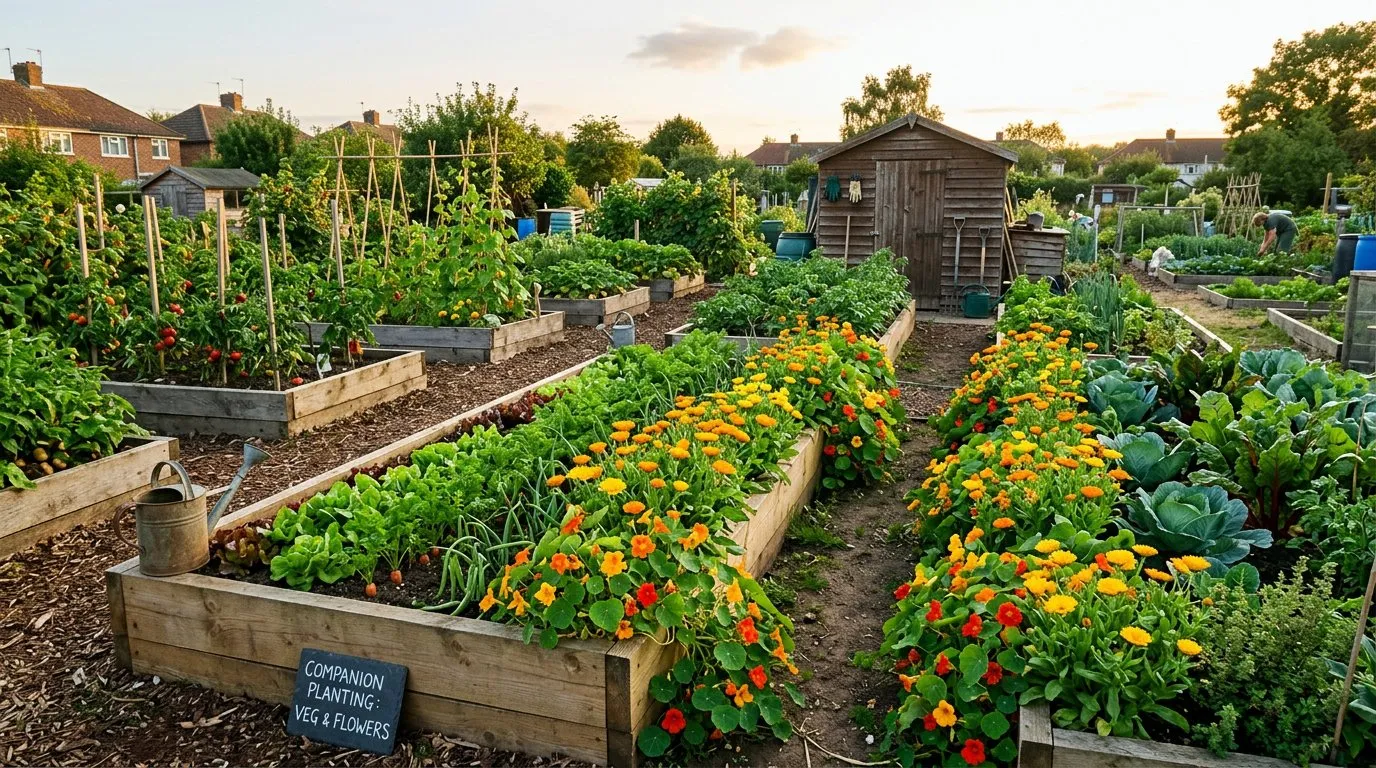
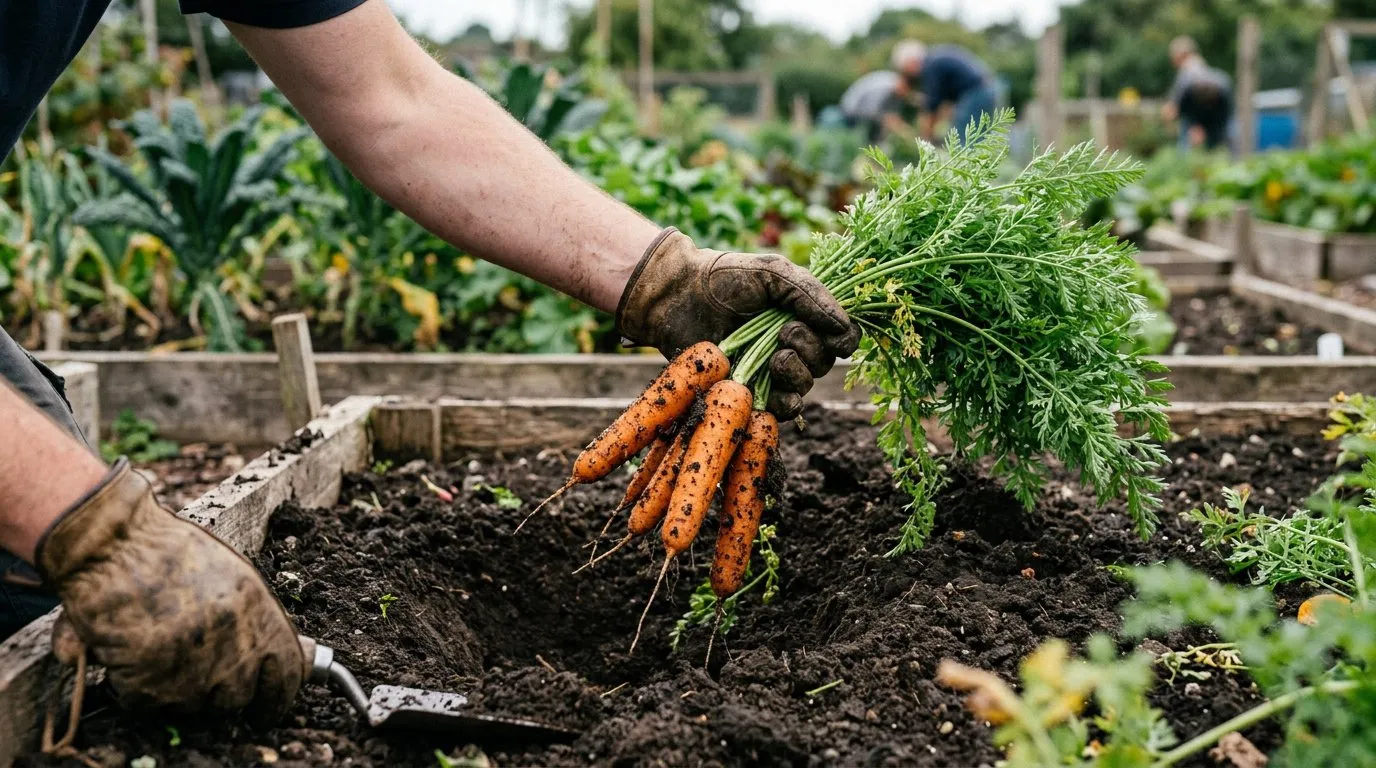
Companion planting on an allotment — flowers between vegetable rows attract pollinators and confuse pests.
Herbs as companion plants
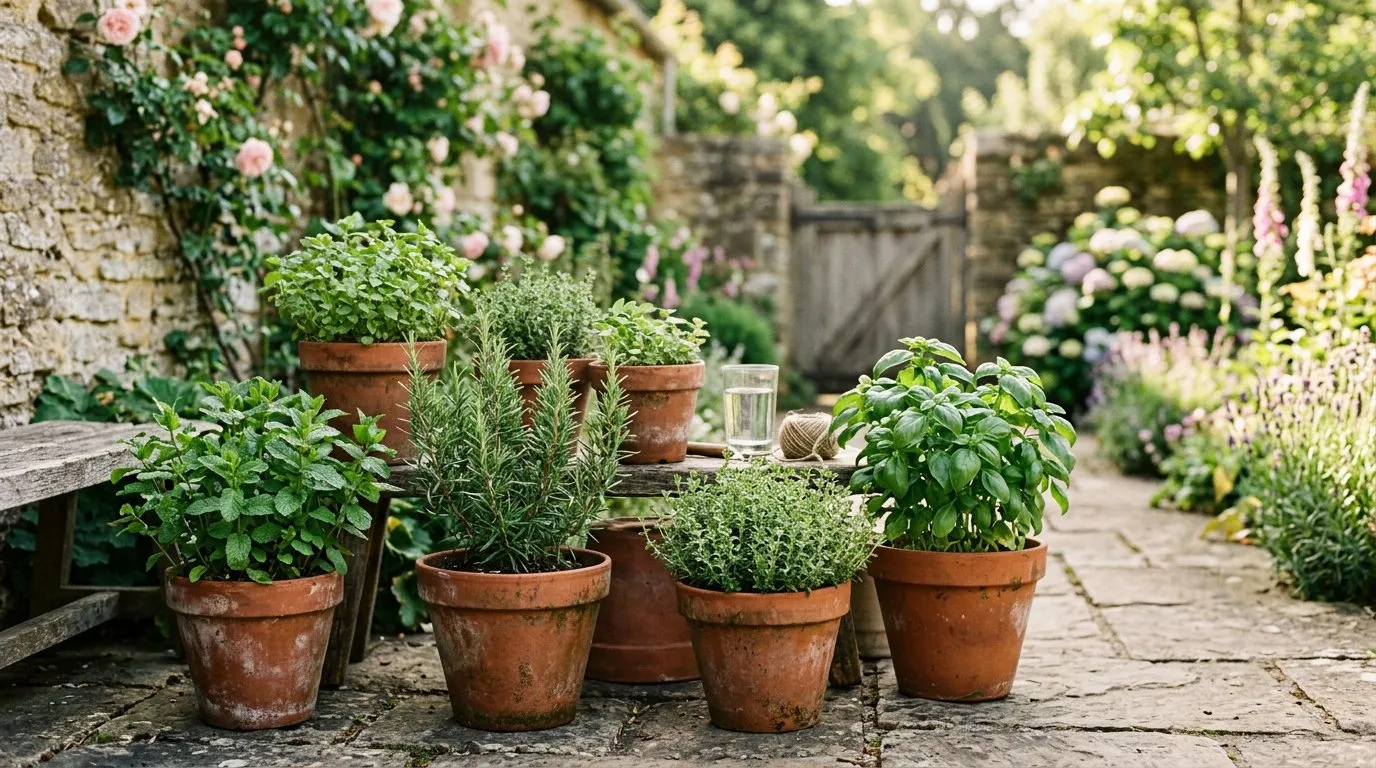
Herbs are among the most useful companion plants. Their strong scents deter pests, their flowers attract pollinators, and you can harvest them for the kitchen too.
Basil — Plant alongside tomatoes and peppers. Repels whitefly and aphids. Needs warmth, so suits a greenhouse or sunny sheltered spot.
Rosemary — Plant near carrots, brassicas, and beans. The strong scent deters carrot fly and cabbage moth. Evergreen, so provides year-round benefit.
Thyme — Plant at the edges of beds. Attracts bees and hoverflies. Low-growing habit suppresses weeds. Partners well with brassicas and strawberries.
Chives — Plant around roses and fruit trees. Deters aphids. The flowers attract pollinators in May and June. Easy to grow and comes back every year.
Mint — Deters flea beetles and aphids when grown near brassicas. Always grow mint in a pot sunk into the ground — it spreads aggressively if planted directly. See our herb growing guide for more.
Dill — Attracts ladybirds, lacewings, and parasitic wasps. Excellent near brassicas. Let it flower for maximum benefit. Avoid planting next to carrots as they cross-pollinate.
Plants to keep apart
Some combinations cause problems. These are the main ones to avoid in UK gardens.
Potatoes and tomatoes — Both susceptible to potato and tomato blight (Phytophthora infestans). Spores spread between them. Keep at least 3 metres apart.
Beans and alliums — Onions, garlic, and leeks inhibit the growth of peas and beans. Plant them in separate areas of the plot.
Fennel and almost everything — Fennel releases substances from its roots that inhibit the growth of nearby plants. Grow it in a separate container or at the edge of the plot, away from other crops.
Walnuts and everything below — Walnut trees produce juglone, a chemical that suppresses growth of tomatoes, potatoes, peppers, and many other plants beneath the canopy.
How to plan companion planting in a small garden
Companion planting works especially well in small spaces where crops grow close together. Raised beds and container gardens concentrate the benefits.
Border the bed with flowers. Plant a row of French marigolds or calendula along each edge. These attract beneficial insects and create a scented barrier against pests.
Interplant herbs. Tuck basil, parsley, and chives between larger crops. They use the space between rows productively and add pest-confusing scents.
Use vertical space. Grow climbing beans up a sweetcorn stem or obelisk with nasturtiums at the base. Three crops in one square metre.
Rotate each year. Move crop families around the bed annually to prevent pest and disease build-up. Follow legumes with brassicas to benefit from the nitrogen they fixed. See our vegetable planting calendar for rotation planning.
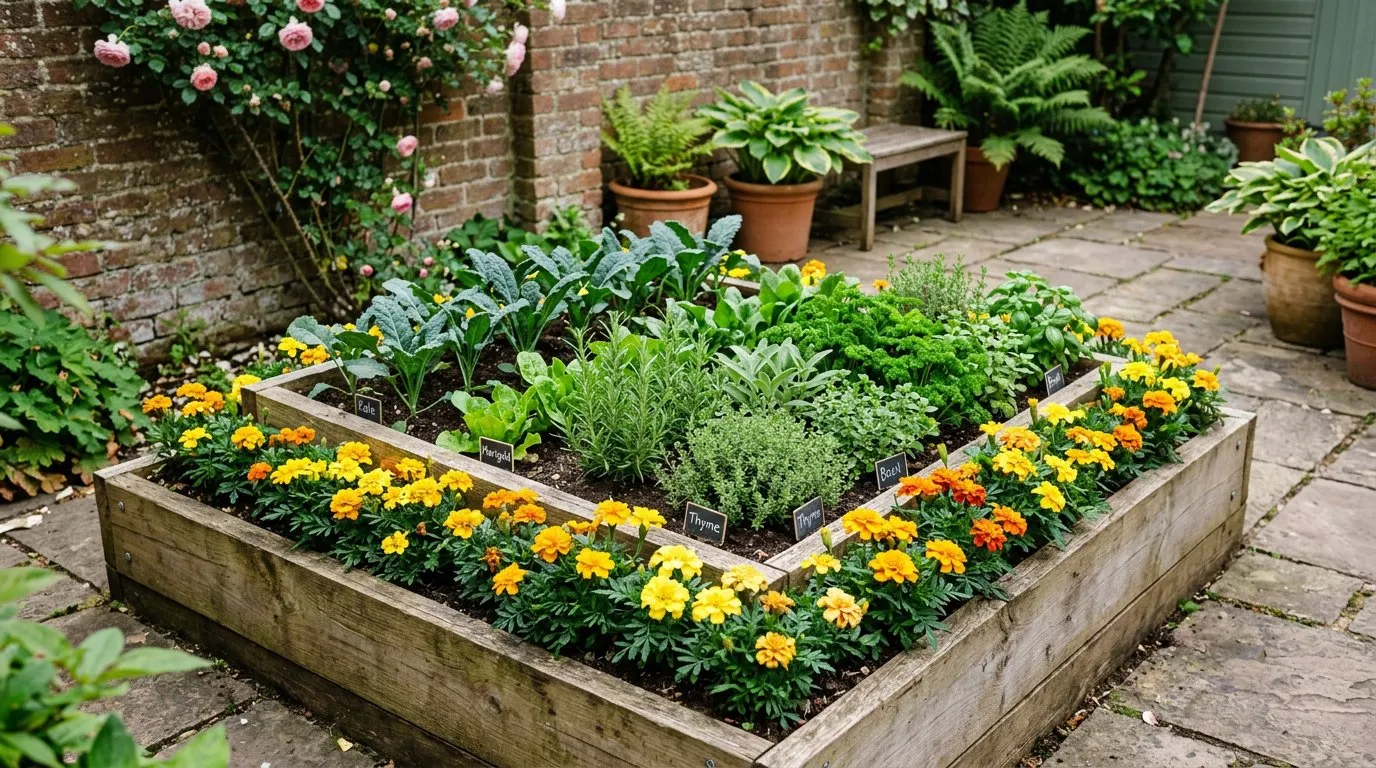
Even a single raised bed benefits from companion planting — marigolds at the edges, herbs between rows.
Why we recommend French marigolds (Tagetes patula) as your first companion plant: After 30 years of growing vegetables, French marigolds planted at 30cm intervals along bed edges consistently reduce whitefly pressure on tomatoes and peppers without any other intervention. In seasons where I used them, whitefly counts on neighbouring tomato plants dropped by around two-thirds compared to unprotected plants the same distance away.
Now you’ve mastered companion planting, read our guide on organic pest control for more chemical-free methods to protect your crops. Comfrey and nettles are excellent companions to grow alongside your vegetable plot — our guide on making comfrey and nettle liquid feed shows how to turn them into one of the most potassium-rich feeds available.
Frequently asked questions
The RHS companion planting guide provides further advice on evidence-based plant combinations for UK gardens.
Lawrie has been gardening in the West Midlands for over 30 years. He grows his own veg using no-dig methods, keeps a wildlife-friendly garden, and writes practical advice based on real UK growing conditions.