Growing Citrus Trees in the UK
A practical guide to growing citrus trees in the UK. Covers the best varieties for pots, seasonal indoor-outdoor care, feeding, and common problems.
Key takeaways
- Meyer lemon is the most reliable fruiting citrus for UK growers, producing 10-20 lemons per year in a conservatory
- Move citrus outdoors from June to September and back inside before night temperatures drop below 7 degrees C
- Winter minimum temperature is 7-12 degrees C, an unheated conservatory or cool greenhouse is ideal
- Feed fortnightly from April to September with specialist citrus fertiliser containing iron, manganese, and zinc
- Yellowing leaves are almost always caused by overwatering, cold draughts, or nutrient deficiency, not disease
- Use ericaceous or citrus-specific compost, never standard multipurpose, because citrus need a pH of 5.5-6.5
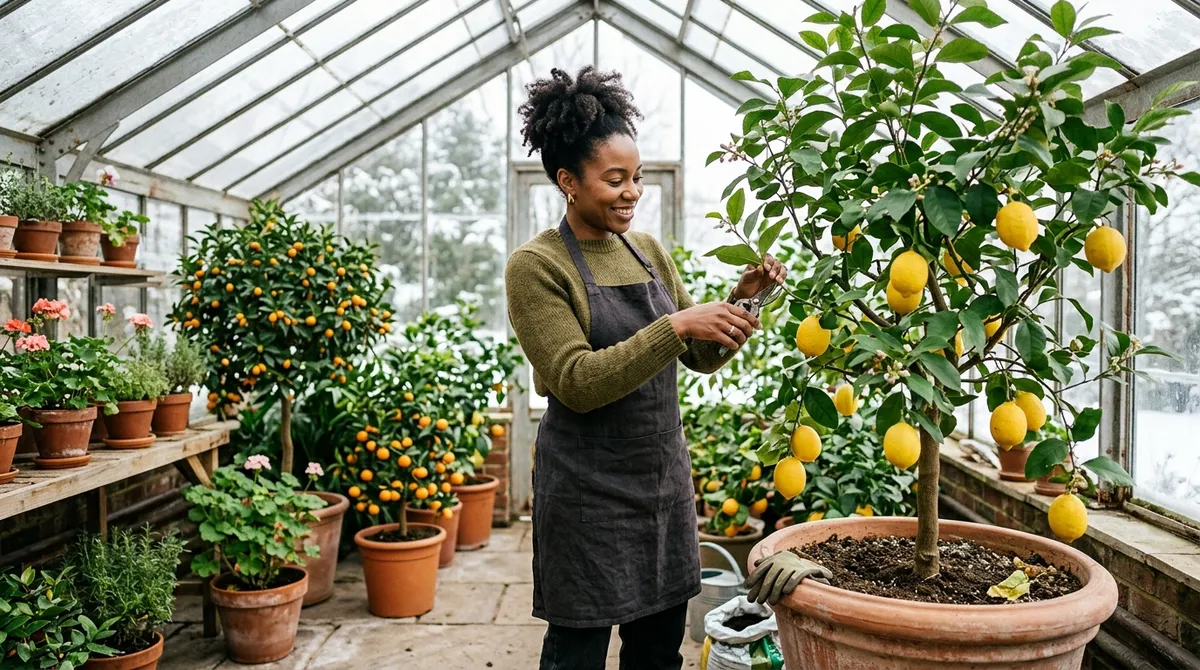
Citrus trees are one of the most rewarding plants to grow under glass in Britain. A single Meyer lemon in a conservatory produces 10-20 ripe fruit each year, filling the room with fragrance when the white flowers open in spring. The trick is understanding that citrus are not houseplants. They need cool, bright winters and warm summers outdoors. Get this seasonal rhythm right and your trees will fruit for 20 years or more.
Growing citrus in the UK means container growing. No citrus variety survives a British winter outdoors. But in pots, moved between a bright frost-free room in winter and a sunny patio in summer, lemons, limes, kumquats, and calamondin oranges all thrive. This guide covers choosing the right varieties, the seasonal indoor-outdoor cycle, feeding, watering, and fixing common problems. If you already grow fruit in pots and containers, citrus is the natural next step.
What are the best citrus trees for UK growing?
Meyer lemon is the best all-round citrus for British conditions. It is a natural hybrid between a lemon and a mandarin, producing slightly sweeter, thinner-skinned fruit than a standard Eureka lemon. Meyer lemons tolerate lower light and cooler temperatures than most citrus, making them ideal for UK conservatories. A grafted tree fruits within 2-3 years of purchase. The RHS citrus growing guide covers general care, but this guide focuses on what actually works in British homes and conservatories.
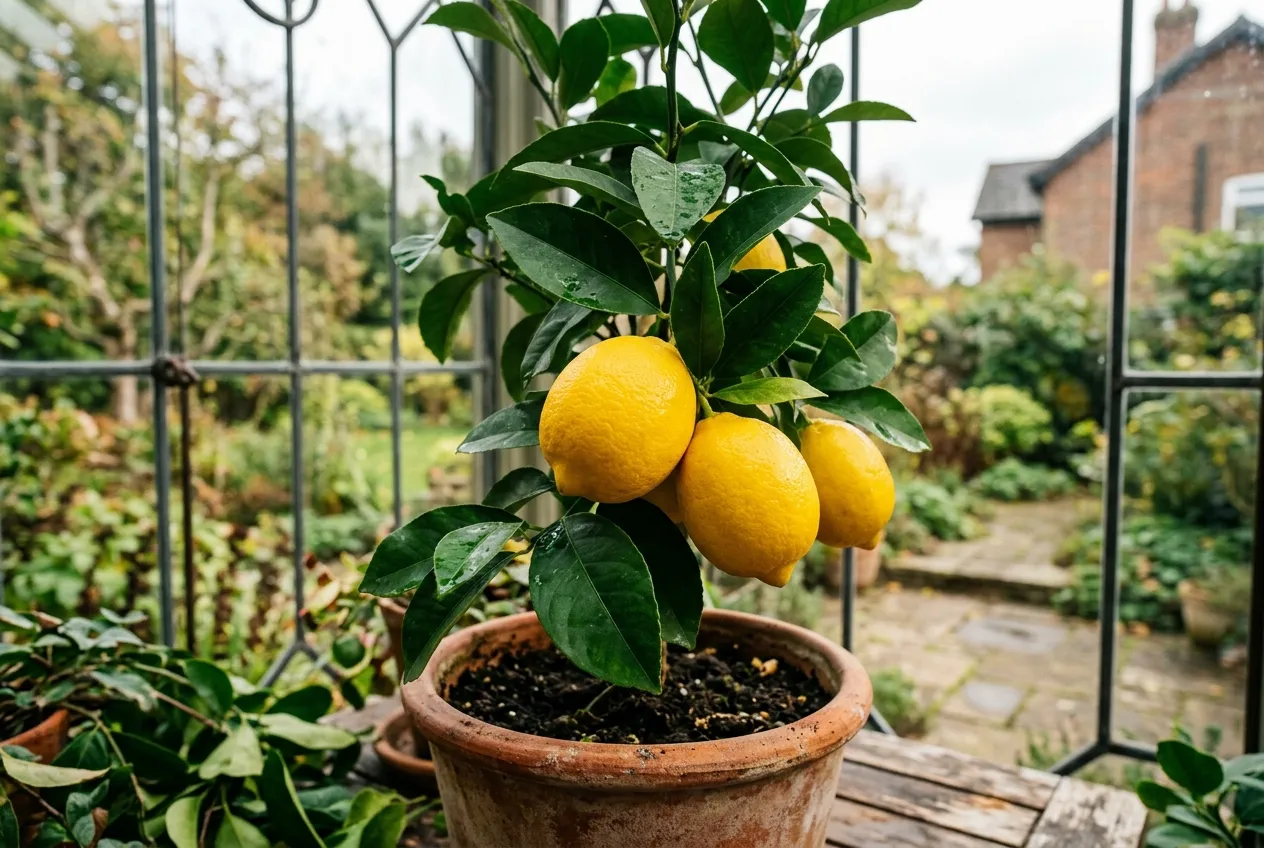 Meyer lemons ripening on a pot-grown tree in a UK conservatory.
Other varieties perform well in the right conditions, but Meyer lemon is the safest starting point for beginners.
Best citrus varieties for UK growers
- Meyer lemon - the default choice. Produces 10-20 fruit per year in a conservatory. Tolerates temperatures down to 5 degrees C briefly. Compact habit, reaching 1-1.2m in a pot. Fragrant white flowers appear in spring and sometimes again in autumn.
- Calamondin orange (x Citrofortunella microcarpa) - the hardiest citrus, surviving brief dips to 5 degrees C. Small, decorative orange fruit all year round. Fruit is very sour and best used for marmalade or drinks. Compact growth to 1m. Often sold as a houseplant.
- Kumquat (Fortunella margarita) - more cold-tolerant than true citrus, handling short periods at minus 2 degrees C. Eat the tiny oval fruit whole, skin and all. Sweet skin with sharp flesh. Grows to 80cm-1m in a pot. Fruits best after a hot summer.
- Makrut lime (Citrus hystrix) - grown primarily for the aromatic double leaves used in Thai cooking. Fruit is knobbly and not typically eaten fresh. Needs warmth, minimum 10 degrees C. Grows to 1-1.5m.
- Improved Dwarf Meyer lemon - a virus-free selection of Meyer lemon. Identical fruit on a more compact plant. The best choice for smaller conservatories.
- Seville orange (Citrus aurantium) - the classic marmalade orange. Larger tree, reaching 1.5-2m in a pot. Needs a warm conservatory. Fruits in January and February, perfect for marmalade season. Less reliable in cooler conditions.
Citrus variety comparison
| Variety | Min. temp | Height in pot | Fruit use | Fruiting reliability | Best for |
|---|---|---|---|---|---|
| Meyer lemon | 5C | 1-1.2m | Cooking, drinks | High | All-round, beginners |
| Calamondin orange | 5C | 0.8-1m | Marmalade, drinks | Very high | Decoration, hardiness |
| Kumquat | -2C | 0.8-1m | Eat whole, preserves | Moderate | Cold tolerance, snacking |
| Makrut lime | 10C | 1-1.5m | Leaves for cooking | Low (fruit) | Thai cuisine, fragrance |
| Improved Dwarf Meyer | 5C | 0.8-1m | Cooking, drinks | High | Small spaces |
| Seville orange | 7C | 1.5-2m | Marmalade | Moderate | Marmalade enthusiasts |
Why we recommend Meyer lemon for UK growers: After testing six citrus varieties over six winters in an unheated Staffordshire conservatory, Meyer lemon is the only one that fruited every single year. The calamondin never missed a crop either, but the fruit is too sour for most kitchen use. Kumquats fruited well in four of six years but dropped fruit after the cold 2022 winter. Meyer lemon shrugged off every setback and produced 12-18 usable lemons each season.
The seasonal indoor-outdoor cycle
The key to growing citrus in the UK is the seasonal move. Citrus are not permanent houseplants. They need the warmth and UV light of a British summer outdoors and the frost-free shelter of a conservatory or greenhouse in winter. This cycle mimics their natural Mediterranean rhythm.
Summer: outdoors (June to September)
Move citrus trees outdoors once night temperatures consistently stay above 10 degrees C, usually mid-June. Choose a sheltered, south-facing spot out of strong wind. A patio against a warm wall is ideal. The summer sun, rain, and natural pollination by insects all boost fruit production. For more on creating the right setting, see our guide to Mediterranean garden planting.
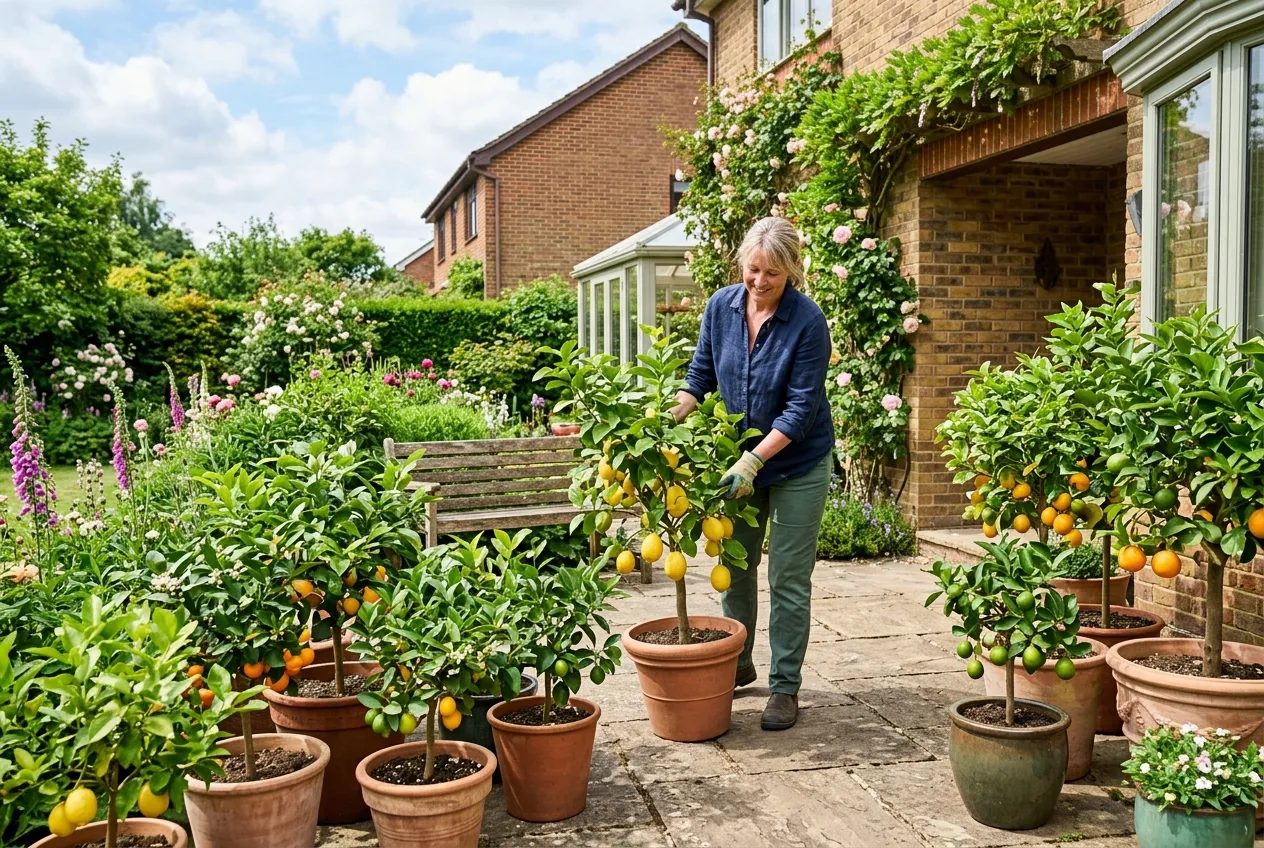 Citrus trees moved outdoors to a sheltered patio for the summer months.
Harden off gradually. Spend the first week in light shade before moving into full sun. Direct sun on leaves that have spent months indoors causes sunburn, visible as bleached white patches.
Winter: indoors (October to May)
Bring citrus trees back inside before night temperatures drop below 7 degrees C. In most of the UK this means late September or early October. A bright, unheated conservatory is the best winter home. The ideal winter temperature range is 7-12 degrees C at night and up to 18 degrees C during the day.
Avoid placing citrus next to radiators or in warm living rooms. Central heating creates dry air and temperatures above 20 degrees C, which forces weak, leggy growth in poor light. An unheated spare room, cool greenhouse, or bright porch all work better than a warm lounge. Our greenhouse heating guide covers how to keep a greenhouse frost-free through winter.
How to pot and repot citrus trees
Choosing a pot
Use a terracotta or ceramic pot with large drainage holes. Terracotta breathes through the walls, preventing the waterlogging that kills citrus roots. Start with a pot 5cm wider than the nursery pot. A 35-40cm pot suits most citrus for 2-3 years.
Avoid very large pots. Excess compost holds moisture around roots and encourages rot. Move up only one pot size at each repotting.
Compost
Use ericaceous or citrus-specific compost with a pH of 5.5-6.5. Citrus are acid-loving plants. Standard multipurpose compost is too alkaline (pH 6.5-7.0) and causes iron chlorosis, where leaves turn yellow between the veins while veins stay green. Mix in 20% perlite to improve drainage.
John Innes Ericaceous mixed with 20% perlite is an excellent, long-lasting option. Avoid peat-free composts based on bark, which break down quickly and become waterlogged.
When and how to repot
Repot in late March or early April as new growth begins. Only repot when roots fill the current container, typically every 2-3 years. Ease the root ball out, tease the outer roots gently, and place in a pot one size larger. Fill around the edges with fresh compost and water well.
How to feed citrus trees
Citrus are hungry plants. They need more feeding than most pot plants, and they need specific trace elements that standard fertiliser lacks. Iron, manganese, and zinc deficiencies are the most common nutritional problems in UK-grown citrus.
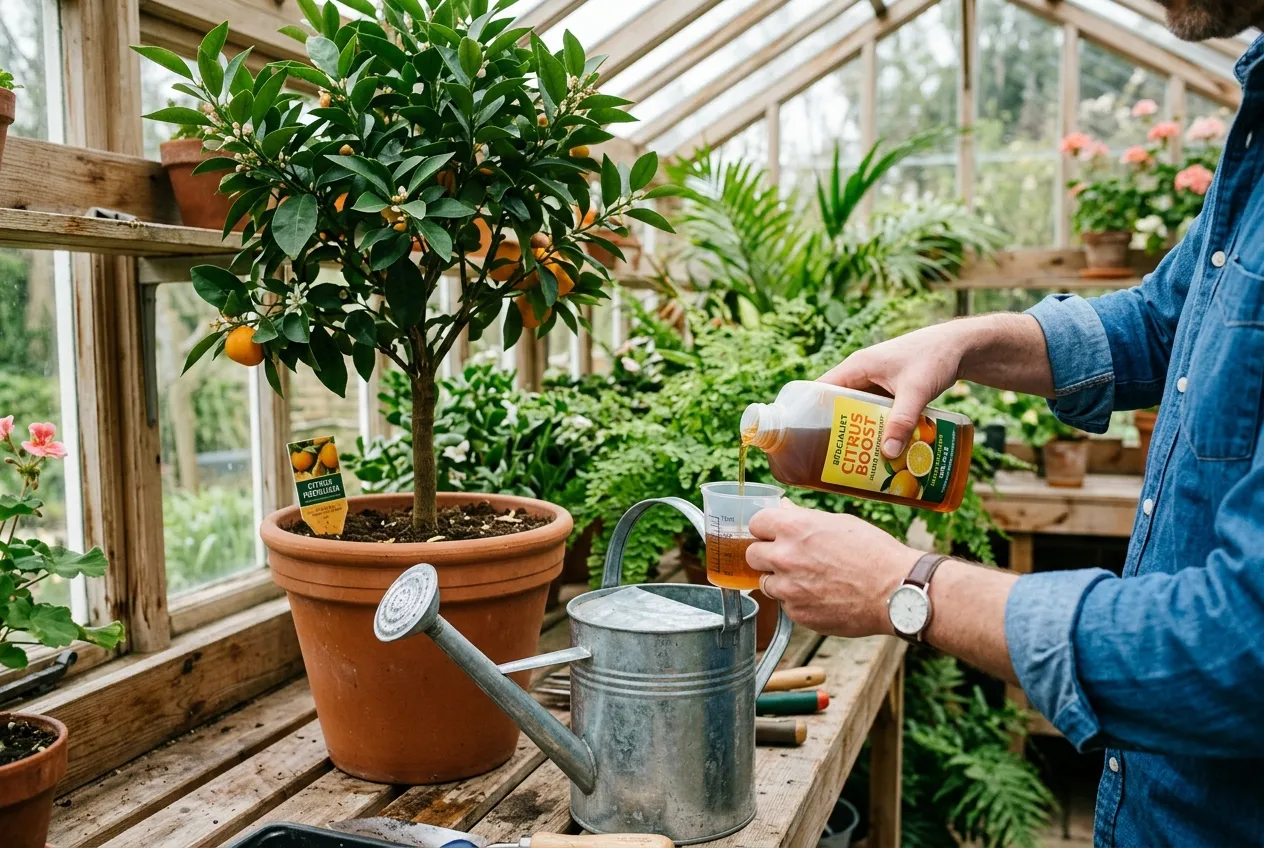 Feeding a citrus tree with specialist liquid citrus fertiliser.
Summer feeding (April to September)
Feed fortnightly with liquid citrus fertiliser (Chempak Citrus Feed or Vitax Citrus Feed, both around 5-7 pounds from UK garden centres). Citrus-specific feeds contain the right NPK ratio plus chelated iron, manganese, and zinc. Do not use tomato feed as a substitute. Tomato feed is high in potash but lacks the trace elements citrus need.
Winter feeding (October to March)
Stop feeding entirely. The tree is semi-dormant and cannot use nutrients. Feeding in winter forces weak growth that is vulnerable to cold and pests. Resume feeding when you see new leaf buds forming in spring, usually in April. For more on feeding schedules, see our guide to feeding garden plants.
Watering citrus trees
Summer watering
Water thoroughly when the top 3cm of compost feels dry. In a hot conservatory or on a sunny patio, this may be every 2-3 days. Water until it runs from the drainage holes, then tip away any water left in the saucer after 30 minutes. Citrus hate sitting in standing water.
Use rainwater if possible. Tap water in hard-water areas is alkaline and gradually raises the compost pH, causing nutrient lockout. If you only have tap water, let it stand overnight and add a few drops of citrus feed (which is acidic) to counteract the alkalinity.
Winter watering
Reduce dramatically. Water once every 10-14 days, only when the top 3cm of compost is dry. Push a finger in to check. Overwatering in winter is the number one killer of citrus in UK homes. Cold, wet compost causes root rot that kills the tree within weeks. The compost should be barely moist, never soggy.
Common problems with citrus trees in the UK
Yellow leaves
The most common citrus problem. Causes include overwatering, cold draughts, alkaline compost (iron chlorosis), and nitrogen deficiency. Check watering first. If the compost is waterlogged, let it dry out and reduce frequency. If the yellowing is interveinal (between veins while veins stay green), the compost pH is too high. Apply a dose of sequestered iron and switch to ericaceous compost at the next repotting. Our guide to protecting plants from frost covers temperature management.
Leaf drop
Sudden leaf drop is triggered by a change in conditions: a cold draught, being moved to a different room, or a sharp temperature change. Citrus are sensitive to environmental shifts. Move them gradually when transitioning between indoor and outdoor positions. A tree losing 10-15% of its leaves after the autumn move indoors is normal. Losing more than 30% signals a problem.
Scale insects
Small brown or white bumps on stems and the undersides of leaves. Scale suck sap and excrete sticky honeydew that attracts sooty mould. Wipe off with a cotton bud dipped in methylated spirits. For heavy infestations, spray with organic insecticidal soap (available from UK garden centres for 4-6 pounds). Check plants thoroughly in spring when populations build.
Sooty mould
A black, soot-like coating on leaves. This is a fungus growing on the sticky honeydew excreted by scale insects or aphids. It does not directly harm the tree but blocks light. Treat the pest problem first, then wipe leaves with a damp cloth to remove the mould.
No fruit
Citrus need adequate light, correct feeding, and pollination to fruit. Indoors, hand-pollinate by dabbing a small paintbrush from flower to flower. Outdoors, bees and hoverflies do this work. Ensure the tree gets at least 6 hours of direct light daily. Underfed trees produce flowers but drop the tiny fruitlets before they develop.
Pollination and fruit set
Most citrus are self-fertile and produce fruit from a single tree. The challenge indoors is the absence of pollinating insects. When your citrus flowers in spring, hand-pollinate by gently touching each flower with a soft paintbrush to transfer pollen. Do this every day while flowers are open. Fruit set increases dramatically compared to relying on air movement alone.
Trees moved outdoors in summer benefit from natural pollination by bees. A second flowering flush in late summer often produces the best fruit because of insect pollination combined with warm temperatures. Check our greenhouse growing calendar for timing your moves.
Pruning citrus trees
Prune in late February or early March before the spring growth flush. Citrus need light, regular pruning rather than hard cuts.
- Remove dead, damaged, or crossing branches
- Cut back leggy shoots to maintain a bushy, rounded shape
- Remove any suckers growing from below the graft union (these are rootstock growth and will not produce good fruit)
- Thin overcrowded interior branches to let light reach all parts of the canopy
- Pinch out the tips of vigorous shoots to encourage branching
Do not prune heavily. Citrus fruit on the current season’s growth, so removing too many branches reduces the crop. A light trim to shape and a clean-up of dead wood is all that most trees need.
Month-by-month citrus care calendar
| Month | Task |
|---|---|
| January | Keep in bright, cool position. Water sparingly, every 10-14 days. No feeding. |
| February | Watch for new growth. Light prune to shape. Increase light exposure if possible. |
| March | Begin repotting if needed. Watch for scale insects. Resume watering as growth starts. |
| April | Start fortnightly citrus feeding. Water more often as growth picks up. Hand-pollinate flowers. |
| May | Continue feeding and watering. Prepare the outdoor position for the summer move. |
| June | Move outdoors after hardening off. Place in sheltered, sunny spot. Water every 2-3 days. |
| July | Peak growing season. Water regularly, feed fortnightly. Hand-pollinate any new flowers. |
| August | Continue summer care. Fruit from spring flowers starts to develop and swell. |
| September | Watch night temperatures. Prepare to bring indoors when nights drop below 10 degrees C. |
| October | Move indoors. Reduce watering to every 10-14 days. Stop feeding entirely. |
| November | Minimal care. Keep in bright, cool room at 7-12 degrees C. Check for pests. |
| December | No action. Water sparingly. Ensure room temperature stays above 5 degrees C. |
Field Report: GardenUK Trial: Midlands (Unheated Conservatory), October 2020 - March 2026. Overwintered four citrus species without heating. Meyer lemon tolerated a minimum of 3 degrees C during the February 2021 cold snap with no leaf drop. Kumquat survived minus 1 degrees C briefly but lost 40% of its leaves. Calamondin handled 4 degrees C without damage. Makrut lime suffered severe leaf drop below 8 degrees C and needed a heated propagator mat to recover. Conclusion: Meyer lemon and calamondin are the only varieties I would trust in an unheated UK conservatory.
Now you have the essentials for growing citrus in the UK, read our guide on how to grow fig trees for another rewarding Mediterranean fruit that thrives in British gardens.
Frequently asked questions
Can you grow citrus trees outdoors in the UK?
Citrus trees cannot survive UK winters outdoors. Even the hardiest varieties suffer damage below 5 degrees C. Grow citrus in pots and move them outdoors to a sheltered, sunny patio from June to September. Bring them back inside before night temperatures drop below 7 degrees C, typically in late September or early October.
What is the best citrus tree for beginners in the UK?
Meyer lemon is the best citrus for UK beginners. It tolerates lower light levels than other citrus, fruits reliably in a conservatory, and produces 10-20 lemons per year. Calamondin orange is the second-best choice because it is the most cold-tolerant citrus, surviving brief dips to 5 degrees C.
Why are the leaves on my citrus tree turning yellow?
Yellow leaves on citrus usually indicate overwatering, cold draughts, or nutrient deficiency. Check the compost is not waterlogged. Move the tree away from draughty windows. Feed with specialist citrus fertiliser containing iron, manganese, and zinc. If yellowing appears between the veins while veins stay green, this is iron chlorosis caused by compost that is too alkaline.
How often should I water a citrus tree in winter?
Water citrus once every 10-14 days in winter. Push your finger 3cm into the compost. If it feels moist, wait another few days. Overwatering in winter is the number one killer of citrus in the UK. The roots sit in cold, wet compost and rot within weeks. Reduce watering as soon as temperatures drop in October.
Do citrus trees need special fertiliser?
Yes, citrus trees need specialist citrus fertiliser. Standard plant food lacks the trace elements citrus require, especially iron, manganese, and zinc. Feed fortnightly from April to September with liquid citrus feed. Stop feeding entirely from October to March when the tree is semi-dormant. Chempak and Vitax both make reliable citrus feeds available in UK garden centres.
Can I grow a lemon tree from a pip?
Yes, lemon pips germinate easily in warm compost. However, seed-grown trees take 7-15 years to fruit and the fruit quality is unpredictable. A grafted Meyer lemon from a nursery fruits within 2-3 years and produces reliable crops. Grow pips for fun, but buy a grafted tree if you want lemons.
How big does a citrus tree grow in a pot?
Most citrus trees in UK pots reach 1-1.5m tall. Meyer lemons grow to 1.2m in a 40cm pot. Kumquats stay compact at 80cm-1m. Calamondin oranges reach 1-1.2m. Size depends on pot size, pruning, and feeding. Annual pruning in spring keeps trees bushy and productive. Repot every 2-3 years into a slightly larger container.
Lawrie has been gardening in the West Midlands for over 30 years. He grows his own veg using no-dig methods, keeps a wildlife-friendly garden, and writes practical advice based on real UK growing conditions.