Key takeaways
- Choose the warmest sunny and sheltered position available
- Grow in a large pot or a prepared root-restricted bed where space is limited
- Water consistently while leaves and fruit are developing, especially in containers
- Keep tiny embryo figs in autumn but remove larger fruit that will not ripen
- Prune lightly and train new shoots rather than repeatedly cutting into old wood
Fig trees can crop outdoors in the UK, but position matters. The best place is warm, sunny and sheltered, with enough space for the leaves to receive light.
A wall is useful because it absorbs warmth and gives shelter. Root restriction, either in a large pot or a prepared planting pocket, also helps keep growth manageable. Neither measure replaces watering: dry compost while fruit is swelling can stop a promising crop from developing well.
Where is the best place to grow a fig tree?
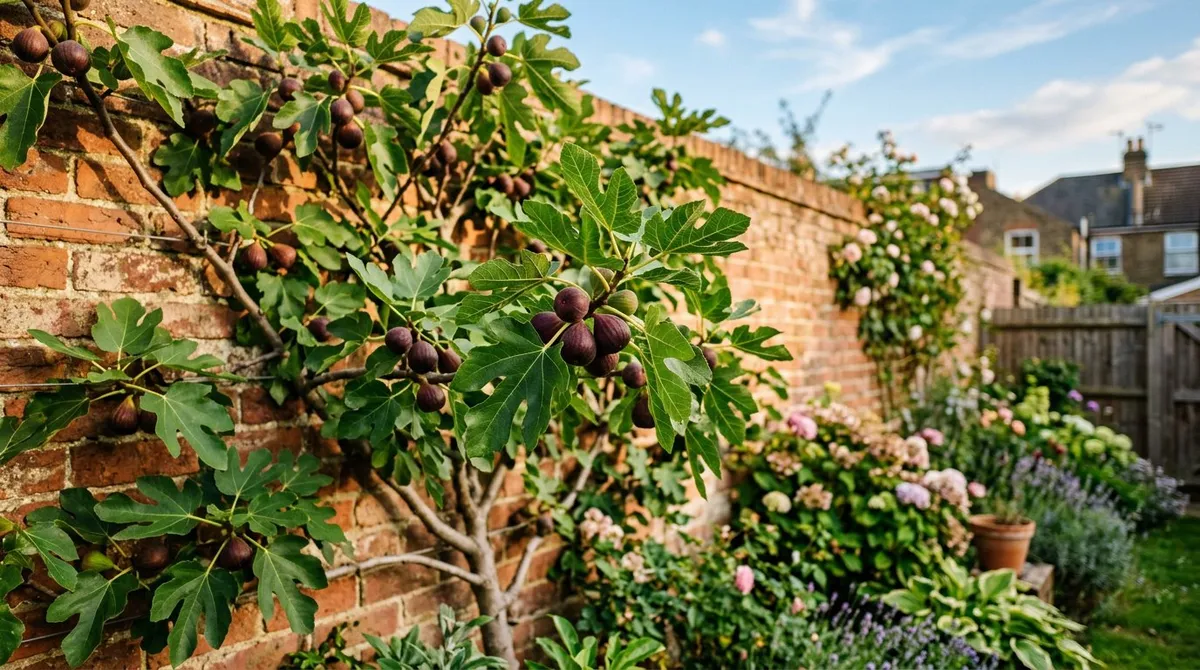
Look for the sunniest protected position in the garden. A south- or south-west-facing wall is a strong choice, particularly in cooler areas. Avoid a frost pocket or an exposed site where cold winds can damage young shoots.
Leave enough room for air and light around the branch framework. A fan-trained tree can fit neatly against a wall, provided wires and fixings stand clear of the masonry. Check that gutters do not pour water into the planting hole and that the roots cannot disturb drains or weak structures.
In a very small garden, a container gives more control. It can also be moved into extra shelter during severe weather, although a mature pot becomes heavy. Read our guide to growing fruit in pots before choosing the container.
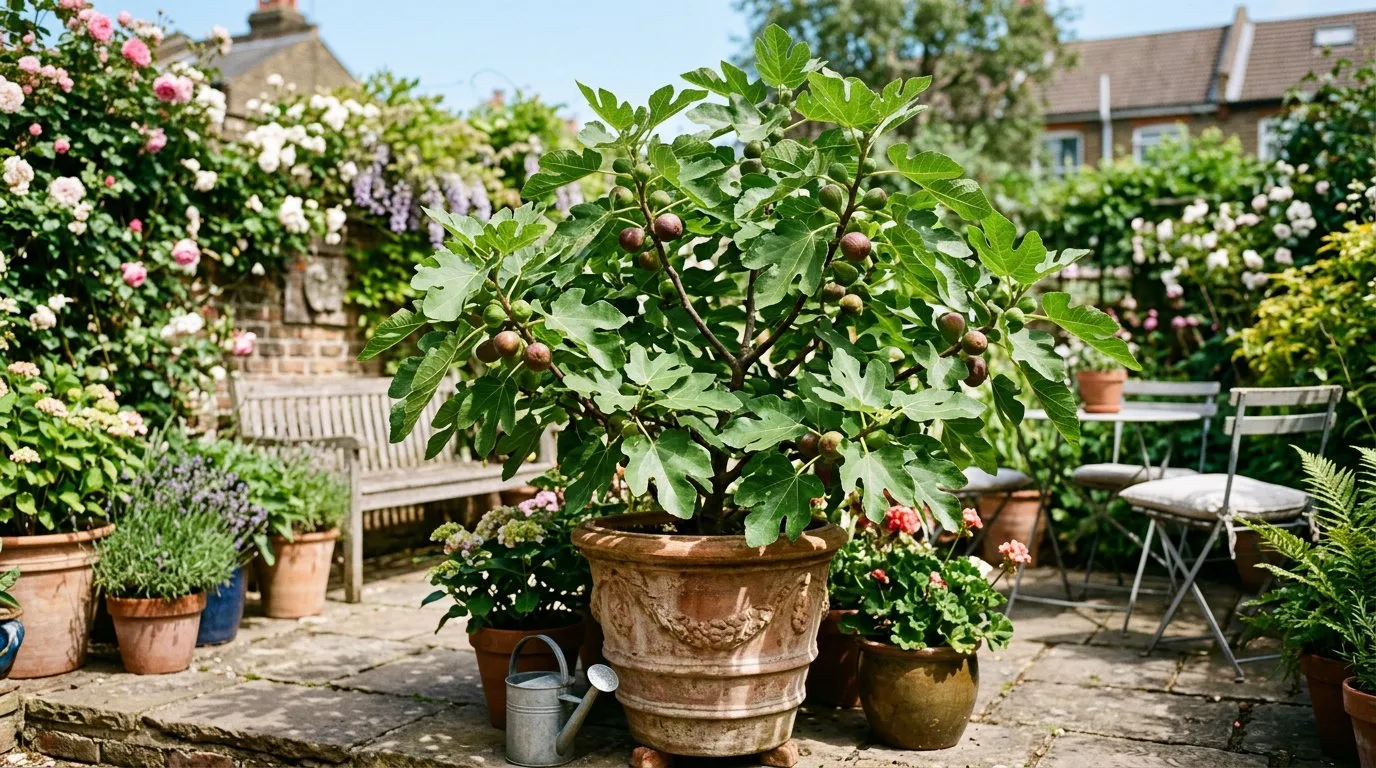
A large container restricts the roots and makes the tree easier to position in a sunny, sheltered spot.
Which fig variety should you choose?
Buy a named edible fig suited to outdoor growing in Britain. ‘Brown Turkey’ is widely grown, self-fertile and recommended by the RHS for UK gardens. Other cultivars are available, but local climate and the warmth of the planting position influence whether fruit ripens.
Choose a healthy plant with balanced branches rather than a tall, weak shoot. Check the expected size and growing method on the label. A plant intended for a pot still needs a stable container and regular care.
A self-fertile cultivar does not need a second tree for pollination. That makes one tree practical for a patio or compact garden.
The RHS guide to growing figs has current cultivar and care advice.
Should you restrict fig-tree roots?
Figs growing in open, fertile soil can make plenty of leafy growth. Root restriction helps contain that vigour and is particularly useful in small gardens.
The simplest option is a large pot with generous drainage holes. Use a loam-based compost and raise the container just enough for water to escape. Do not leave it standing in a saucer of water through winter.
For planting in the ground, the RHS describes a prepared pit lined on the sides with paving slabs and a layer of rubble or broken bricks at the base. The goal is to limit sideways root growth without creating a watertight box. On heavy or wet ground, a container may be safer than a badly drained planting pit.
Root restriction does not mean neglect. Confined roots dry more quickly and depend on you for water and nutrients.
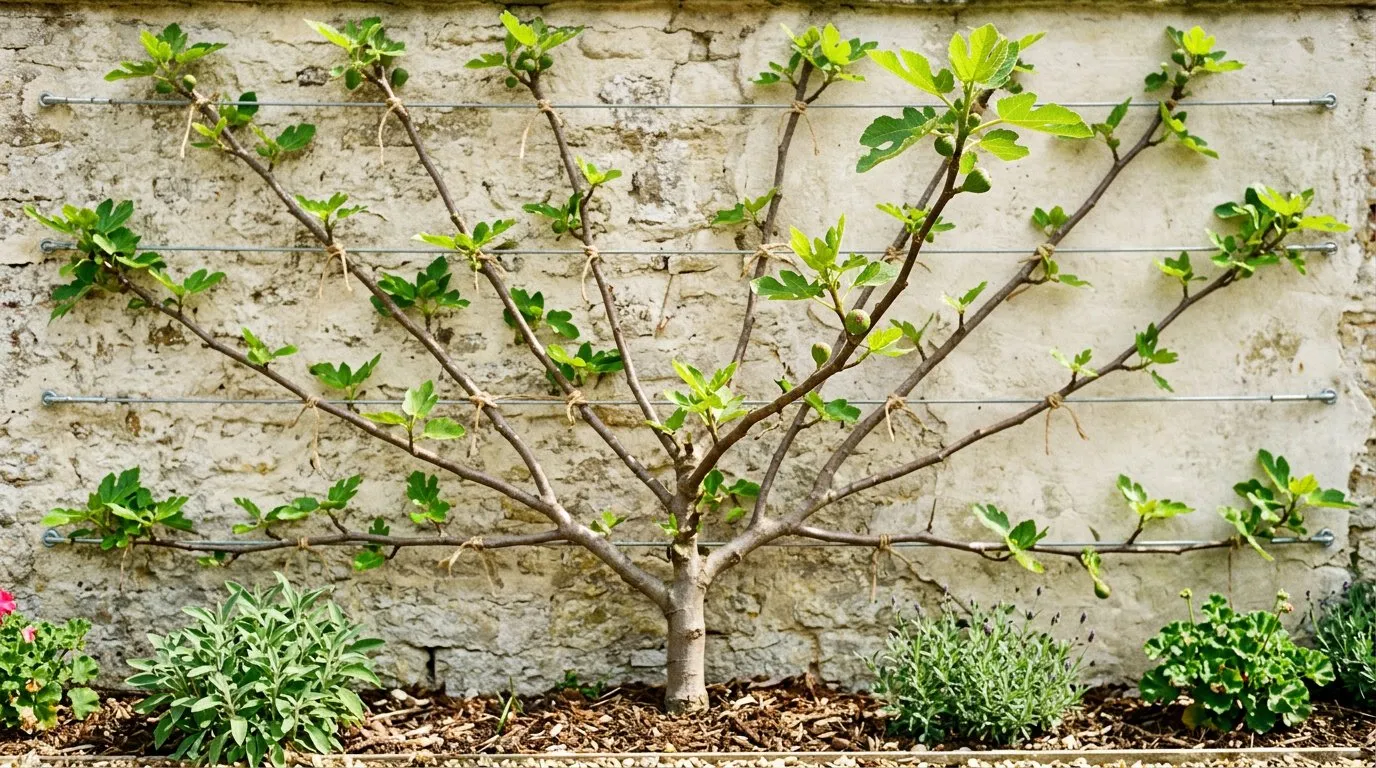
Fan training spreads the fruiting shoots across a warm wall without taking over the border.
How to plant a fig tree
Plant in spring so the roots can establish as the soil warms. Water the plant before removing its pot and keep it at the same soil level.
For a container:
- Choose a frost-resistant pot with drainage holes and enough weight to remain stable.
- Add loam-based compost and set the rootball at its existing depth.
- Firm gently, water thoroughly and leave a gap below the rim for watering.
- Position the pot before it becomes too heavy to move safely.
For a root-restricted bed, prepare the drainage and side barriers before planting. Do not bury the stem or heap fresh manure against it. Add a surface mulch while keeping the base of the stem clear.
If the tree will be fan trained, install strong horizontal wires before the branches fill the wall. Our fan-training guide explains the basic framework.
Watering and feeding figs
Water new trees during dry spells while they establish. Container plants need closer attention because their compost can dry rapidly in warm weather.
Aim for even moisture rather than alternating between dust-dry and saturated compost. Check the pot below the surface before watering. Fruit swelling in summer is a particularly important period.
Feed container figs during the growing season using a suitable general feed, following the product instructions. The RHS recommends changing to a high-potassium liquid feed as fruit develops. Avoid pushing soft, leafy growth with excessive nitrogen.
Refresh the top layer of compost in established containers when repotting is not yet needed. Move up a pot size only when necessary; an enormous new container removes much of the benefit of root restriction.
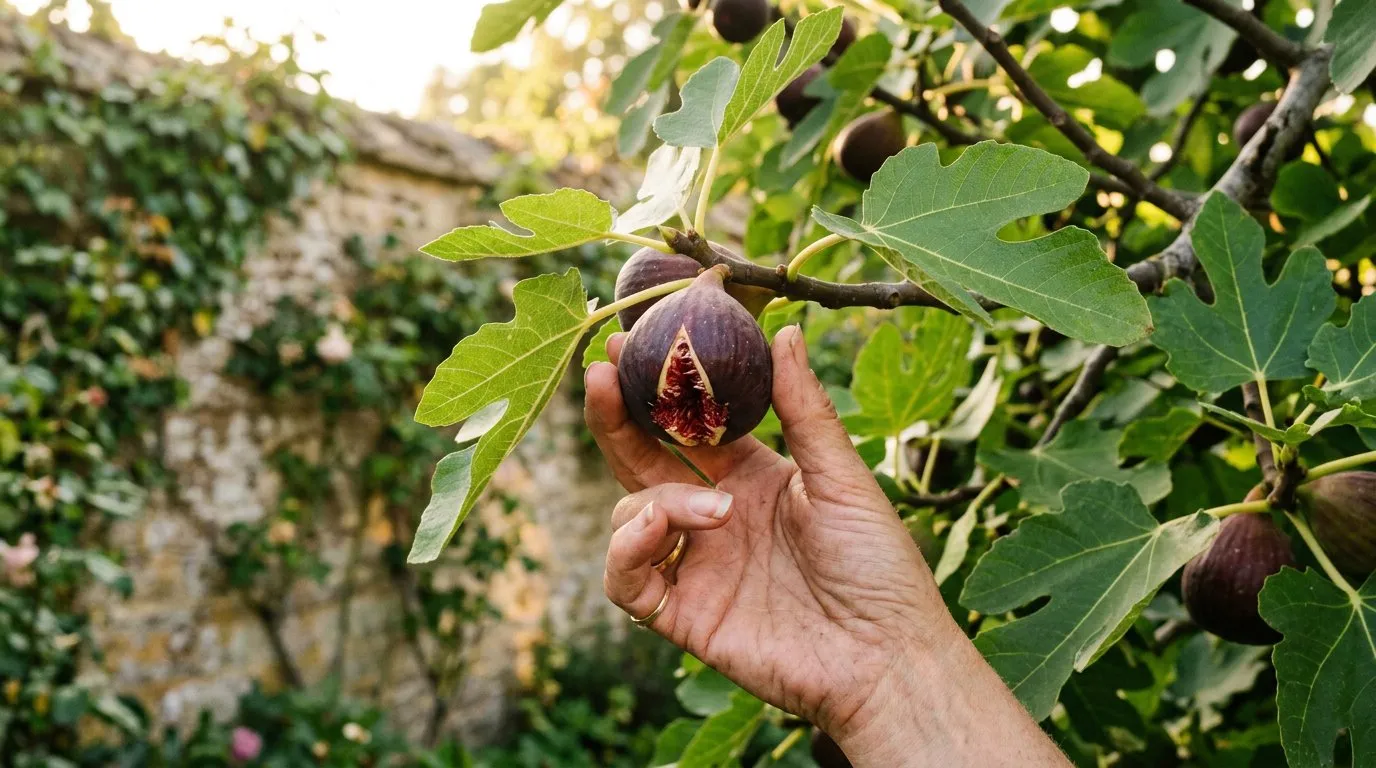
A ripe fig softens and hangs down; colour alone is not a reliable test across every cultivar.
How and when to prune a fig tree
Pruning should keep the canopy open and the tree within its space. Wear gloves because fig sap can irritate skin, and clean tools before starting.
In spring, remove dead or damaged growth after the worst cold weather has passed. On fan-trained trees, tie in useful new shoots to fill gaps. In early summer, pinching growing tips can encourage side shoots on established trees.
Avoid heavy, repeated pruning. It often produces vigorous replacement shoots and removes useful fruiting growth. Spread larger work over more than one season when possible.
The RHS fig pruning guide explains the different approach for free-standing and fan-trained trees. Our broader fruit-tree pruning guide is useful for tool hygiene and planning cuts.
How fig fruit develops in the UK
Tiny embryo figs form near shoot tips late in the season and can remain through winter. These are the fruits most likely to swell and ripen the following summer.
Larger green figs left after the main harvest generally fail to ripen in the UK. Remove those in autumn, but leave the small pea-sized embryos. Check them gently so you do not damage the shoot tips.
Fruit is ready when it softens, hangs down and may show a bead of sugary liquid. Pick carefully because ripe figs bruise easily. Protect the crop with netting that is taut, secure and regularly checked so birds cannot become trapped.
In a cool summer, some fruit may not ripen. Do not respond with hard pruning. Improve light, shelter and watering, then assess the next crop.
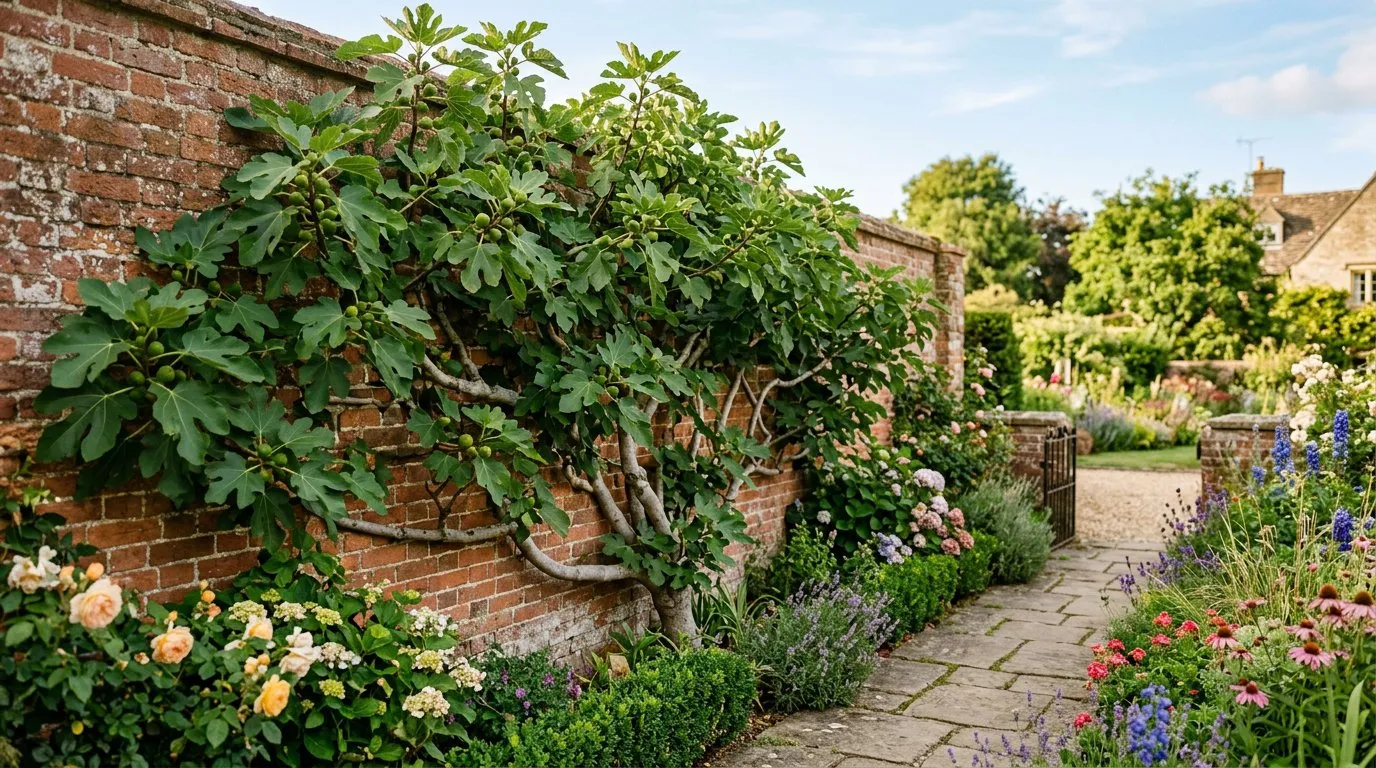
A wall-trained fan makes good use of warmth and keeps the branches within reach for tying and harvesting.
Winter care for fig trees
Established trees in a sheltered position often need little intervention. Young growth and container roots are more vulnerable during prolonged cold.
Move a pot beside a sheltered wall or into a cold greenhouse when severe weather is forecast. Insulate the container without blocking drainage. Outdoor shoots can be protected with horticultural fleece, removed or loosened when conditions improve so moisture does not remain trapped.
Do not keep a dormant fig in a heated room. It needs a normal winter rest. See our winter care for potted fruit trees for practical container protection.
Common fig-growing problems
Plenty of leaves but little fruit
The tree may be too vigorous, too shaded or too young. Improve light and avoid high-nitrogen feeding. Consider root restriction if it is growing freely in rich soil.
Fruit forms but does not ripen
The site may lack warmth, or the tree may have dried out while fruit was swelling. Keep the root zone evenly moist and preserve the tiny overwintering embryos.
Leaves wilt in a container
Check the compost. A dry rootball needs a thorough, slow watering; saturated compost needs better drainage. Do not assume every wilted leaf means more water.
Small dark marks on leaves
Remove badly affected fallen leaves and keep the canopy airy. Identify the symptom before applying a treatment, because weather damage, pests and disease can look similar.
Frequently asked questions
Where is the best place to plant a fig tree?
Choose a warm, sunny and sheltered spot. A south- or south-west-facing wall can help fruit ripen and protects the tree from cold winds.
Do fig trees need a lot of sun?
Yes. Good sun and warmth help the current crop ripen. In a cool or exposed garden, use the warmest wall or grow the tree in a movable pot.
Can a fig tree grow in a pot?
Yes. Use a large, stable container with drainage holes and loam-based compost. Water and feed it regularly during the growing season.
Why does my fig tree produce leaves but no ripe fruit?
Too little warmth, erratic watering or unrestricted vigorous growth can delay fruiting. Improve the position and care before using heavy pruning.
Should I remove unripe figs in autumn?
Remove larger unripe fruit after the harvest. Keep the tiny pea-sized embryo figs near shoot tips because these can form the following year’s crop.
Explore more practical advice in our growing guides or start with the fruit-tree growing guide if you are planning a mixed garden orchard.
Our team produces practical UK gardening guidance from source research, contributor records and established horticultural practice. Editorial standards are overseen by Matt W.