Growing Wedding Flowers in Your Garden
Grow your own wedding flowers in a UK garden. Covers best varieties, sowing times, conditioning tips, and a month-by-month cutting guide.
Key takeaways
- Start your cutting garden 12-18 months before the wedding to build strong, productive plants
- Sweet peas sown in October produce the longest stems and most blooms for June and July weddings
- Dahlias are the single best flower for late summer weddings, producing 30+ stems per plant from August
- Condition all cut stems in cool water for 8-12 hours before arranging to extend vase life to 5-10 days
- Growing your own wedding flowers can save 80% compared with average UK florist costs of £300-£800
- Include foliage plants like eucalyptus and pittosporum, which provide structure and fill gaps in arrangements
Growing wedding flowers in your garden is one of the most rewarding projects a UK gardener can take on. The blooms are fresher than anything a florist supplies. They carry a personal story. And they cost a fraction of the price.
The average UK wedding florist charges £300-£800 for bouquets, table arrangements, and buttonholes. A dedicated cutting garden produces the same volume of flowers for £50-£120 in seeds, tubers, and compost. The trade-off is time, and plenty of it. You need 12-18 months of planning and growing before the wedding day itself.
This guide covers which flowers to grow for each wedding month, how to lay out a cutting garden that maximises stems, and the conditioning techniques that keep blooms fresh without professional cold storage.
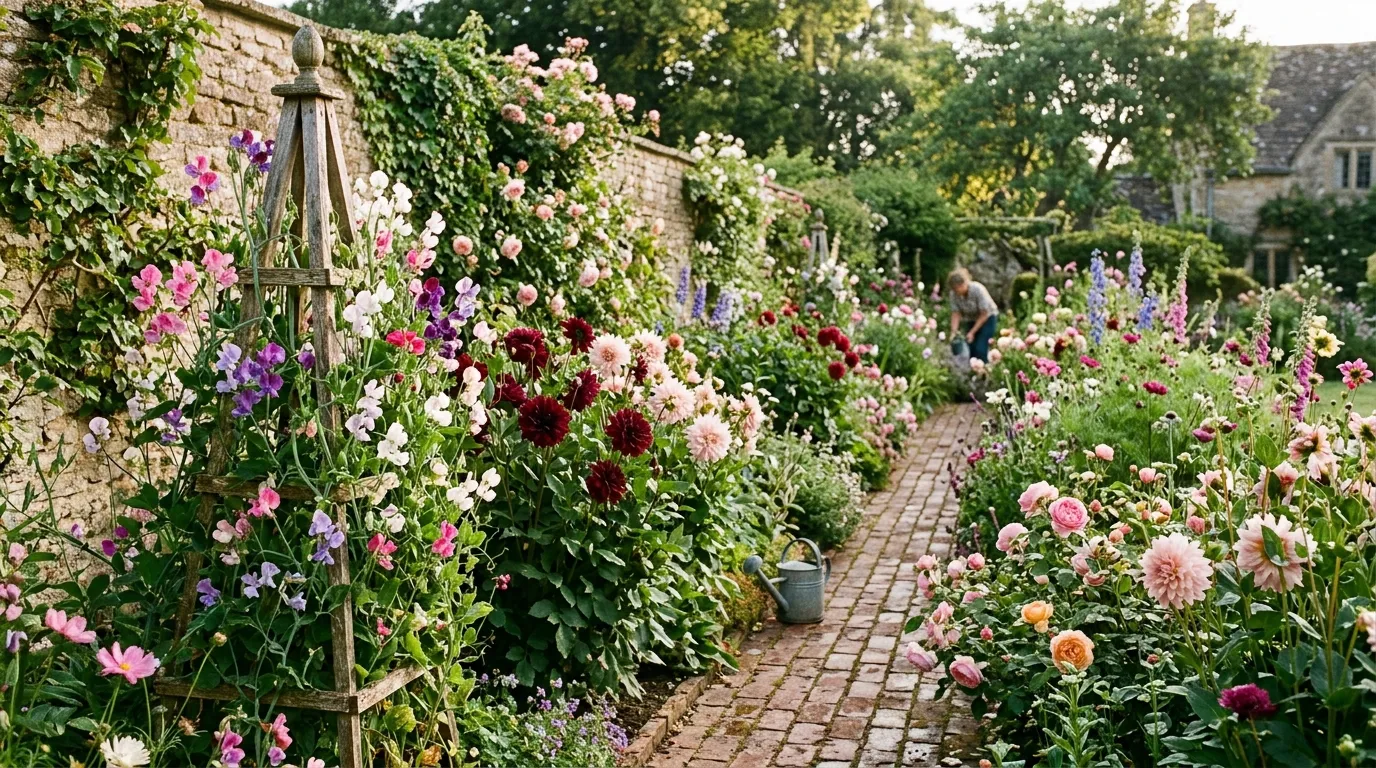
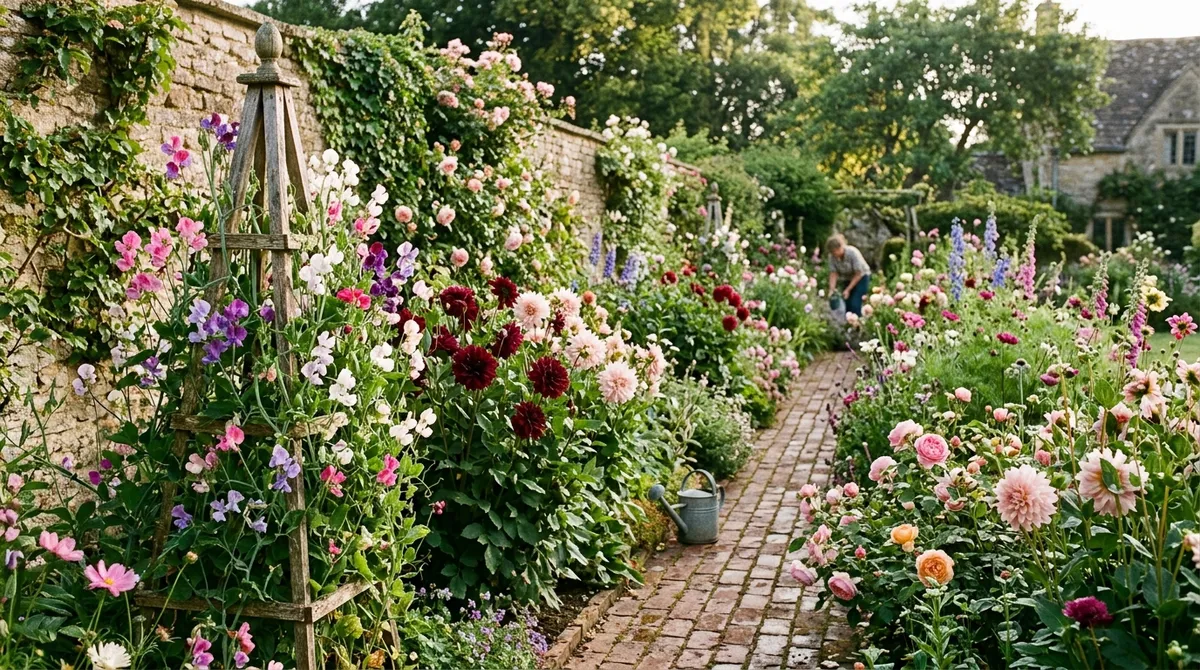
A dedicated cutting garden in full summer bloom. Sweet peas climb an obelisk while dahlias and roses line the brick path.
When to start planning your wedding flower garden
Begin 12-18 months before the wedding date. Perennials like roses and peonies need a full growing season to put down roots before they produce enough cutting stems. A rose planted in November will give you decent blooms the following June. One planted in March of the wedding year will barely manage three stems.
The timeline depends on your wedding month. For a June wedding, start the previous October by sowing sweet peas in root trainers and ordering bare-root roses. For an August wedding, you have more flexibility since dahlias planted in May will flower by late July.
Here is the planning timeline I followed:
- 18 months before: Prepare beds, improve soil with compost, order bare-root roses and peony crowns for winter planting
- 12 months before: Plant roses and peonies in November. Sow sweet peas in October for overwintering in a cold frame
- 8 months before: Order dahlia tubers and annual seeds in January
- 5 months before: Start dahlias in pots under cover in April. Direct sow cornflowers and gypsophila
- 2 months before: Pinch out sweet peas. Stake dahlias as they grow
- 1 month before: Do a trial cut and arrange a test bouquet to check quantities
Best wedding flowers by month
Not every flower blooms when you need it. The table below shows what is realistically available from a UK cutting garden each month, based on four seasons of records in Staffordshire.
| Flower | Bloom Period | Vase Life | Difficulty | Best For |
|---|---|---|---|---|
| Peony | Mid-May to June | 5-7 days | Moderate | May/June weddings |
| Sweet pea | June to September | 4-6 days | Easy | June-Sept weddings |
| Rose (David Austin) | June to October | 7-10 days | Moderate | Any summer wedding |
| Dahlia | August to October | 5-8 days | Easy | Late summer/autumn |
| Cornflower | June to August | 5-7 days | Easy | Rustic themes |
| Gypsophila | June to August | 7-10 days | Easy | Filler and bouquets |
| Foxglove | June to July | 3-5 days | Easy | Height and drama |
| Cosmos | July to October | 4-6 days | Easy | Informal weddings |
| Ammi majus | June to August | 5-7 days | Easy | Lace-like filler |
| Scabious | June to September | 5-7 days | Easy | Wildflower style |
For May weddings, peonies are the star. Varieties Sarah Bernhardt (pale pink) and Duchesse de Nemours (white) are the most reliable in UK gardens. They need 2-3 years to establish fully, so plan ahead.
For June and July, sweet peas dominate. Autumn-sown plants produce stems 30-40cm longer than spring-sown ones. Pick every other day to keep plants producing. One row of 30 plants yields roughly 150 stems per week at peak season.
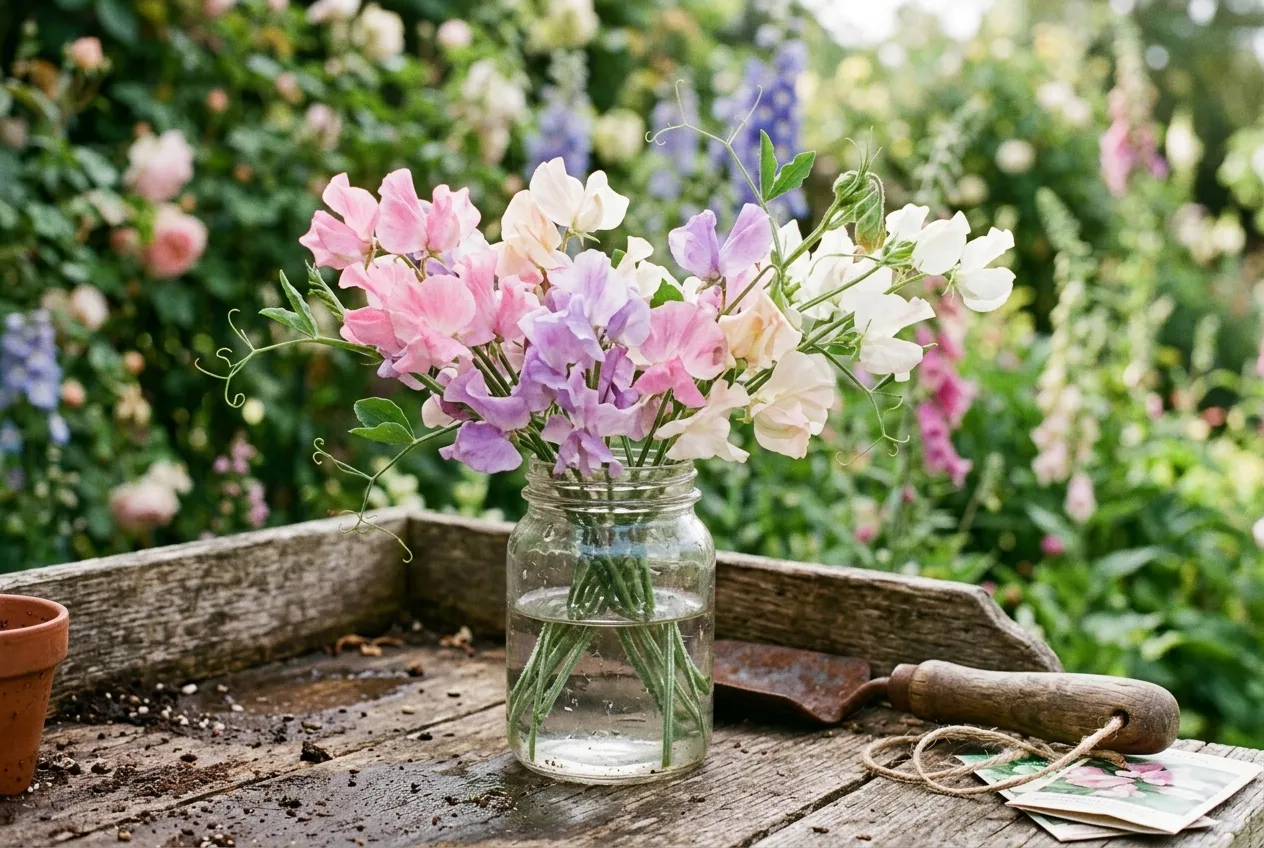
Freshly cut sweet peas in pastel shades. Picking every two days encourages continuous flowering from June through September.
For August onwards, dahlias are unmatched. A single tuber of Cafe au Lait produces 20-30 stems across the season. Combine with burgundy varieties like Arabian Night and coral-toned Labyrinth for depth and contrast.
How to lay out a cutting garden for wedding flowers
You do not need a large space. A plot of 3m x 4m supports enough plants for a small wedding. For larger celebrations, aim for 6m x 4m or use a full cutting garden layout with dedicated rows.
The key principles for a wedding cutting garden:
Plant in rows, not beds. Rows make harvesting faster and allow you to walk between plants without crushing stems. Space rows 45cm apart for most varieties. Dahlias need 60cm.
Use netting for straight stems. Stretch horizontal netting (15cm grid) at 30cm and 60cm height above the ground. Stems grow through the squares and stay upright without individual staking.
Dedicate one row per species. This makes succession sowing easier and keeps similar watering needs together. Sweet peas and roses want consistent moisture. Cornflowers and cosmos tolerate drier conditions.
Include a foliage section. Wedding arrangements need 40-60% greenery. Grow eucalyptus gunnii (hardy to -15C), pittosporum, and ferns. A single eucalyptus in a large pot, cut back hard each spring, produces masses of the round juvenile leaves that florists charge £3-£5 per stem for.
Essential varieties for a wedding cutting garden
Sweet peas
The best scented varieties for weddings include Jilly, Mollie Rilstone, and Anniversary. Sow in October in root trainers. Overwinter in an unheated cold frame. Plant out in March when soil reaches 5C. Pinch at the second true leaf pair for bushier plants.
Roses
David Austin varieties bred for cutting give the longest vase life. Keira (soft peach, 8-day vase life), Juliet (apricot, 7 days), and Patience (white, 9 days) are proven performers. Plant bare-root roses in November. Feed monthly with rose fertiliser from April.
Dahlias
Cafe au Lait (blush), Arabian Night (dark burgundy), and Labyrinth (coral) cover most wedding colour palettes. Start tubers in pots in April. Plant out after the last frost, typically mid-May in the Midlands. Pinch the central growing tip when plants reach 30cm to encourage side shoots.
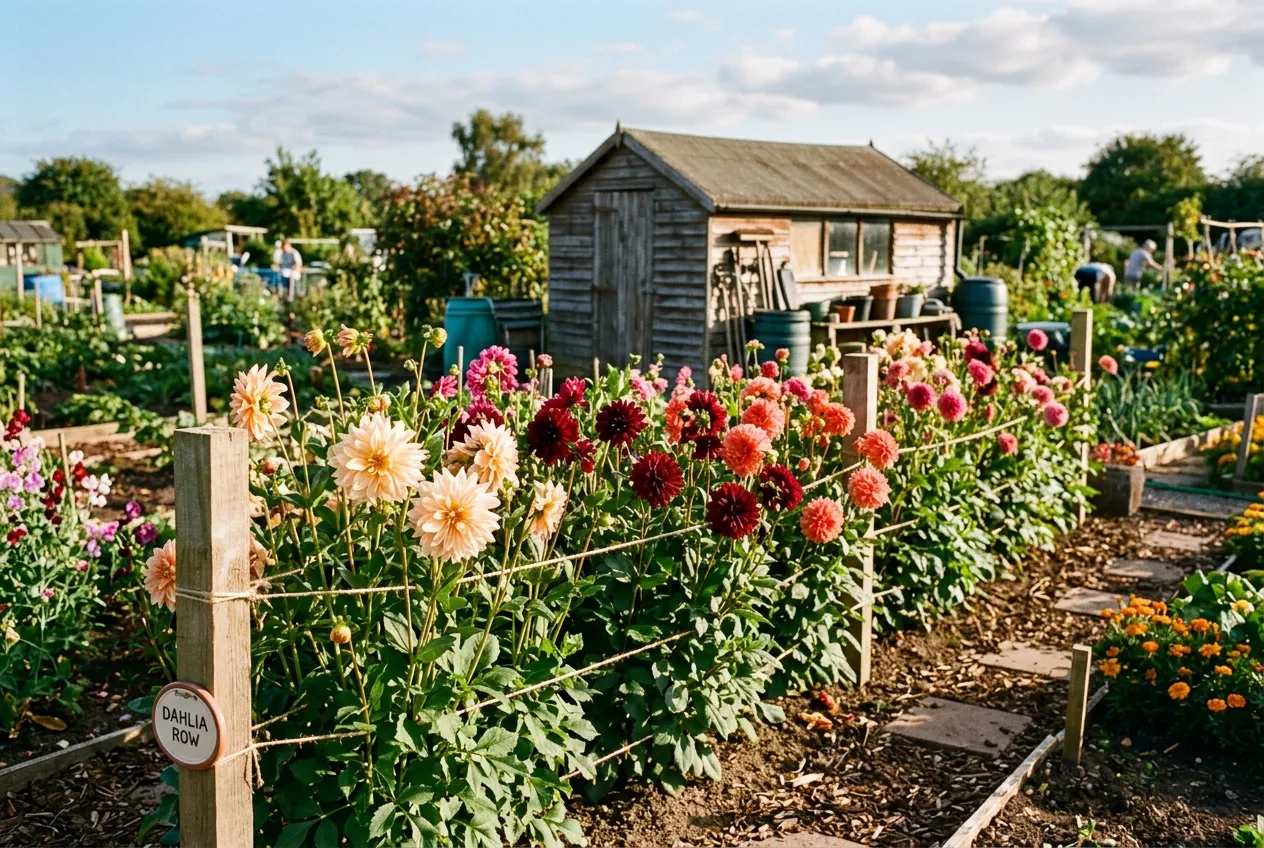
Dahlia varieties in a dedicated cutting row. Cafe au Lait, burgundy, and coral blooms from a single allotment plot.
Peonies
Plant bare-root crowns in October or November with the eyes (buds) no deeper than 5cm below soil level. Too deep and they will not flower. It takes 2-3 years for a peony to reach full production. The RHS peony growing guide covers soil preparation in detail. Varieties for UK weddings: Sarah Bernhardt (pale pink, fragrant), Bowl of Beauty (pink with cream centre), and Duchesse de Nemours (white).
Supporting flowers and fillers
Cornflowers (Centaurea cyanus) sow directly in March or September. Gypsophila paniculata grows from seed in 10-12 weeks. Ammi majus gives a cow parsley look without the floppiness. Scabious adds texture. Together, these fillers cost under £15 in seed and stretch your main blooms across twice as many arrangements.
Growing from seed versus buying plants
For a wedding on a tight budget, growing from seed saves the most money. A packet of 50 sweet pea seeds costs £3-£4. The same number of plug plants costs £25-£30. The catch is time: seeds need sowing 6-8 months before you want flowers. Plug plants give you a 4-6 week head start.
My recommendation: grow sweet peas, cornflowers, cosmos, and ammi from seed. Buy dahlias as tubers (£3-£6 each). Buy roses as bare-root plants (£12-£20 each). Buy peonies as established crowns (£10-£15 each). This mix balances cost with reliability.
Check the flower planting calendar for exact sowing dates by region. Northern gardens run 2-3 weeks behind southern timescales.
“The best wedding flowers I ever grew came from a £2 packet of sweet pea seeds sown the previous autumn. By June they were 2 metres tall and producing 40 stems a week. No florist can match that freshness.” - Lawrie Ashfield
Conditioning and arranging your wedding flowers
This is where home-grown flowers fail or succeed. Without proper conditioning, stems wilt within hours. With it, they last 5-10 days.
Harvest at 6am. Water content in stems peaks in early morning. By midday, stems are 15-20% less hydrated. Cut at a 45-degree angle with sharp secateurs into a bucket of cool water. Never use scissors, which crush the stem fibres.
Strip lower leaves immediately. Any leaf below the waterline rots and breeds bacteria within 24 hours. Bacteria block the water-conducting xylem vessels and cause wilting.
Condition for 8-12 hours. Place stems in a cool room (10-15C) in clean water with a teaspoon of sugar per litre and a drop of bleach. The sugar feeds the flower. The bleach kills bacteria. This is more effective than commercial flower food.
Specific conditioning tips by variety:
- Sweet peas: Cut when the bottom flower is fully open and the top bud is still closed. They last 4-6 days.
- Roses: Cut when the bud is soft to a gentle squeeze but not yet open. Strip all thorns. They last 7-10 days.
- Dahlias: Cut fully open flowers only. Dip stem ends in boiling water for 10 seconds, then straight into cold water. They last 5-8 days.
- Peonies: Cut in tight bud with colour showing. They open over 2-3 days. Refrigerate in bud if you need to delay opening.
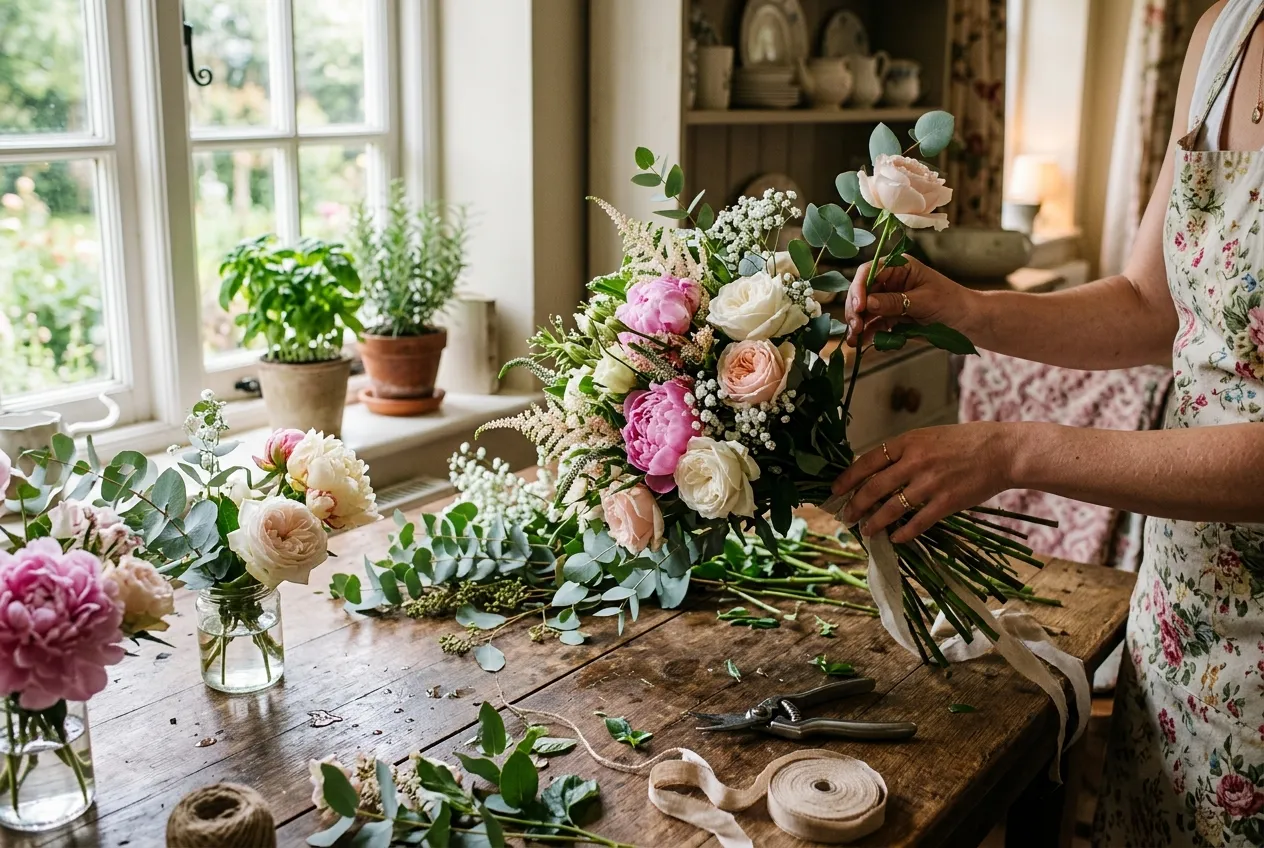
Arranging a bridal bouquet from garden-grown flowers. Peonies, roses, eucalyptus, and gypsophila combine on a cottage kitchen table.
Foliage plants for wedding arrangements
Professional florists spend as much on greenery as on flowers. In a home-grown wedding, foliage is the secret weapon that makes 20 blooms look like 50.
Eucalyptus gunnii is the most useful. Grow it in a large pot and coppice (cut to the base) each March. It regrows 1-1.5m of juvenile foliage by summer. The round, silvery-blue leaves are the same variety florists charge premium prices for. Hardy to -15C across the UK. The National Trust cutting garden at Sissinghurst is worth visiting for foliage inspiration.
Pittosporum tenuifolium produces glossy, dark green sprays. Varieties Silver Queen (variegated) and Tom Thumb (deep purple) add colour contrast. Hardy to -10C.
Ferns. Polystichum setiferum (soft shield fern) gives elegant, arching fronds. Cut them the day before the wedding and condition in water overnight. They last 7-10 days.
Rosemary and mint. Both provide texture and scent. Rosemary stems hold their shape well. Mint wilts faster but the fragrance in a bridal bouquet is worth the shorter life.
The best cutting flowers for UK gardens
If you want to expand beyond wedding-specific blooms, explore the best flowers for cutting guide, which covers 25 varieties ranked by vase life and seasonal availability.
What to do in the week before the wedding
The final week is the most stressful. Here is the schedule I recommend:
- 7 days before: Walk the cutting garden and count available stems. Identify any gaps and buy backup flowers from a local flower farm if needed.
- 3 days before: Cut all roses and peonies. Condition overnight. Store in a cool room or garage at 10-15C.
- 2 days before: Cut all foliage. Condition in buckets. Prepare vases, oasis blocks, and ribbon.
- 1 day before: Cut sweet peas, dahlias, and fillers at 6am. Condition for 8 hours. Begin arranging in the afternoon. Store finished arrangements in the coolest room overnight.
- Wedding morning: Final touches. Spray with a fine water mist. Transport in buckets, not laid flat.
Frequently asked questions
When should I start growing flowers for my wedding?
Start 12-18 months before the wedding date. Perennials like roses and peonies need a full growing season to establish before they produce enough stems. Sweet peas sown the previous October will outperform spring-sown plants by June. Dahlias can be started later, with tubers planted in May for August flowers.
What are the easiest wedding flowers to grow in the UK?
Sweet peas and cornflowers are the easiest to grow. Both can be sown directly outdoors and need minimal care beyond regular watering. Cornflowers germinate in 7-10 days and flower within 12 weeks of sowing. Sweet peas need a support structure but reward you with months of scented blooms from June through September.
Can I grow enough flowers for a full wedding in a small garden?
A 3m x 4m cutting patch can supply a small wedding. That space holds roughly 20 dahlia plants and 30 sweet pea plants, enough for a bridal bouquet, 6 table arrangements, and buttonholes. Supplement with foliage from a single eucalyptus gunnii grown in a pot and gypsophila sown along the edges.
How do I keep cut wedding flowers fresh without a florist?
Cut stems at 6am when water content is highest. Strip all lower leaves immediately and place stems in a bucket of cool water with a teaspoon of sugar and a drop of bleach. Condition for 8-12 hours in a cool room at 10-15 degrees. This extends vase life to 5-10 days for most varieties.
Which flowers work for a May wedding in the UK?
Peonies are the standout choice for May weddings. Varieties like Sarah Bernhardt and Coral Charm bloom from mid-May in southern England. Combine with lily of the valley, ranunculus, and late tulips. Foxgloves also provide height. May is too early for dahlias and most sweet peas in cooler regions.
How much money can I save by growing my own wedding flowers?
The average UK wedding florist bill is £300-£800. Seeds, tubers, and compost for a cutting garden cost £50-£120. That is a saving of 80% or more. The main investment is time: roughly 2-3 hours per week during the growing season for watering, feeding, and training plants.
What if my wedding flowers are not ready in time?
Always have a backup plan for every variety. Grow early and late-flowering cultivars of each species. If dahlias are slow, cornflowers and sweet peas fill the gap. Gypsophila and greenery stretch fewer blooms across more arrangements. Worst case, local flower farms sell seasonal bunches for £10-£25, far less than a florist.
Lawrie has been gardening in the West Midlands for over 30 years. He grows his own veg using no-dig methods, keeps a wildlife-friendly garden, and writes practical advice based on real UK growing conditions.