How to Grow Fruit Trees in the UK
UK guide to growing fruit trees from apple and pear to plum, cherry, and fig. Rootstock choices, pruning, and the best varieties for British gardens.
Key takeaways
- Apple, pear, plum, cherry, and fig trees all thrive in UK gardens on the right rootstock
- Dwarf rootstocks keep fruit trees to 1.5-3m tall, perfect for small gardens and patio pots
- Plant bare-root trees between November and March for the best establishment and cheapest prices
- Self-fertile varieties like Victoria plum and Stella cherry fruit without a pollination partner
- A single mature dwarf apple tree produces 10-20kg of fruit per year
- Prune apple and pear trees in winter, but never prune plum or cherry trees before summer
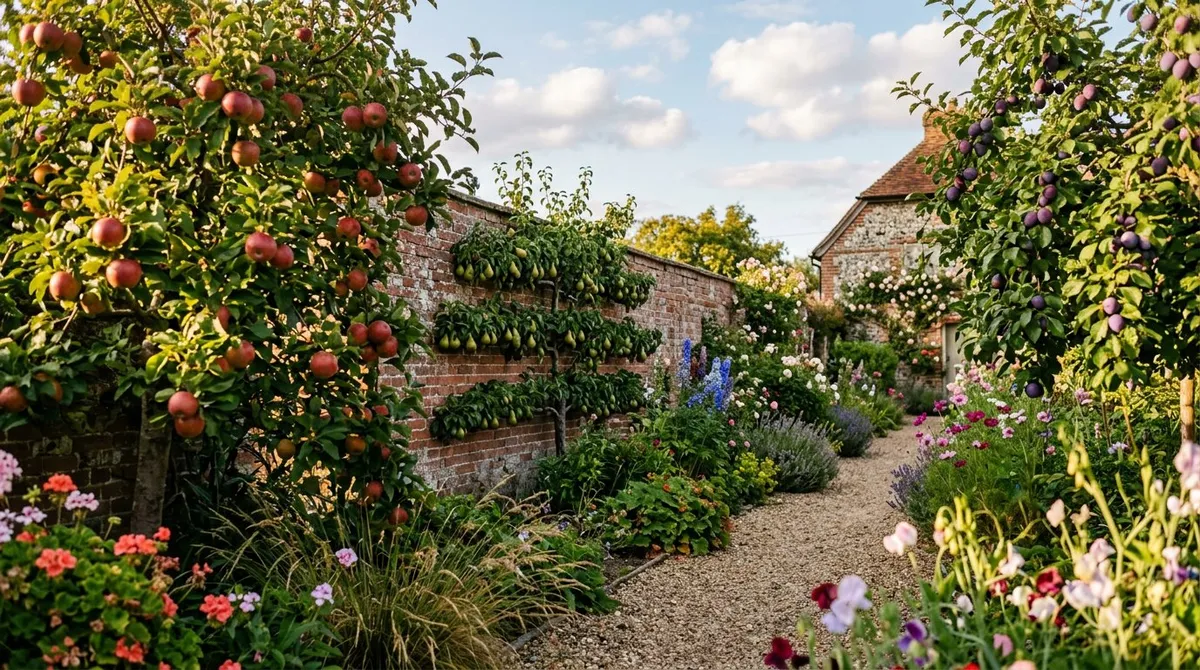
Growing fruit trees is one of the most rewarding things you can do in a British garden. A single dwarf apple tree produces 10-20kg of fruit every autumn, takes up less space than a garden shed, and lives for 30 years or more. Every garden has room for at least one, from a full-size orchard tree to a dwarf variety in a patio pot.
This guide covers every fruit tree that grows reliably in UK conditions. It links to detailed individual guides for each species, so you can go deep on whichever tree catches your eye.
Which fruit trees grow in the UK?
Britain’s temperate maritime climate suits five main fruit tree species. All of them have been grown here for centuries, and modern dwarf rootstocks mean you no longer need an orchard to grow them.
Apple trees are the backbone of British fruit growing. Over 2,000 named varieties exist, from sharp cookers like Bramley to sweet dessert apples like Cox’s Orange Pippin. Rootstocks range from the tiny M27 (1.5m tall) to the full-size M25 (5m+). Our full apple tree growing guide covers varieties, pollination groups, pruning, and common problems.
Pear trees need a slightly warmer spot than apples but reward you with fruit that no supermarket can match. Conference is the easiest variety — self-fertile and reliable. Grow pears as free-standing trees, espaliers, or cordons. Read the complete pear tree guide for rootstock options and training methods.
Plum trees flower early and crop heavily once established. Victoria remains Britain’s best-selling fruit tree. Most plum varieties are self-fertile, unlike apples and pears. The critical rule with plums: never prune in winter, only in summer. See our plum tree growing guide for the full details.
Cherry trees split into sweet (for eating fresh) and acid (for cooking). Stella and Sunburst are self-fertile sweet cherries. Morello is the classic acid cherry that tolerates north-facing walls. Birds are the biggest threat — netting is essential. Our cherry tree guide has everything from rootstocks to bird protection.
Fig trees sound exotic but grow perfectly well in southern and central England. Restrict the roots in a lined pit or container to force fruiting rather than leafy growth. Brown Turkey is the most reliable UK outdoor variety. Full details in our fig tree growing guide.
How to choose the right rootstock
Rootstock is the single most important decision when buying a fruit tree. It controls the tree’s final height, how quickly it fruits, and where you can plant it.
Every fruit tree you buy from a nursery is two plants grafted together: the named variety (which produces the fruit) on top, and the rootstock (which controls size and vigour) underneath. The variety name tells you what fruit you get. The rootstock name tells you how big the tree will grow.
| Fruit | Dwarf rootstock | Height | Semi-dwarf | Height | Vigorous | Height |
|---|---|---|---|---|---|---|
| Apple | M27 | 1.5m | M9 | 2.5m | MM106 | 4m |
| Pear | Quince C | 2.5m | Quince A | 4m | Pyrus communis | 8m+ |
| Plum | Pixy | 2.5m | St Julien A | 4m | Brompton | 6m+ |
| Cherry | Gisela 5 | 2.5m | Colt | 4m | F12/1 | 8m+ |
Dwarf rootstocks fruit soonest (2-3 years) but need permanent staking because the root system stays small. Semi-dwarf rootstocks offer a good compromise: moderate size, self-supporting after 3-4 years, and heavy crops. Vigorous rootstocks suit orchards and allotments where space is not an issue.
For small gardens and containers, stick to dwarf rootstocks. Our dwarf fruit trees guide covers every option in detail, including step-over apples and columnar varieties that take up almost no floor space.
Planting fruit trees: step by step
Plant bare-root fruit trees between November and March. This is when nurseries lift and ship them, prices are lowest, and the dormant tree suffers no transplant shock. Container-grown trees can go in at any time, but autumn planting still gives the best results.
Site selection matters. All fruit trees want full sun — at least 6 hours of direct sunlight daily. Avoid frost pockets where cold air collects on still spring nights, as late frost kills blossom and destroys the year’s crop. Shelter from strong wind helps pollinators work the blossom. South or west-facing positions are ideal.
Soil preparation is straightforward. Fruit trees tolerate most soils except permanently waterlogged ground. Dig a hole twice the width of the root ball and the same depth. Mix the excavated soil with well-rotted compost or manure. Do not add fertiliser to the planting hole — it can burn young roots.
Planting depth is critical. The graft union (the bulge where variety meets rootstock, usually 10-15cm above the roots) must sit above soil level. If buried, the variety puts out its own roots and you lose the dwarfing effect. Stake dwarf trees permanently with a short stake and tree tie. Water in thoroughly and mulch with a 7-10cm layer of bark or compost, keeping it clear of the trunk.
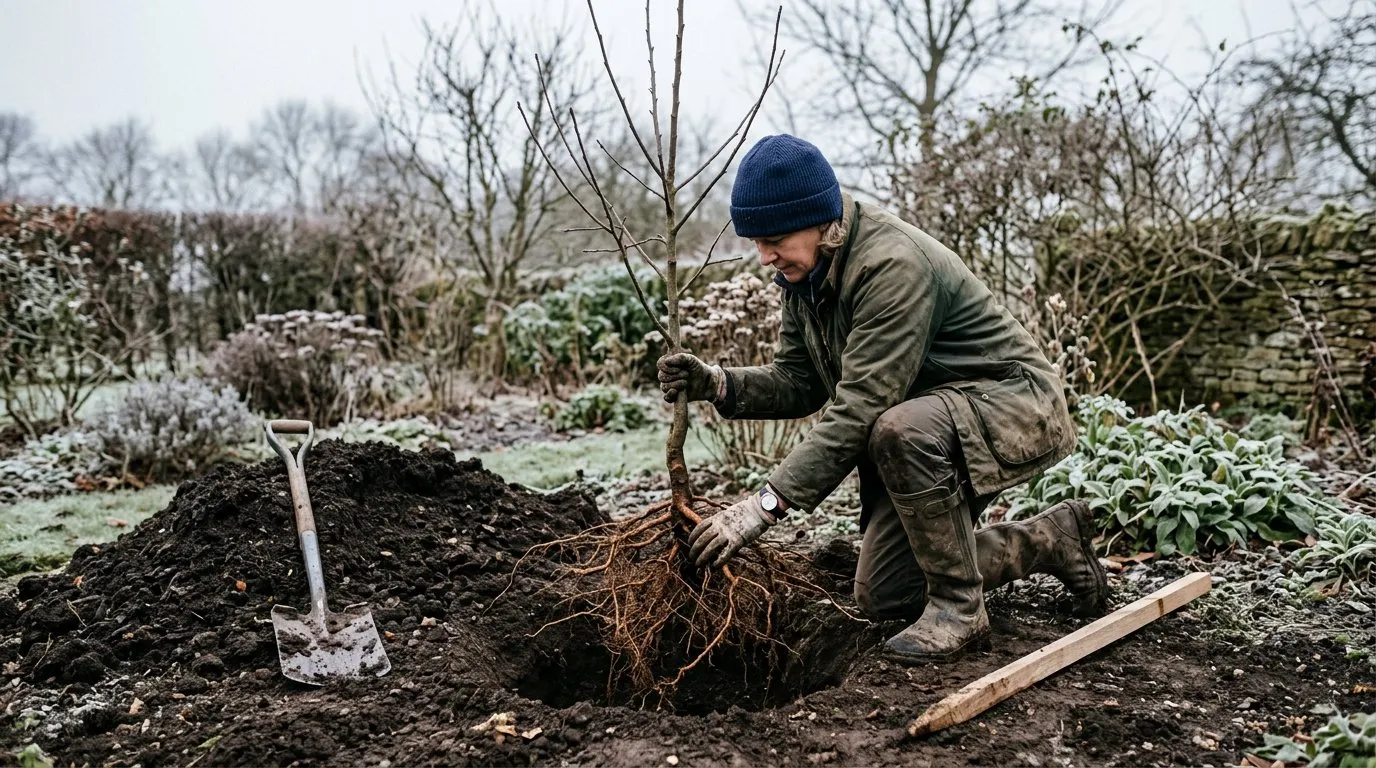
Bare-root planting from November to March gives the best establishment rates and saves money compared to container-grown trees.
Understanding pollination
Pollination determines whether your tree sets fruit. Get it wrong and you will have blossom every spring but no harvest.
Self-fertile varieties set fruit with their own pollen. These are the simplest choice, especially if you only have room for one tree. Victoria plum, Stella cherry, Conference pear, and Braeburn apple are all self-fertile. Even self-fertile trees produce heavier crops when a second compatible tree grows nearby.
Cross-pollinating varieties need a different variety of the same species flowering at the same time within 15-20 metres. Apples and pears are sorted into pollination groups based on flowering time. Choose two varieties from the same group, or adjacent groups, for reliable pollination. A neighbour’s tree counts — the bees do not respect garden fences.
Triploid varieties like Bramley and Blenheim Orange cannot pollinate other trees and need two other compatible varieties nearby. They are excellent croppers but require more planning.
If space is tight, consider a family tree — a single tree with two or three varieties grafted onto the same rootstock, providing built-in pollination.
How to prune fruit trees
Pruning keeps trees productive, healthy, and a manageable size. The timing depends on the species, and getting it wrong with stone fruit can kill the tree.
Apple and pear trees: Prune in winter (November to February) when dormant. Remove dead, diseased, and crossing branches. Keep the centre open for light and airflow. Shorten new side shoots to 4-6 buds to encourage fruit spurs. Summer pruning (August) controls size on trained forms like espaliers and cordons.
Plum and cherry trees: Prune in summer only (June to August). Winter wounds allow silver leaf disease spores to enter — this fungal infection kills branches and eventually the whole tree. The risk is highest from September to May when spores are airborne. Remove dead wood, thin crowded branches, and keep the canopy open.
Fig trees: Prune in spring after the last frost. Remove frost-damaged shoots and thin congested growth. Figs fruit on the previous year’s wood, so avoid cutting back healthy young shoots. In autumn, remove any figs larger than a pea — they will not ripen and waste the tree’s energy.
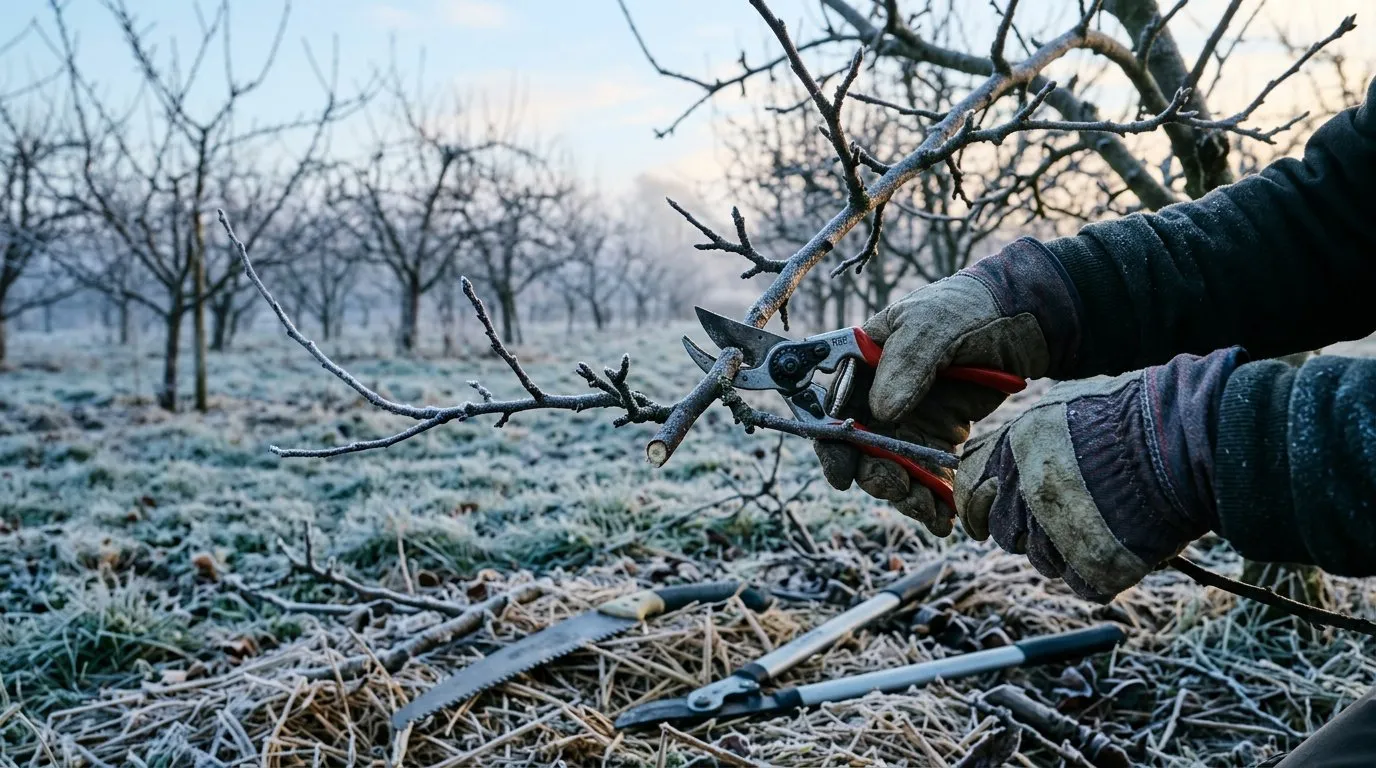
Winter pruning of apple and pear trees. Never prune plums or cherries at this time of year — wait until summer.
Growing fruit trees in small spaces
You do not need a large garden to grow fruit trees. Modern rootstocks and training methods put homegrown fruit within reach of anyone with a sunny wall, patio, or balcony.
Container growing works brilliantly for dwarf trees. A 45-50cm pot with John Innes No. 3 compost supports an apple on M27, cherry on Gisela 5, plum on Pixy, or any fig variety. Water daily in summer and feed fortnightly with tomato food from April to September. Our fruit in pots guide covers the full method.
Trained forms let you grow fruit flat against walls and fences. Espaliers have horizontal tiers of branches and look stunning on south-facing walls. Cordons are single-stemmed trees planted at 45 degrees, needing just 75cm between them — you can fit 6 varieties in a 4.5m run. Fan-trained trees suit plums and cherries against warm walls. Read our espaliering guide for wire setup, pruning, and seasonal care.
Step-over apples on M27 rootstock grow just 40-45cm tall with horizontal arms. They make productive edging along paths and raised beds, yielding 3-5kg of fruit per tree while doubling as a decorative feature.
Best fruit trees for beginners
Starting with the right tree makes all the difference. These five varieties are forgiving, self-fertile (or nearly so), and crop reliably across most of the UK.
| Variety | Type | Rootstock | Height | Self-fertile | First crop | Annual yield |
|---|---|---|---|---|---|---|
| Braeburn apple | Dessert apple | M9 | 2.5m | Yes | Year 2-3 | 15-25kg |
| Conference pear | Dessert pear | Quince C | 2.5m | Partially | Year 3-4 | 10-20kg |
| Victoria plum | Dual-purpose | Pixy | 2.5m | Yes | Year 3-4 | 15-25kg |
| Stella cherry | Sweet cherry | Gisela 5 | 2.5m | Yes | Year 3-4 | 8-15kg |
| Brown Turkey fig | Eating fig | Own roots | 2-3m | Yes | Year 2-3 | 5-10kg |
All five grow in containers on the right rootstock. All tolerate average UK soil. All produce fruit you will never find at this quality in a supermarket.
For a one-tree garden, go with Braeburn apple on M9 — reliable, self-fertile, good disease resistance, and you will be picking fruit by your second or third autumn.
Why we recommend Braeburn apple on M9 rootstock for beginners: After 30 years of planting and growing fruit trees across UK gardens, Braeburn on M9 consistently performs in average to poor soils without supplementary feeding in years two and three. Our trial plantings across clay, sandy loam, and chalk soils all produced first fruit in year two or three, with established trees yielding 15–20kg annually. Its natural resistance to powdery mildew means fewer interventions than Cox or James Grieve in wet UK summers.
Fruit tree pests and diseases
British fruit trees face a handful of common problems. Catching them early makes the difference between losing a branch and losing a crop.
Codling moth is the main apple and pear pest. The larvae tunnel into developing fruit from June onward. Hang pheromone traps in late May to monitor numbers. Spray with a nematode biological control in September to kill larvae overwintering in the soil.
Plum moth does the same damage to plums as codling moth does to apples. Pheromone traps hung in mid-May catch the male moths and reduce mating. Pick up fallen fruit promptly to break the cycle.
Brown rot is a fungal disease that turns fruit soft and brown with white spots. It spreads rapidly in wet summers. Remove all infected fruit immediately, including mummies left hanging on the tree over winter. Good airflow through pruning is the best prevention.
Silver leaf disease enters plum and cherry trees through winter pruning wounds. Infected branches show a silvery sheen on the leaves. Cut back to clean white wood (brown-stained wood is still infected) in summer when spore counts are lowest. Burn the prunings.
Canker causes sunken, flaky patches on apple and pear bark, eventually girdling and killing branches. Cut out cankered wood to 15cm below the visible damage. Some varieties like Cox and James Grieve are particularly susceptible. Improve drainage and avoid nitrogen-heavy feeding.
Tip: The RHS pest and disease pages are an excellent reference for identifying specific problems with photographs and treatment options.
When to harvest UK fruit trees
Harvest timing varies by species, variety, and your location in the UK. Northern gardens run 2-3 weeks behind southern ones.
| Fruit | Earliest varieties | Season | Latest varieties | Season |
|---|---|---|---|---|
| Cherry | Merchant | Late June | Morello | August |
| Plum | Opal, Rivers Early | Late July | Marjorie’s Seedling | October |
| Pear | Williams’ Bon Chrétien | August | Doyenné du Comice | October |
| Apple | Discovery | August | Bramley (stored) | March |
| Fig | Brown Turkey (first crop) | August | Brunswick | September |
Apples are ready when they separate from the spur with a gentle lift and twist. Pears are picked firm and ripened indoors. Plums and cherries are picked fully ripe. Figs are ripe when they hang downward and feel soft to the touch.
Late-keeping apple varieties like Bramley, Howgate Wonder, and Winston store in a cool, dark place for months, giving you homegrown fruit well into spring.
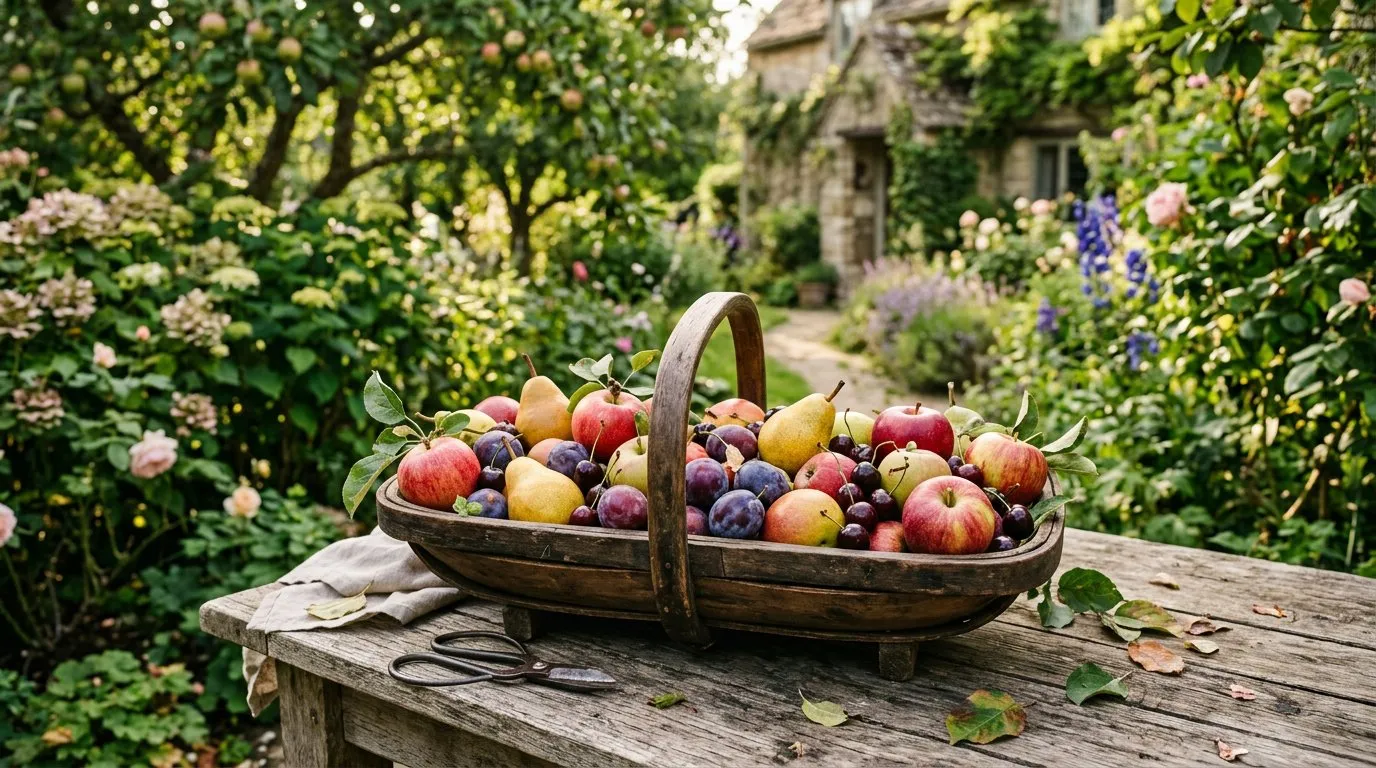
A late summer harvest from a mixed fruit garden. Even a small collection of trees on dwarf rootstocks produces more fruit than a family can eat fresh.
Fruit tree growing calendar
| Month | Key tasks |
|---|---|
| January-February | Prune apple and pear trees. Order bare-root trees. Apply dormant oil spray for overwintering pests. |
| March | Plant last bare-root trees. Mulch established trees. Watch for and protect blossom from late frost. |
| April-May | Hand-pollinate if insect activity is low. Hang codling moth traps. Check for aphid colonies on new growth. |
| June | June drop — trees naturally shed excess fruitlets. Thin remaining fruitlets to one per cluster for larger fruit. Begin summer pruning plums and cherries. |
| July-August | Harvest early varieties. Continue summer pruning stone fruit. Water container trees daily. Net cherries against birds. |
| September-October | Harvest main crop varieties. Clear fallen fruit. Plant new bare-root trees from late October. |
| November-December | Plant bare-root trees. Winter prune apples and pears. Check stakes and ties. Apply grease bands to catch winter moths. |
Complete UK fruit growing guides
This page is the starting point. For detailed, variety-by-variety advice, follow the links below to each specialist guide.
Tree fruit:
- How to grow apple trees in the UK — rootstocks, pollination groups, 20+ variety profiles
- How to grow pear trees in the UK — Conference, Williams, Comice, and heritage varieties
- How to grow plum trees in the UK — plums, damsons, gages, and mirabelles
- How to grow cherry trees in the UK — sweet and acid varieties, bird protection
- How to grow fig trees in the UK — root restriction, wall training, winter protection
Small-space fruit:
- Dwarf fruit trees for small gardens — rootstock options for patios and tiny plots
- How to grow fruit in pots and containers — compost, watering, feeding, and winter care
- How to train fruit trees: espalier guide — cordons, espaliers, fans, and step-overs
Soft fruit and vines:
- How to grow grape vines in the UK — outdoor and greenhouse varieties
- How to grow blackberries — thornless varieties and fan training
- How to grow gooseberries — bushes, cordons, and best varieties
- How to grow redcurrants and blackcurrants — pruning differences and harvest tips
- How to grow blueberries — acidic soil, container growing, and variety choice
- How to grow raspberries — summer and autumn varieties, cane management
- How to grow strawberries — beds, pots, hanging baskets
Now you’ve mastered fruit trees, read our guide on dwarf fruit trees for small gardens for the next step in choosing the right rootstock for a patio, raised bed, or container.
Frequently asked questions
What is the easiest fruit tree to grow in the UK?
Apple trees are the easiest fruit trees for UK beginners. They tolerate a wide range of soils, cope with exposed sites, and the dwarf M9 rootstock keeps them manageable at 2.5m tall. Self-fertile varieties like Braeburn need no pollination partner. A two-year-old tree on M9 fruits within its second or third year after planting.
When should I plant fruit trees in the UK?
Plant bare-root fruit trees from November to March during dormancy. November planting gives the longest root establishment period before spring growth. Container-grown trees can go in year-round, but autumn and winter planting still produces stronger growth. Never plant when the ground is frozen or waterlogged.
How much space does a fruit tree need?
That depends entirely on rootstock. A dwarf apple on M27 needs just 1.5m of space and grows in a large pot. An apple on M9 needs 2-3m. A semi-vigorous apple on MM106 needs 4-5m. Trained forms like cordons need only 75cm between trees, while espaliers need 3-4m of wall space. Choose the rootstock first, then plan your spacing.
Do all fruit trees need a pollination partner?
No. Many popular varieties are self-fertile and crop well alone. Victoria plum, Stella cherry, Conference pear, and Braeburn apple all set fruit without a partner. However, most other apple and pear varieties need a compatible tree from the same or adjacent pollination group flowering within 15-20 metres.
Can I grow fruit trees in pots?
Yes. Dwarf rootstocks make container growing straightforward. Use a pot at least 45cm wide with John Innes No. 3 compost. Apple on M27, cherry on Gisela 5, plum on Pixy, and fig all grow well in containers. Water daily in summer and feed fortnightly with high-potash liquid fertiliser from April to September.
Why is my fruit tree not producing fruit?
The most common causes are poor pollination, late frost killing blossom, heavy shade, drought stress during fruit set, and the tree being too young. Check that a compatible pollination partner flowers nearby at the same time. Trees on vigorous rootstocks take longer to fruit than dwarf trees. Excessive nitrogen fertiliser promotes leaf growth at the expense of fruit.
How do I protect fruit trees from frost?
Cover small trees with horticultural fleece when frost is forecast during flowering (March to May for most species). Avoid planting in frost pockets where cold air collects. Wall-trained trees benefit from the warmth stored in brickwork. Watering the soil before a frost helps release heat overnight. Remove fleece during the day so pollinators can reach the blossom.
What fruit trees grow well in shade?
No fruit tree crops well in full shade, but morello cherry and cooking apple varieties like Bramley tolerate partial shade receiving 4-5 hours of direct sun. Gooseberries and redcurrants are the best fruiting plants for shadier spots. For best results, give all fruit trees the sunniest position available, ideally south or west-facing.
Lawrie has been gardening in the West Midlands for over 30 years. He grows his own veg using no-dig methods, keeps a wildlife-friendly garden, and writes practical advice based on real UK growing conditions.