How to Grow Sunflowers in the UK
Complete guide to growing sunflowers in UK gardens. Covers sowing times, best varieties, container growing, pests, and seed harvesting.
Key takeaways
- Sow indoors from late March or outdoors from late April when soil reaches 10C
- Germination takes 7-14 days — faster at 20-25C on a warm windowsill
- Dwarf varieties like Teddy Bear suit pots as small as 30cm diameter
- Giant varieties need 45-60cm spacing and staking once they pass 1m tall
- Slugs are the biggest threat to seedlings — protect with copper tape or grow in pots until 15cm tall
- Leave seed heads on the plant in autumn to feed goldfinches and other garden birds
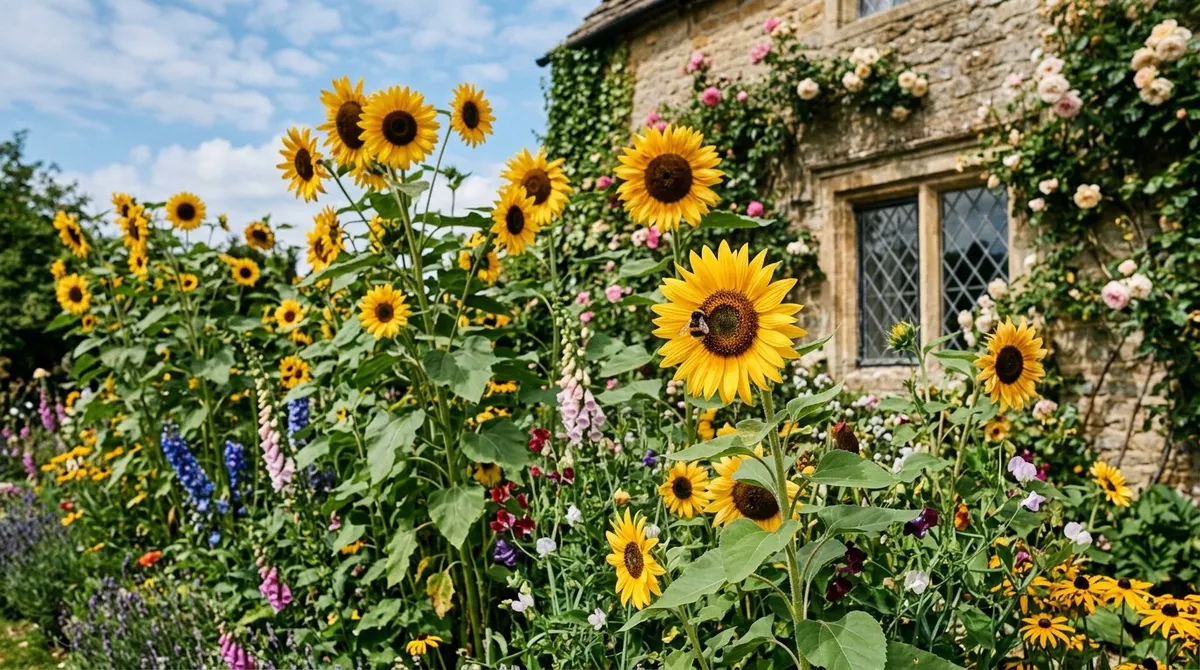
Sunflowers are one of the fastest flowers to grow in the UK. A single seed sown in April produces a plant over 2m tall by August. Children can measure their progress in centimetres per day during peak growth.
This guide covers sowing, growing, and harvesting sunflowers across all UK regions. The principles are the same for a towering giant or a compact pot plant. For a complete month-by-month flower schedule, see our flower planting calendar.
When to plant sunflower seeds in the UK
Timing depends on whether you start indoors or sow directly outside.
Indoors: Sow from late March to May. Use individual 7.5-10cm pots filled with peat-free multipurpose compost. Push each seed 1.5-2.5cm deep, water gently, and place on a warm windowsill at 20-25C. Cover with a clear plastic bag until shoots appear. Seeds germinate in 7-14 days.
Outdoors: Sow from late April to early June once soil temperature reaches 10C at 10cm depth. Use a soil thermometer to check. Southern England typically hits 10C by late April. Northern England and Scotland often need to wait until mid-May.
Latest sowing date: Mid-June. Sunflowers take 8-18 weeks to flower, so later sowings risk running out of season before blooming. If you want flowers through the whole summer, stagger your sowing every 2-3 weeks from April to June.
| Region | Earliest outdoor sowing | Typical last frost |
|---|---|---|
| Southern coast | Mid-April | Late April |
| London and Home Counties | Late April | Early May |
| Midlands and East Anglia | Early May | Mid-May |
| Northern England | Mid-May | Late May |
| Scotland (lowlands) | Late May | Early June |
For other things to sow alongside sunflowers, see our seed sowing calendar.
How to sow and plant out sunflowers
Indoor sowing step by step:
- Fill 7.5-10cm pots with peat-free compost. Water until moist but not soggy.
- Push one seed per pot 1.5-2.5cm deep. Deeper in lighter compost, shallower in heavier mixes.
- Cover with a clear plastic bag or place in a propagator at 20-25C.
- Remove the cover once shoots emerge at 7-14 days.
- Grow on a sunny windowsill, turning the pot daily to prevent leaning.
- Harden off at 3-4 weeks old by placing outside during the day for a fortnight.
- Plant out after the last frost when seedlings have 2-3 pairs of true leaves.
Direct outdoor sowing: Rake the soil to a fine tilth. Make holes 1.5-2.5cm deep and 10cm apart. Drop one seed per hole, cover with soil, and water. Thin seedlings to their final spacing once they have two true leaves.
Spacing: Give tall varieties 45-60cm between plants. Dwarf types need 30-45cm. Wider spacing produces larger flower heads. In rows, space rows 75cm apart.
Gardener’s tip: Sow two or three seeds per position outdoors and thin to the strongest seedling. This insures against poor germination and slug damage.
Best sunflower varieties for UK gardens
Choosing the right variety matters more than any other decision. A 3m giant needs staking and space. A 40cm dwarf fits in a window box.
Tall varieties (1.5m and above)
| Variety | Height | Flower | Best for |
|---|---|---|---|
| Russian Giant | 2-3m | Yellow, single head 30cm+ | Children’s competitions |
| Mongolian Giant | 3-4m | Yellow, heads up to 45cm | Tallest possible plant |
| Velvet Queen | 1.5m | Deep crimson-red | Colour in borders |
| Soraya | 1.8m | Tangerine-orange, 25+ stems | Cut flowers |
| Autumn Beauty | 1.5-1.8m | Gold, bronze, mahogany mix | Cottage gardens |
Dwarf varieties (under 1m)
| Variety | Height | Flower | Best for |
|---|---|---|---|
| Teddy Bear (RHS AGM) | 60-90cm | Double, fluffy golden | Pots and borders |
| Sunny Smile | 40-50cm | Yellow, dark centre | Containers |
| Suntastic Yellow | 20-30cm | Compact, pollen-free | Balconies, windowboxes |
| Little Becka | 60-90cm | Bicolour red-gold | Large pots |
| Sunspot | 45-60cm | Large heads on short stems | Dramatic pot displays |
Pollenless varieties like ProCut and Sunrich are best for cut flowers. They produce no pollen, so they leave no mess on tables and suit hay fever sufferers.
Growing sunflowers in pots
Container growing works well for dwarf and compact varieties. Tall types struggle in pots because they topple in wind and dry out fast.
Pot size: Minimum 30cm diameter for dwarf varieties. Use 40-50cm pots for semi-dwarf types like Little Becka. For container gardening basics, including compost and drainage, see our separate guide.
Compost: Fill with peat-free multipurpose compost. Add slow-release fertiliser granules at planting time. Top up with a liquid tomato feed fortnightly once flower buds form.
Watering: Containers dry out fast in summer. Check daily and water when the top 2cm of compost feels dry. On hot days, pots on south-facing patios may need watering twice. Placing saucers underneath helps retain moisture.
Position: Full sun is essential. Place pots where they get at least 6 hours of direct sunlight. Rotate the pot every few days to prevent the stem leaning towards the light.
Caring for sunflowers through the season
Sunflowers are low-maintenance once established. They need water, support, and occasional feeding.
Watering: Water weekly in dry weather. Soak the base thoroughly rather than sprinkling the leaves. In hot spells, increase to twice weekly. Overwatering causes yellowing leaves and root rot, so check the soil before adding more.
Feeding: Apply a balanced liquid feed every fortnight from June. Switch to a high-potash tomato feed once buds appear. This encourages larger flowers with stronger colour.
Staking: Tall varieties need staking once they pass 1m. Push a sturdy bamboo cane or wooden stake 30cm into the ground beside the stem. Tie the stem to the stake with soft twine in a figure-of-eight loop. Add more ties every 30cm as the plant grows.
Pinching out: Cut the growing tip of branching varieties when they reach 60-100cm. This forces side shoots and produces more (smaller) flower heads rather than one single bloom. The RHS children’s sunflower guide recommends pinching at 1m for maximum branching.
Why do sunflowers follow the sun?
Young sunflower stems track the sun from east to west during the day. At night, they reset to face east before sunrise. This is called heliotropism.
Cells on the east side of the stem grow faster during the day. This pushes the head westward. At night, the west-side cells elongate, turning it back east. A 2016 study in Science found this boosts light capture by over 10%. Plants grew larger leaves and heavier stems.
Once the flower head opens fully, tracking stops. Mature flower heads face east permanently. East-facing flowers warm up faster in the morning, which attracts more pollinators. Bumblebees prefer warm flowers and visit east-facing heads five times more often than west-facing ones.
Common sunflower problems and how to fix them
Slugs and snails are the number one threat to seedlings. They strip young plants overnight, leaving only bare stems. Protect seedlings with copper tape around pots, beer traps at ground level, or biological nematode controls. The safest option is to grow seedlings in pots on a table until they reach 15cm tall, then plant out. For more methods, see our slug prevention guide.
Aphids cluster on stems and buds from May onward. Blast them off with a strong jet of water from a hose. Encourage natural predators by planting lavender and marigolds nearby to attract ladybirds and hoverflies.
Drooping heads usually mean the plant needs water. Soak the base thoroughly. If watering does not help, the head may simply be heavy with developing seeds, which is normal in late summer.
Powdery mildew appears as white patches on leaves in late summer. Improve air circulation by spacing plants wider. Remove badly affected leaves. It rarely kills the plant at this stage in the season.
Birds and squirrels raid seed heads in autumn. Cover the heads with fine mesh or muslin if you want to save seeds for eating. If you are happy to share, leaving the heads uncovered feeds goldfinches through winter.
Harvesting and saving sunflower seeds
For eating: Cut the head when the back turns brown and the petals have dropped. Leave 30cm of stem attached and hang the head upside down in a dry, ventilated shed for 1-2 weeks. When the seeds are dry, rub them free with your thumb. Roast at 150C for 20-25 minutes with a light coating of oil and salt.
For replanting: Let the seeds dry completely on the head. Store in a paper envelope in a cool, dry place over winter. Sow the following spring. Home-saved seed from hybrid (F1) varieties will not grow true to type. Open-pollinated varieties like Russian Giant reproduce reliably from saved seed.
For wildlife: Leave the seed heads standing in the garden through autumn and winter. Goldfinches, blue tits, and greenfinches feed on the seeds. The RSPB recommends leaving heads in place as a natural bird feeder. Our guide to attracting birds to your garden has more on feeding strategies.
Why we recommend Teddy Bear for container and small garden growing: After 30 years of trialling sunflower varieties, Teddy Bear consistently performs better in exposed UK gardens than any other dwarf type. Its double, fully-packed flower head stays intact in wind that strips petals from single-headed varieties within days. In back-to-back pot trials on a south-facing terrace, Teddy Bear produced flowers that lasted 3-4 weeks before fading, compared to 10-14 days for Sunny Smile. It also carries an RHS Award of Garden Merit, which reflects its proven performance in British conditions.
Growing sunflowers with children
Sunflowers are one of the best plants for getting children into gardening. The seeds are large enough for small hands to handle. Growth is fast enough to hold attention.
Start a height competition. Give each child their own pot with a Russian Giant or Mongolian Giant seed. Measure weekly with a tape measure taped to the wall or fence. At peak growth in July, sunflowers can grow 5-8cm per day.
Keep a growing diary with dates, heights, and drawings. This makes a natural school project that runs from April through October. The RHS Campaign for School Gardening uses sunflowers as their recommended introductory plant.
Month-by-month sunflower calendar
| Month | Task |
|---|---|
| March | Sow indoors in pots on a warm windowsill |
| April | Continue indoor sowing; begin outdoor sowing in southern England |
| May | Outdoor sowing across all regions; plant out indoor-raised seedlings |
| June | Last chance to sow; stake tall varieties; begin feeding fortnightly |
| July | Water weekly; tie stems to stakes; watch for aphids; peak growth |
| August | Flowering peaks; switch to tomato feed; enjoy the display |
| September | Harvest seeds for eating; leave heads for birds; collect seed for next year |
| October | Clear spent plants; add stems to compost heap |
Frequently asked questions
When should I plant sunflower seeds in the UK?
Sow indoors from late March to April. Sow outdoors from late April to early June once soil reaches 10C. Northern England and Scotland may need to wait until mid-May for outdoor sowing. Mid-June is the latest practical sowing date.
How long do sunflowers take to grow from seed to flower?
Most varieties flower 8-18 weeks after sowing. Early dwarf types like Sunny Smile bloom in 8-10 weeks. Giant varieties like Mongolian Giant take 14-18 weeks. Sowing indoors in March gives flowers by late June.
Can sunflowers grow in pots?
Dwarf varieties grow well in pots of 30cm diameter or larger. Use peat-free multipurpose compost and water daily in summer. Teddy Bear, Sunny Smile, and Suntastic Yellow are the best choices for containers.
Do sunflowers come back every year?
Annual sunflowers complete their lifecycle in one season. They do not return the following year. Perennial sunflowers like Helianthus Lemon Queen come back each spring once established. Annual types often self-seed if you leave the heads to drop.
Why are my sunflower leaves turning yellow?
Yellow leaves usually indicate overwatering or nitrogen deficiency. Check soil drainage and reduce watering if the ground is waterlogged. Feed with a balanced liquid fertiliser every fortnight during the growing season.
Do sunflowers need full sun?
Sunflowers need at least 6-8 hours of direct sunlight daily. They grow best in an open, south-facing position. Plants in partial shade grow leggy, produce smaller heads, and flower later. For shaded gardens, see our best plants for shade.
How do I harvest sunflower seeds for eating?
Cut the head when the back turns brown and seeds are plump. Hang upside down in a dry, ventilated space for 1-2 weeks. Rub seeds free by hand. Roast at 150C for 20-25 minutes with a pinch of salt.
Now you’ve mastered sunflowers, read our guide on how to grow dahlias in the UK for the next bold summer flower that carries the display right through to autumn.
Further reading
- Flower planting calendar — month-by-month sowing guide for all UK flowers
- How to grow dahlias — another summer favourite that pairs well with sunflowers
- Bee-friendly garden plants — sunflowers and other pollinator favourites
- Cottage garden planting plan — traditional border designs using sunflowers
- When to plant sunflowers — dedicated timing guide for UK regions
Lawrie has been gardening in the West Midlands for over 30 years. He grows his own veg using no-dig methods, keeps a wildlife-friendly garden, and writes practical advice based on real UK growing conditions.