Seed Sowing Calendar UK
Month-by-month seed sowing calendar for UK gardens. Covers vegetables, flowers, and herbs with indoor and outdoor timings for every month.
Key takeaways
- Over 60 different crops can be started from seed in March and April alone
- January-February: start slow growers like onions, chillies, and sweet peas indoors
- March: the biggest sowing month for vegetables, with 20+ crops to start
- May-June: sow tender crops outdoors and start biennials for next year
- July-August: sow winter vegetables and overwintering crops for year-round harvests
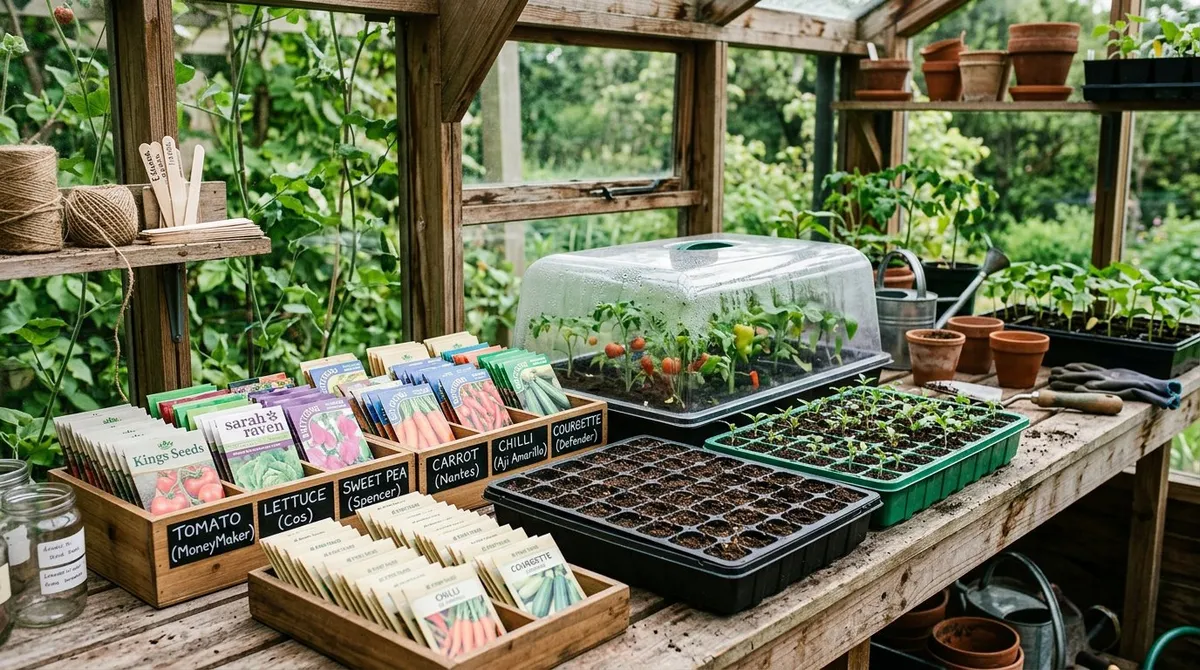
Knowing when to sow each seed is the single most useful skill in gardening. Sow too early and seedlings struggle in cold, dark conditions. Sow too late and crops run out of time to mature. This calendar takes the guesswork out of seed sowing for UK gardens.
Unlike our vegetable planting calendar, which focuses on vegetables alone, this guide covers vegetables, flowers, and herbs month by month. It tells you what to sow, whether to start indoors or outdoors, and what to expect. If you are starting an allotment, use this calendar alongside a four-bed crop rotation plan. For specific crops, see our dedicated guides on tomato planting times, potato planting times, and sunflower planting times.
January
The quietest month for sowing. Focus on planning and a handful of slow-growing crops.
Vegetables
- Onions (from seed) - sow indoors at 15-18C. Onion seed needs a long season to produce full-sized bulbs by August. Sow in modules or trays.
- Chillies - sow at 21-25C. Chillies are the slowest crop in the garden. A January start gives them the 20+ weeks they need to ripen fruit by autumn.
- Aubergines - sow at 21-25C. Like chillies, they need a long growing season.
Flowers
- Sweet peas - sow in root trainers in an unheated greenhouse or cold frame. January-sown sweet peas produce the strongest plants and earliest flowers. Our guide on when to plant sweet peas covers the full timing window.
- Pelargoniums (geraniums) - sow at 18-21C for summer bedding.
Herbs
No herb sowings needed in January. Order seed catalogues and plan your herb garden instead.
Gardener’s tip: January is the best month to order seeds online. Popular varieties sell out by March. Make a list, check quantities, and order early. Keep seeds in a cool, dry place until sowing time.
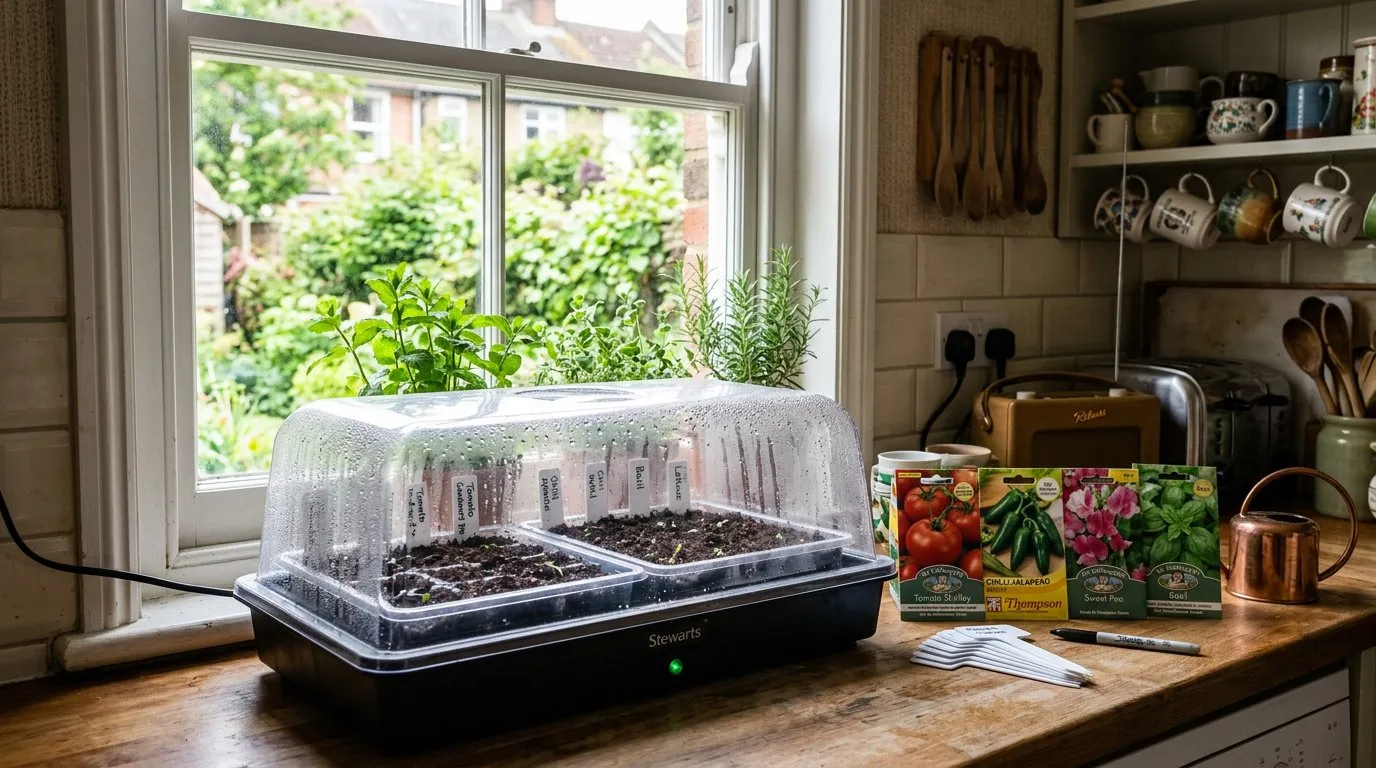 A heated propagator on a south-facing windowsill. This setup provides the 18-21C needed for germinating tender crops.
February
The sowing season begins to build. Light levels improve noticeably through the month.
Vegetables
- Broad beans - sow indoors in root trainers or deep pots. Or sow directly outdoors in sheltered southern gardens from late February if soil reaches 5C.
- Tomatoes - sow indoors from late February for greenhouse growing. See our tomato timing guide and best greenhouse plants month by month for the full year-round plan.
- Peppers - sow at 18-21C. They need 8-10 weeks of indoor growing.
- Leeks - sow in trays at 12-15C. Leeks are slow starters but reliable croppers.
- Lettuce - sow indoors for the earliest spring salads.
Flowers
- Sweet peas - continue sowing if not started in January.
- Begonias - sow at 21C on the surface of moist compost. Seeds are tiny.
- Snapdragons (Antirrhinum) - sow at 18C for summer flowers.
Herbs
- Chives - sow indoors at 15-18C.
March
The biggest sowing month of the year. Over 30 crops can start in March. See our full March planting guide for detailed advice.
Vegetables (indoor)
- Tomatoes - sow at 18-21C. The core sowing month for outdoor tomatoes.
- Courgettes - sow from mid-March in 9cm pots at 18-20C.
- Squash and pumpkins - sow from mid-March at 18-20C.
- Sweetcorn - sow from late March in deep modules.
- Cucumbers - sow from late March at 21-25C.
- Beetroot - sow indoors for transplanting or outdoors from mid-March.
Vegetables (outdoor)
- Broad beans - sow 5cm deep, 20cm apart. See our broad bean planting guide for regional timing advice.
- Peas - sow 5cm deep in flat trenches.
- Parsnips - sow directly. Use fresh seed each year.
- Carrots - sow from mid-March under fleece.
- Spring onions - sow 1cm deep in rows.
- Spinach - sow 2cm deep, 15cm apart.
- Lettuce - sow outdoors in short rows.
- Radish - sow every 2-3 weeks for continuous supply.
Flowers (indoor)
- Cosmos - sow at 15-18C.
- Zinnias - sow at 18-21C.
- Dahlias (from seed) - sow at 18C.
- Lobelia - sow on the surface at 18-21C.
- Nicotiana - sow at 18-20C.
Flowers (outdoor)
- Sweet peas - sow directly outdoors.
- Calendula - scatter seed on prepared soil.
- Cornflowers - sow where they will flower.
- Poppies - scatter sow with sand for even distribution.
Herbs
- Parsley - sow outdoors, 1cm deep. Slow to germinate (3-4 weeks).
- Chives - sow outdoors or divide existing clumps.
- Coriander - sow outdoors in situ.
April
Outdoor sowing expands dramatically. Soil temperatures rise above 10C across most of England. See our April planting guide.
Vegetables (indoor)
- Runner beans - sow in 9cm pots at 12-15C from mid-April.
- French beans - sow in pots at 12-15C.
- Kale - sow in modules at 15-18C for winter harvests.
- Brussels sprouts - sow in modules. These need a long season.
- Calabrese - sow in modules for summer harvests.
Vegetables (outdoor)
- Carrots - main sowing month. Cover with mesh for carrot fly.
- Beetroot - sow 3cm deep, thin to 10cm apart.
- Turnips - sow 2cm deep in rows.
- Radish - continue successional sowings.
- Lettuce - continue every 2 weeks.
- Chard - sow 2cm deep, 30cm apart.
- Spinach - continue sowings.
- Onion sets - push into soil with the tip just visible.
Flowers (outdoor)
- Sunflowers - sow from late April. See our sunflower planting guide.
- Nasturtiums - push large seeds 2cm into soil.
- Nigella - scatter sow on open ground.
- Marigolds (French and African) - sow 1cm deep.
Herbs (outdoor)
- Basil - sow indoors at 18-20C. Surface sow.
- Dill - sow directly outdoors.
Warning: April sunshine is deceptive. Do not sow tender crops outdoors in April. Night temperatures still drop below freezing in many areas. Runner beans, French beans, courgettes, and tomatoes stay indoors until late May.
May
The last major sowing month. Tender crops finally go outdoors after the last frost. See our May planting guide.
Vegetables (outdoor)
- Runner beans - sow directly from late May, 5cm deep.
- French beans - sow from late May, 5cm deep.
- Sweetcorn - sow in blocks from late May.
- Swede - sow in rows from May.
- Turnips - continue sowings.
- Lettuce, radish, spring onions - continue successional sowings.
Flowers (outdoor)
- Sunflowers - continue sowing until mid-June.
- Night-scented stock - scatter near seating areas.
- Nasturtiums - continue sowing.
Plant out
This is the month to plant out everything raised indoors: tomatoes, courgettes, squash, sweetcorn, cucumbers, runner beans, French beans.
June
Focus shifts to successional sowings and starting winter crops. See our June planting guide.
Vegetables
- French beans - last sowings until mid-June.
- Runner beans - last sowings until mid-June.
- Kale - sow indoors for winter harvests.
- Purple sprouting broccoli - sow in modules for February-April harvests.
- Brussels sprouts - final sowings for Christmas harvests.
- Spring cabbage - sow from late June.
- Lettuce, beetroot, carrots - continue successional sowings.
Flowers (outdoor)
- Foxgloves - sow for next year’s flowers.
- Wallflowers - sow in a seed bed for autumn transplanting.
- Sweet William - sow for next year.
- Honesty - sow outdoors for next spring.
Herbs
- Basil - sow directly outdoors from early June.
- Coriander - sow every 3 weeks for continuous supply.
July
Sowing winds down but important winter crops still need starting.
Vegetables
- Spring cabbage - sow for overwintering.
- Perpetual spinach - sow for autumn and winter leaves.
- Turnips - final sowings for autumn harvests.
- Lettuce - continue until August.
- Radish - continue until August.
Flowers
- Wallflowers - continue sowing.
- Canterbury bells - sow for next year.
August
The focus shifts to overwintering crops.
Vegetables
- Overwintering onion sets - plant from August onwards.
- Spring cabbage - transplant July sowings.
- Winter lettuce - sow under cloches.
- Perpetual spinach - final sowings.
Flowers
- Forget-me-nots - sow for spring.
September to December
September
- Overwintering onion sets - continue planting.
- Green manures - sow on empty beds to prevent nutrient loss.
October
- Garlic - plant cloves 5cm deep, 15cm apart. Our garlic planting guide explains the best timing for your region.
- Broad beans - sow Aquadulce Claudia in sheltered spots for overwintering.
November
- Broad beans - continue overwintering sowings.
- Garlic - continue planting.
December
- No sowing. Plan, order seeds, clean pots, and prepare beds for next year.
Indoor vs outdoor sowing guide
| Crop | Start indoors? | Direct sow outdoors? | Best method |
|---|---|---|---|
| Tomatoes | Yes (essential) | No | Indoor only |
| Peppers/chillies | Yes (essential) | No | Indoor only |
| Courgettes | Yes | No | Indoor preferred |
| Cucumbers | Yes | No | Indoor only |
| Runner beans | Optional | Yes (from late May) | Either works |
| French beans | Optional | Yes (from late May) | Direct sow preferred |
| Broad beans | Optional | Yes (Feb-Apr) | Direct sow preferred |
| Peas | Optional | Yes (Mar-Jun) | Direct sow preferred |
| Carrots | No | Yes (Mar-Jul) | Direct sow only |
| Parsnips | No | Yes (Feb-Apr) | Direct sow only |
| Beetroot | Optional | Yes (Mar-Jul) | Either works |
| Lettuce | Optional | Yes (Mar-Aug) | Either works |
| Radish | No | Yes (Mar-Aug) | Direct sow only |
| Sweetcorn | Recommended | Yes (late May) | Indoor start gives head start |
| Kale | Recommended | Yes (May-Jun) | Indoor preferred |
Root vegetables with taproots (carrots, parsnips) must be sown directly. They do not transplant. Brassicas, lettuce, and beans transplant well from indoor starts.
For detailed indoor sowing technique, see our guide on how to sow seeds indoors.
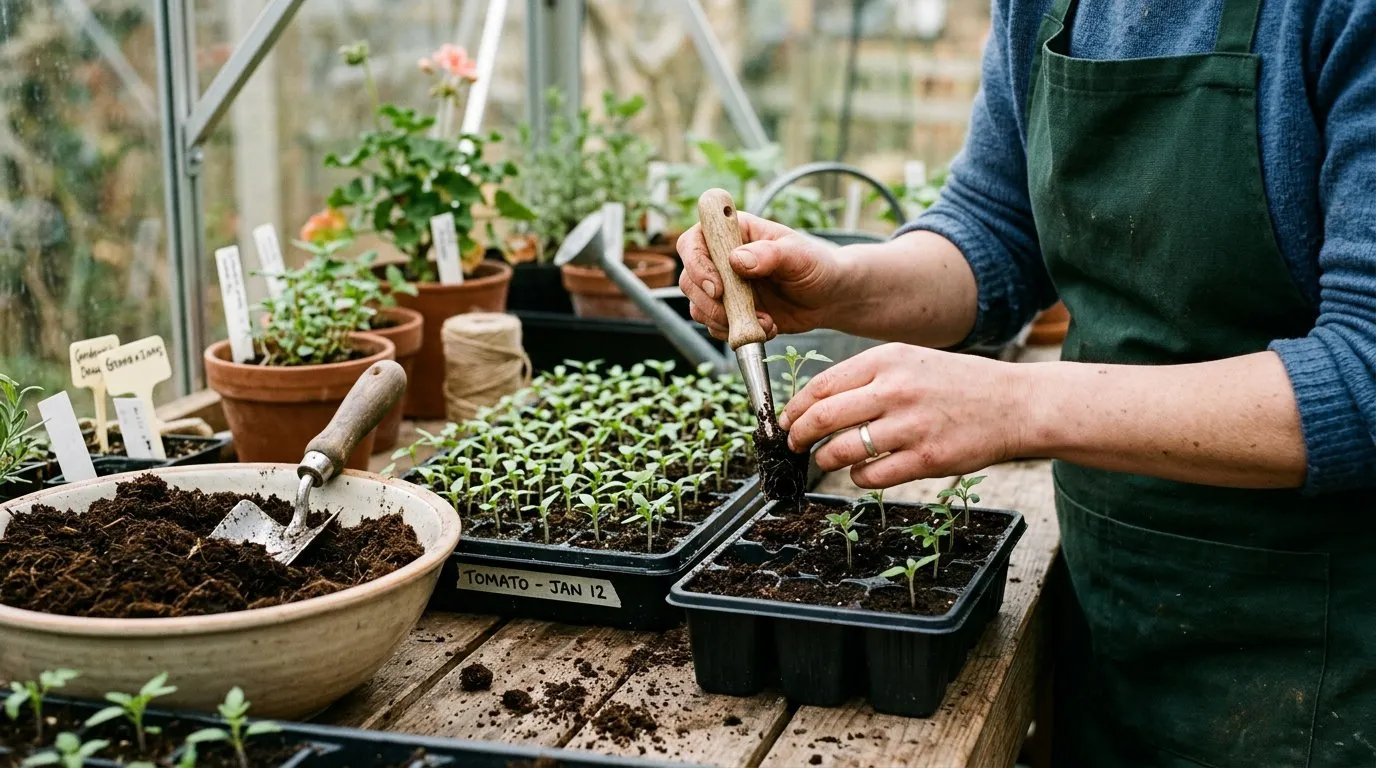 Pricking out seedlings into individual modules. Handle seedlings by their leaves, never the fragile stem.
Common mistakes
Sowing everything in March
March is the busiest month, but sowing all your crops at once creates a bottleneck. You run out of windowsill space, cannot keep up with watering, and the garden gets a glut followed by nothing. Spread sowings across March, April, and May.
Ignoring light levels
January and February indoor sowings struggle because daylight hours are short. Seedlings grow pale and leggy. Either wait until March for most crops or use grow lights to supplement natural light. Position trays as close to glass as possible without touching.
Not labelling seeds
It sounds obvious, but a tray of unlabelled seedlings is useless by May. You cannot tell a tomato seedling from a pepper seedling at the two-leaf stage. Label everything with variety name and sowing date. Use a waterproof pen on plastic labels.
Burying seeds too deep
Small seeds like lettuce and basil need light to germinate. Press them onto the surface and cover with a thin layer of vermiculite. The general rule: sow at a depth of twice the seed diameter. A lettuce seed is 2mm across, so cover with 4mm of compost.
Forgetting to harden off
Every plant started indoors needs 10-14 days of gradual outdoor exposure before planting out. The temperature shock from indoors to outdoors stalls growth for weeks. Build outdoor exposure gradually, starting with 2-3 hours on sheltered days.
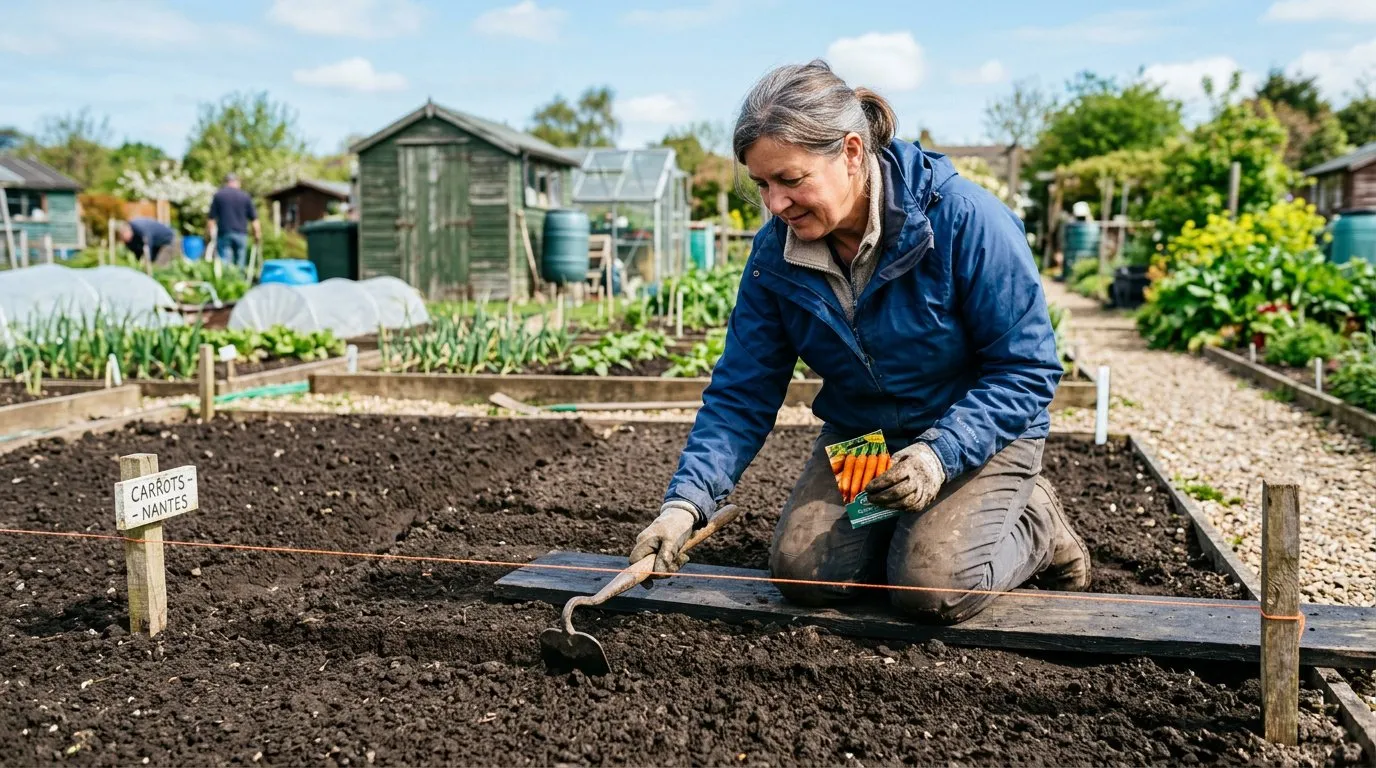 Drawing a seed drill for direct outdoor sowing. The depth depends on the seed size: twice the seed diameter as a rule.
Why we recommend a heated propagator for March indoor sowings: After 30 seasons of starting seeds on windowsills, cold frames, and in heated propagators, a heated propagator consistently produces stronger, faster-germinating seedlings than any windowsill setup. Tomatoes sown at a stable 20C in a propagator germinate in 6-8 days; the same seeds on an unheated windowsill in March take 12-18 days and produce spindly seedlings that never fully recover. The Vitopod propagator, run at 20C, reduced our average germination time across 14 crops by 40% and cut seedling losses to under 5% compared to 20-30% on a cold windowsill.
Now you’ve mastered the seed sowing calendar, read our guide on seed saving for beginners for the next step in becoming fully self-sufficient with your seed supply.
Frequently asked questions
When should I start sowing seeds in the UK?
Start from January with slow-growing crops like onions and chillies indoors. The main sowing season begins in March for most vegetables, flowers, and herbs. Indoor sowing at 18-21C gives tender crops a head start before the last frost in late May.
What month is best for sowing seeds UK?
March and April are the peak sowing months. Over 60 crops can be started across vegetables, flowers, and herbs. March focuses on indoor tender crops and outdoor hardy vegetables. April opens outdoor sowing to a wider range as soil warms above 10C.
Can I sow seeds in January UK?
Yes, but only a few crops benefit from a January start. Sow onion seeds, chillies, and aubergines indoors at 18-21C. Sweet peas can start in a cold greenhouse. Most crops should wait until March when light levels are strong enough to produce healthy seedlings.
What seeds can I sow directly outside?
Hardy crops sow directly outdoors from March: broad beans, peas, parsnips, carrots, beetroot, radish, spinach, and spring onions. Tender crops like runner beans and sweetcorn go directly outdoors from late May after the last frost. Root vegetables with taproots must be sown directly.
When is it too late to sow seeds UK?
Most main-season sowings end by late June. Some crops like lettuce and radish can be sown until August for late harvests. Winter crops like kale and spring cabbage are sown in June and July. Garlic goes in from October. There is always something to sow.
Do I need a greenhouse to sow seeds?
No, a warm windowsill works for most indoor sowings. A south-facing window provides enough light for germination from March onwards. A greenhouse is helpful but not essential. Many crops sow directly outdoors without any indoor start at all. A heated propagator on a windowsill is an inexpensive alternative.
Lawrie has been gardening in the West Midlands for over 30 years. He grows his own veg using no-dig methods, keeps a wildlife-friendly garden, and writes practical advice based on real UK growing conditions.