Key takeaways
- Chit first and second earlies for about 4-6 weeks before planting
- Plant first earlies around late March and second earlies in early to mid-April
- Plant maincrops from mid-April to early May
- Delay outdoor planting on cold, exposed sites and protect emerging shoots from frost
- Plant extra-early containers in a frost-free greenhouse from early March
Plant first early potatoes around late March, second earlies in early to mid-April, and maincrops by early May. Move those dates later in cold or exposed gardens. Timing depends on the potato type, local conditions and frost risk. This guide focuses specifically on planting times across the UK. We cover chitting schedules, regional planting windows, and the differences between earlies and maincrops. For the full growing process from planting through to harvest, see our potato growing guide. Planning your spring sowing schedule more broadly? Our March planting guide covers everything else you can start this month.
Why timing matters for potatoes
Potato shoots are frost-tender. Cold, waterlogged soil also increases the risk of tubers rotting before growth starts.
Use the standard planting windows as a guide, then adjust for your site. Mild, sheltered gardens can use the early end. Colder, exposed or waterlogged sites should wait.
The RHS potato growing guide places first earlies around late March. It places second earlies in early to mid-April and maincrops from mid-April to early May. It also advises planting later in colder regions.
Gardener’s tip: Check the forecast and soil condition together. Delay if the bed is saturated or emerging shoots would meet frost.
Chitting: the first step in your potato timeline
Chitting means encouraging seed potatoes to sprout before planting. It is optional, but can bring forward an early crop.
When to start chitting
Start chitting first and second earlies in late January on mild sites. Colder gardens can start as late as early March. Our January planting guide and February planting guide help with the wider schedule. Chitting usually takes four to six weeks. Place seed potatoes in egg boxes or seed trays with the rose end pointing upward. Keep them cool, bright and frost-free. Avoid a warm, dark room, which produces long, pale shoots.
When are they ready?
The RHS describes short shoots reaching about 5cm within six weeks. Handle them carefully at planting so the shoots do not snap.
For maincrops, chitting has little advantage because they grow for longer. First and second earlies benefit most from the earlier start.
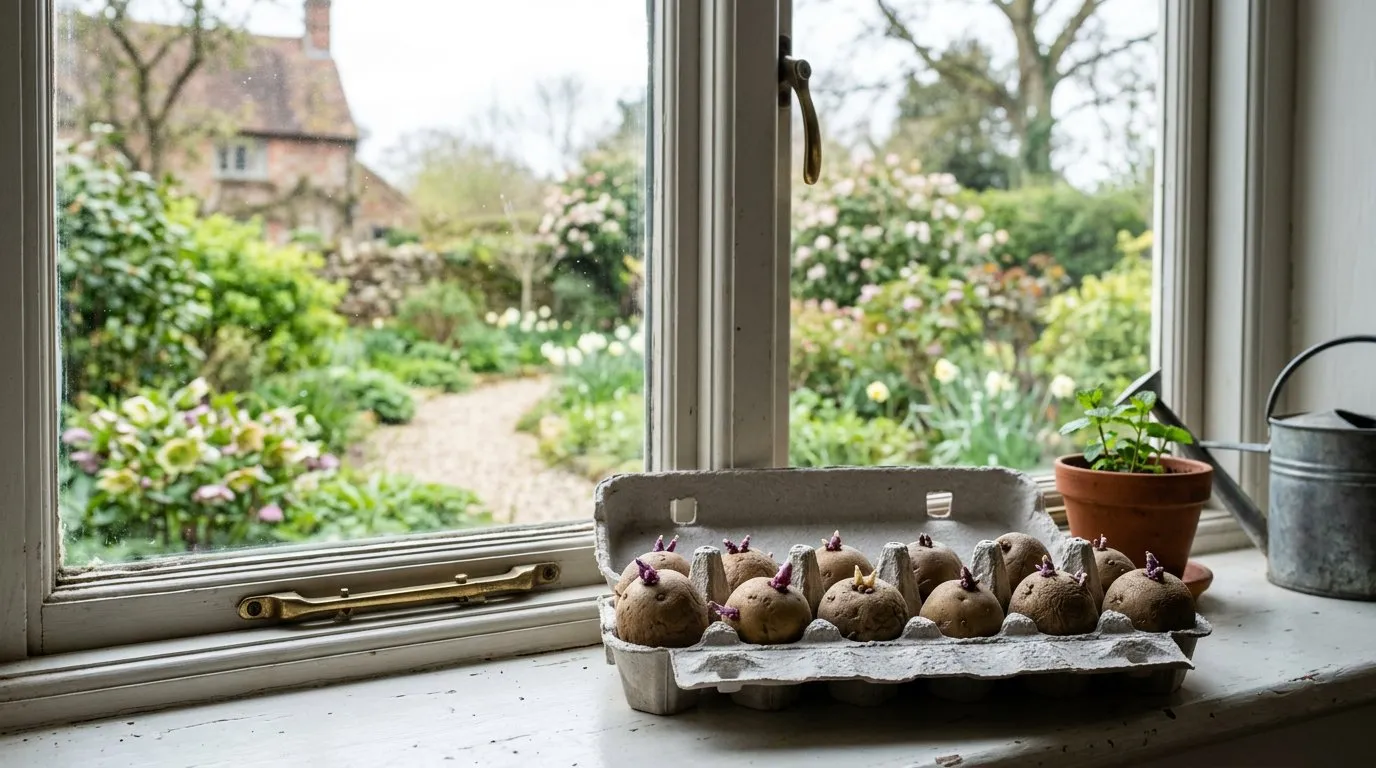 Chitting seed potatoes in January. Stand tubers in an egg box with the rose end facing up in a cool, light room.
Why classified seed potatoes matter
Use seed potatoes sold for planting rather than leftover ware potatoes. The difference is traceability and plant-health control, not appearance.
The GOV.UK Seed Potato Classification Scheme explains that marketed seed potatoes in England and Wales are inspected and classified. The scheme checks health, varietal identity and freedom from mixtures. Scotland operates its own classification system.
Read the official label before planting. It identifies the variety and grade, which helps you match the tubers to the intended window. Keep the label until harvest so any problem can be traced to the lot.
Record the retailer and purchase date beside the label. This separates similar varieties and preserves a clear reference if symptoms appear later.
Do not use soft, damaged or rotting tubers. Classification provides a health standard, but storage damage after purchase can still spoil individual seed potatoes.
When to plant first early potatoes
First earlies are the earliest potato type to harvest. Popular varieties include Rocket, Swift, Pentland Javelin and Lady Christl.
Regional planting dates for first earlies
| Site condition | First-early timing |
|---|---|
| Mild and sheltered | Use late March as the starting point |
| Average lowland garden | Aim around late March, if soil is workable |
| Cold, exposed or upland | Plant later than the standard window |
| Frost-free greenhouse container | An extra-early crop can start in early March |
The table is a decision guide, not a frost forecast. Check your postcode forecast and protect shoots if a late frost is expected.
Adjust the date for your own bed
Use three checks before choosing the planting day.
First, inspect drainage. Dig to the intended 15cm trench depth after rain. Wait if water collects in the hole or wet soil smears into a dense ribbon.
Second, compare exposure. A raised bed beside a sunny wall warms and drains differently from open clay on an allotment. Treat them as separate sites, even within the same postcode.
Third, check the forecast for the period when shoots may emerge. Exact emergence time varies by variety and weather, so keep fleece ready when planting at the early edge.
Record the variety, bed, planting date and first emergence. That note turns a national calendar into a local guide over later seasons. It also shows whether a slow start came from timing, drainage or a specific seed lot.
Protecting early plantings
If you plant at the early end, protect emerging shoots from frost with fleece or fresh earthing up.
Earthing up also prevents developing tubers from turning green in sunlight. The RHS advises starting when shoots reach about 23cm. Draw soil up while leaving roughly 10cm of foliage exposed.
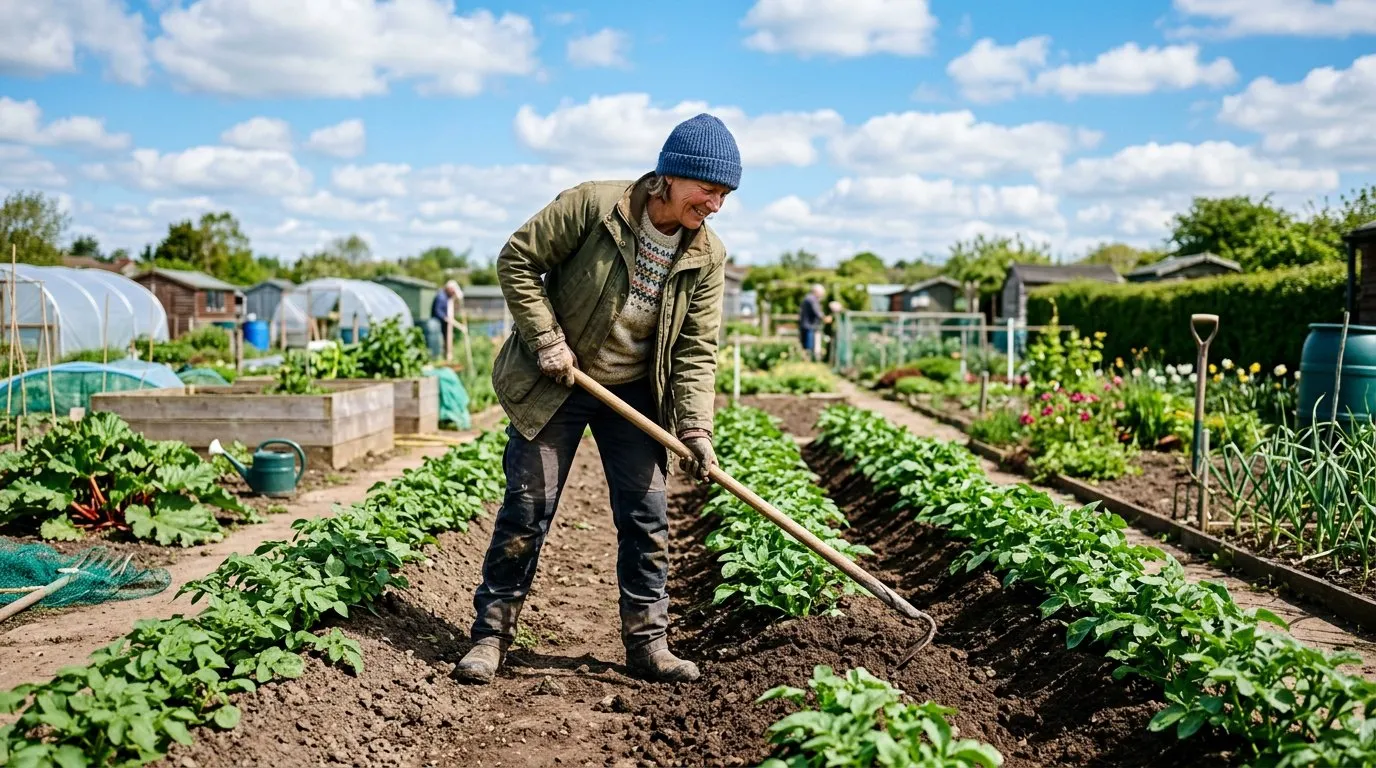 Earthing up potatoes when stems reach 20cm. Mound soil around the stems to prevent tubers turning green.
When to plant second early potatoes
Second earlies follow first earlies and are usually lifted in July or August. Charlotte, Kestrel and Maris Peer are common choices. Plant second earlies in early to mid-April, moving later on colder sites. See our April planting guide for other crops to sow then. Their earlier harvest can reduce the time that foliage is exposed to the main summer blight period. Weather still decides when blight pressure rises.
When to plant maincrop potatoes
Maincrops grow longer and are generally harvested from late August into October. Popular varieties include Maris Piper, King Edward, Sarpo Mira and Desiree.
Plant maincrops from mid-April to early May, moving towards the later end on cold sites.
Maincrop potatoes need wider spacing than earlies. The RHS advises 37cm between tubers and 75cm between rows.
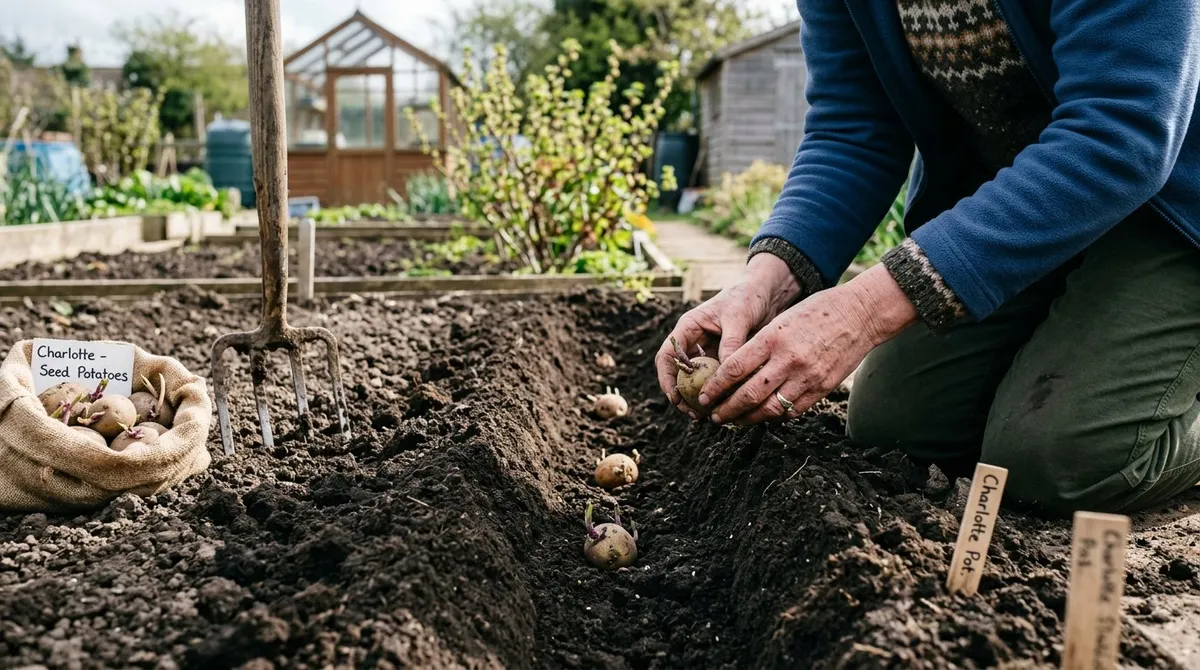
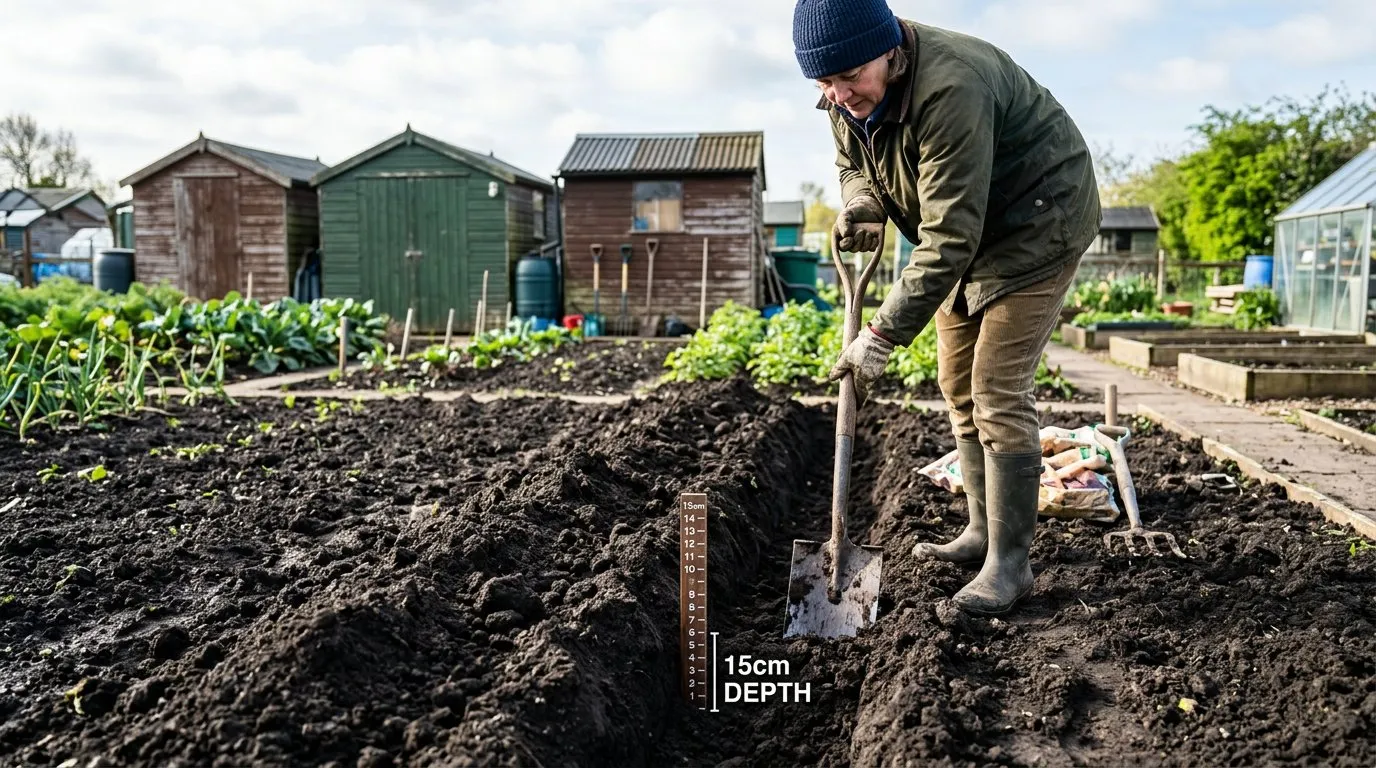 Digging a planting trench 15cm deep. Space trenches 60cm apart for first earlies, 75cm for maincrops.
Blight and maincrop timing
The main disease risk for a long-season crop is potato blight (Phytophthora infestans). Warm, humid weather can speed its spread while maincrop foliage is still active. If blight recurs locally, compare varieties with recognised resistance. The RHS potato blight guide covers symptoms and current control advice.
Warning: Check current RHS guidance before acting on suspected blight. Remove infected material as advised and do not compost it.
Variety comparison: planting times and characteristics
| Variety | Type | Typical planting window | General harvest window | Best use |
|---|---|---|---|---|
| Rocket | First early | Around late March | June-July | New potatoes, salads |
| Swift | First early | Around late March | June-July | Boiling, containers |
| Charlotte | Second early | Early to mid-April | July-August | Salads, boiling |
| Kestrel | Second early | Early to mid-April | July-August | All-rounder |
| Maris Piper | Maincrop | Mid-April to early May | Late August-October | Roasting, chips |
| King Edward | Maincrop | Mid-April to early May | Late August-October | Baking, mash |
| Sarpo Mira | Maincrop | Mid-April to early May | Late August-October | Blight-prone areas |
| Desiree | Maincrop | Mid-April to early May | Late August-October | Roasting, general |
These are type-level windows. The supplier’s label and local conditions take priority.
Container planting timeline
A frost-free greenhouse allows an extra-early container crop from early March. Outdoors, containers still need protection when frost threatens. Use a container at least 30cm wide and deep. Half-fill it with about 15cm of peat-free multipurpose compost. The RHS advises one seed potato per 30cm of pot diameter, then adding compost as shoots grow. Keep containers in a sunny place and water consistently. For more on small spaces, see our guide to starting a vegetable garden.
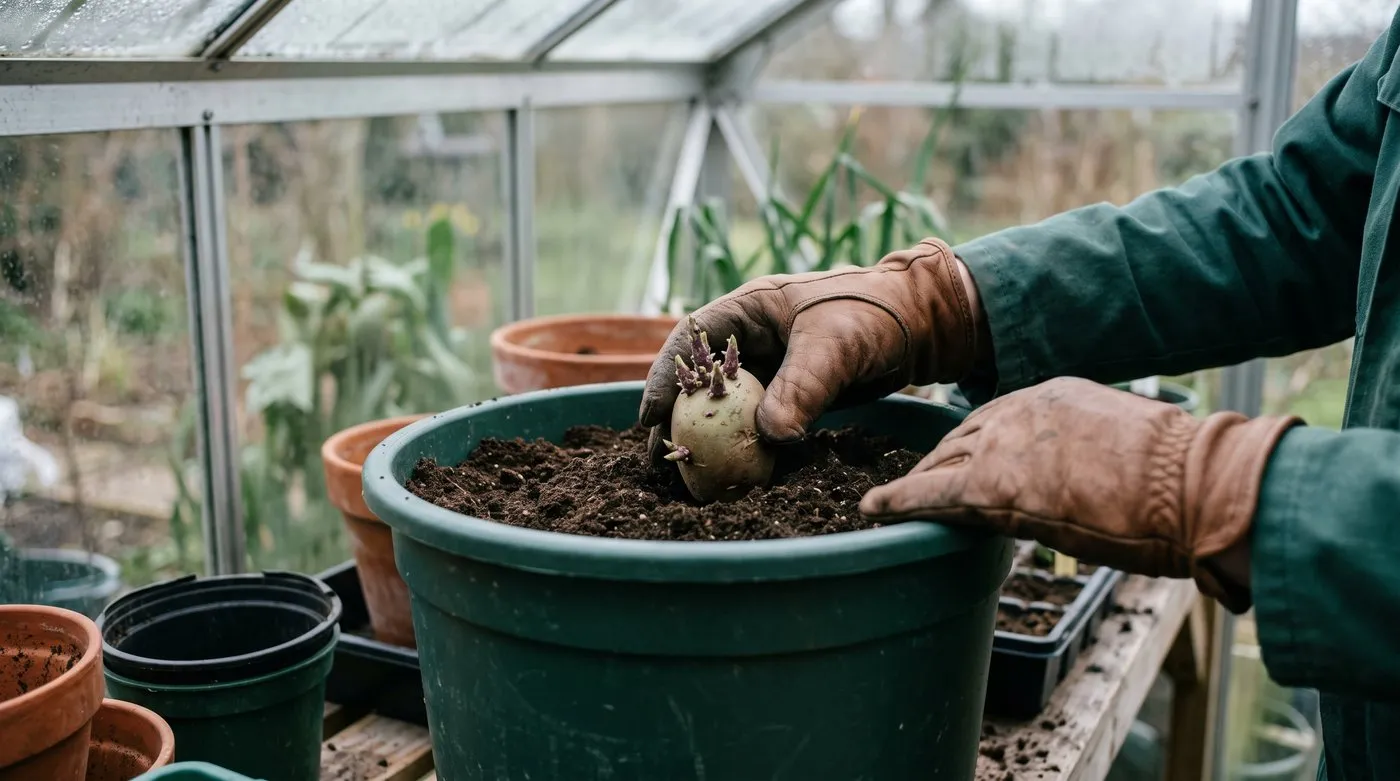 A frost-free greenhouse allows an extra-early container crop from early March.
Christmas potatoes: the August planting window
For a Christmas crop, plant prepared cold-stored seed potatoes in July or early August. Use a large container in a greenhouse or another bright, frost-free place. Follow the supplier’s instructions for a suitable early variety. Indoor growing protects the foliage from frost and reduces exposure to outdoor blight. Keep the container in good light and water it consistently. Harvest timing varies with variety and growing conditions.
Month-by-month potato timeline
| Month | What to do |
|---|---|
| January | Buy seed potatoes. Start chitting late January. |
| February | Continue chitting. Prepare planting beds. Add compost or well-rotted manure. |
| March | Plant first earlies around late March. Start extra-early greenhouse containers earlier. |
| April | Plant second earlies and maincrops. Earth up first earlies. |
| May | Earth up all varieties. Water during dry spells. Monitor for slug damage. |
| June | Harvest first earlies when plants flower. Start lifting second earlies late June. |
| July | Continue harvesting earlies. Watch for blight on maincrops. |
| August | Plant Christmas potatoes. Harvest second earlies. Blight risk at peak. |
| September | Harvest maincrops. Let skins set for two weeks after cutting haulm. |
| October | Complete maincrop harvest before heavy frosts. Store in hessian sacks. |
| For more monthly crop choices, check our April planting guide and May planting guide. The vegetable planting calendar covers the full year. |
Common mistakes with potato planting times
Planting too early into cold soil
Do not plant by calendar alone. Cold, saturated ground can rot tubers before shoots establish. Wait for workable soil and a suitable forecast.
Ignoring regional differences
National dates are only a baseline. Colder, exposed and upland gardens should plant later than mild, sheltered sites.
Skipping frost protection for early plantings
Emerging potato shoots are frost-tender. If you plant early, keep fleece ready or earth up fresh growth before a forecast frost.
Planting maincrops too late
Maincrops need the longest season. Plant them within the mid-April to early-May window unless the supplier gives different advice.
Using old or damaged seed potatoes
Choose firm seed potatoes without rot or damage. Store them as the supplier directs and discard any that deteriorate.
What to plant alongside potatoes
Potatoes fit into a crop rotation. Move them to a different part of the plot where possible to reduce soil-borne problems. For soil preparation, see our guides to making compost and improving clay soil. Our seed sowing calendar covers other spring crops. Browse more articles in the growing section.
Frequently asked questions
When is the best month to plant potatoes in the UK?
March and April are the main planting months. Plant first earlies around late March, second earlies in early to mid-April, and maincrops by early May.
Can I plant potatoes in February in the UK?
February is usually too early outdoors. Use it to chit early varieties in a cool, bright, frost-free place. Plant outside later when conditions improve.
Is it too late to plant potatoes in May?
Early May still suits maincrop potatoes. Plant as soon as conditions allow because later planting shortens the growing season. Follow the variety supplier’s timing.
Do I need to chit potatoes before planting?
Chitting is optional but useful for early varieties. Keep tubers cool, bright and frost-free for four to six weeks. Maincrops gain little from chitting.
When should I plant Christmas potatoes?
Plant prepared Christmas-crop seed potatoes in July or early August. Use a large container in a bright, frost-free greenhouse. Follow the supplier’s timing for the variety.
Browse the growing guides or continue with our full potato growing guide.
Our team produces practical UK gardening guidance from source research, contributor records and established horticultural practice. Editorial standards are overseen by Matt W.