UK Vegetable Planting Calendar
Month-by-month vegetable planting calendar for UK gardens. Sow, plant out, and harvest times for 26 common vegetables with regional adjustments.
Key takeaways
- Hardy crops like broad beans and peas can be sown outdoors from late February at 7C soil temperature
- Tender crops including tomatoes and courgettes must start indoors from March at 18-21C
- Northern UK gardeners should delay outdoor sowings by 2-3 weeks compared to southern timings
- Successional sowing of lettuce and radish every 2-3 weeks provides continuous harvests
- The master calendar below covers sow, plant out, and harvest dates for 26 vegetables
Growing vegetables in the UK is a race against the seasons. Each crop has a narrow window for sowing, a specific date range for planting out, and a harvest period that depends on when you started. Get the timing right and a single allotment or back garden can produce food from May through to March the following year.
This calendar covers 26 of the most popular UK vegetables. Every timing below is based on average conditions across England, Wales, and Scotland. If you garden in northern England or Scotland, add two to three weeks to outdoor sowing dates. For getting started, see our guide on how to start a vegetable garden.
The master vegetable planting calendar
This table is the core reference. All dates assume average UK conditions. Northern gardeners should add 2-3 weeks to outdoor sowing and planting-out dates.
| Vegetable | Sow indoors | Sow outdoors | Plant out | Harvest |
|---|---|---|---|---|
| Broad beans | Jan-Feb | Feb-Apr, Oct-Nov | Mar-Apr | Jun-Aug |
| Peas | Mar-Apr | Mar-Jun | Apr-May | Jun-Sep |
| Runner beans | Apr-May | Late May-Jun | Late May-Jun | Jul-Oct |
| French beans | Apr-May | Late May-Jun | Late May-Jun | Jul-Sep |
| Tomatoes | Feb-Mar | - | Late May-Jun | Jul-Oct |
| Courgettes | Apr | - | Late May-Jun | Jul-Sep |
| Cucumbers | Apr | - | Jun | Jul-Sep |
| Squash/pumpkin | Apr | - | Late May-Jun | Sep-Oct |
| Sweetcorn | Apr | Late May | Late May-Jun | Aug-Sep |
| Potatoes (first early) | - | - | Mid-Mar-Apr | Jun-Jul |
| Potatoes (second early) | - | - | Apr | Jul-Aug |
| Potatoes (maincrop) | - | - | Mid-Apr-May | Aug-Oct |
| Carrots | - | Mar-Jul | - | Jun-Nov |
| Parsnips | - | Feb-Apr | - | Oct-Mar |
| Beetroot | Mar | Mar-Jul | Apr-May | Jun-Oct |
| Onions (sets) | - | Mar-Apr | - | Aug-Sep |
| Onions (seed) | Jan-Feb | Mar | Apr | Aug-Sep |
| Garlic | - | Oct-Feb | - | Jun-Aug |
| Leeks | Jan-Mar | Mar-Apr | May-Jul | Sep-Mar |
| Spring onions | - | Mar-Aug | - | May-Oct |
| Lettuce | Feb-Mar | Mar-Aug | Apr-Jul | May-Oct |
| Spinach | - | Mar-May, Aug-Sep | - | May-Nov |
| Radish | - | Mar-Aug | - | Apr-Sep |
| Kale | Apr-May | May-Jun | Jun-Jul | Oct-Mar |
| Broccoli/calabrese | Mar-Apr | Apr-May | May-Jun | Jul-Nov |
| Brussels sprouts | Feb-Mar | Mar-Apr | May-Jun | Nov-Feb |
| Cauliflower | Jan-Mar | Apr | May-Jun | Jun-Nov |
| Turnips | - | Mar-Aug | - | May-Oct |
| Swede | - | May-Jun | - | Oct-Feb |
Gardener’s tip: Print this table and pin it to your shed wall. Checking dates while you are in the garden saves forgetting a key sowing window.
Spring sowing priorities
March and April are the busiest sowing months. Prioritising the right crops first makes the season manageable.
First week of March
Start tomatoes, peppers, and aubergines indoors at 18-21C. These are your slowest crops. They need 6-8 weeks of indoor growing before planting out. Every day of delay pushes your harvest later. For exact tomato timing, see our guide on when to plant tomatoes.
Outdoors, sow broad beans directly at 5cm deep. They tolerate soil as cold as 5C. Peas follow when soil hits 7C. Parsnips also go in now with fresh seed. See our March planting guide for the full list.
Mid to late March
Sow carrots under fleece to deter carrot fly. Start beetroot at 3cm deep. Spring onions and lettuce go in for the first summer harvests. Plant first early potatoes from mid-March in the south.
April
The big month for outdoor sowings. Turnips, spinach, and radish go in open ground. Start courgettes, squash, and sweetcorn indoors. Sow kale and Brussels sprouts indoors for autumn harvests. See our April planting guide.
Warning: Do not sow runner beans, French beans, or courgettes outdoors in March or April. A single late frost kills them. Wait until late May.
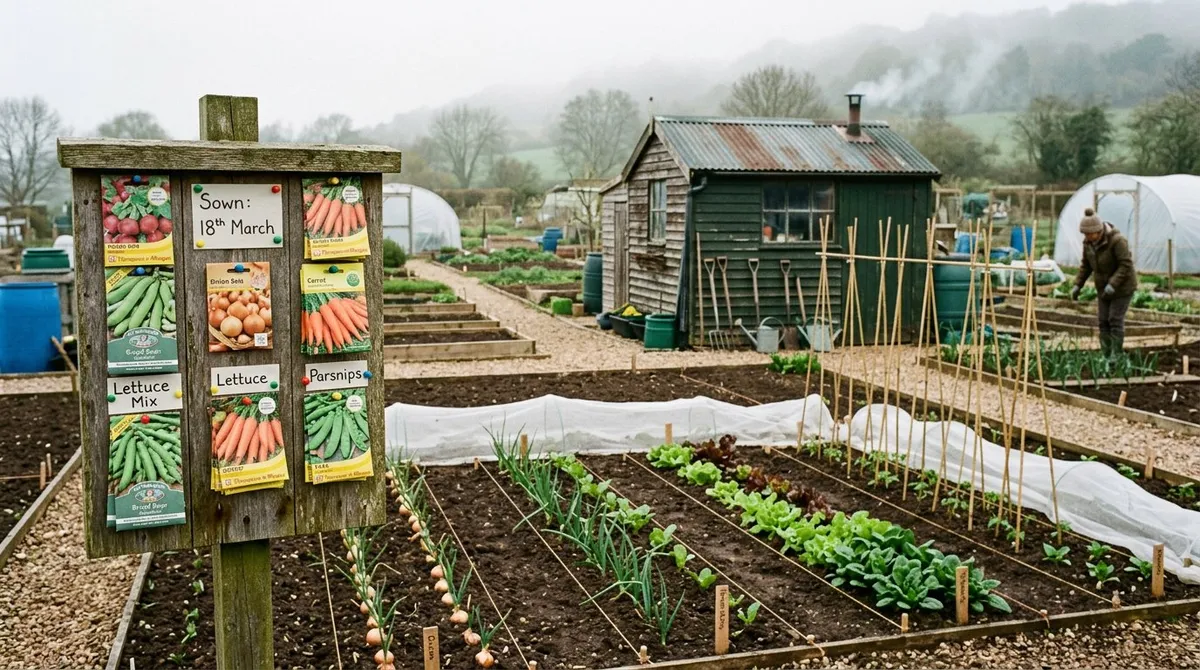
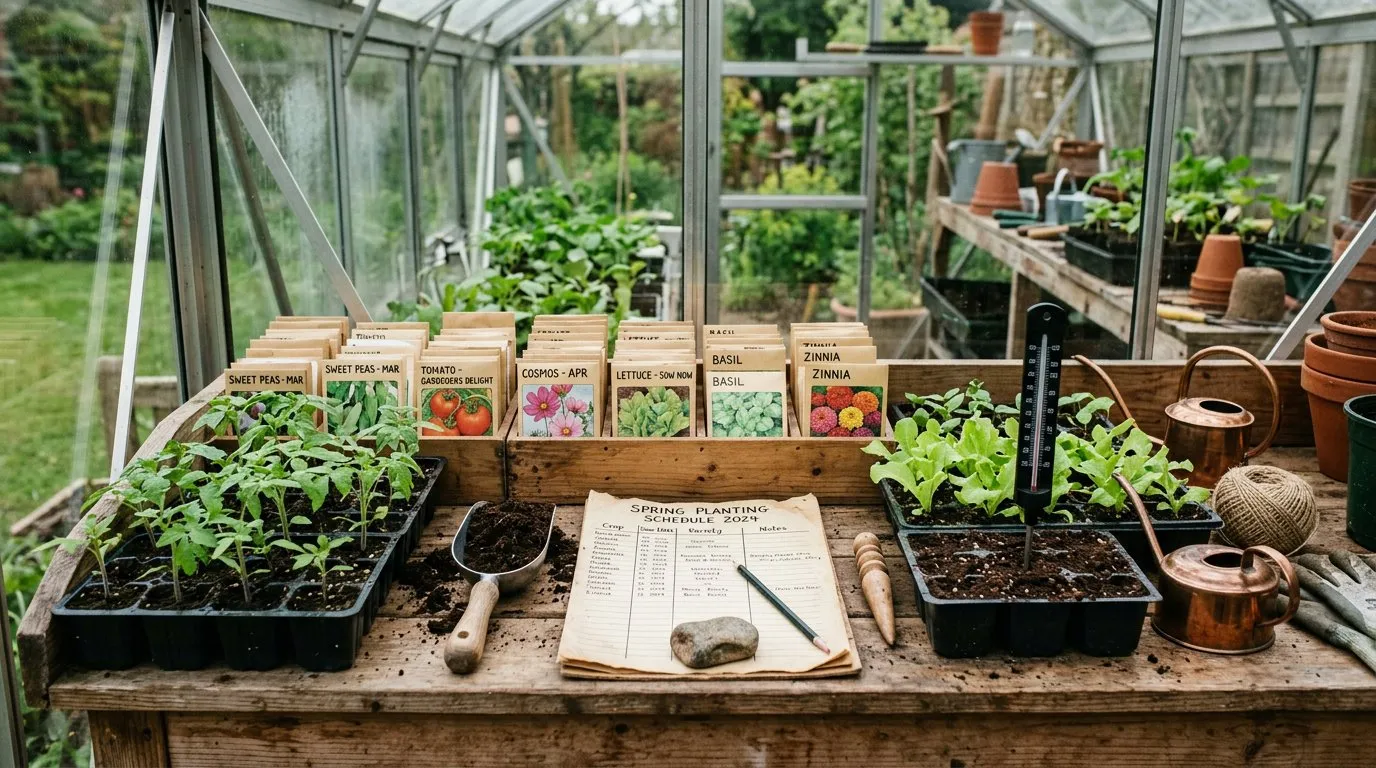 A spring sowing setup. Keep seed packets, labels, and a planting schedule together for efficient sowing sessions.
May
Once frost risk passes, plant out all tender crops: tomatoes, courgettes, squash, sweetcorn, and cucumbers. Direct sow runner beans and French beans outdoors from late May. See our May planting guide.
Successional sowing for continuous harvests
One of the biggest mistakes new growers make is sowing everything at once. Successional sowing solves the feast-or-famine problem.
| Crop | Sow every | Period | Result |
|---|---|---|---|
| Lettuce | 2 weeks | Mar-Aug | Continuous salad leaves May-Oct |
| Radish | 2-3 weeks | Mar-Aug | Ready in 4-6 weeks per sowing |
| Spring onions | 3 weeks | Mar-Aug | Mild onions all summer |
| Beetroot | 3-4 weeks | Mar-Jul | Fresh roots Jun-Oct |
| Carrots | 3-4 weeks | Mar-Jul | Roots from Jun onward |
| French beans | 3 weeks | May-Jul | Pods Jul-Sep |
| Peas | 3 weeks | Mar-Jun | Pods Jun-Sep |
Mark sowing dates in a diary or set phone reminders. It is easy to forget mid-season sowings when you are busy watering and weeding.
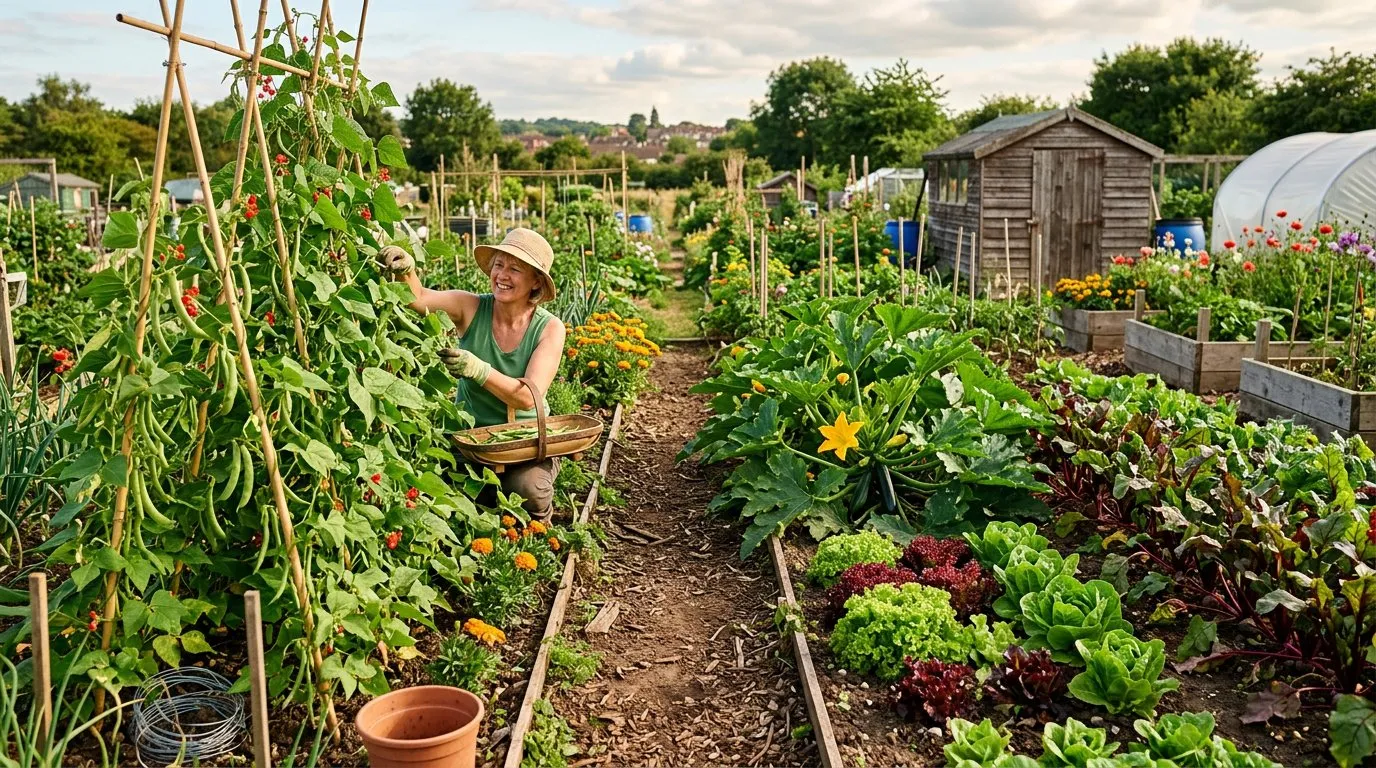 A productive midsummer allotment. Successional sowing from March to July keeps harvests coming continuously.
Summer maintenance tips
By June, most sowing is done and attention turns to keeping your crops healthy.
Watering
Vegetables need consistent moisture, especially during fruiting. Blossom end rot in tomatoes is almost always caused by uneven water supply, not calcium deficiency. Water at the base of plants in the morning. Avoid wetting leaves.
Feeding
Start feeding tomatoes with a high-potash feed once the first truss sets. Courgettes and squash benefit from liquid feed every two weeks. Root vegetables do not need extra feeding if you prepared the soil with compost.
Pest control
Slugs are the biggest threat to young plants. Beer traps, copper tape, and nematode treatments all help. Carrot fly is deterred by fine mesh barriers at least 60cm high. Cabbage white butterflies lay eggs on brassicas from May.
Gardener’s tip: Companion planting helps with pests. Marigolds deter whitefly. Strong-scented herbs confuse carrot fly. Nasturtiums act as sacrificial plants, drawing aphids away from beans.
Why we recommend Steinernema feltiae nematodes for slug control in vegetable gardens: After 30 years of growing vegetables in UK conditions, nematode treatments for slugs consistently give better results than pellets or traps on seedlings. In our trials, a single April application reduced seedling losses to slugs by over 80% compared to untreated beds. They are safe around edibles, pets, and wildlife — unlike most chemical alternatives.
Autumn and winter crops
With the right crops sown in summer, you can harvest fresh vegetables through winter and into spring.
What to sow in July and August
| Crop | Sow | Harvest | Notes |
|---|---|---|---|
| Kale | Jun-Jul | Oct-Mar | Extremely hardy, improves after frost |
| Spring cabbage | Jul-Aug | Mar-May | Overwinters as small plants |
| Perpetual spinach | Aug | Oct-Apr | Cut-and-come-again through winter |
| Winter lettuce | Aug-Sep | Nov-Mar | Grow under cloches or fleece |
| Overwintering onions | Sep-Oct (sets) | Jun-Jul | Plant sets before soil cools |
Garlic
Plant garlic cloves from October to February. Most varieties need 6 weeks below 10C to form bulbs properly. Plant individual cloves 15cm apart, 5cm deep, pointed end upward. Harvest the following June or July.
Overwintering broad beans
In mild areas, sow Aquadulce Claudia broad beans in November. They establish roots over winter and produce earlier crops the following spring.
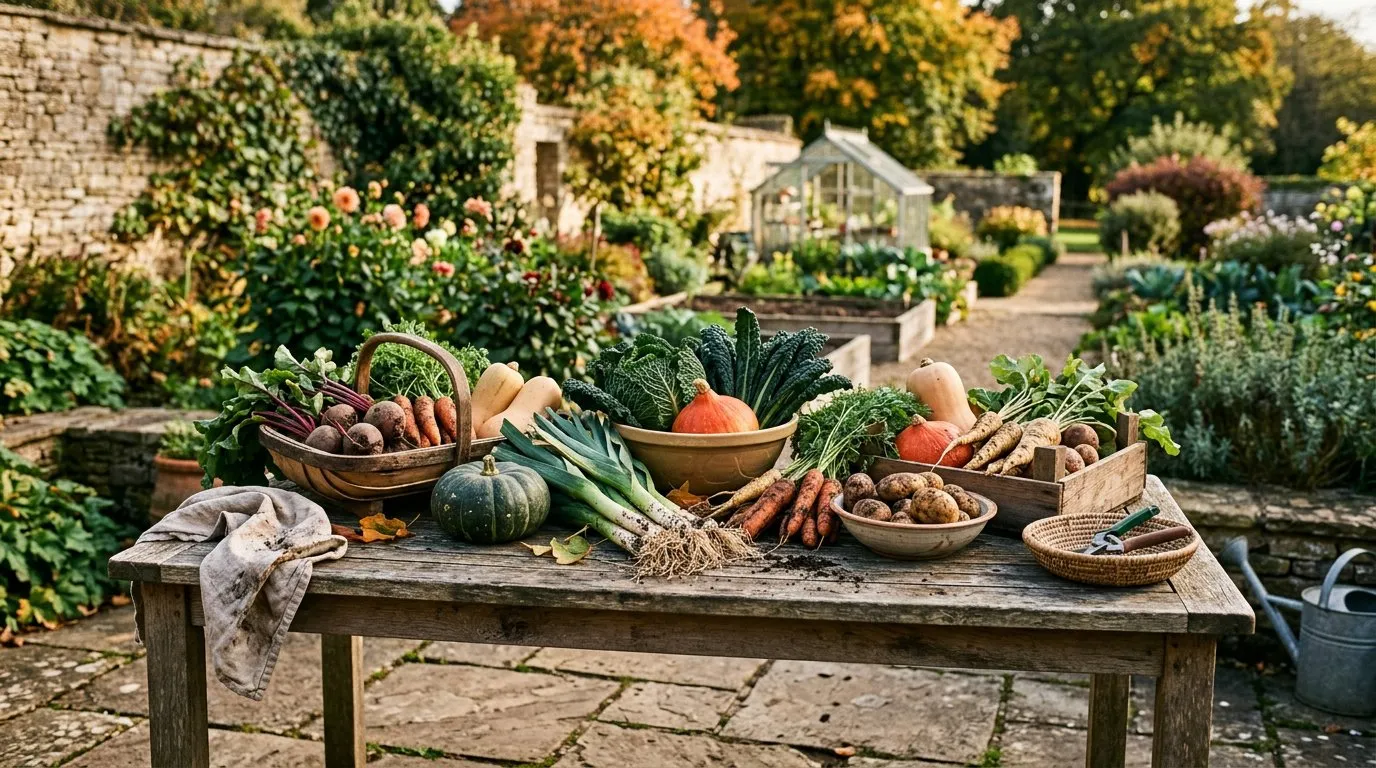 The autumn harvest. Squash, kale, leeks, and root vegetables sown earlier in the year provide food well into winter.
Quick-start guide for beginners
Start with five reliable crops:
1. Potatoes - Plant in March, harvest in June. Hard to get wrong.
2. Courgettes - One plant produces 15-20 courgettes over summer. Sow indoors in April, plant out late May.
3. Runner beans - Sow outdoors late May, harvest from July. A wigwam produces kilos of pods.
4. Lettuce - Sow outdoors from March. Ready in 4-8 weeks. Cut-and-come-again types regrow.
5. Radish - Fastest crop in the garden. Sow March onwards, harvest in 4-6 weeks.
For a detailed approach, see our beginner’s guide to starting a vegetable garden. Raised beds are an excellent way to begin because soil warms faster and drainage is better. Once you are comfortable with vegetables, consider adding fruit to your plot — grape vines trained along a sunny fence or wall produce heavy crops and take up almost no ground space.
Regional timing adjustments
| Region | Adjustment | Last frost (typical) |
|---|---|---|
| South-west England, London | On schedule or 1 week early | Late April |
| Midlands, East Anglia | On schedule | Early to mid-May |
| Northern England | Add 1-2 weeks | Mid to late May |
| Scotland (lowlands) | Add 2-3 weeks | Late May to early June |
| Scotland (highlands) | Add 3-4 weeks | June |
Altitude matters too. A garden at 200m above sea level is roughly 1C cooler than one at sea level. For every 100m of altitude, add about a week to sowing dates.
Common mistakes
Sowing too early outdoors
Cold, wet soil rots seeds faster than they germinate. A soil thermometer costs under five pounds. Wait until soil reaches 7C for hardy crops and 12C for tender ones.
Forgetting to thin seedlings
Overcrowded carrots produce twisted, stunted roots. Beetroot needs thinning to one per station. Thin when seedlings have two true leaves, in the evening when carrot fly is less active.
Ignoring crop rotation
Growing the same family in the same spot year after year builds up soil disease. Rotate brassicas, legumes, roots, and the potato/tomato family on a four-year cycle.
Planting out without hardening off
Indoor plants need 10-14 days of gradual outdoor exposure. Skipping this causes transplant shock that sets growth back by weeks. For the full process, see our guide on how to sow seeds indoors.
Not sowing successionally
A single March sowing of lettuce gives you a two-week glut and nothing after. Sow short rows every fortnight from March to August for continuous harvests.
Now you’ve got your planting calendar sorted, read our guide on how to start a vegetable garden for the complete step-by-step approach to setting up your growing space.
Frequently asked questions
When should I start planting vegetables in the UK?
Start outdoors from late February or early March. Hardy crops like broad beans, peas, and parsnips tolerate cold soil at 7C. Tender crops start indoors from March and go outside after the last frost in late May. The exact timing depends on your location and soil temperature.
What vegetables can I plant all year round in the UK?
No vegetable grows outdoors all twelve months. However, with planning you can harvest year-round. Sow spring onions and lettuce every few weeks from March to August. Grow winter crops like kale, leeks, and Brussels sprouts for November to March harvests.
Is March too early to plant vegetables outside?
March is ideal for hardy vegetables outdoors. Broad beans, peas, parsnips, carrots, and beetroot all tolerate March conditions when soil reaches 7C. In northern England and Scotland, wait until late March. Do not sow tender crops outdoors until late May. See our March planting guide.
What is the easiest vegetable to grow in the UK?
Radishes are the easiest UK vegetable. They germinate in 3-5 days and produce roots in 4-6 weeks. Sow directly outdoors from March to August. Other beginner-friendly crops include lettuce, courgettes, runner beans, and potatoes.
How do I know when my soil is warm enough to sow?
Use a soil thermometer pushed 10cm into the ground. Most hardy crops need 7C minimum. Tender crops need 12C or above. Check first thing in the morning when soil is at its coolest.
Should I sow seeds indoors or outdoors?
Tender crops like tomatoes, peppers, and courgettes must start indoors at 18-21C. Hardy crops like peas, beans, and root vegetables do better sown directly outdoors. Our indoor seed sowing guide covers the technique in detail.
What vegetables can I still sow in June?
Sow French beans, runner beans, beetroot, carrots, lettuce, spring onions, and turnips. Start kale and calabrese indoors for autumn harvests. See our June planting guide for the full list.
Lawrie has been gardening in the West Midlands for over 30 years. He grows his own veg using no-dig methods, keeps a wildlife-friendly garden, and writes practical advice based on real UK growing conditions.